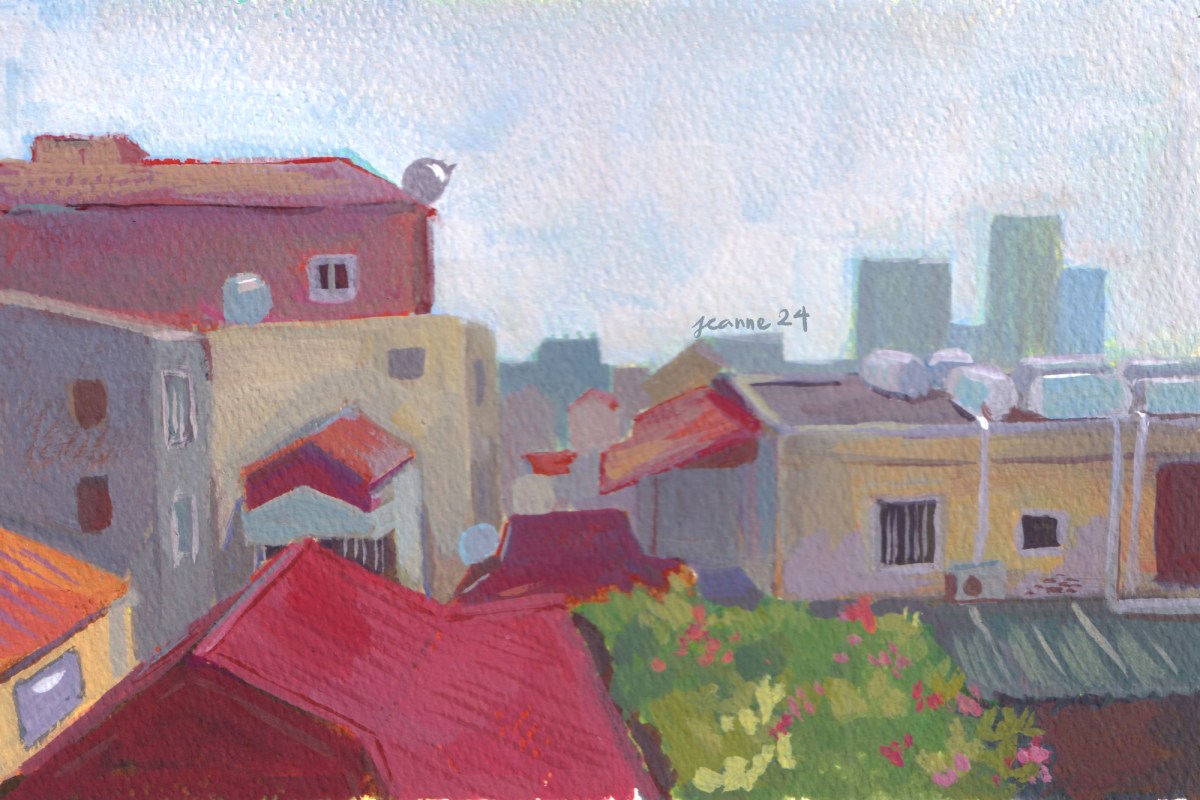
How I Start
It all started when I watched videos by James Gurney. I was amazed by how much fun it looked to explore the world through an artist’s eyes, and how urban sketching could really improve my art skills. James went into detail about his process, from choosing materials to picking subjects and actually painting. His videos inspired me – a homebody by nature – to get outside and work on my observation and on-the-spot painting skills, instead of always sticking to my desk.
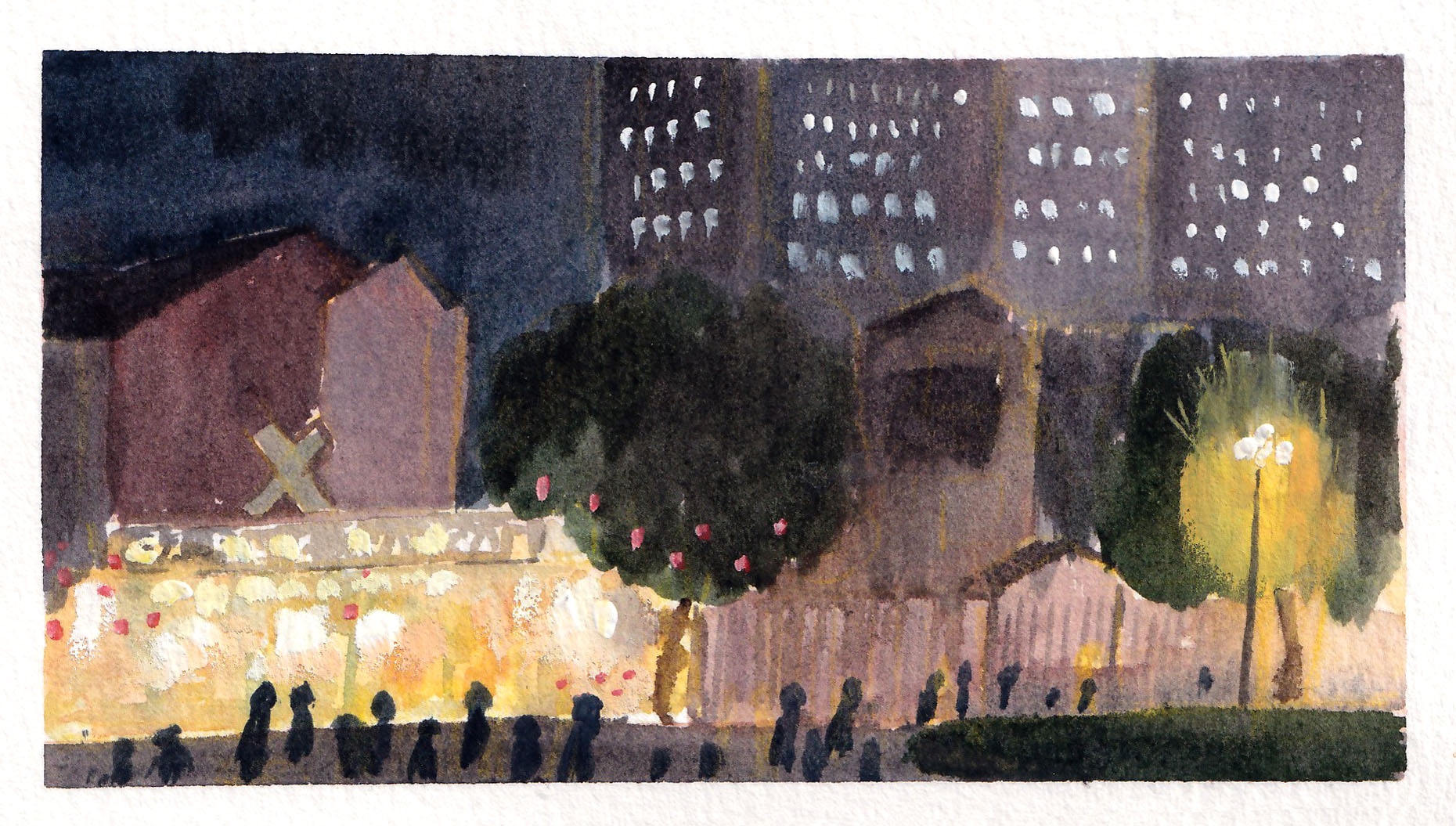
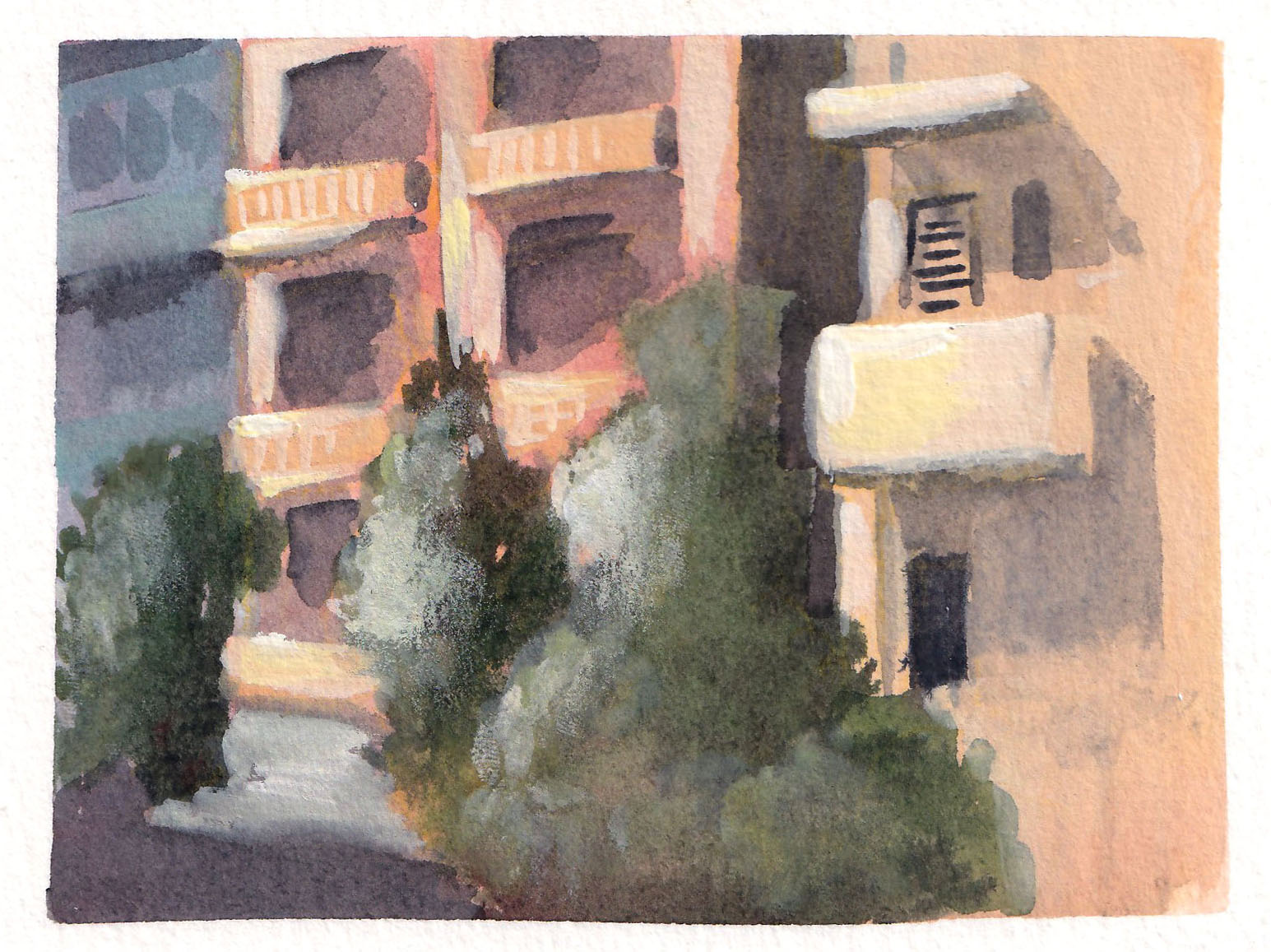
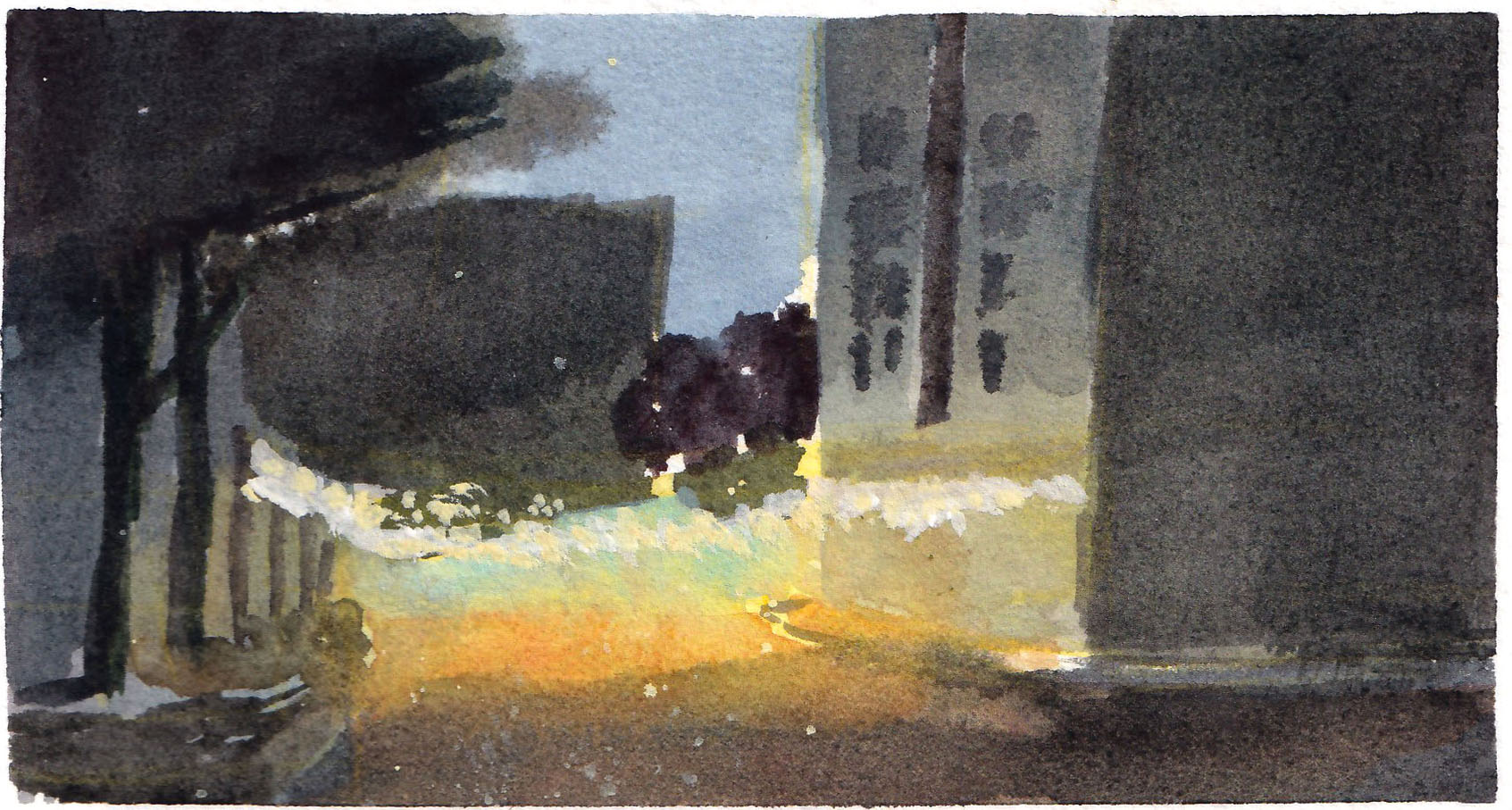
I grew up in Hanoi, where the streets are full of houses from all kinds of different eras. They’re old and diverse, definitely not your typical urban design, but perfect for painting.
I thought I knew all about these houses until I started sketching them. That’s when I began noticing details I’d never paid attention to before. Questions started popping up in my mind: Why does this window look strange? Is it uncomfortable living in these houses? And so on.
My Medium: Watercolor vs Gouache
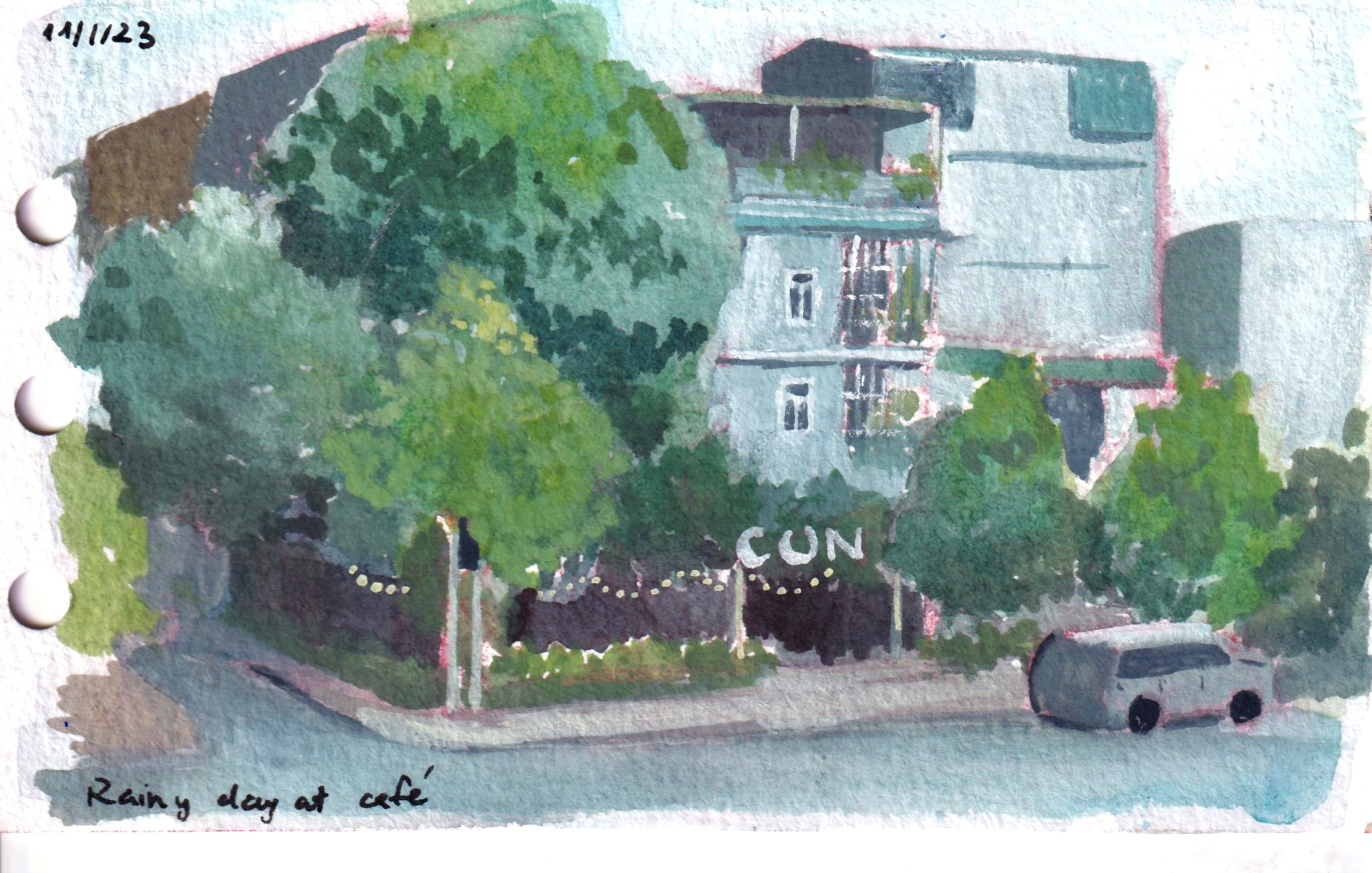
I started with watercolor because it was the most convenient and readily available option. I could use pans or different sizes of boxes depending on where I was painting. It reminded me of the old-school watercolor techniques I admired.
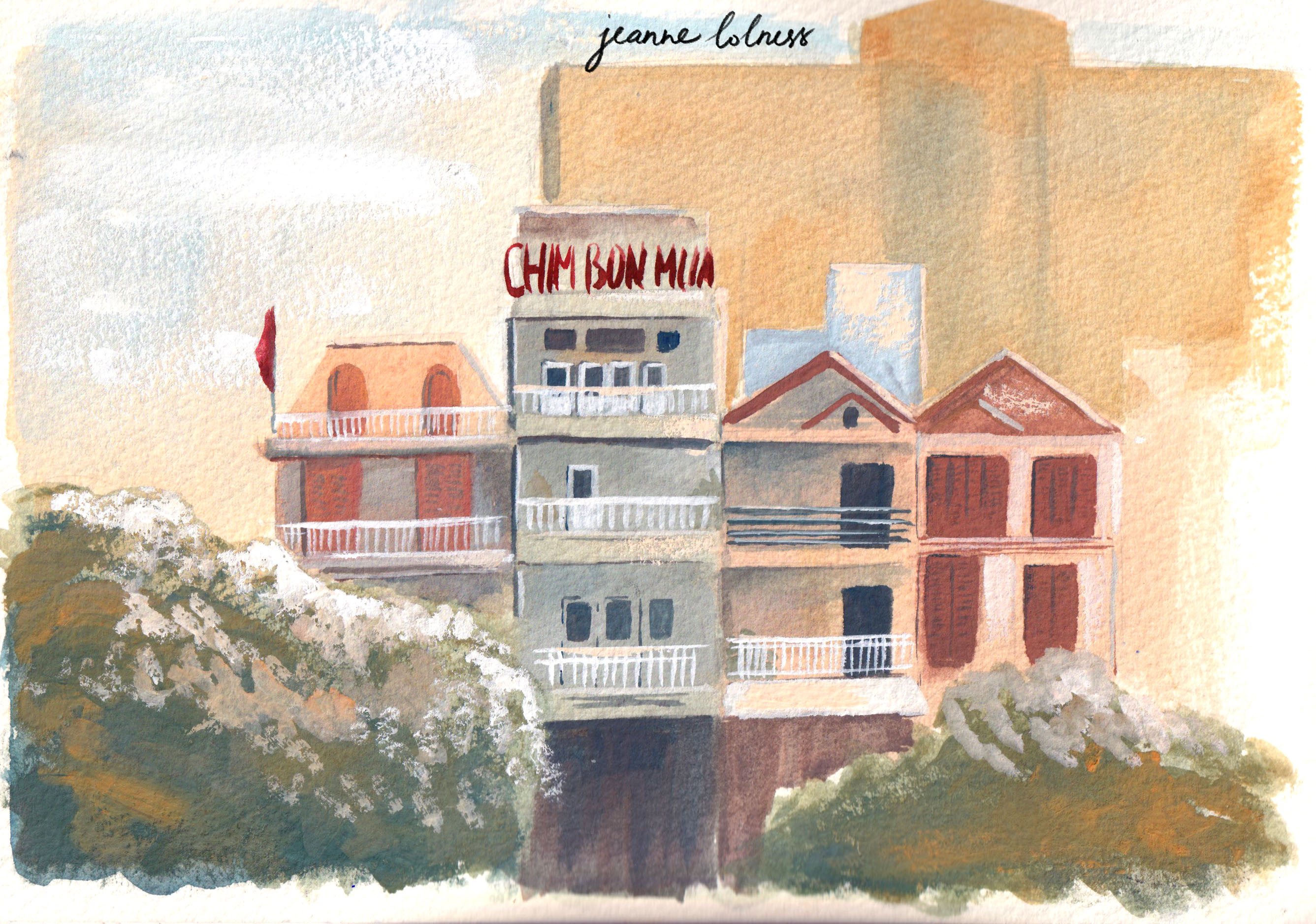
Gouache, on the other hand, was messier for me at first. I had bought a set of bottles, which weren’t as portable as tubes for outdoor painting. It might sound like a small detail, but the difference in storage was significant—paints in tubes are far more convenient. Since paint tubes were first introduced in the early 19th century, around 1841, by American artist John G. Rand; it has got easier for artists to travel and work en plein air (outdoors), which became especially important during the rise of Impressionism.
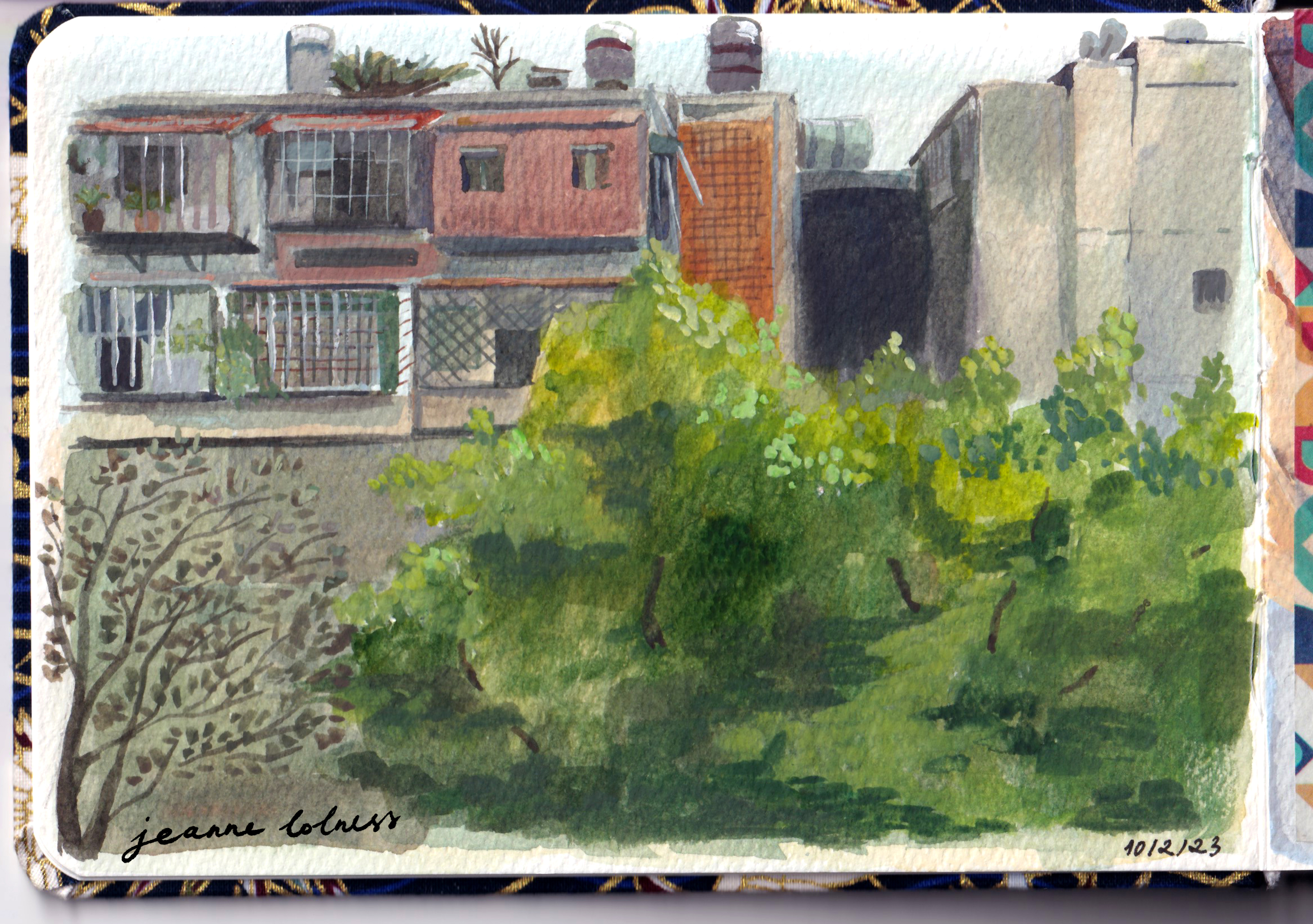
Once I switched my gouache to tubes, it became my favorite medium. I enjoy painting opaquely, except when I have a specific idea that requires transparency. Gouache is more forgiving than watercolor, and it’s easier to define both large areas and fine details.
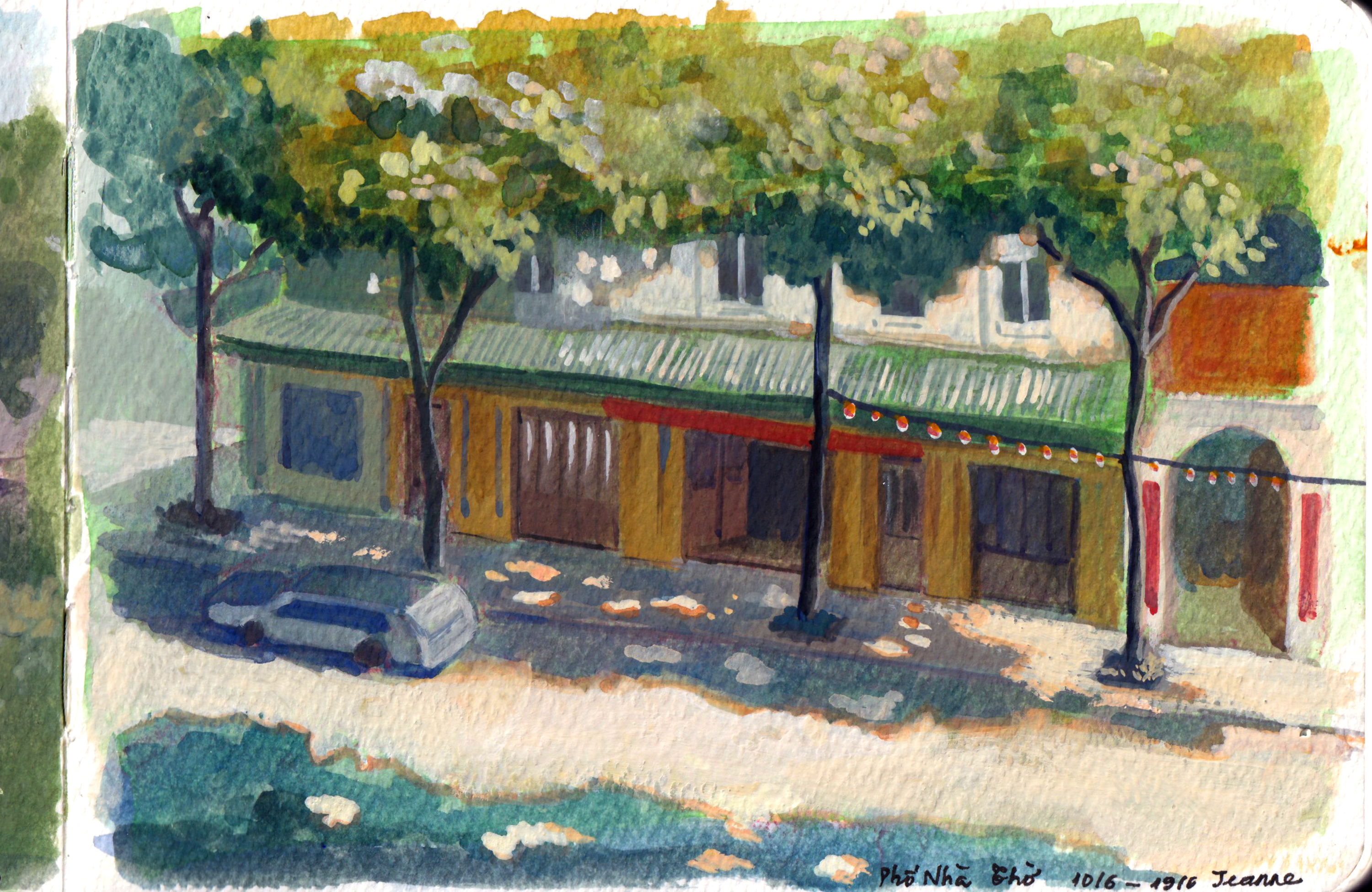
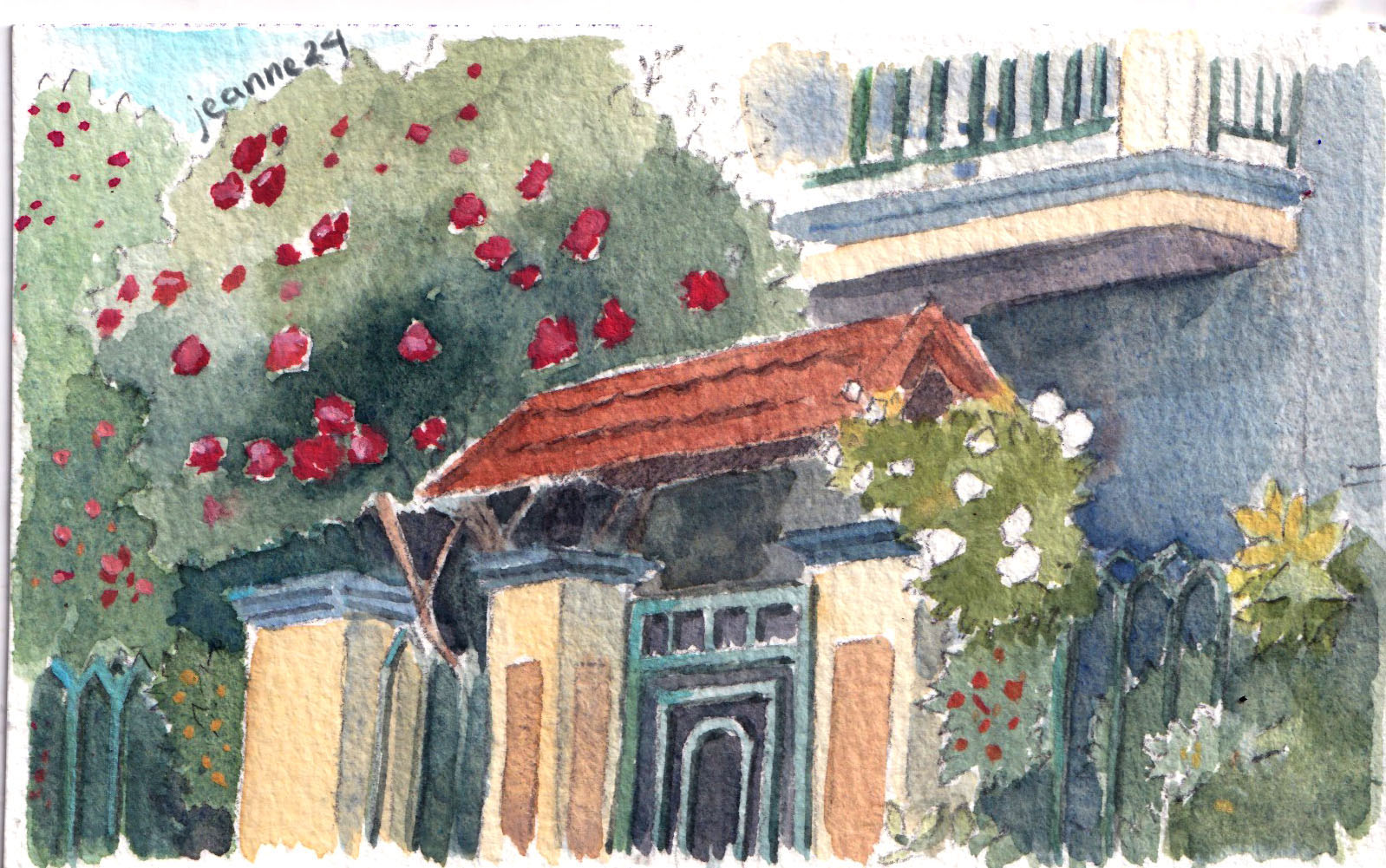
I started by painting my own neighborhood since I was already familiar with it from my daily life. It felt like a chance to rediscover my surroundings in a new way. I’m especially drawn to houses with plants, those that have a nostalgic vibe, or those that clearly show signs of someone’s life lived there.
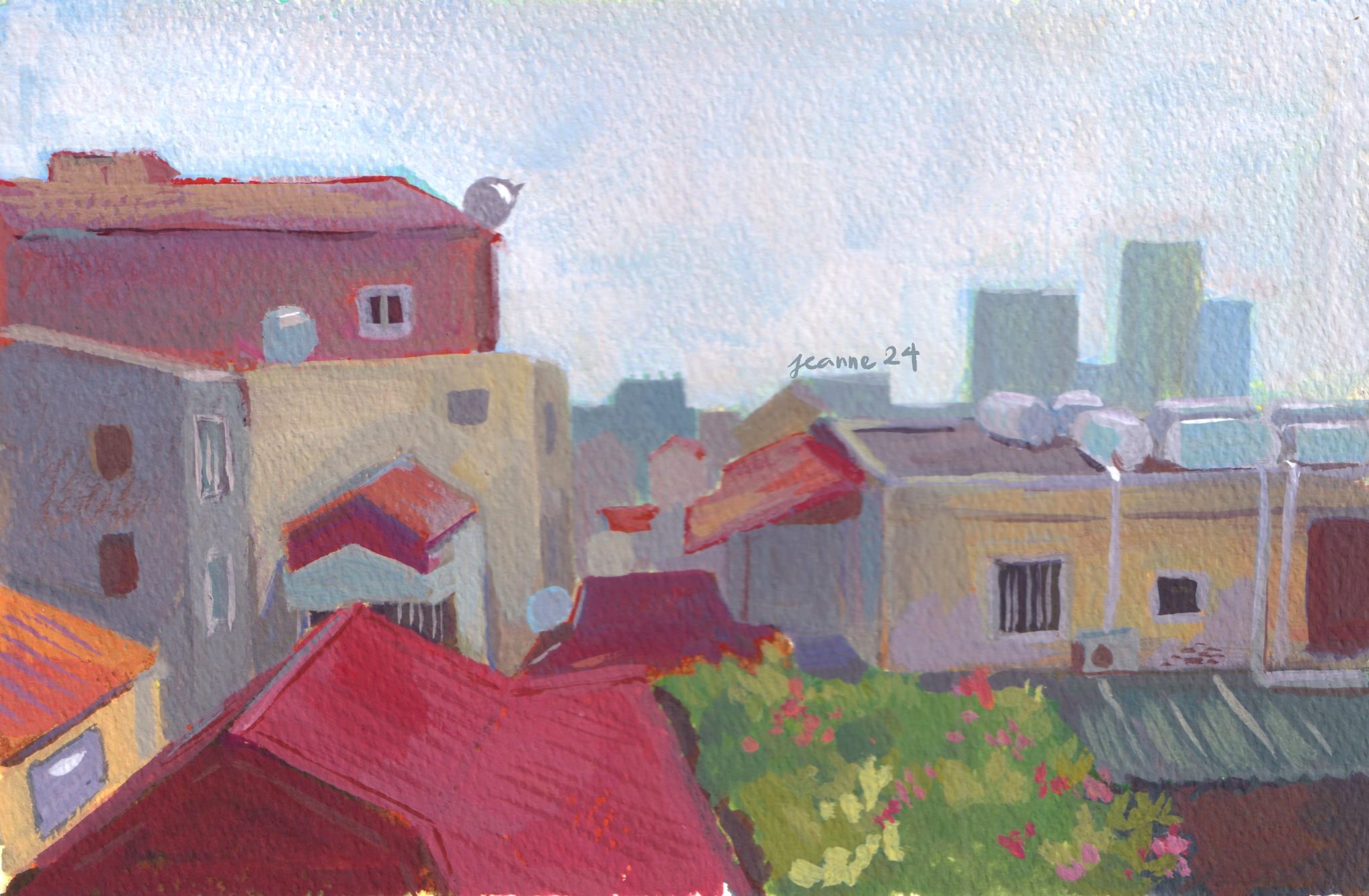
For watercolor, there’s a wide range of pans available, which allows me to create a personalized palette. With the help of adhesive putty, I can make my own compact watercolor box to carry around. My favorite brush is the waterbrush, as it has a reservoir for water built into the handle, making it super convenient. Travel brushes are also great, though I’ve found that investing in good-quality brushes and a durable case is more worthwhile in the long run.
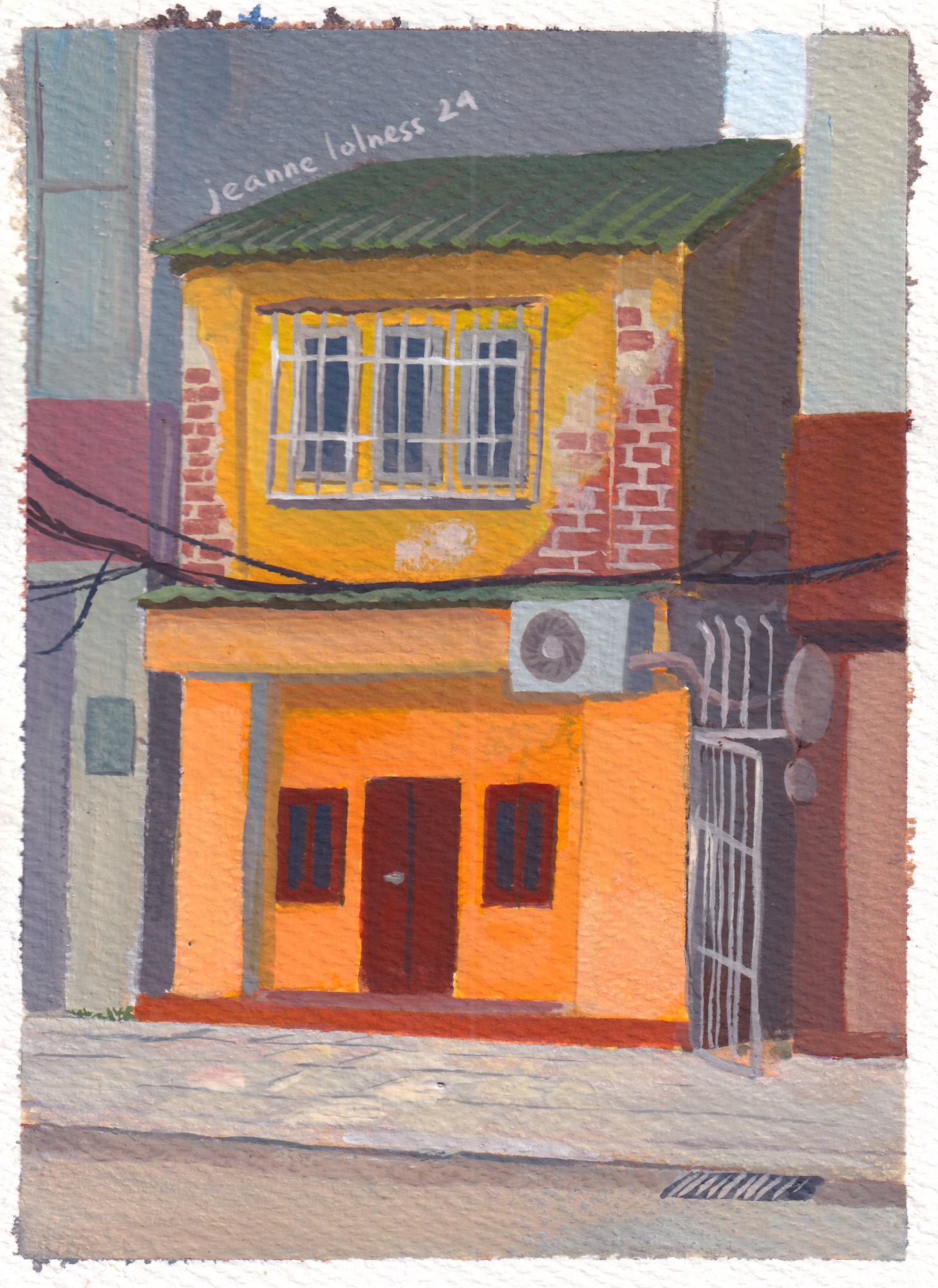
Hanoi’s streets stand out from other cities due to the rich history shaped by major influences from nations such as China, France, and the US. Tourist areas often showcase French architecture, which can be explored further in my blog about Hanoi, including detailed sketches of house facades.
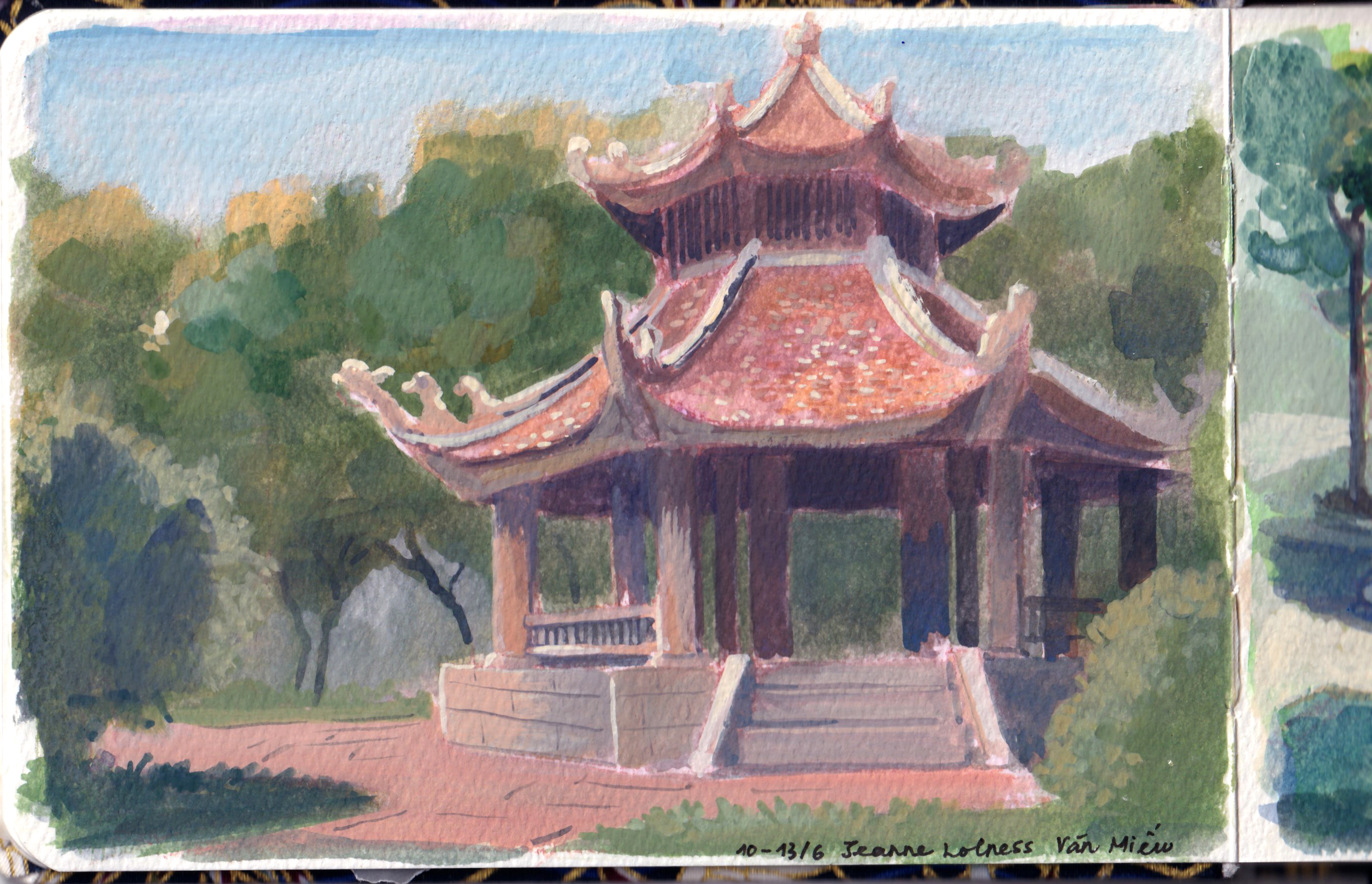
Before the French Revolution, the architecture in Northern Vietnam was deeply influenced by Chinese culture. Buildings often featured intricate decorations, from the roof to the walls, with wooden, symmetric designs. This style can still be seen today in temples and other historical structures.
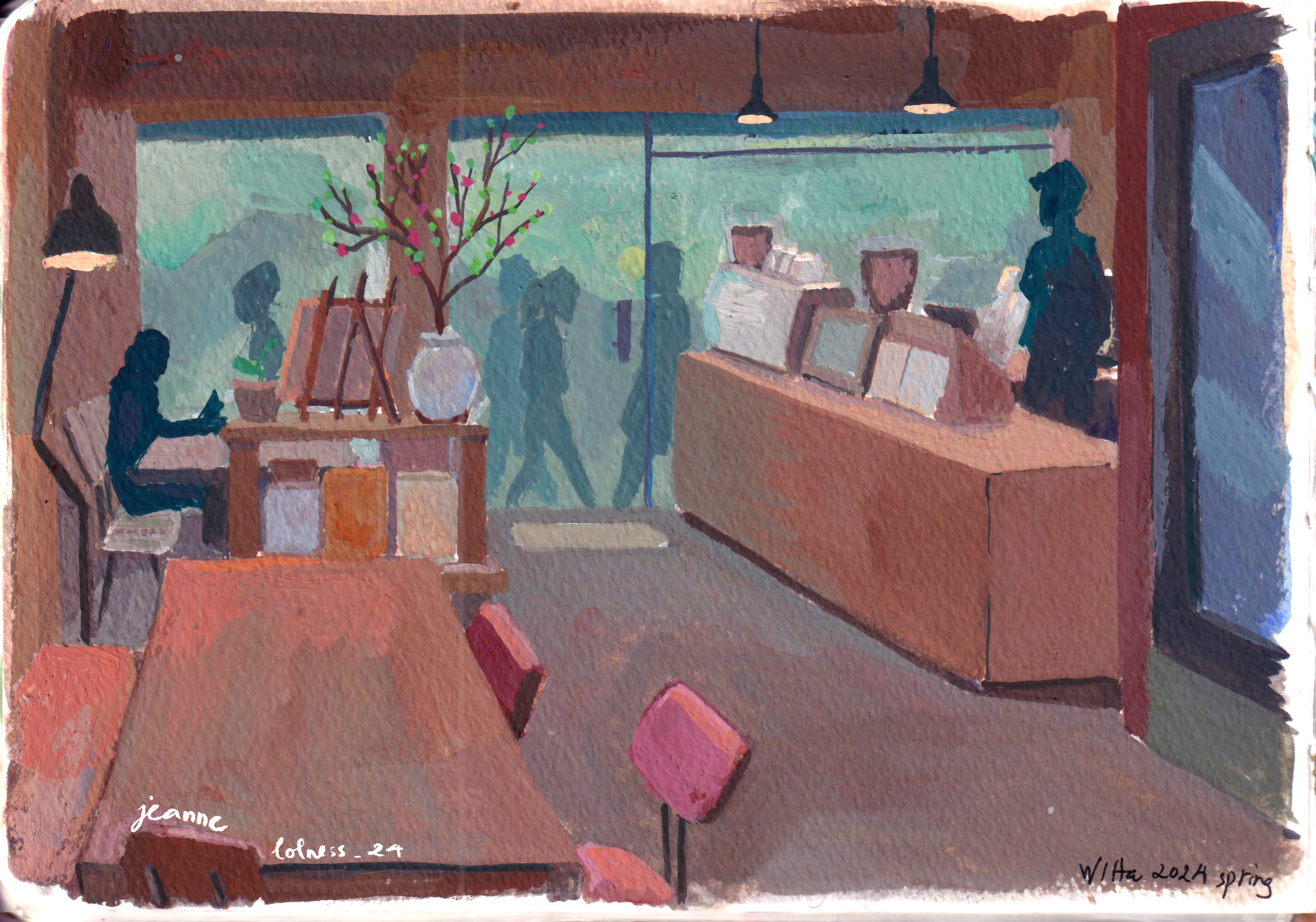
Hanoi’s vibrant coffee culture also provides ample opportunities for me to do studies. Many coffee shops are renovated from traditional architecture, while others embrace modern styles with clean lines and ambient lighting. Coffee shops in Hanoi serve as a melting pot for conversations, offering a perfect setting to observe and study people in real life.
To sum up
In wrapping up my journey of urban sketching in Hanoi, I’ve realized how much this experience has enriched my view of the city. Sketching outdoors has helped me capture the lively streets, stunning architecture, and everyday moments that often go unnoticed.
I encourage others to grab a sketchbook and explore their own surroundings. There are so many stories and details in our daily lives waiting to be captured. Each sketch not only reflects a scene but also our personal growth as artists. So, let’s keep sketching, observing, and enjoying the world around us!
Discover more from Jeanne Lolness
Subscribe to get the latest posts sent to your email.

 Jeanne Lolness