The very first big project – the one that launches my freelance career

I received the request for this project when I was so confused about what direction to go with my life. I was already working on some small commissions, but things was going nowhere.

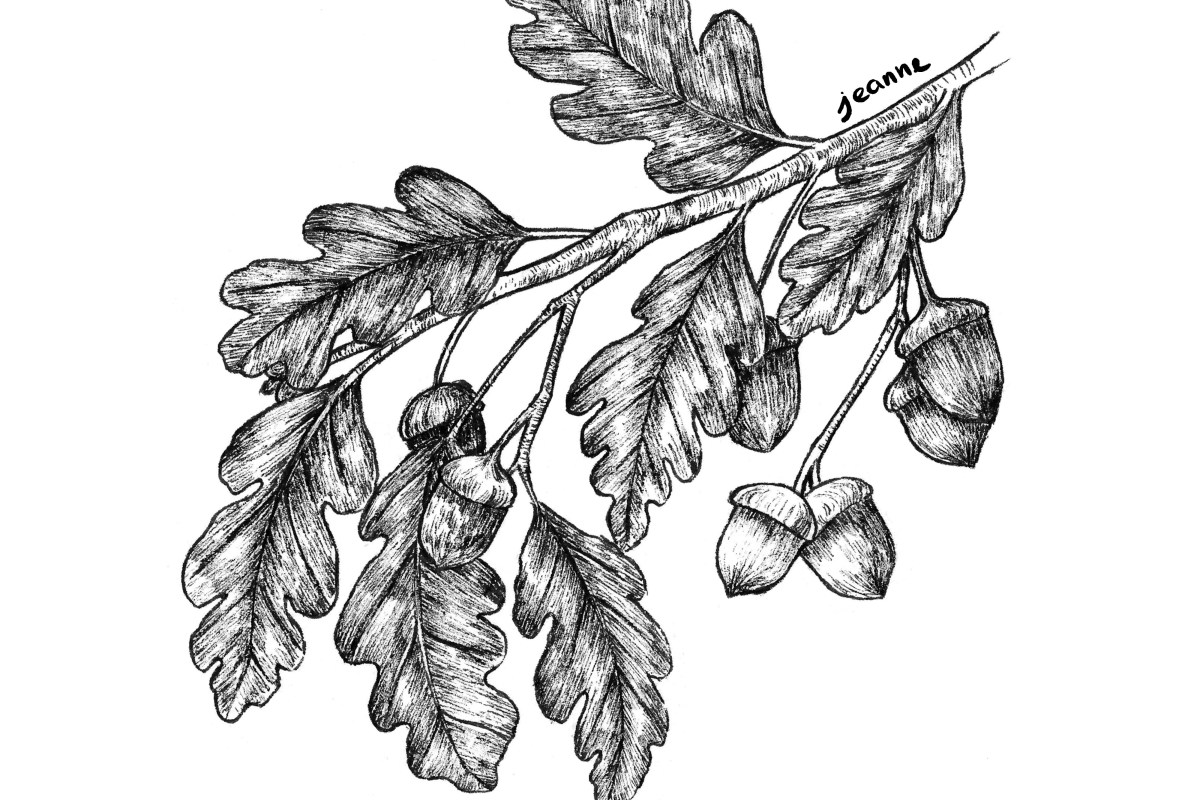
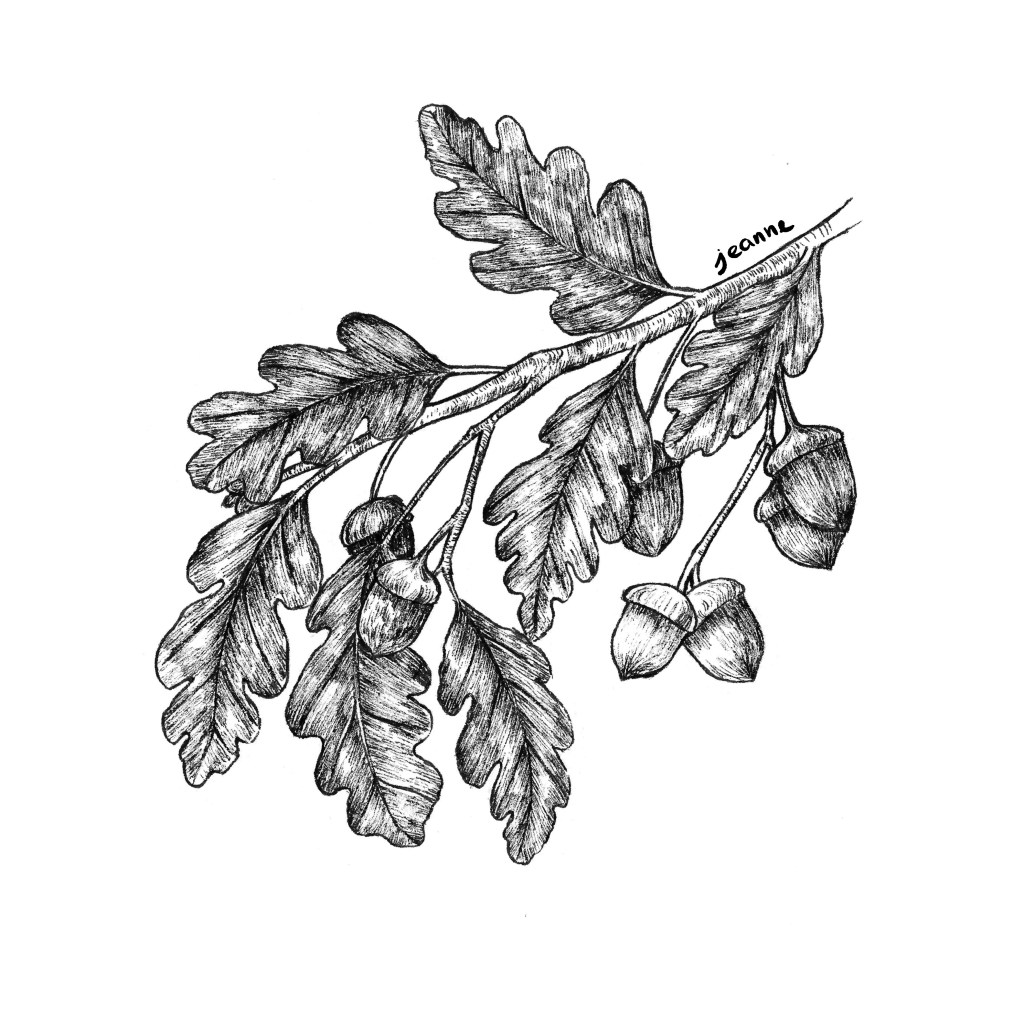
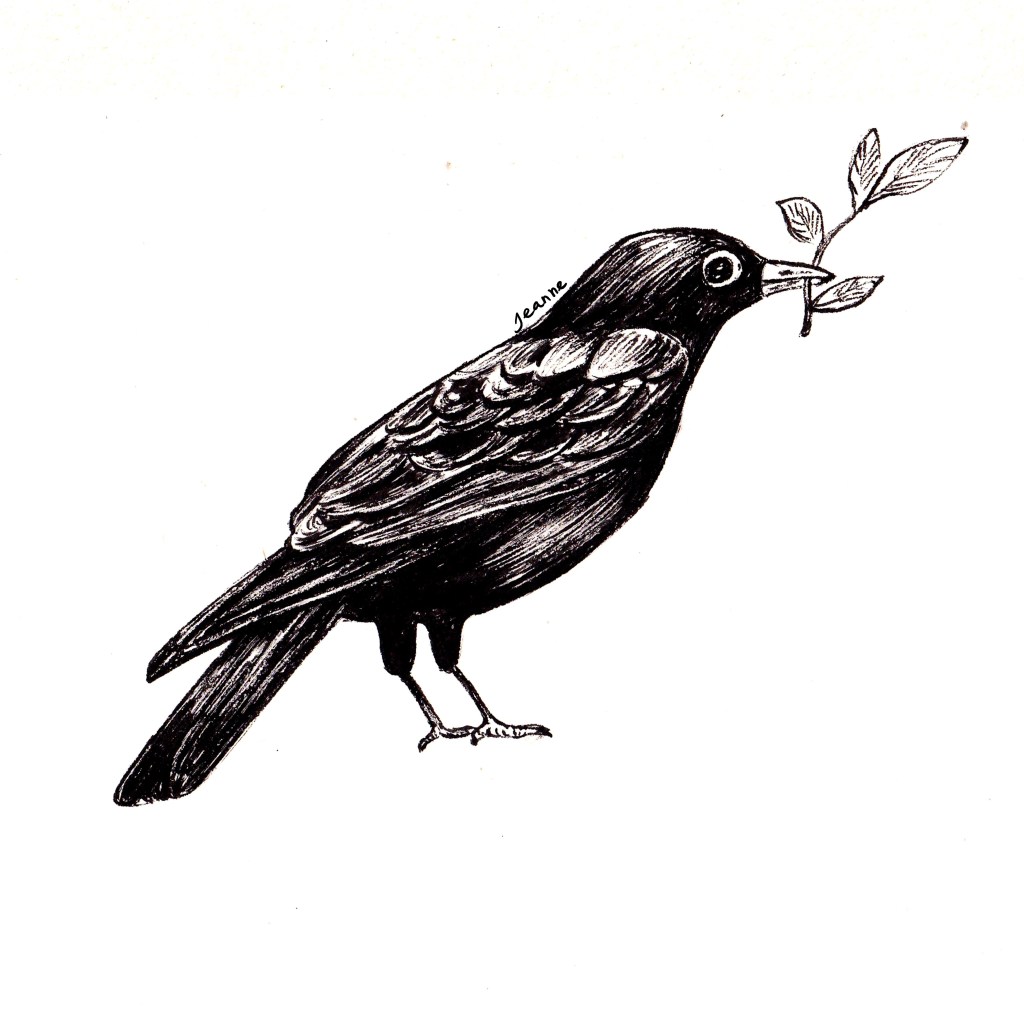
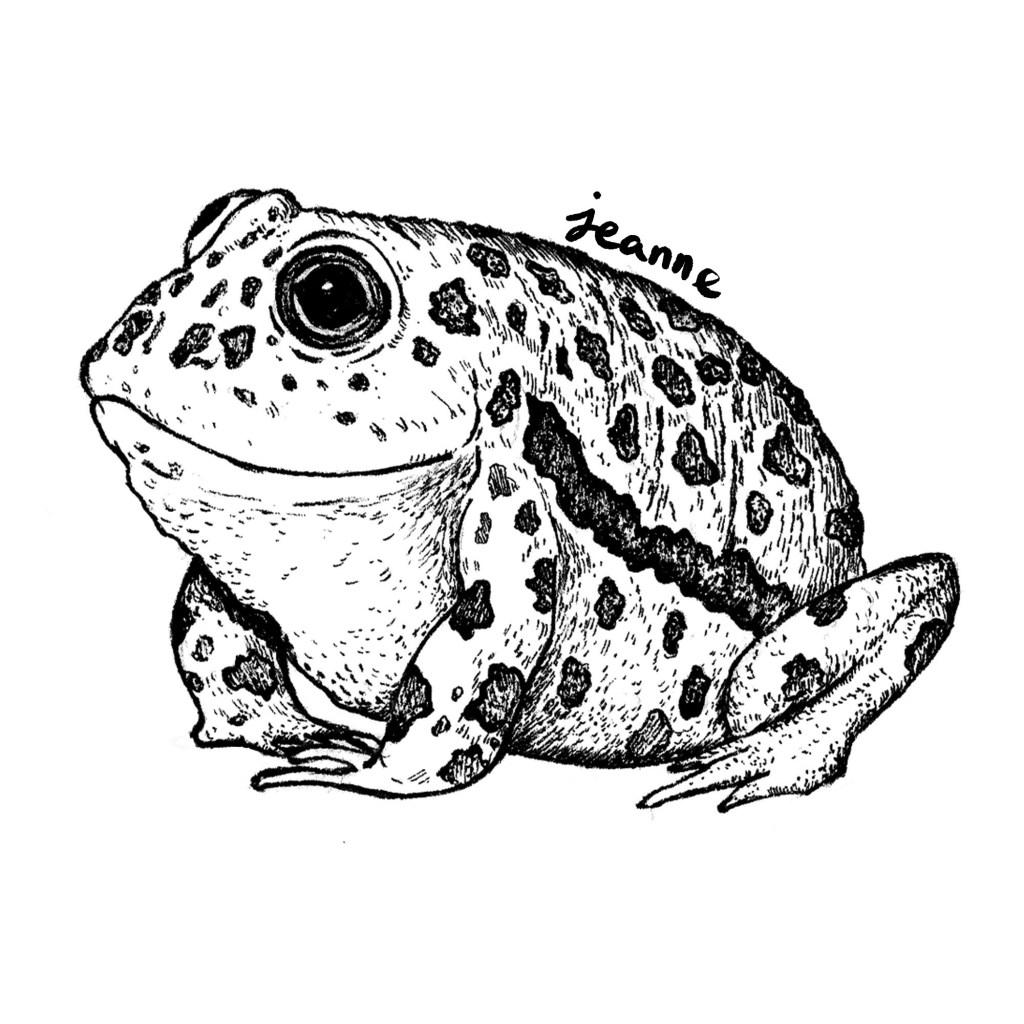
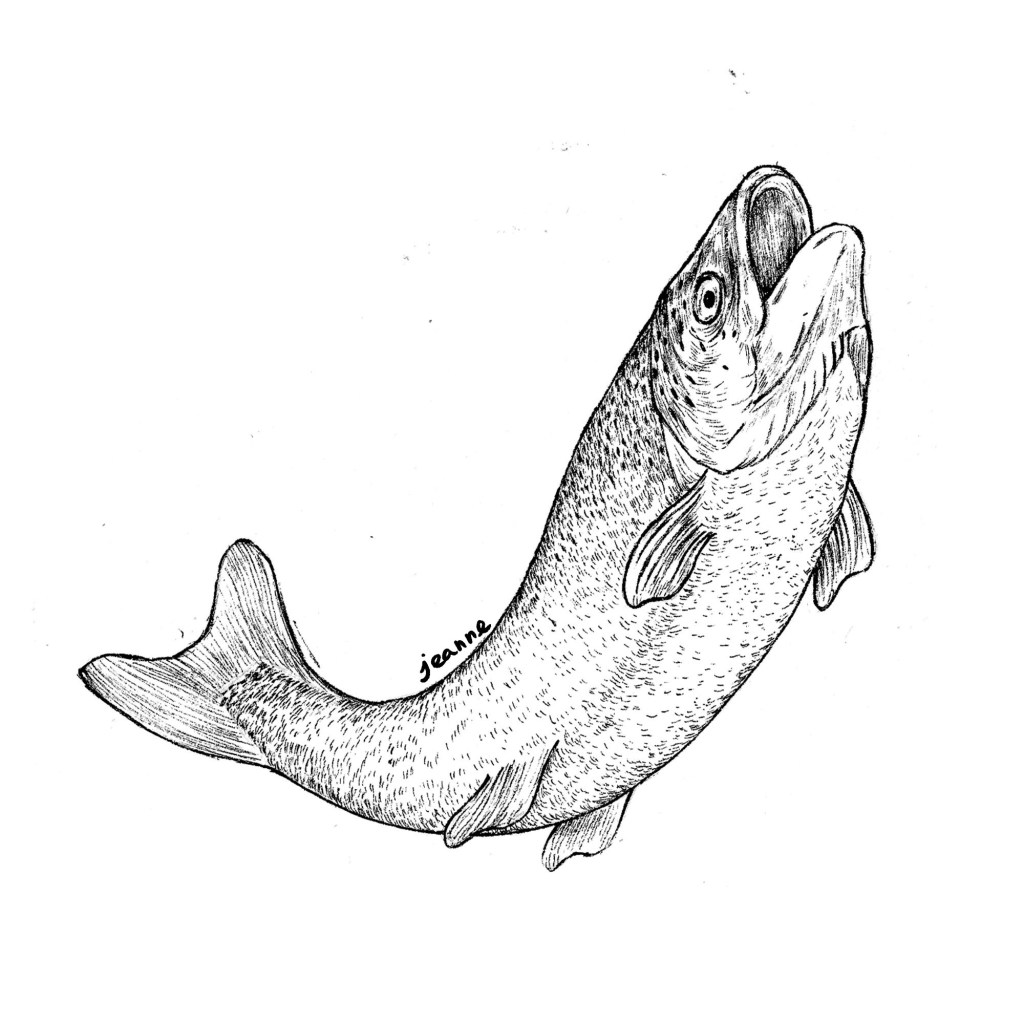
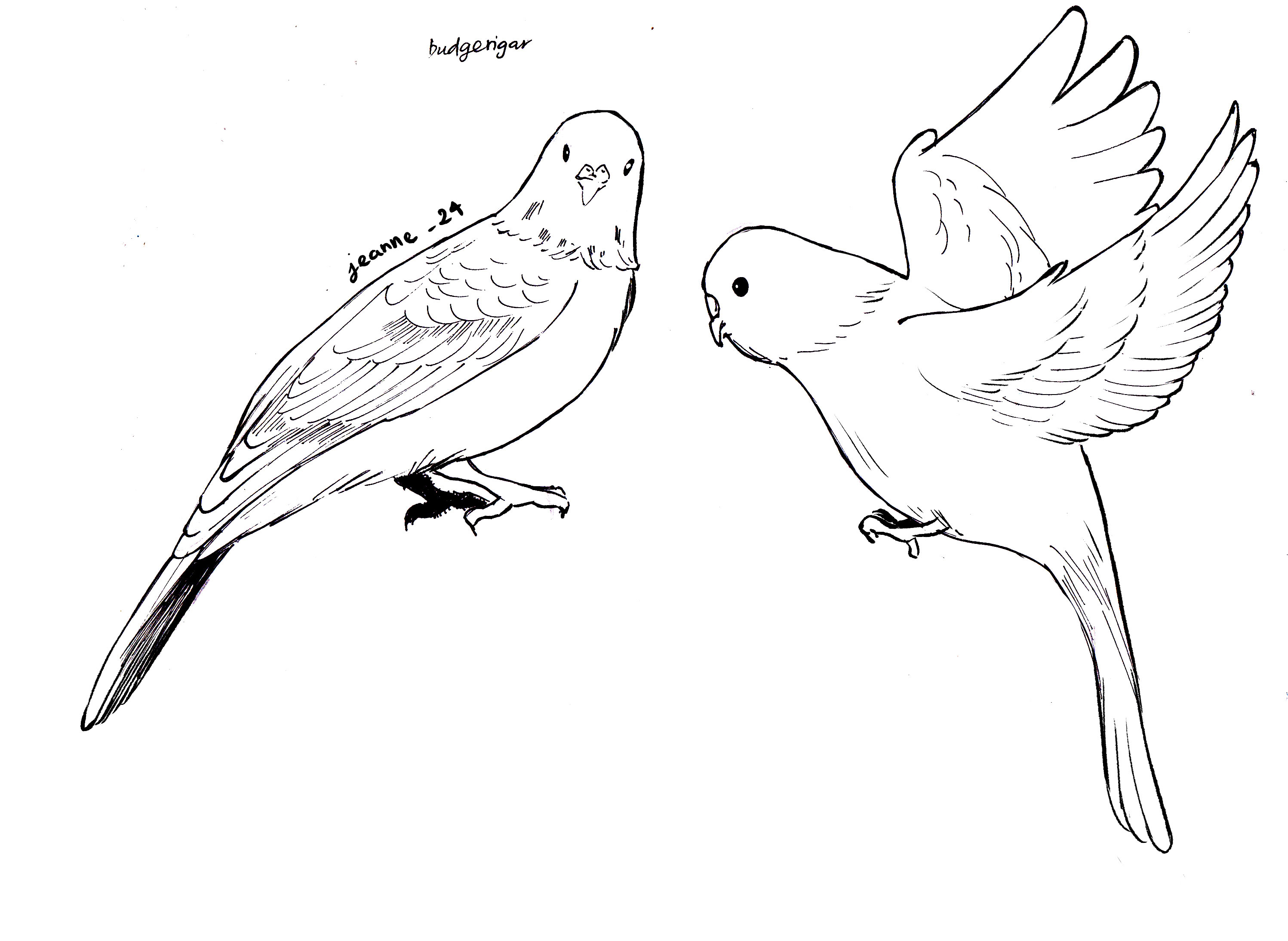
For this project, I actually offer to do the first sketch for free since I wasn’t sure about myself on how to draw the whole series. The author was asking for a series of detailed ink drawings for leaves and animals. I’m still amazed now by how much trust the author had in me and how smooth things went.

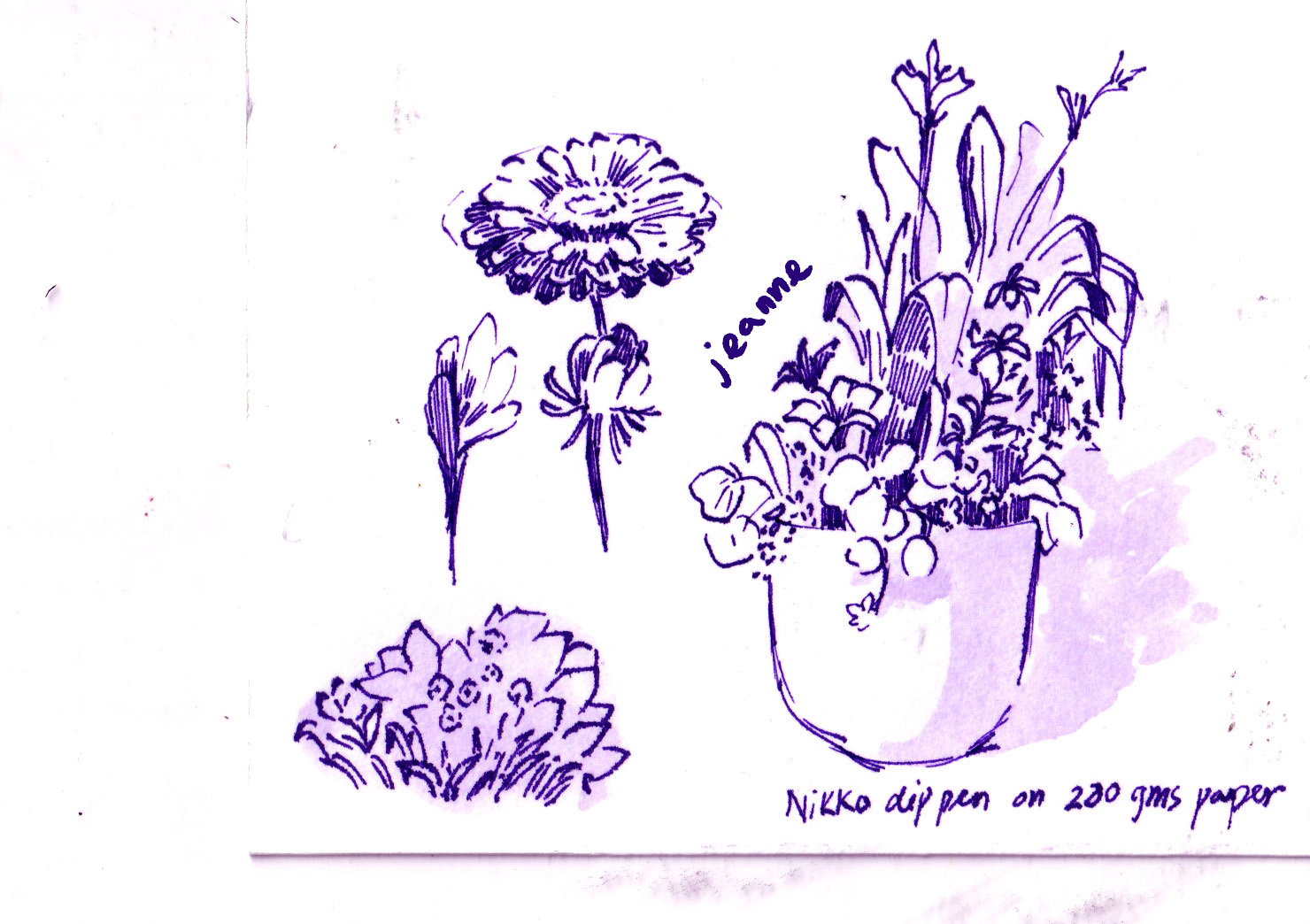
I based many details on botanical illustrations from old books, which I dug up from Internet Archives. I do use photos from Google and other stocks sites, yet they tend to be not as useful. What I look for is an image showing the full branch or plant in clear lighting, and online images tend to be either close-up shots of just the flowers or have a strong contrast.

This project consists of about 30 ink illustrations for 30 poems about nature. It came like a magic touch, and kept me afloat for a whole three months to be able to receive more commission request.

I don’t do much these ink commissions anymore, since I’m working more with colors and full scene illustrations. I still look back this project dearly, since the payment helped supported me in those early days and I had a collection of animal and botanical illustrations in my portfolio.

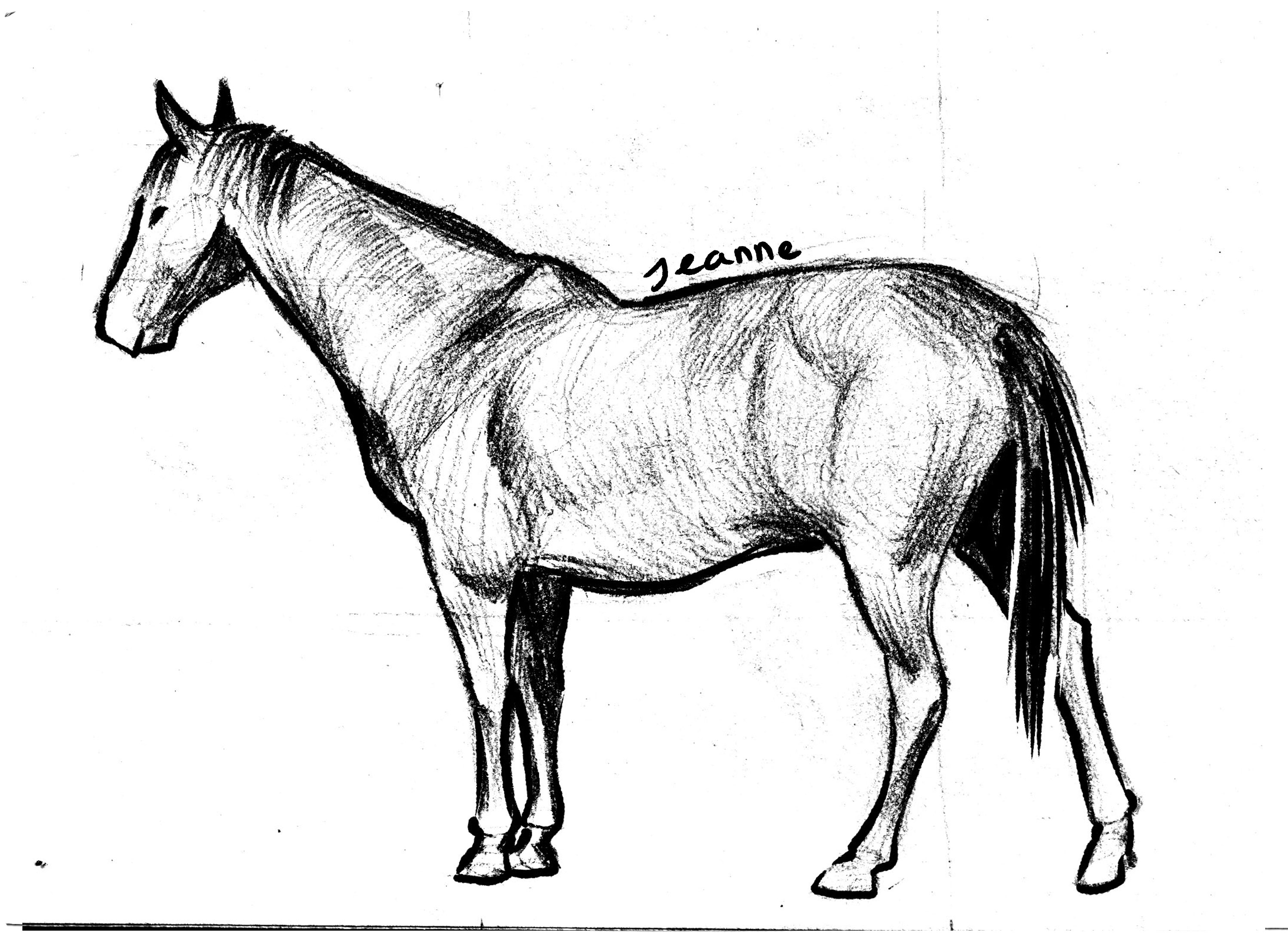
Yet, birds, animals and plants are still my favorite topics to sketch with ink particularly, I have loosened my grip more, creating an impression rather than detailed inking. I have been taken up with studying animal anatomy carefully to be correct – a small anatomical mistake can make the whole drawing look off!

Hanoi houses and streets in my sketchbook

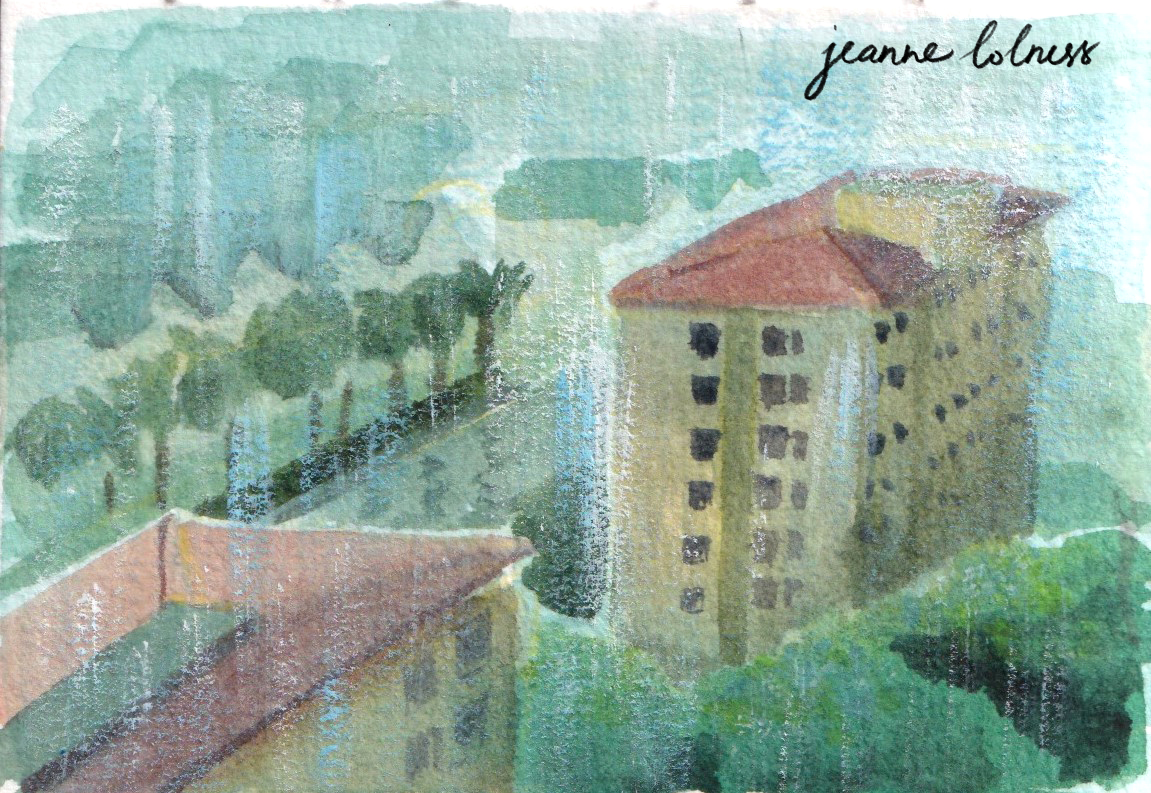
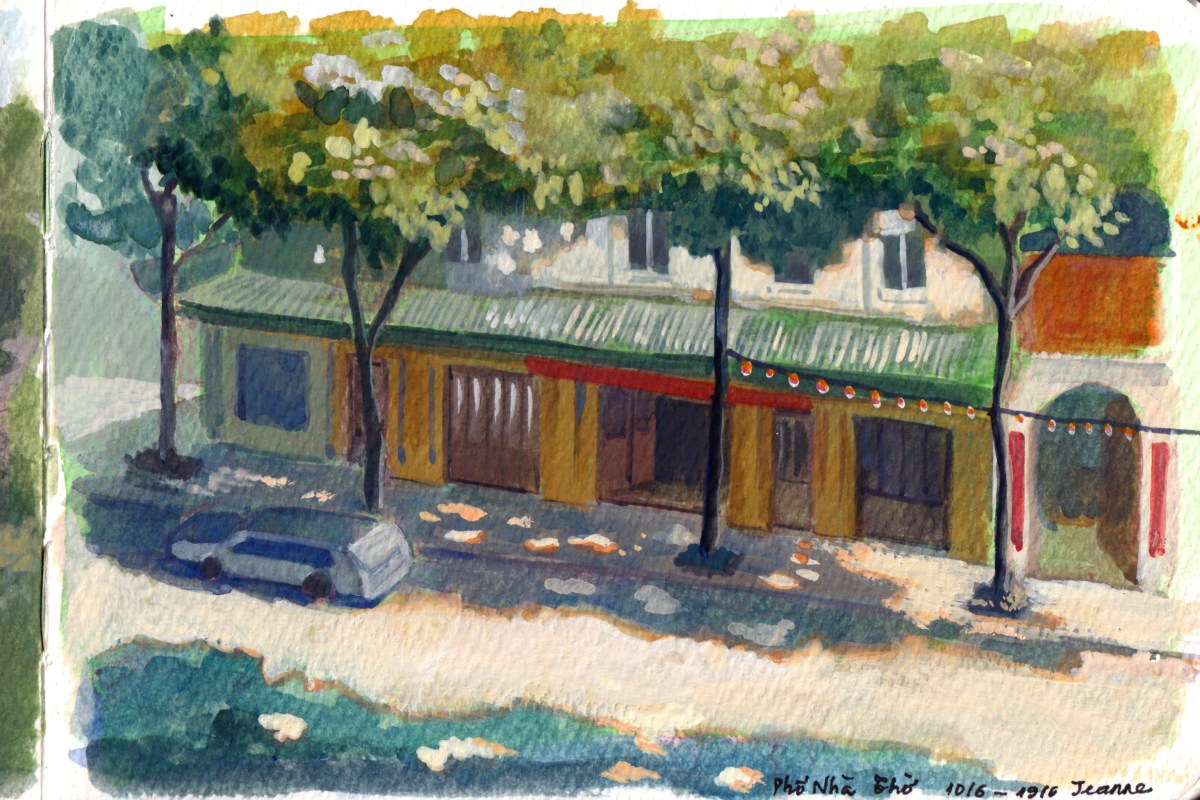
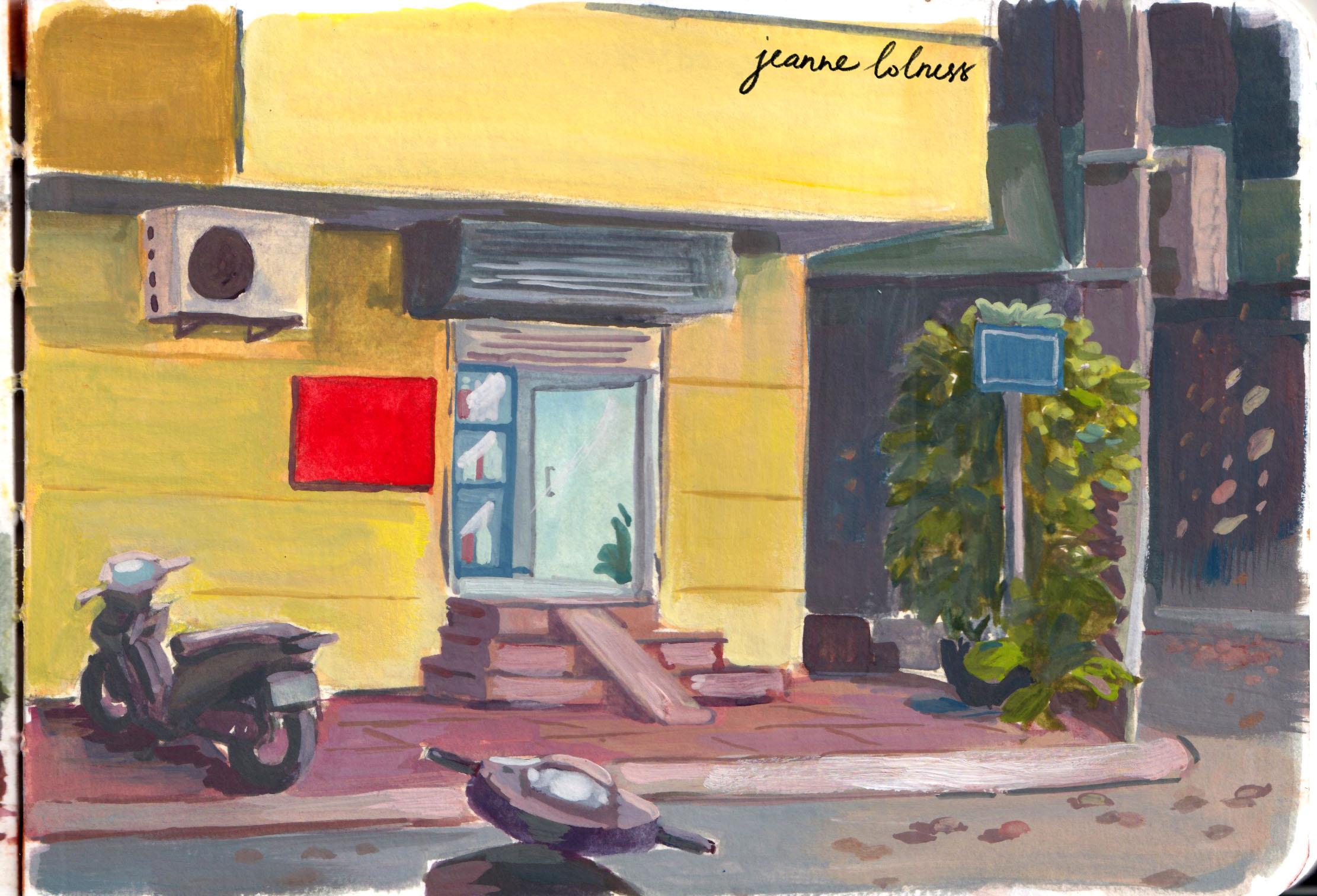
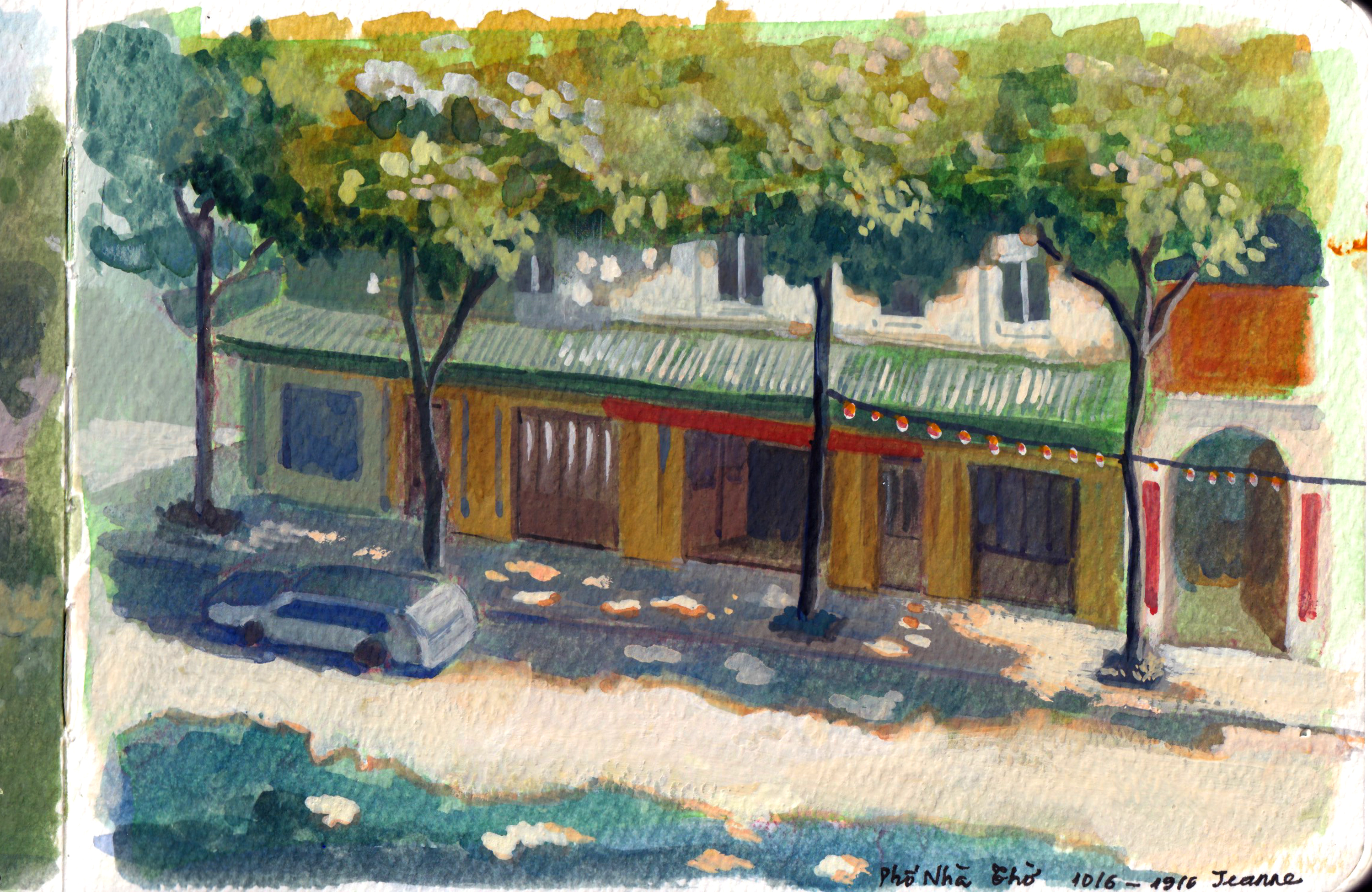
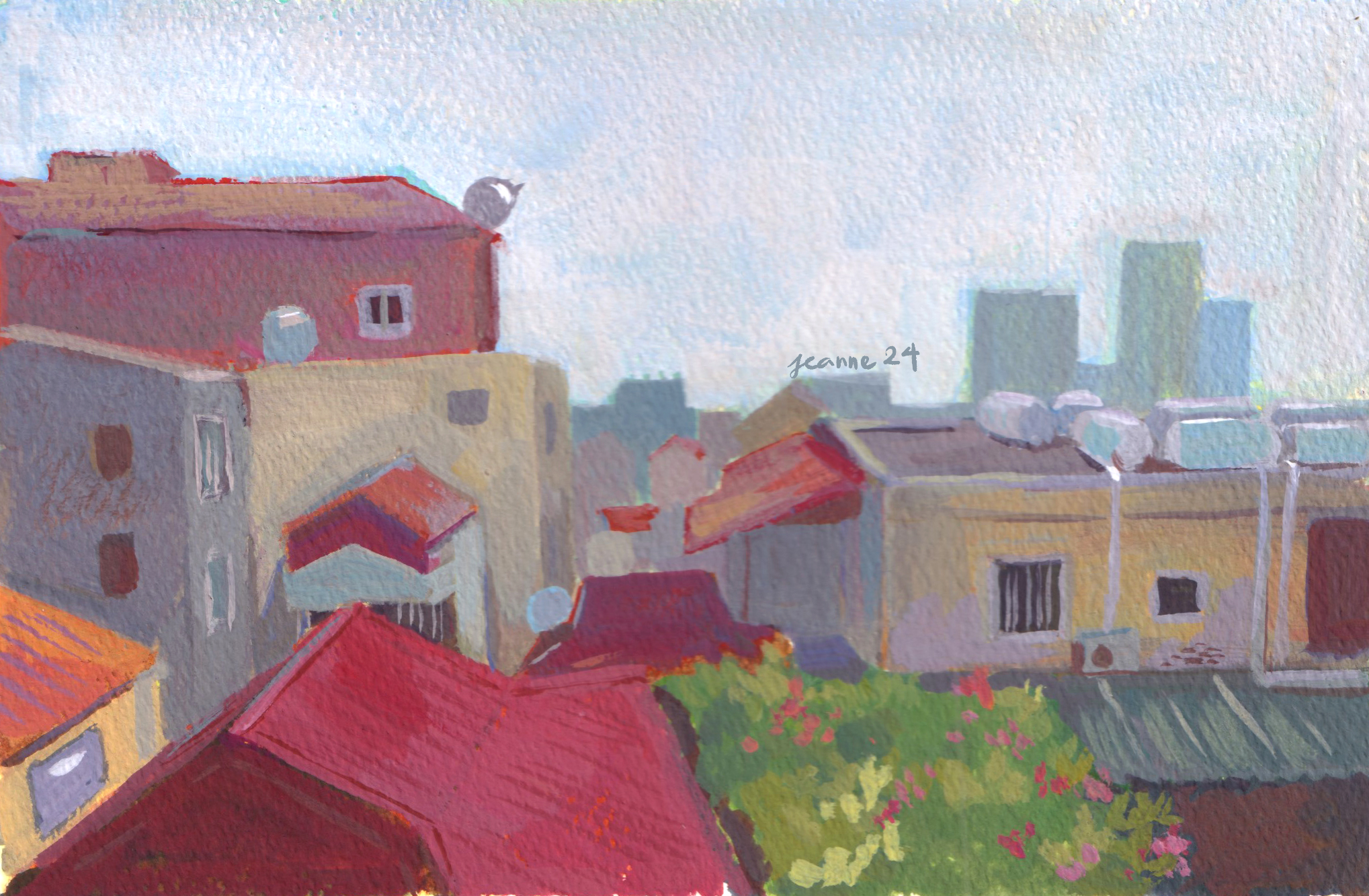
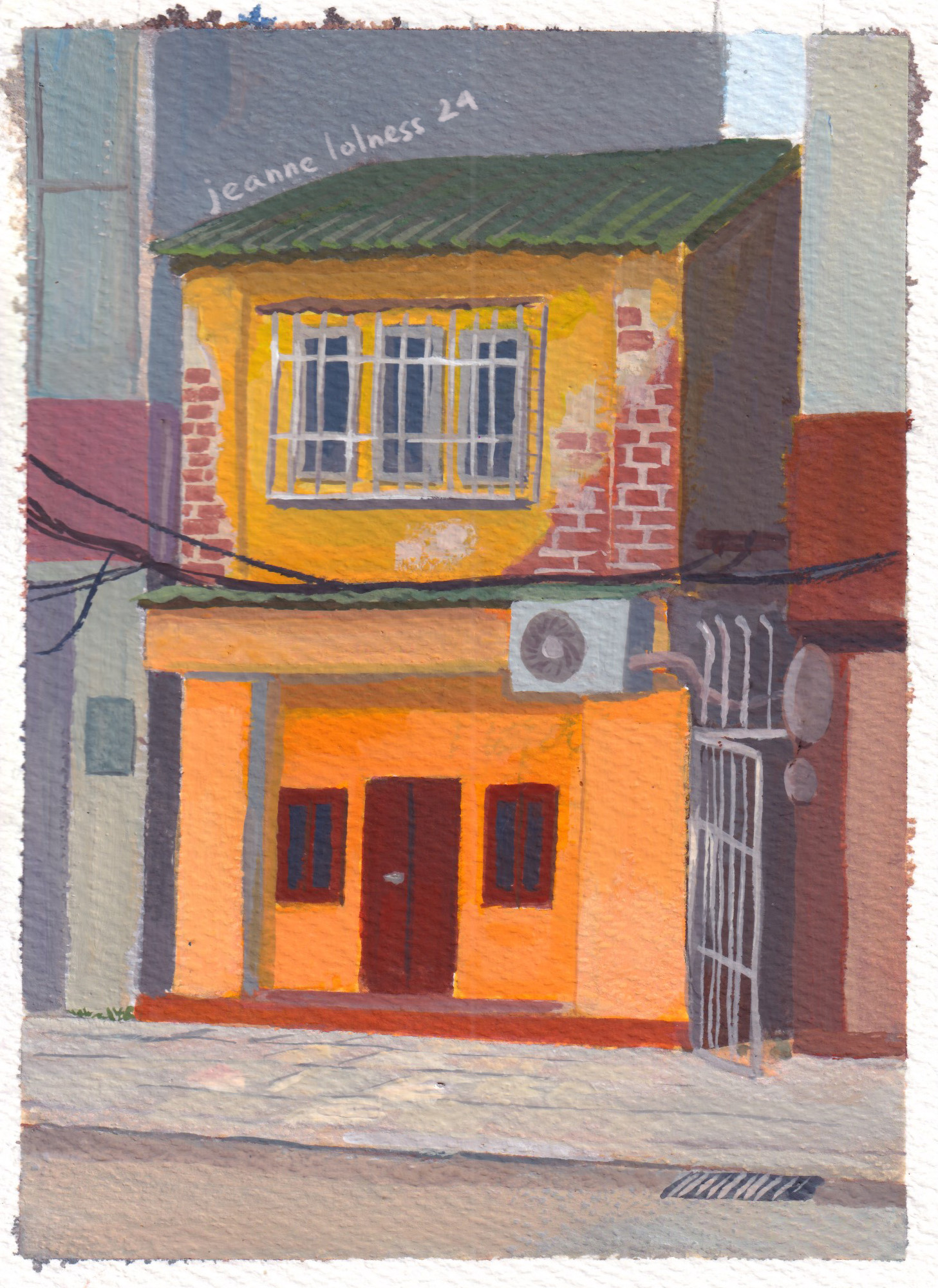
I spent most of my life in Hanoi. When I was a kid living in my grandparent’s house, I was surrounded by copies of Bùi Xuân Phái, a Vietnamese artist famous for painting Hanoi houses in the 20th century. It was probably the first seed in my affection for this city.

A rainy street

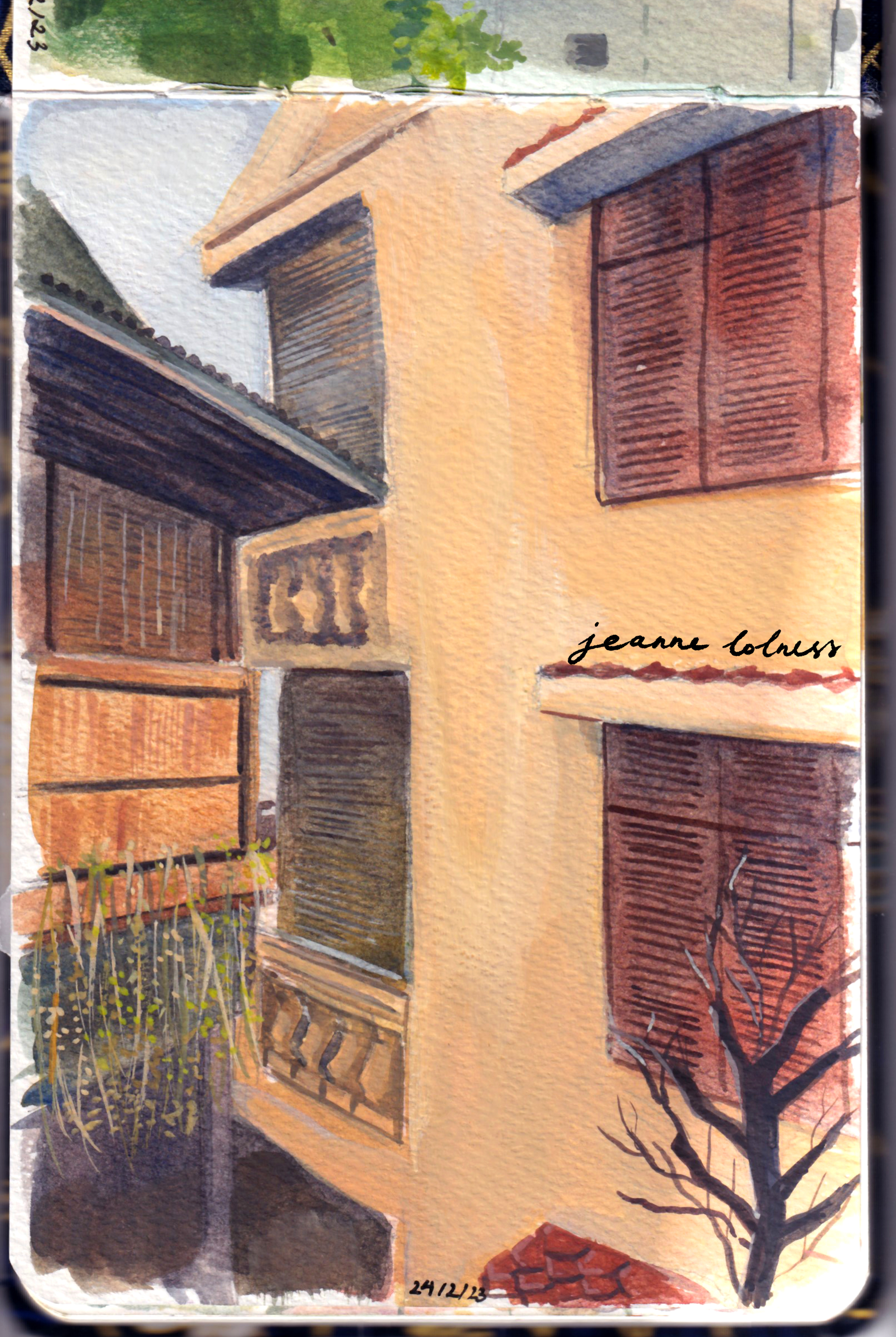
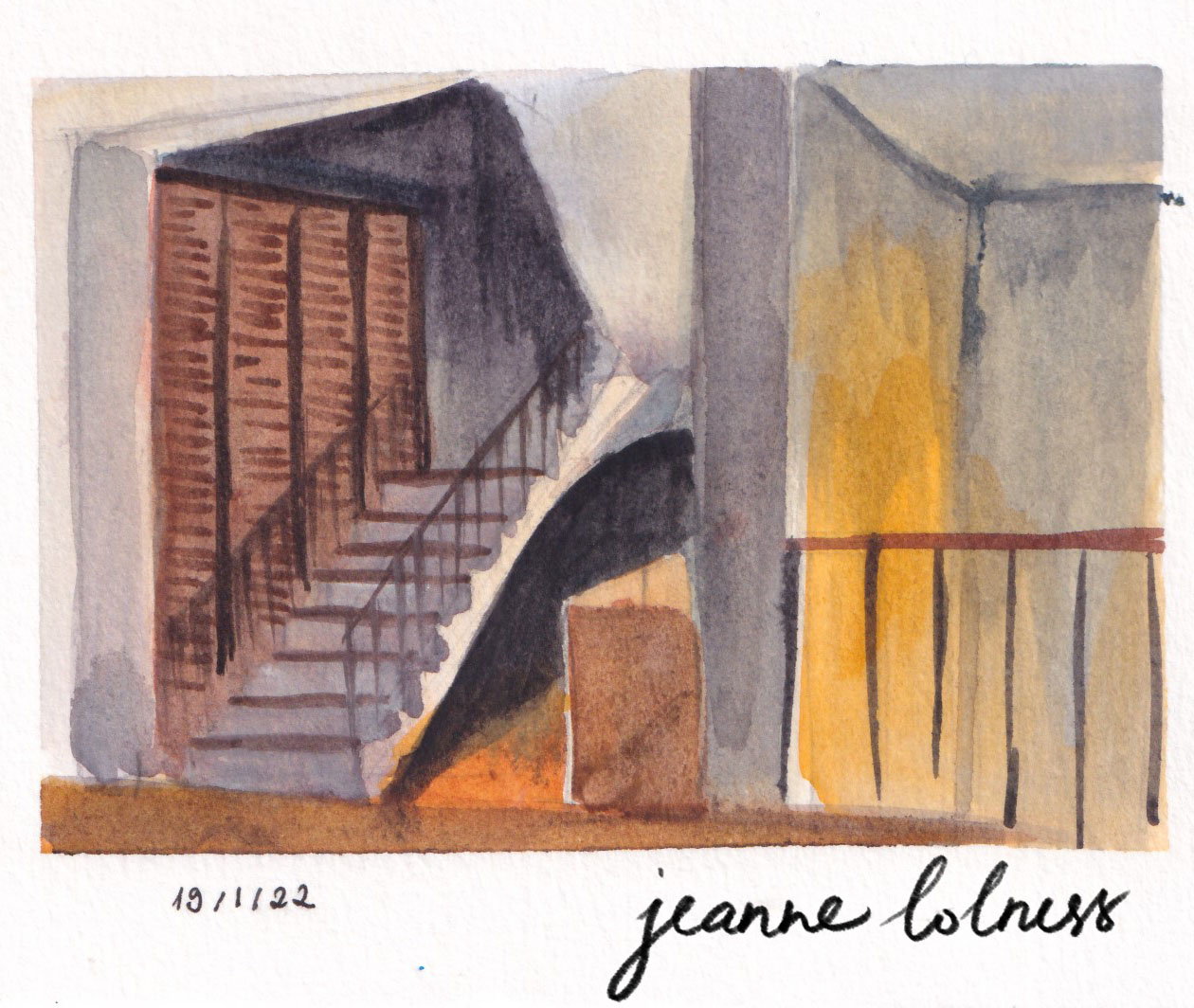
My affection goes to old houses, mostly those with cracks and weird innovations. They are the witnesses of Hanoi history and my own life. Now I live in a modern apartment with elevators, but I still remember running down the stairs full of plants pot, old furniture and and beehive coals.

Trang Tien Street
The street where I grew up
A silent corner in autumn
A street at noon

Many old houses in Hanoi are painted in yellow, which is a reminiscence of French colonization period. French often painted important buildings in yellow, and the reason is still unknown. It could have a symbolic meaning of an upper class, but yellow paint was also a cheap option at that time. Even after the war, there are still many houses and buildings painted in the similar yellow tones.

An old house covered in ivies
From my grandparent’s house window

I left my grandparent’s house when I was was ten. Many areas of the city are being upgraded with modern architecture, yet, the street where I grew up remained almost the same. I don’t know how long they will stay the same, but I’m grateful for that.

Luckily, even though old houses are being pulled down due to safety reasons, Hanoians don’t have less love for our history of architecture. There are cafes being built resembling houses from the last century, furniture being kept from generation to generation, exhibition showcasing how and why these houses were built and loved and artists incorporating elements from childhood into artworks.

If you ever come to visit Vietnam, let’s stop for a second to watch these small houses stacking next to each other on the streets. It’s possible that many generations have lived in these houses and new hopes are being created despite two wars, economic downturns and most recently, an international disease.

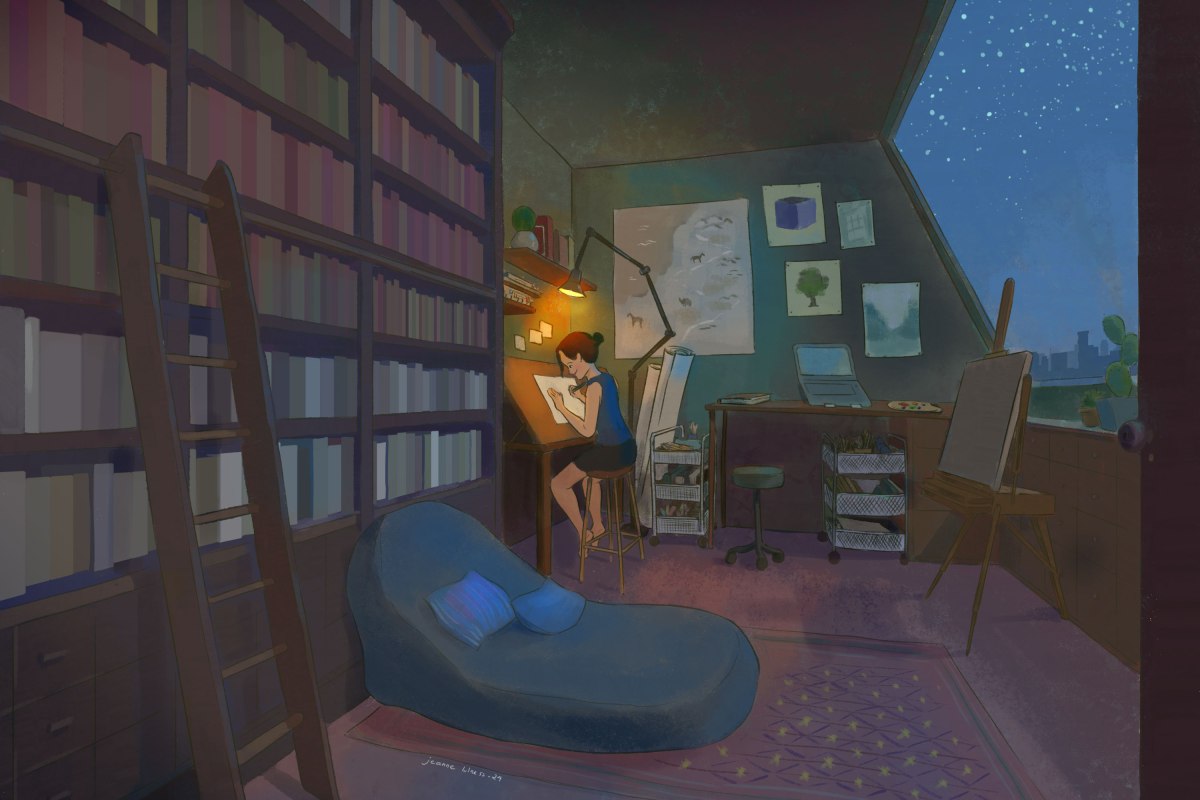
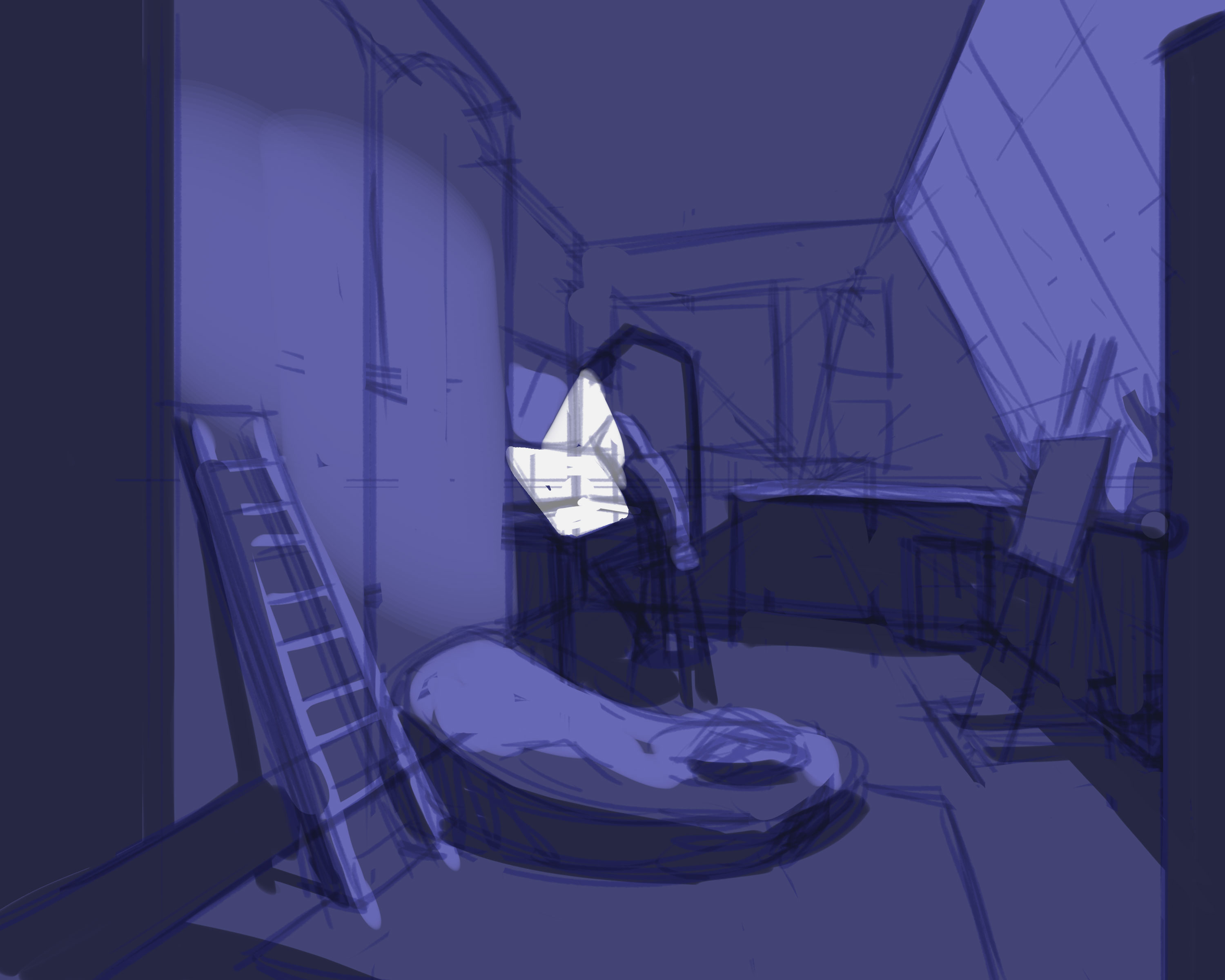
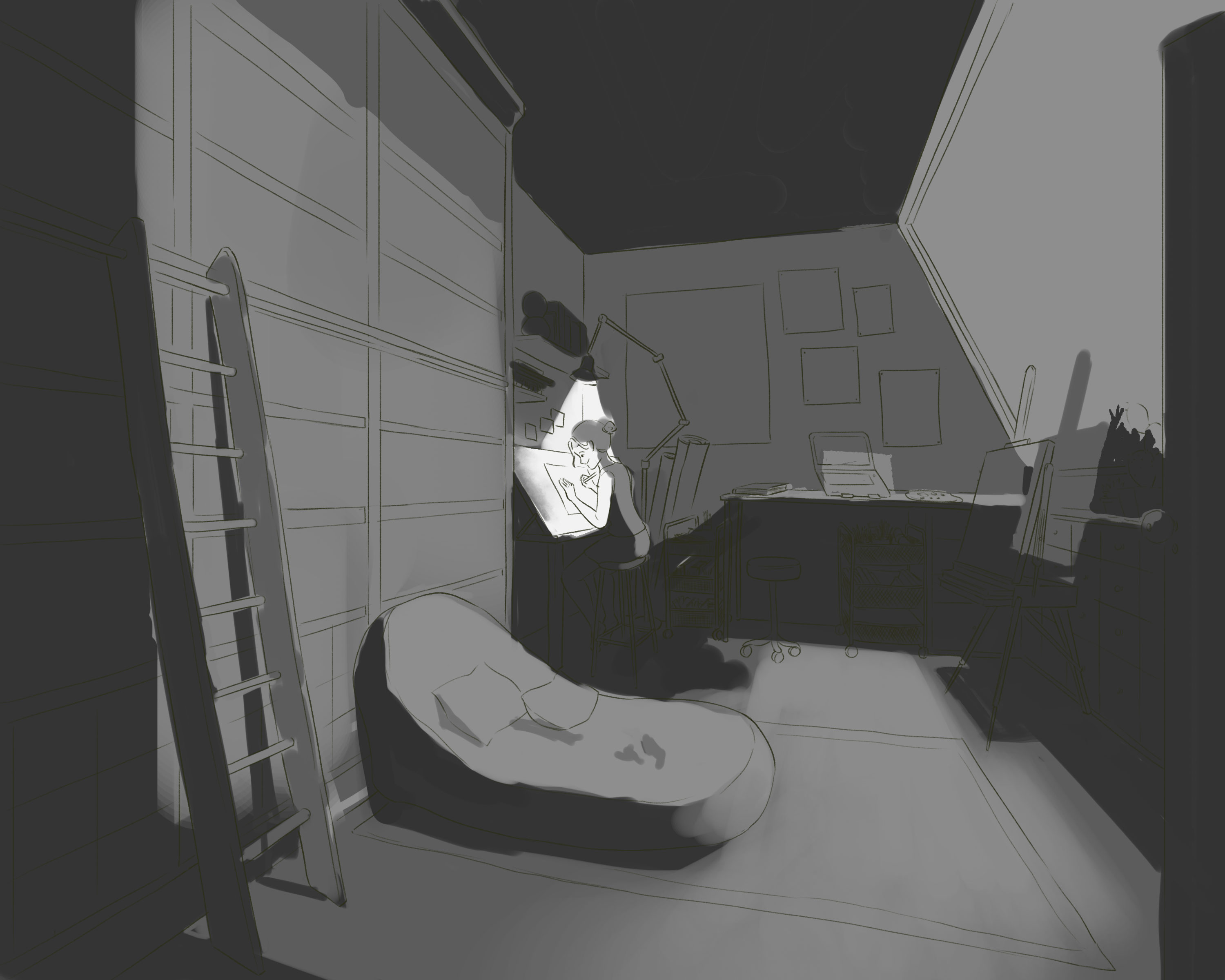
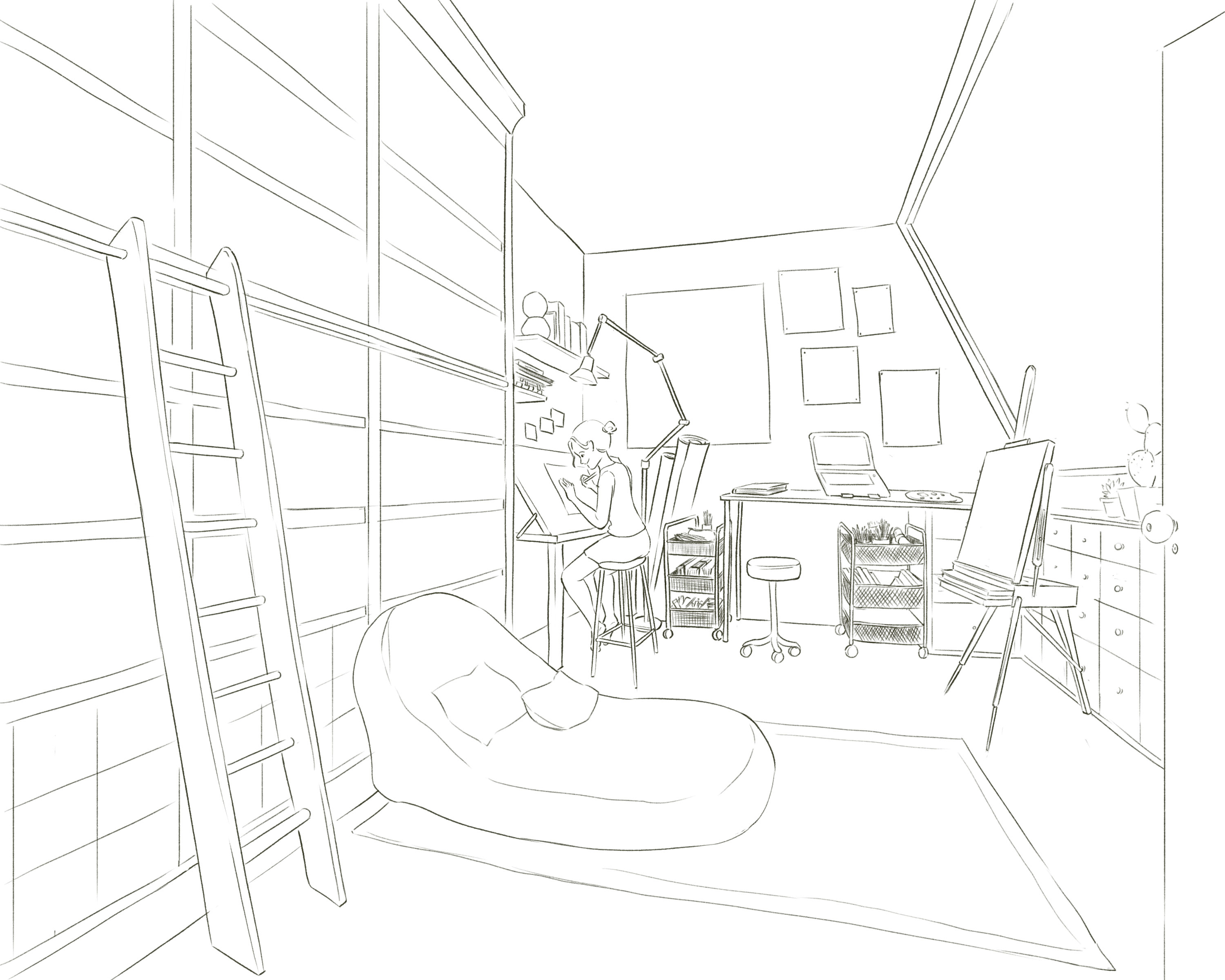
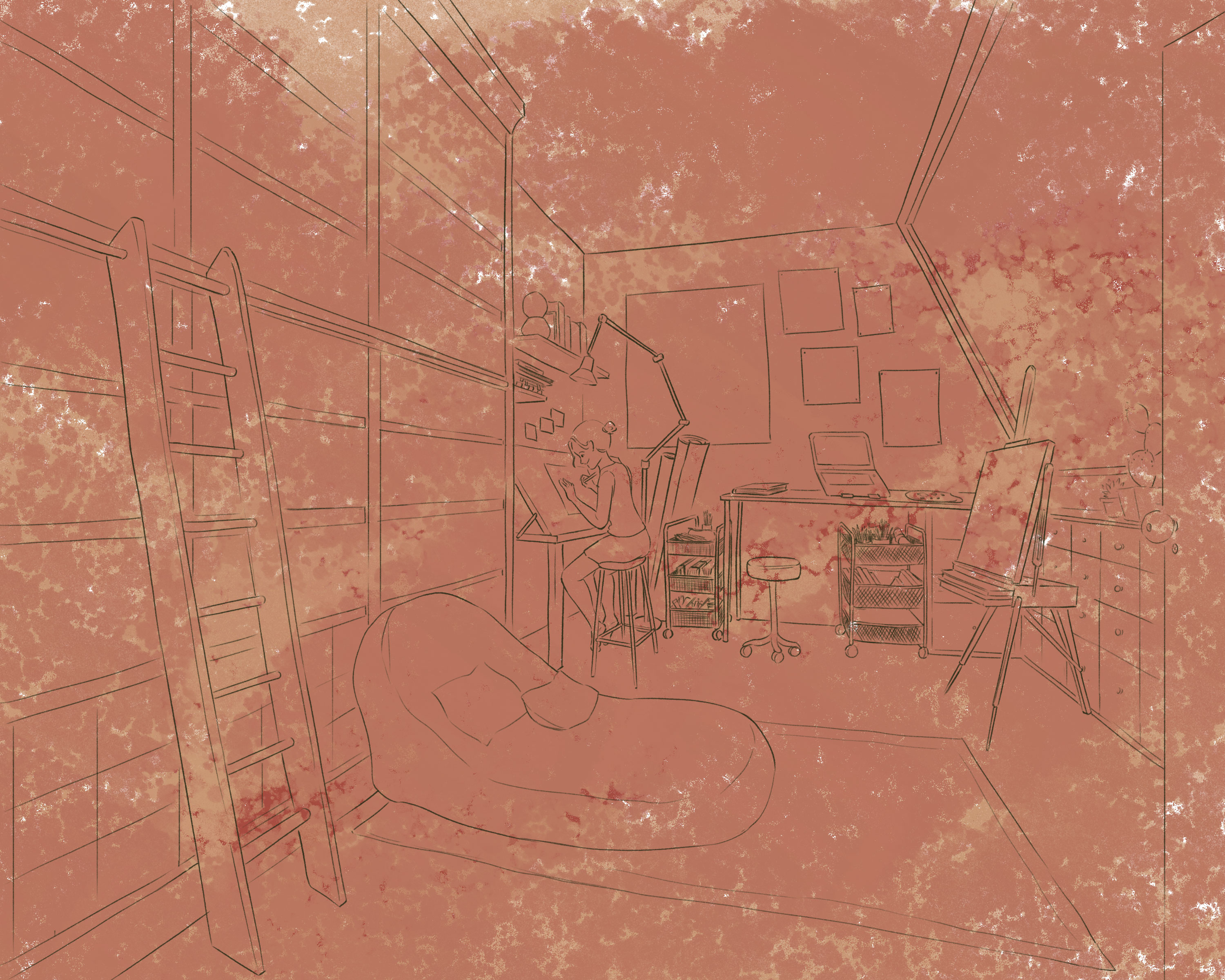
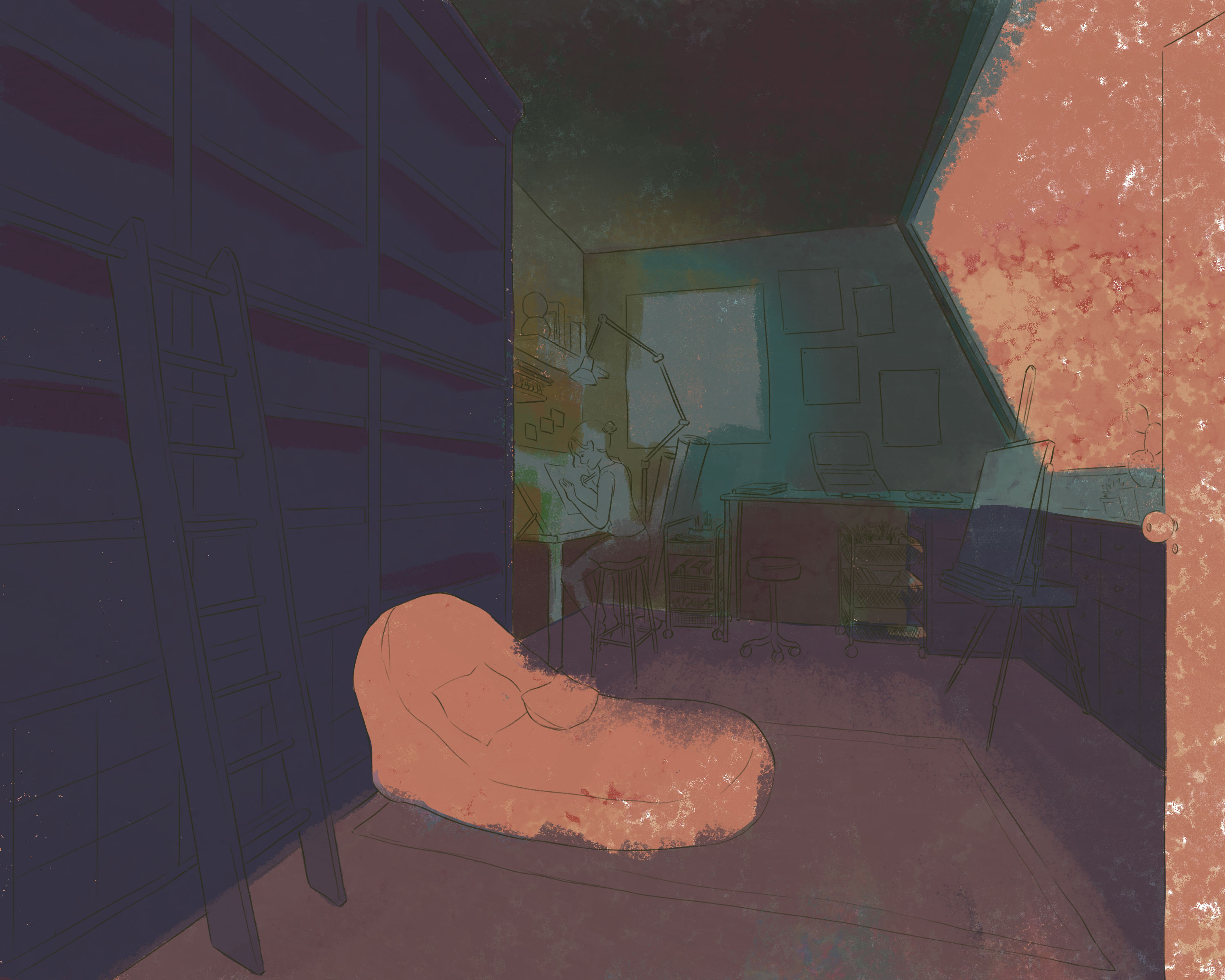
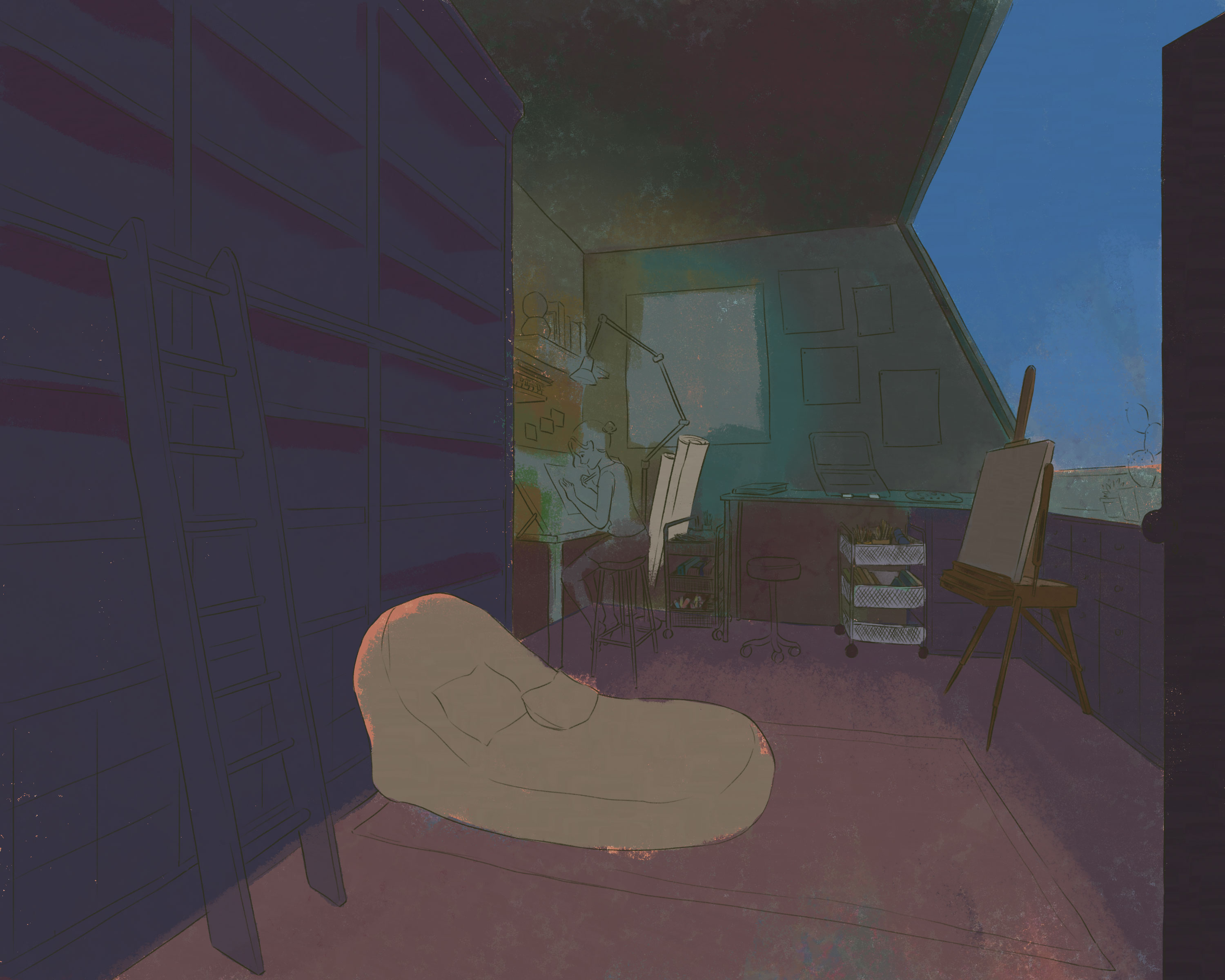
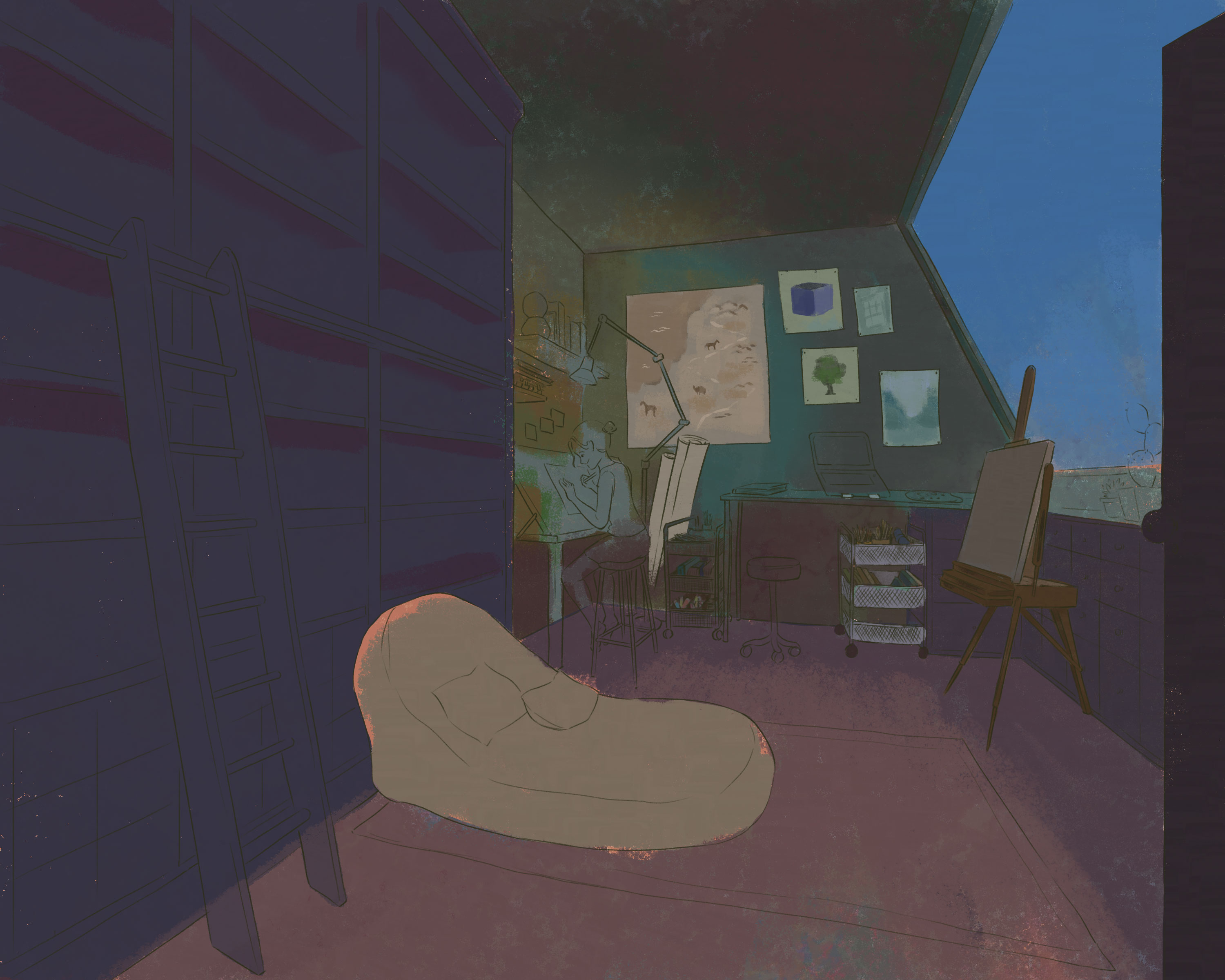
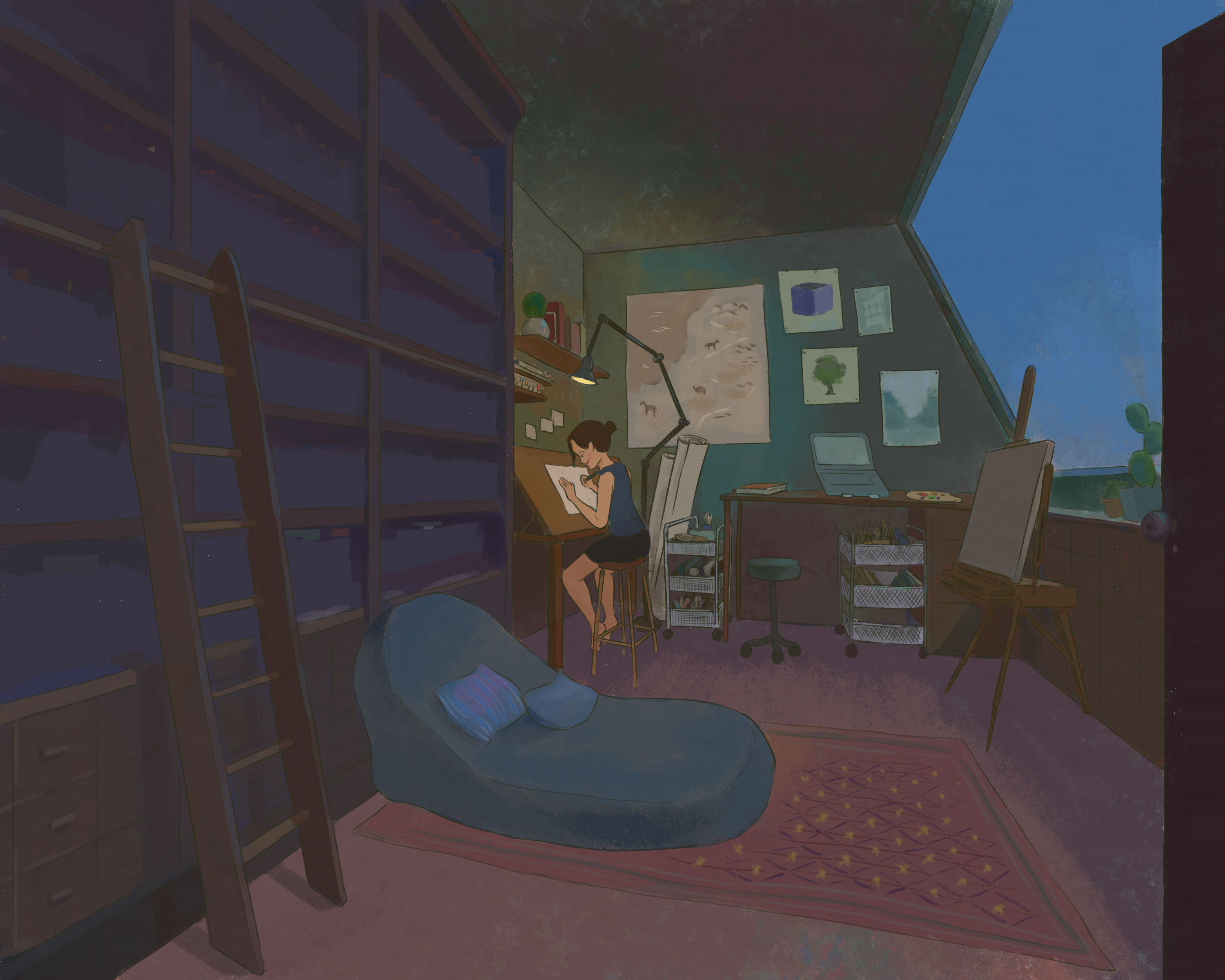
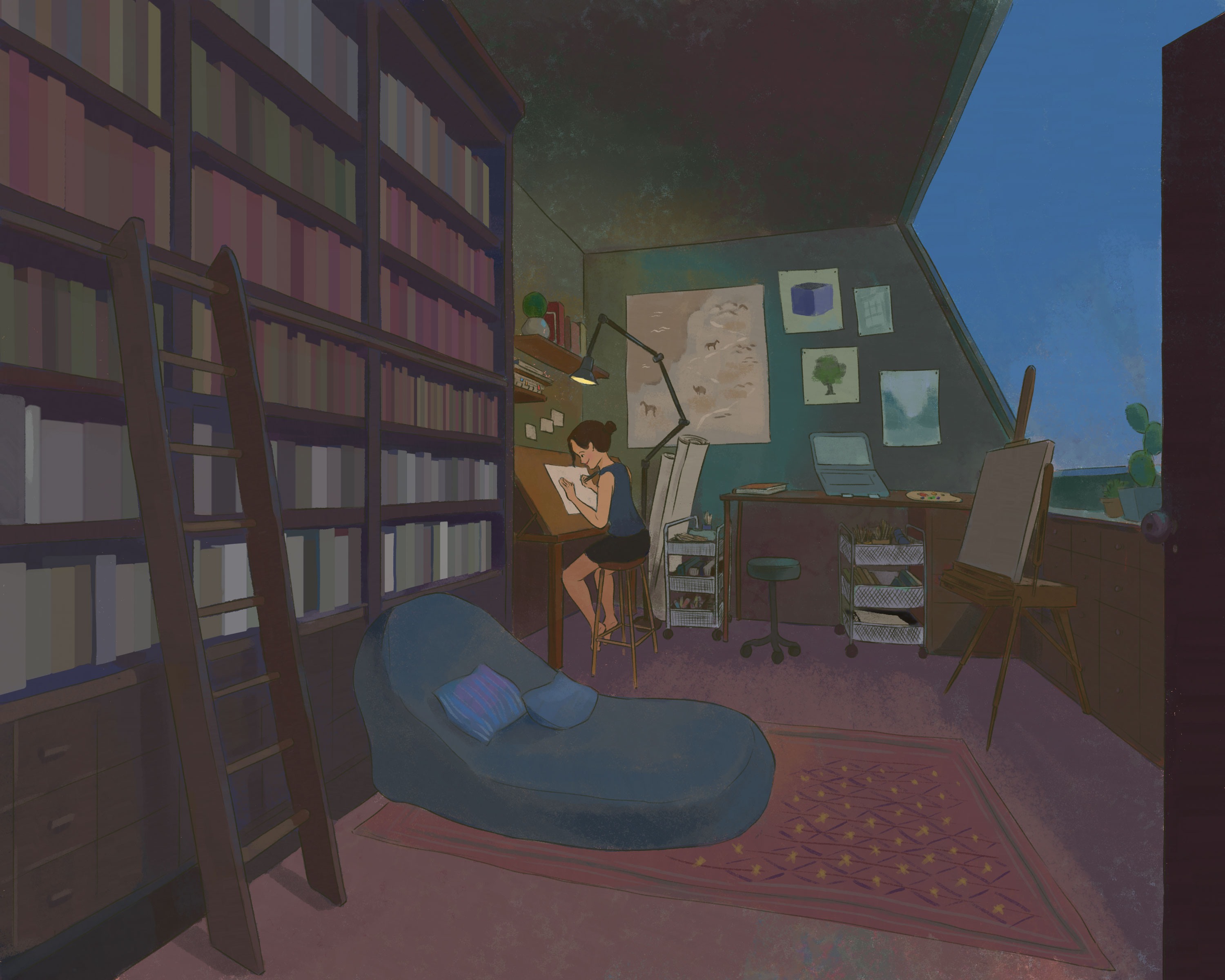
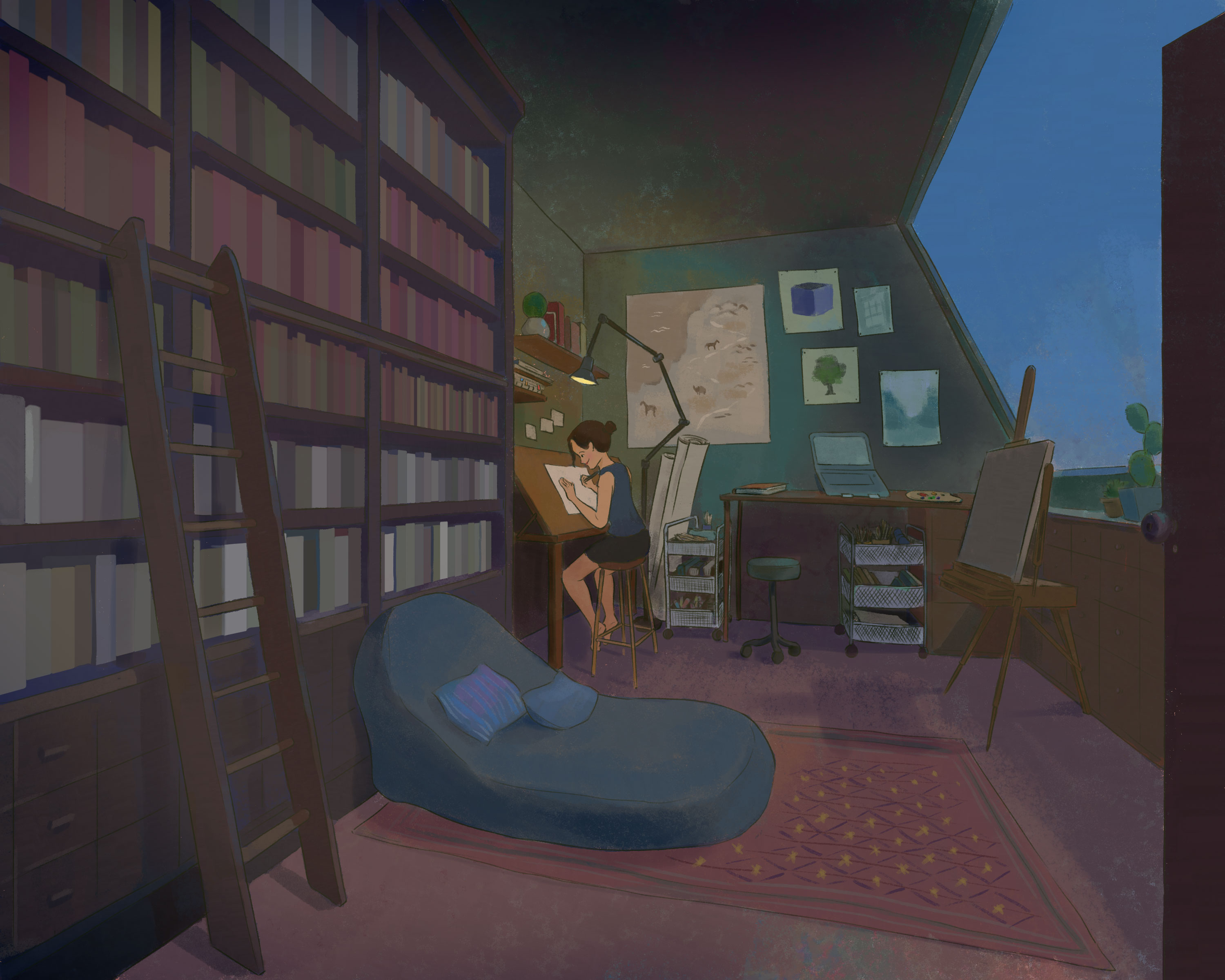
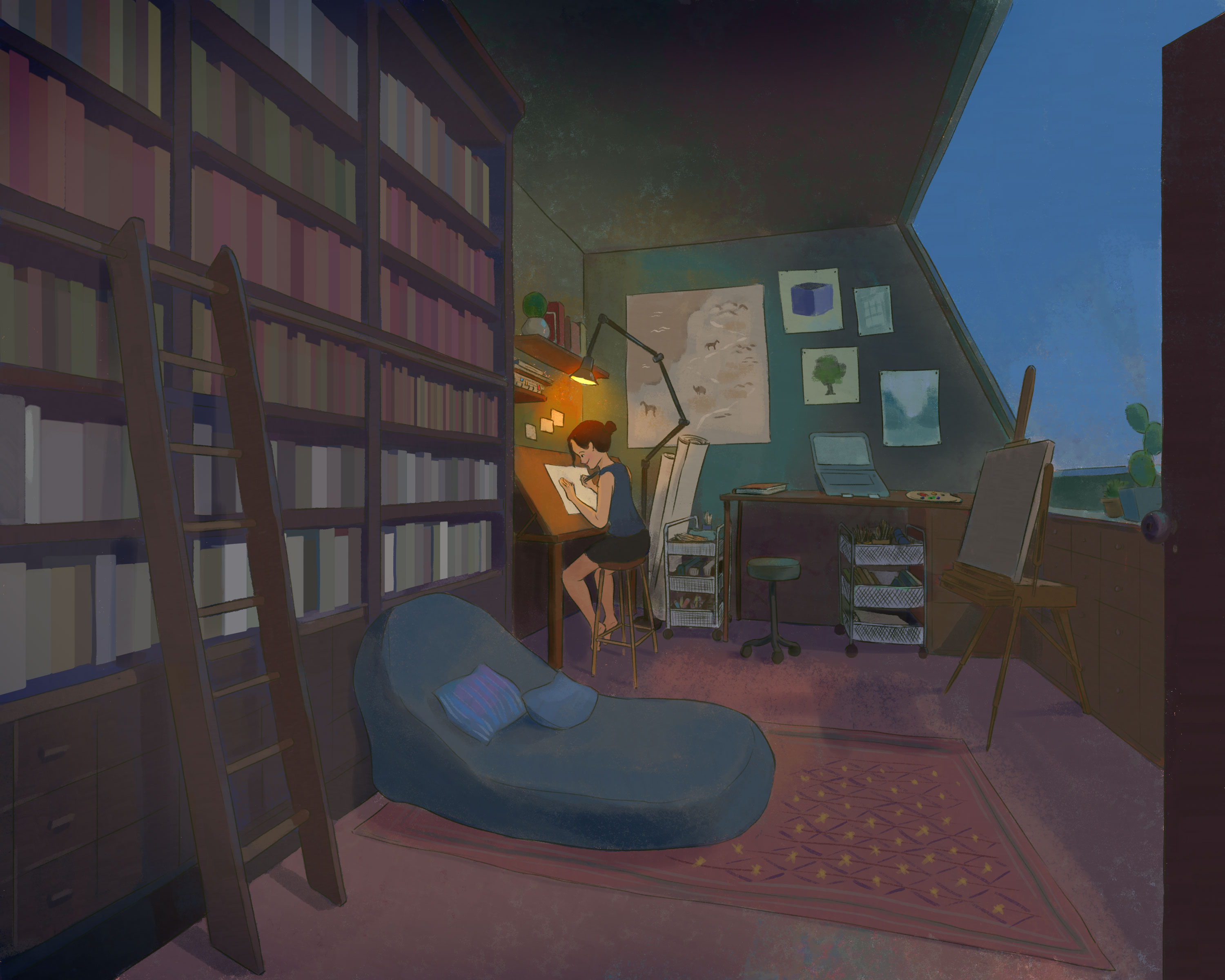
I painted myself working at night – breaking down my process

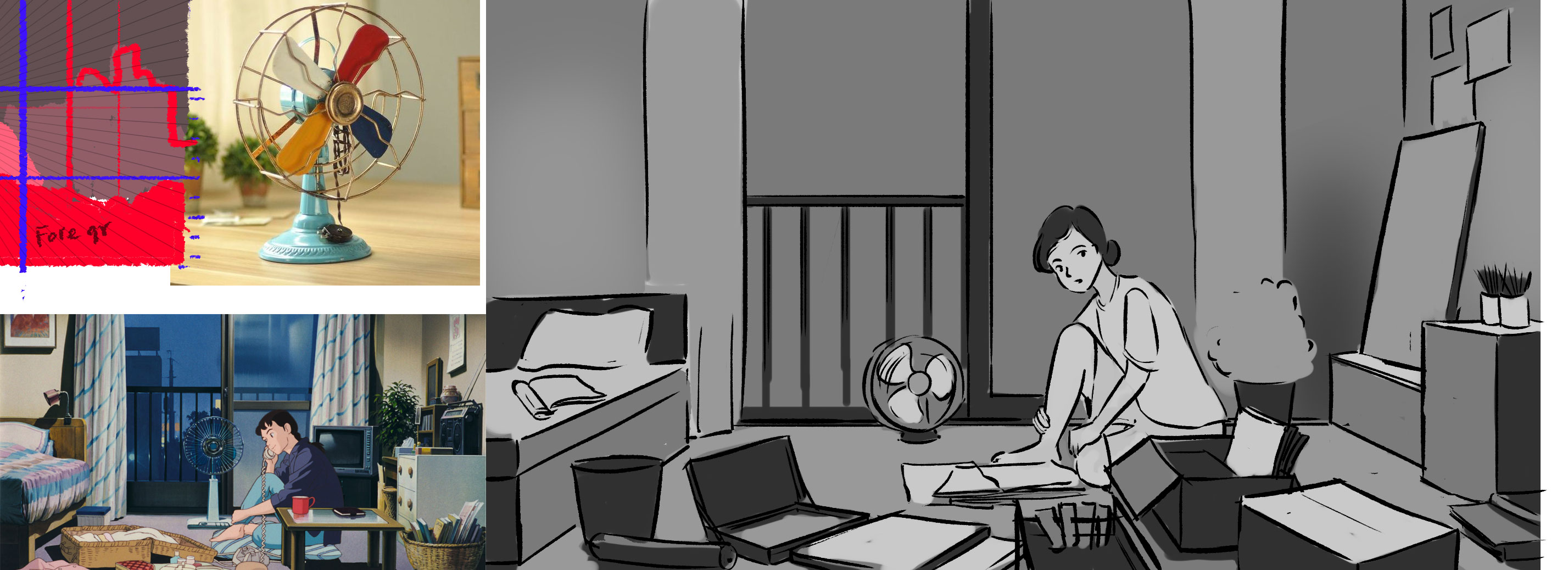
I took a class about composition and one of the homework was to copy and get creative from the arts that I need in grayscale.

I chose this scene in the movie ‘Only Yesterday’ from Ghibli because it feels intimate, it can be the room of anyone and I just need to step over the frame to be in the same room.

Inspired from that, I want to paint an arts room, a room that I would build if I have all the money I could.

I want to use night ambient light, a kind of soft light going with a strong light, light from the bulb. In that way, I could light up the whole room, yet still keep the focus on the main character (me :))

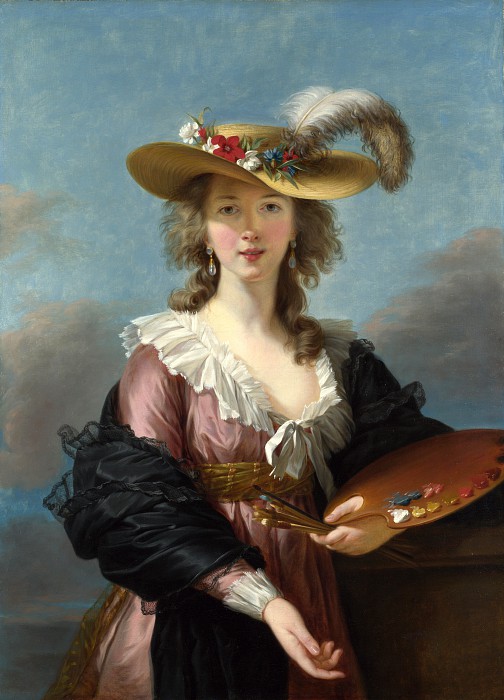
Art history Spotlight: Élisabeth Vigée Le Brun

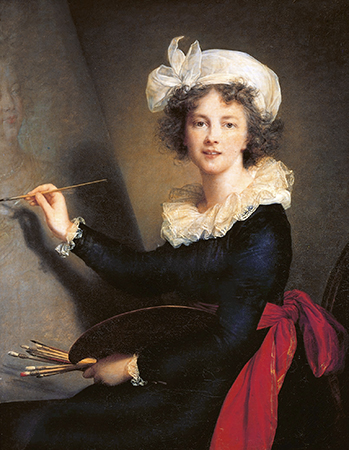
I first knew about Élisabeth Vigée Le Brun from a video by National Gallery. My first impression is that this women is a bold yet feminine painter. She rose from a modest background, and painted without academic training or public acknowledgement and became a kind of ‘celebrity’ artist. To me, she is a true feminist: she never stopped embracing her tender, maternal character in her painting; yet in real life, she fought in her own way to be able to do the things she loved.

Élisabeth Louise Vigée-LeBrun, Self-Portrait, 1790, oil on canvas, 100 x 81 cm
(Galleria degli Uffizi, Florence)

She wrote about her youth in her autobiography and her love for arts started from when she was a schoolgirl. Her father had always seen something in her and let her play with his crayon pastels all days. She never admitted she was gifted to be painter, but declared “what an inborn passion for the art I possessed. Nor has that passion ever diminished; it seems to me that it has even gone on growing with time, for to-day I feel under the spell of it as much as ever, and shall, I hope, until the hour of death.” (1)

This passion never left her for all her life. She painted portraits professionally from early teens without a license from the Académie Royale de Peinture et de Sculpture (Academie for short). This was not a surprise, considering the  Académie’s position of monopoly on the art market. A female artist wasn’t allowed to attend figures classes with naked models. Élisabeth wasn’t trained formally, mostly self-taught and guided by mentors who were friends of her father: Hubert Robert, Joseph Vernet, etc.

She rose to be the favorite court painter of Marie Antoinette, Queen of France, wife of Louis XVIII. The queen, with the king, intervened to help Élisabeth get a license. She developed a friendship with the queen, which was unusual considering their classes. In her memoir, Élisabeth shared about the kindness she was given by the queen and their mutual interest in music. (1) The life of the two women paralleled and contrasted in a curious way, pairing with the fluctuations of French politics.

She was friends and acquaintances with many aristocrats, and she became a salonnière, simply explained, she hosted social gatherings for people to talk about arts, literature, history, politics, etc. Salons were mainly hosted by women, namely Madame de Tencin, Madame du Deffand (friend of Voltaire), Madame Necker (wife of Louis XVI’s director of finances). Still, Élisabeth painted furiously at day and hosted sessions of poetry readings or musical recitals at night. She never wanted to be known as a salonnière, the point of opening a salon was to support her passion and her husband’s career as an arts dealer.

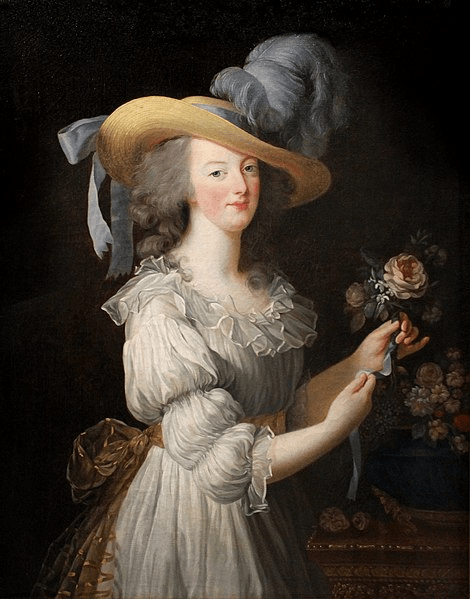
She reached her peak from 1783 till 1789, after she received official admission from the Academie. In 1783, she also finished the painting known as “Marie-Antoinette en gaulle”, in which she depicted the queen in a close and intimate point of view. Élisabeth wanted to represent the queen not just as a queen but a women “in all her appealing and vulnerable femininity”. (2) In  1783, 1785, 1787, and 1789 Salons, she achieved great success with her portraits of royal members and her own family. In total, she submitted more than fifty pictures. (3)

Marie-Antoinette en gaulle (1783)
(Luxembourg Museum, Paris) 

These glamourous days ended in 1789, the outbreak of French evolution. Her most important patron and friend, Marie Antoinette was executed in 1793. Élisabeth fled to Rome, Italy and then Saint Petersburg, Russia. She was patronized by royal members and kept painting them to support herself and her daughter, Julie. Her financial situation was bad despite her success. The money she earned in her teen years was used up by her step father, and the money she earn after marriage was used up by her husband (2). She returned to Paris in 1802, officially separated from Le Brun in 1805, and he passed away in 1813.

She continued to paint until the day she died in 1842, as she hoped in her youth. In 1835, Vigée Le Brun published her memoirs titled “Souvenirs,” which told the story of her life from very early days until the last moment.

What’s admirable about Élisabeth Vigée Le Brun is her hard-working and brave attitude to stick to her passion. She is the true definition of “pursuing passion” and her love for arts became what kept her alive in difficult times. She was a protégée, but as a women, she had to overcome many more obstacles just to be recognized. Her hard-working attitude shines from her memoir.

She experienced ups and downs in both her social and private life. She became the most sought for-female portraitist in Paris, yet she was forced to get married and didn’t have a happy personal life. She lived a long life (she passed away at 86 years old) and her admirers surrounded her till the end, yet she suffered the loss of her only daughter, her close brother, her friends. She witnessed the monarchy reaching its peaks and collapsing to dust. Her portraits, her memoir are now evidences of a remarkable era of French history.

Her memoir is available for free on Project Gutenberg .

(1) Vigée-Lebrun, Louise-Élisabeth. Memoirs of Madame Vigée Lebrun. Translated by Lionel Strachey. New York: Doubleday, Page & Company, 1903.

(2) May, Gita. The Odyssey of an Artist in an Age of Revolution. New Haven and London: Yale University Press.

(3) “The Metropolitan Museum of Art. Élisabeth Louise Vigée Le Brun (1755–1842).” Metropolitan Museum of Art, accessed July 10, 2024. URL: https://www.metmuseum.org/toah/hd/vgee/hd_vgee.htm.

I love sketching and painting old architecture structures!
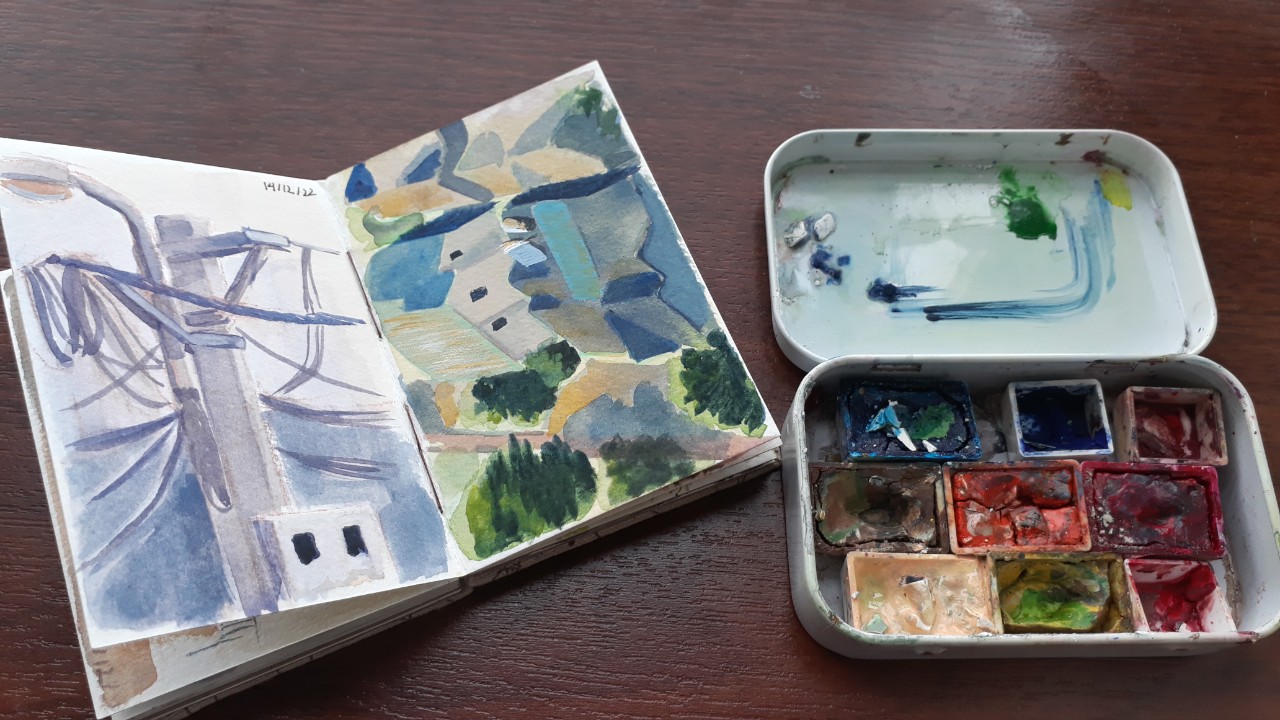
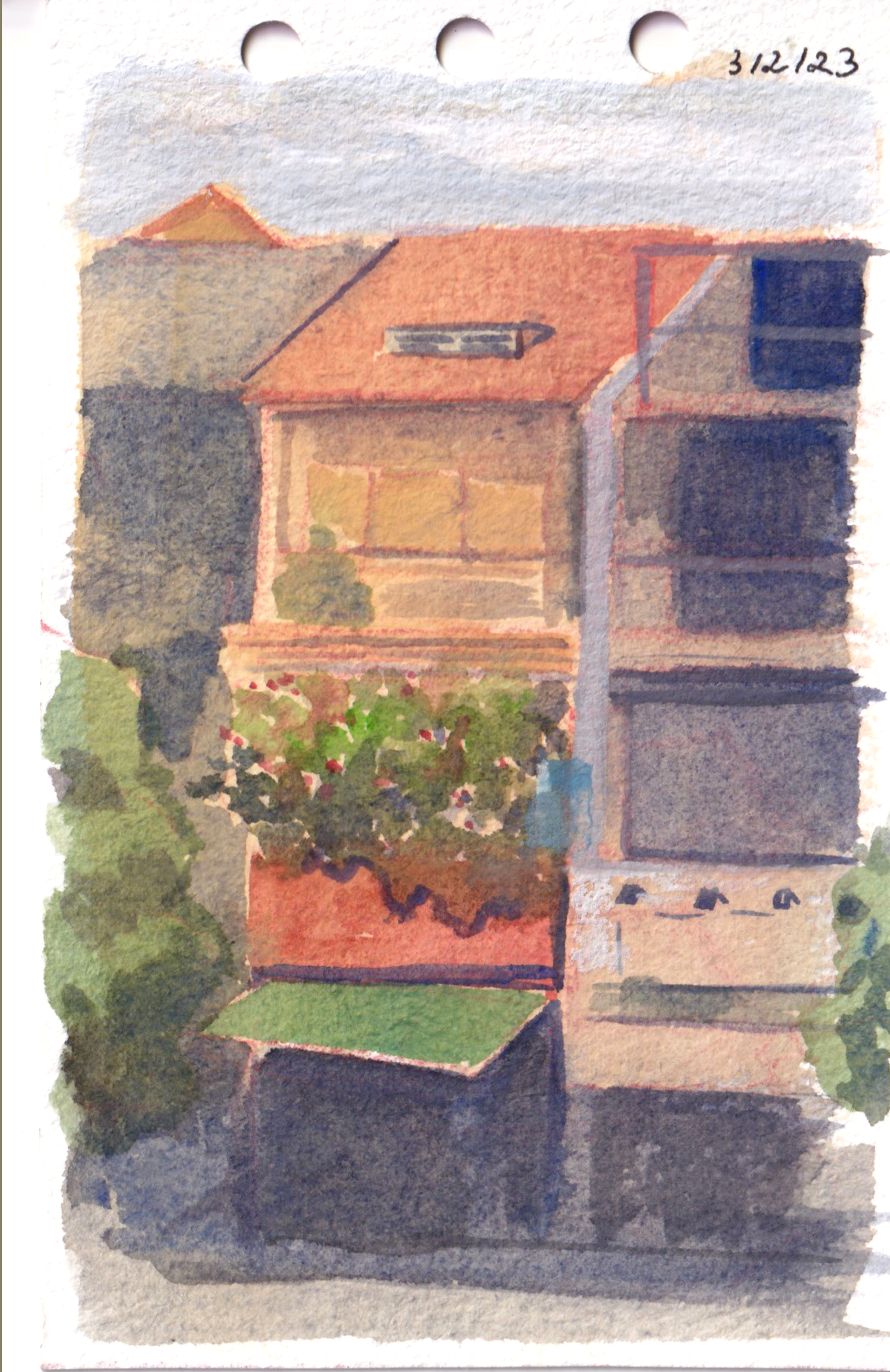
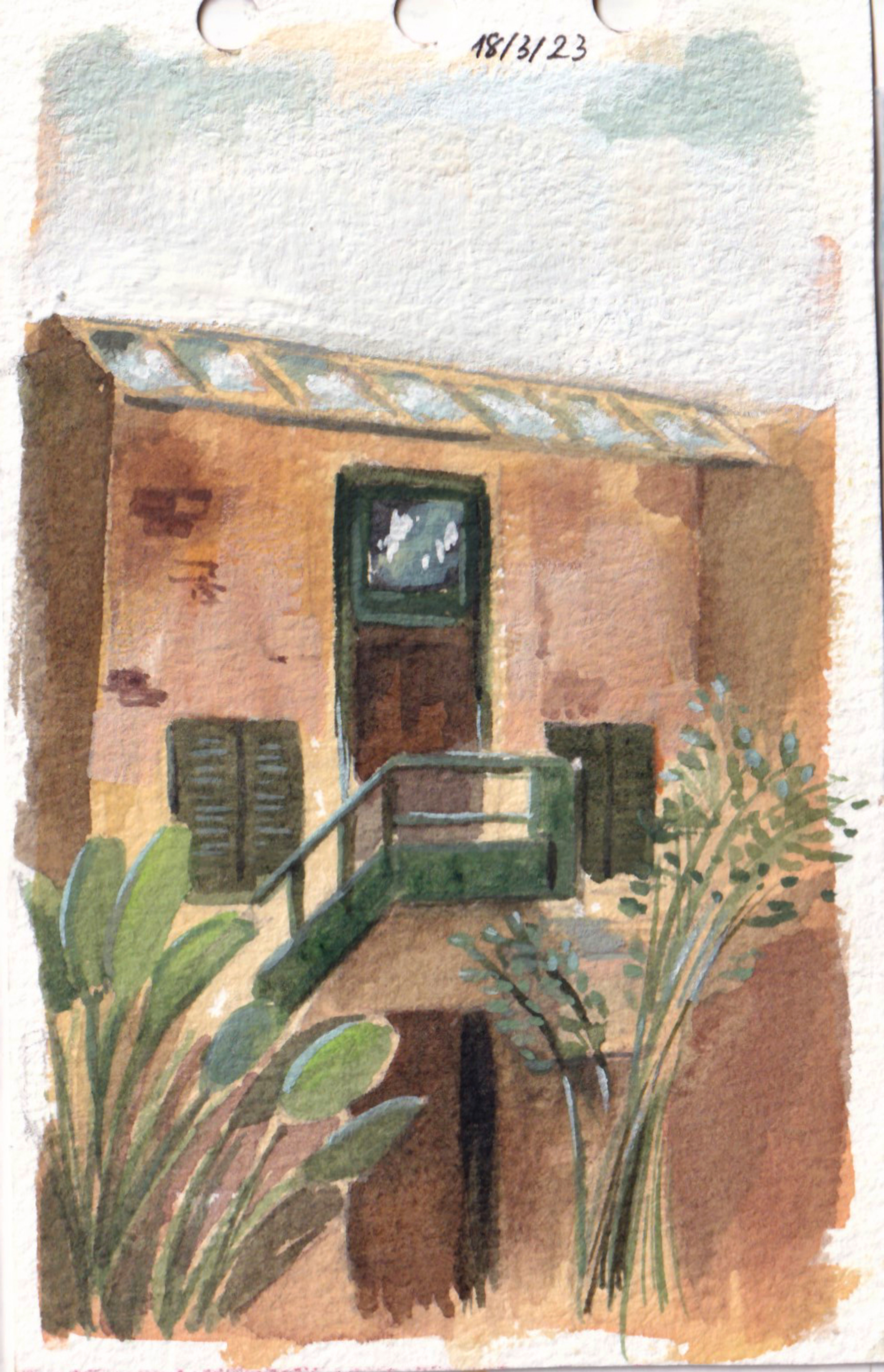
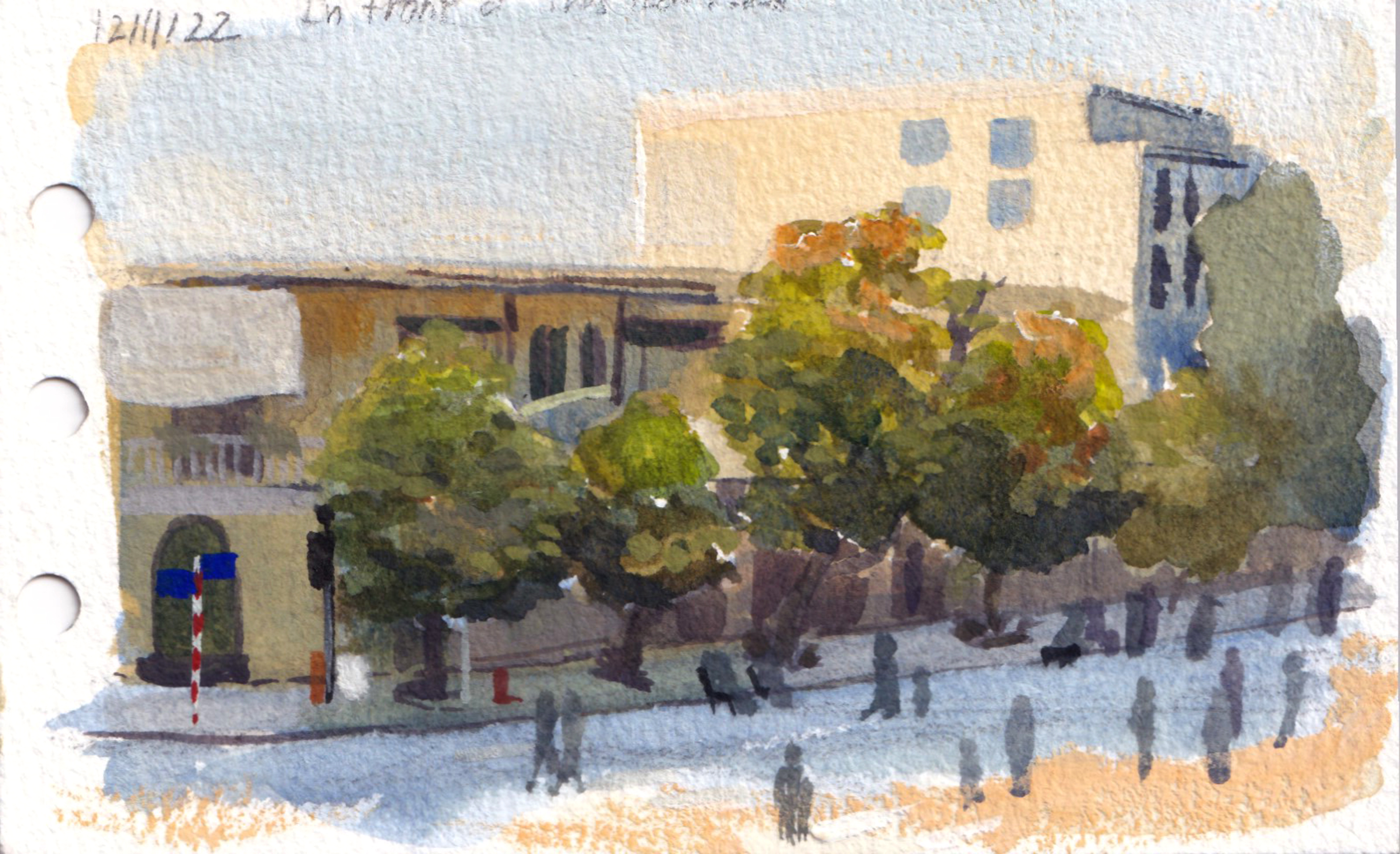
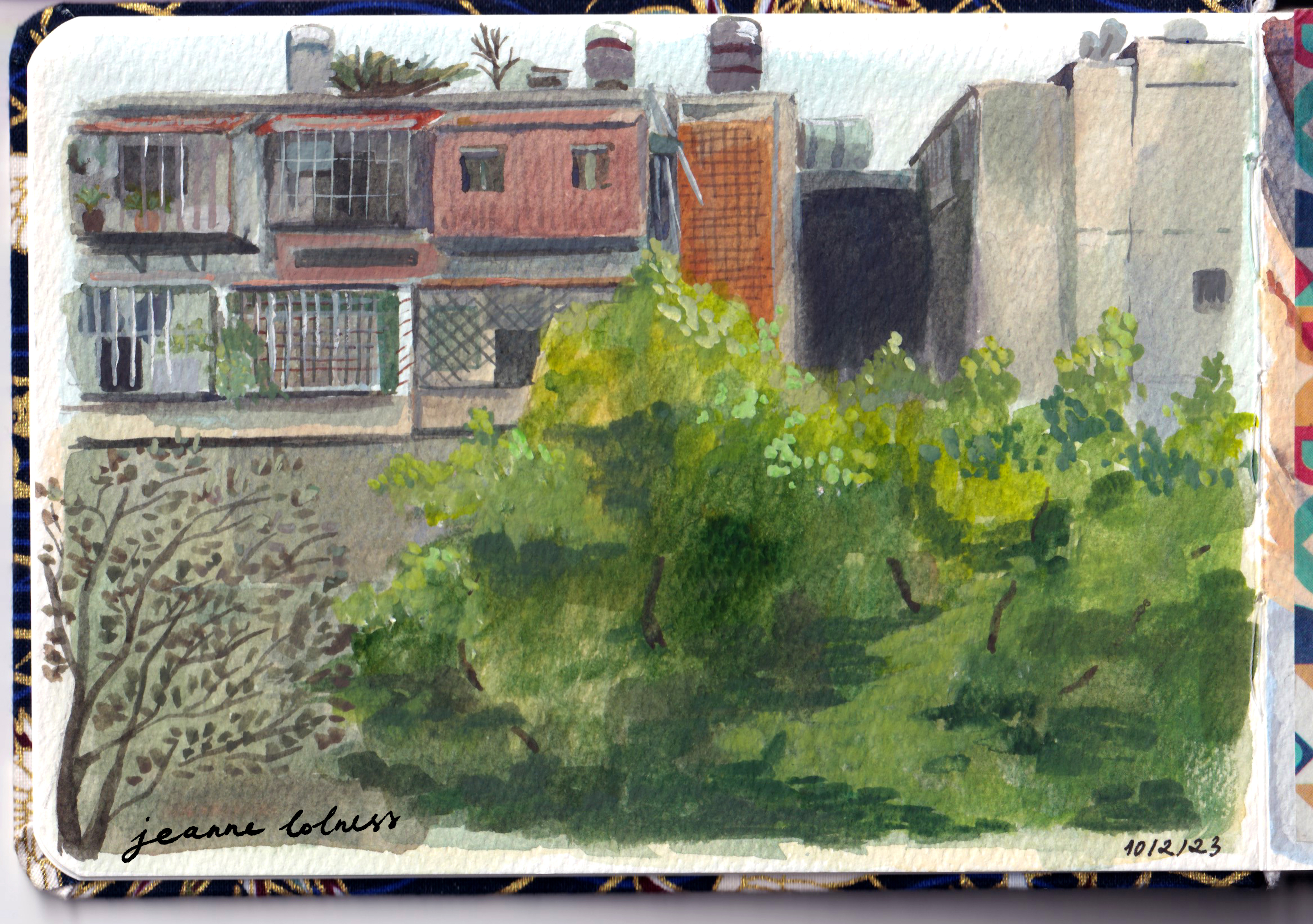
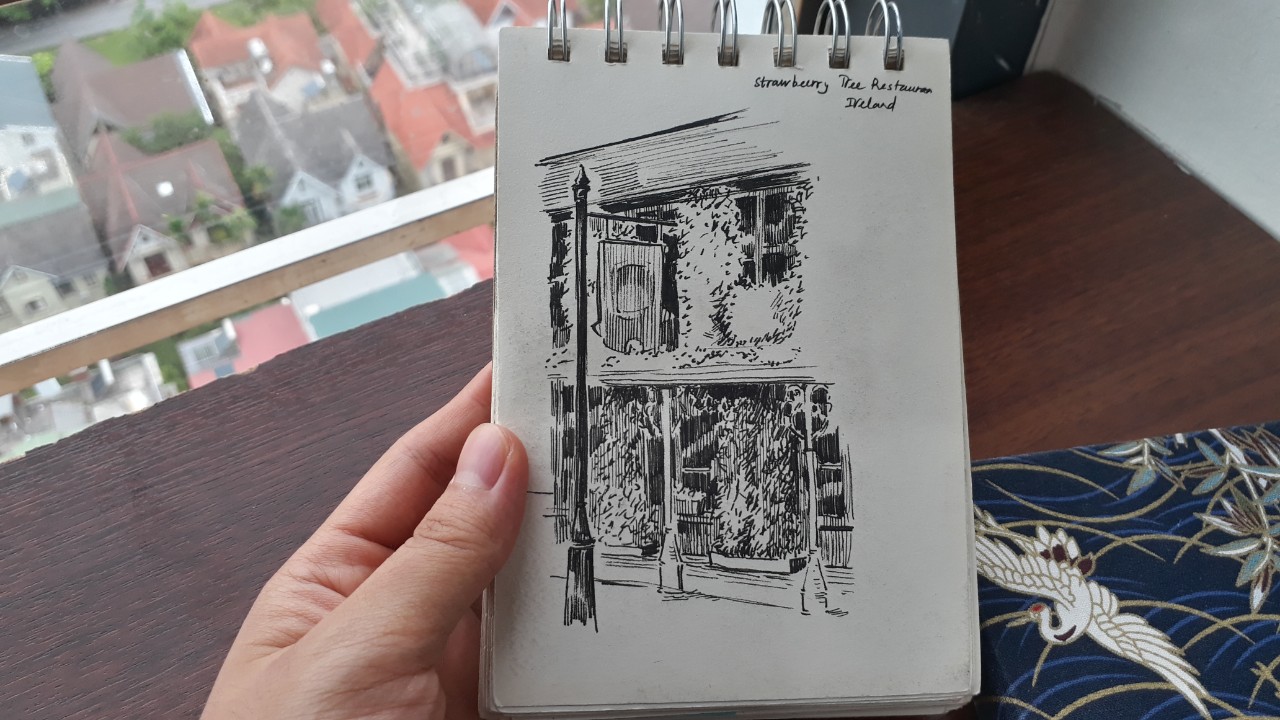
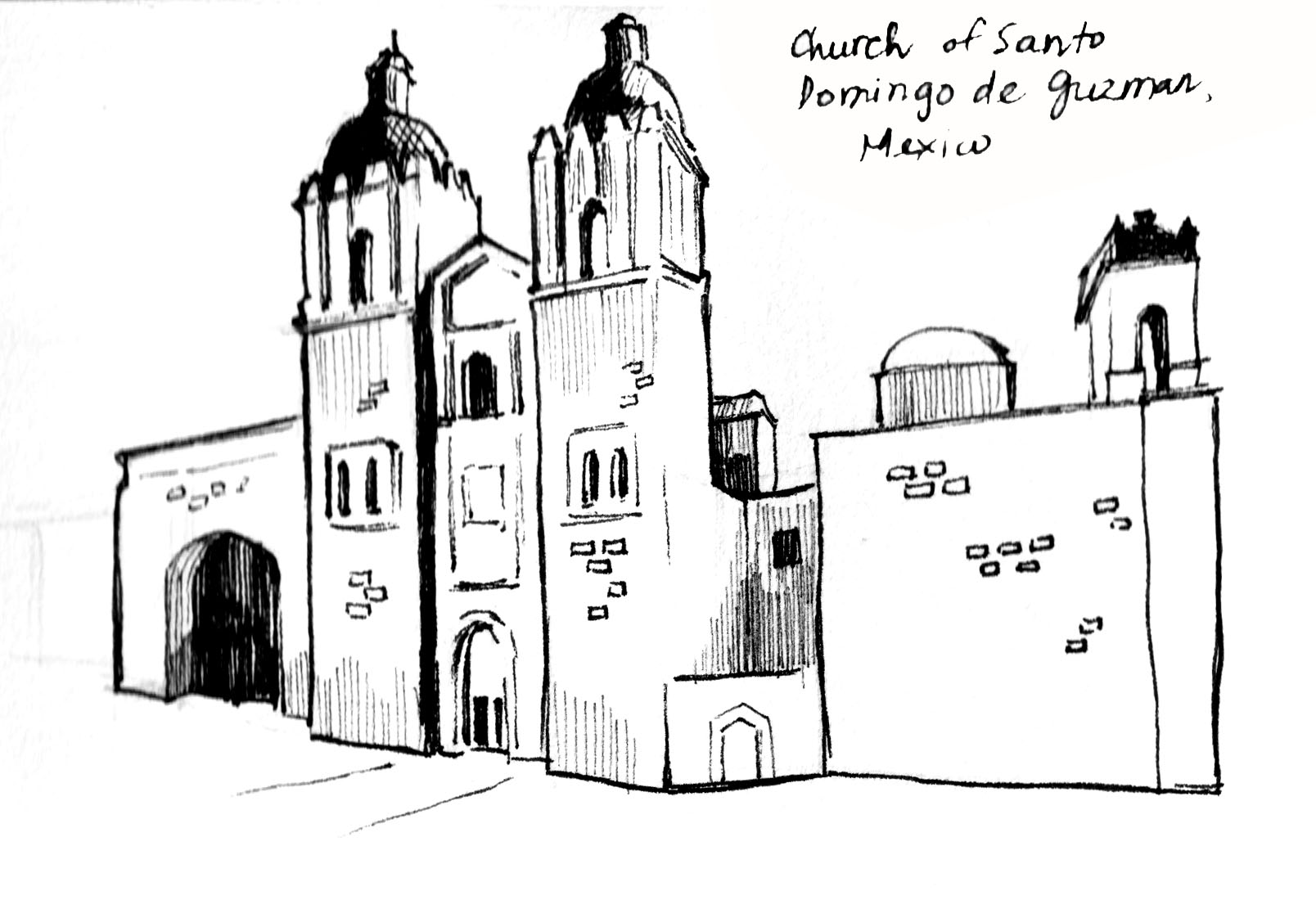
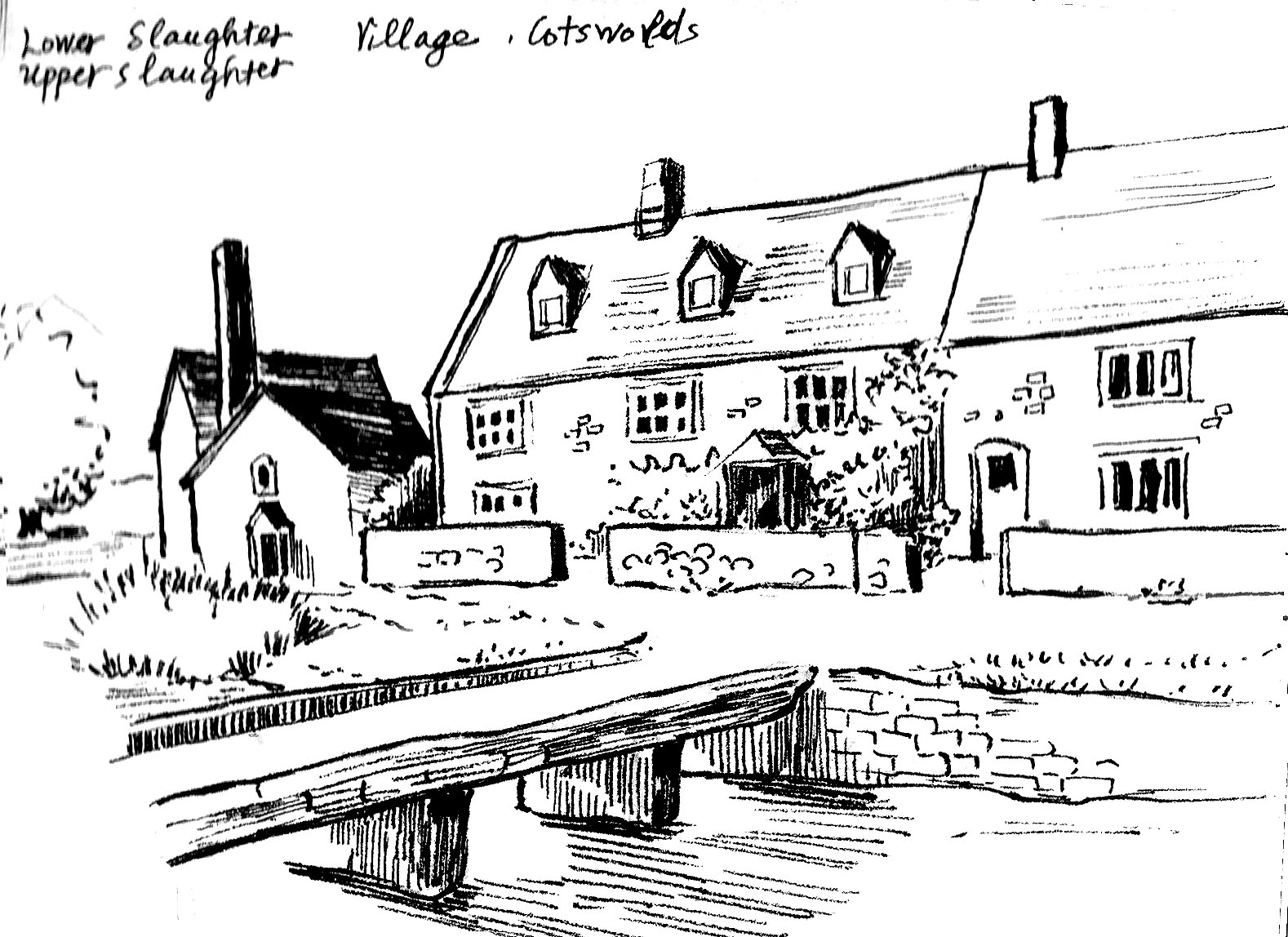
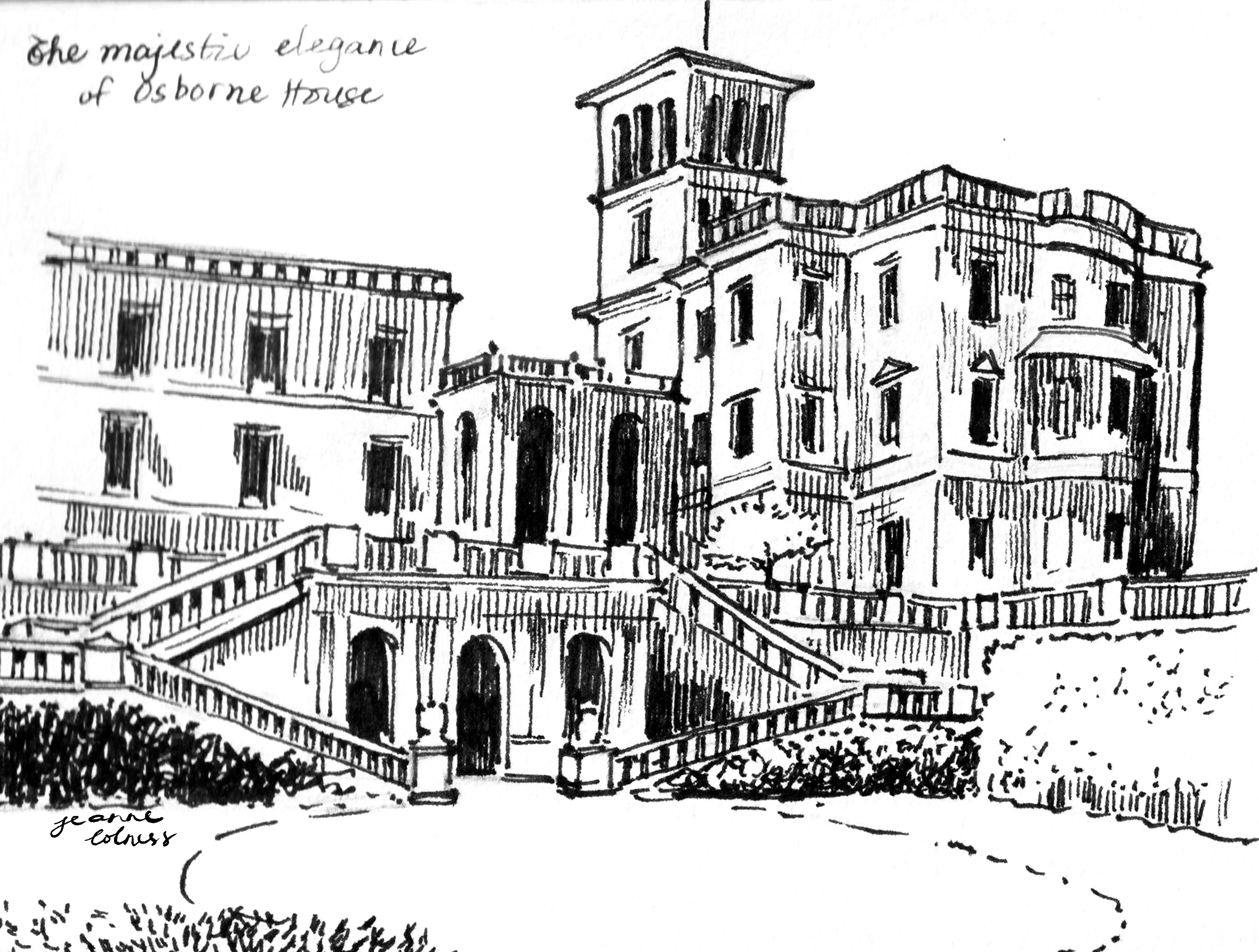
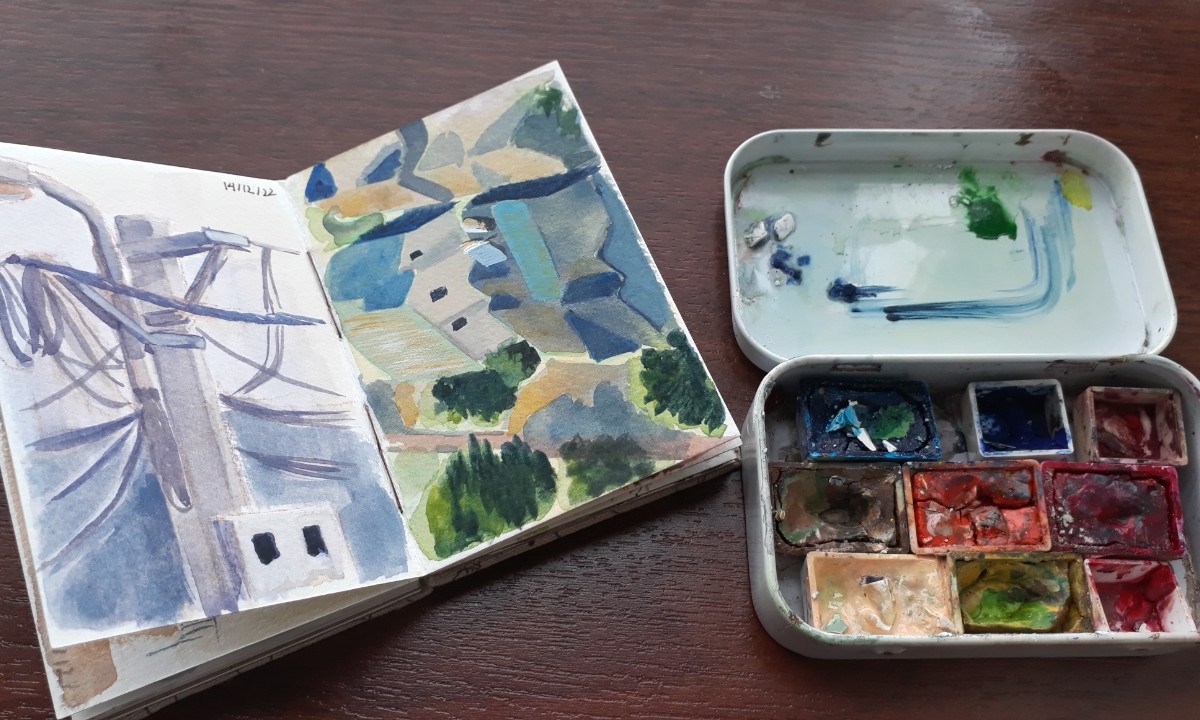
I kept a A6 sketchbook of random things, with no restriction to keep track of what attracts me. Though perspective always confuses me, houses, castles, churches, temples, etc always catch my eyes.

My Little Sketchbook

Page from my A6 sketchbook

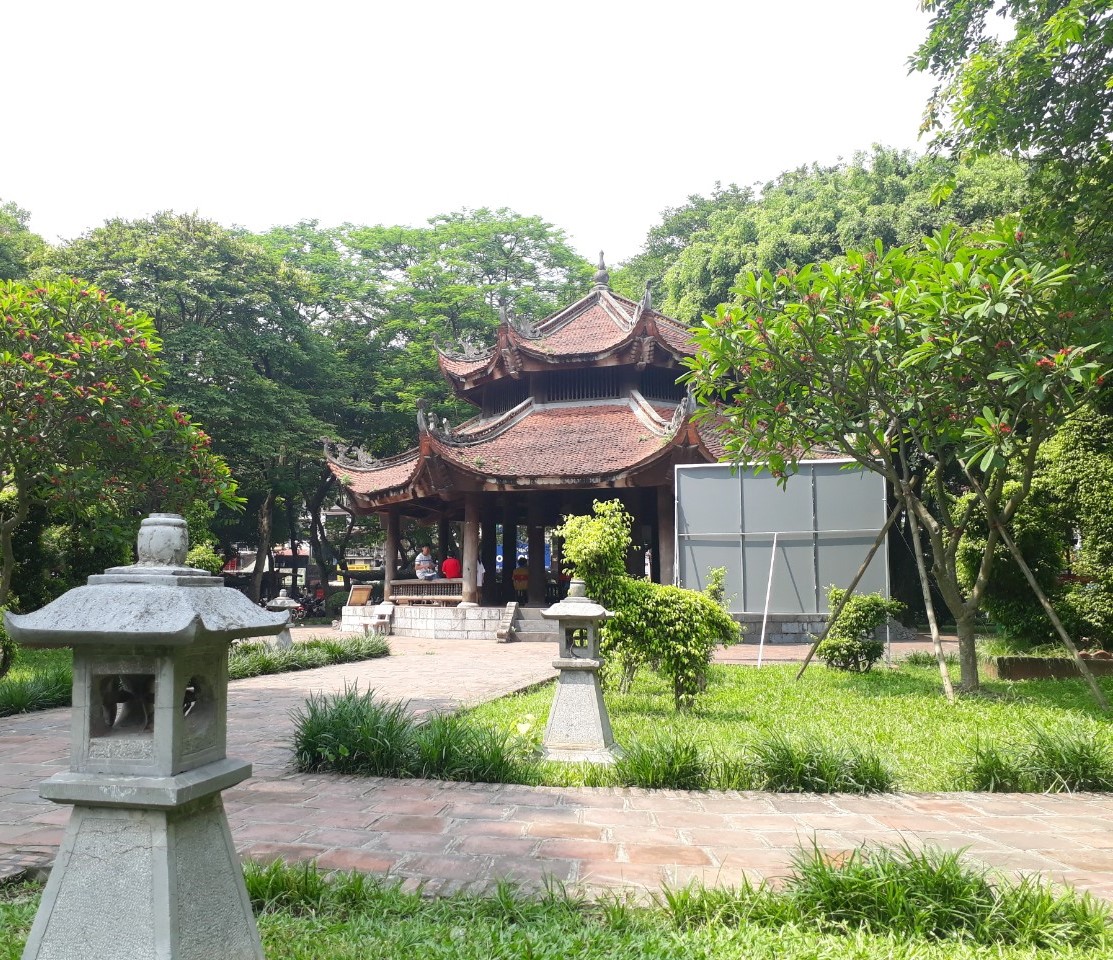
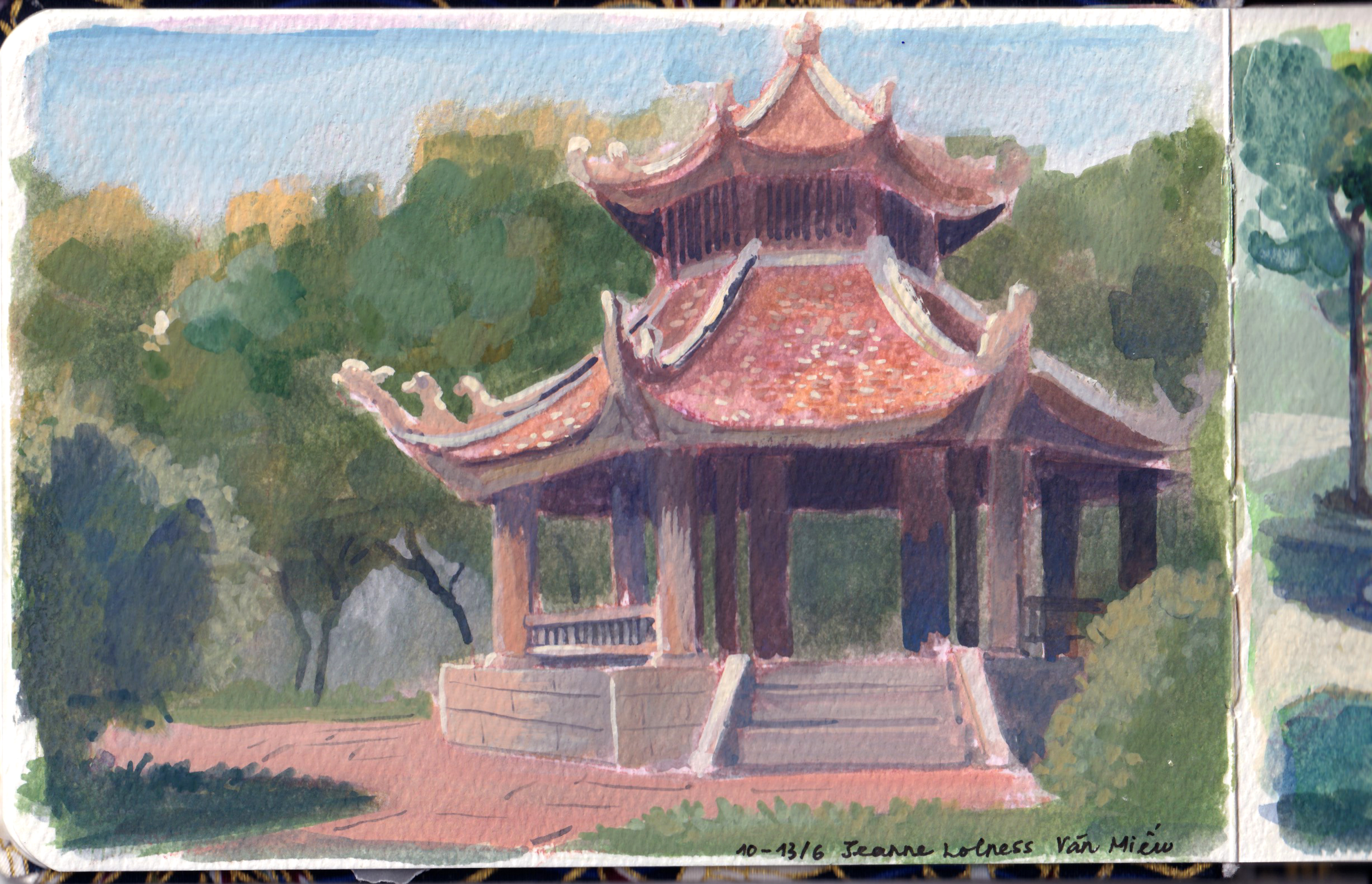
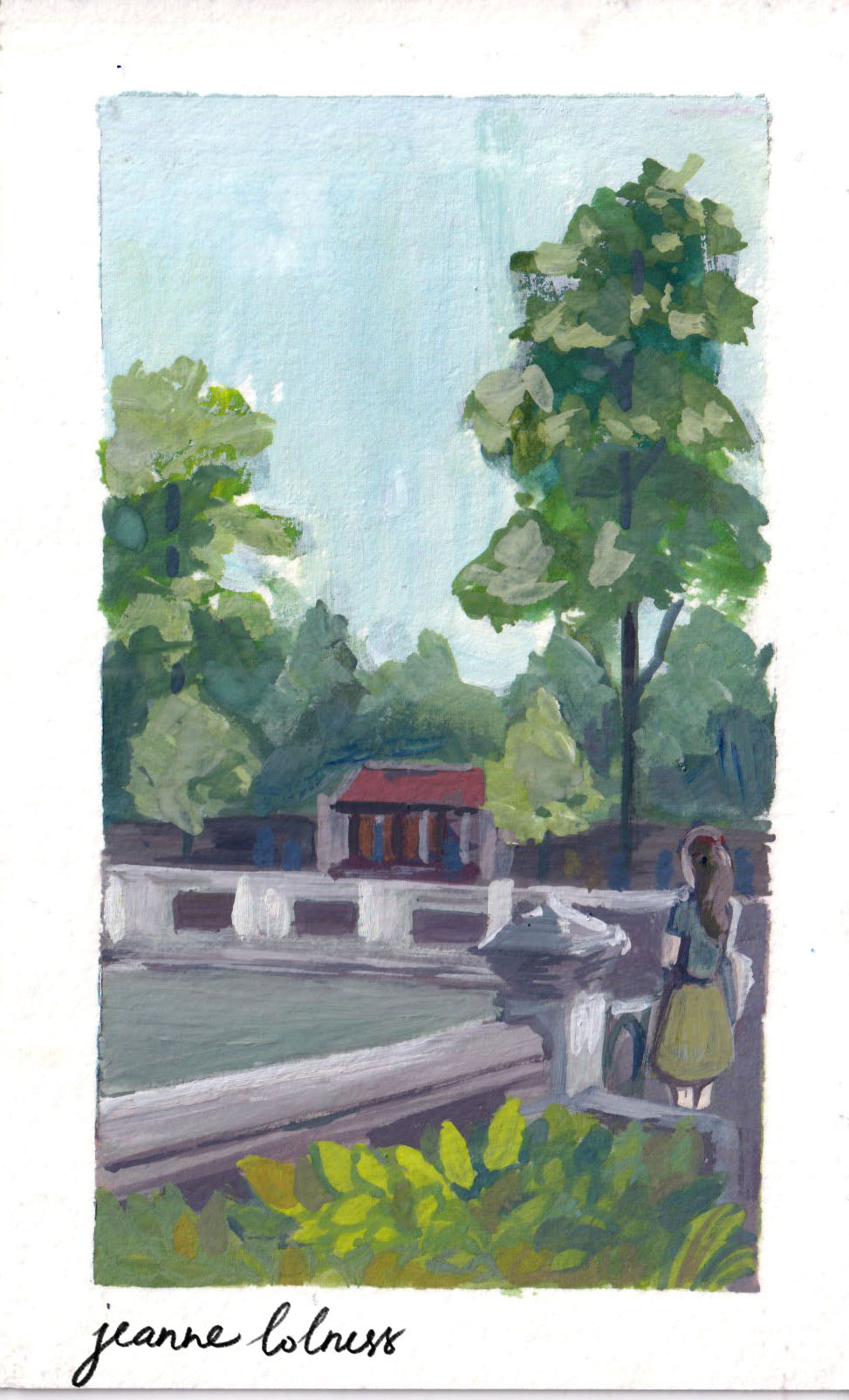
A plein air painting of a hexagon temple I did in the area of Temple of Literature – a tourist attraction in Hanoi.

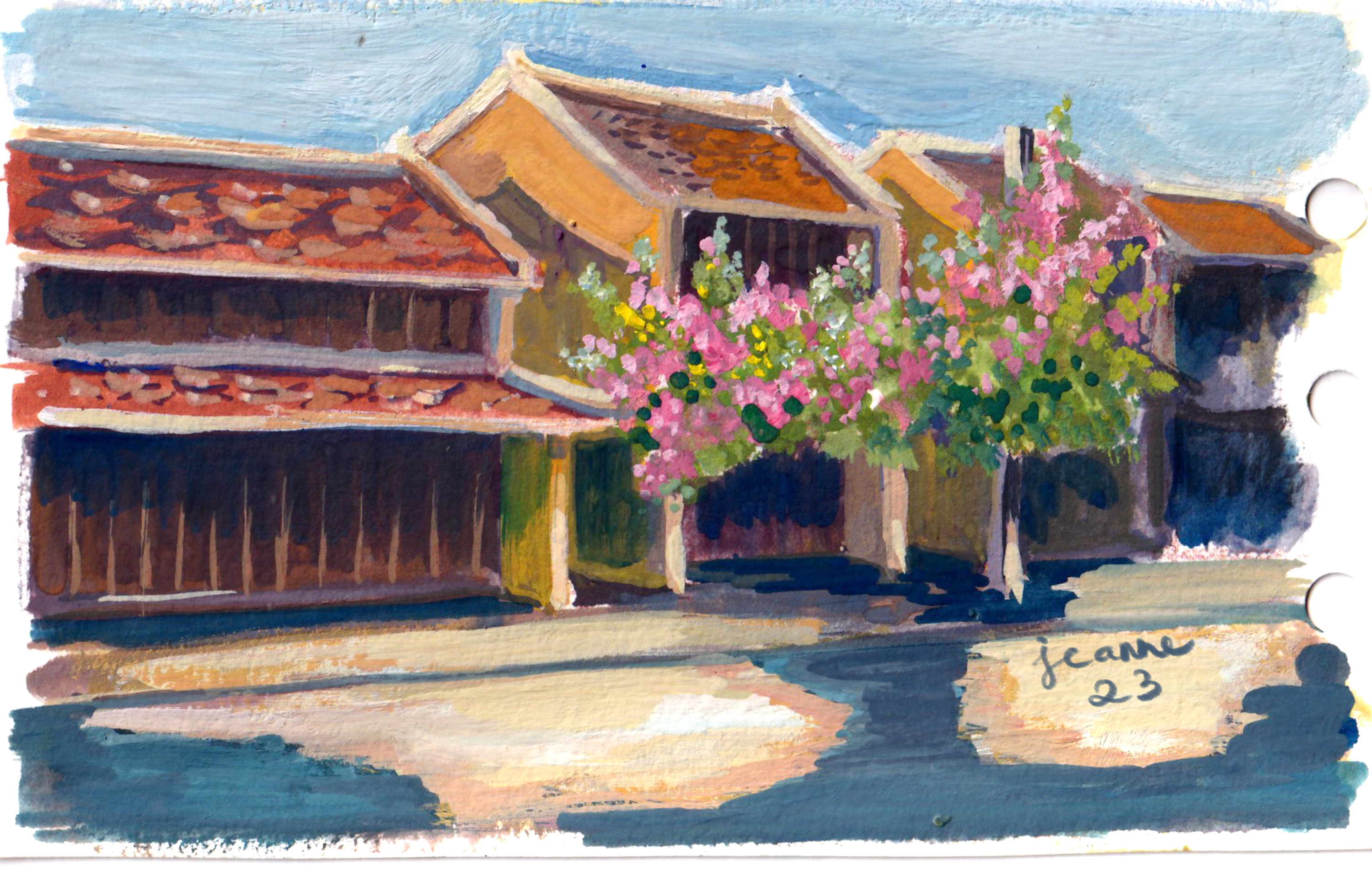
A Hoi An street, I could walk around this place for hours.

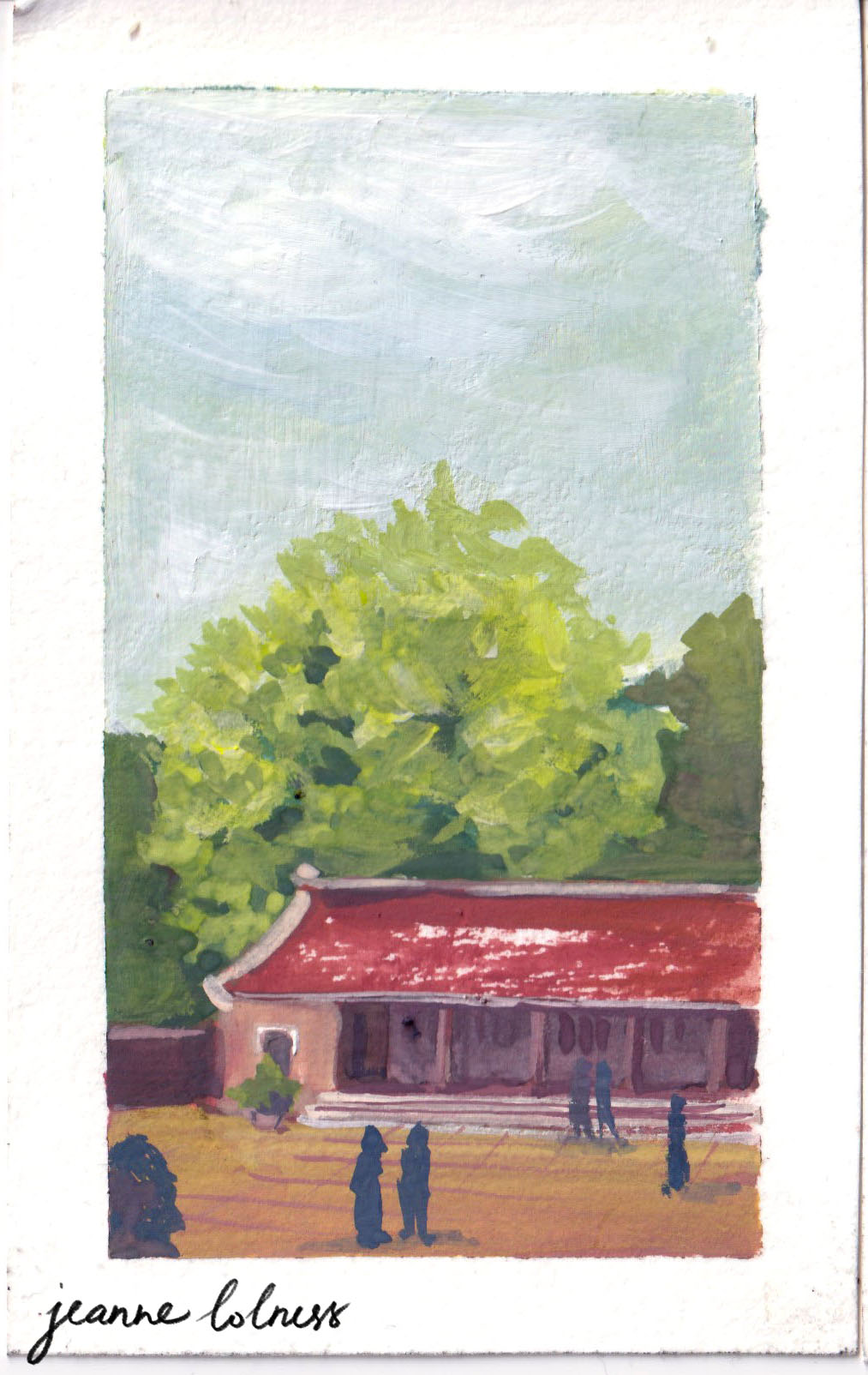
Still quick sketches of traditional structures in the area of Temple of Literature. The place organizes many exhibitions every year so I actually went there a lot.

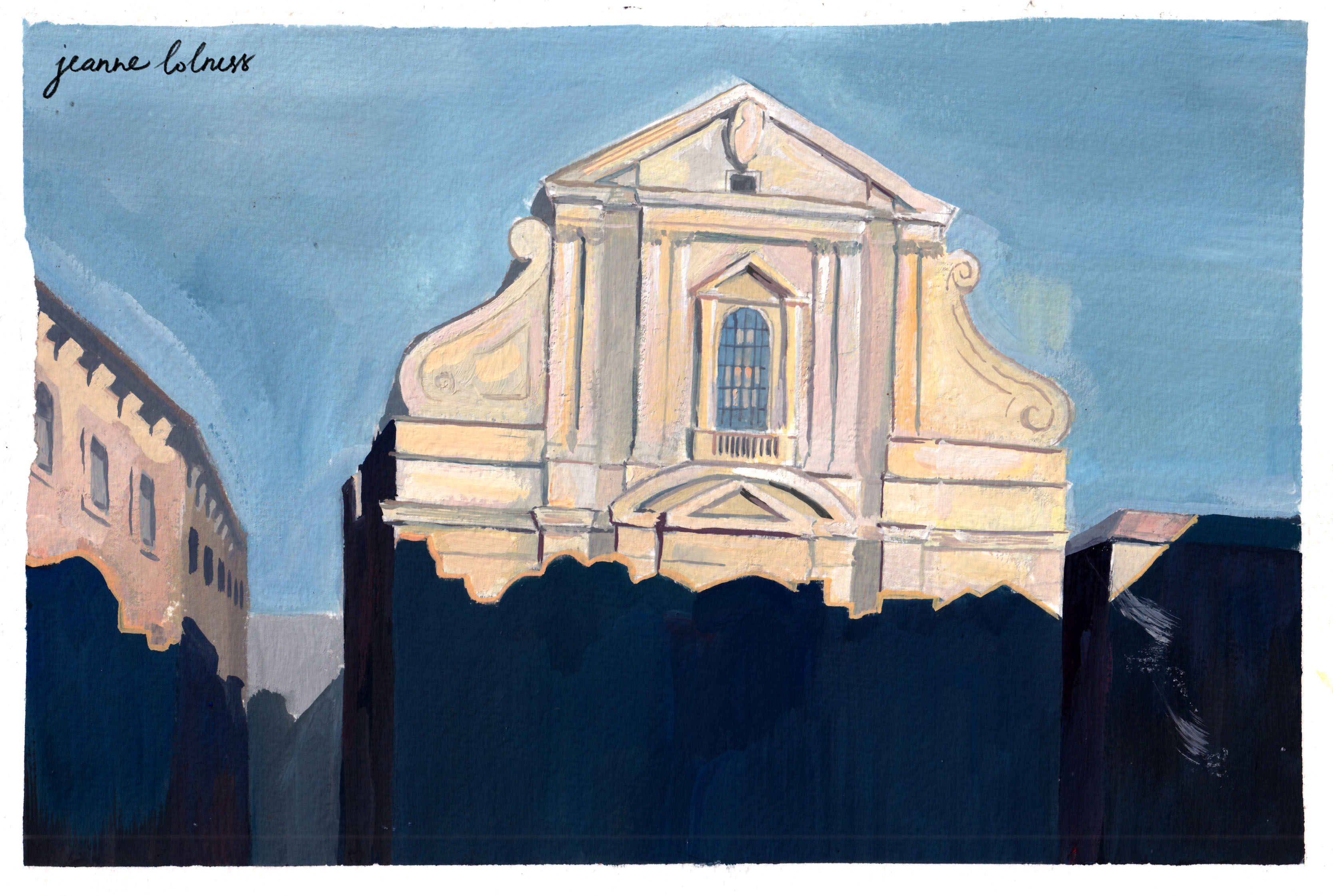
Chiesa di San Carlino alle Quattro Fontane, also known as San Carlino, designed by Francesco Borromini. This is his first independent gig.

I get excited by Italian architecture as well, though I got dreadful quickly because I can draw every detail of the church.

An interesting about churches is that many were designed with a smaller budget and area than we might think. Especially later in history, when Christianity was divided into different sections and cities developed quickly, people need a medium church close on their street rather than a grandeur one.

These studies turned out to help me improve my perspective skills, which made it easier to tackle commissions wit complex point of view like the one below.

An ink series to illustrate small corners of daily life

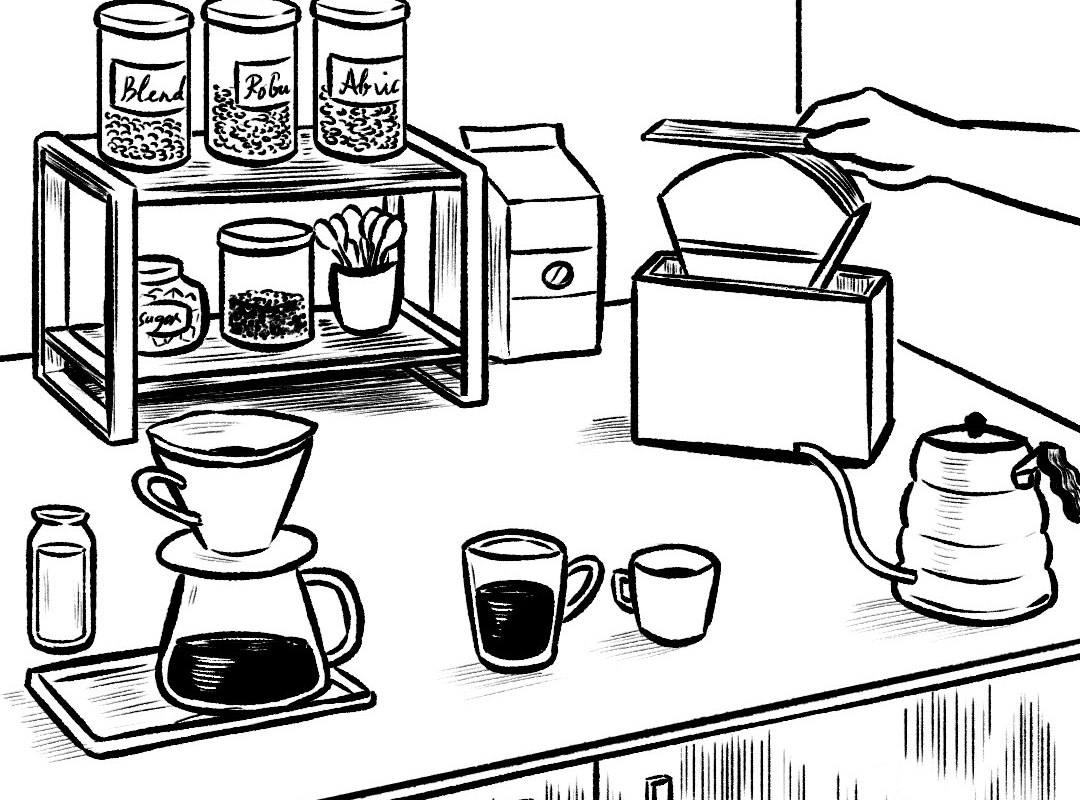
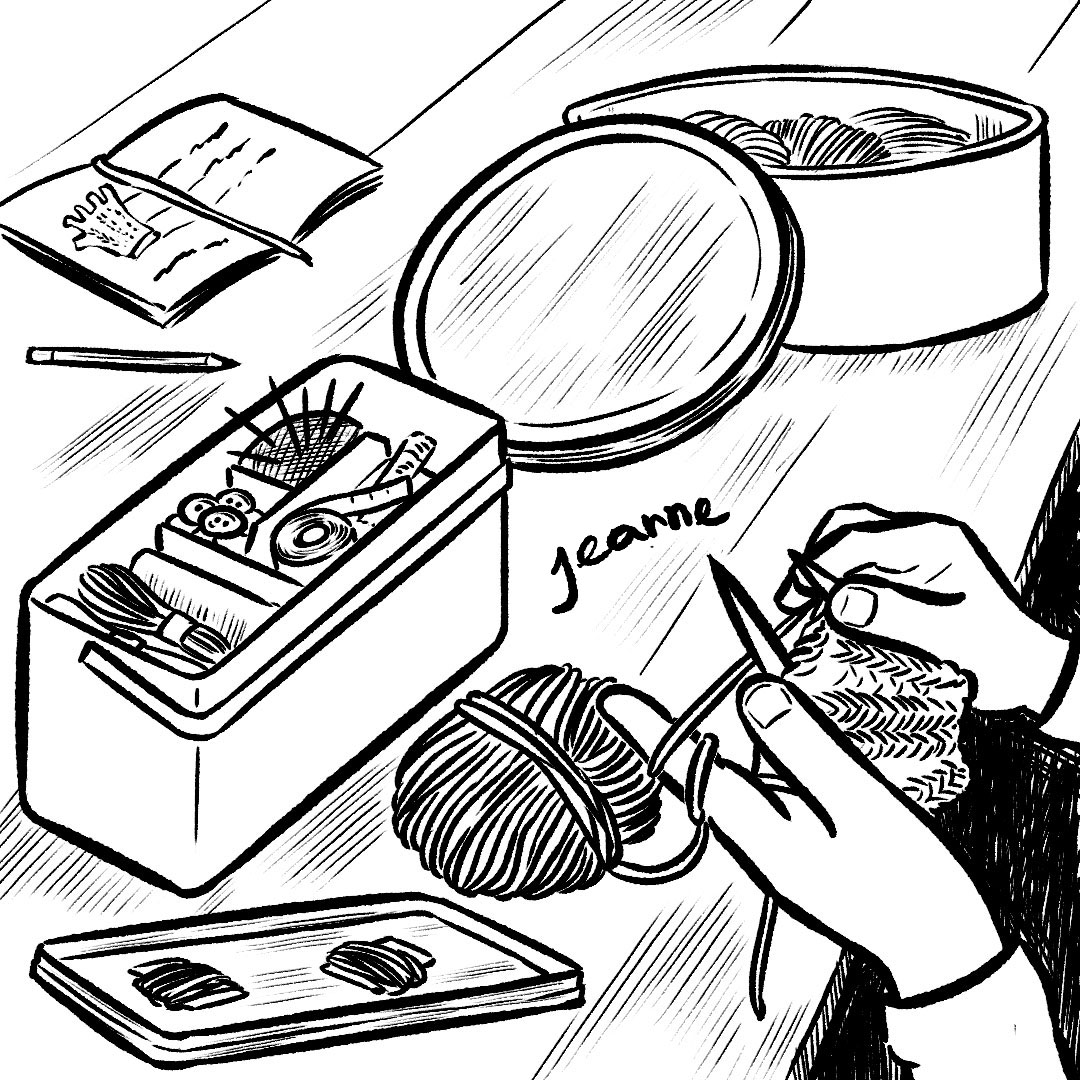
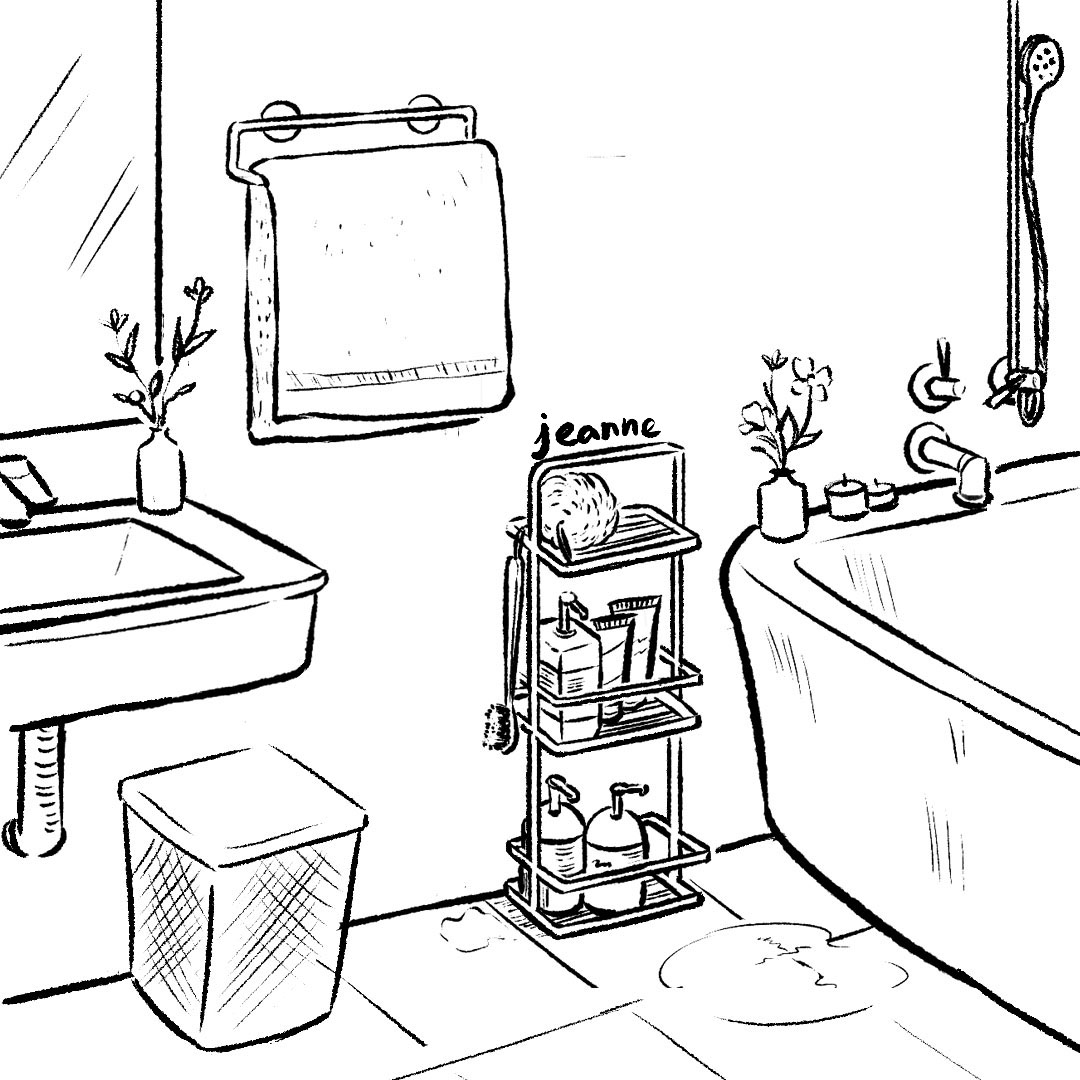
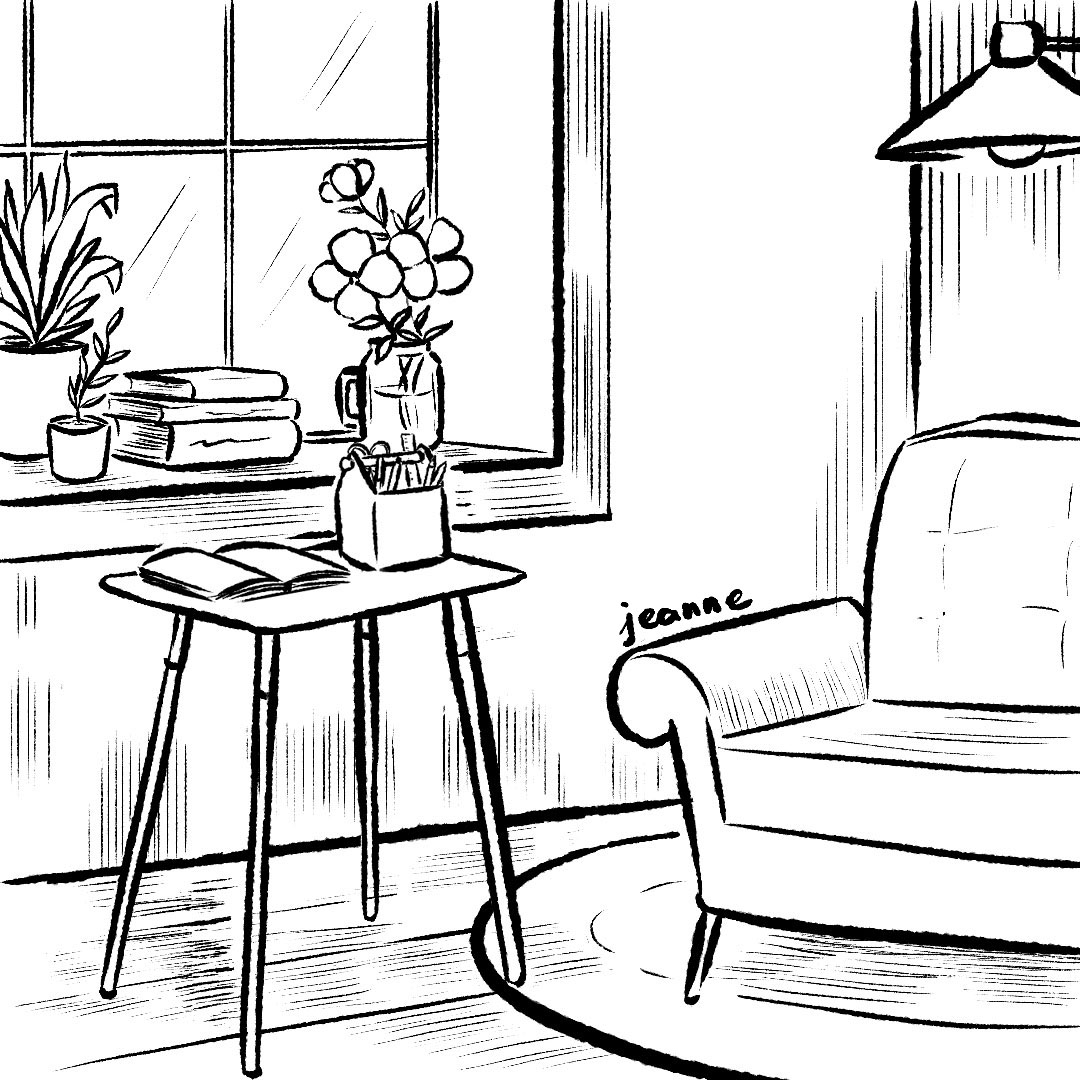
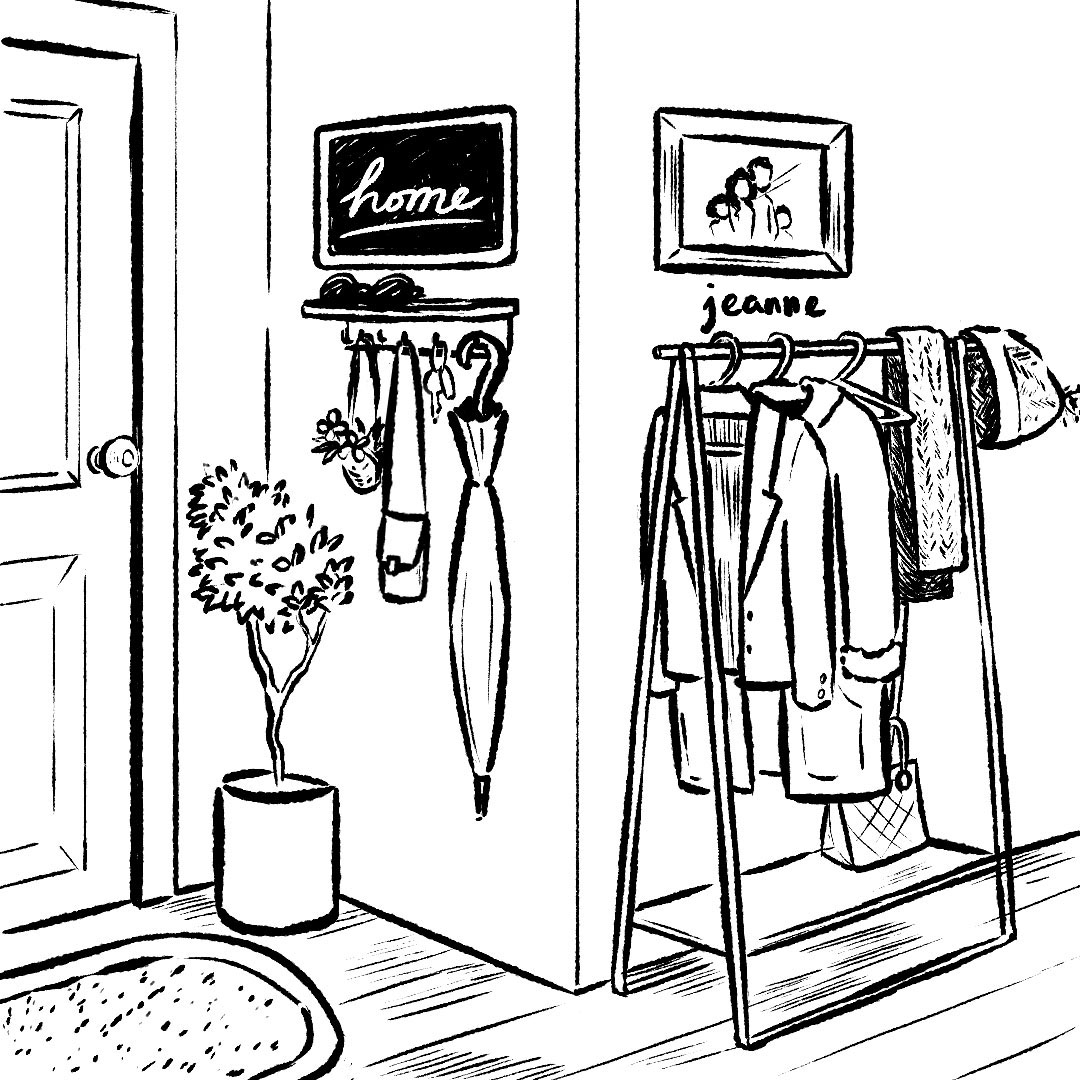
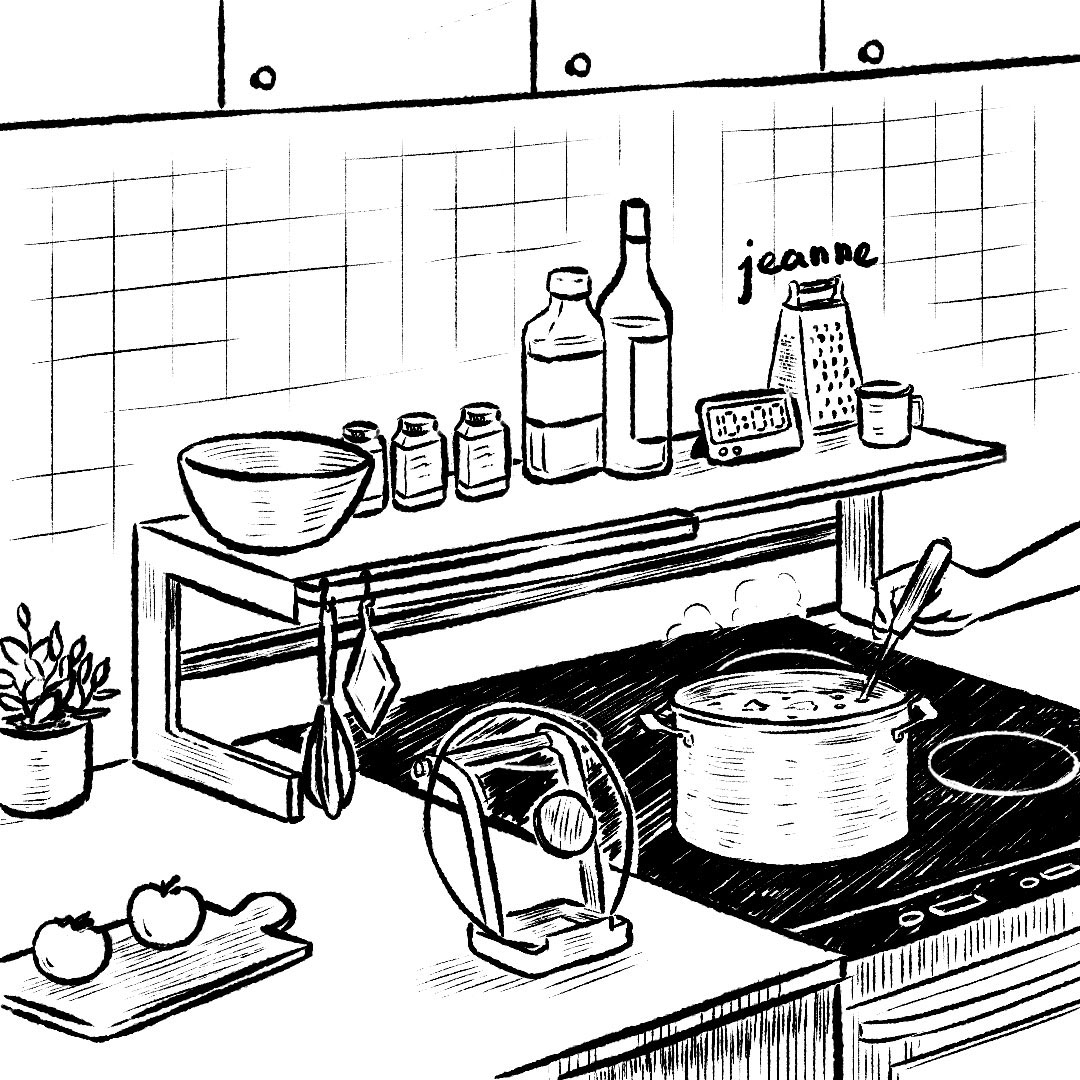
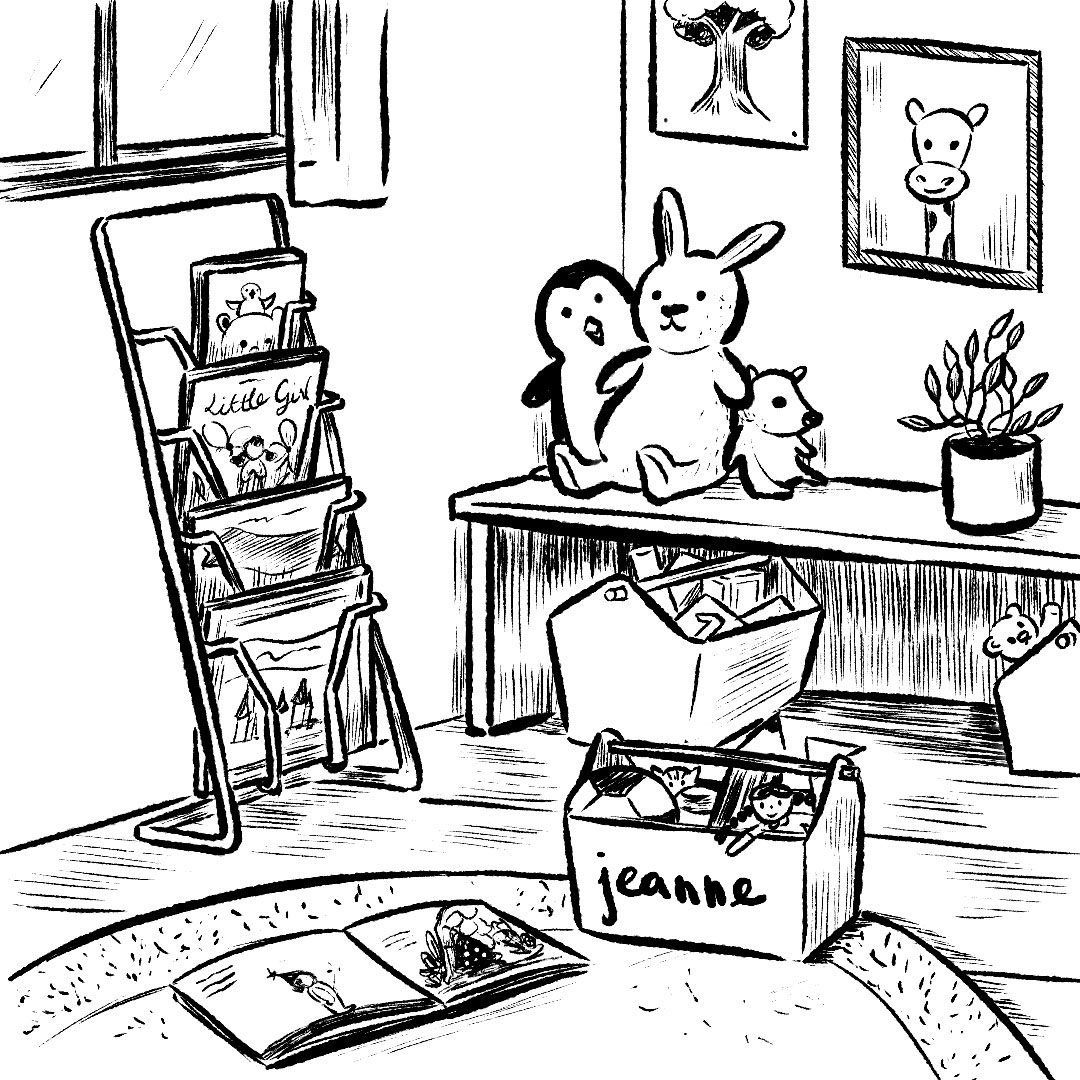
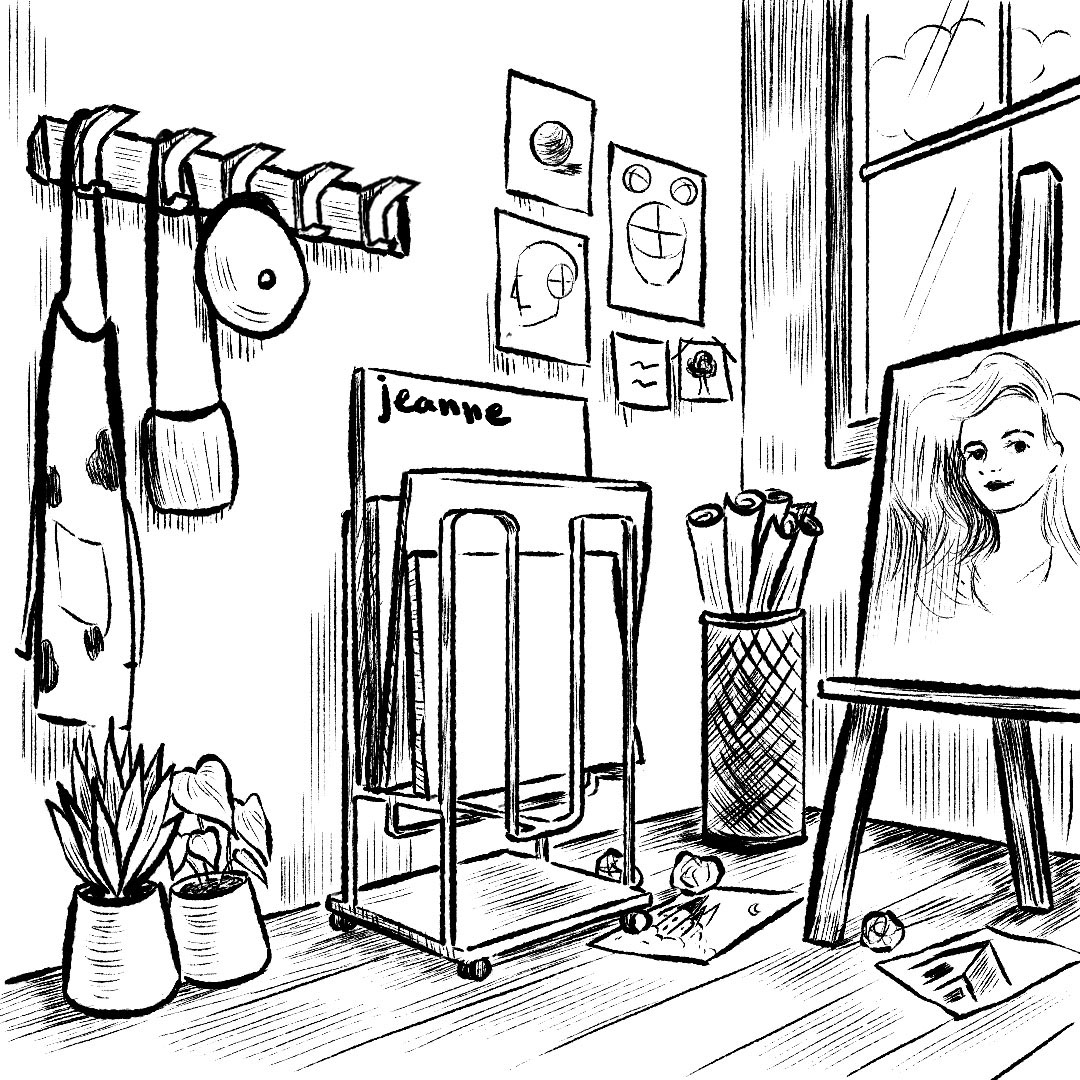
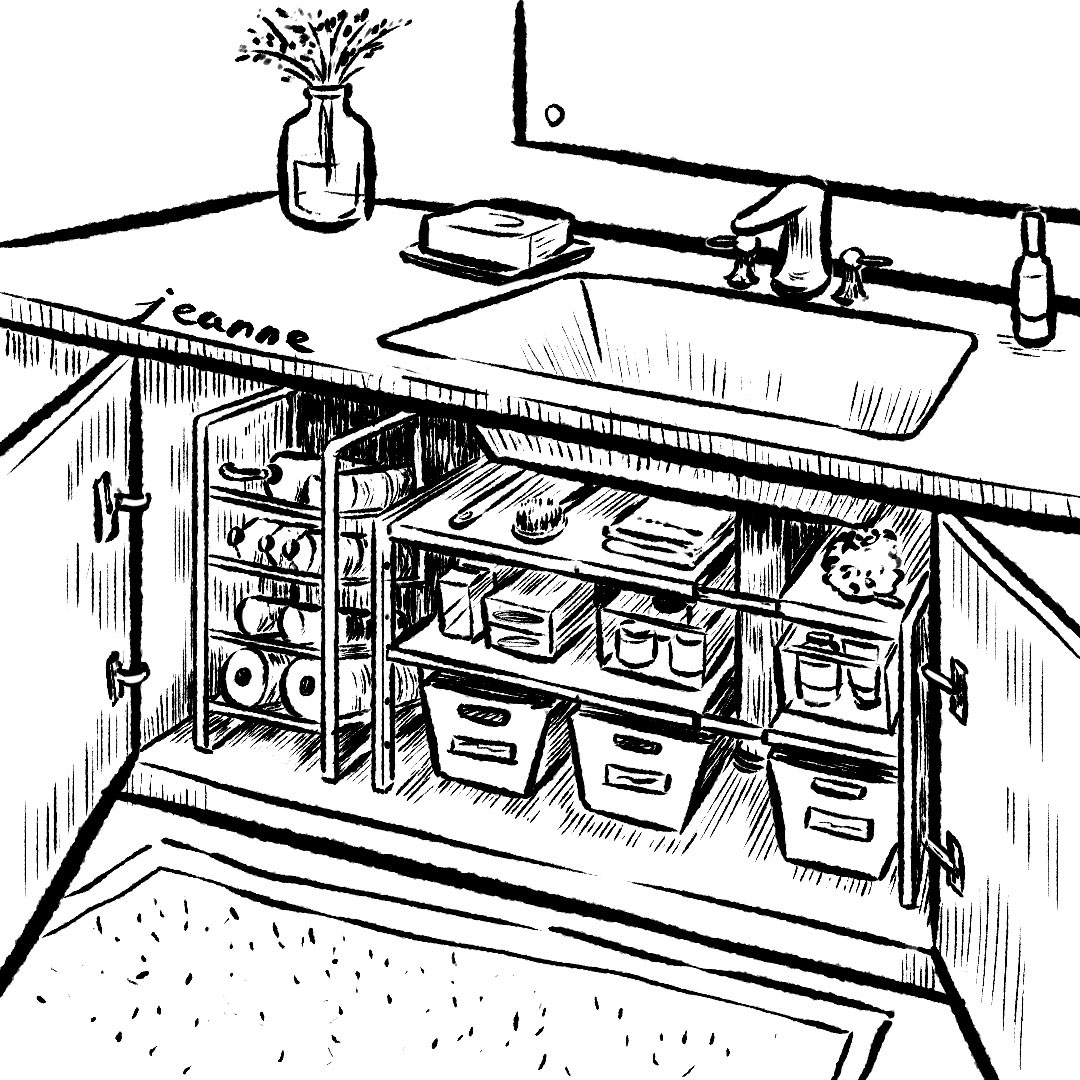
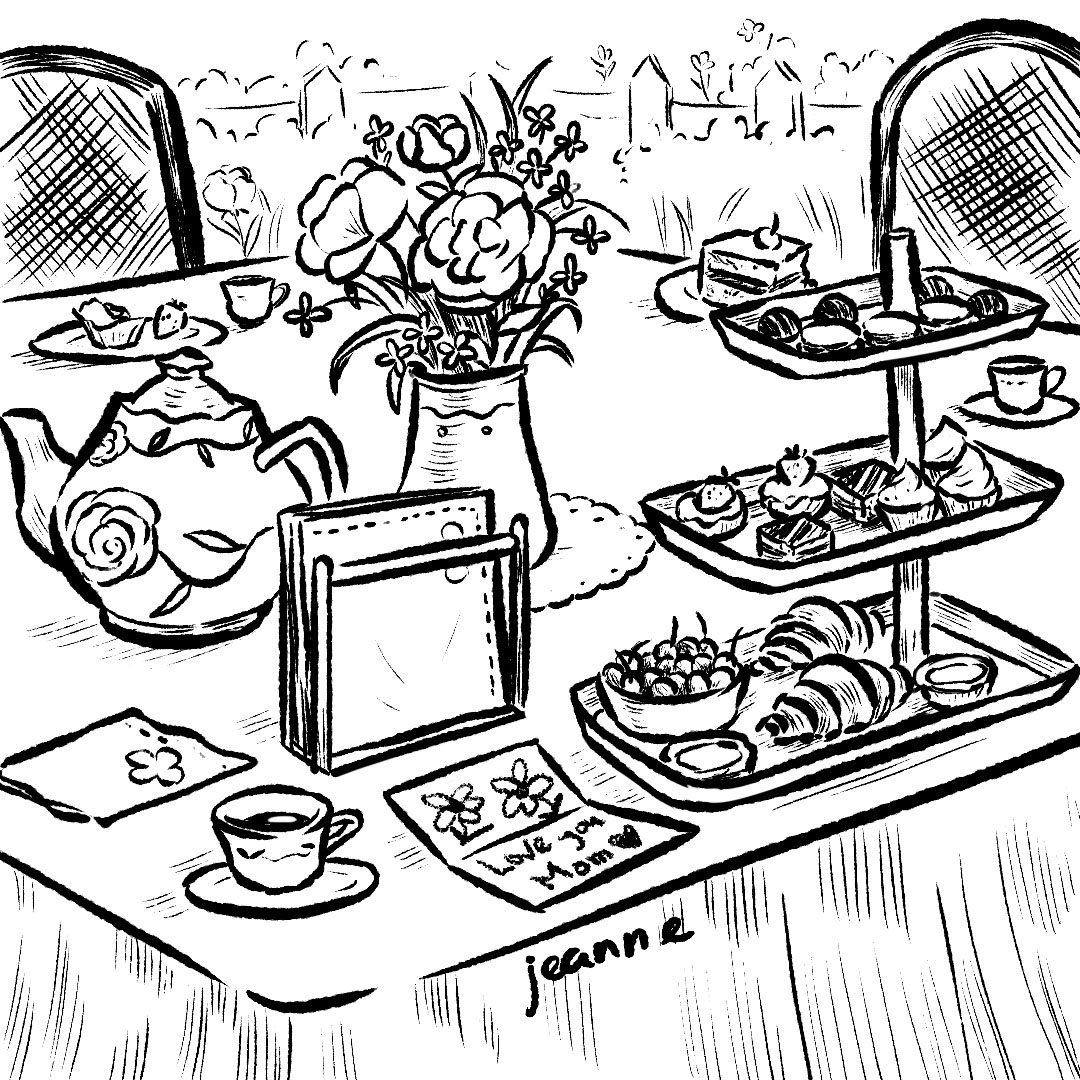
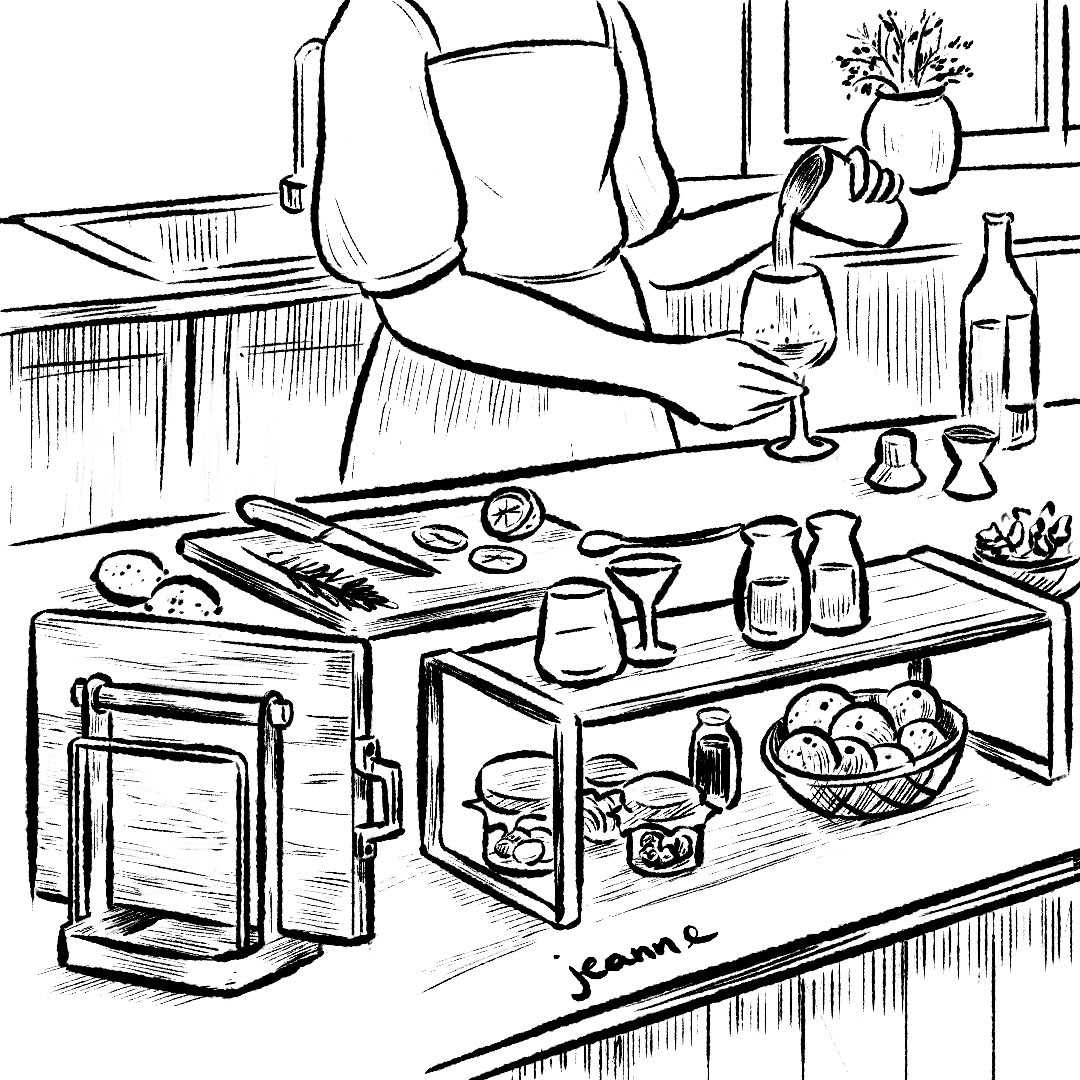
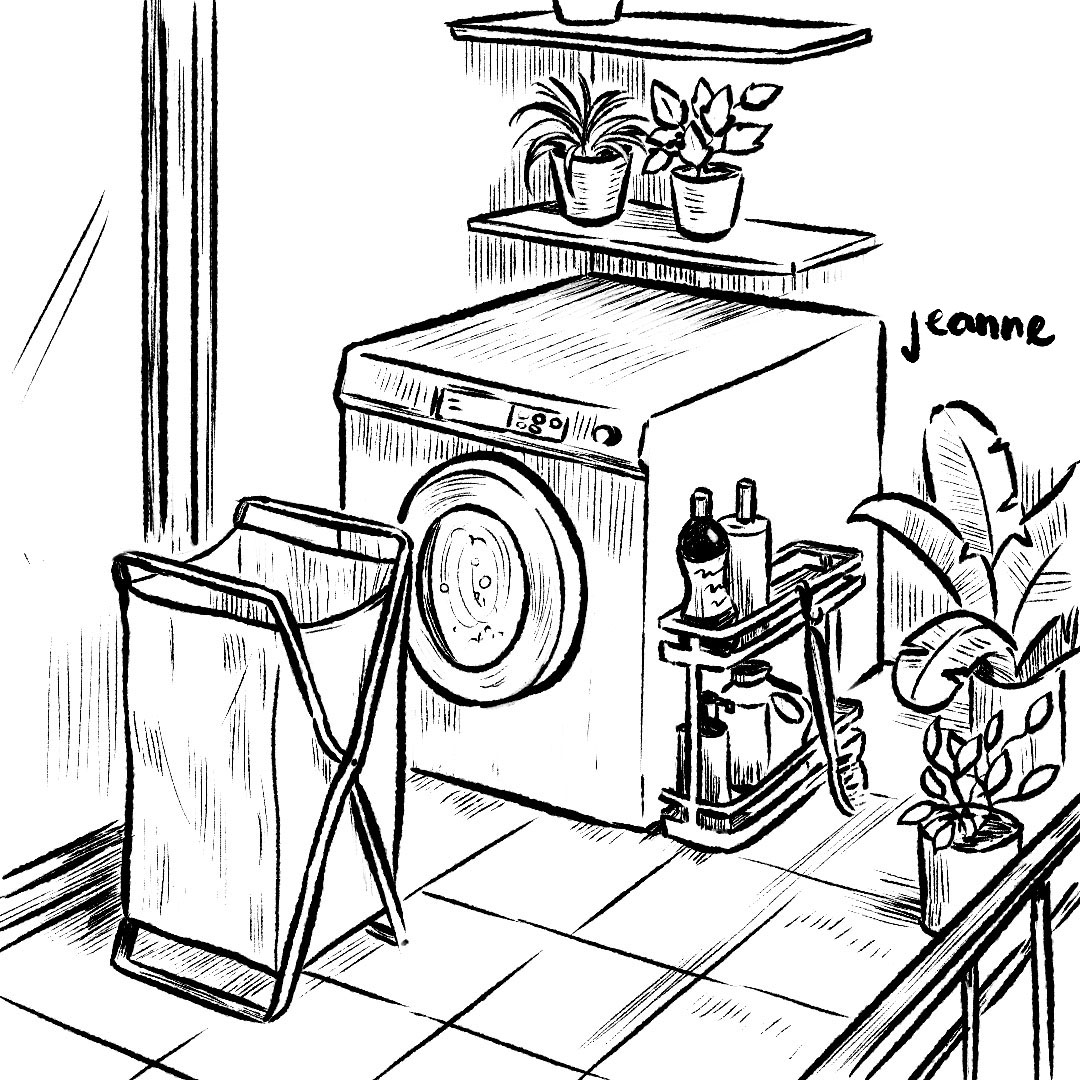
A while ago, I was contacted by one representatives of the brand Yamazaki Home to create illustrations showing their products in use. They have a wide rang of products and I was asked to send two illustrations per month for their social media campaign.

Of course, I jump at it, because I love organizing things myself, though not really regularly. But when I feel I’m a mess mentally, organizing physical objects does help.

The project lasts for more than a year, afterwards, they changed their approach to more photos by users.

The two below are my favorite pieces out of the whole campaign.

Inspired by my own sink
Inspired by English tea tables

This project pushes me to observe my daily life rather than scrolling through thousands of references online. Sometimes I just sit gazing at some random objects to relax.

What about you? What’s your favorite moment of your daily life?

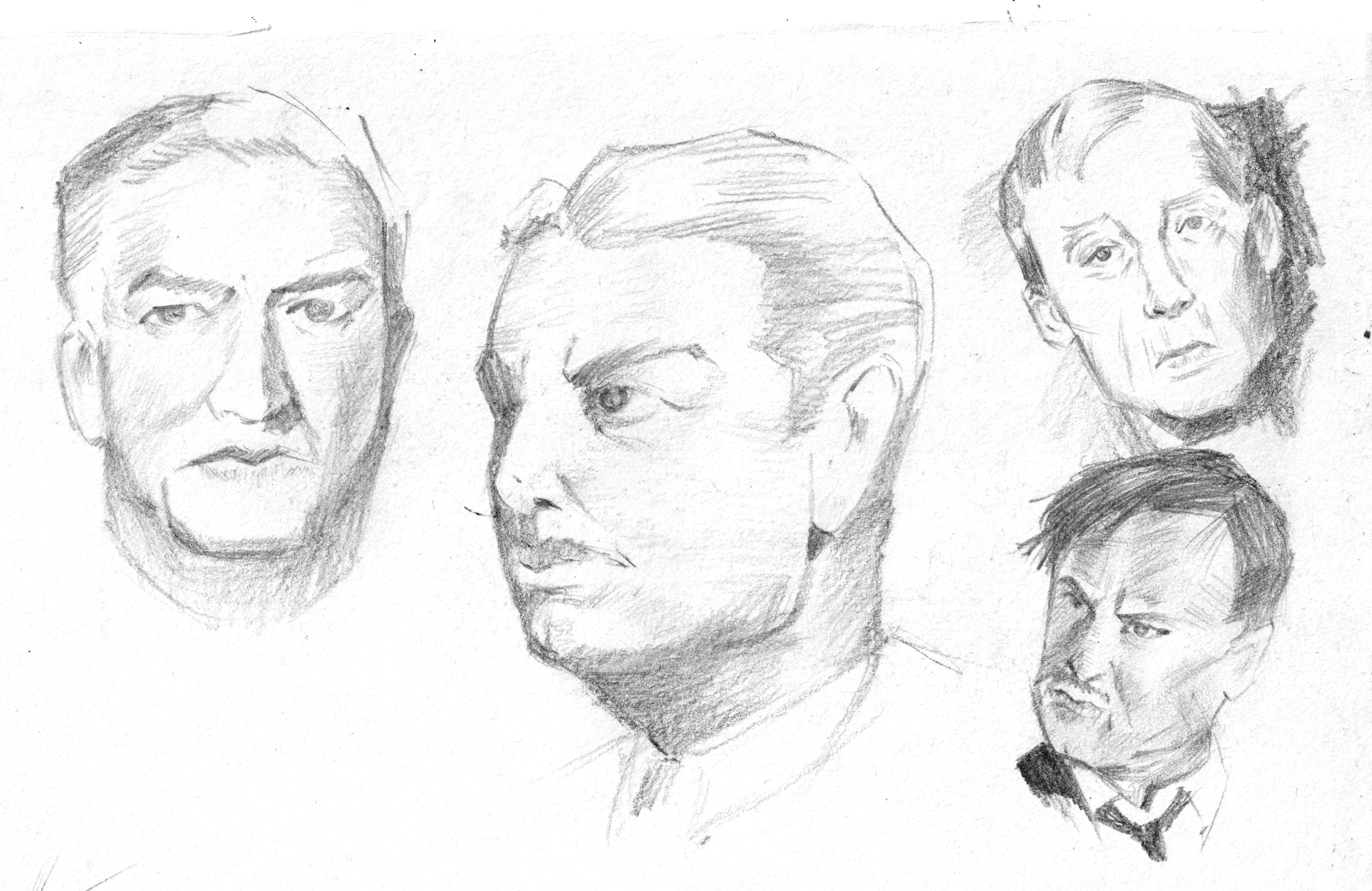
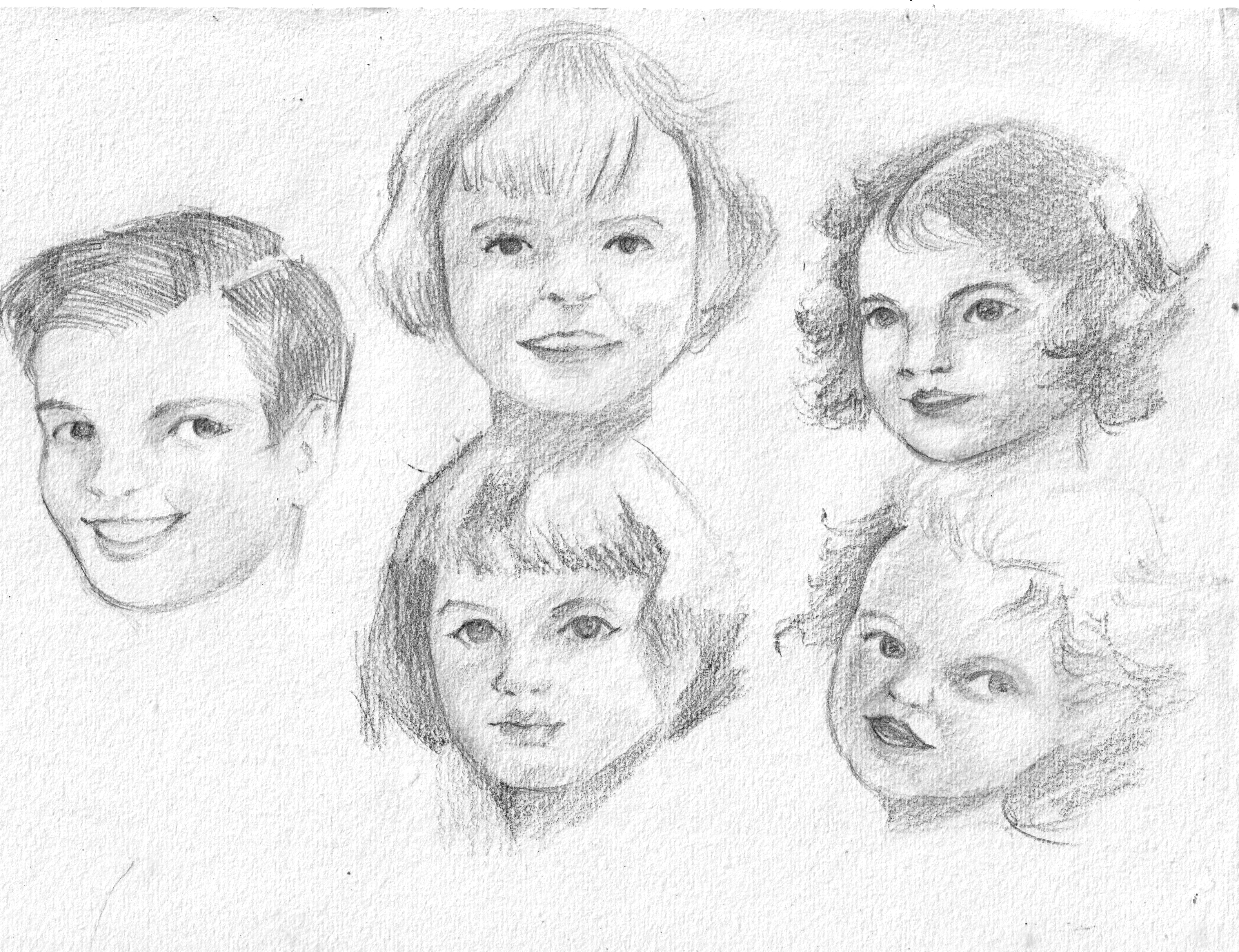
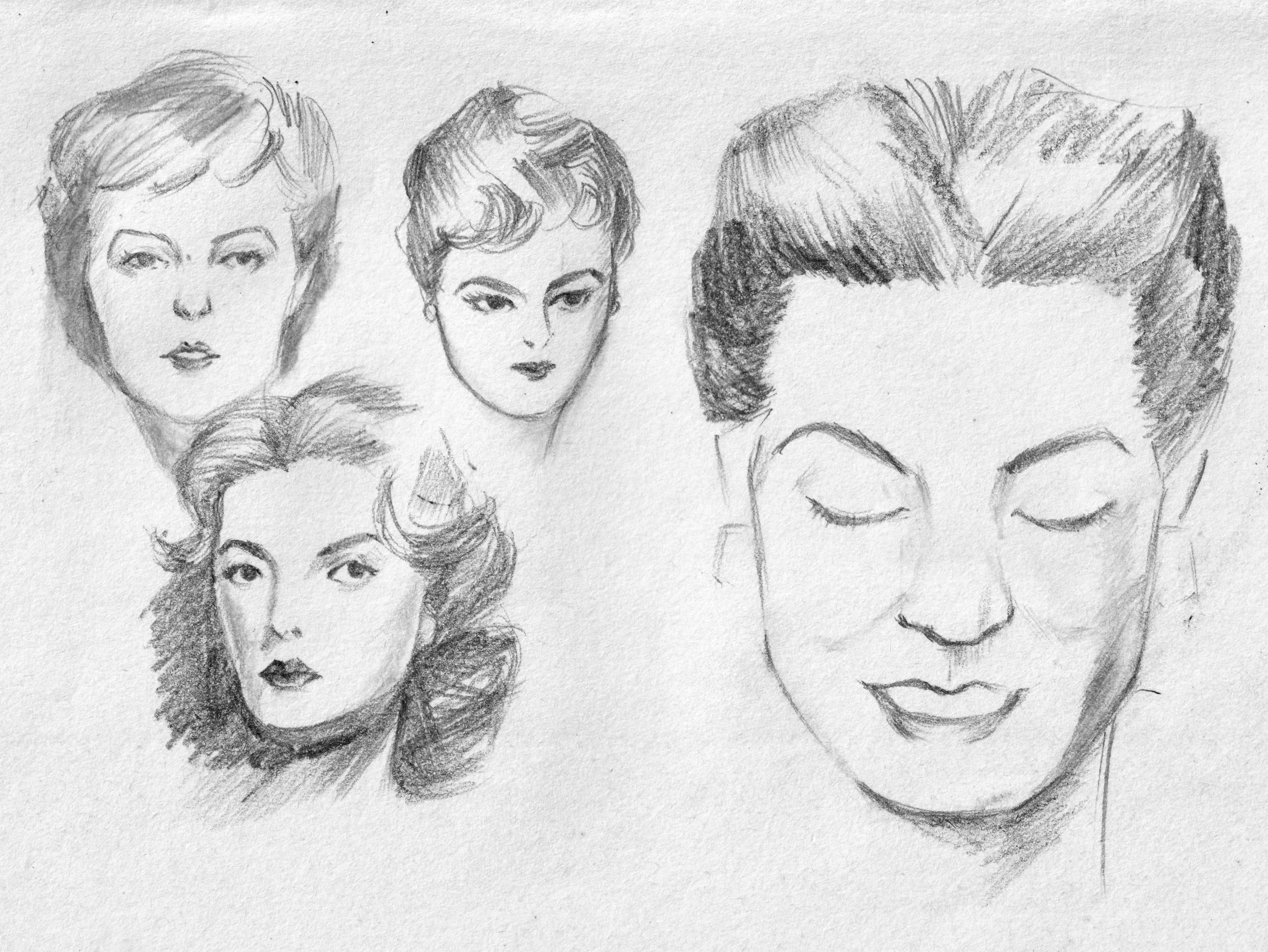
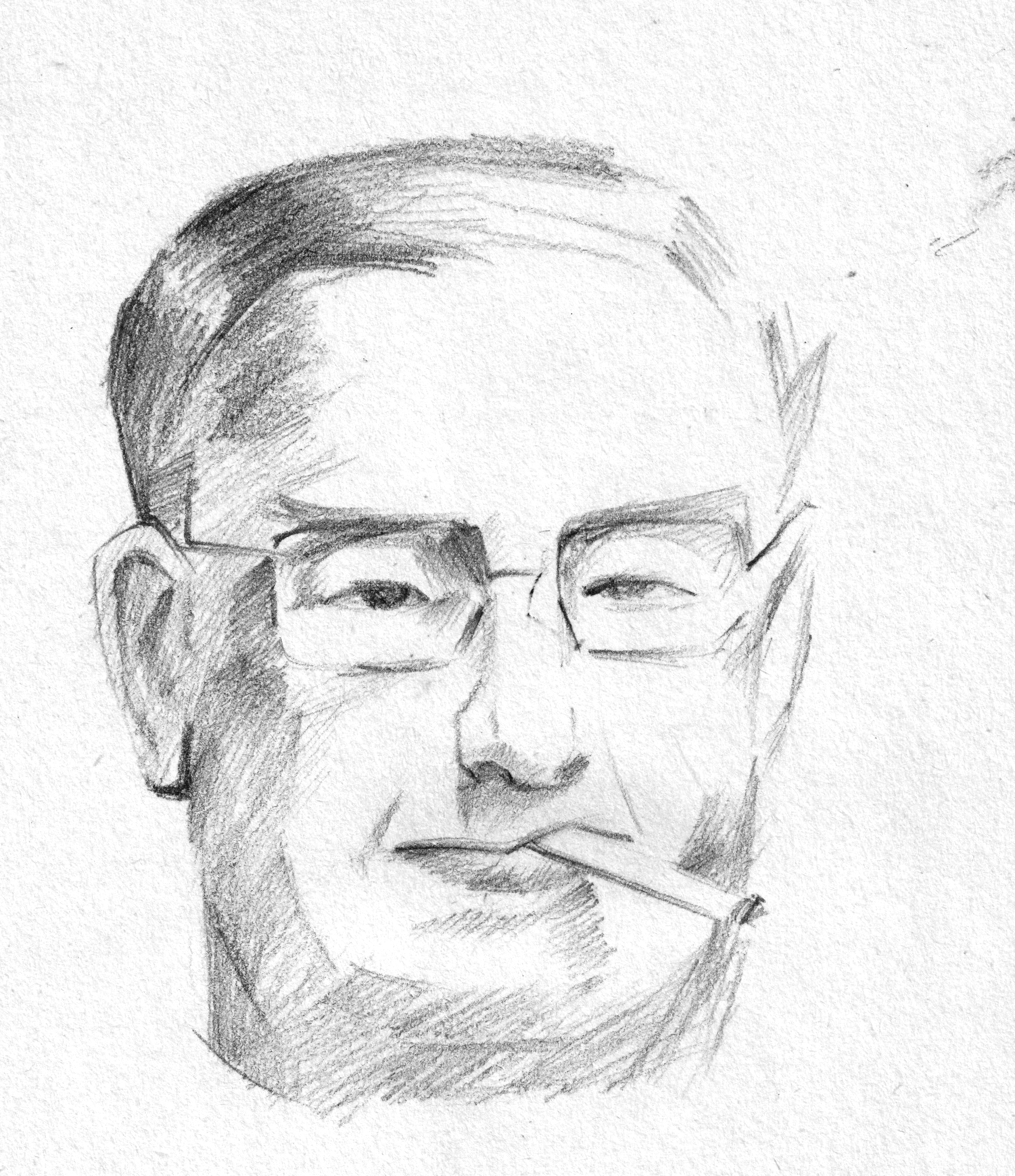
Drawing the human face and painting portraits

Human face is always a hard subject for me, since it’s easy to draw it ‘wrong’ and hard to fix it ‘right’. The annoying thing is even if I realize the face is ‘off balance’, sometimes I can’t point out which part need fixing or how should I re-draw it later.

That’s why it takes a long time for me to be able to draw a face that I can feel satisfied with.

My start

My first proper learning would be Proko’s drawing face videos, which is based on Andrew Loomis method. Later, I discovered Andrew Loomis wrote a whole series of books about arts, especially about figure drawings and portraits. The book I read, “Drawing the Face and Hands” was published in 1956, yet it’s still useful in learning the general structure of the face. The books were divided into male, female, teenager, kids and a small section at the end about hands. He often began with building the blocks first, then slowly adding features. The proportion of human face is similar among all people, yet, age and gender make the main difference.

I tried copying the sketches in the book

The only few drawbacks of the book are it don’t have any exercise or suggestion about practices and it was written in 50s language, which is lengthy and flattering for me. However, I can still feel the warmth and efforts of Andrew Loomis in his first few words opening the books “Now let’s get to work in earnest”.

The first course

Later, when I took the course “Deconstructed: Drawing People” by Viktor Kalvachev, he shared his method learned from a criminology professor to recognize faces based on basic shapes. Actually, you can see that section free on Schoolism channel.

Together, I found it easier to draw faces from images and came up with my own design for commissions.

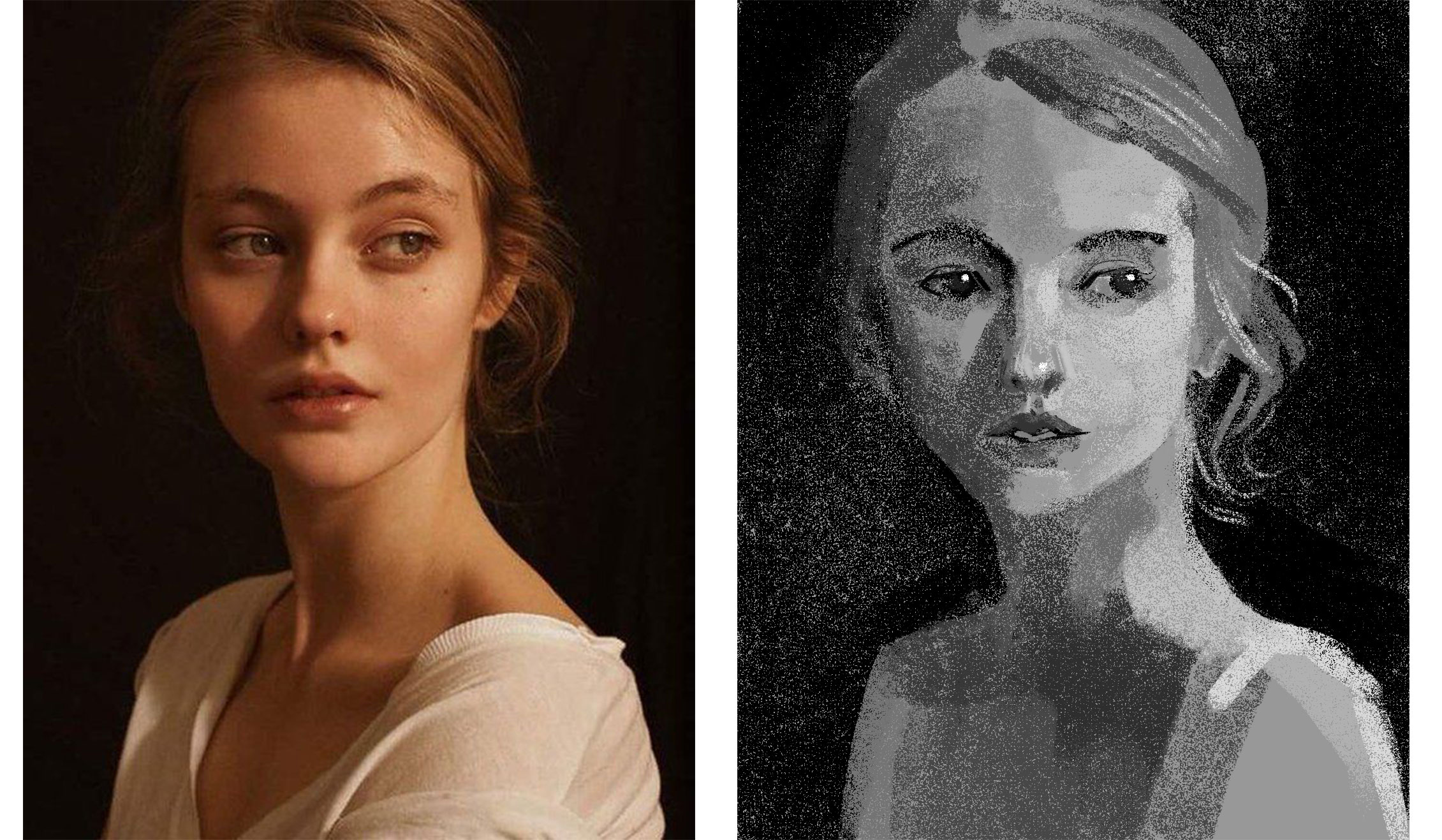
A 60-day portrait painting challenge

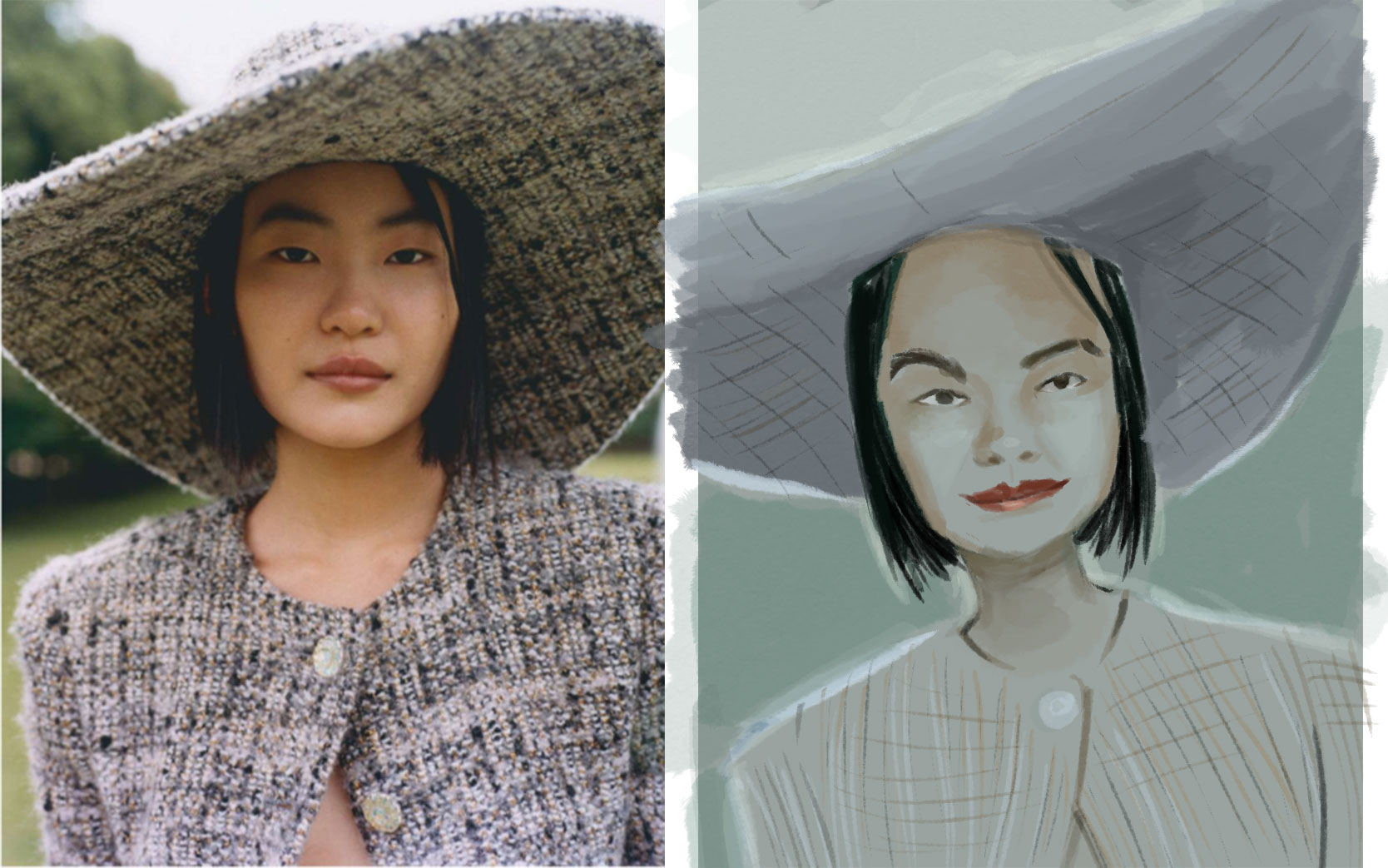
Feeling okay with my line drawing/sketch, I start to look for more ways to paint the face. There are realistic approach and stylish approach, color and lighting setup are also considered. I want a bit of fun so I try the Digital Painting Workout by Woulter Tulp (also a course on Schoolism). The course’s main purpose was to practice digital painting, yet the instructor prioritized portraits because they are subjects that can be tackled in 30 minutes or so. For each day in 2 months, I spared 30-40 minutes to paint an image based on the instructor’s guidance. Each painting focus on one goal only: value or color or rendering, etc.

The useful side of this workout is that it allows me to learn painting both way: realistically and stylishly. I learned that there’s endless possibilities about painting a person, the important point is to paint how I feel about the person.

Unknown source
Source: Freepik
Model: Ludan, from Vogue

My most recent course

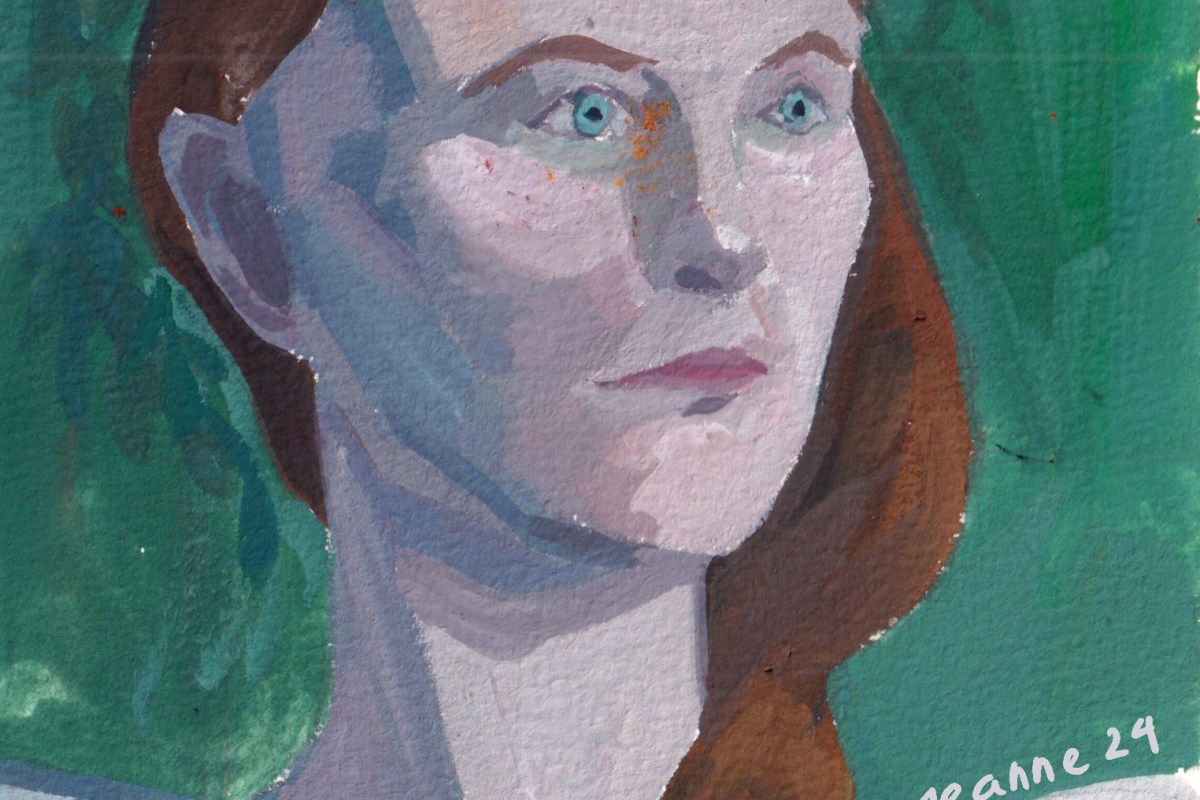
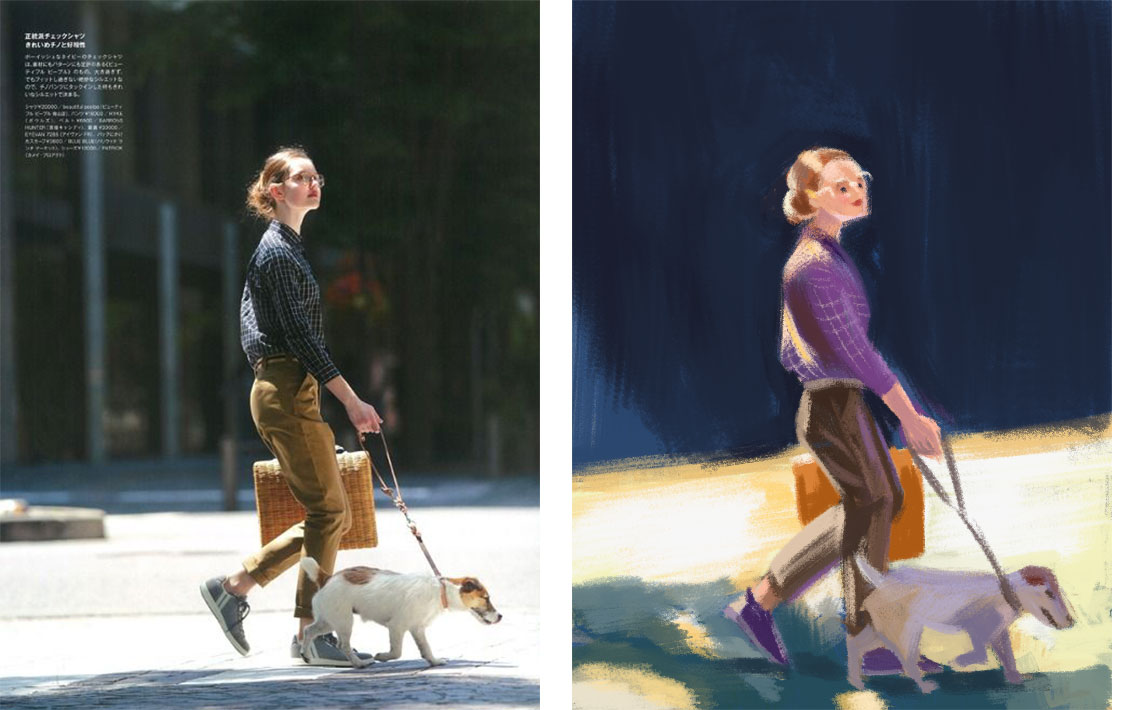
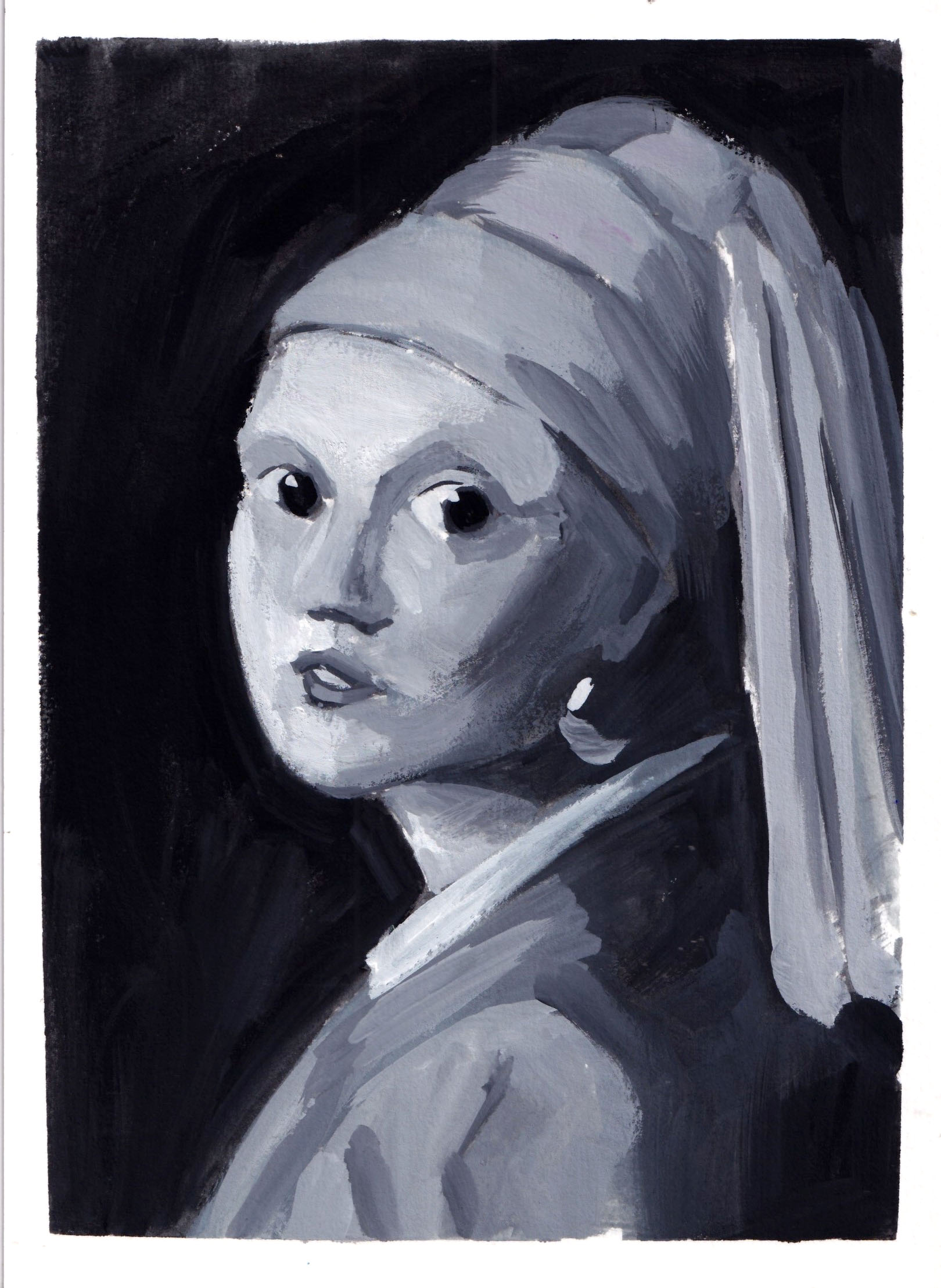
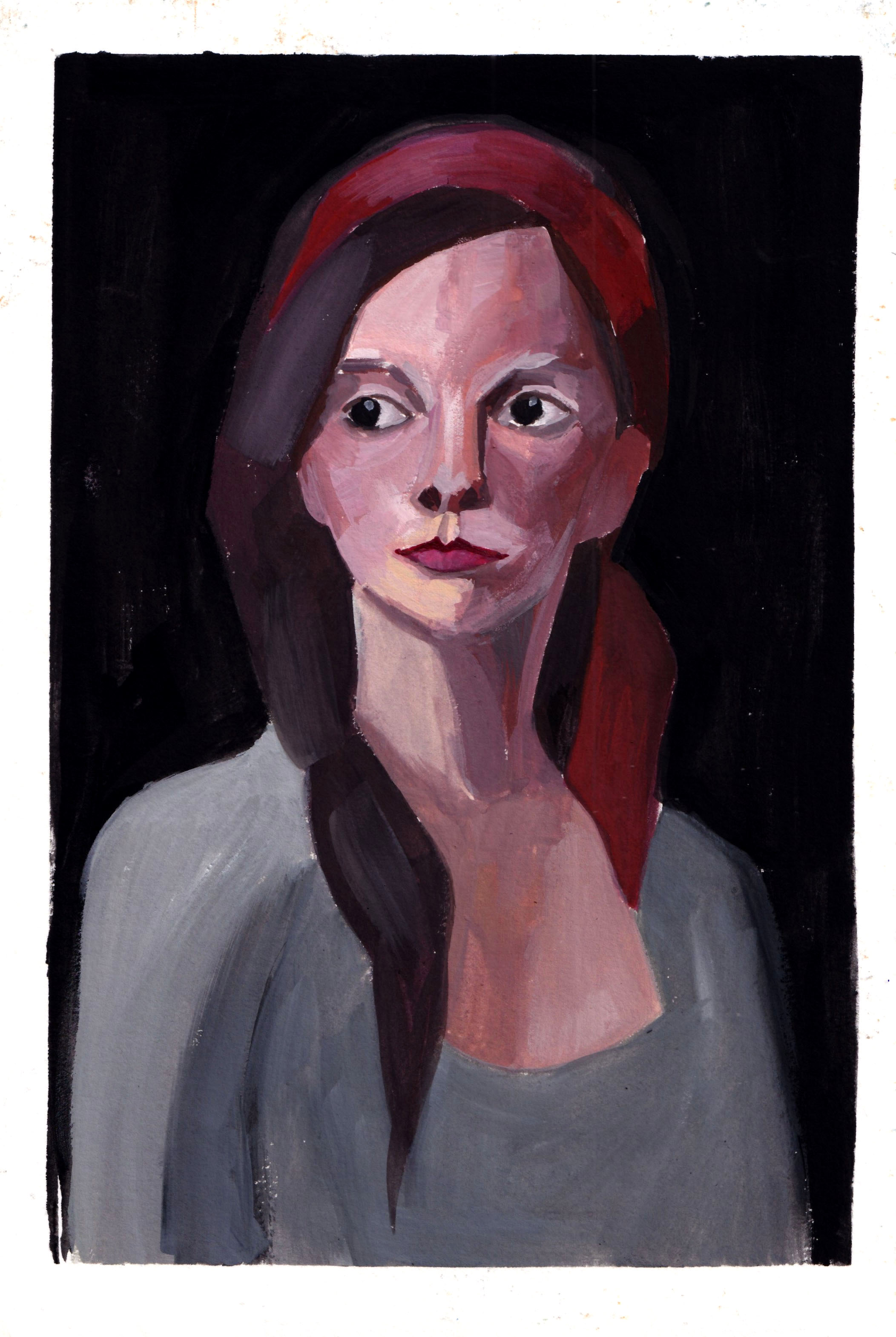
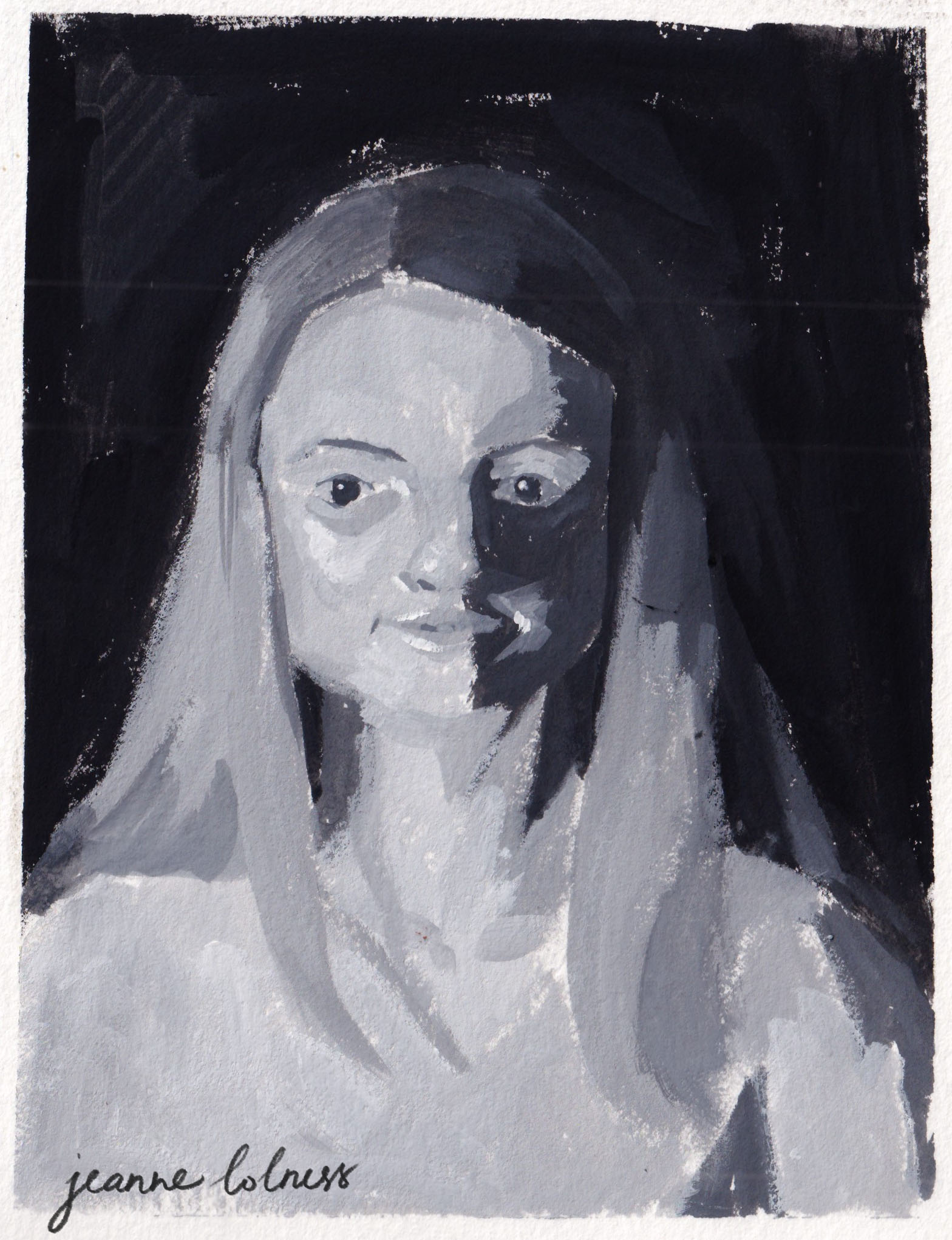
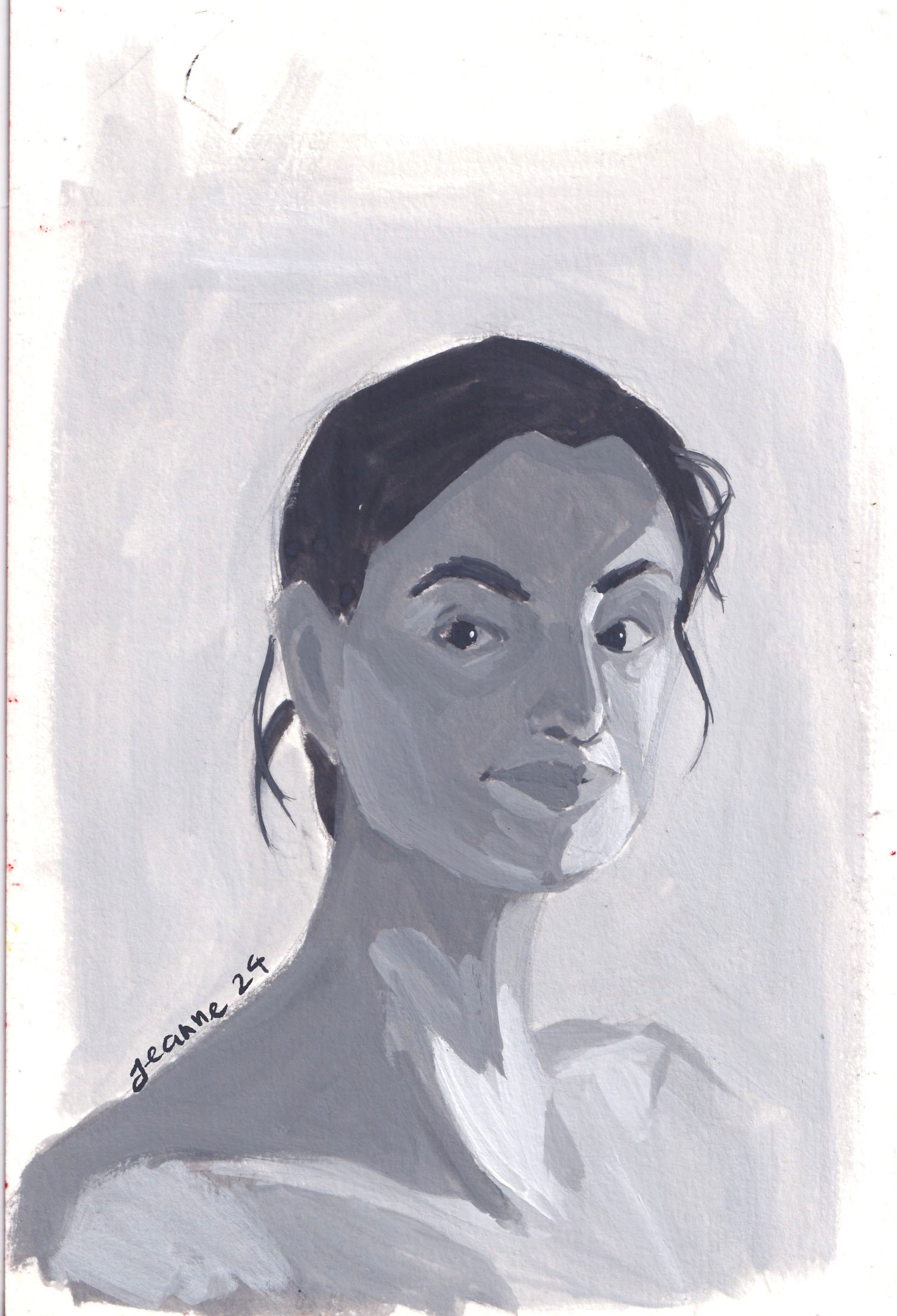
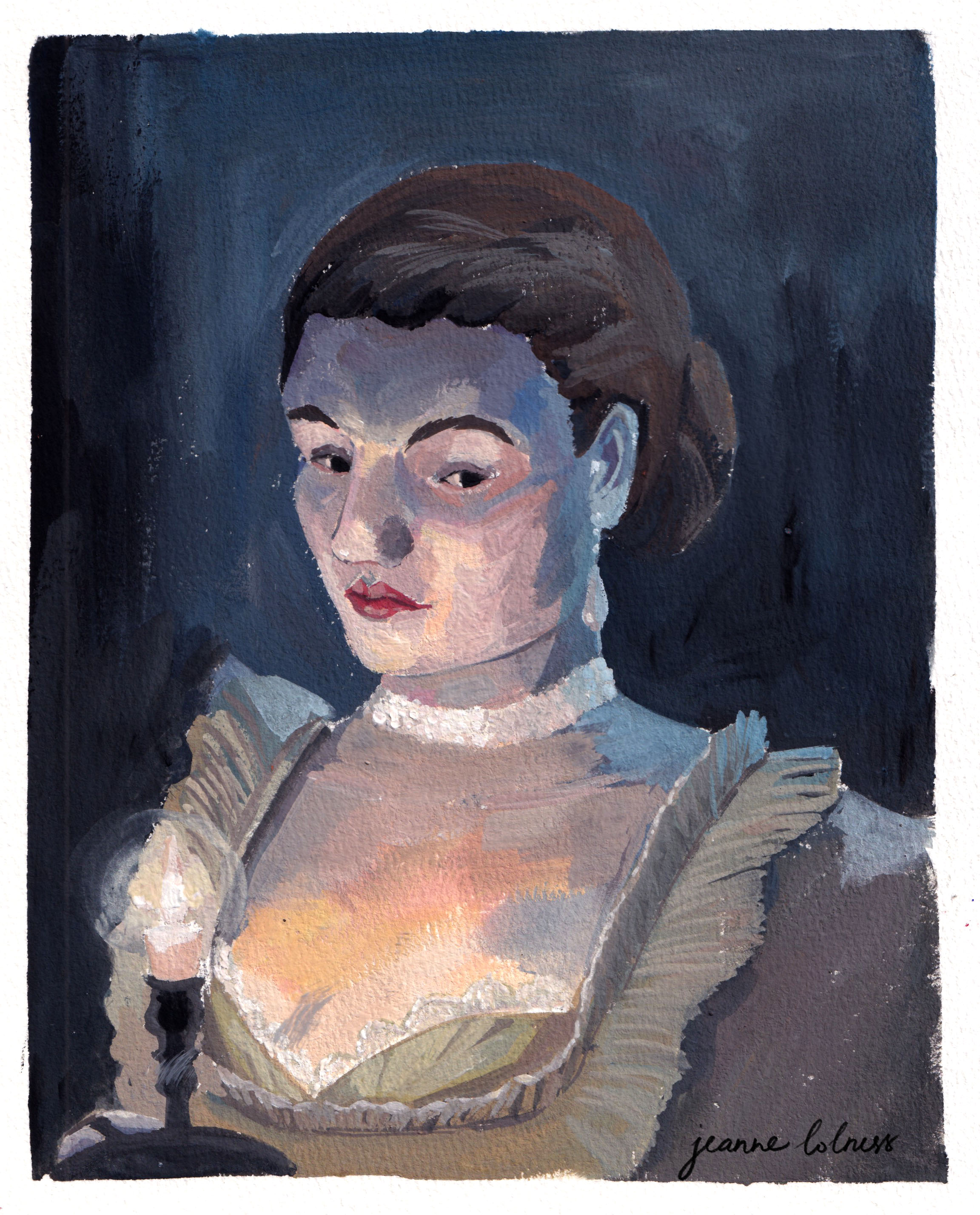
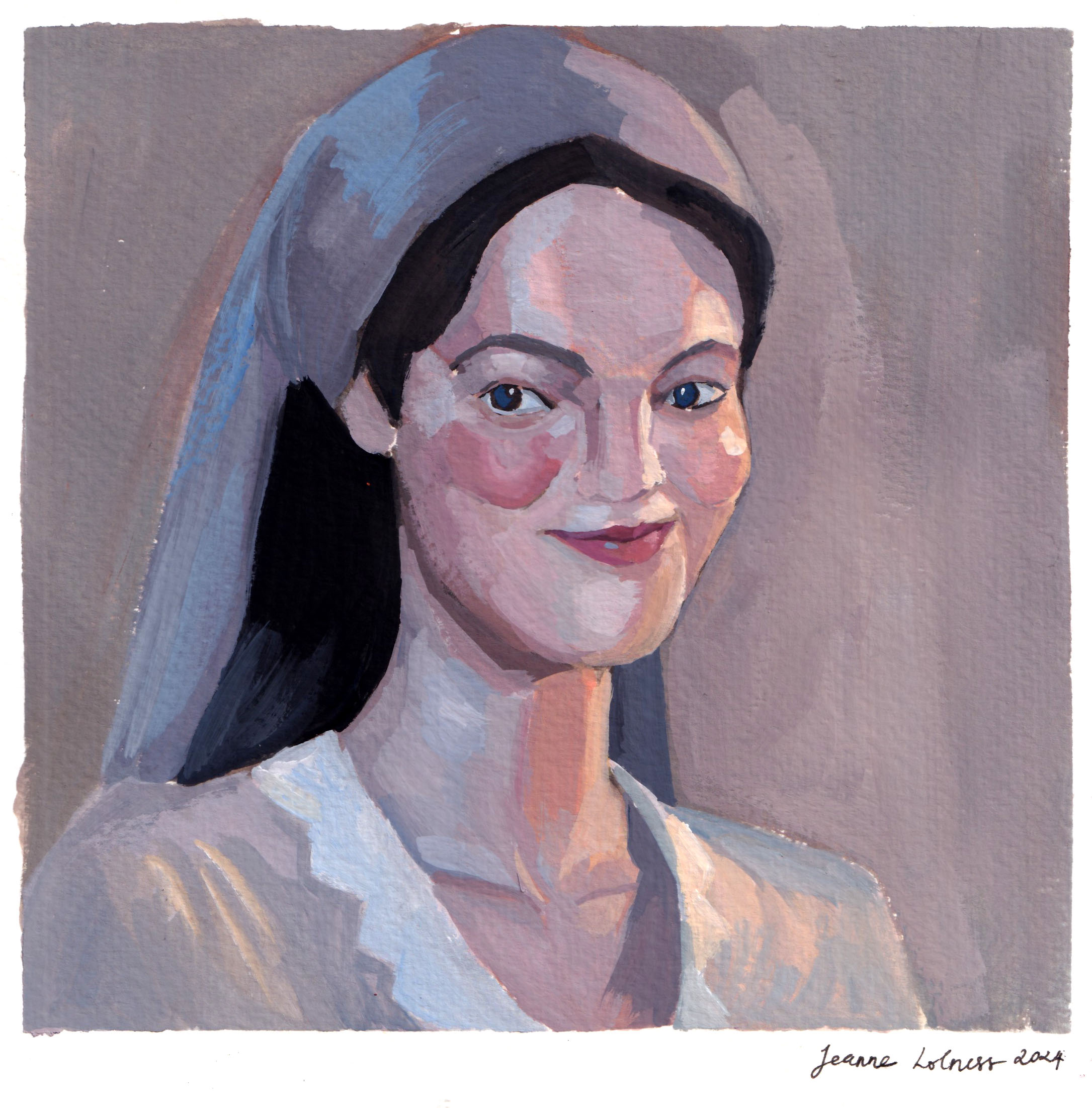
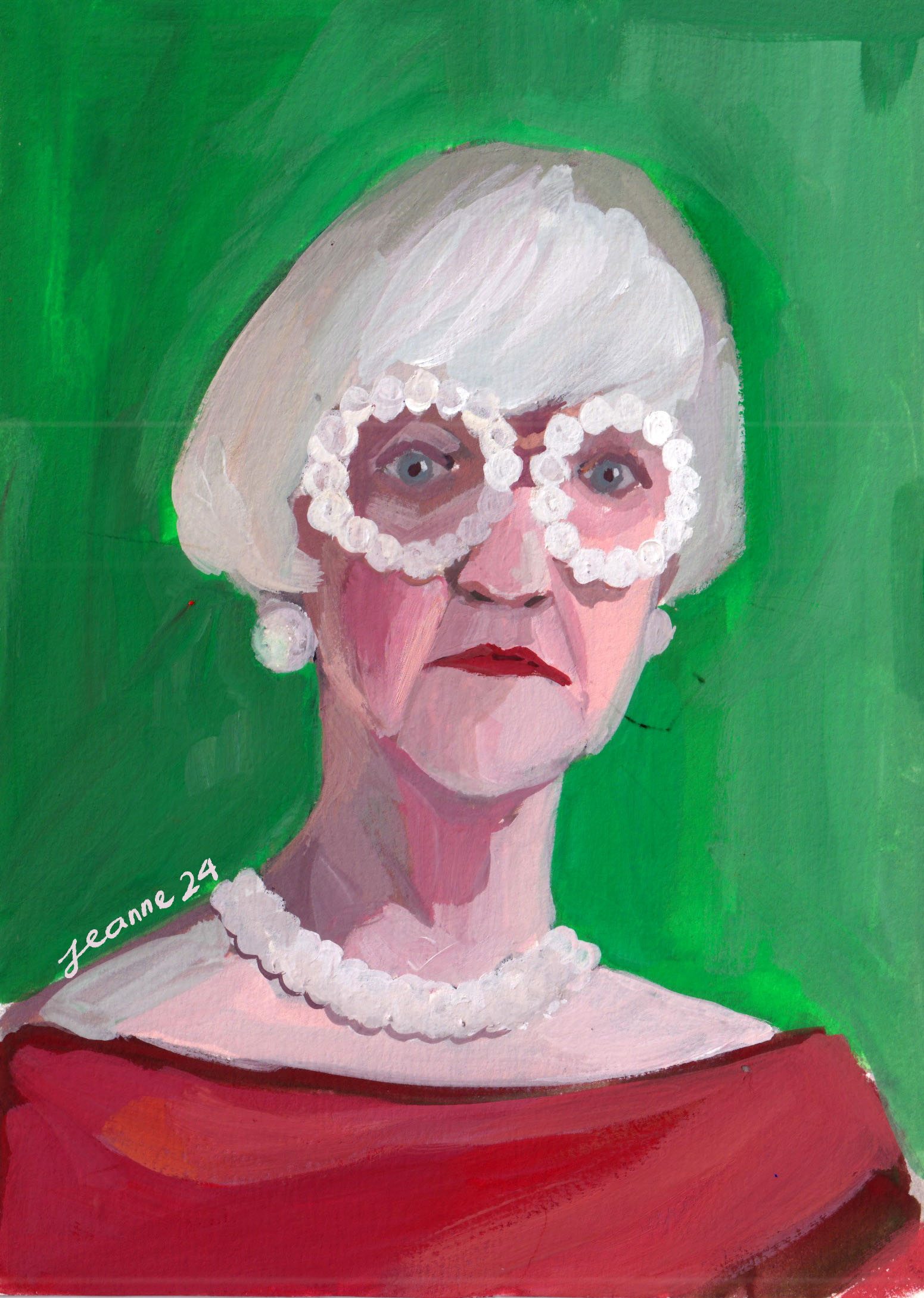
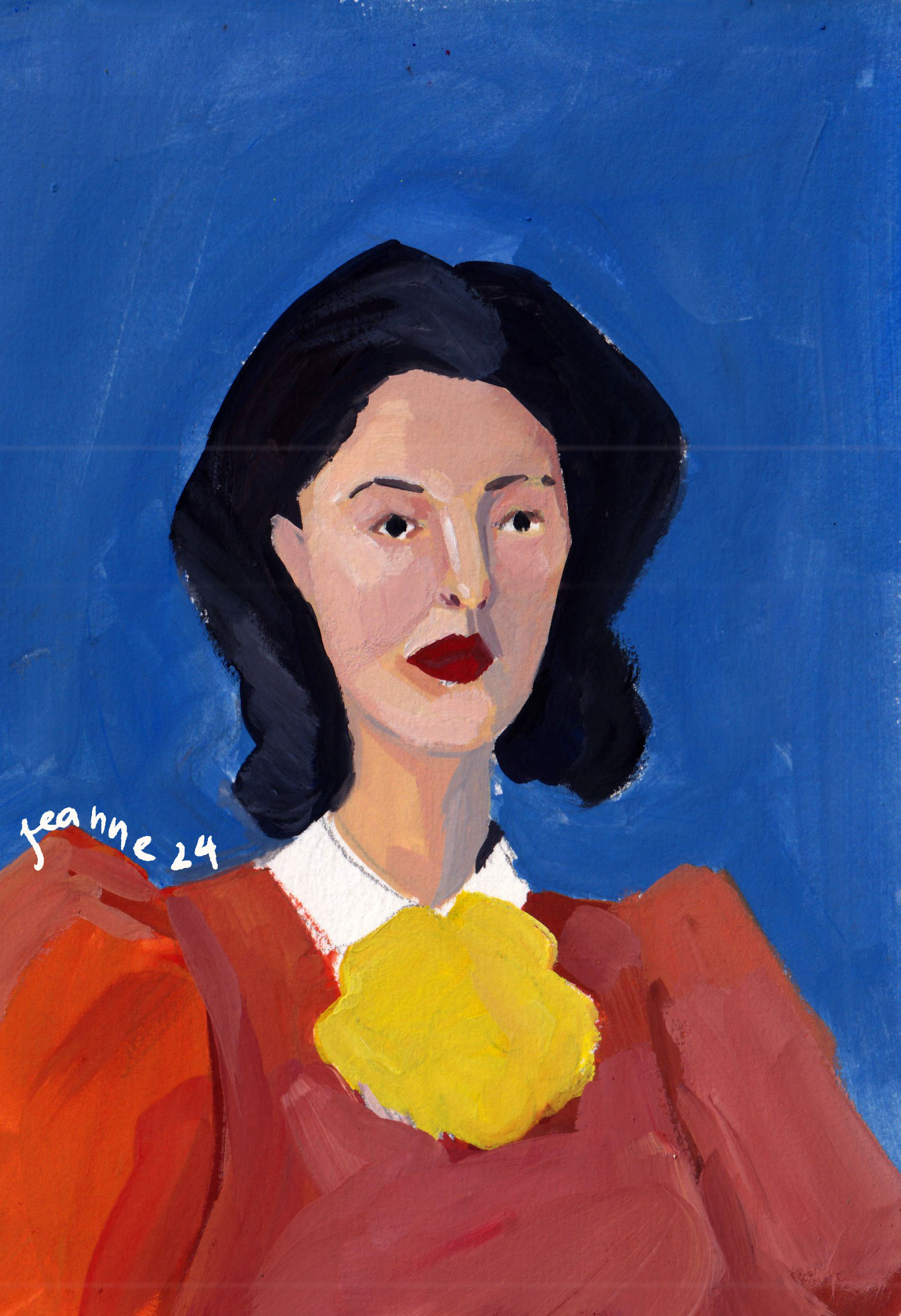
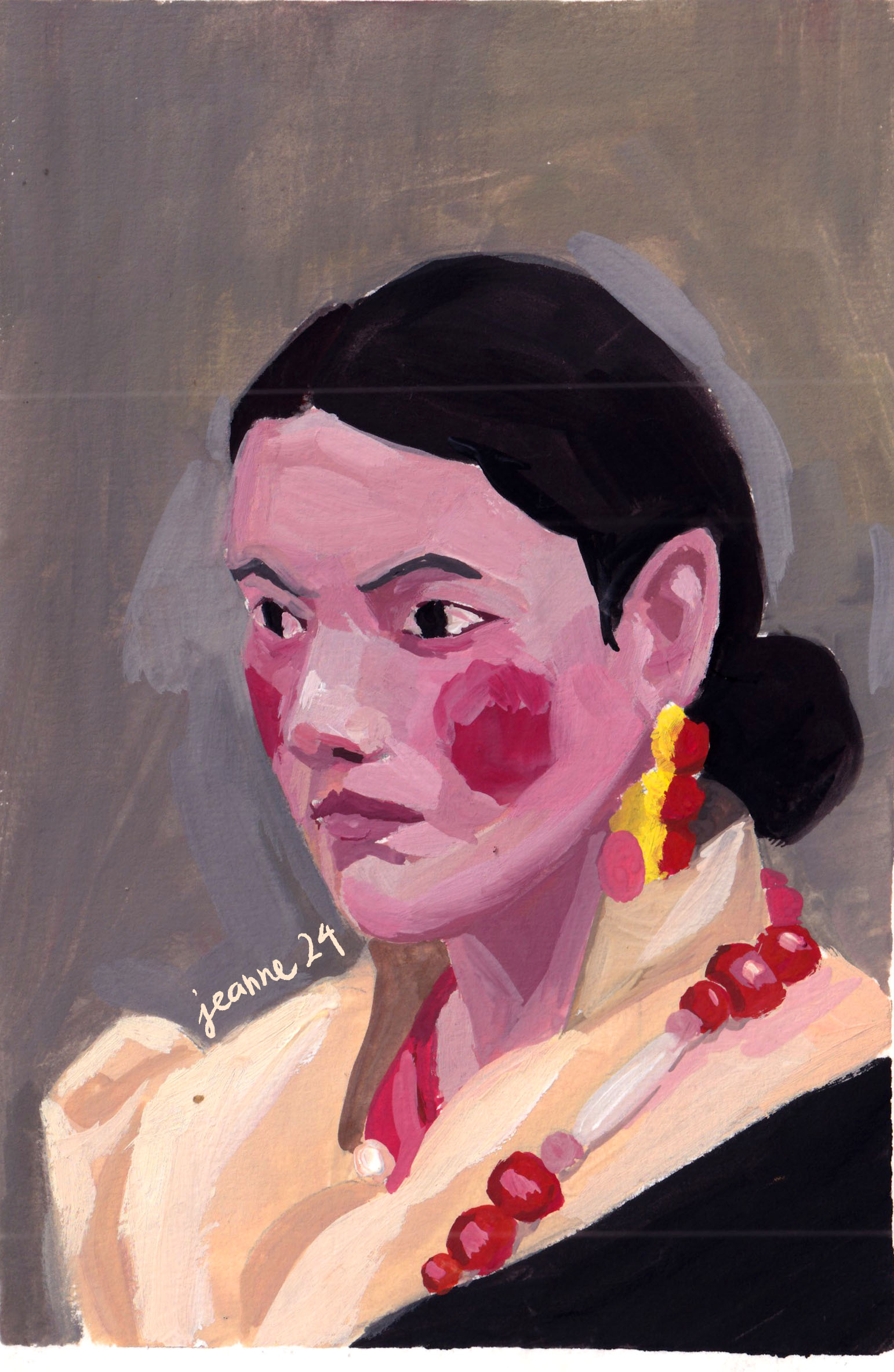
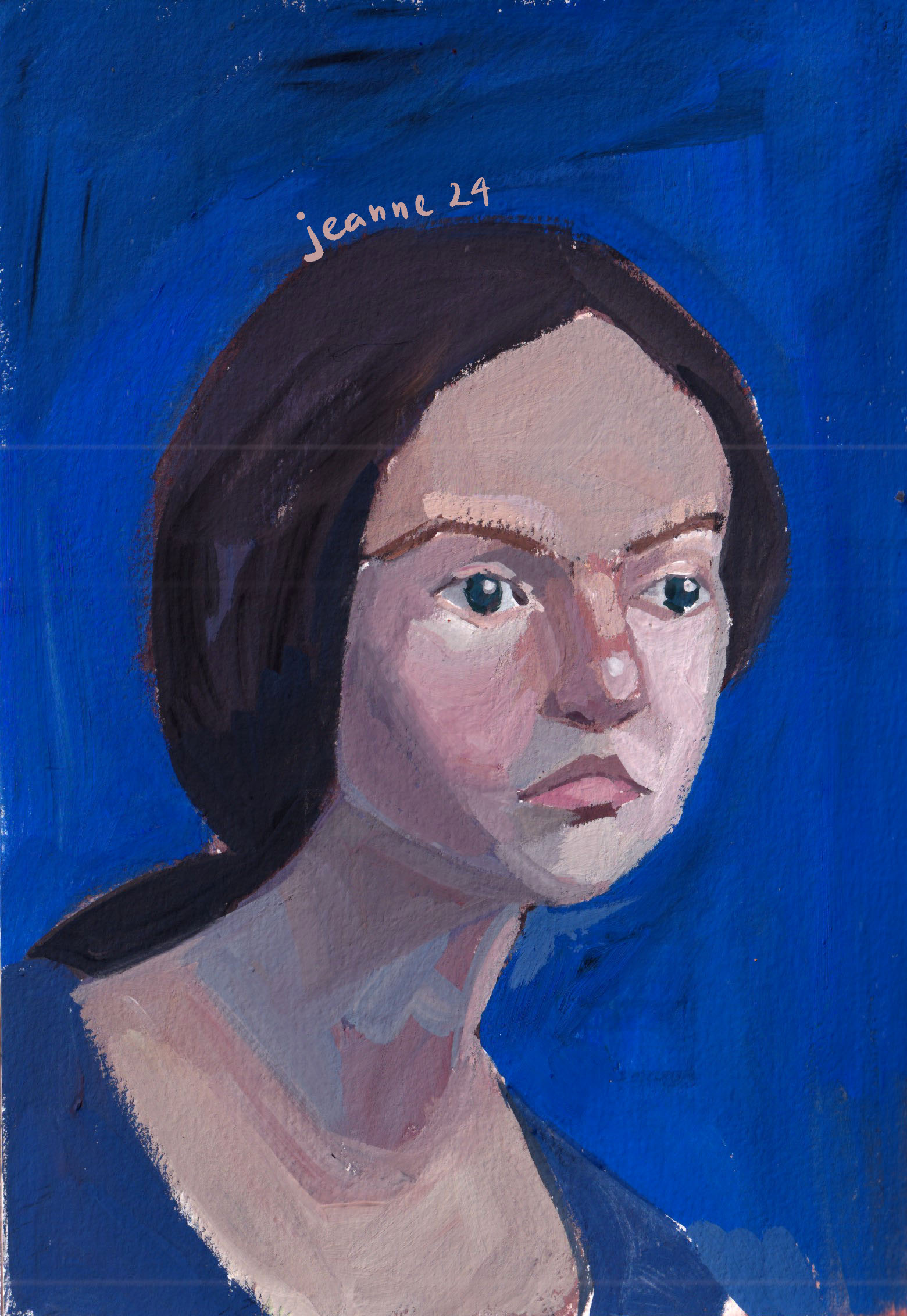
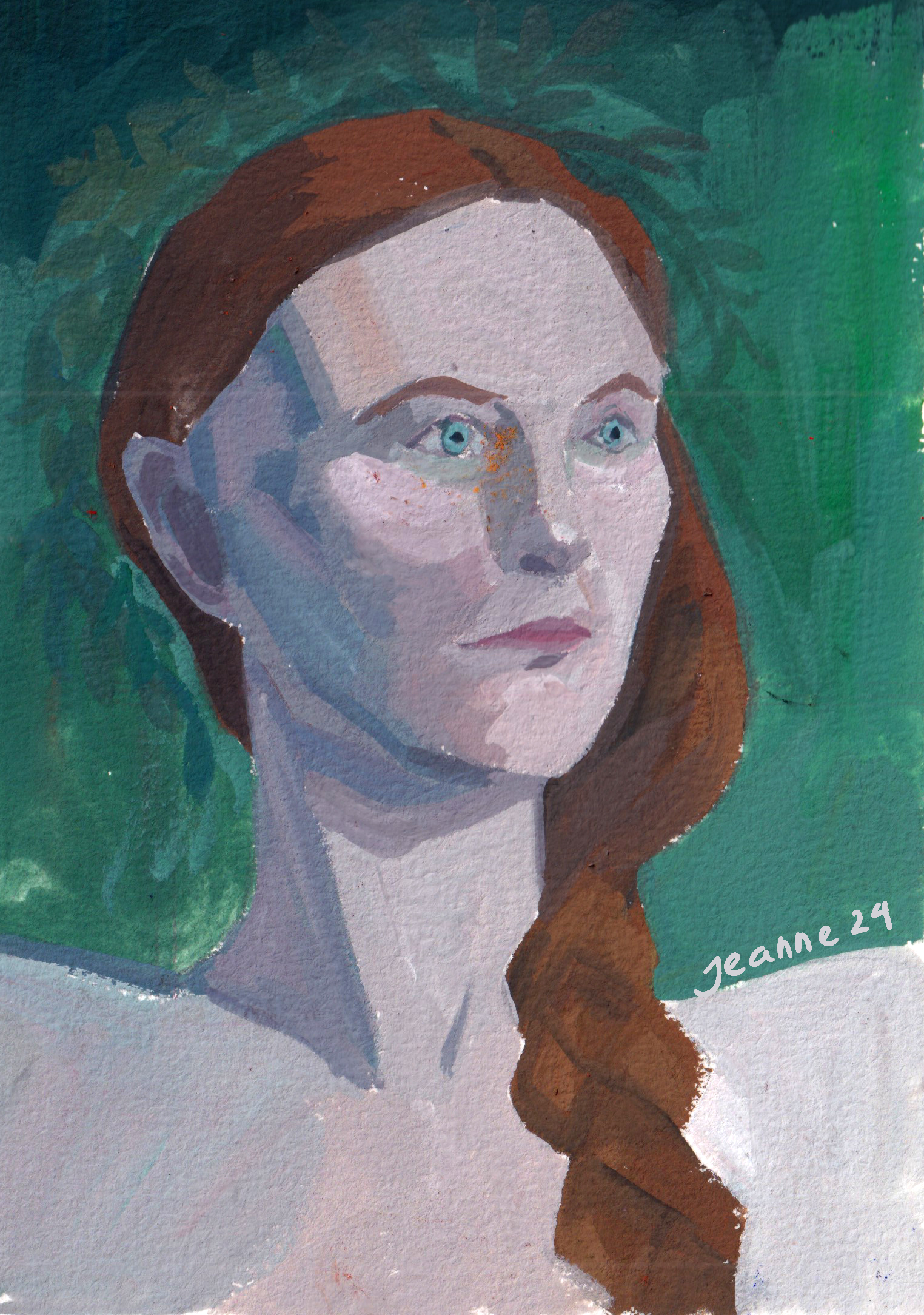
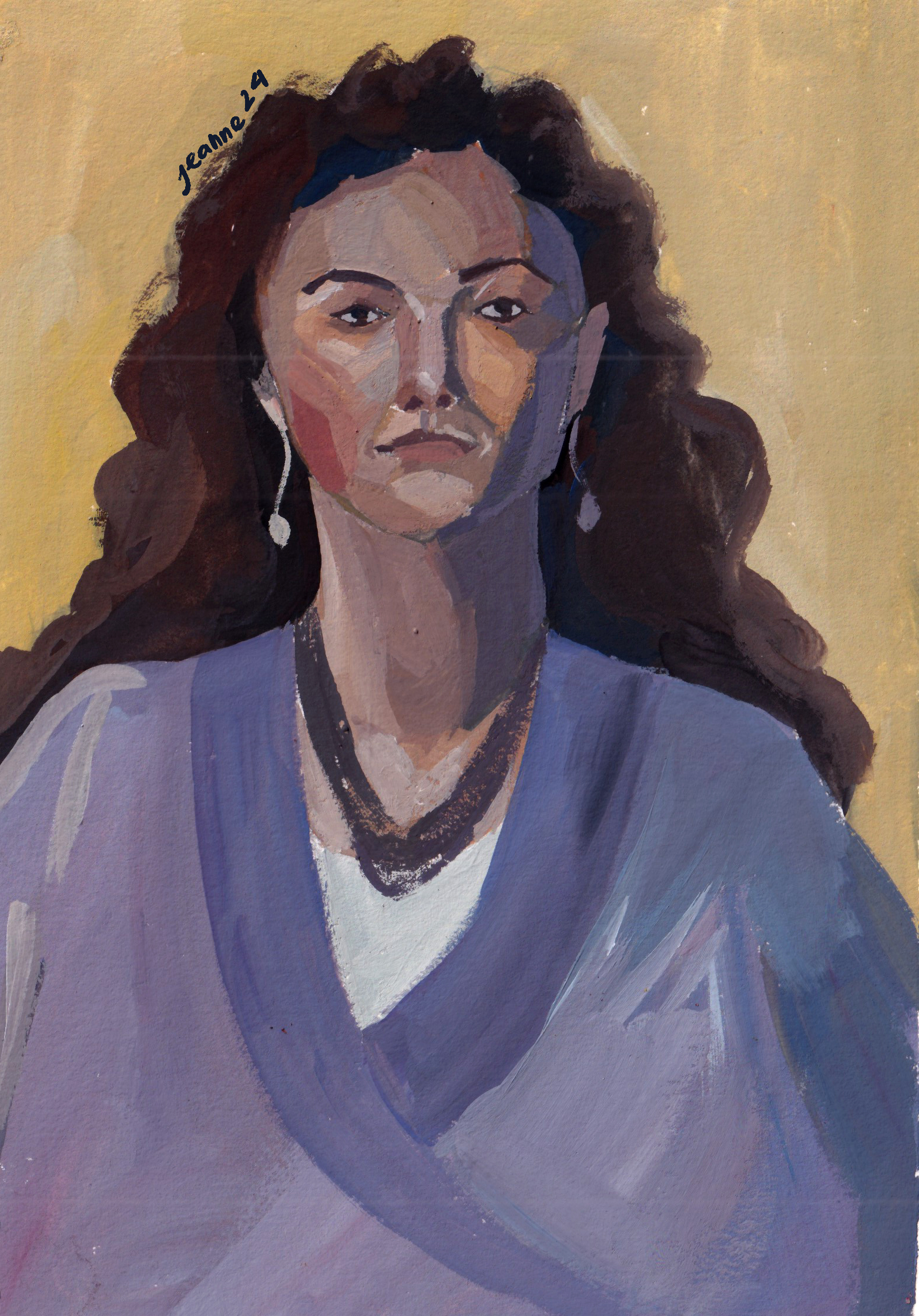
The most recent course I took is about color, and the subjects used were also portraits. This time I used gouache for the whole course, trying to mix color traditionally. The side effect of this course is that my portrait skill improved a lot as well.

Credit: @Lee Avision/ Trevillion Image
Actress Pınar Deniz
Based on photo by Photographer Sirli Raitma
Based on photo by Photographer Leslie Zhang JiaCheng
Unknown source
Credit: @Paradise studio
Model: Jessica from Croquis Cafe
Photographs by Paolo Verzone, Egyptologist Monica Hanna, from National Geographic

These paintings aren’t used for commercial purposes, just for education and promotion only.

I aim to use realistically but not in order to copy the image exactly, the important is to paint how I feel about the model, how I think about her, what’s the real or the imagined story I could tell with her eyes, her skin, etc.

What’s next?

I want to learn more about human expressions and experiment with specific lighting, especially dramatic/ theatrical set up to tell a story. And I will need to revisit the face structure to keep my knowledge fresh, but with a different approach/method to keep the art as fun as I originally started it.

Process of a difficult painting: looking back to childhood

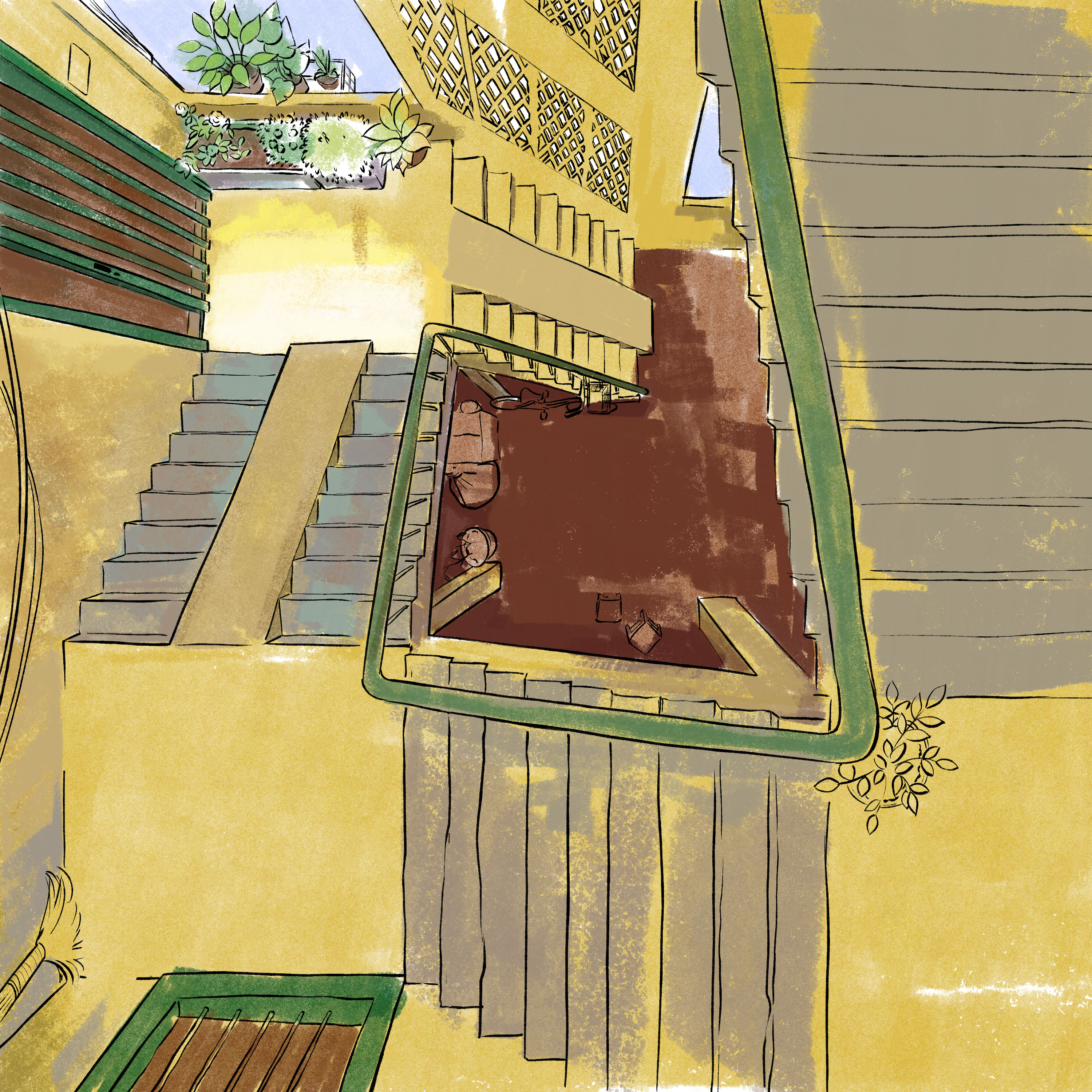
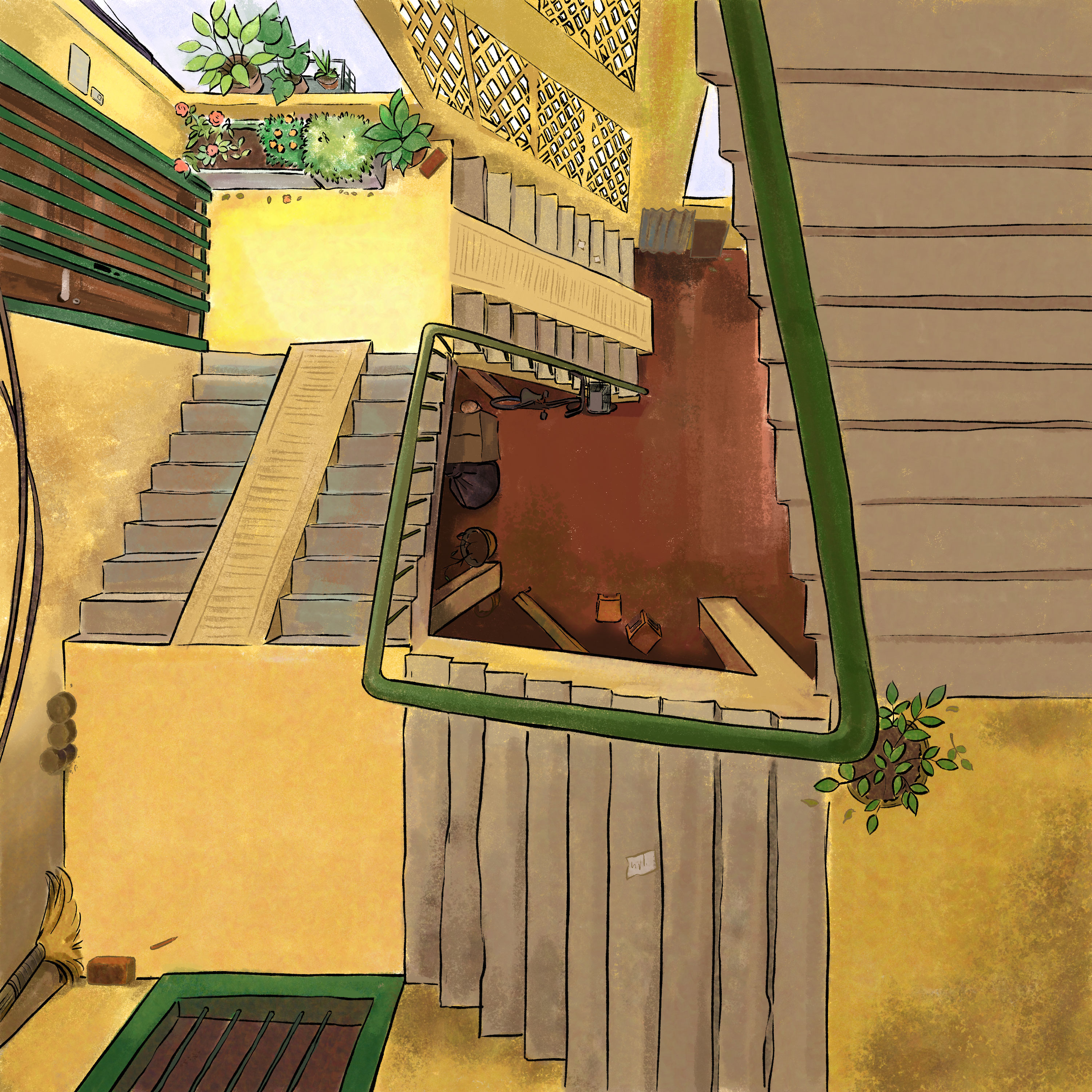
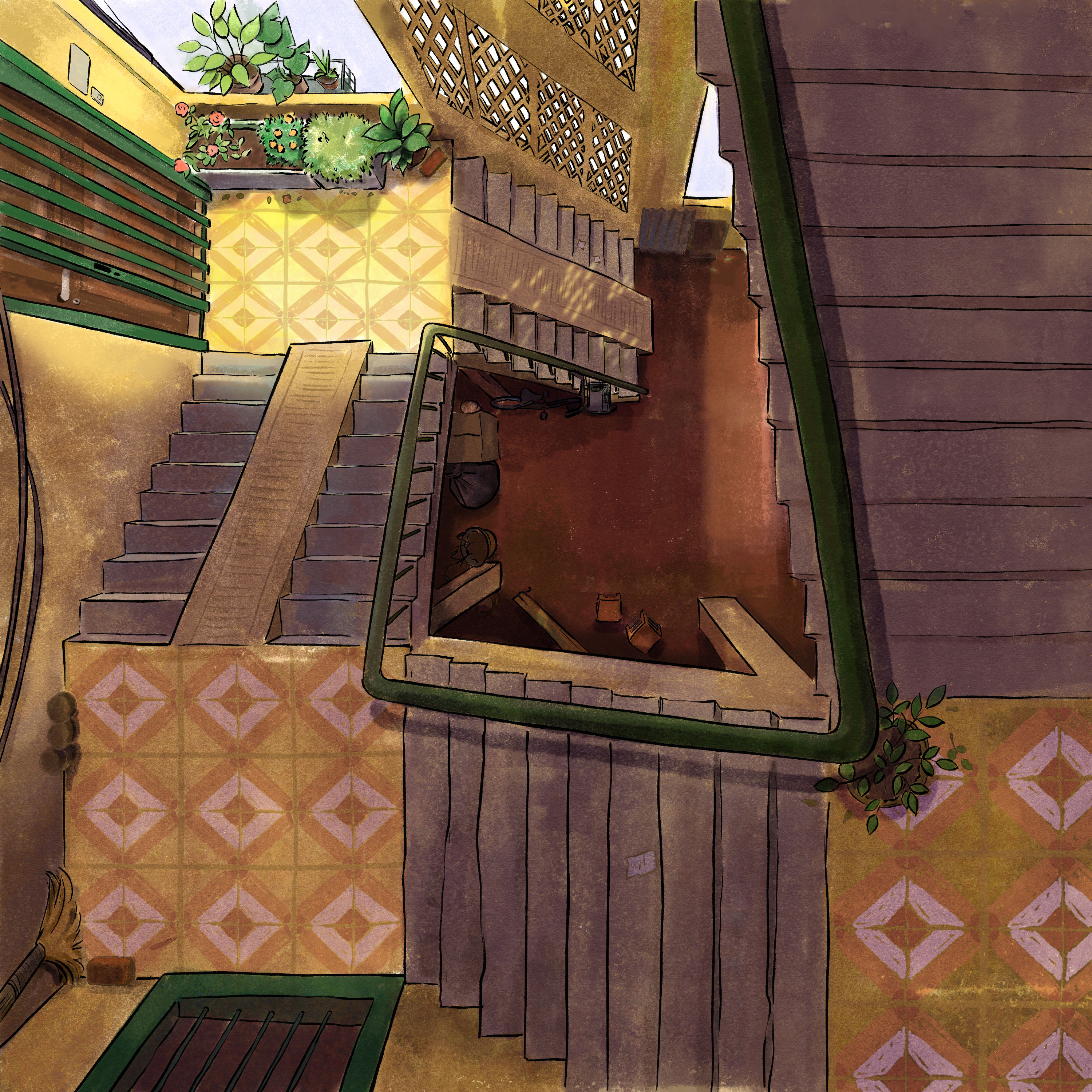
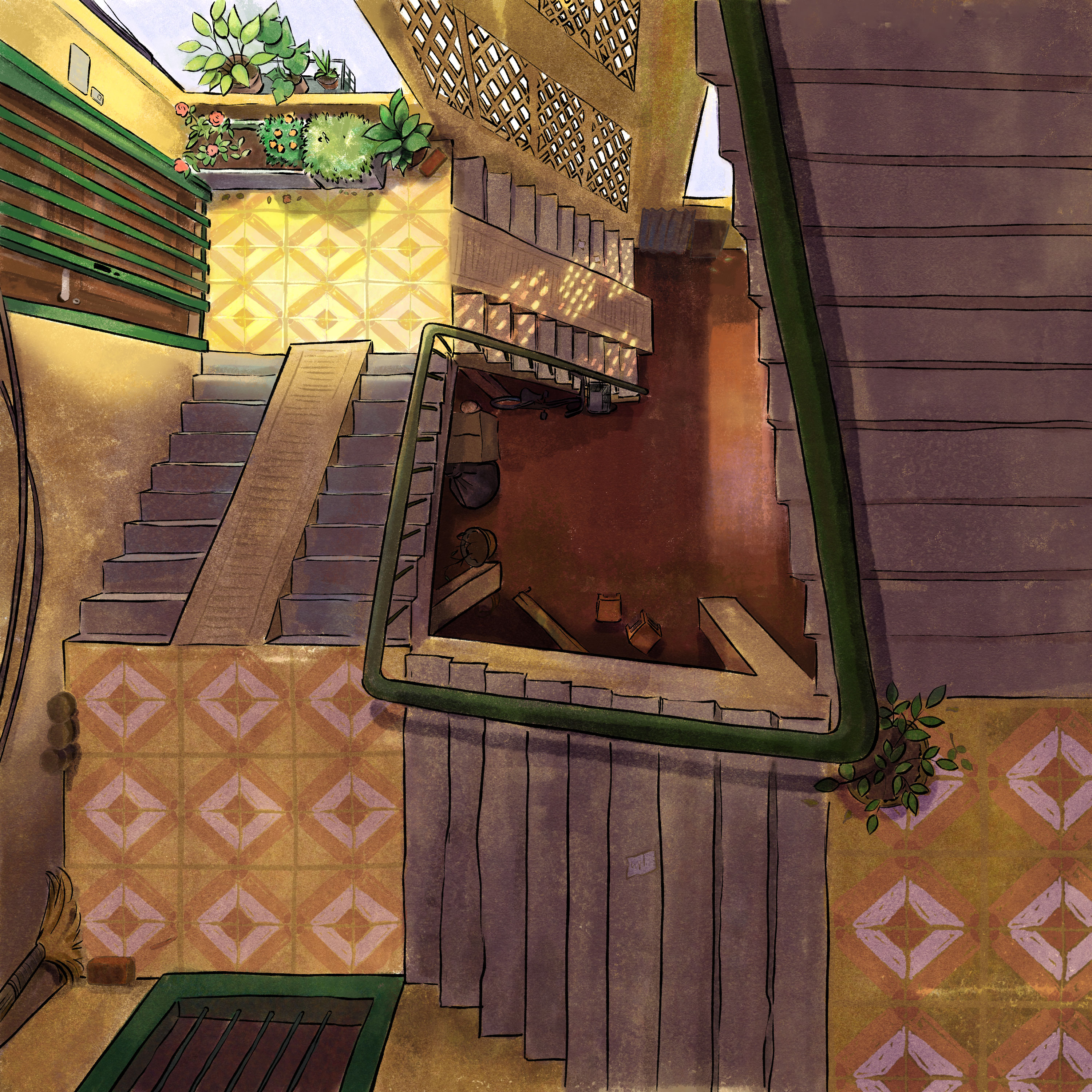
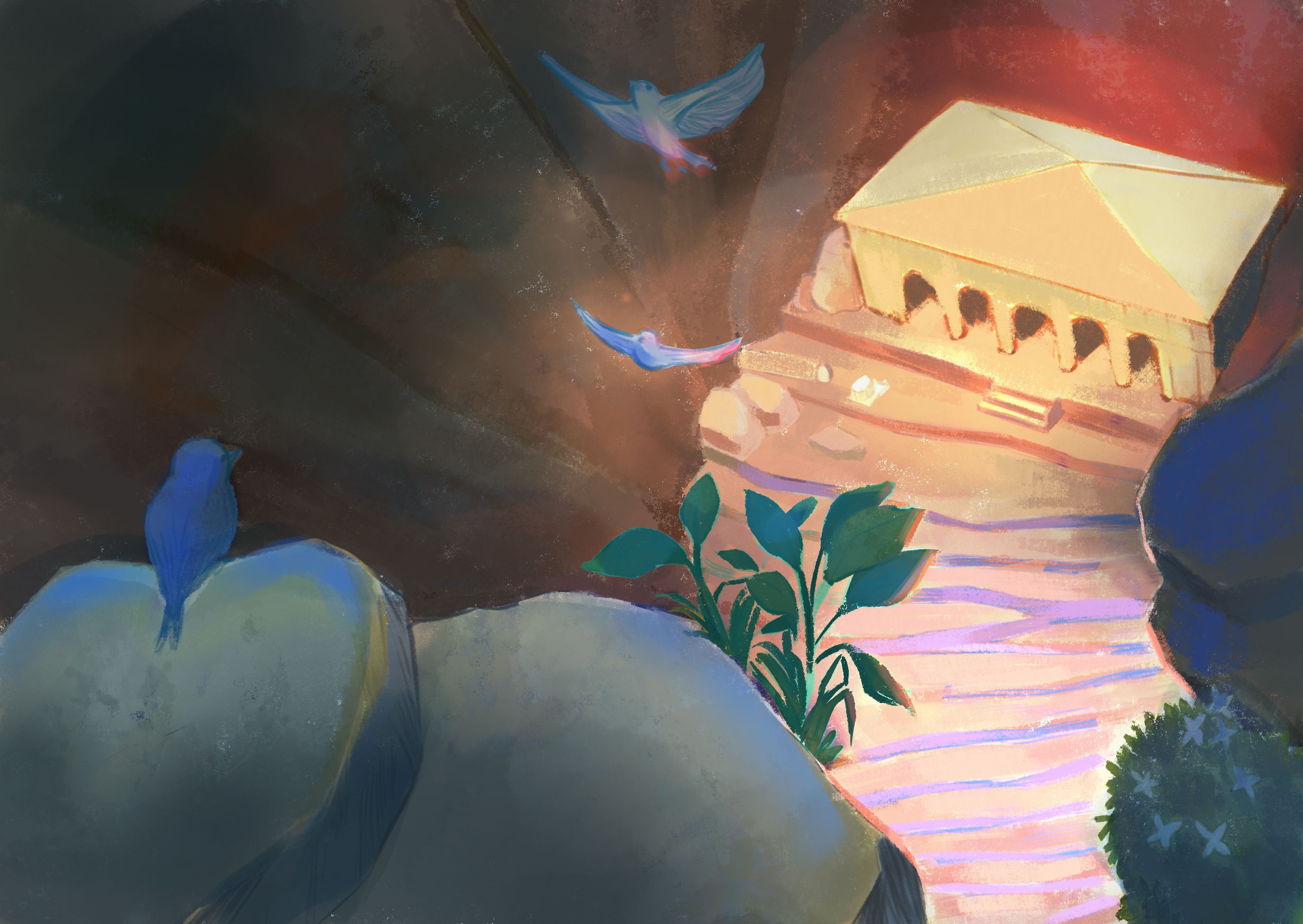
This is not a difficult illustration in terms of techniques. The perspective is tricky, but once I got the guides set up, I just need to follow the lines.

The more challenging stages are about colors: how to pick colors to show that this is not a realistic scene but more of a place in memory? I always know yellow is the main color, so I start with it first.

The purple and earth tone works together unexpectedly. The minor green tones help leading the viewers to the focus. All the colors sit nicely with each other, and the more wonderful thing is they are true to a certain level with the place I grew up.

Art History Spotlight: Yayoi Kusama

One thing I notice when studying art history is the downtrend in the value of arts and the increasing diversity of arts. It is used to be ridiculously expensive and exclusive to the aristocrat, then slowly going down. The introduction of technology in the Enlightenment age makes paints, art tools, etc. cheaper and more accessible. Prints were spread throughout the world. Arts, along with wine and other collectibles, became a source of financial investment.

What’s the role of an artist in this diverse special market? This market isn’t controlled by supply and demand but sometimes by an artist’s death and the wealth of some collectors. And how would us society measure an artist’s productivity? How many paintings they produce or how much money they earn? Van Gogh created about 2000 artworks and didn’t get a penny of his artworks’ value when he was alive. Vermeer only painted about 3 – 4 paintings a year, which accounts to 34 surviving pieces, he died in 1675 and was ‘rediscovered’ in 19th century. Most of his life stories are theories based on church book, ledger’s book, sales record and court recordings. His family declared bankruptcy right after he died.

So how should the art economy run and what role should each person take? That’s also my big question as an artist myself in the age of artificial intelligence and social media. That’s also why I sympathize with the art installation “The Narcissus Garden” by Yayoi Kusama.

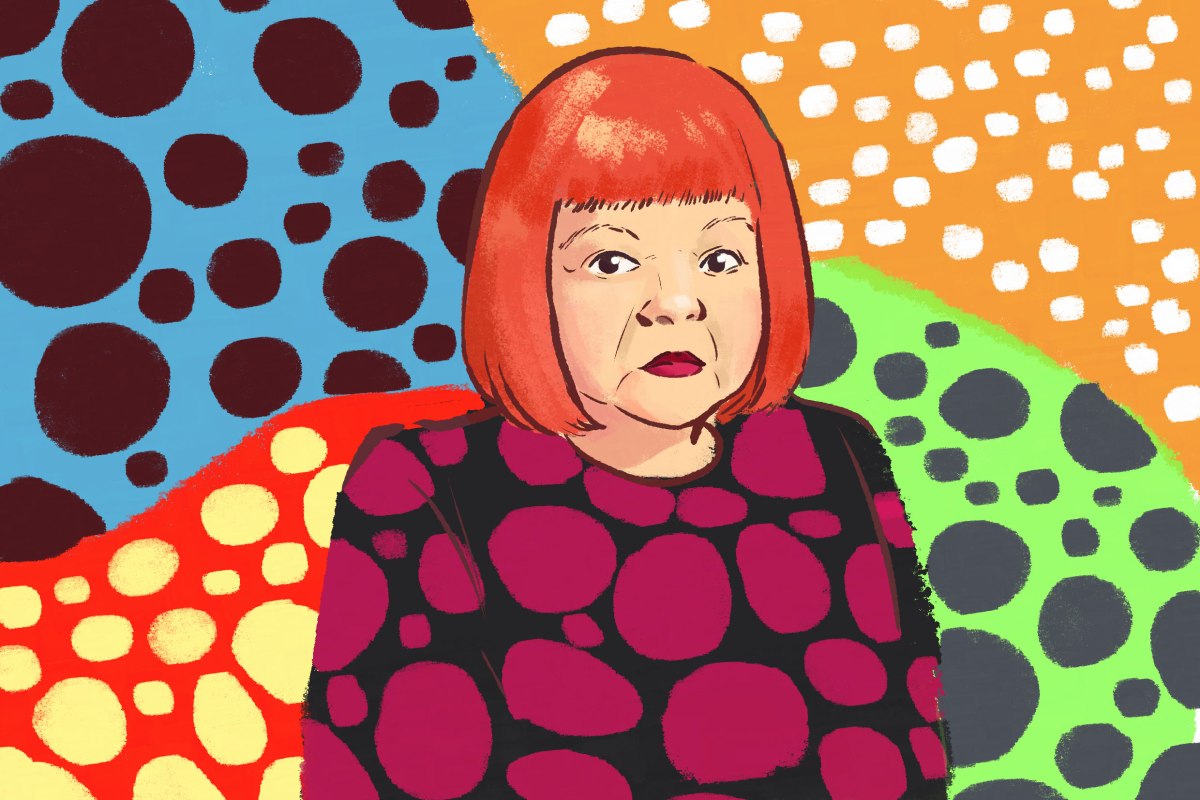
Yayoi Kusama is now famous as the “Princess of Polka Dots” due to her hallucinatory visions of “dots” and “nets”.

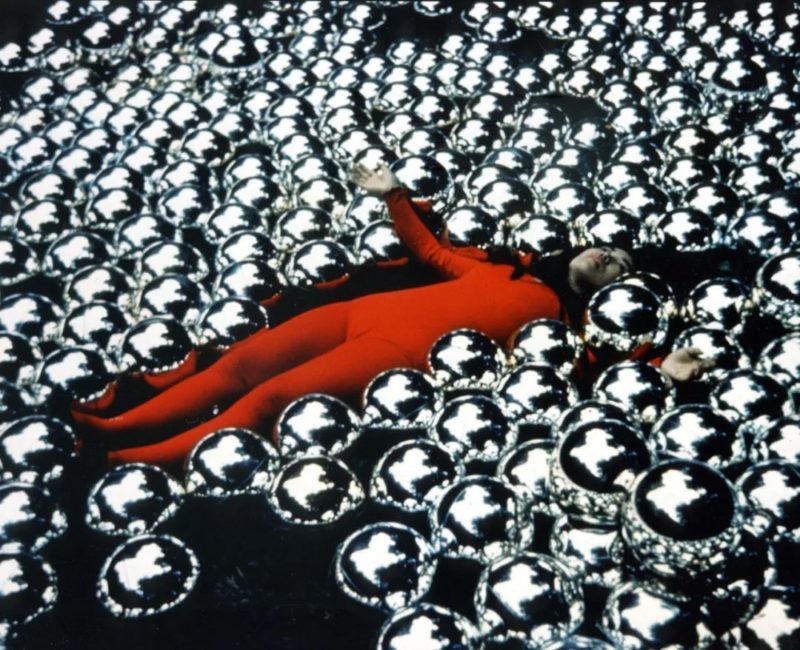
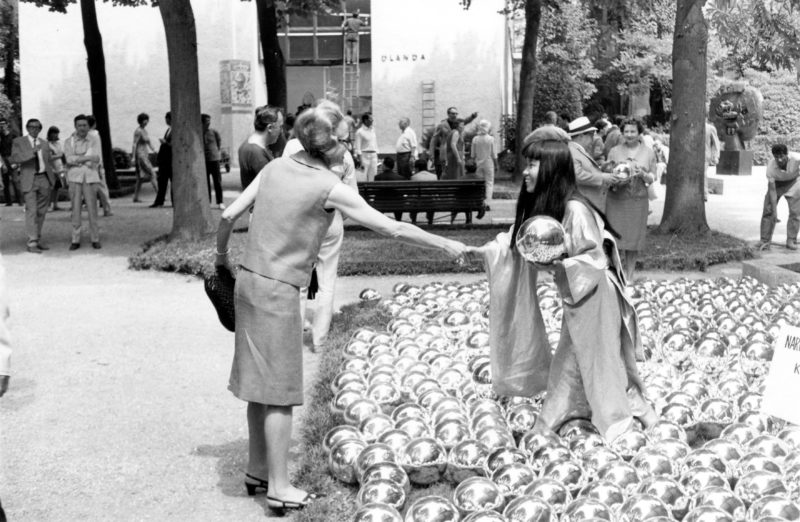
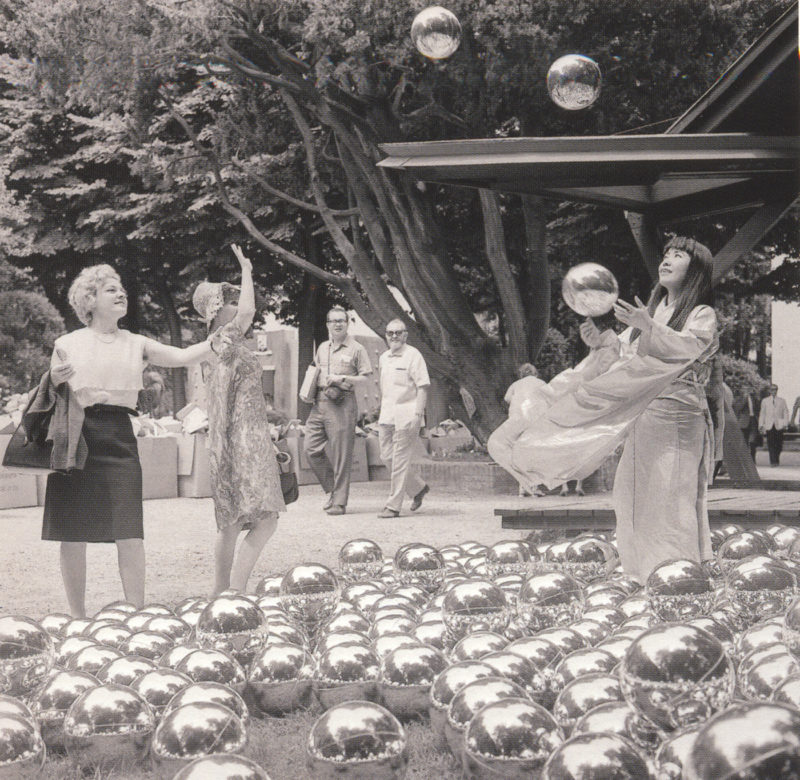
The art installation is first shown as an unofficial part of the 33rd Venice Biennale exhibit in 1966. She received financial support from her friend Lucio Fontana and permission from the chairman of the Biennale Committee. She staged 1500 mass-produced plastic silver globes, similar to the a fortune teller’s ball with two signs “Narcissus garden, Kusama” and “Your Nacissium [sic]”. Visitors can buy the mirror ball for 2 dollars each. Kusama also distributed flyers showing off her work. Ironically, the Biennale officials stepped in and stopped her action.

Yayoi Kusama in Narcissus Garden, 1966, installed in Venice Biennale, Italy, 1966 (photo: Yayoi Kusama Studio) © YAYOI KUSAMA. Courtesy David Zwirner, New York; Ota Fine Arts, Tokyo/Singapore/Shanghai; Victoria Miro, London/Venice.

However, the Narcissus Garden was commissioned and re-installed at various settings including Instituto Inhotim, Brazil; Central Park, New York;  Hayward Gallery, London; most recent in The Momentary (a museum in Arkansas). Much later in 1993, she was officially invited to represent Japan at the 45th Venice Biennale.

The most common interpretation is about narcissistic side of people. You look into the balls and you will see yourselves. You will look at another you, a distorted version. The version in Central Park, New York set the balls next to river, paying homage to the Greek myths of Narcissus. You can go further by taking a selfie with the reflective ball, having an image of different versions of yourself. And it can go on and on, considering the image will possibly go online and many people will see you. In each of your friend or follower’s mind, there will be another version of you existing.

However, if we look back at the very first installation, the action of selling the ball is important as well. Considering each ball is a piece of the big artwork, the artist gives away part of her arts to be viewed in the eyes of the audience, then in turn to get paid to create more. A part of the artist merges with a part of the person being painted, creating a new person on paper or canvas. Some persons will only see themselves because that’s the literal image on the ball, saying “Hey, I can do it myself! Why do I have to pay you to do something so easy?”.
The 20th century in which Kusama lived most of her life was the time when animations, magazines and printing industry developed quickly. Artists no longer sold their works only through art galleries or art dealers; but can work for newspaper (namely: J.C. Leyendecker) or animation production (the first animation in 1908). However, these career choices often require the artist to work on tight deadlines and productivity was prioritized. The public can also get prints or see the artwork via television. It is a favorable move for the audience, but not for the artist. Art is not something valuable anymore. Look at Kusama, she only sold her balls for 2 dollars each, which possibly just covered the price of production, transportation and arrangement of 1500 reflective balls. It goes further today, when you can scroll through Instagram with thousands of artworks for free. You don’t have to travel long way to enter a gallery anymore, now it’s turn for the artists to complain about their works don’t reach you.

That’s why I sympathize with this art installation so much and fall into the rabbit hole about Yayoi Kusama to get inspired by her boldness and vividness in her art world.

She now has her own museum in Japan, which only admits visitors booking in advance.

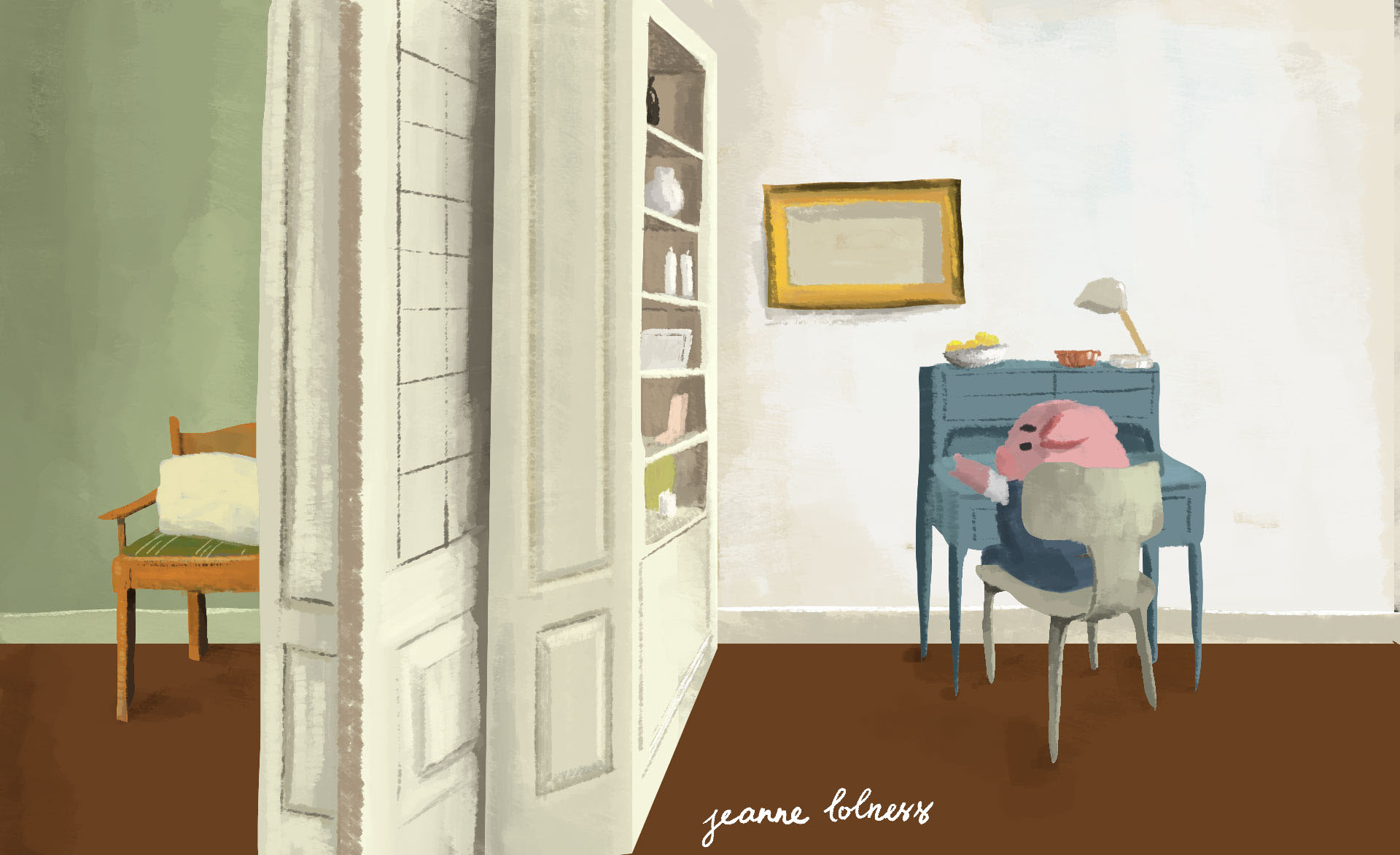
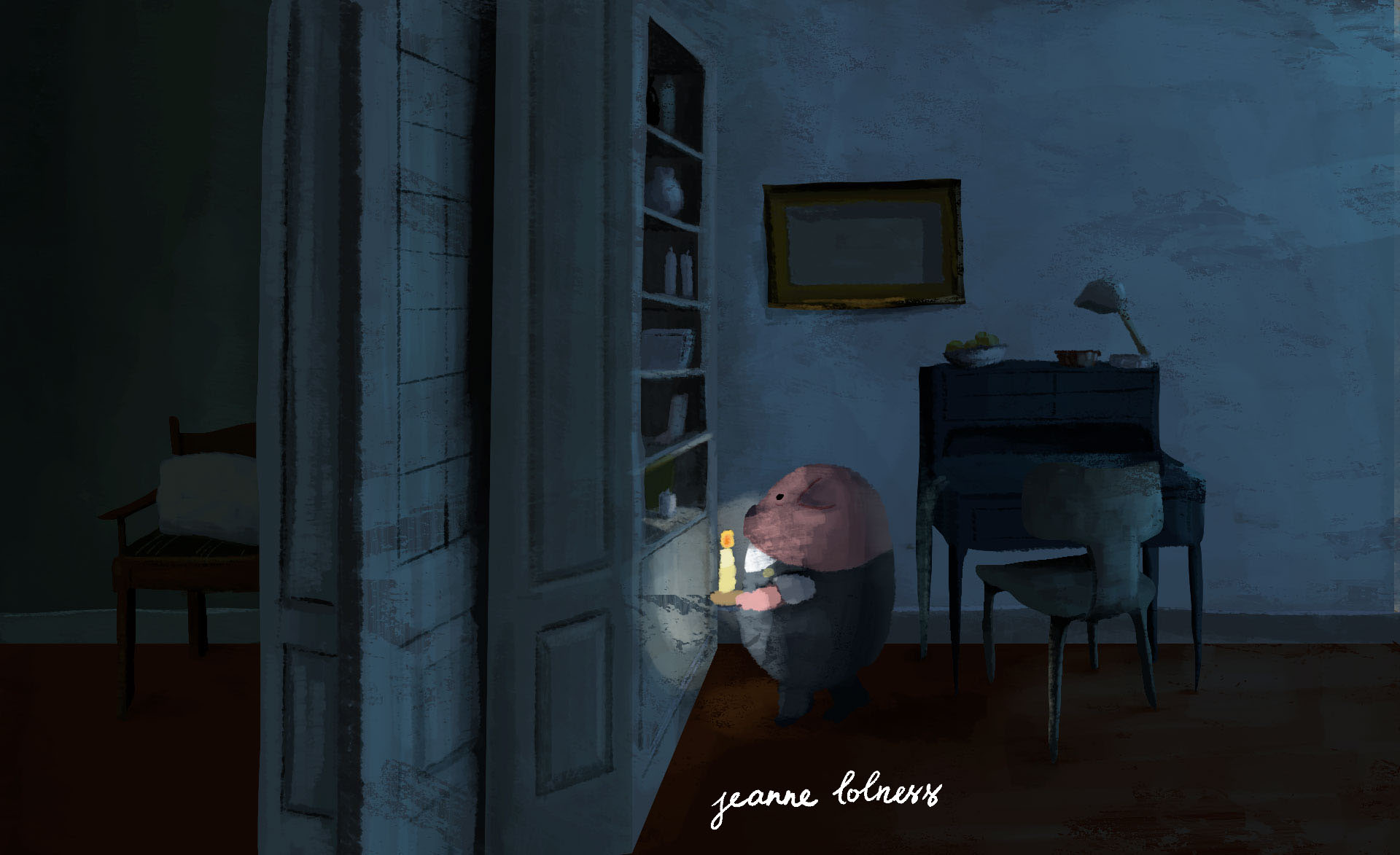
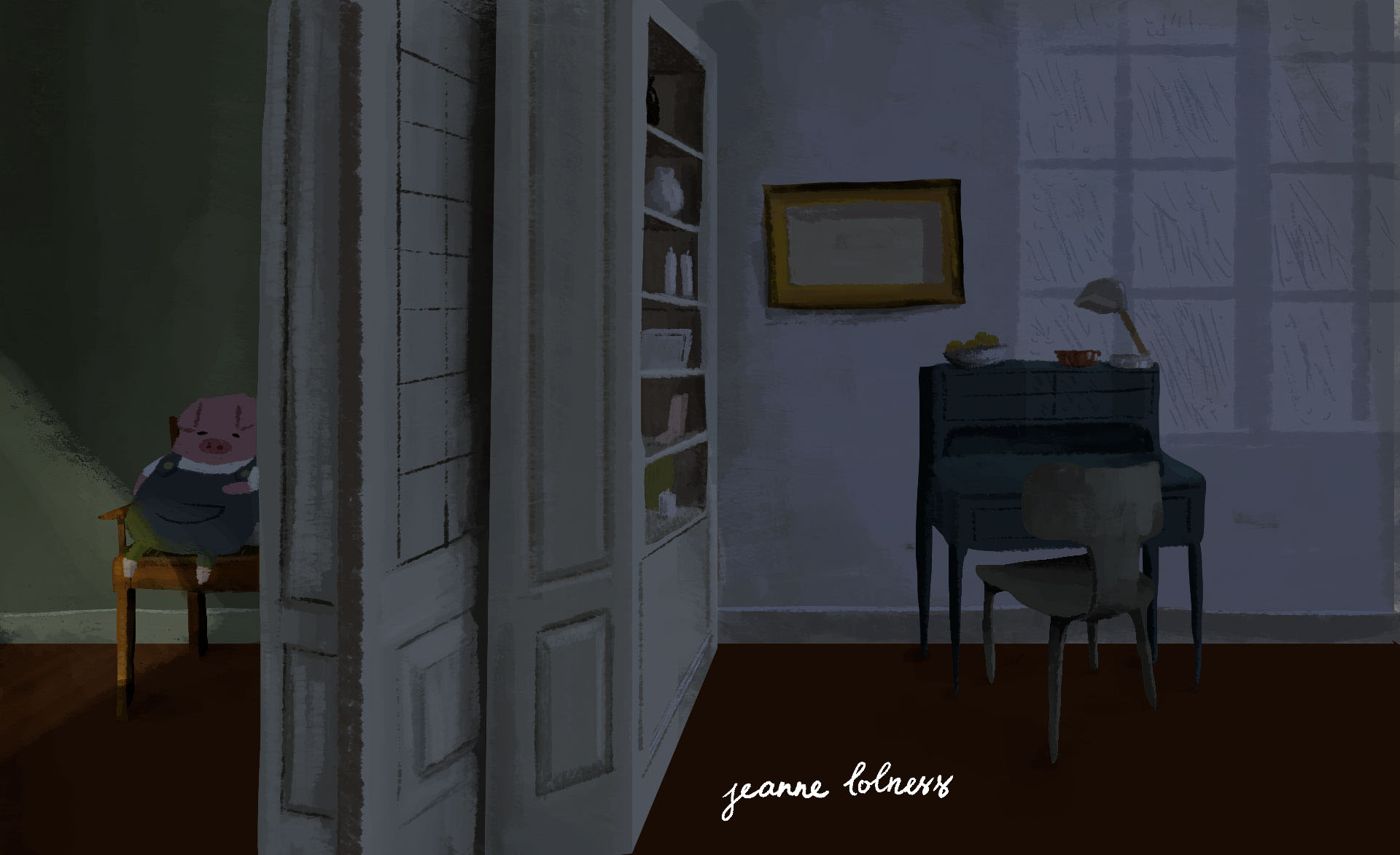
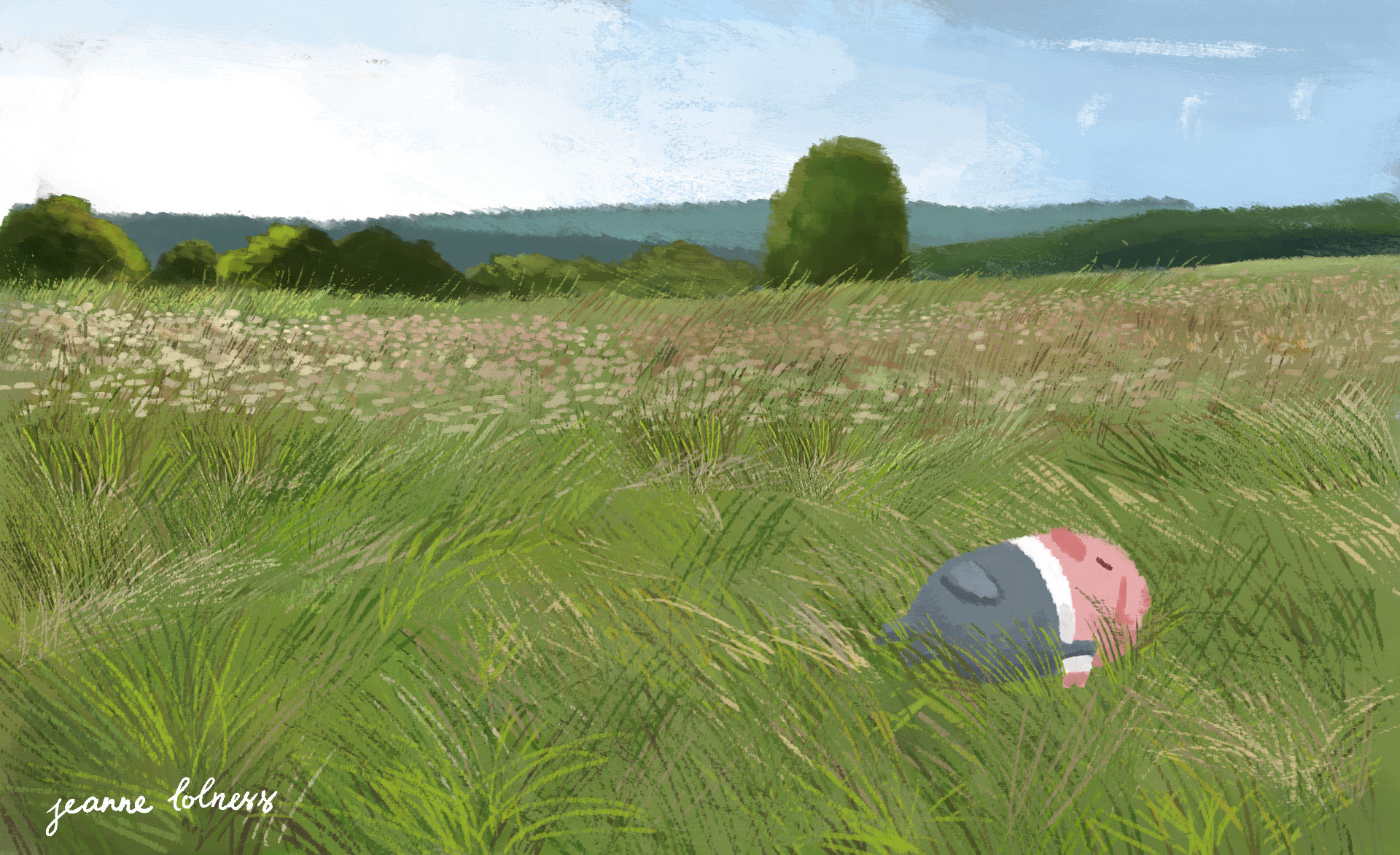
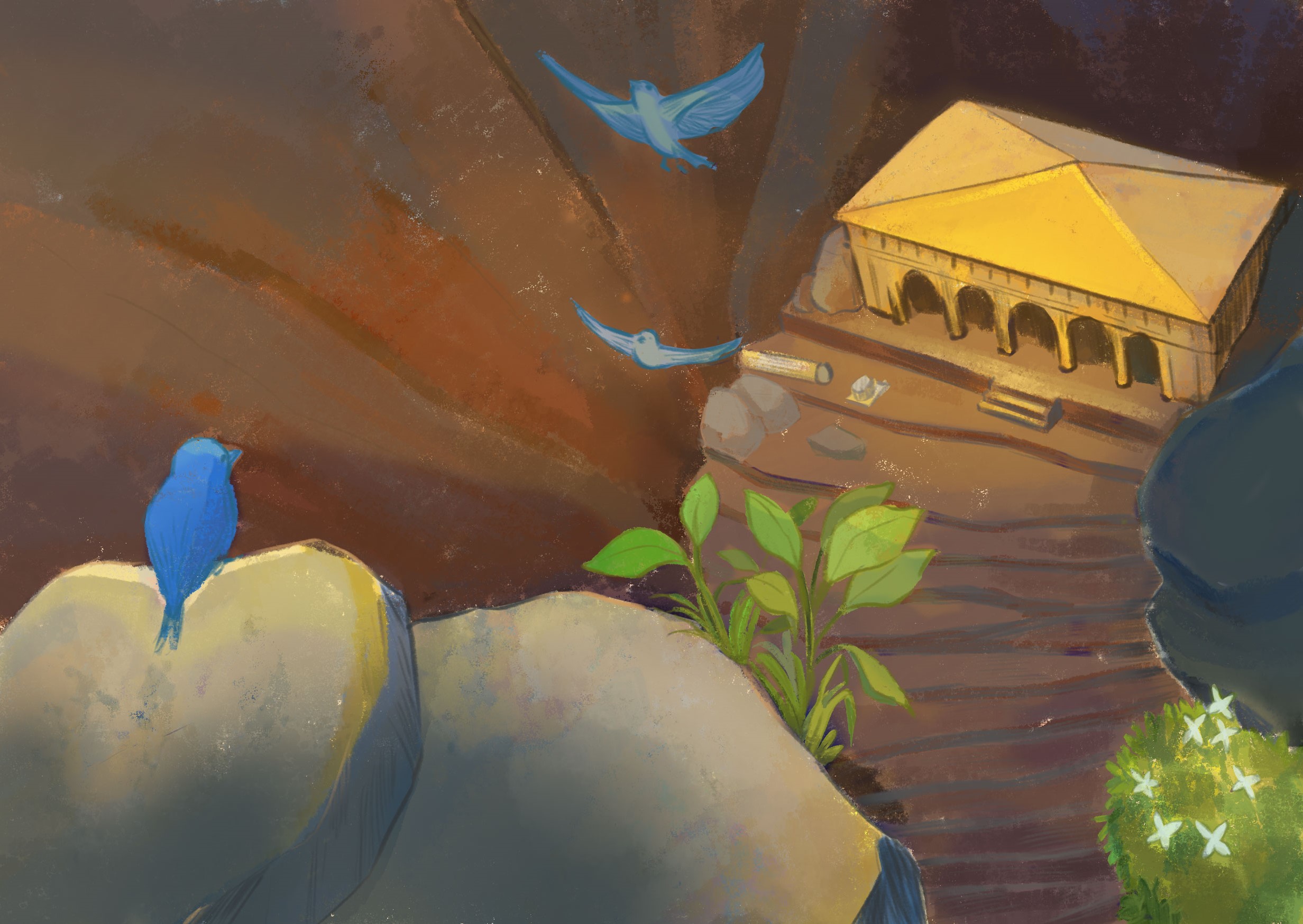
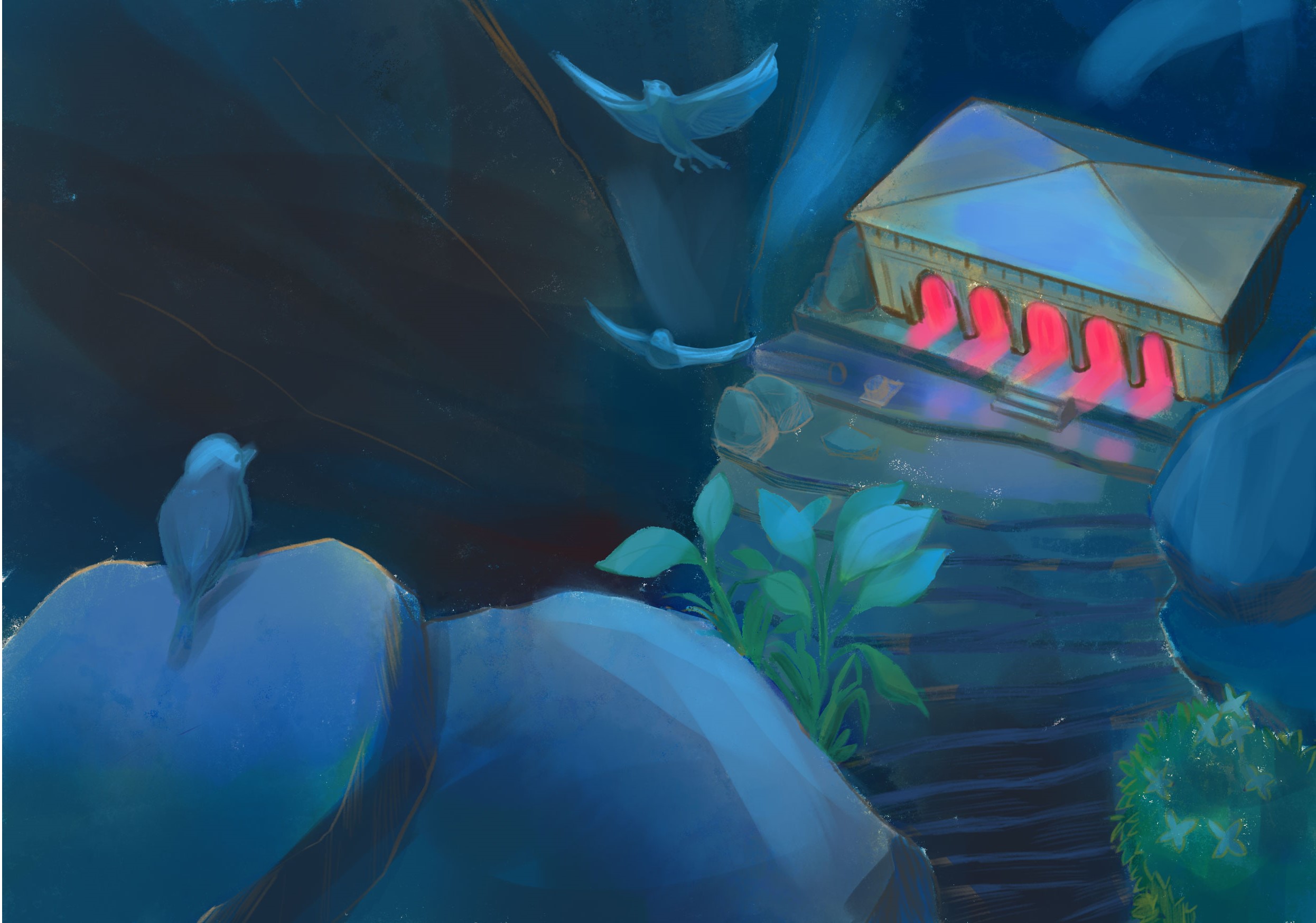
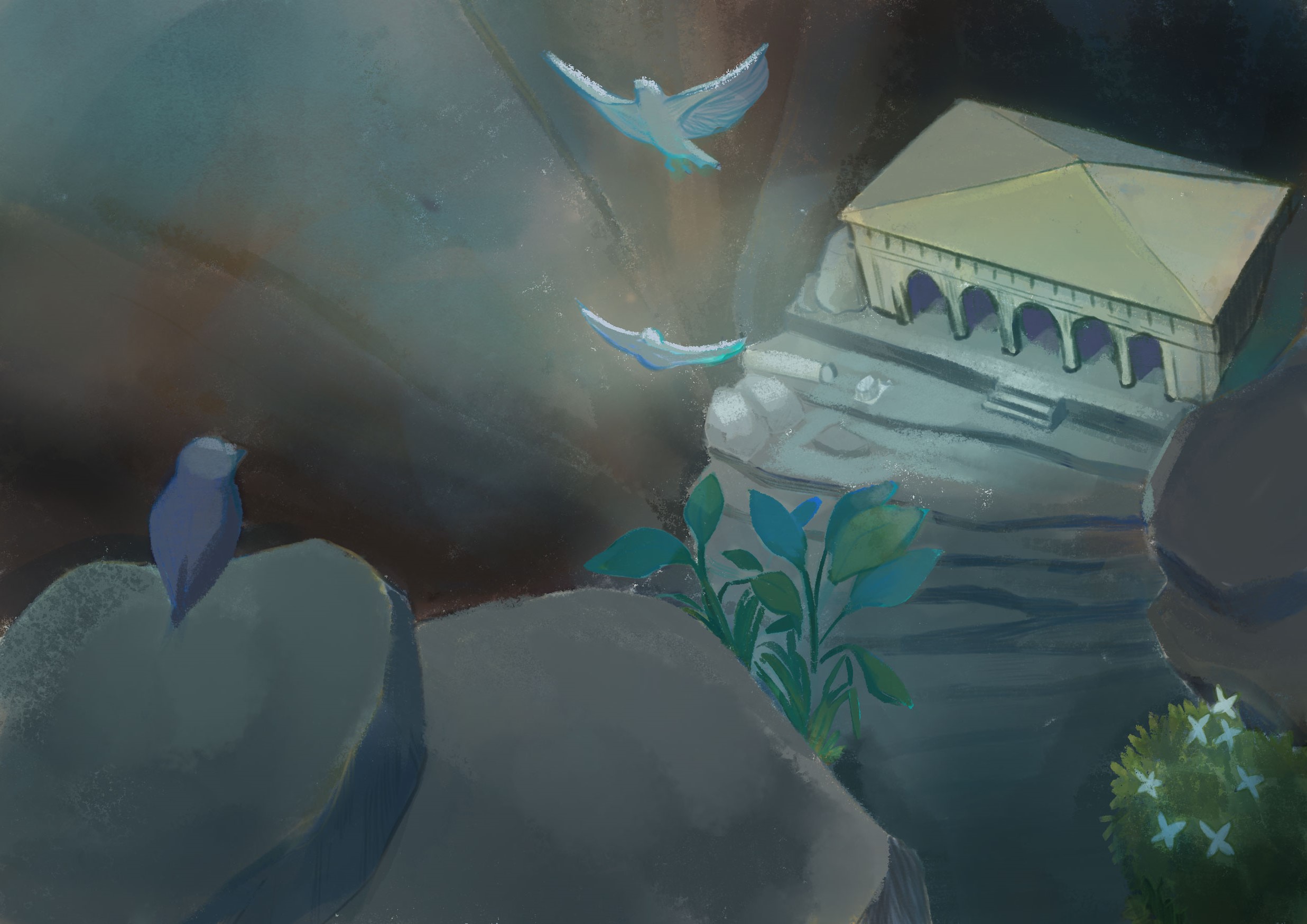
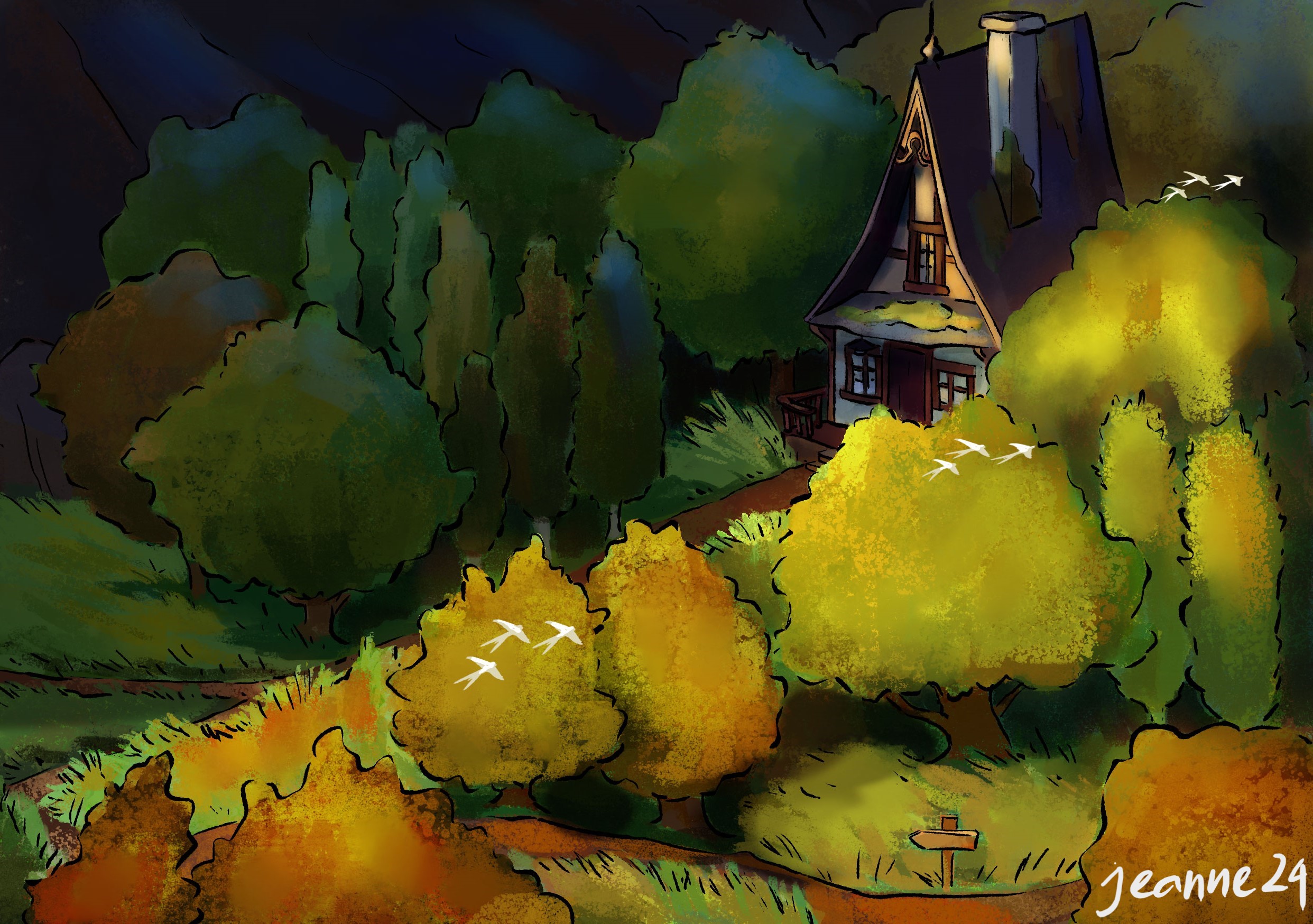
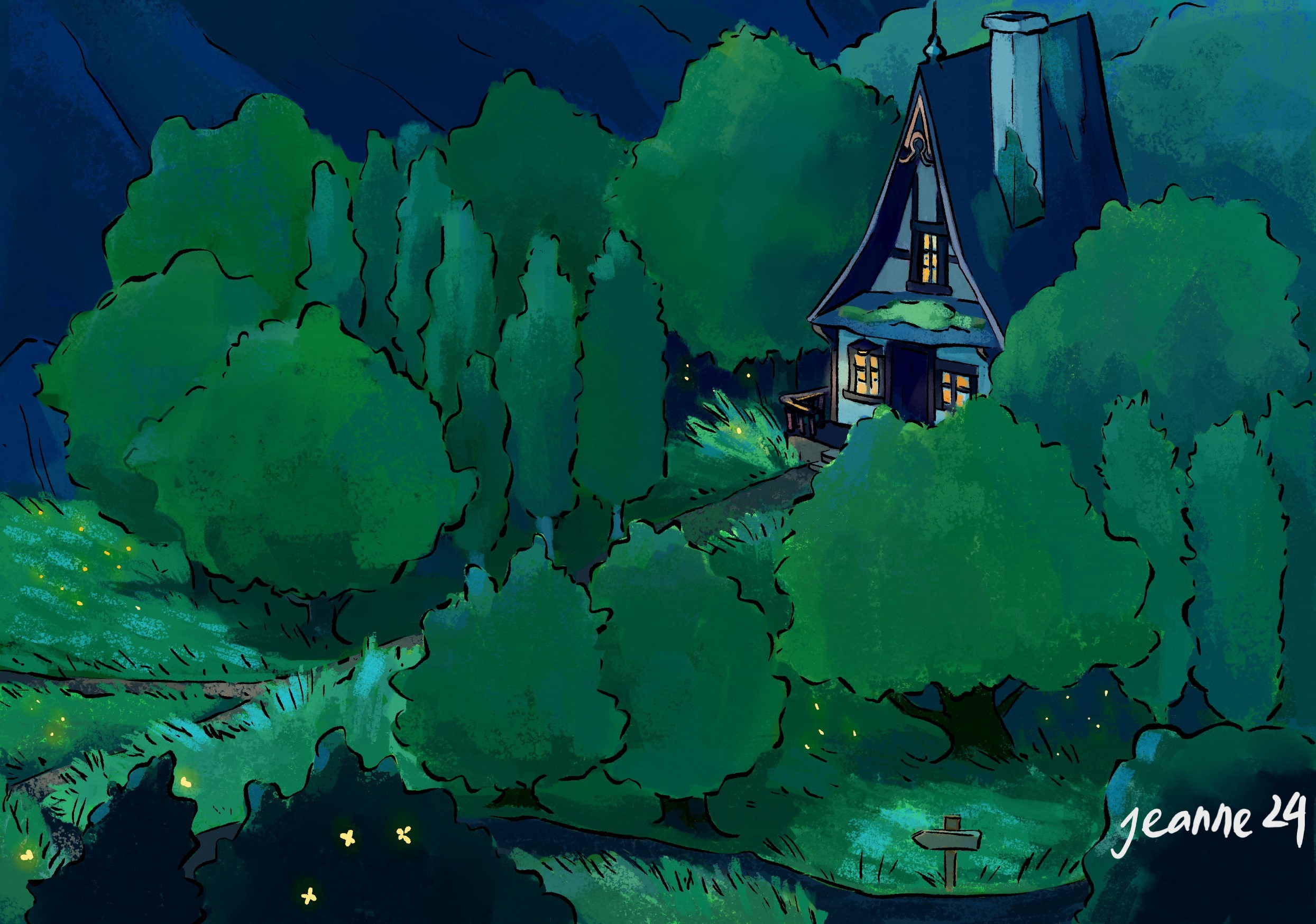
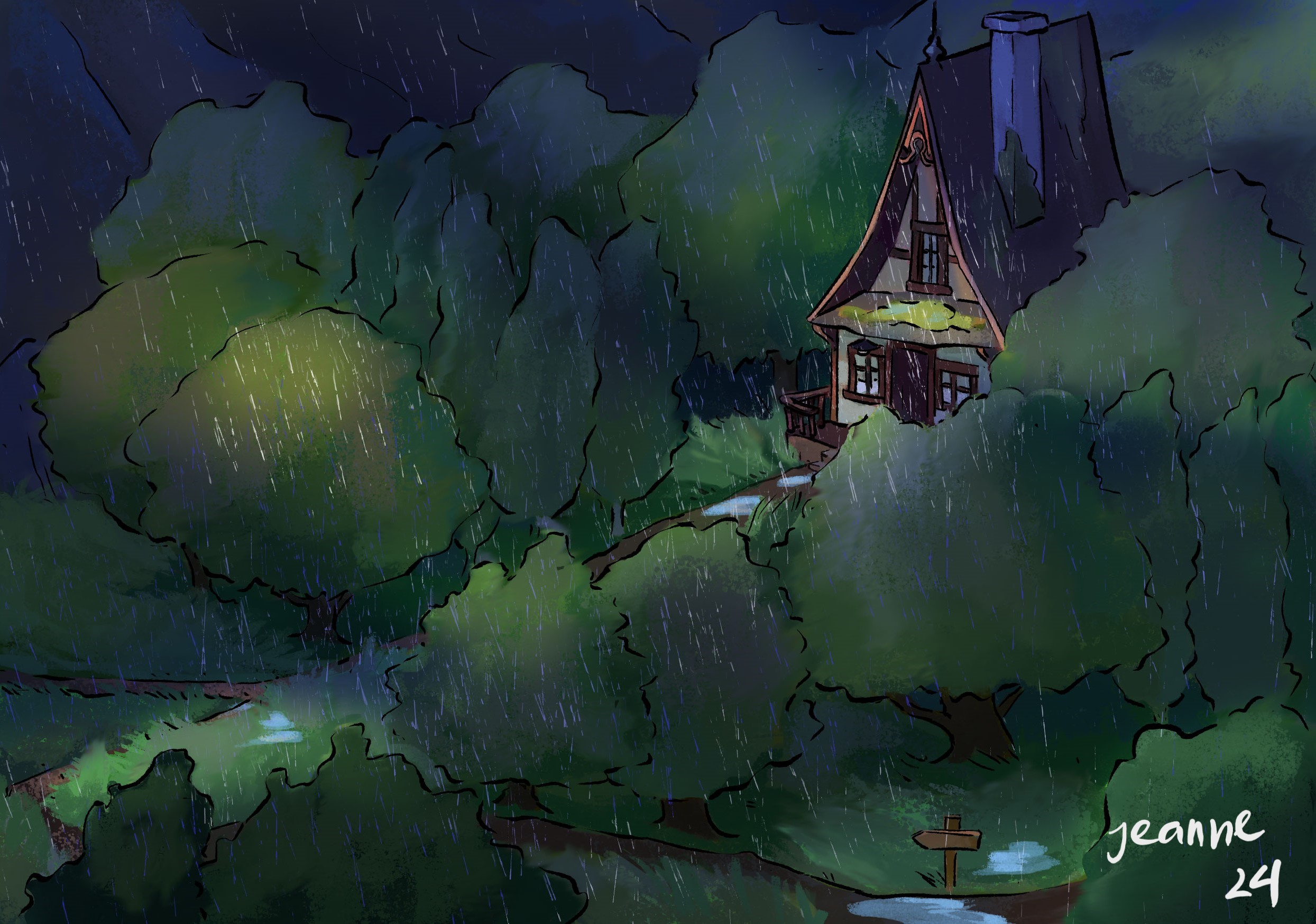
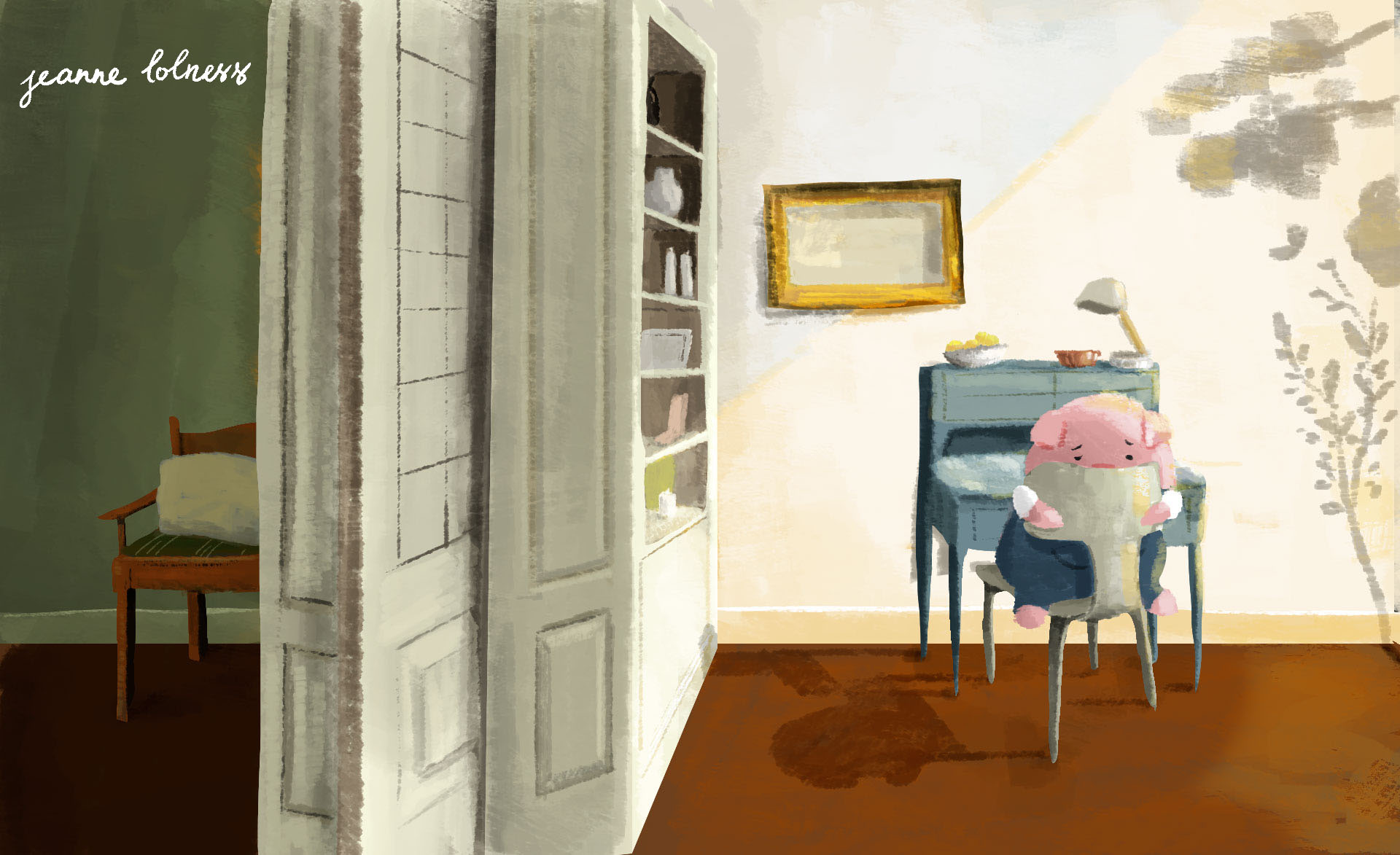
Painting the same scene at different hours

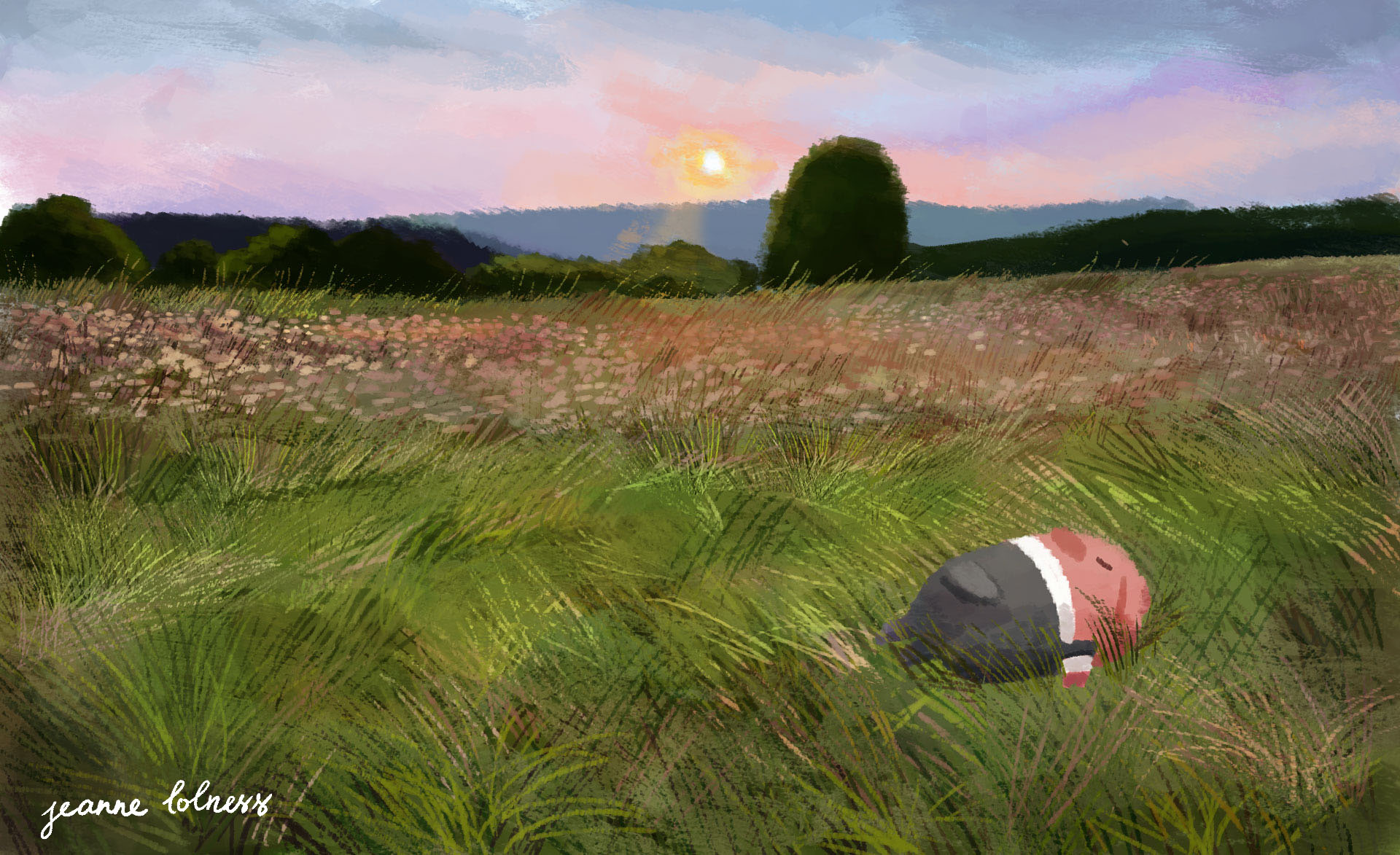
Disclaimer: The character used is the pig from the Dam Keeper animation/graphic novel by Tonko House. It was used for educational purpose only and the below paintings are not for commercial.

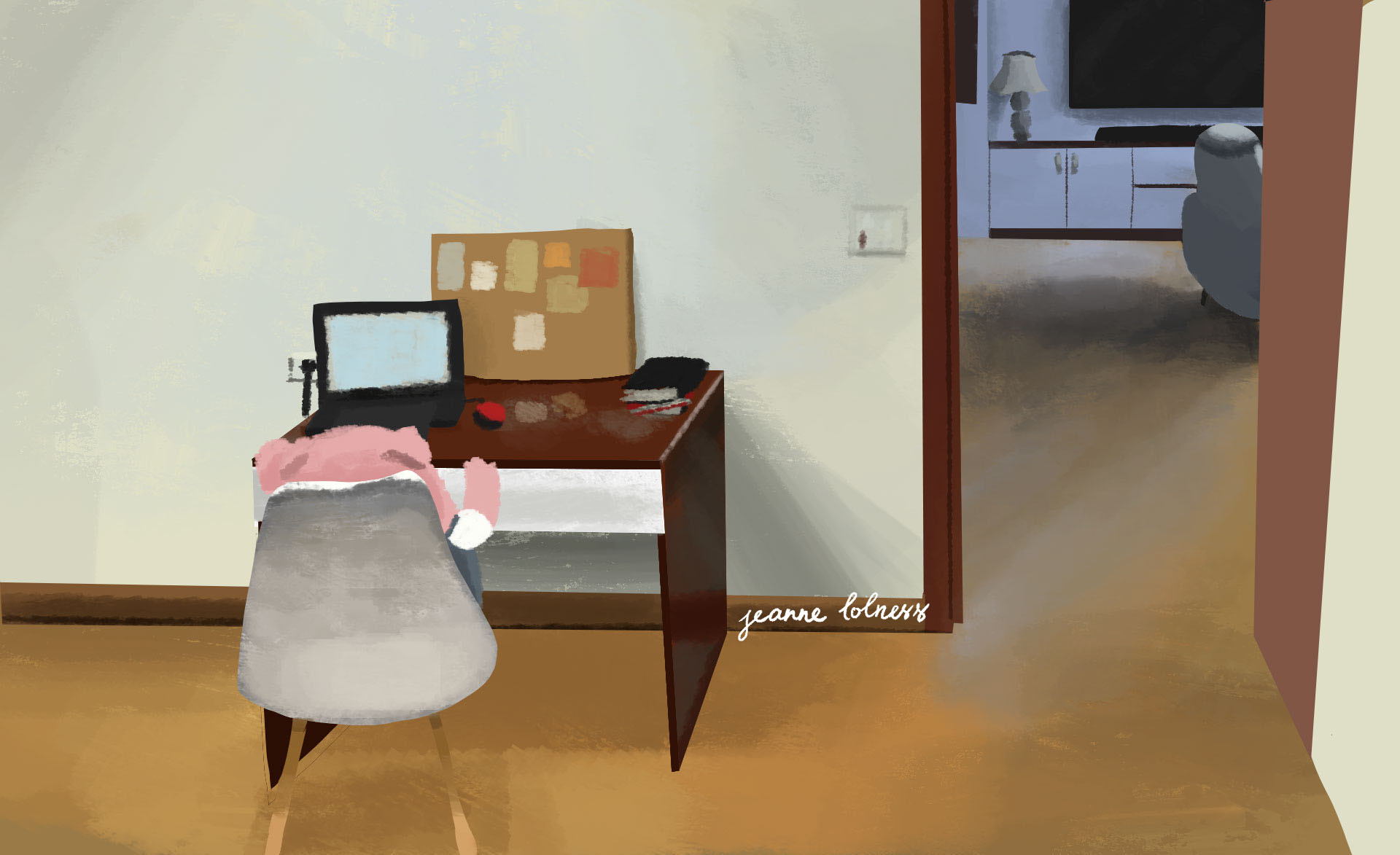
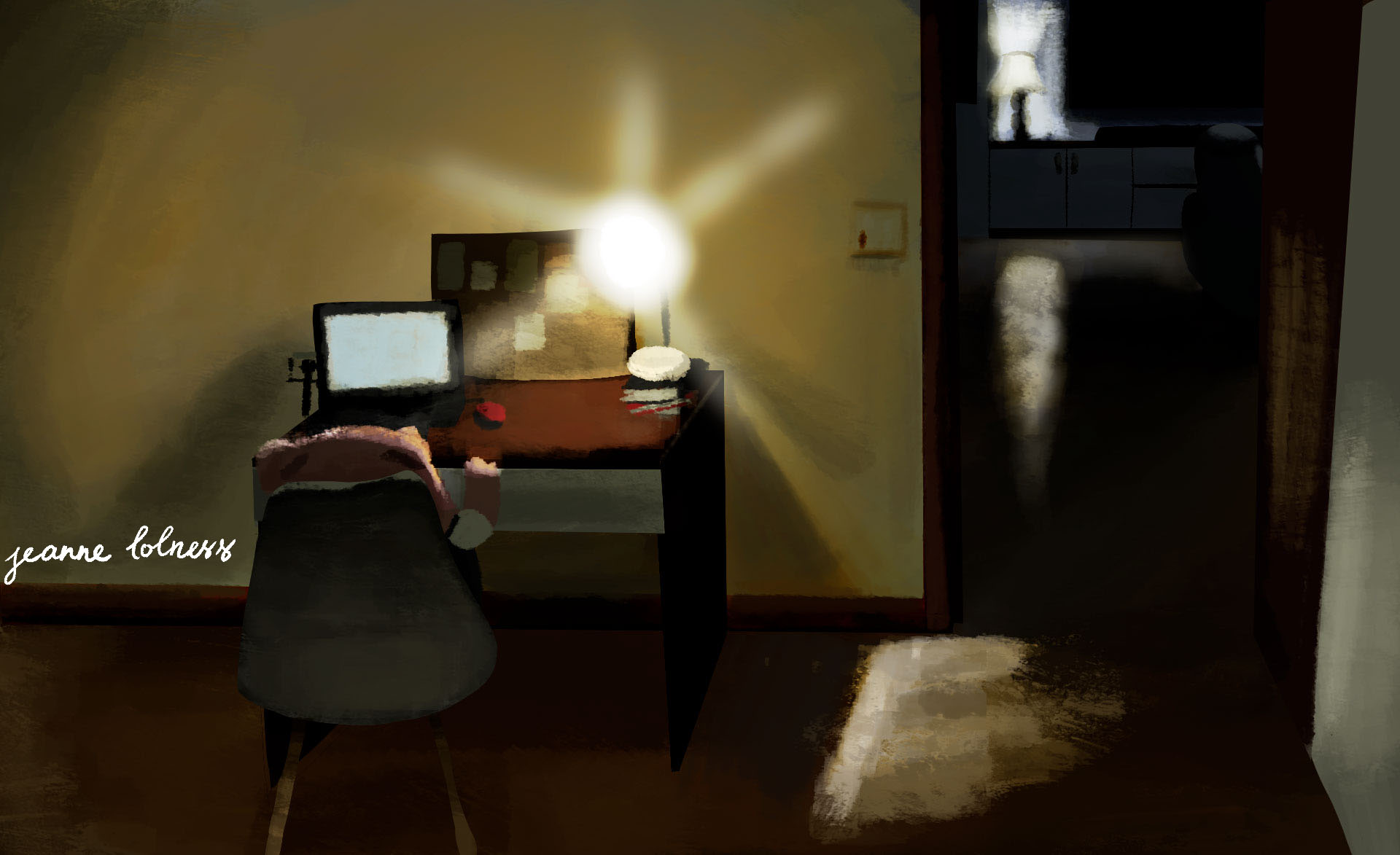
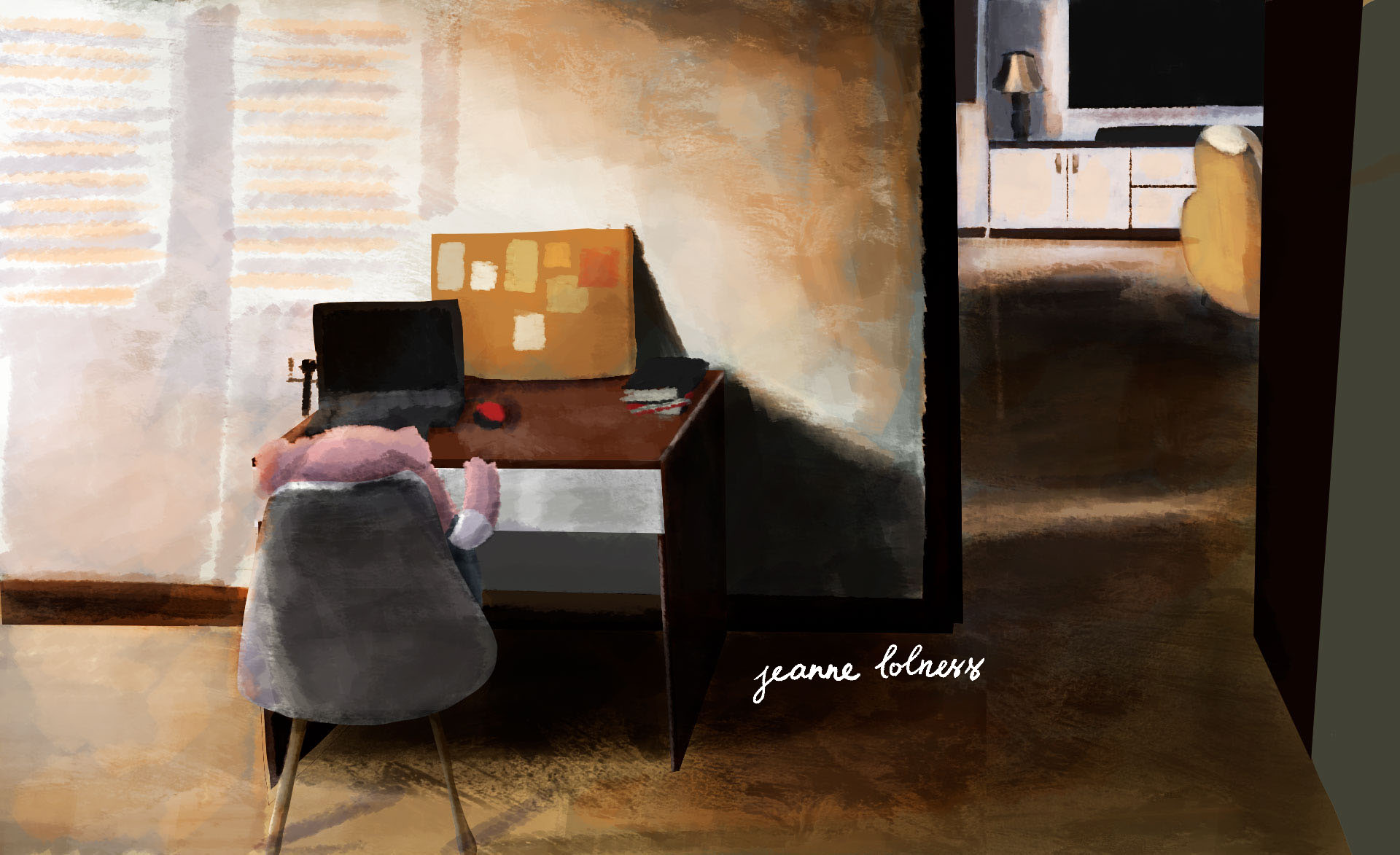
One exercise given by many master artists is painting the same thing over and over again. When it comes to landscape or a full scene, a room for example, it’s recommended to paint the same scene in different lighting setup.

A simple lighting set up would be day and night.

I tried to make the scenes more interesting by adding some shadows and story elements in the scene.

The pig is just sleeping, if you are curious. Even a wide landscape like a meadow could be improved with lighting and color to tell a story.

Here is a small series in which I used my own room as a background. I started with an overcast setup (no dramatic lighting) and experiment with sources of light: outdoor light coming from the windows, artificial light from the lamps.

Then I can go on having more fun with many more types of landscapes and stories. I try to imagine pitching these as real material for a movie or a graphic novel: how the story is told and how to keep the viewers curious.

A broad view is much more difficult because there can be more attention areas and more ways to lead the viewers’ eyes. This is what I’m working on.

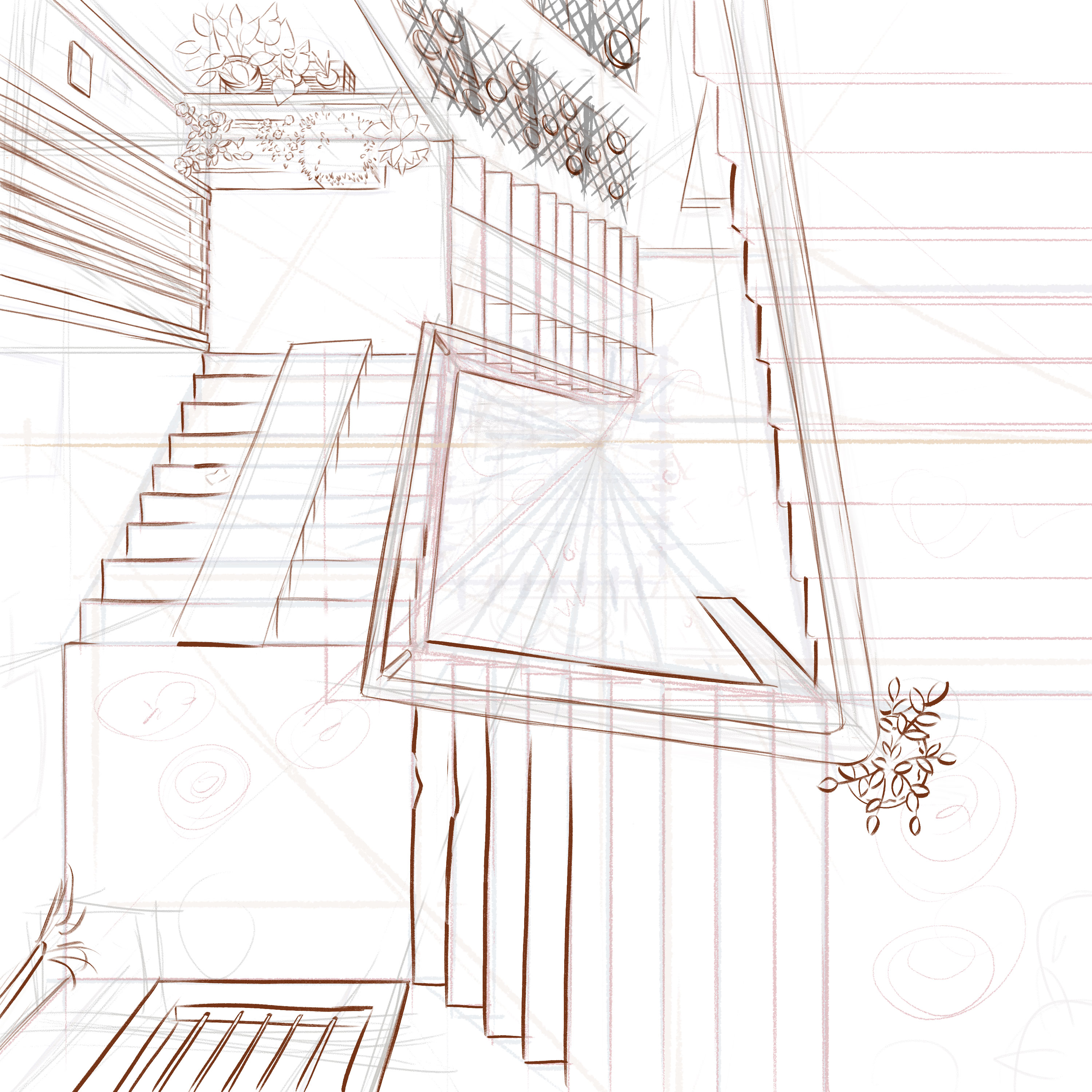
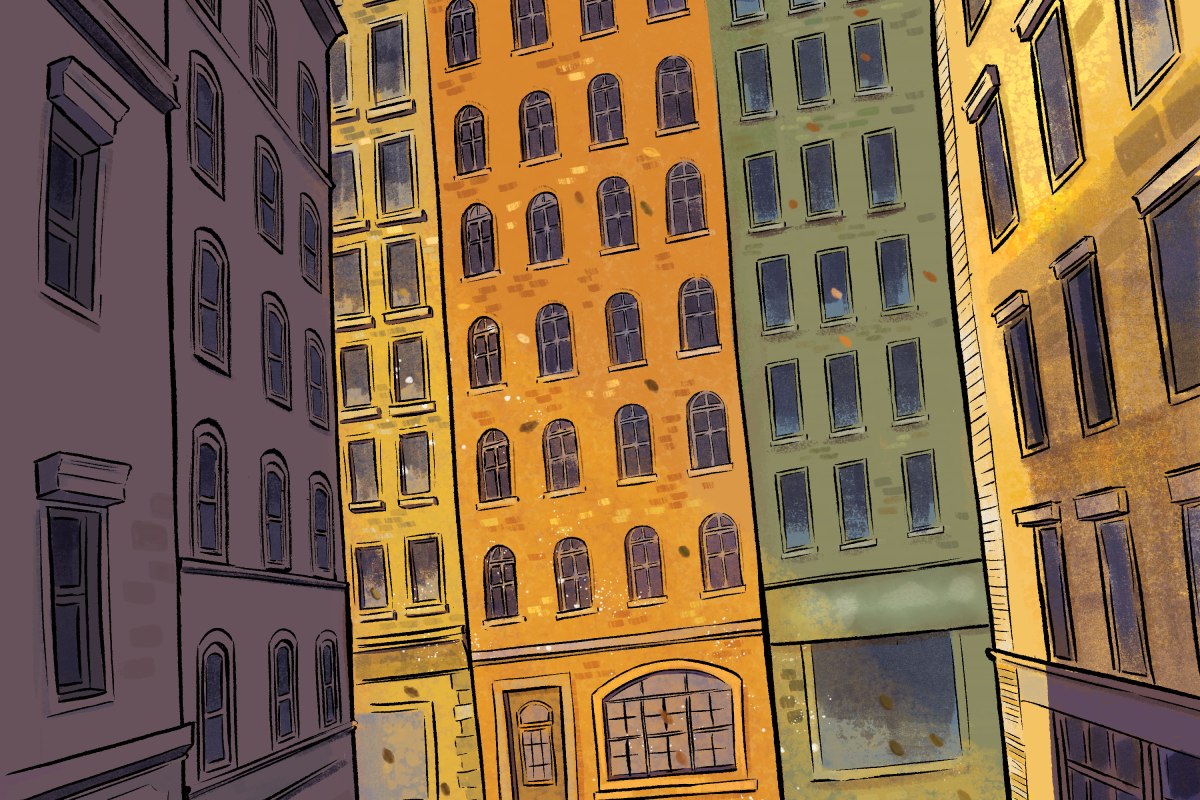
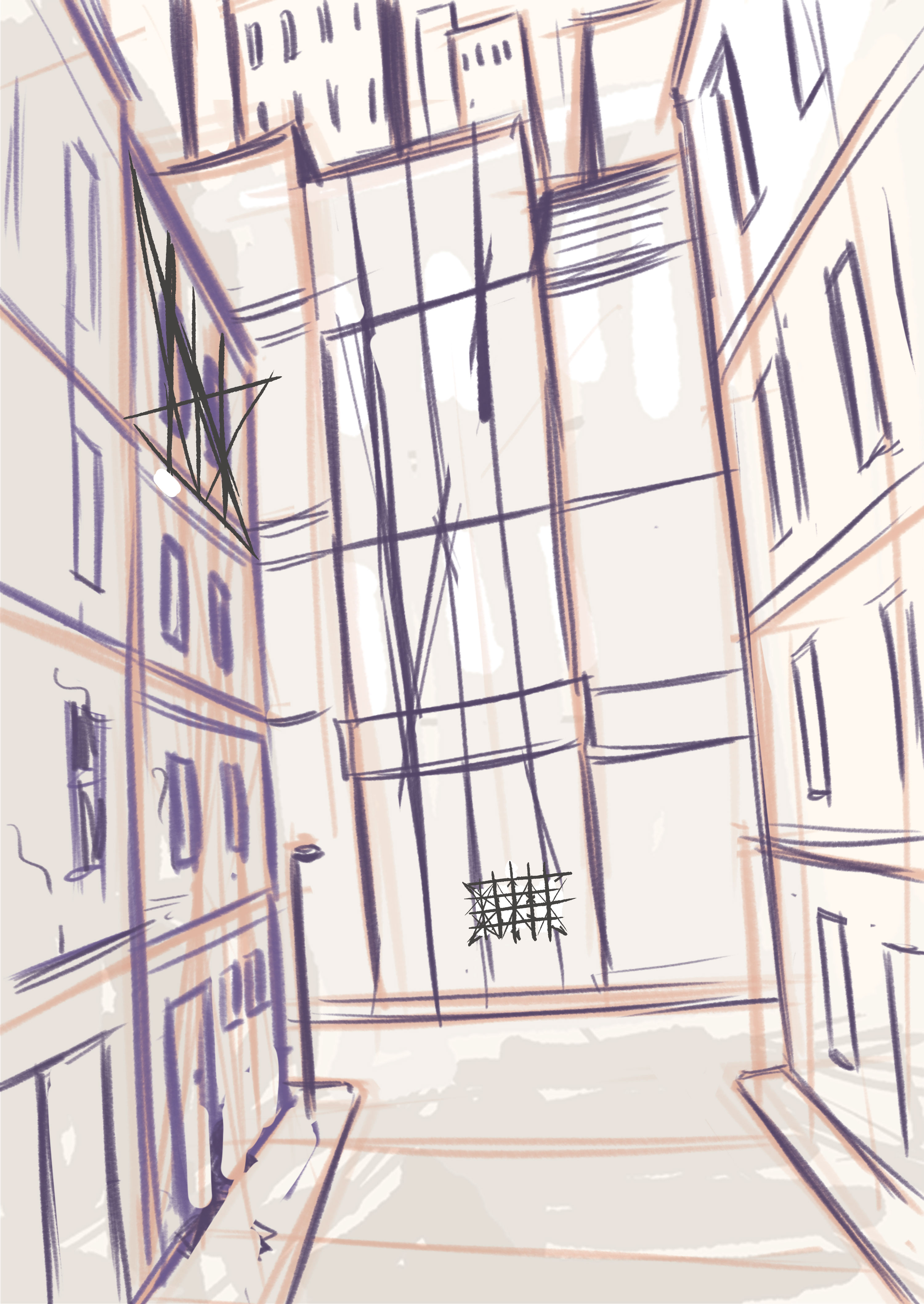
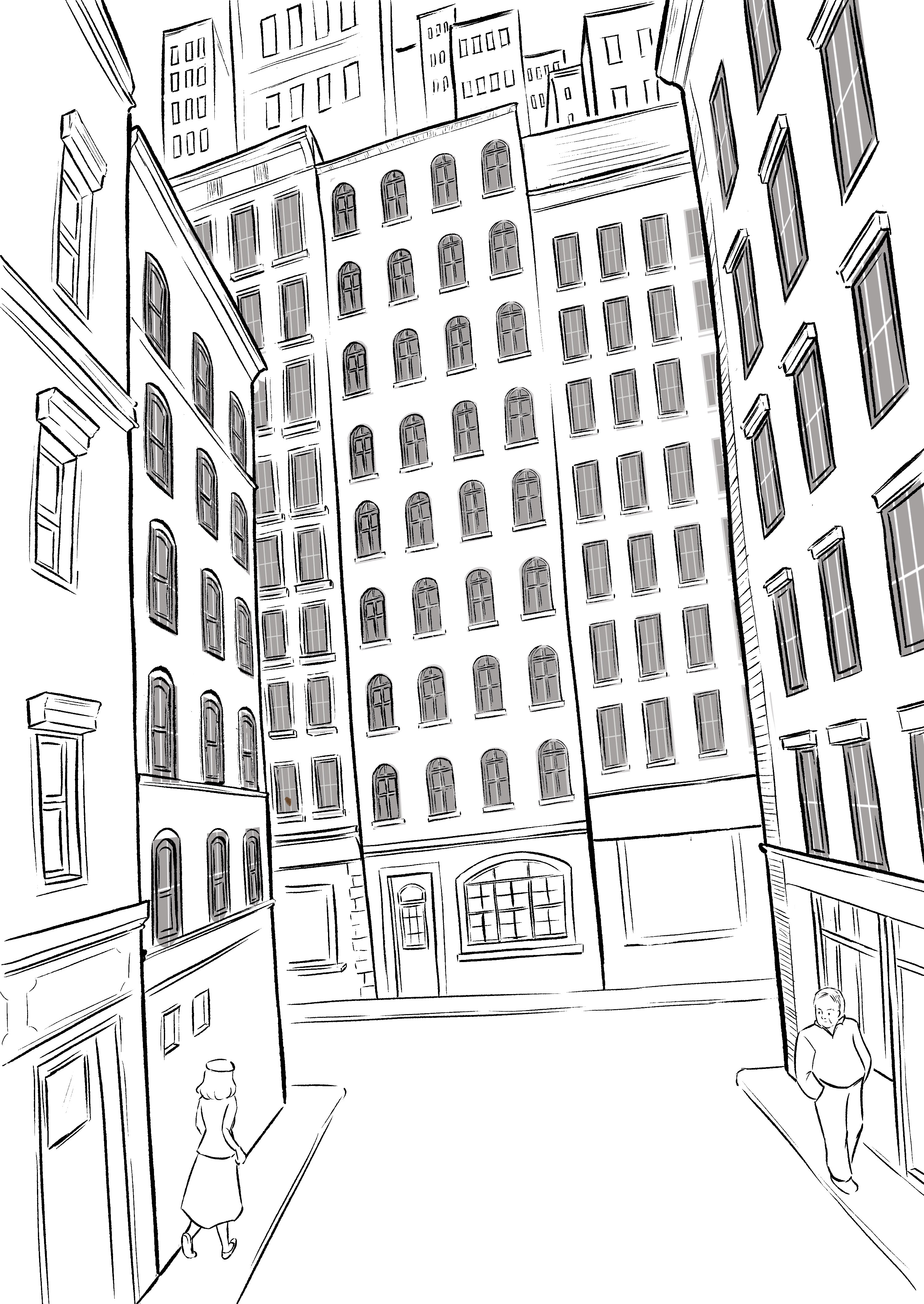
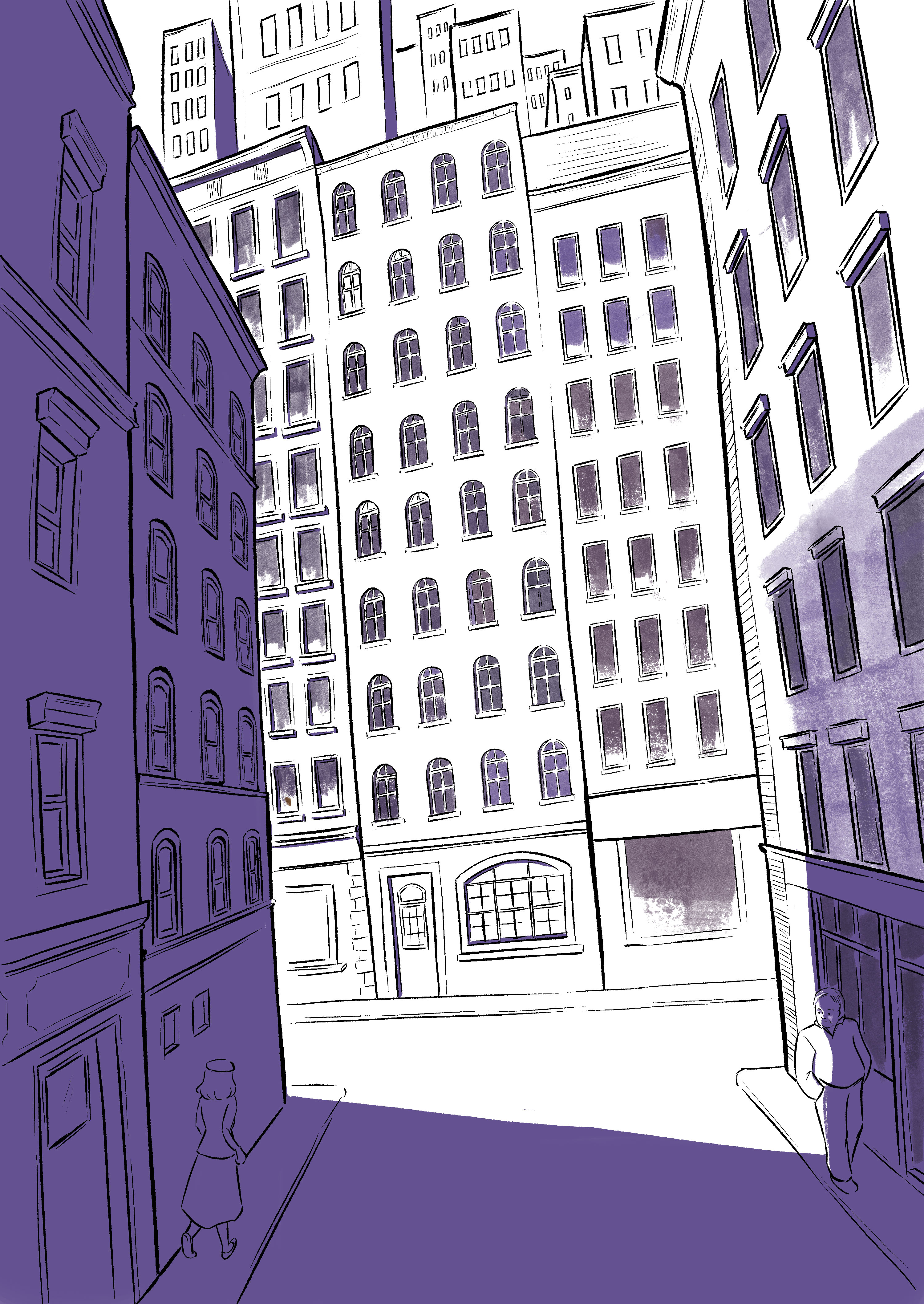
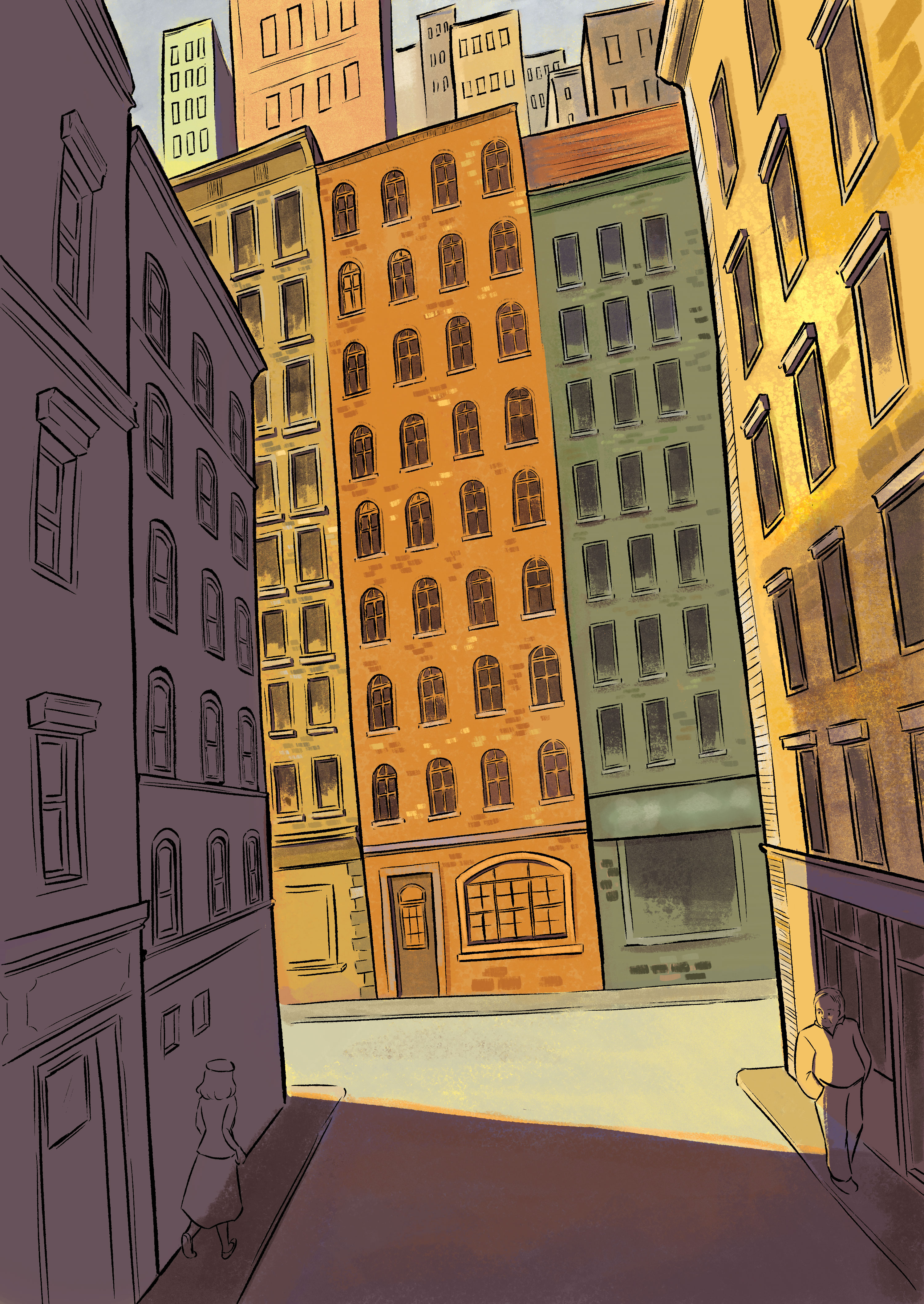
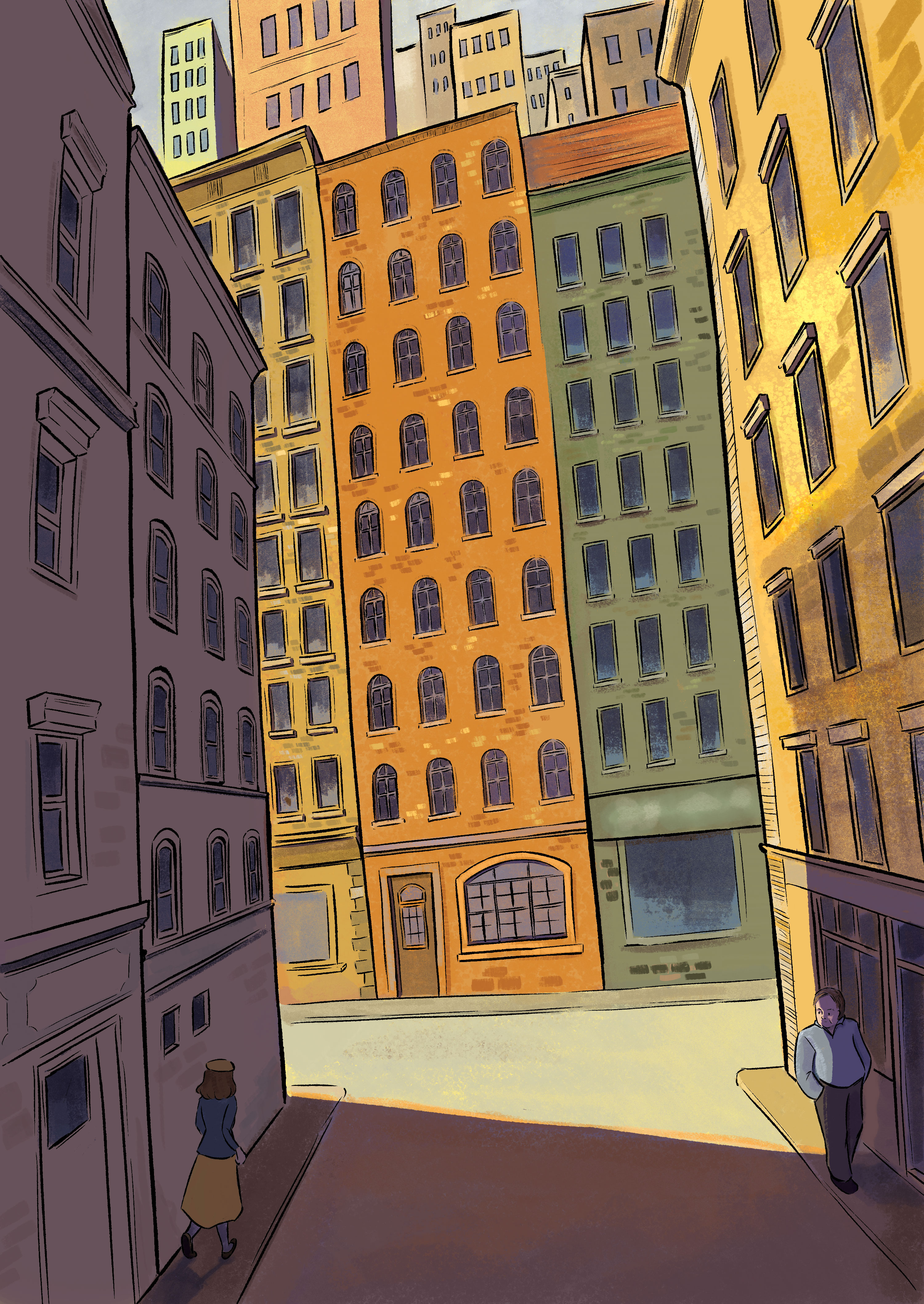
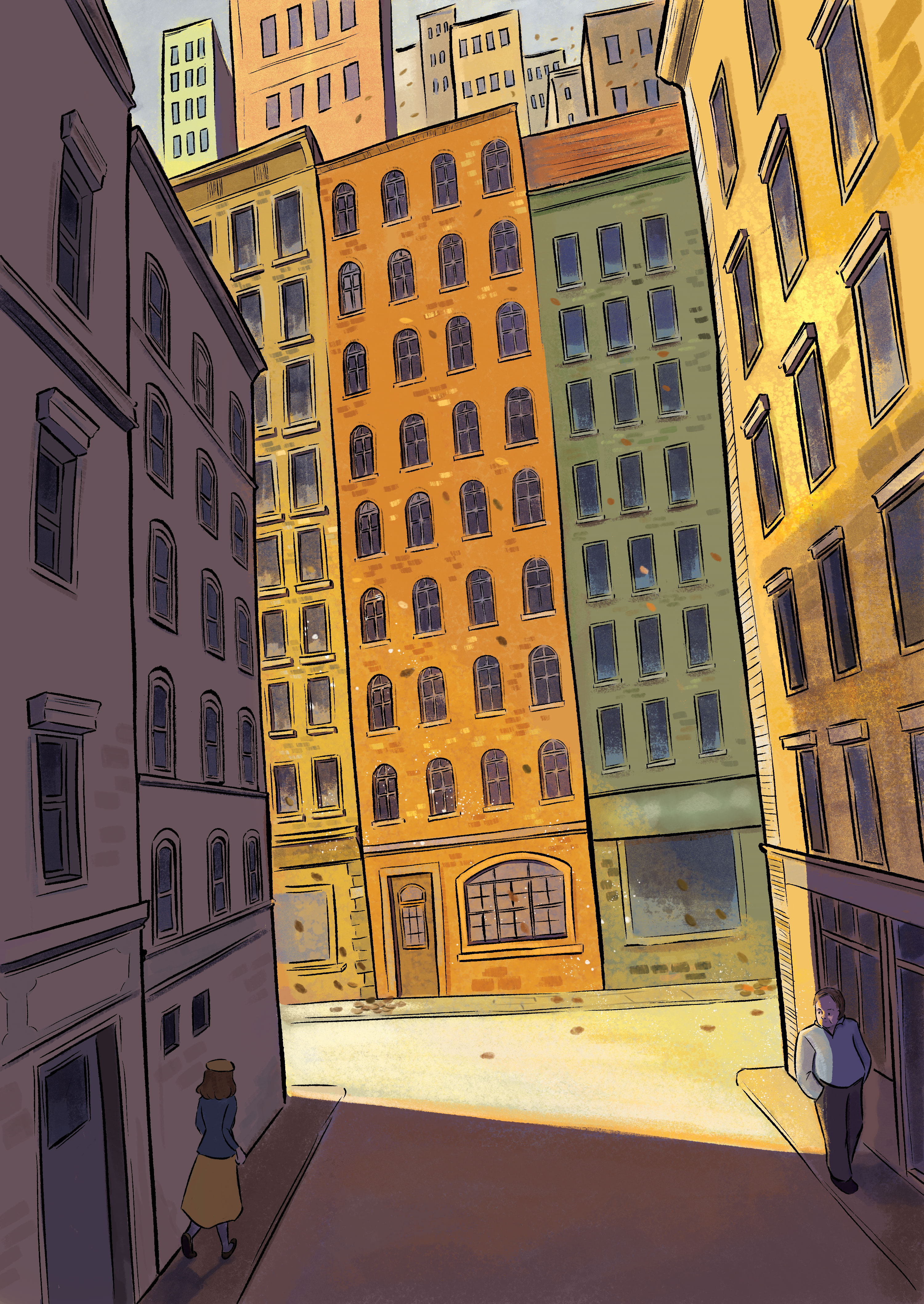
Process of a distorted street scene

As person growing up in a city with buildings, sometimes I feel lost and falling behind. Buildings, though they are frigid structure, get taller every year. They get pulled down to be built taller and taller; while human, or me, doesn’t. I can’t break myself down to rebuild me to a better person.

Together with the book “Dora Bruder” by Patrick Modiano, I come up with this idea of a girl getting lost in a city, a crowd of cold blocks stacking over each other.

The sketching for this illustration actually took longer than the painting. There are a lot of windows to draw and I have to make sure the perspectives are distorted out of reality. About color, I already have the idea of using orange-yellow tone for a nostalgia vibe, which indirectly determined my choice of shadow (purple).

That’s it! I love this illustration because I love the book and I’m proud of me taking time with all these windows.
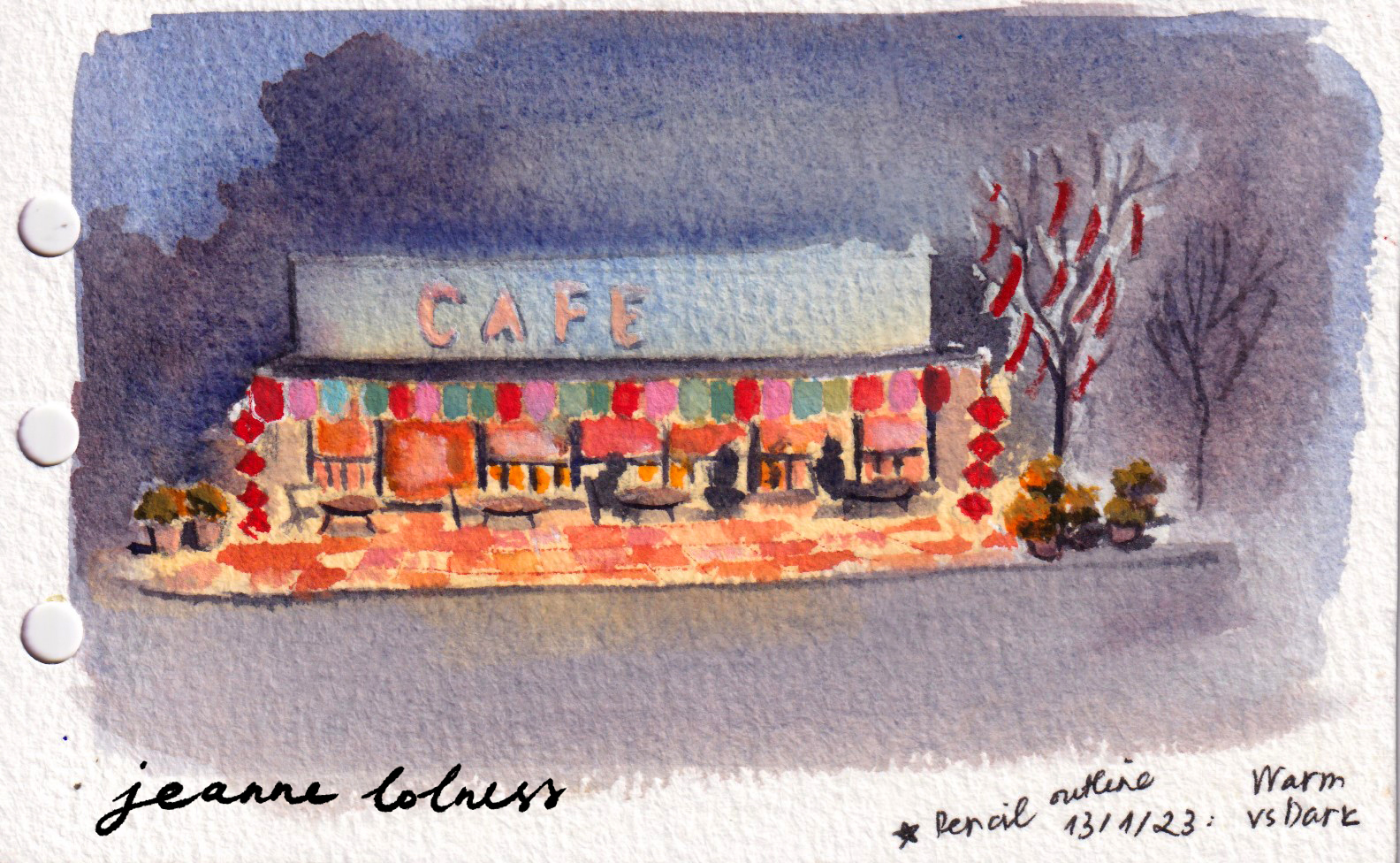
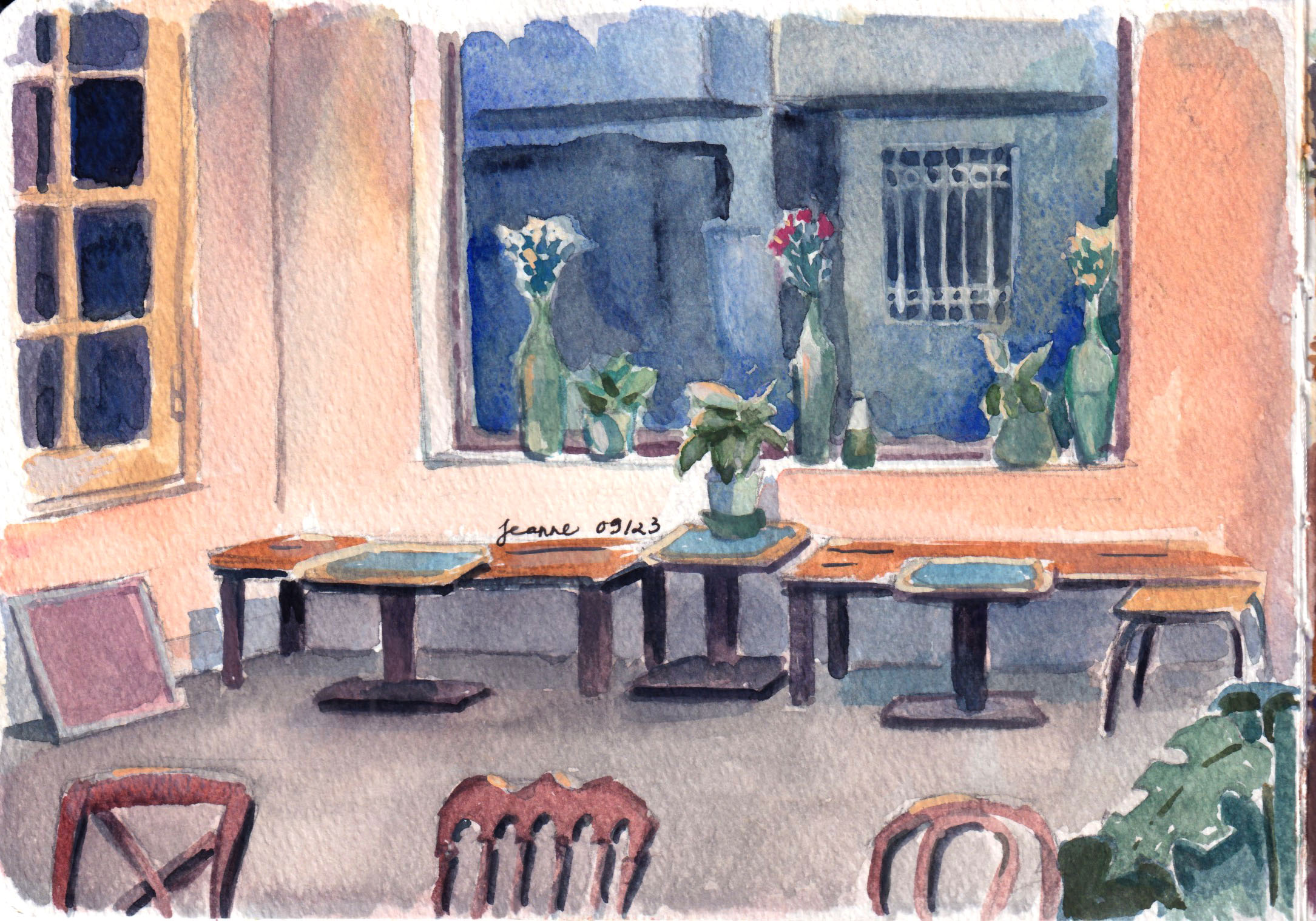
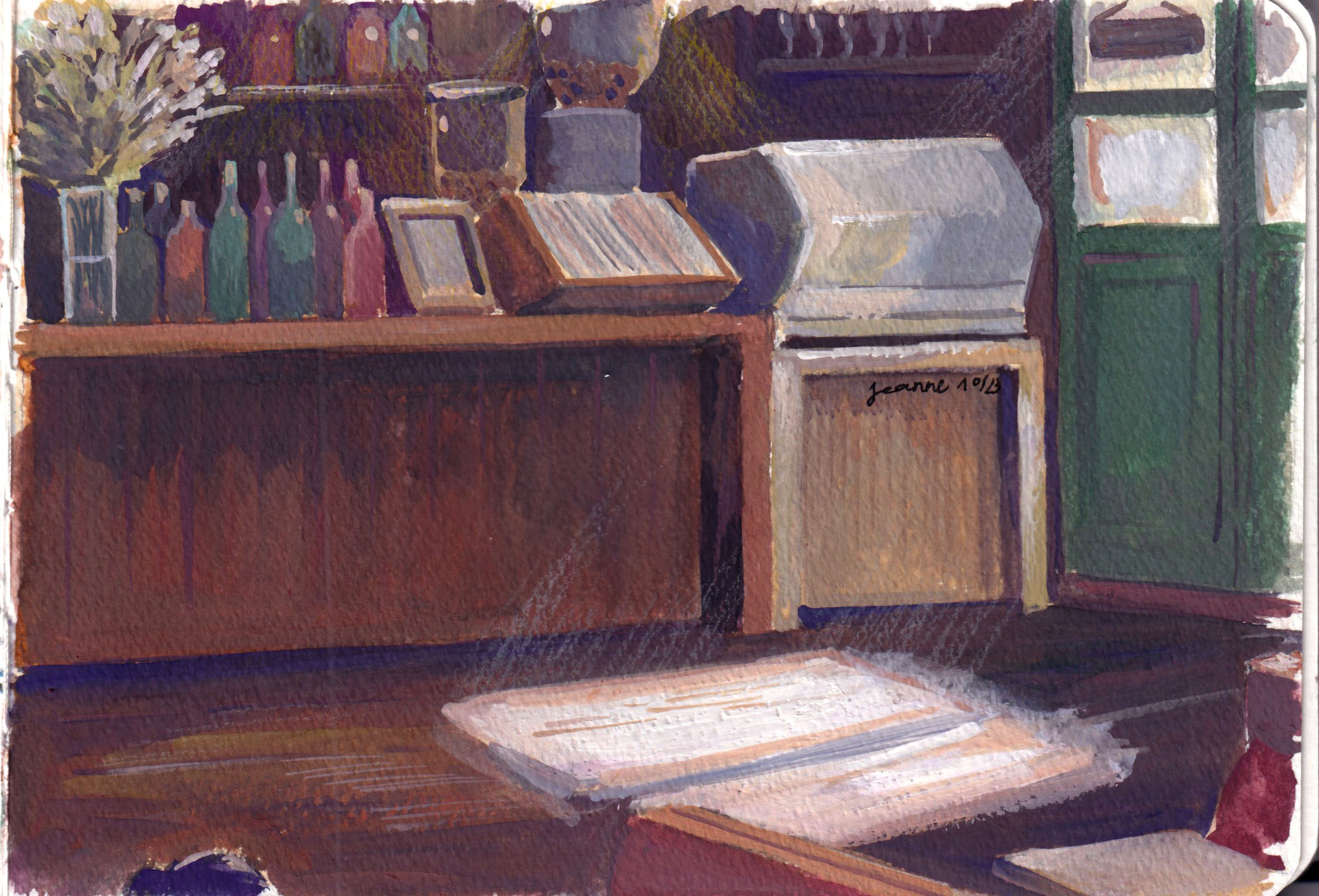
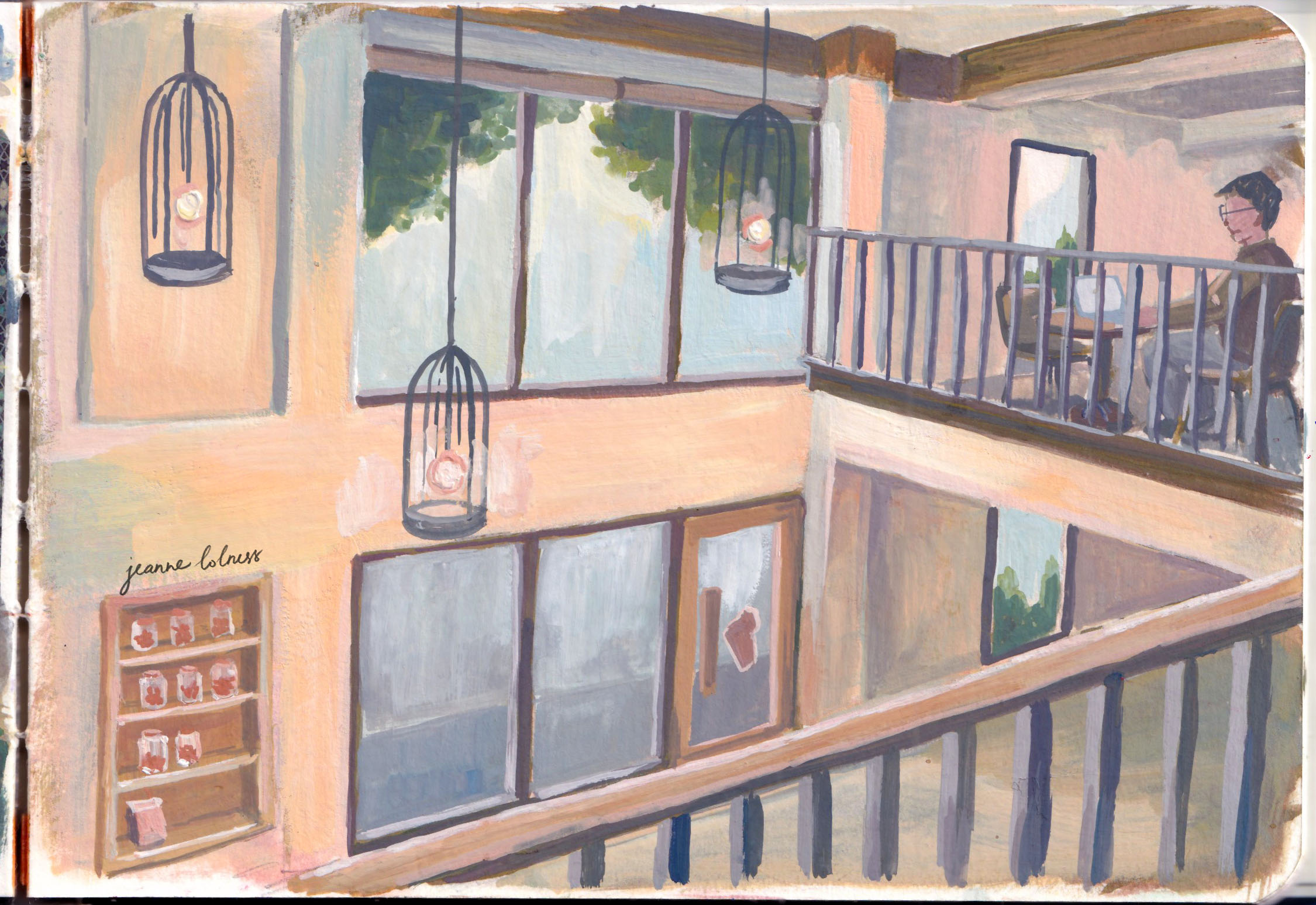
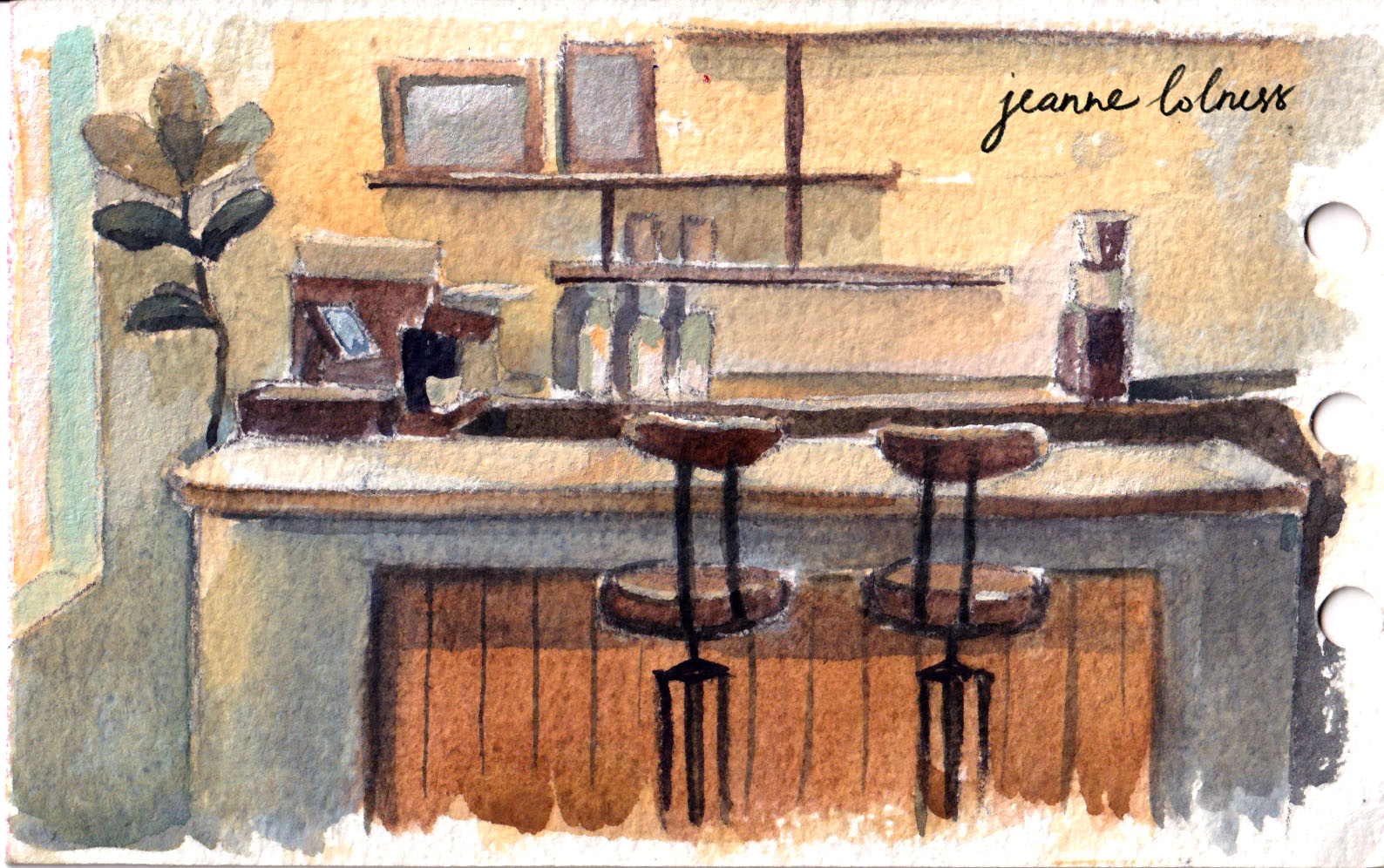
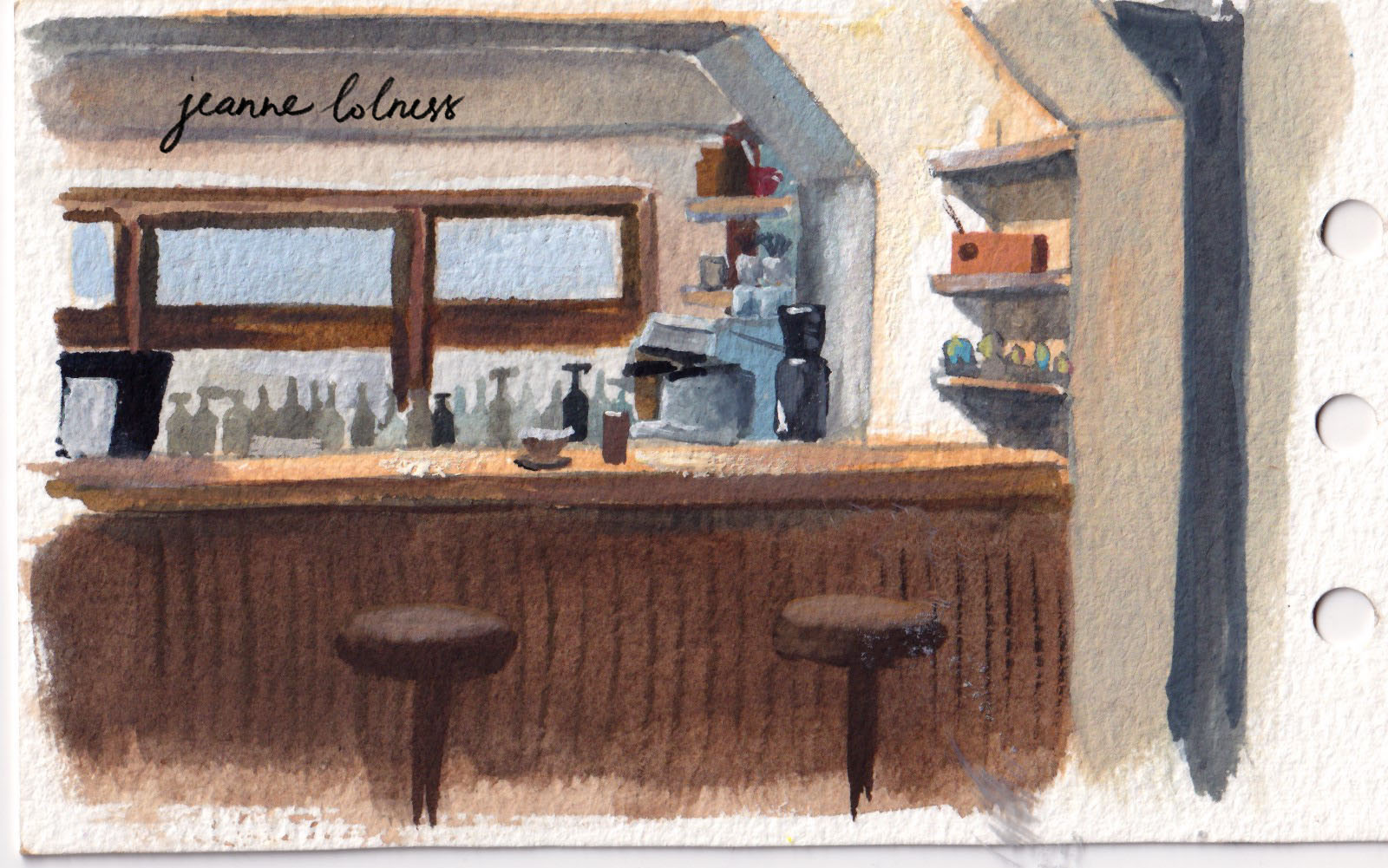
My long-lasting affection with coffee shops via paintings

My grandparents are big fans of coffee, growing up with them, I always smelled coffee in the house. Though I didn’t take to drinking coffee until my twenty-something, the smell of coffee is something I associate with a shelter and a cozy place.

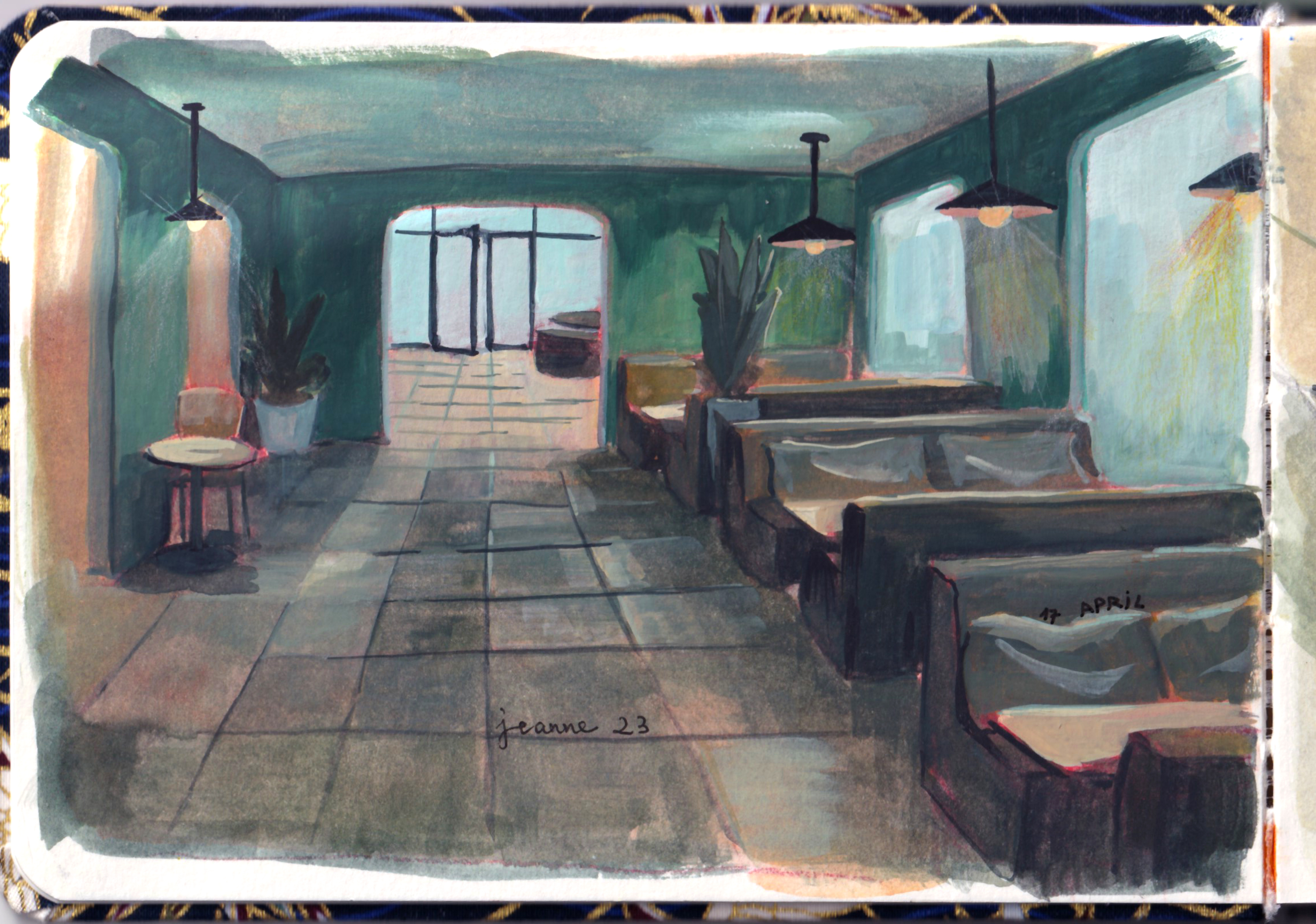
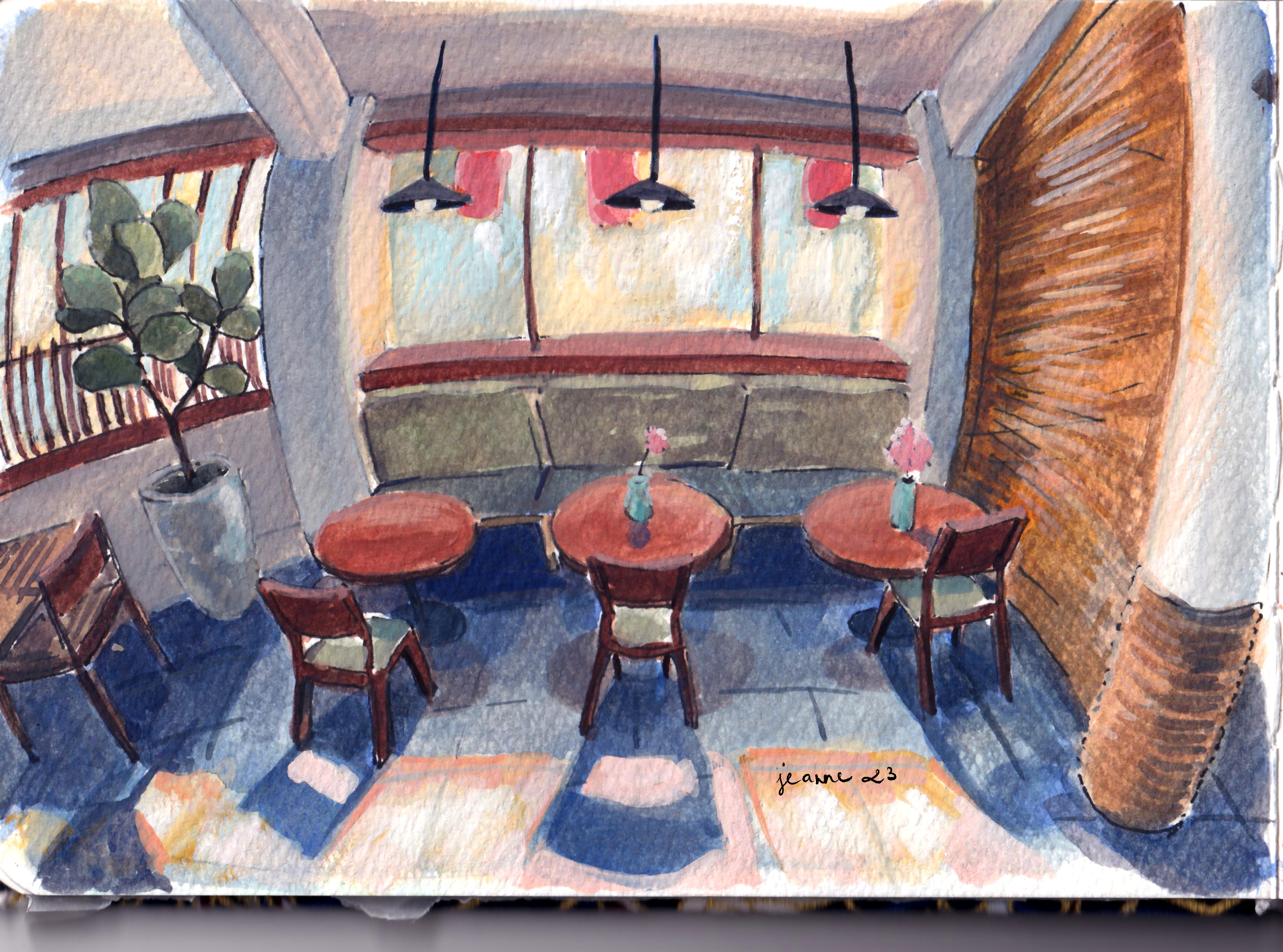
And there is a cafe for every single need of people in Vietnam, as long as I could specify how I feel and what I want. Most of the times, I prefer a quiet working cafe with a few floors, high desks and chairs, with bright lighting and lots of windows.

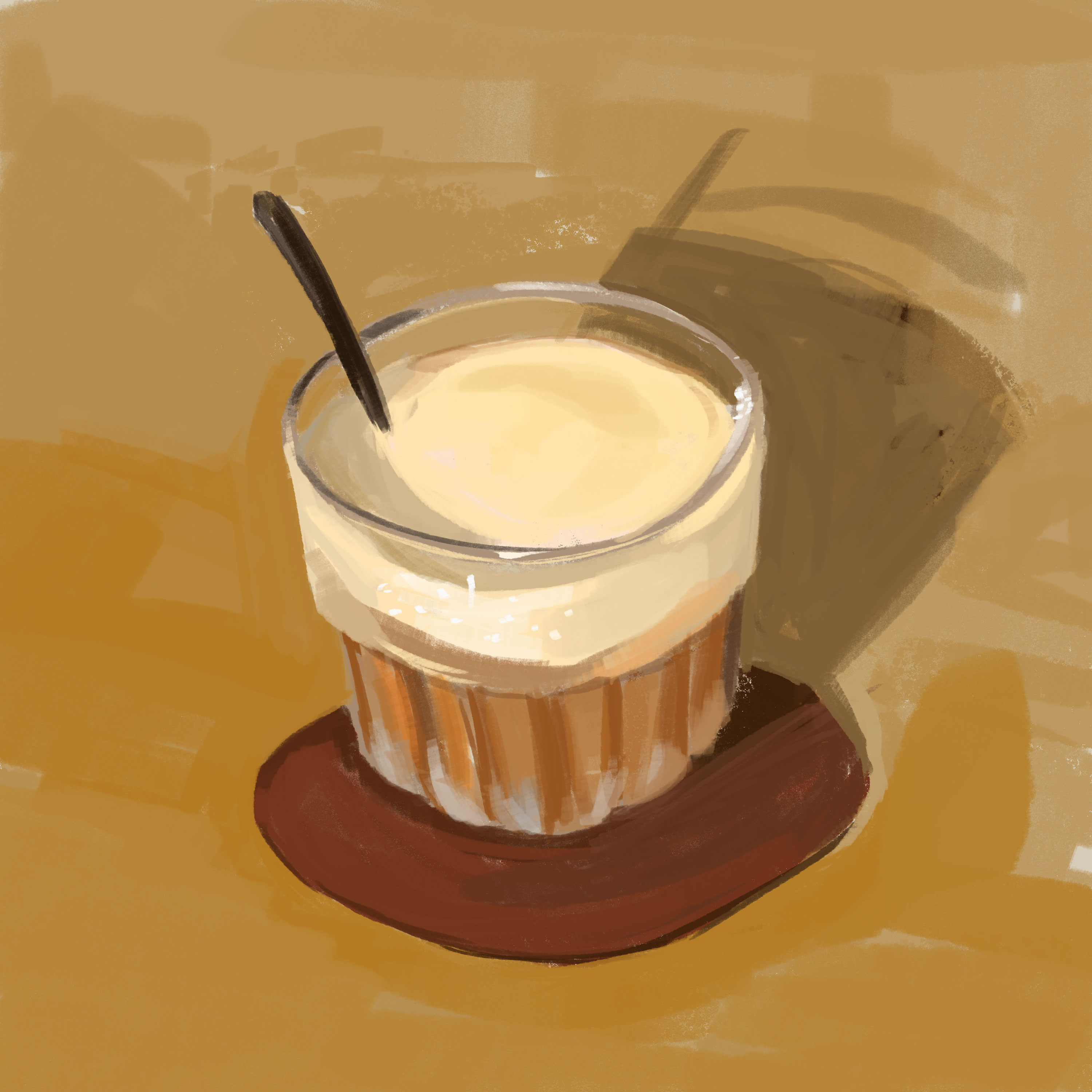
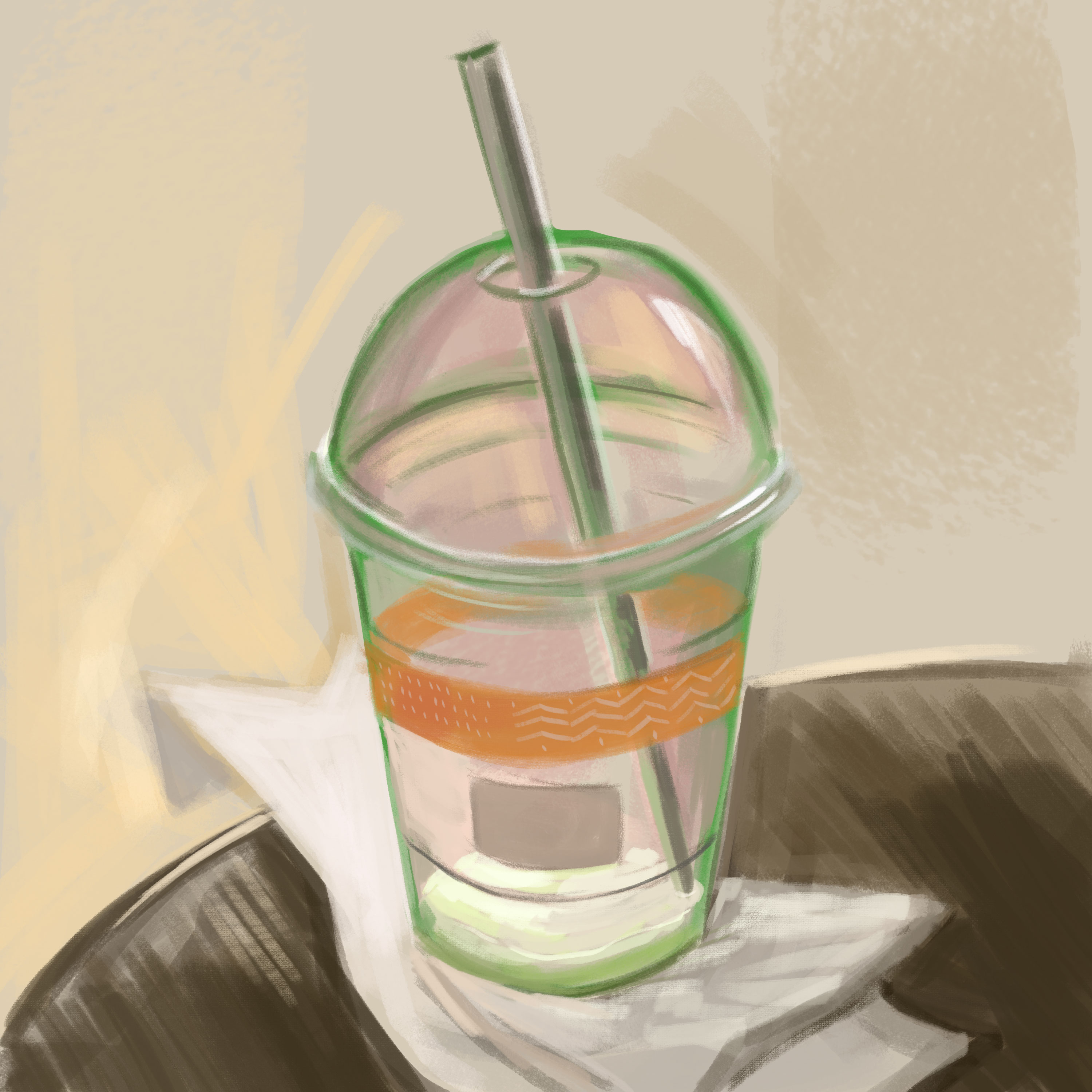
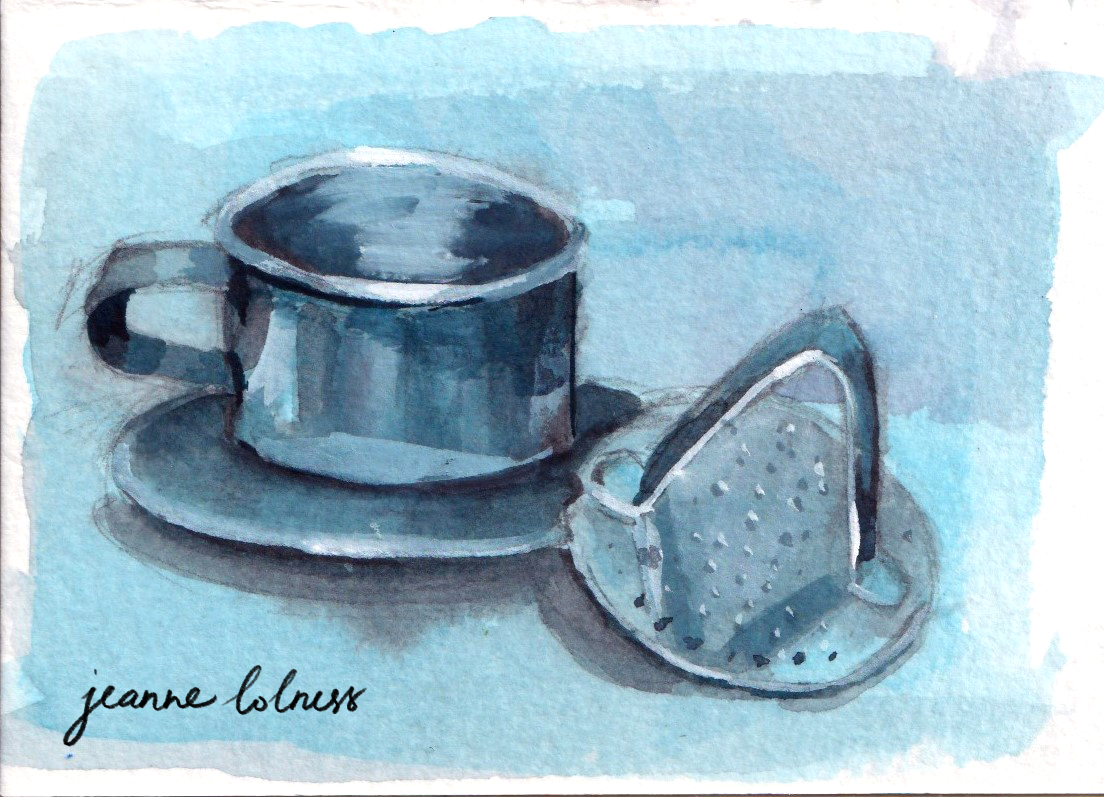
I like to do still life studies with coffee glasses and cups as well.

With the growth of social media and online reviewing, coffee shops start investing in interior design, good-quality chairs and tables. They become great subjects for me to paint as I observe how interior design affects how people talks and moves. Lovers meet, friends gather, strangers look at each other. All happens at a coffee shop.

What’s my favourite type of coffee? “Bac xiu”- coffee with lots of milk. It usually has a warm brown color due to the milk. It tastes moderately sweet with a strong aroma from Robusta coffee beans.

A lazy coffee at noon

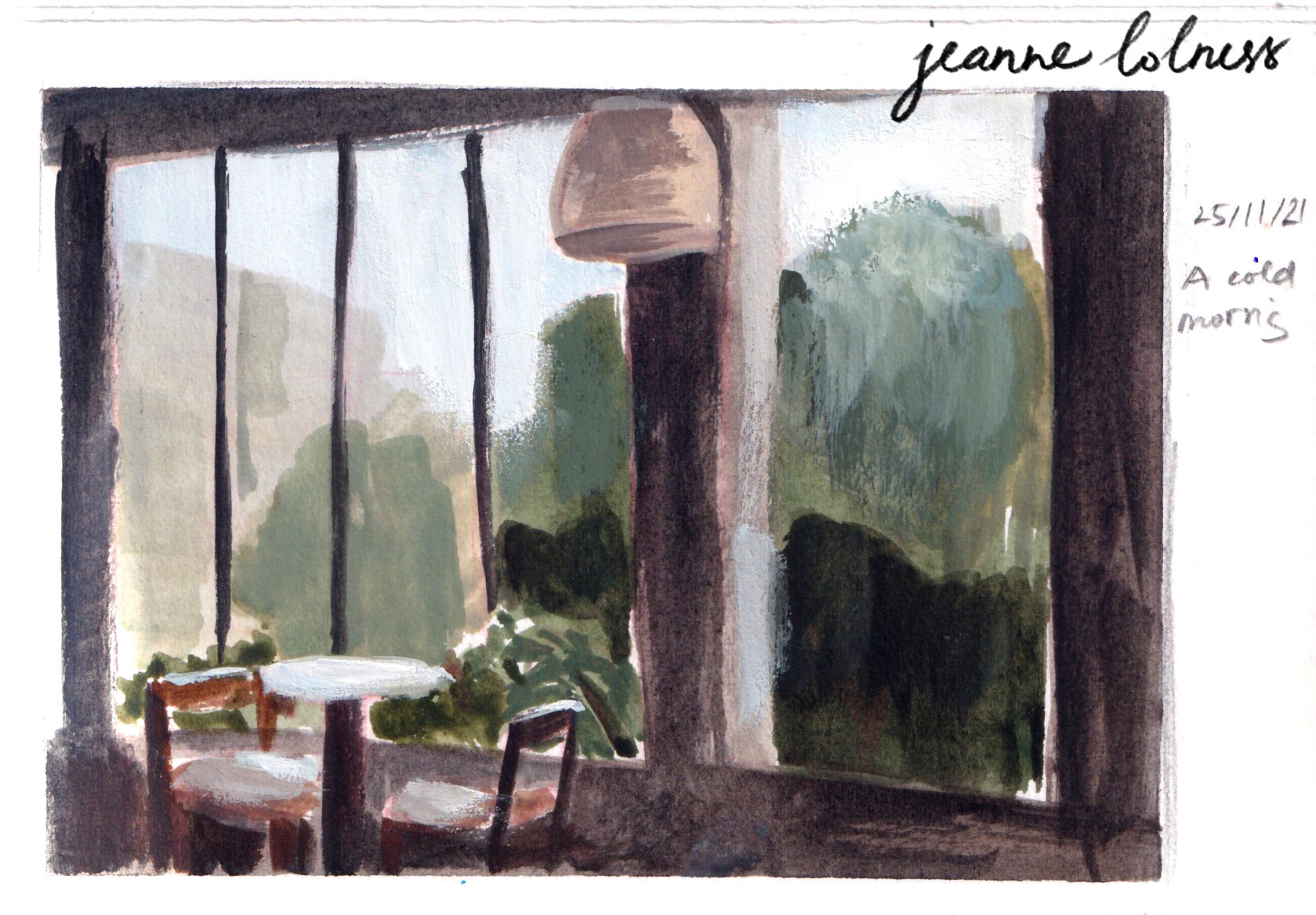
I usually go to a coffee shop in the mornings, the silent period. Most people would just get a takeaway before rushing to their workplaces and for more than once, I’m the only customer sitting. I don’t mind the baristas taking their time to make my drink and sometimes they have time to bring the cup to the table for me even though they don’t have to.

A summer day

There are people in my life I label: ‘coffee people’. They are the ones I never talk with but know the faces, and they know mine. It’s weird I never find the attraction to start a conversation, but they become part of the coffee shop. If anyone creates a cafe theme theater stage, ‘coffee people’ must be there. They have no lines but they have to be there.

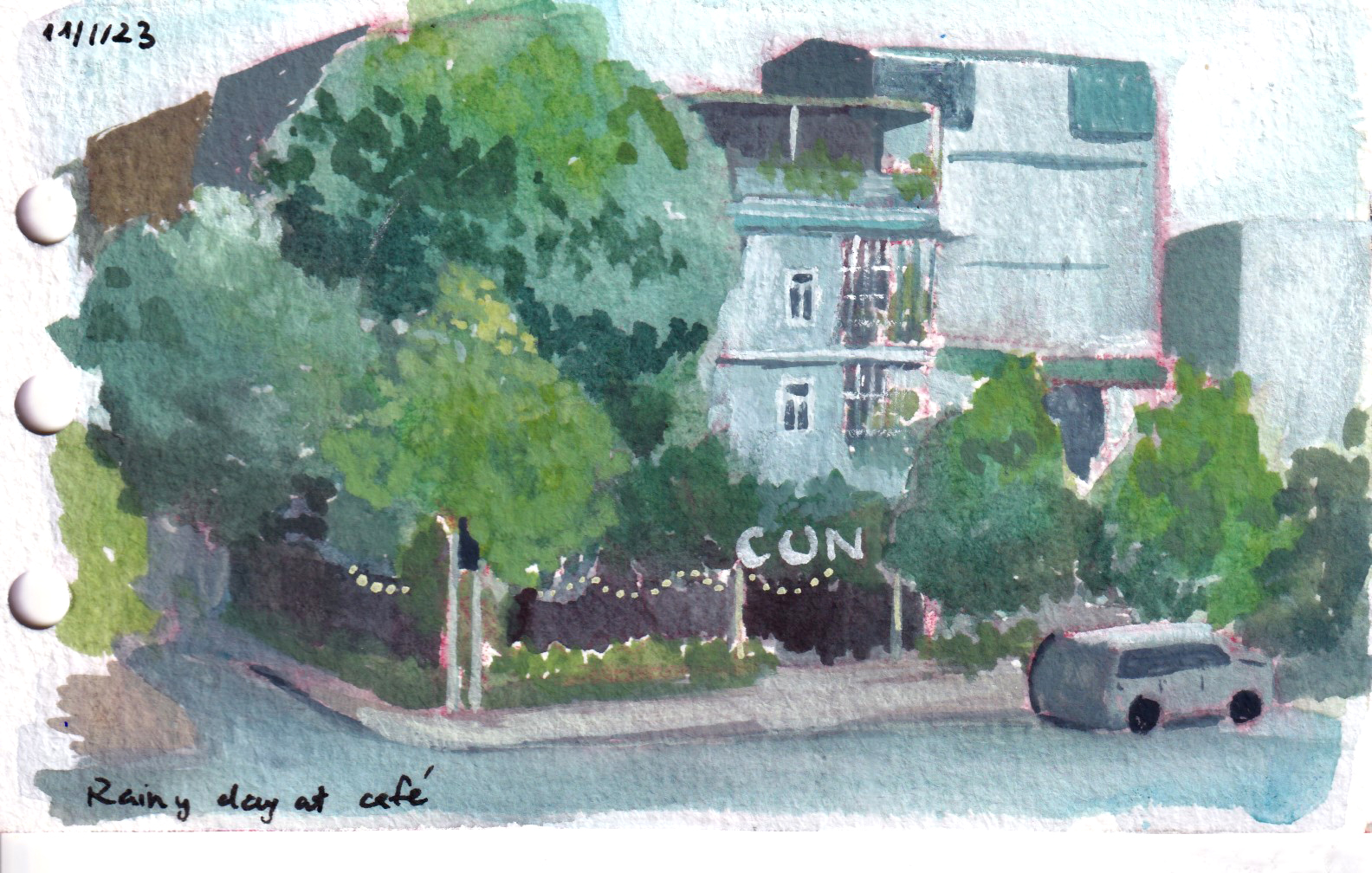
I went to coffee shops even on rainy days. It takes more efforts but it’s another kind of experience when it rains heavily outside and you are in the warm lighting indoors sipping a warm coffee cup. The coffee shops becomes a valid shelter.

Morning light in a cafe

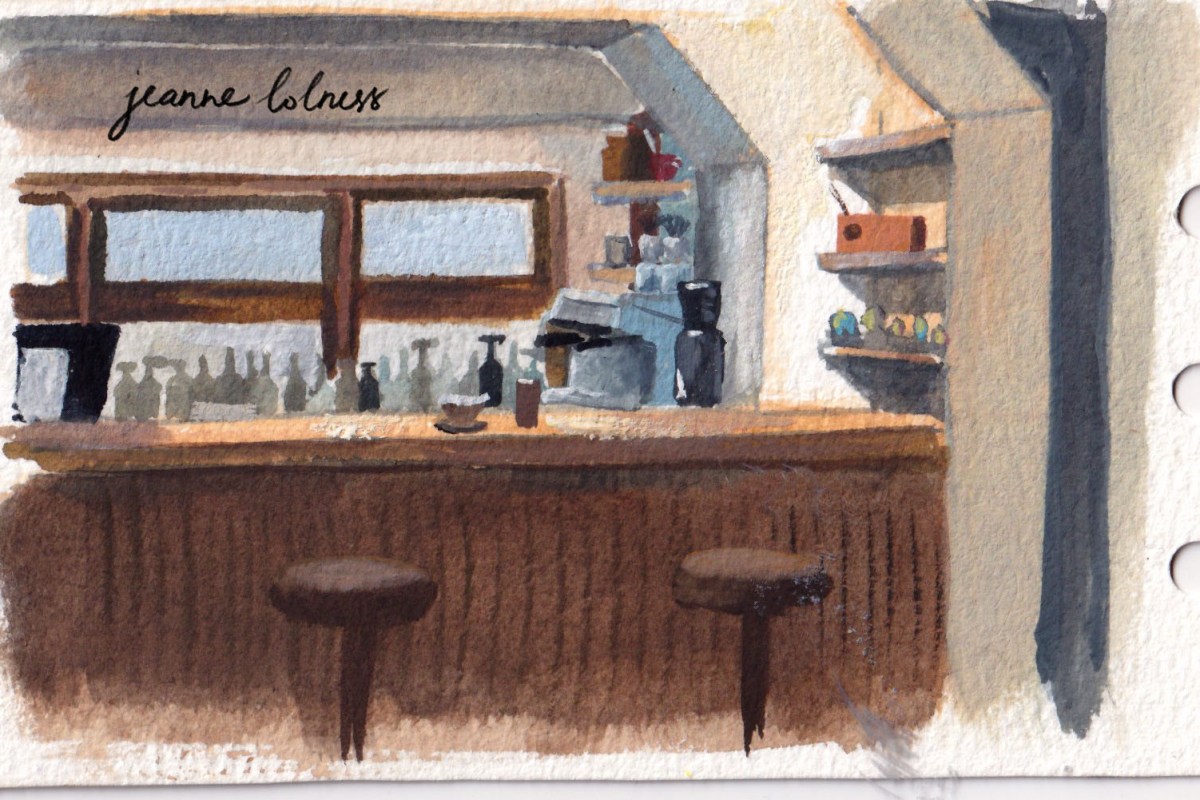
There’s always a compelling collision of light at a cafe. Light shines through windows, light reflects from glasses and cups, polished coffee machine, light specially made to make you feel attracted to more coffee. We are put under the spell of designed space and light.

Coffee counters is a source of inspiration as well, with lots of objects and activities going around them. And the design may be similar but this counter just feels different from the other one.

Let’s take a break here and enjoy our first (or last) cup of coffee for today, shall we?

Art Journal Entry: End of 2024 Summer

I will be exactly 26 in a few days and I often find myself dwelling on the past, not necessarily my childhood or adolescence, but the years after graduating from university. Though I kept a big journal, I still wonder how I have got over all of these things. I don’t share my journal, because it’s very personal and I mostly wrote about my relationship with people rather with arts. But I think a journal about arts could be shared, hopefully helping anyone reading get over the feeling of being lost in our 20s.

As a freelance illustrator, summer is often the slow season. People go on holiday, there are no big celebrations and this year, with generative images and recession all over the globe, it’s even a slower summer for me.

I tried to take this as an opportunity to improve my skills and were ambitious when I plan for the summer. I was already ambitious when I wrote down my new year resolutions, even though I have never completely achieve them. I want to continue paint landscape and improve my portrait, storyboard, people in drapery and animals skills.

It was smooth with animals and portraits because I started practicing with them already in spring, I just need to finish them as I go. Storyboarding is surprisingly hard because there are not much to remember, it’s more about imagining a camera running around in space and merge them with your perspective skill. It starts growing too hard and I have to decide to delay learning it, trying another source of book and lectures.

Sketching people in drapery is figure sketching but a new level. I practiced figure sketching with nude models or minimal dressed models so when the big challenge is to imagine how their arms and legs move under the fabric. And choosing what folds to tell the story; there will be folds that can be memorized and folds you just add because of a specific pose.

What I didn’t plan to study is learning to use Procreate, because I’m still not sure whether to get an Ipad or a new laptop. But I decided to get an Ipad, because I prefer something lightweight and minimal. I never fully use and understand Photoshop and it’s too heavy, Procreate works much better for me, it’s just drawing.

Some Procreate sketches

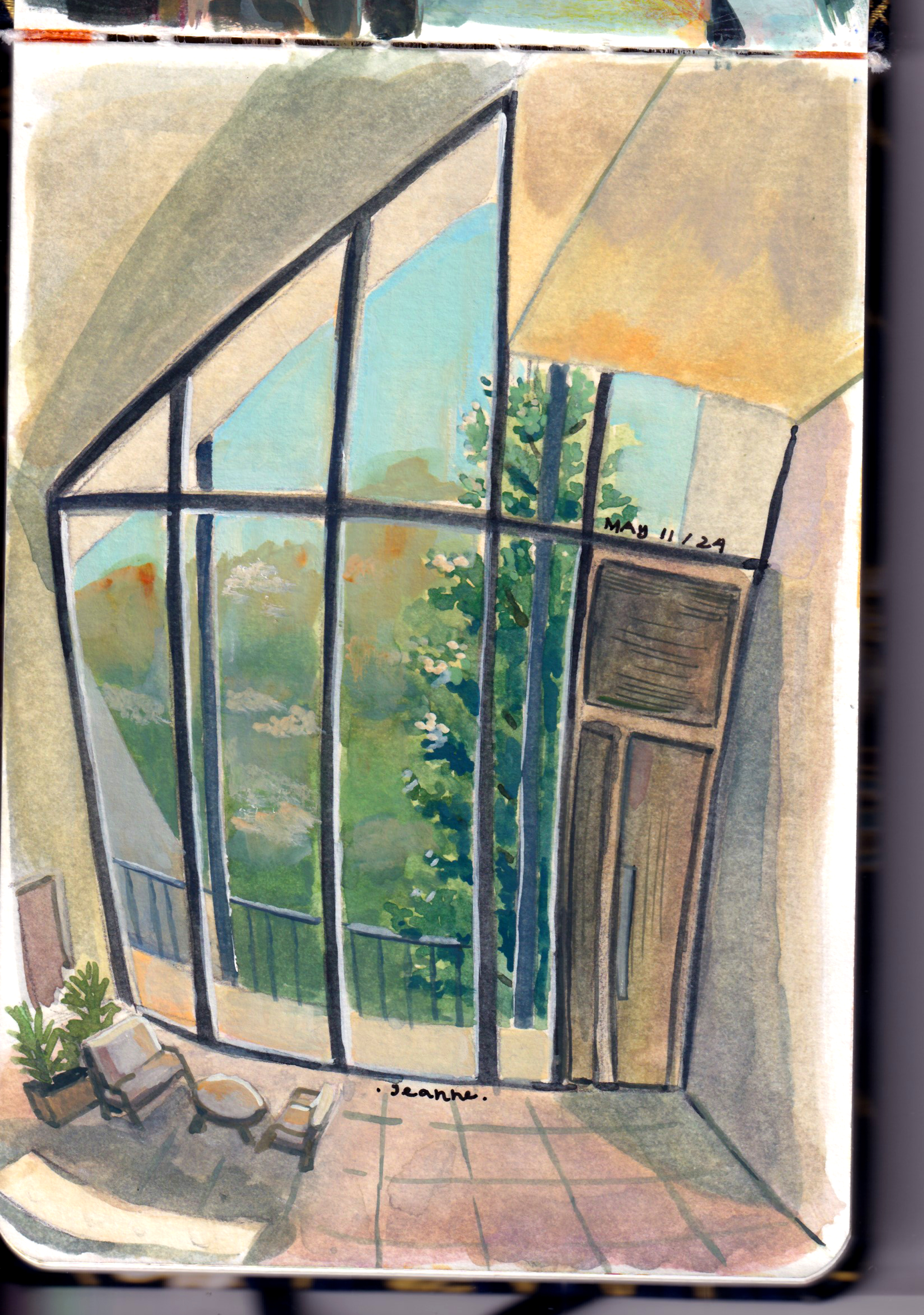
Apart from new skills, I still try to paint landscape both outdoors and with images I gather myself. This summer I painted a lot with my Holbein Acrylic Gouache, which has brighter tones compared to my old Nevskaya Palitra gouache.

It sounds like I have learned and done a lot of things, but actually I felt like a crap all the time. When I started freelancing and studying arts on my own, I believed after a few years, things would get easier and even if I’m not a genius, I must have gather skills and projects along the way. I did gather new skills and projects, but the feeling of having nothing and being nobody is still the same. I guess that the curse of being an artist.

Goodbye Summer. At least we weren’t lazy.