History Spotlight: Adélaïde Labille

If you have read my blog about Élisabeth Vigée Le Brun, chances are that you enjoy this article about Adélaïde Labille-Guiard – a fellow female artist. They are two of only four females accepted into the Academy in 1783. Critics at the time liked to portray them as contemporary rivals, since they had many in common. However, there is no solid evidence of rivalry or friendship, since formal history often doesn’t take relationships and feelings into account. One concrete fact is that both female artists have supreme talents and suffered from male jealousy to political fluctuations in 18th century.

A calculated career

Adélaïde didn’t have any artistic family background, she was one of eight children born to a Paris shopkeeper. Despite that, she turned to artists in her neighborhood, first painting miniatures with Francois-Ele Vincent, then working with pastel taught by Maurice Quentin de La Tour and then Francoi Andre Vincent (son of Francois – Elie). She worked her way up the academia art world gradually, from joining the Academia de Saint Luc, exhibiting at the Salon de la Correspondance and finally the Academia Royale de Peinture et de Sculpture. While Vigee-Le Brun was preferred by the Queen, Adelaide painted King Louis XVI’s aunts, Mesdames Adelaide and Victoire along with a wider range of topic.
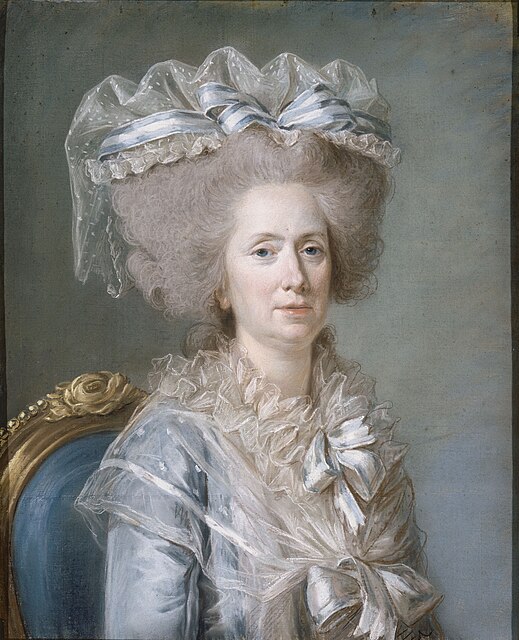
Marie Adélaïde de France, Known as Madame Adélaïde;
pastel on blue paper mounted on canvas;
28.74 x 23.14 in (730 x588 mm)

However, she couldn’t have planned for the French revolution. She welcomed the Revolution and supported with ‘“patriotic donations”. However, the subjects of her previous portraits became the liabilities, attracting criticism from men and even danger. The post-revolutionary successor to the Academy decided to exclude woman from the art world. The Directory of the Department of Paris required Labille-Guiard to hand over an enormous group portrait, commissioned by the king’s brother to burned. She saught refuge in the countryside and only returned to Paris in 1795 and die in 1803. If there was anything from the Revolution benefiting her, she was able to divorce her husband, Louis Nicholas Guiard and married her rumored to be lover and teacher, Andre Vincent in 1800. (Auricchio (2009))
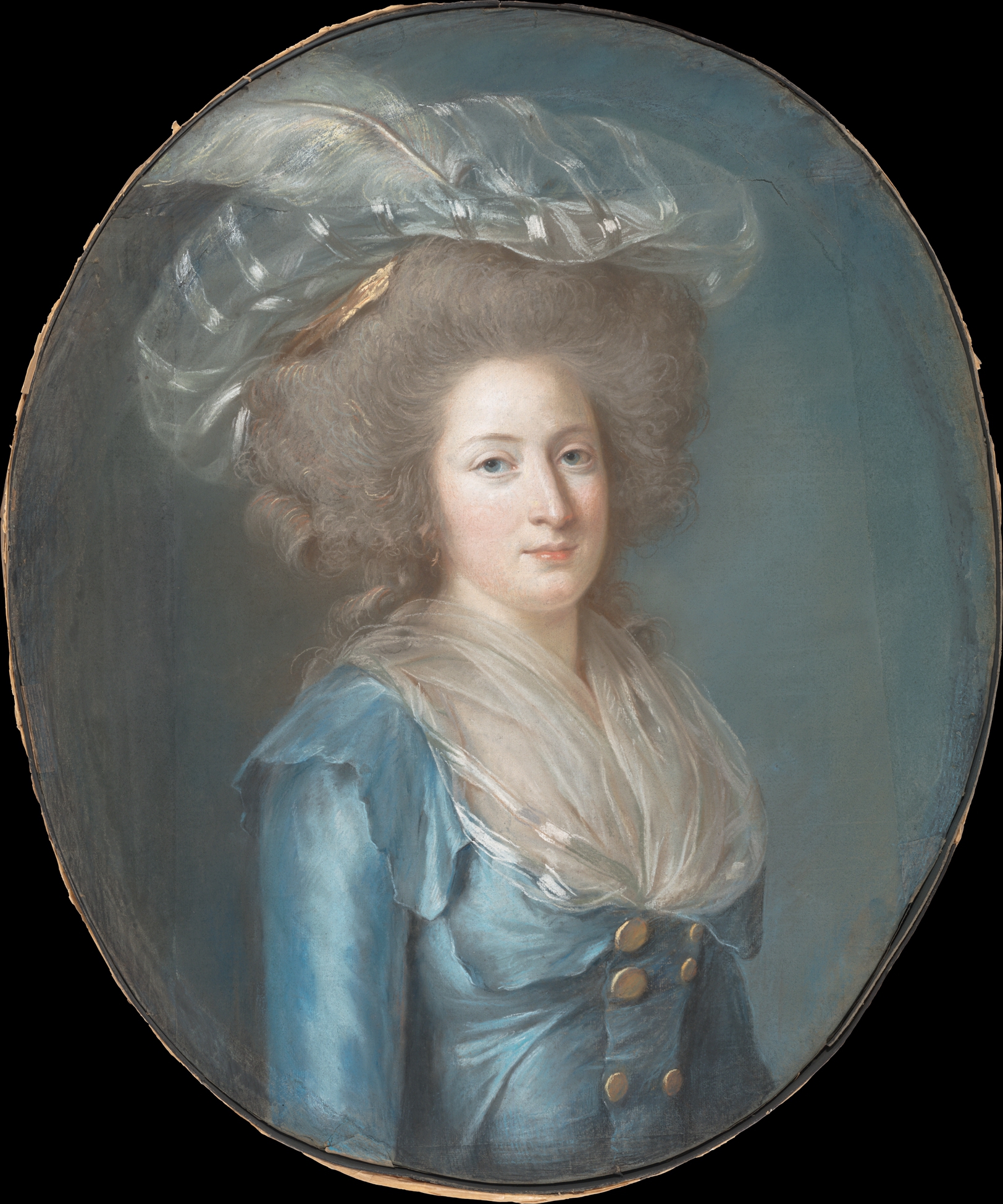
Madame Elisabeth de France (1764–1794),
Pastel on blue paper, seven sheets joined, laid down on canvas,
Oval, 31 x 25 3/4 in. (78.7 x 65.4 cm.)

A feminist

Despite her formal education and training, she was greeted with controversy and rumors. Vincent, who was rumored to be her lover at the time, was said to have ‘touches up’ Labille-Guiard – an offend towards both her paintings and personal life. (more: “His love makes your talent. Love dies and talent falls”). More ridiculous tales including her 2000 lovers were only stopped after her appealing to a well-placed patron, who was possibly the wife of the director of the Batiments du roy. She was outraged, of course: “One must expect to have one’s talent ripped apart”. (McPhee (2021))

Portrait of François-André Vincent, pastel, 23.81x 19.6 in (65×50 cm)

In the argument in the Academy on contributing to the regeneration of the nation, she was the only woman, naturally attracting criticism. (Auricchio (2009)) She proposed increasing numbers of women being admitted to the Academy, but was rejected. Despite the term revolutionary with his name, Jacques Louis David, emphasized: “The rewards destined for artists cannot be without danger for woman [since art requires] long and hard study … incompatible with the modest virtues of their sex”. (McPhee (2021))

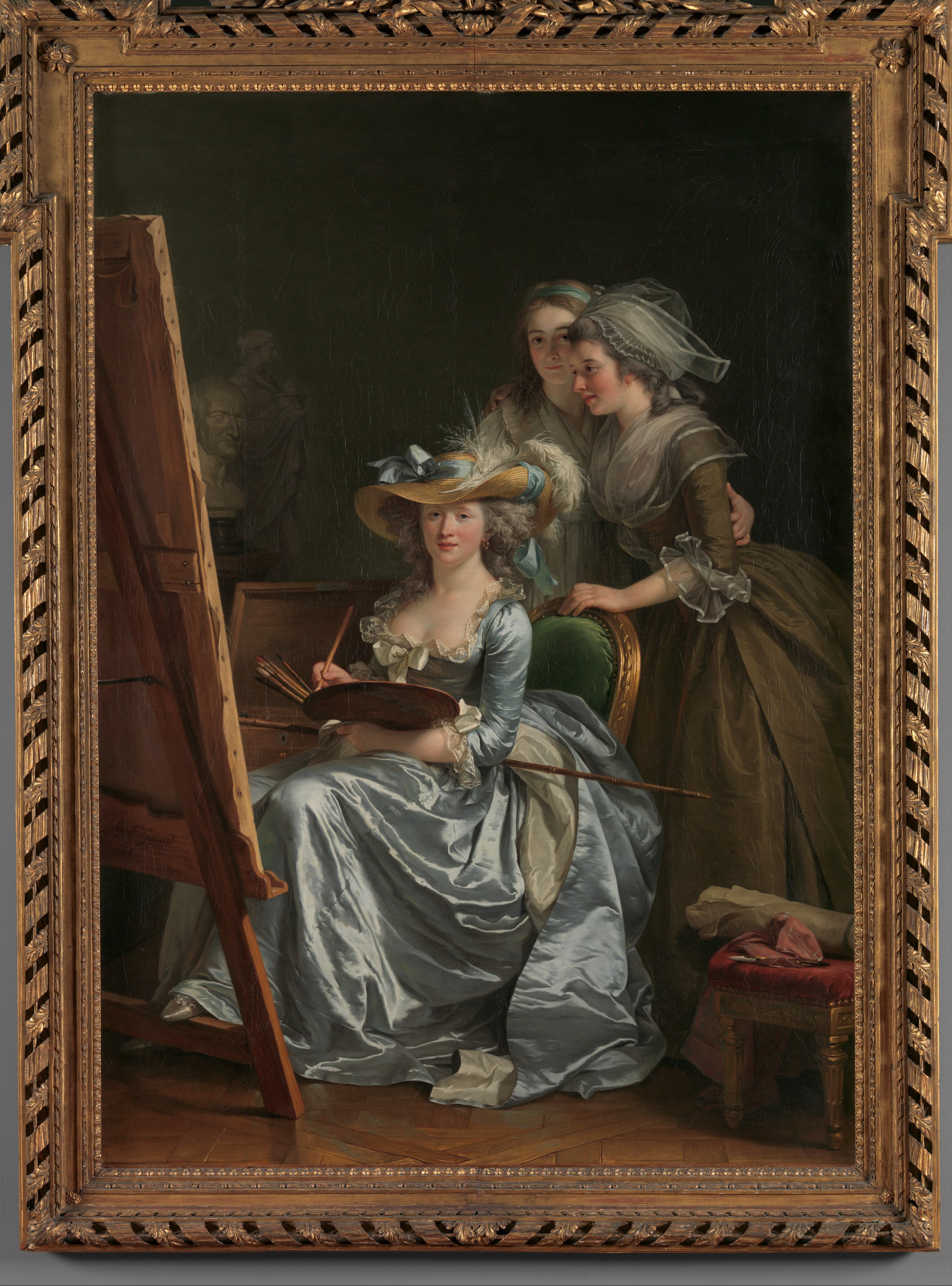
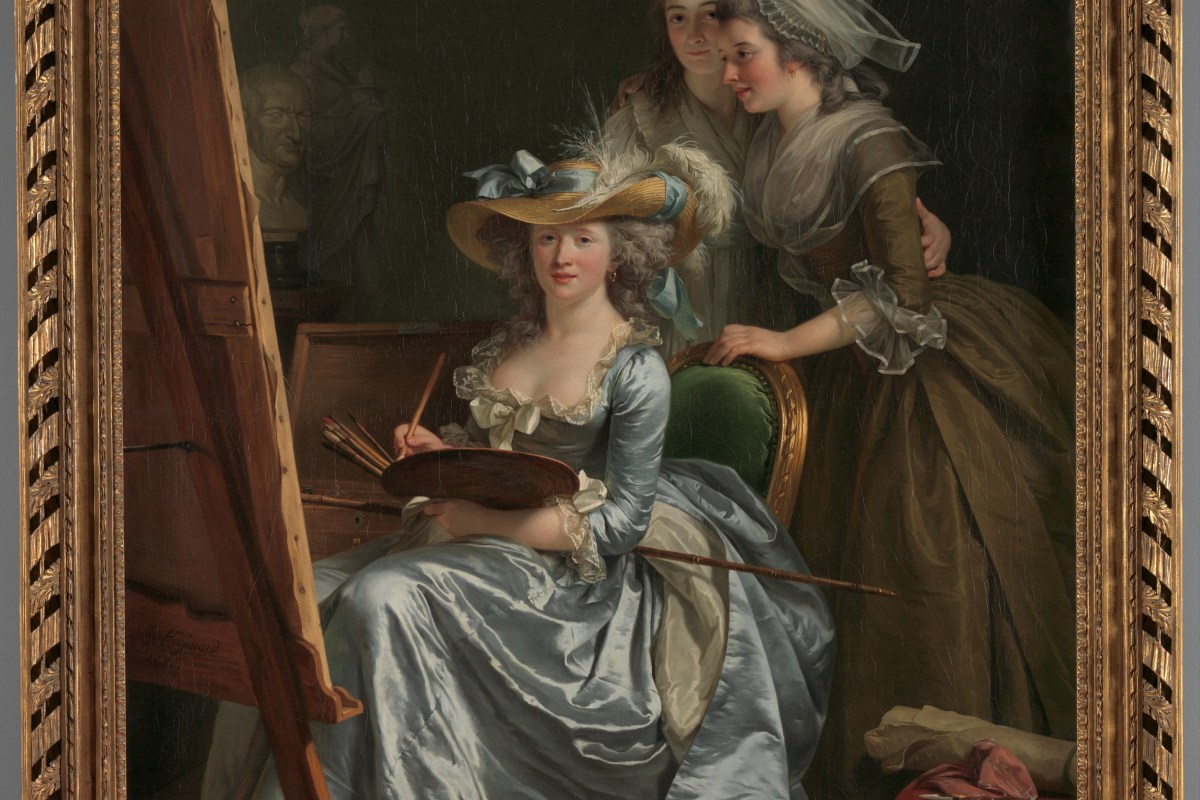
She had always dreamt of establishing a school for female artists, which can be seen in her most important work “Self-Portrait with Two Pupils”. Besides her foremost position as her prestigious artist for the royal family, she expressed herself as the educator and supporter for female artists. One of the students shown was Marie Gabrielle Capet, her favorite students and another talented artist. Both shared the dream of a school for female artists and lived together even after the marriage to Vincent. After A’s death, Capet kept taking care of Vincent.
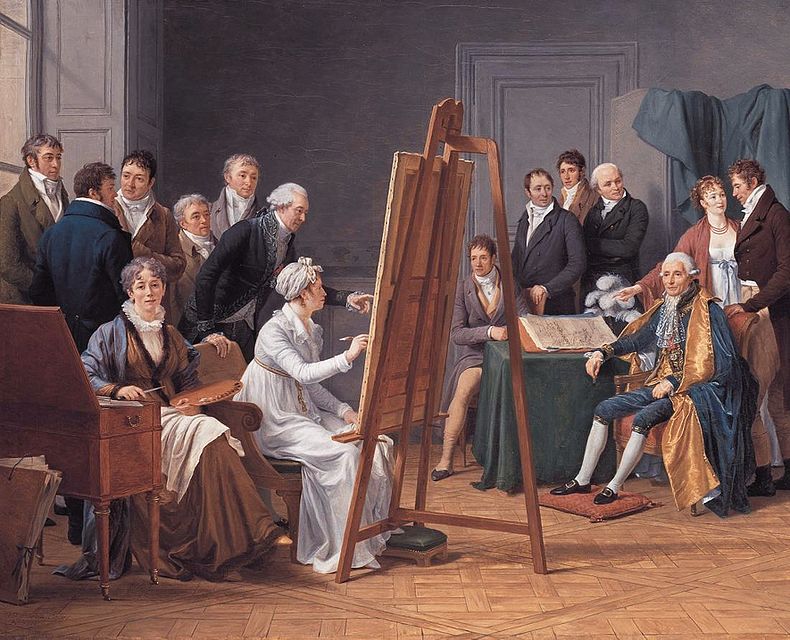
Atelier of Madame Vincent, 1808. Painting of Adélaïde Labille-Guiard painted in 1808 by her pupil Marie Capet.

An educator


Self-Portrait with Two Pupils, Marie Gabrielle Capet and Marie Marguerite Carreaux de Rosemond , 1785
Oil on canvas; 83 x 59 1/2 in. (210.8 x 151.1 cm)

In the painting “Self-Portrait with Two Pupils,” she chose to show herself in a fashionable dress and a straw hat, not quite the style expected in an artist’s studio. Let’s not forget that she grew up with fabrics around, and she tended to indulge in the latest fashion in her works. She appeared to be wearing robes à l’anglaise, “fitted close to the waist in the front and back.”(Fashion History Timeline (Klopfer, n.d.)) She dressed herself in the latest fashion of a low plunging neckline and revealing bust line, which is similar to Vigee Lebrun’s portrait of Marie Antoinette. Along with two other females who dressed completely distinguished form each other, the purpose of dress choice was possibly to showcase her expertise in rendering cloth, especially the latest fashion in society.

Her silk dress’s pastel blue color also reflected the characteristics of the Rococo style. She was over 30 years old, married, and had been working for more than 10 years when the painting was made.

In the portrait, she and one of her students, Marie Marguerite Carreaux, smiled and looked directly at the audience, while Marie Gabrielle Capet was staring at the canvas. Carreaux was possibly wearing a chemise dress, which was usually seen with the straw hat outside rather than inside a studio. Capet, on the other hand, was dressed in what resembled the attire of a female artist working in her environment. Her lighting rendering skill was shown here, with Capet’s youthful face was softly lit, while Carreaux was almost entirely in the dark. (Fashion History Timeline (Klopfer, n.d.))
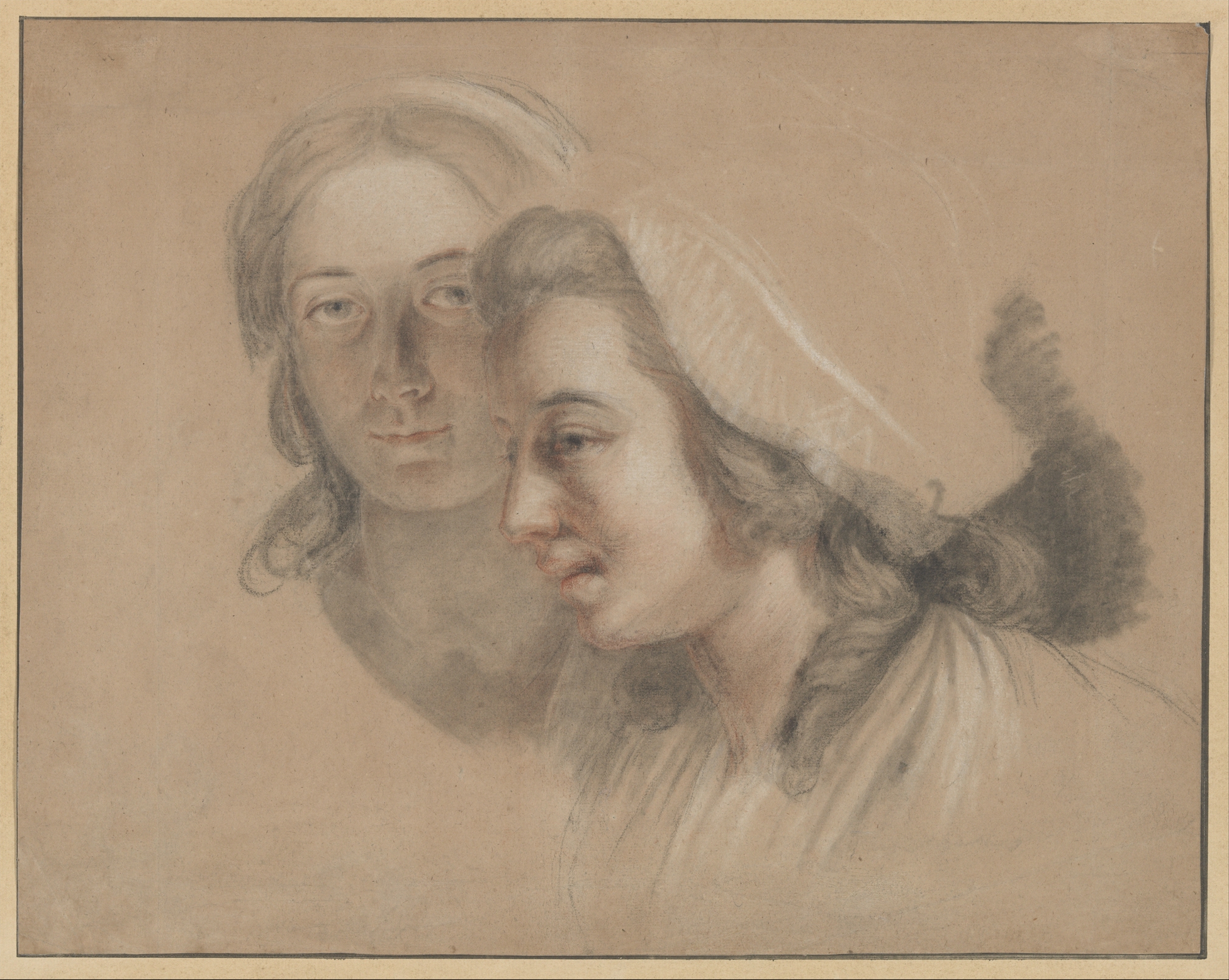
Marie Gabrielle Capet and Marie Marguerite Carreaux de Rosemond sketch,
Black chalk with stumping, red and white chalks on beige paper

One notable thing is the straw hat, an object didn’t go well with any dresses or the indoors studio. Pairing a formal fashionable dress with a straw hat could indicate that Adélaïde didn’t see herself as completely belonging to the fancy world of the royals. In fact, her dress was the only ‘fancy’ thing in a simple studio.

Compared to other portraits by her and a self-portrait by her contemporary, Vigee Le Brun, she didn’t include any flowers but chose to include a sculpture of a vestal virgin and a bust of their father. This could reflect her modesty and indicate that her final goal was to attain the same status as the males in the Academy who painted historical scenes—the most important genre at the time.

The stick she is holding supports this notion; it was more likely that she was working on a grand scene rather than portraits and still lifes, which were more suitable for females. This was a bold goal for a woman, but with her students present, she likely aimed to push more female artists into the limelight alongside her own achievements.

In the end

Adélaïde Labille-Guiard’s dream didn’t come true, there was no art school for female artists nor there were more females in the Academy. Nevertheless, her life and work embody resilience, talent, and a progressive vision for women in the arts. Despite facing societal prejudice, political upheaval, and personal challenges, she carved out a place for herself in the male-dominated art world. Her advocacy for female artists, exemplified in her iconic Self-Portrait with Two Pupils, highlights her dedication to empowering women and redefining their roles in artistic academia. Labille-Guiard’s legacy serves as an enduring reminder of the barriers she broke and the paths she paved for future generations of women in art.

References

Auricchio, L. (2009). Adélaïde Labille-Guiard. Harvard Magazine. Retrieved January 20, 2025, from https://www.harvardmagazine.com/2009/09/adelaide-labille-guiard

Klopfer, M. (n.d.). 1785 – Labille-Guiard, self-portrait with two pupils. Fashion History Timeline. Retrieved January 20, 2025, from https://fashionhistory.fitnyc.edu/1785-labille-guiard-self-portrait

McPhee, P. (2021). Hidden women of history: Adélaïde Labille-Guiard, prodigiously talented painter. University of Melbourne. Retrieved January 20, 2025, from https://findanexpert.unimelb.edu.au/news/3011-hidden-women-of-history–ad%C3%A9la%C3%AFde-labille-guiard–prodigiously-talented-painter

National Museum of Women in the Arts (NMWA). (2021). Royalists to romantics: Spotlight on Adélaïde Labille-Guiard. Retrieved January 20, 2025, from https://nmwa.org/blog/artist-spotlight/royalists-to-romantics-spotlight-on-adelaide-labille-guiard

Louvre Museum. (n.d.). Portrait of Madame Adélaïde [Painting]. Retrieved January 20, 2025, from https://collections.louvre.fr/en/ark:/53355/cl020212847

The Metropolitan Museum of Art (Met). (n.d.). Adélaïde Labille-Guiard: Self-portrait with two pupils [Painting]. Retrieved January 20, 2025, from https://www.metmuseum.org/art/collection/search/436840

The Metropolitan Museum of Art (Met). (n.d.-b). Adélaïde Labille-Guiard: Portrait of Madame Adélaïde [Painting]. Retrieved January 20, 2025, from https://www.metmuseum.org/art/collection/search/439405

The Metropolitan Museum of Art (Met). (n.d.-c). Adélaïde Labille-Guiard: Portrait of a woman in profile [Painting]. Retrieved January 20, 2025, from https://www.metmuseum.org/art/collection/search/335183

Wikimedia Commons. (n.d.-a). Labille-Guiard, A. (1787). Marie Adélaïde de France [Painting]. Retrieved January 20, 2025, from https://commons.wikimedia.org/wiki/File:Labille-Guiard,_Ad%C3%A9la%C3%AFde_-_Marie_Ad%C3%A9la%C3%AFde_de_France_-_Versailles_MV5940.jpg#mw-jump-to-license

Wikimedia Commons. (n.d.-b). Capet, M. G. (1808). Atelier of Madame Vincent [Painting]. Retrieved January 20, 2025, from https://commons.wikimedia.org/wiki/File:Marie-Gabrielle_Capet_-_Atelier_of_Madame_Vincent_-_1808.jpg#mw-jump-to-license
Art history Spotlight: Exploring Rachel Ruysch: The Master of Floral Still Lifes

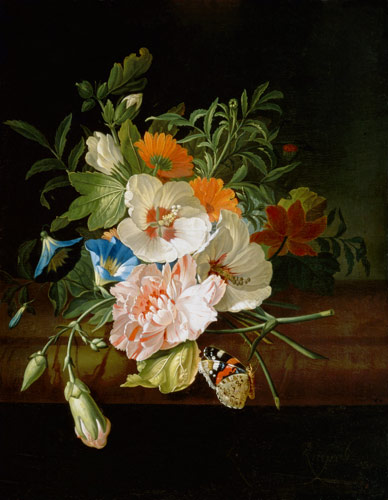
I’m pretty sure you have seen her works somewhere, the blooming flowers painting with a brownish tone background. If you tried searching her name on any search engine, tons of flower paintings will show up – don’t be surprised, because she actually left a legacy of about 250 still life paintings.

Family background: A genius born in a supportive environment

Rachel Ruysch, born in Amsterdam, is the daughter of Antony Fredericus, Professor of Anatomy, and Maria, daughter of an architect Pieter Post. Her talent was discovered from early age and her father let her study under Willem van Aelst, a talented painter of flowers in Delft. She quickly surpassed her teacher, and her talent became known in the highest circles. She was invited to German Courts before she was of middle age. She became the first female artist to enter artist society in The Hague in 1701.

In her personal life: she got married with Juriaen Pool (1666-1745), an excellent painter of portraits and a colleague in the Court Paintership of the Elector Palatine in 1693. She must have a happy marriage with him, since they had ten kids together and she was fully supported by her husband to keep painting with her maiden name.

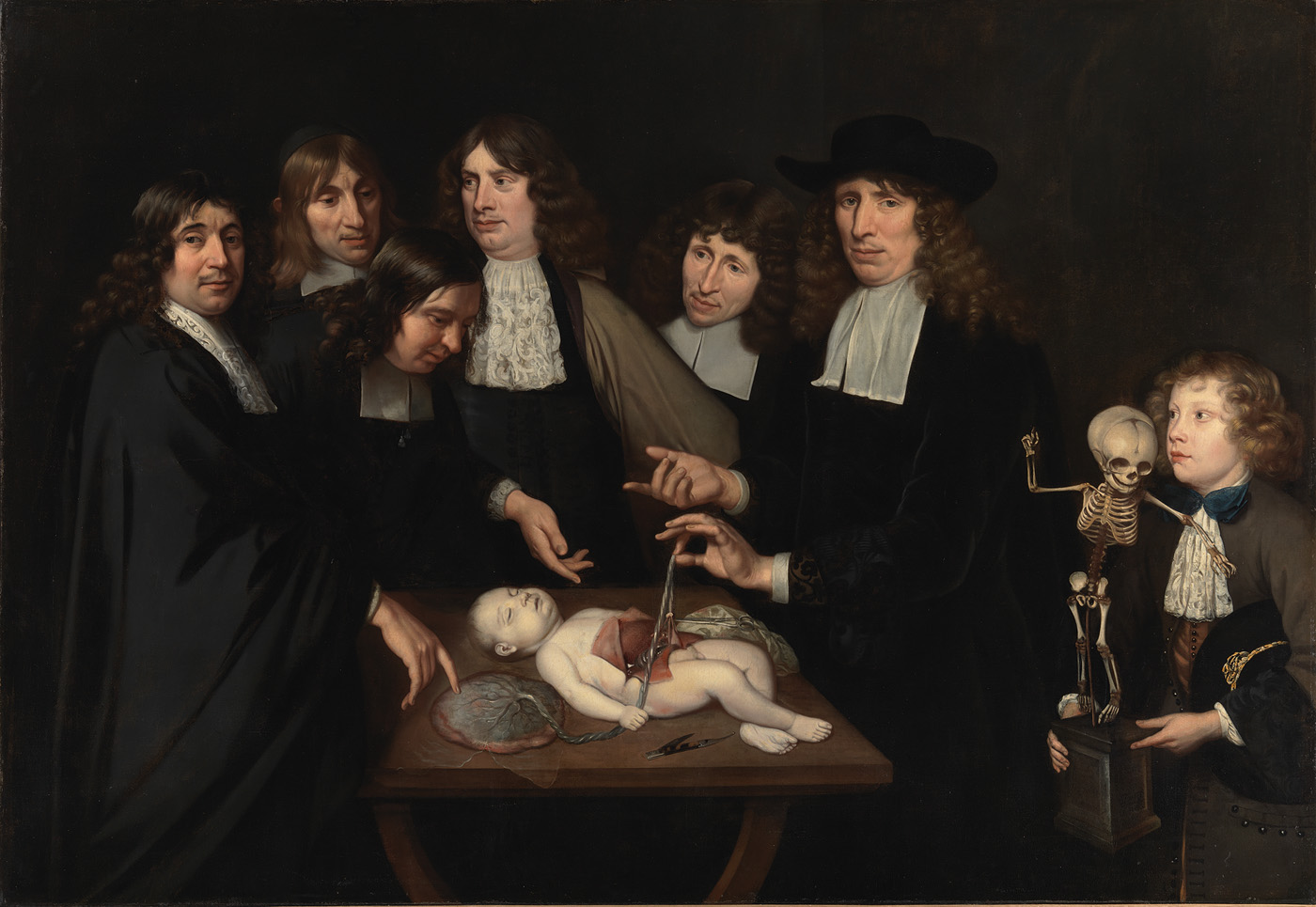
While we can’t deny her talent and hard work, it’s important to note that her success is powered by other males in a patriarchy: her father and her husband. Her father is a renowned scientist specializing in anatomy and botany, and also an amateur painter. His cabinet, a huge collection of anatomical collection, attracted visitors from all over Europe, including Tsar Peter the Great. His collection was one of the earliest fluid-preserved specimens, making he himself an interest subject to study from the point of view of a scientist as well. He himself was featured in painting by Jan van Neck. (Dam, n.d)

Van Neck, J. (1683). The Anatomy Lesson of Dr. Frederik Ruysch [Oil on canvas].

As an artistic person, Frederick Ruysch added a touch of decorative to his preservation, making his specimens an art collection to an extent. He was obsessed with the concept of ‘vanitas’ – the transcience of life and death. ‘Vanitas’ – Latin for ‘vanity’, means pointlessness and futility of pleasure, ambition and all worldly desires (Dam, n.d). This topic is explored by artists during Baroque period, belonging to allegorical art (arts representing a higher ideal). Frederick probably passed on his interest to Rachel while she helped him with his collection; not to mention, she had access to the greatest library of reference for flowers, plants and insects. In addition, she has other family members interested in arts: her grandfather was an architect, his brother and uncle also drew and painted well.
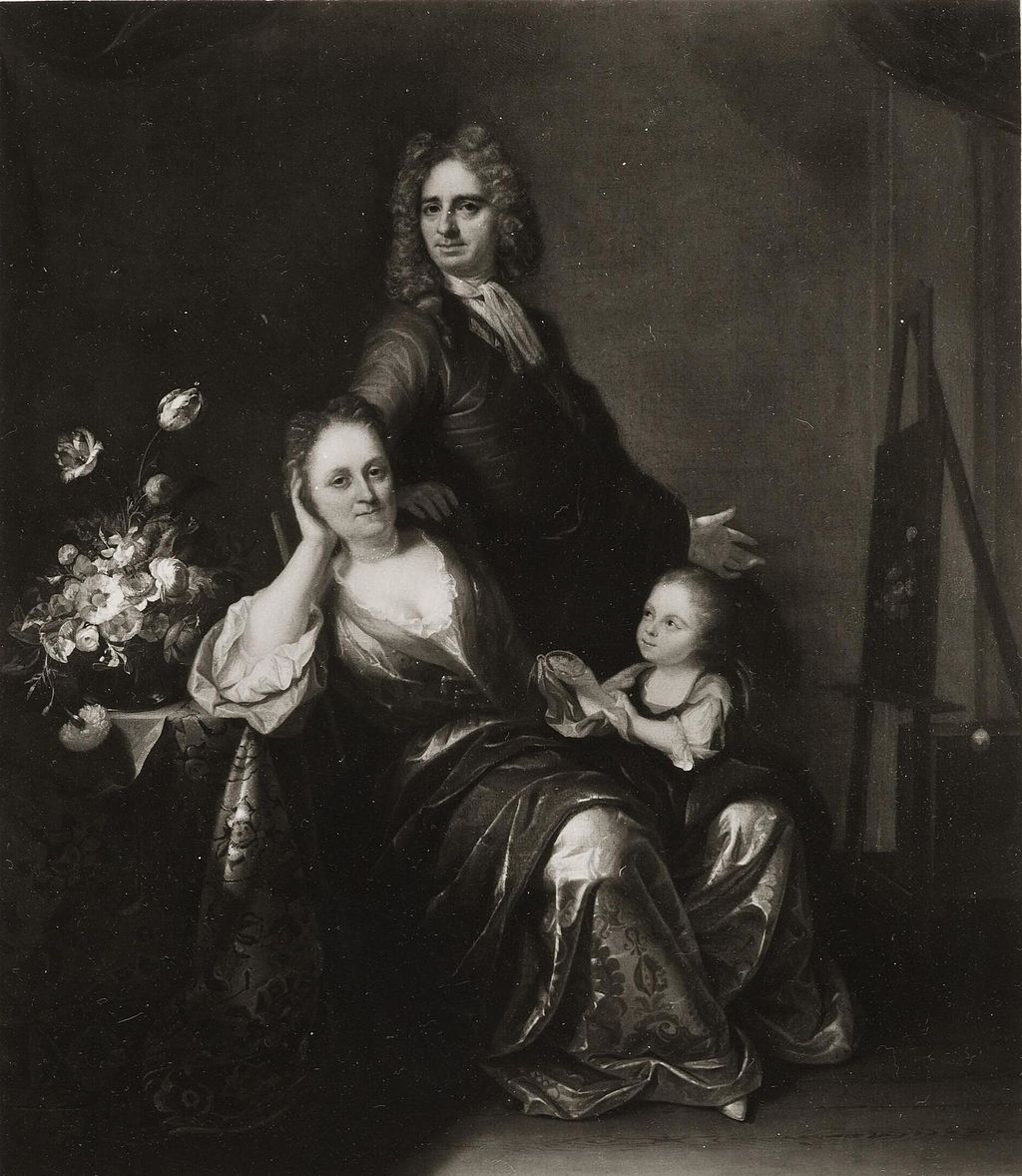
Less is known about her husband, Juriaen Pool; however, his love and support for her can be seen in his painting of the family. He is a court painter, a portraitist and a printmaker.

Pool, J., & Ruysch, R. (1716). Family portrait with flower still life in the making [Painting].

The only version from online resources is monochrome, but it’s obvious on the left of the painting is a bouquet of flowers, a familiar subject in Rachel’s artworks. She was ‘in the spotlight’ of the painting, indicating his admiration for her. She also used her maiden name through her whole career and her husband was likely to support instead of eclipse her talent.

In 1750, the state honored Ruysch with the publication of Dichtlovers voor de uitmuntende schilderessen Mejufvrouwe Rachel Ruisch (‘Poems for the Excellent Painter Mistress Rachel Ruysch’) (The Art Story,n.d). This anthology, the first of its kind for a Dutch artist, featured poems by eleven contemporary poets and scholars who celebrated her life and work. Rachel Ruysch passed away later that year at the age of 85.

Analysis on her style: highly detailed and scientific based botanical painting

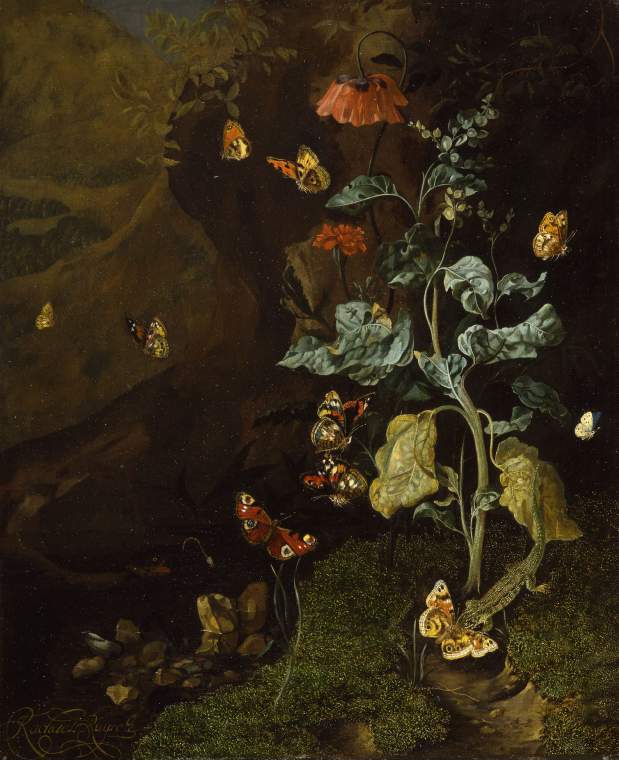
A still life with flowers, butterflies and a lizard in a dell: PD.87-1973
(The Fitzwilliam Museum, 2025). An early work.

One important detail is that the bouquets Rachel painted never existed, but an assortment of fruits, flowers and insects from the artist’s imagination. That showcases her adept understanding of nature, especially botany and anatomy of insects as well as compositional skills of arranging the details to attract the viewers. She put together flowers from different seasons as well as from overseas, which, somehow reflected the development of Dutch horticultural industry as well as international trade, not to mention the “Tulip Mania” – the first recorded economic bubbles (Smarthistory (n.d.) One more thing to notice is that she used asymmetrical composition, emphasizing the natural bloom and droop of the flower – this was an ‘informal’ choice compared to other contemporary painters.

Her process often started with main lines of a composition, then she rendered details with the goal of being as true-to-life as possible. Different texture, from the soft silky petals to the rough leaves, were accurately painted. Arts writer Alexxa Gotthardt highlights that Ruysch “swiftly gained a reputation across Amsterdam for the enchanting realism of the plants and insects in her paintings. Her works weren’t merely idealized depictions but subtly alluded to themes of mortality and the life cycle.” (The Art Story,n.d)

In early works, she often painted woodland scenes “sottobosco” (forest floor), being inspired from Otto Marseus van Schrieck, Abraham Mignon, and her teacher, Willem van Aelst (The Art Story,n.d). A special technique she learned from her master, Willem van Aelst, was imprinting. She sometimes used real moss and real butterfly wings as imprints in her early painting. The scenes were often dramatically lit – one feature that stayed consistent in all her paintings. Later, her style reflected more of Baroque art style – a movement against Mannerist style, an intricate and formulaic approach. She often painted a bouquet, depicting flowers at various stages of life, capturing their journey from vibrant bloom to graceful decay. They were paired with a wide range of insects and animals – she created an ecosystem in her painting.

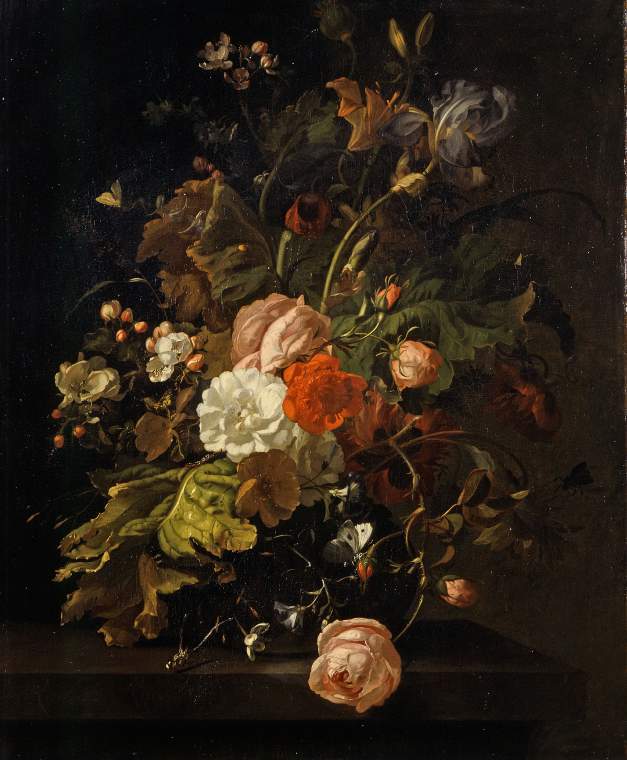
A vase of flowers (The Fitzwilliam Museum, 2025)

As she grew older, her compositions feature more open, expansive arrangements that fill the frame, evoking a rich sense of atmosphere and subtle humidity. She used bold diagonals and fluid curves to guide the viewer’s eye effortlessly across the composition. The central group of flowers were often the lightest and brightest, insects were arranged unexpectedly evoking a sense of curiosity in viewers.

Her paintings were often termed with ‘vanitas’ or ‘memento mori’ (Latin for ‘remember you must die’) since it was her father’s obsession. It’s a popular genre in Dutch during the seventeenth century, using still-life form to provoke thoughts about the fleeting life (Hibbitt, 2020). It’s the most common idea associated with her flowers painting, that all beauty fades and that all life, in the end, must die while celebrating the beauty of nature. Her painting may serve as a moral value to live thoughfully, prioritizing what truly matters over transient worldly matters.

References

Dam, A. (n.d). Death re-enlightened: Conservation of Frederik Ruysch’s wet anatomical preparations—The Rembrandts of fluid-preserved specimens [PDF]. ResearchGate. https://www.researchgate.net/publication/376812311

Hibbitt, F. (2020, July 14). Vanitas: Dutch master paintings explained. The Collector. https://www.thecollector.com/vanitas-dutch-master-paintings/

Huygens ING. (n.d.). Rachel Ruysch. Vrouwenlexicon. Retrieved January 6, 2025, from https://resources.huygens.knaw.nl/vrouwenlexicon/lemmata/data/Ruysch,%20Rachel/en

Pinakothek Museums (n.d.). Real or not? Rachel Ruysch and her butterflies. Retrieved January 6, 2025, from https://www.pinakothek.de/en/blog/real-or-not-rachel-ruysch-and-her-butterflies

The Fitzwilliam Museum. (2025). A still life with flowers, butterflies and a lizard in a dell [Web page]. https://collection.beta.fitz.ms/id/object/1906

The Art Story. (n.d.). Rachel Ruysch: Legacy. The Art Story. Retrieved January 8, 2025, from https://www.theartstory.org/artist/ruysch-rachel/

Smarthistory. (n.d.). Rachel Ruysch, Flower still-life. Retrieved January 6, 2025, from https://smarthistory.org/ruysch-flower-still-life/

Art history Spotlight: Élisabeth Vigée Le Brun

I first knew about Élisabeth Vigée Le Brun from a video by National Gallery. My first impression is that this women is a bold yet feminine painter. She rose from a modest background, and painted without academic training or public acknowledgement and became a kind of ‘celebrity’ artist. To me, she is a true feminist: she never stopped embracing her tender, maternal character in her painting; yet in real life, she fought in her own way to be able to do the things she loved.

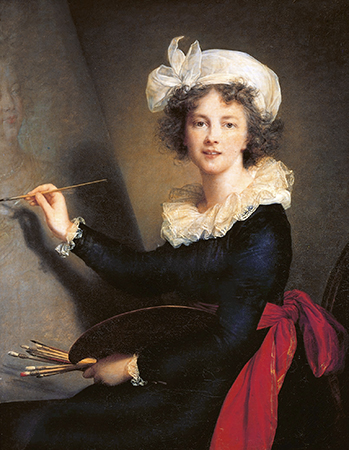
Élisabeth Louise Vigée-LeBrun, Self-Portrait, 1790, oil on canvas, 100 x 81 cm
(Galleria degli Uffizi, Florence)

She wrote about her youth in her autobiography and her love for arts started from when she was a schoolgirl. Her father had always seen something in her and let her play with his crayon pastels all days. She never admitted she was gifted to be painter, but declared “what an inborn passion for the art I possessed. Nor has that passion ever diminished; it seems to me that it has even gone on growing with time, for to-day I feel under the spell of it as much as ever, and shall, I hope, until the hour of death.” (1)

This passion never left her for all her life. She painted portraits professionally from early teens without a license from the Académie Royale de Peinture et de Sculpture (Academie for short). This was not a surprise, considering the  Académie’s position of monopoly on the art market. A female artist wasn’t allowed to attend figures classes with naked models. Élisabeth wasn’t trained formally, mostly self-taught and guided by mentors who were friends of her father: Hubert Robert, Joseph Vernet, etc.

She rose to be the favorite court painter of Marie Antoinette, Queen of France, wife of Louis XVIII. The queen, with the king, intervened to help Élisabeth get a license. She developed a friendship with the queen, which was unusual considering their classes. In her memoir, Élisabeth shared about the kindness she was given by the queen and their mutual interest in music. (1) The life of the two women paralleled and contrasted in a curious way, pairing with the fluctuations of French politics.

She was friends and acquaintances with many aristocrats, and she became a salonnière, simply explained, she hosted social gatherings for people to talk about arts, literature, history, politics, etc. Salons were mainly hosted by women, namely Madame de Tencin, Madame du Deffand (friend of Voltaire), Madame Necker (wife of Louis XVI’s director of finances). Still, Élisabeth painted furiously at day and hosted sessions of poetry readings or musical recitals at night. She never wanted to be known as a salonnière, the point of opening a salon was to support her passion and her husband’s career as an arts dealer.

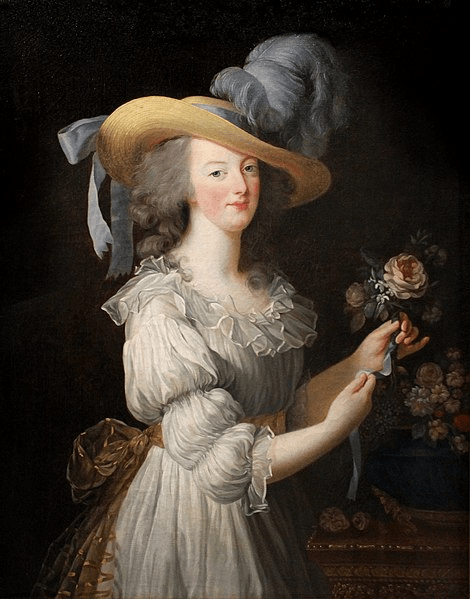
She reached her peak from 1783 till 1789, after she received official admission from the Academie. In 1783, she also finished the painting known as “Marie-Antoinette en gaulle”, in which she depicted the queen in a close and intimate point of view. Élisabeth wanted to represent the queen not just as a queen but a women “in all her appealing and vulnerable femininity”. (2) In  1783, 1785, 1787, and 1789 Salons, she achieved great success with her portraits of royal members and her own family. In total, she submitted more than fifty pictures. (3)

Marie-Antoinette en gaulle (1783)
(Luxembourg Museum, Paris) 

These glamourous days ended in 1789, the outbreak of French evolution. Her most important patron and friend, Marie Antoinette was executed in 1793. Élisabeth fled to Rome, Italy and then Saint Petersburg, Russia. She was patronized by royal members and kept painting them to support herself and her daughter, Julie. Her financial situation was bad despite her success. The money she earned in her teen years was used up by her step father, and the money she earn after marriage was used up by her husband (2). She returned to Paris in 1802, officially separated from Le Brun in 1805, and he passed away in 1813.

She continued to paint until the day she died in 1842, as she hoped in her youth. In 1835, Vigée Le Brun published her memoirs titled “Souvenirs,” which told the story of her life from very early days until the last moment.

What’s admirable about Élisabeth Vigée Le Brun is her hard-working and brave attitude to stick to her passion. She is the true definition of “pursuing passion” and her love for arts became what kept her alive in difficult times. She was a protégée, but as a women, she had to overcome many more obstacles just to be recognized. Her hard-working attitude shines from her memoir.

She experienced ups and downs in both her social and private life. She became the most sought for-female portraitist in Paris, yet she was forced to get married and didn’t have a happy personal life. She lived a long life (she passed away at 86 years old) and her admirers surrounded her till the end, yet she suffered the loss of her only daughter, her close brother, her friends. She witnessed the monarchy reaching its peaks and collapsing to dust. Her portraits, her memoir are now evidences of a remarkable era of French history.

Her memoir is available for free on Project Gutenberg .

(1) Vigée-Lebrun, Louise-Élisabeth. Memoirs of Madame Vigée Lebrun. Translated by Lionel Strachey. New York: Doubleday, Page & Company, 1903.

(2) May, Gita. The Odyssey of an Artist in an Age of Revolution. New Haven and London: Yale University Press.

(3) “The Metropolitan Museum of Art. Élisabeth Louise Vigée Le Brun (1755–1842).” Metropolitan Museum of Art, accessed July 10, 2024. URL: https://www.metmuseum.org/toah/hd/vgee/hd_vgee.htm.

Art History Spotlight: Yayoi Kusama

One thing I notice when studying art history is the downtrend in the value of arts and the increasing diversity of arts. It is used to be ridiculously expensive and exclusive to the aristocrat, then slowly going down. The introduction of technology in the Enlightenment age makes paints, art tools, etc. cheaper and more accessible. Prints were spread throughout the world. Arts, along with wine and other collectibles, became a source of financial investment.

What’s the role of an artist in this diverse special market? This market isn’t controlled by supply and demand but sometimes by an artist’s death and the wealth of some collectors. And how would us society measure an artist’s productivity? How many paintings they produce or how much money they earn? Van Gogh created about 2000 artworks and didn’t get a penny of his artworks’ value when he was alive. Vermeer only painted about 3 – 4 paintings a year, which accounts to 34 surviving pieces, he died in 1675 and was ‘rediscovered’ in 19th century. Most of his life stories are theories based on church book, ledger’s book, sales record and court recordings. His family declared bankruptcy right after he died.

So how should the art economy run and what role should each person take? That’s also my big question as an artist myself in the age of artificial intelligence and social media. That’s also why I sympathize with the art installation “The Narcissus Garden” by Yayoi Kusama.

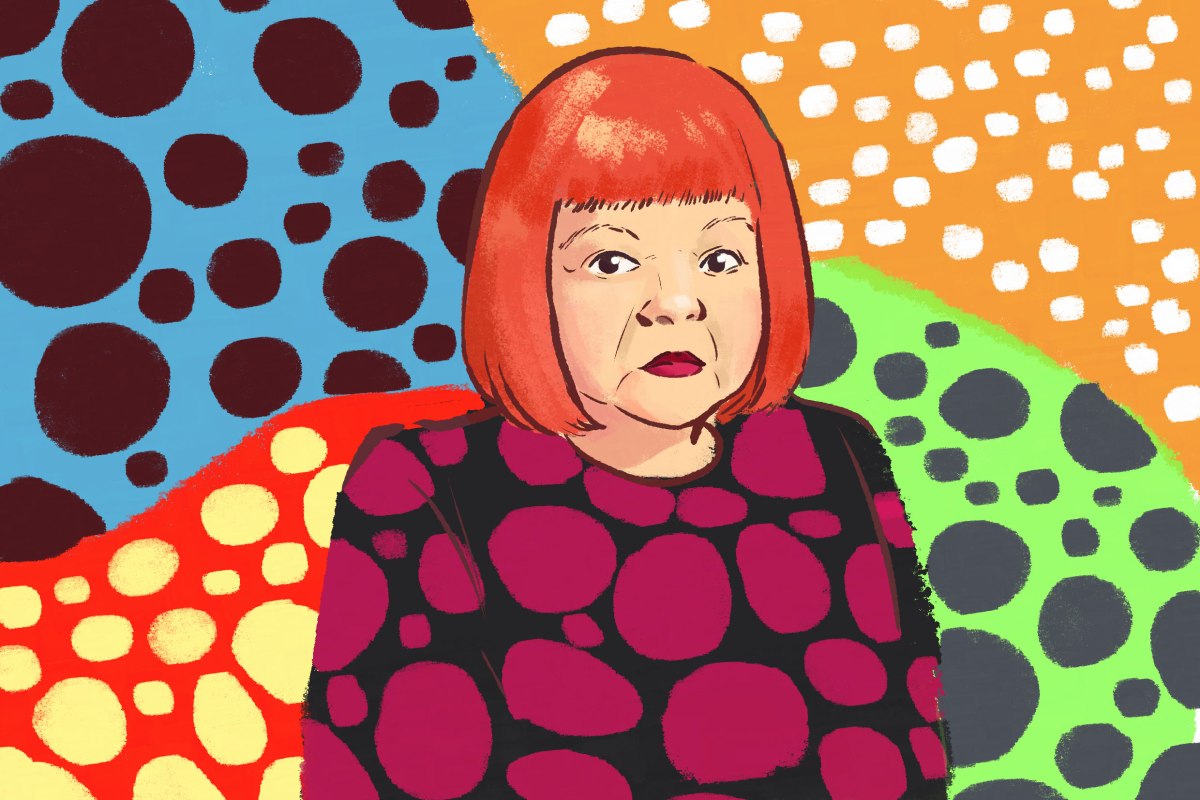
Yayoi Kusama is now famous as the “Princess of Polka Dots” due to her hallucinatory visions of “dots” and “nets”.

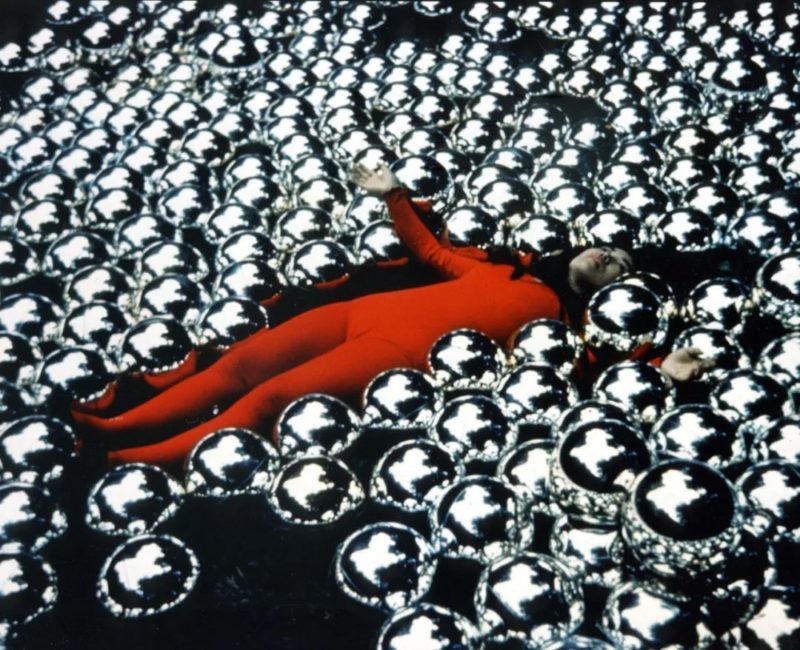
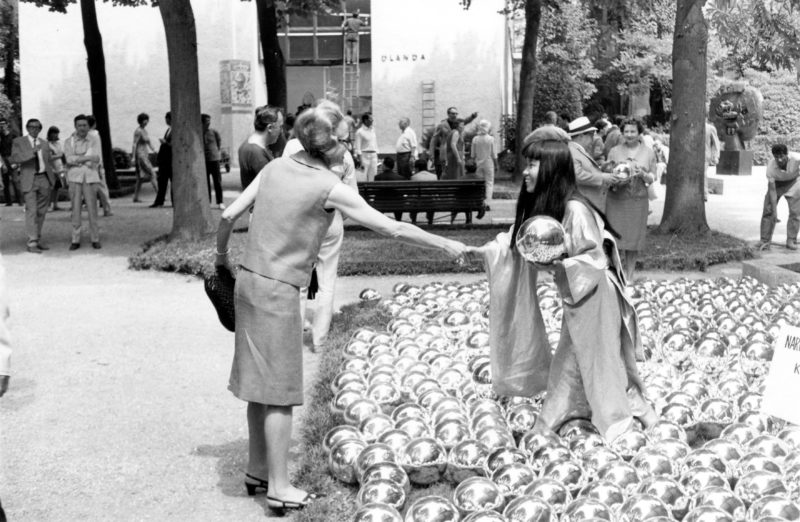
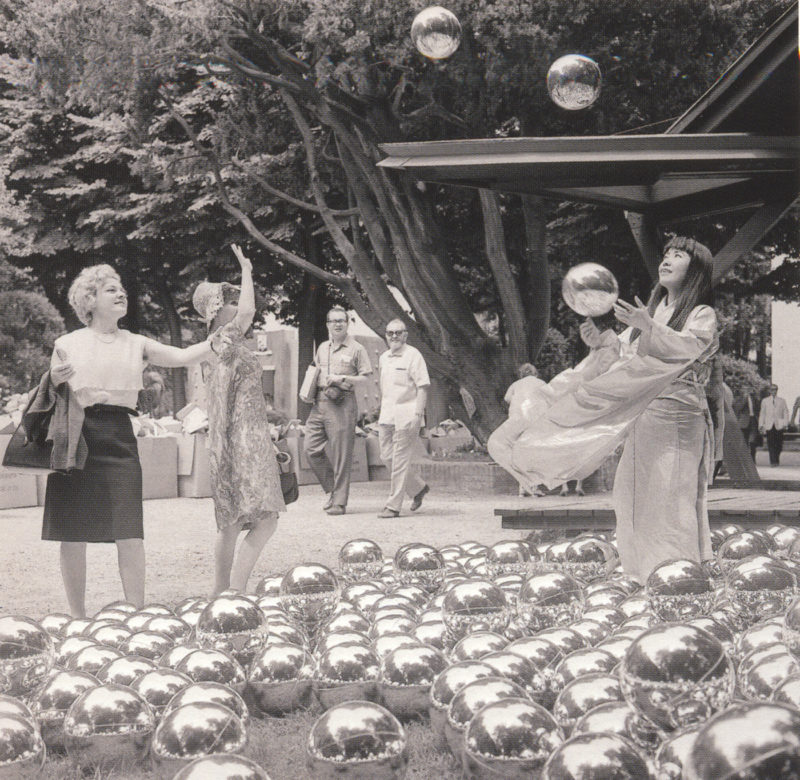
The art installation is first shown as an unofficial part of the 33rd Venice Biennale exhibit in 1966. She received financial support from her friend Lucio Fontana and permission from the chairman of the Biennale Committee. She staged 1500 mass-produced plastic silver globes, similar to the a fortune teller’s ball with two signs “Narcissus garden, Kusama” and “Your Nacissium [sic]”. Visitors can buy the mirror ball for 2 dollars each. Kusama also distributed flyers showing off her work. Ironically, the Biennale officials stepped in and stopped her action.

Yayoi Kusama in Narcissus Garden, 1966, installed in Venice Biennale, Italy, 1966 (photo: Yayoi Kusama Studio) © YAYOI KUSAMA. Courtesy David Zwirner, New York; Ota Fine Arts, Tokyo/Singapore/Shanghai; Victoria Miro, London/Venice.

However, the Narcissus Garden was commissioned and re-installed at various settings including Instituto Inhotim, Brazil; Central Park, New York;  Hayward Gallery, London; most recent in The Momentary (a museum in Arkansas). Much later in 1993, she was officially invited to represent Japan at the 45th Venice Biennale.

The most common interpretation is about narcissistic side of people. You look into the balls and you will see yourselves. You will look at another you, a distorted version. The version in Central Park, New York set the balls next to river, paying homage to the Greek myths of Narcissus. You can go further by taking a selfie with the reflective ball, having an image of different versions of yourself. And it can go on and on, considering the image will possibly go online and many people will see you. In each of your friend or follower’s mind, there will be another version of you existing.

However, if we look back at the very first installation, the action of selling the ball is important as well. Considering each ball is a piece of the big artwork, the artist gives away part of her arts to be viewed in the eyes of the audience, then in turn to get paid to create more. A part of the artist merges with a part of the person being painted, creating a new person on paper or canvas. Some persons will only see themselves because that’s the literal image on the ball, saying “Hey, I can do it myself! Why do I have to pay you to do something so easy?”.

The 20th century in which Kusama lived most of her life was the time when animations, magazines and printing industry developed quickly. Artists no longer sold their works only through art galleries or art dealers; but can work for newspaper (namely: J.C. Leyendecker) or animation production (the first animation in 1908). However, these career choices often require the artist to work on tight deadlines and productivity was prioritized. The public can also get prints or see the artwork via television. It is a favorable move for the audience, but not for the artist. Art is not something valuable anymore. Look at Kusama, she only sold her balls for 2 dollars each, which possibly just covered the price of production, transportation and arrangement of 1500 reflective balls. It goes further today, when you can scroll through Instagram with thousands of artworks for free. You don’t have to travel long way to enter a gallery anymore, now it’s turn for the artists to complain about their works don’t reach you.

That’s why I sympathize with this art installation so much and fall into the rabbit hole about Yayoi Kusama to get inspired by her boldness and vividness in her art world.

She now has her own museum in Japan, which only admits visitors booking in advance.