One thing I notice when studying art history is the downtrend in the value of arts and the increasing diversity of arts. It is used to be ridiculously expensive and exclusive to the aristocrat, then slowly going down. The introduction of technology in the Enlightenment age makes paints, art tools, etc. cheaper and more accessible. Prints were spread throughout the world. Arts, along with wine and other collectibles, became a source of financial investment.
What’s the role of an artist in this diverse special market? This market isn’t controlled by supply and demand but sometimes by an artist’s death and the wealth of some collectors. And how would us society measure an artist’s productivity? How many paintings they produce or how much money they earn? Van Gogh created about 2000 artworks and didn’t get a penny of his artworks’ value when he was alive. Vermeer only painted about 3 – 4 paintings a year, which accounts to 34 surviving pieces, he died in 1675 and was ‘rediscovered’ in 19th century. Most of his life stories are theories based on church book, ledger’s book, sales record and court recordings. His family declared bankruptcy right after he died.
So how should the art economy run and what role should each person take? That’s also my big question as an artist myself in the age of artificial intelligence and social media. That’s also why I sympathize with the art installation “The Narcissus Garden” by Yayoi Kusama.
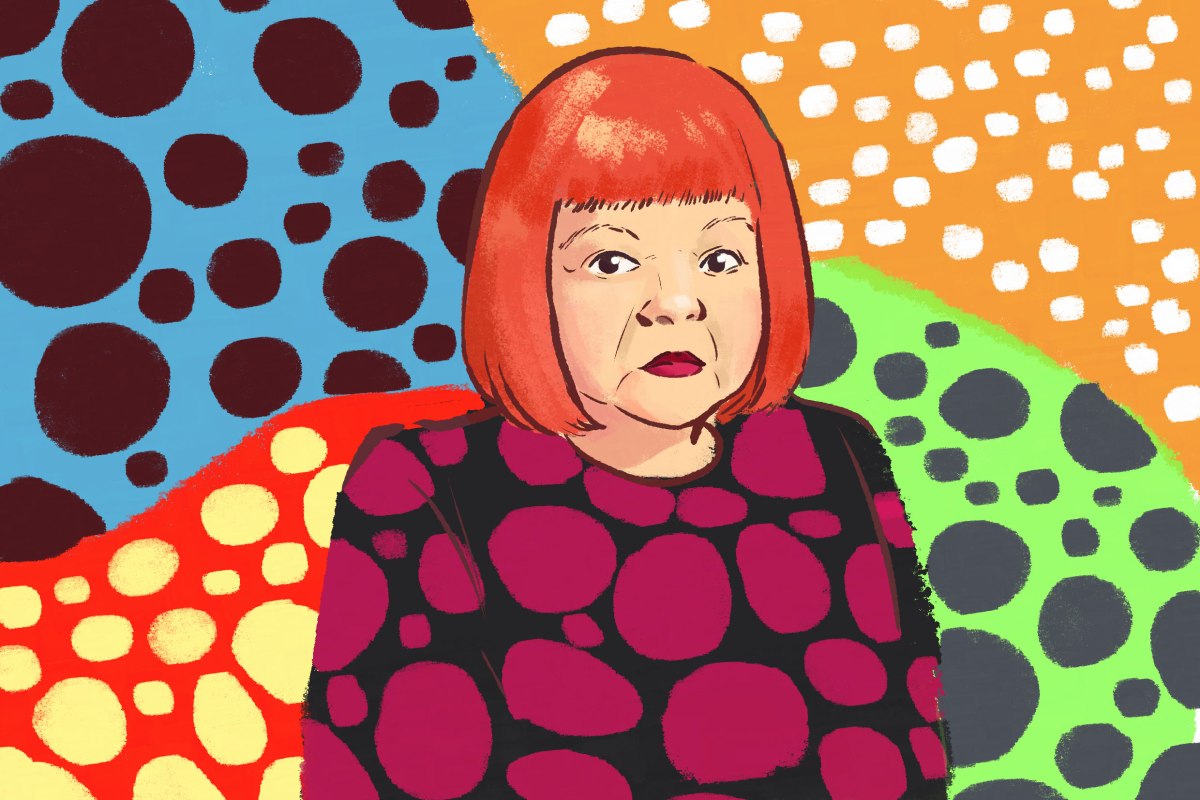
Yayoi Kusama is now famous as the “Princess of Polka Dots” due to her hallucinatory visions of “dots” and “nets”.
The art installation is first shown as an unofficial part of the 33rd Venice Biennale exhibit in 1966. She received financial support from her friend Lucio Fontana and permission from the chairman of the Biennale Committee. She staged 1500 mass-produced plastic silver globes, similar to the a fortune teller’s ball with two signs “Narcissus garden, Kusama” and “Your Nacissium [sic]”. Visitors can buy the mirror ball for 2 dollars each. Kusama also distributed flyers showing off her work. Ironically, the Biennale officials stepped in and stopped her action.
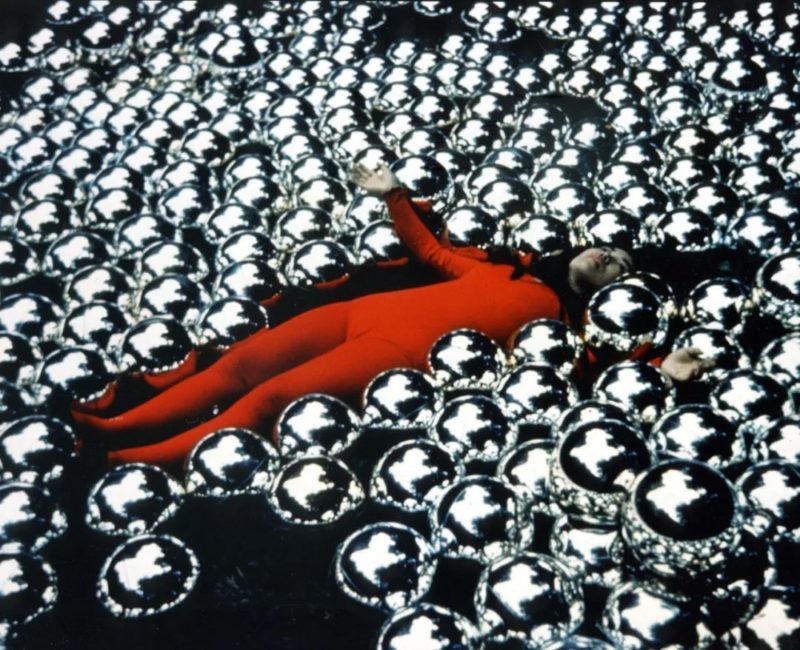
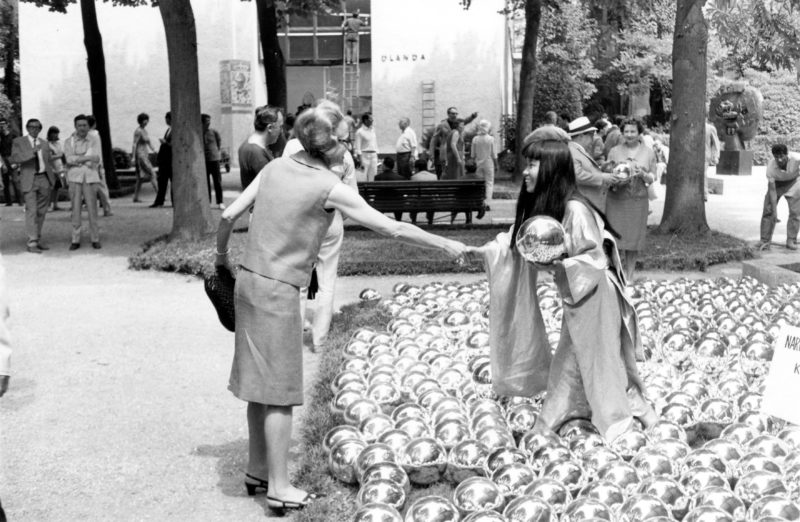
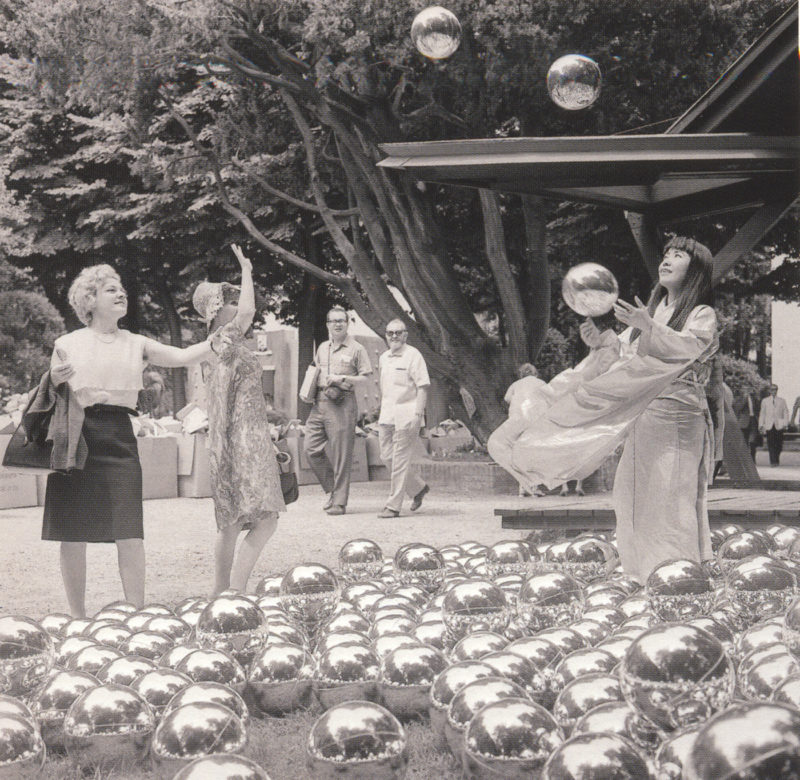
Yayoi Kusama in Narcissus Garden, 1966, installed in Venice Biennale, Italy, 1966 (photo: Yayoi Kusama Studio) © YAYOI KUSAMA. Courtesy David Zwirner, New York; Ota Fine Arts, Tokyo/Singapore/Shanghai; Victoria Miro, London/Venice.
However, the Narcissus Garden was commissioned and re-installed at various settings including Instituto Inhotim, Brazil; Central Park, New York; Hayward Gallery, London; most recent in The Momentary (a museum in Arkansas). Much later in 1993, she was officially invited to represent Japan at the 45th Venice Biennale.
The most common interpretation is about narcissistic side of people. You look into the balls and you will see yourselves. You will look at another you, a distorted version. The version in Central Park, New York set the balls next to river, paying homage to the Greek myths of Narcissus. You can go further by taking a selfie with the reflective ball, having an image of different versions of yourself. And it can go on and on, considering the image will possibly go online and many people will see you. In each of your friend or follower’s mind, there will be another version of you existing.
However, if we look back at the very first installation, the action of selling the ball is important as well. Considering each ball is a piece of the big artwork, the artist gives away part of her arts to be viewed in the eyes of the audience, then in turn to get paid to create more. A part of the artist merges with a part of the person being painted, creating a new person on paper or canvas. Some persons will only see themselves because that’s the literal image on the ball, saying “Hey, I can do it myself! Why do I have to pay you to do something so easy?”.
The 20th century in which Kusama lived most of her life was the time when animations, magazines and printing industry developed quickly. Artists no longer sold their works only through art galleries or art dealers; but can work for newspaper (namely: J.C. Leyendecker) or animation production (the first animation in 1908). However, these career choices often require the artist to work on tight deadlines and productivity was prioritized. The public can also get prints or see the artwork via television. It is a favorable move for the audience, but not for the artist. Art is not something valuable anymore. Look at Kusama, she only sold her balls for 2 dollars each, which possibly just covered the price of production, transportation and arrangement of 1500 reflective balls. It goes further today, when you can scroll through Instagram with thousands of artworks for free. You don’t have to travel long way to enter a gallery anymore, now it’s turn for the artists to complain about their works don’t reach you.
That’s why I sympathize with this art installation so much and fall into the rabbit hole about Yayoi Kusama to get inspired by her boldness and vividness in her art world.
She now has her own museum in Japan, which only admits visitors booking in advance.
 Jeanne Lolness