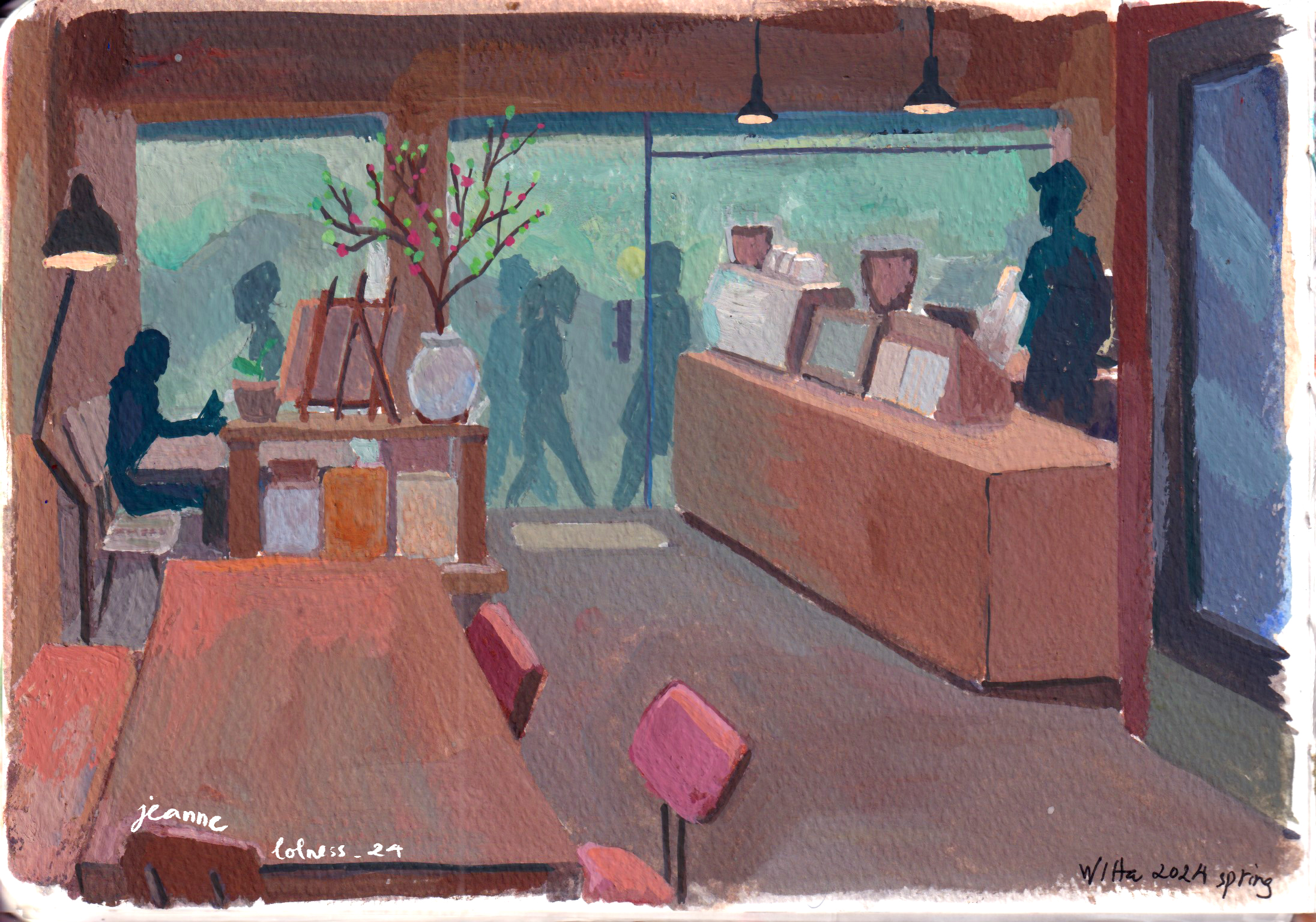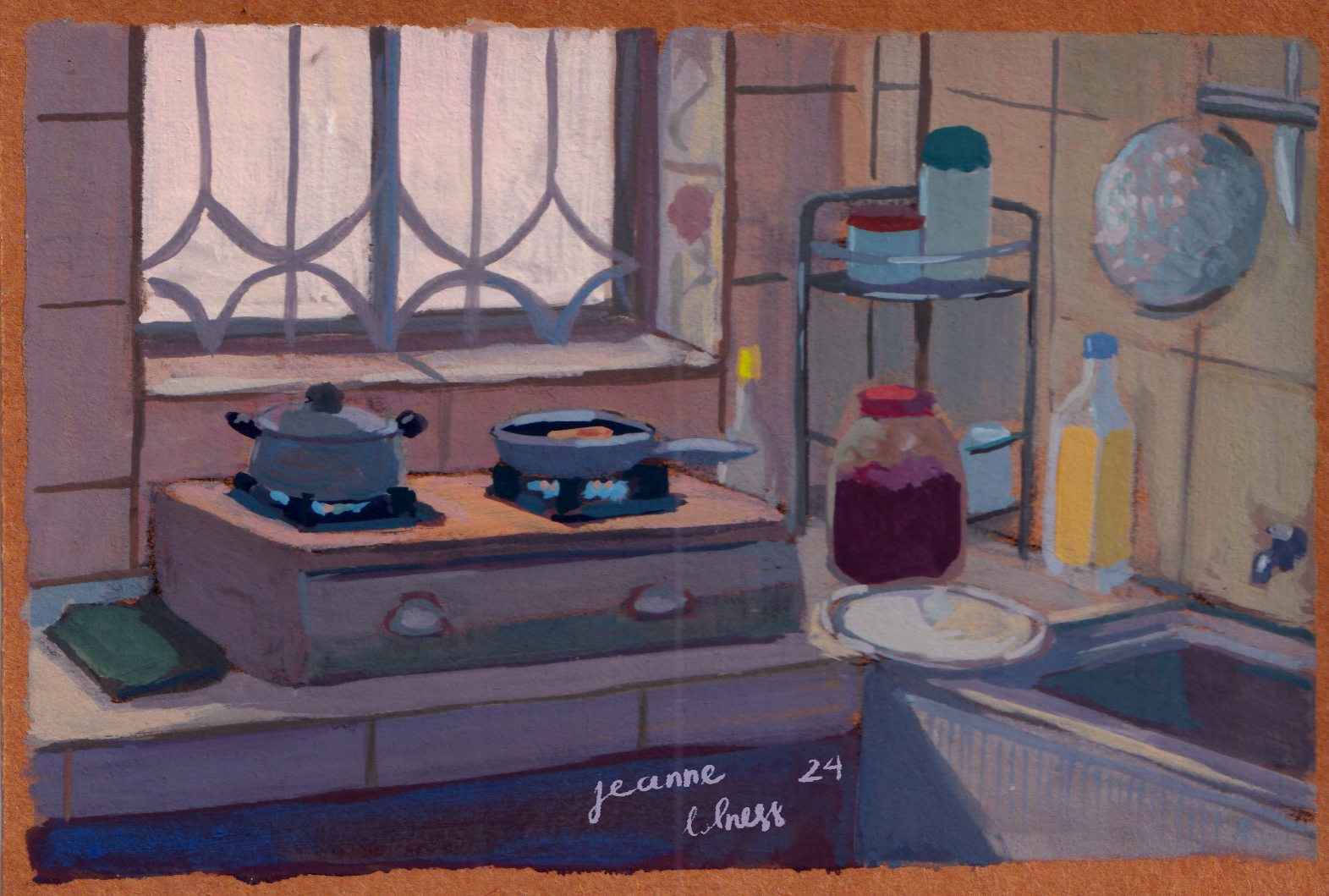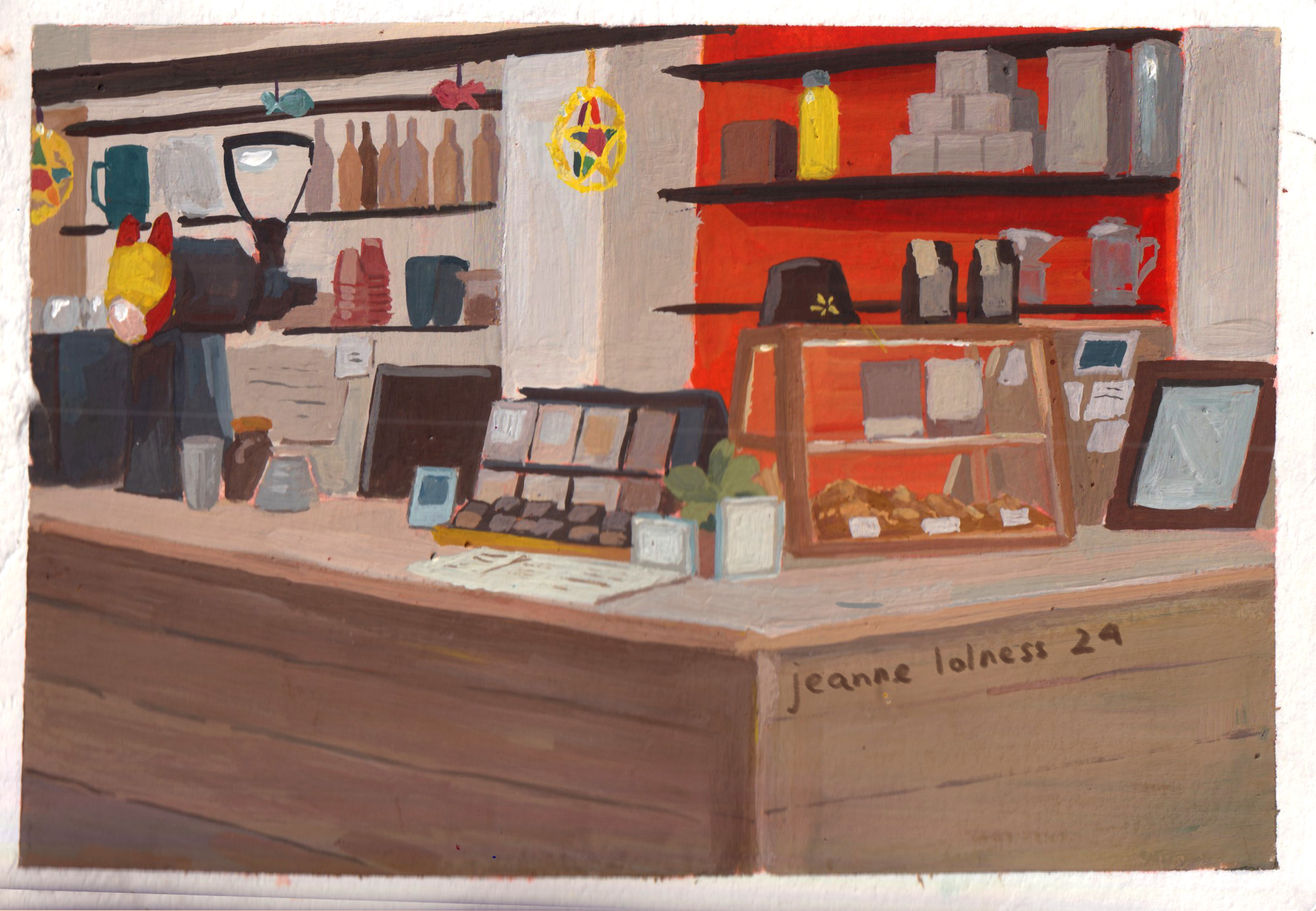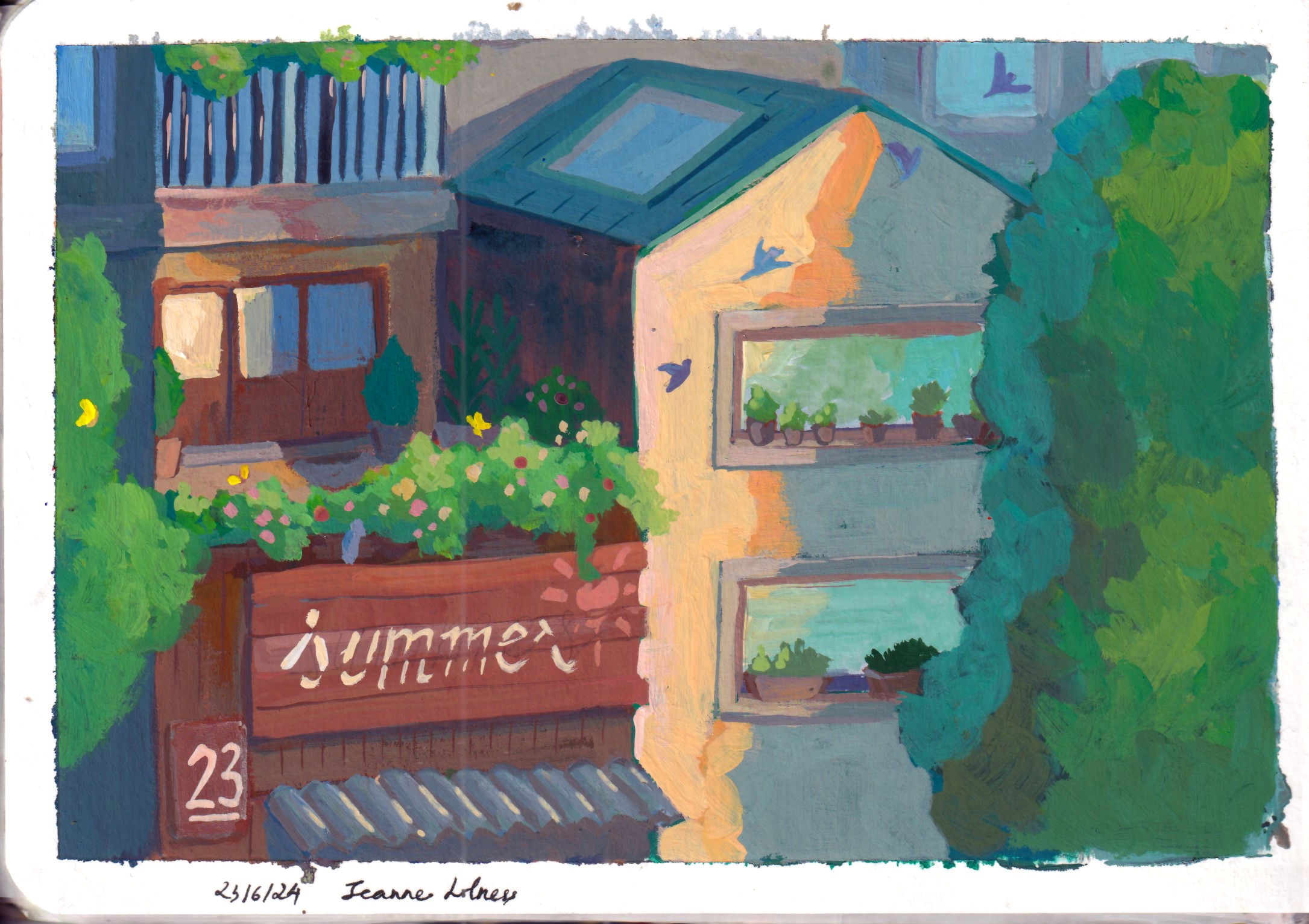
Painting Huế: Nostalgia and Summer

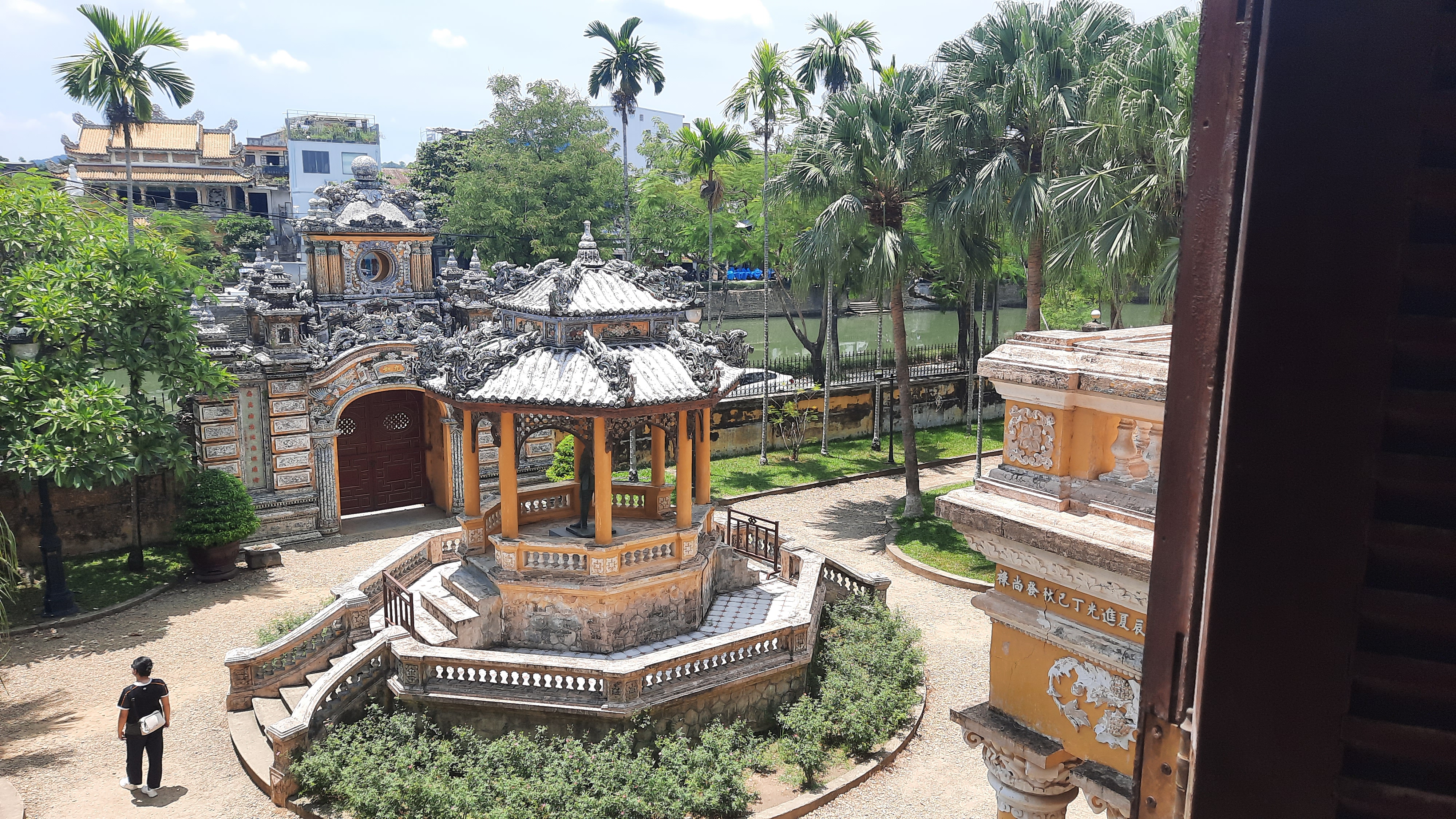
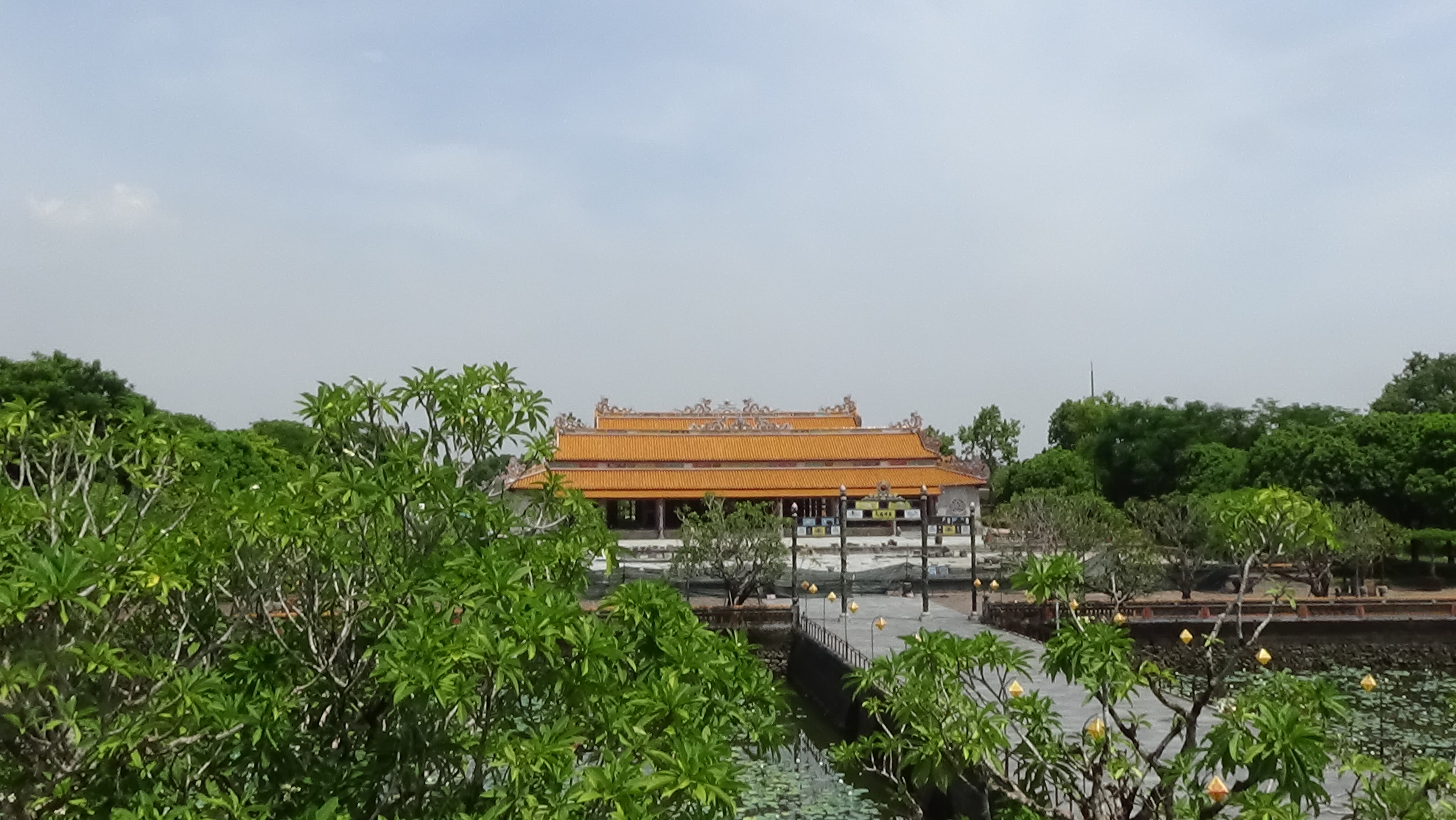
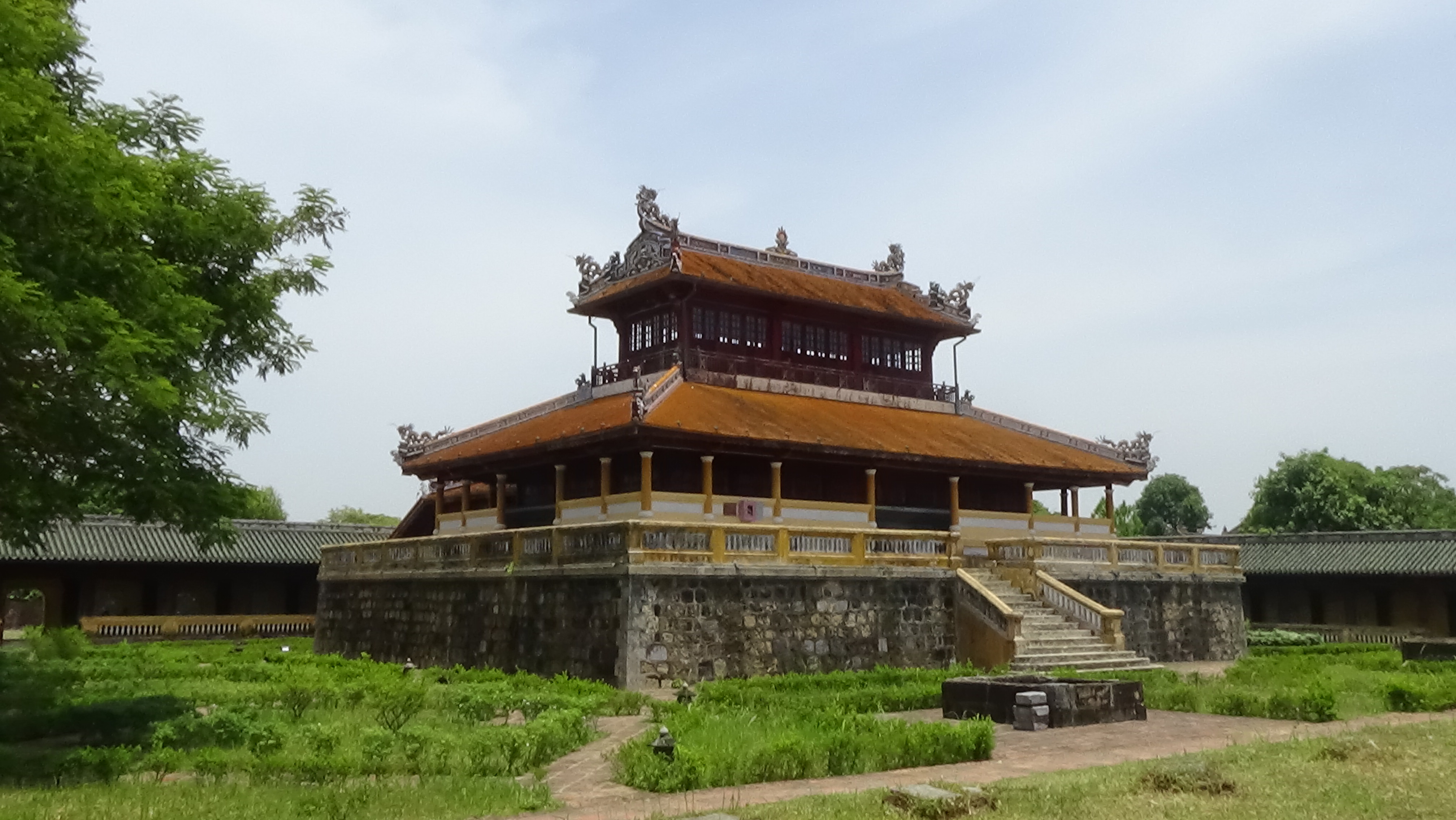
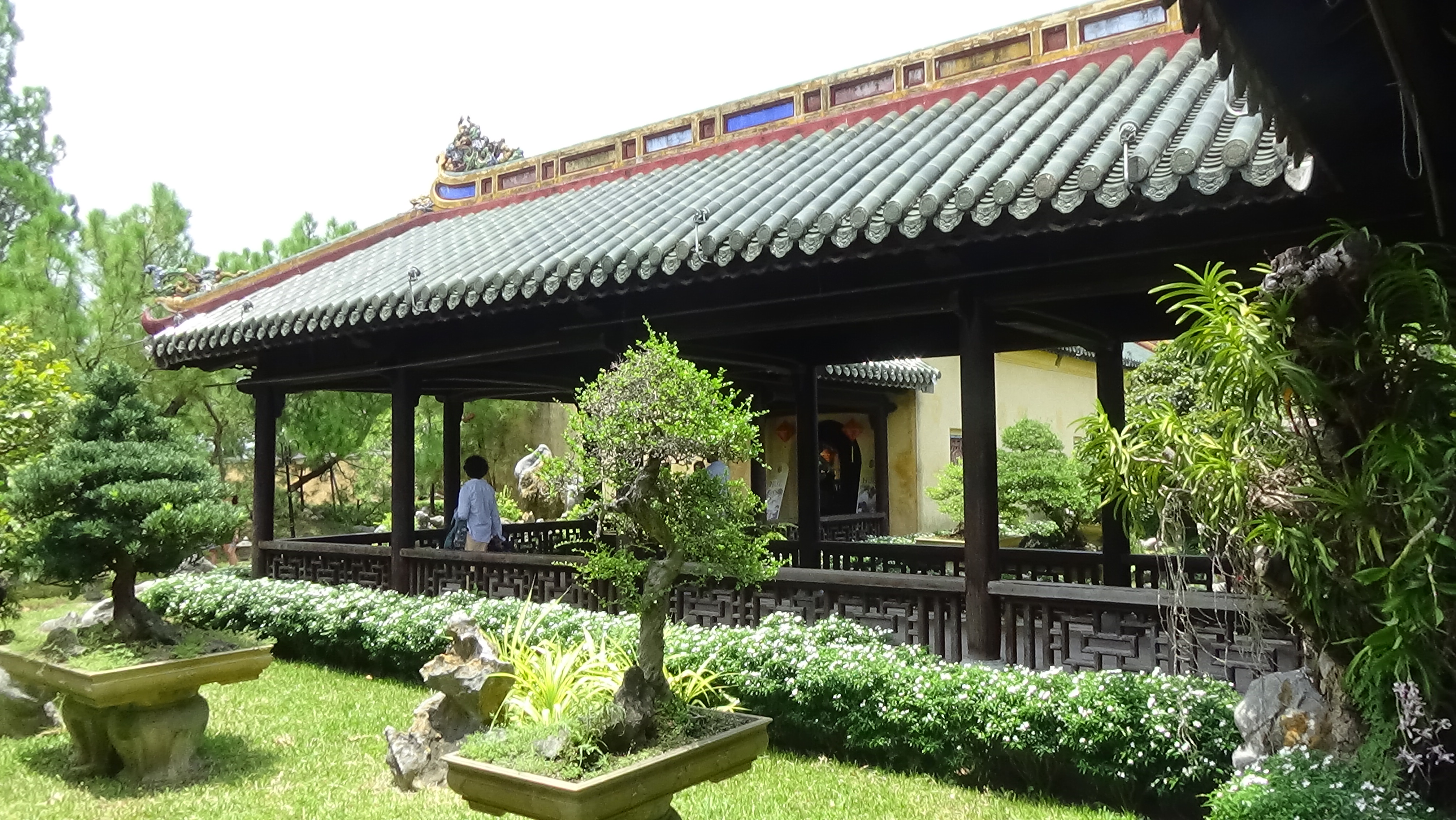
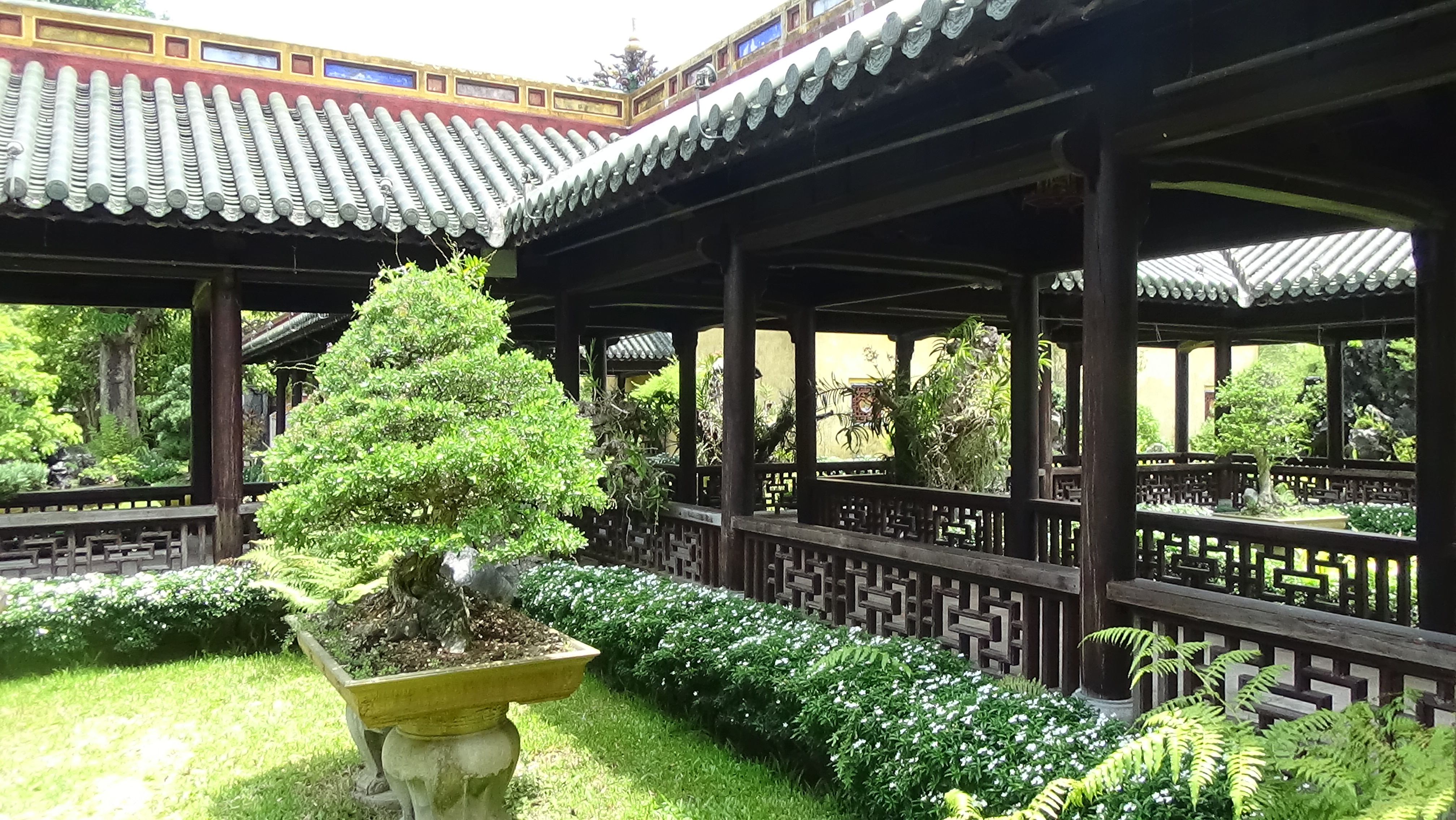
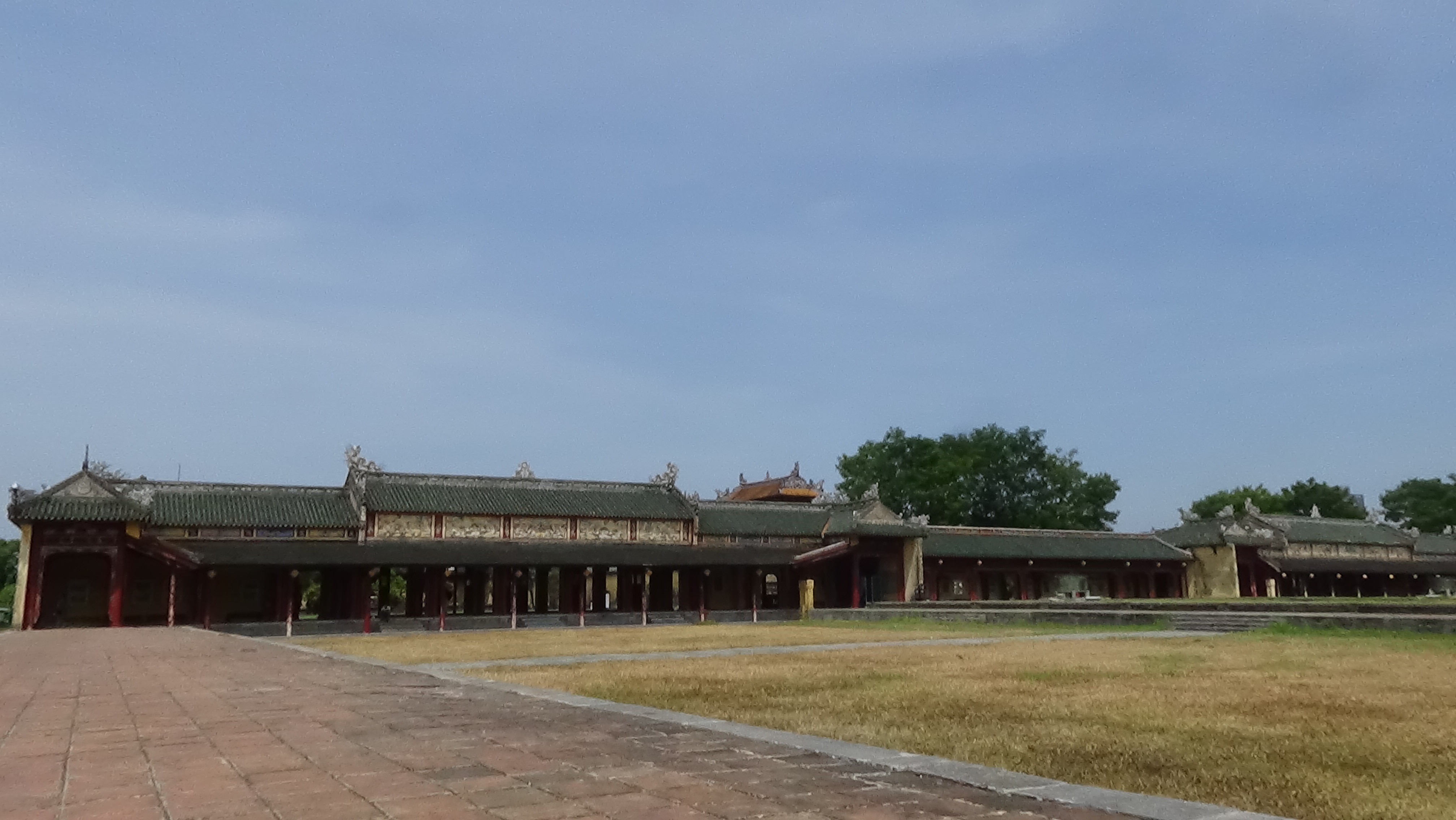
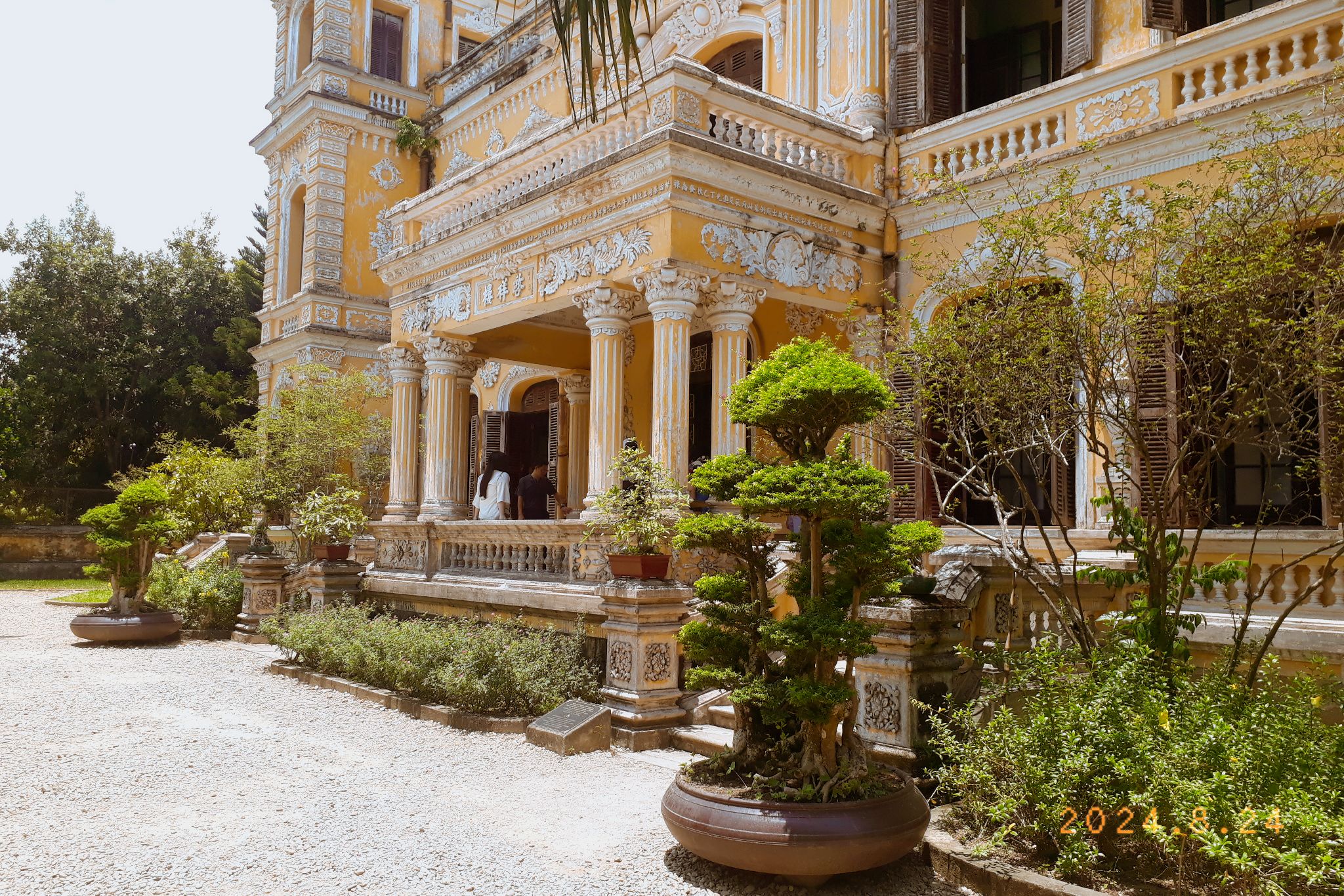
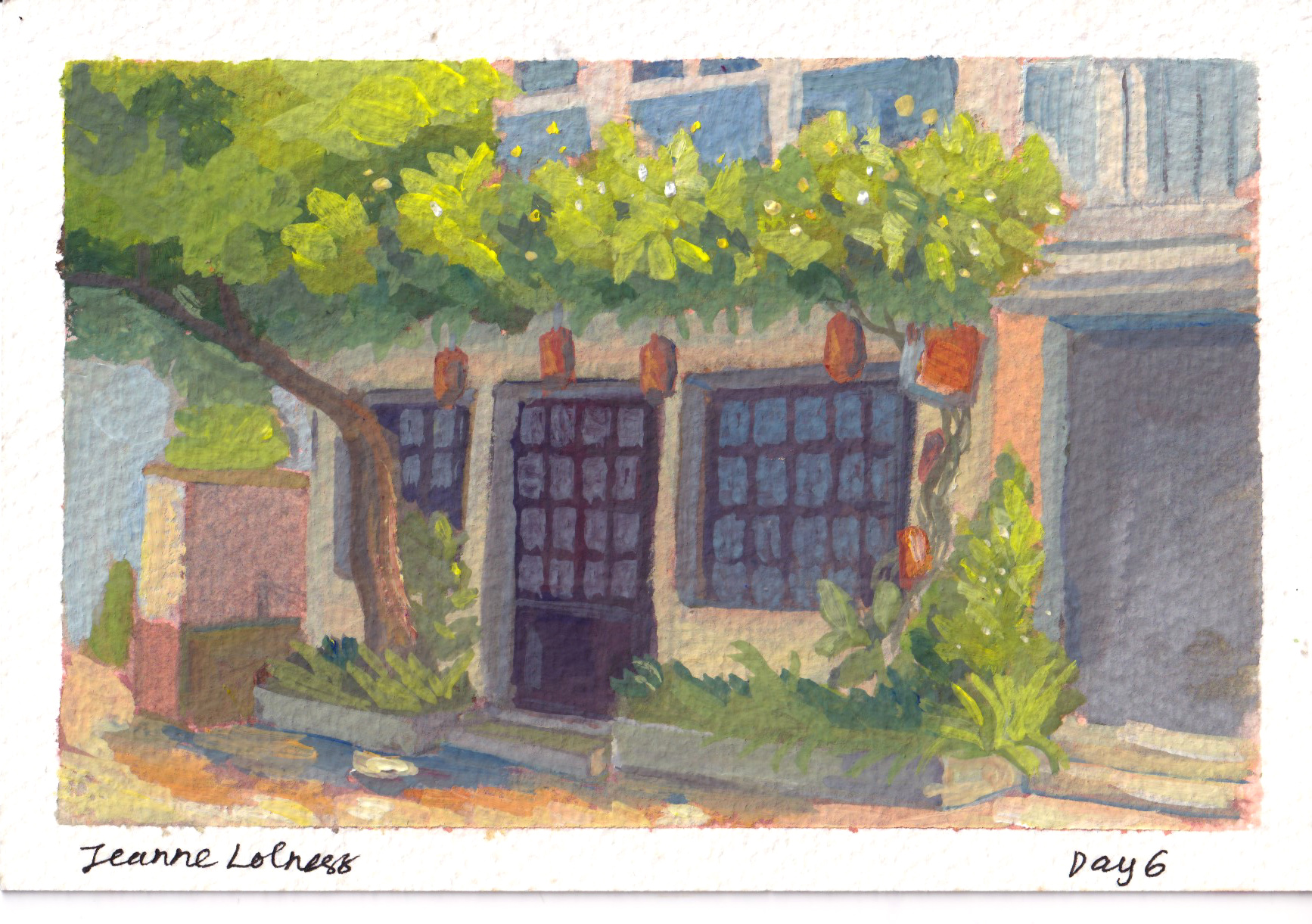
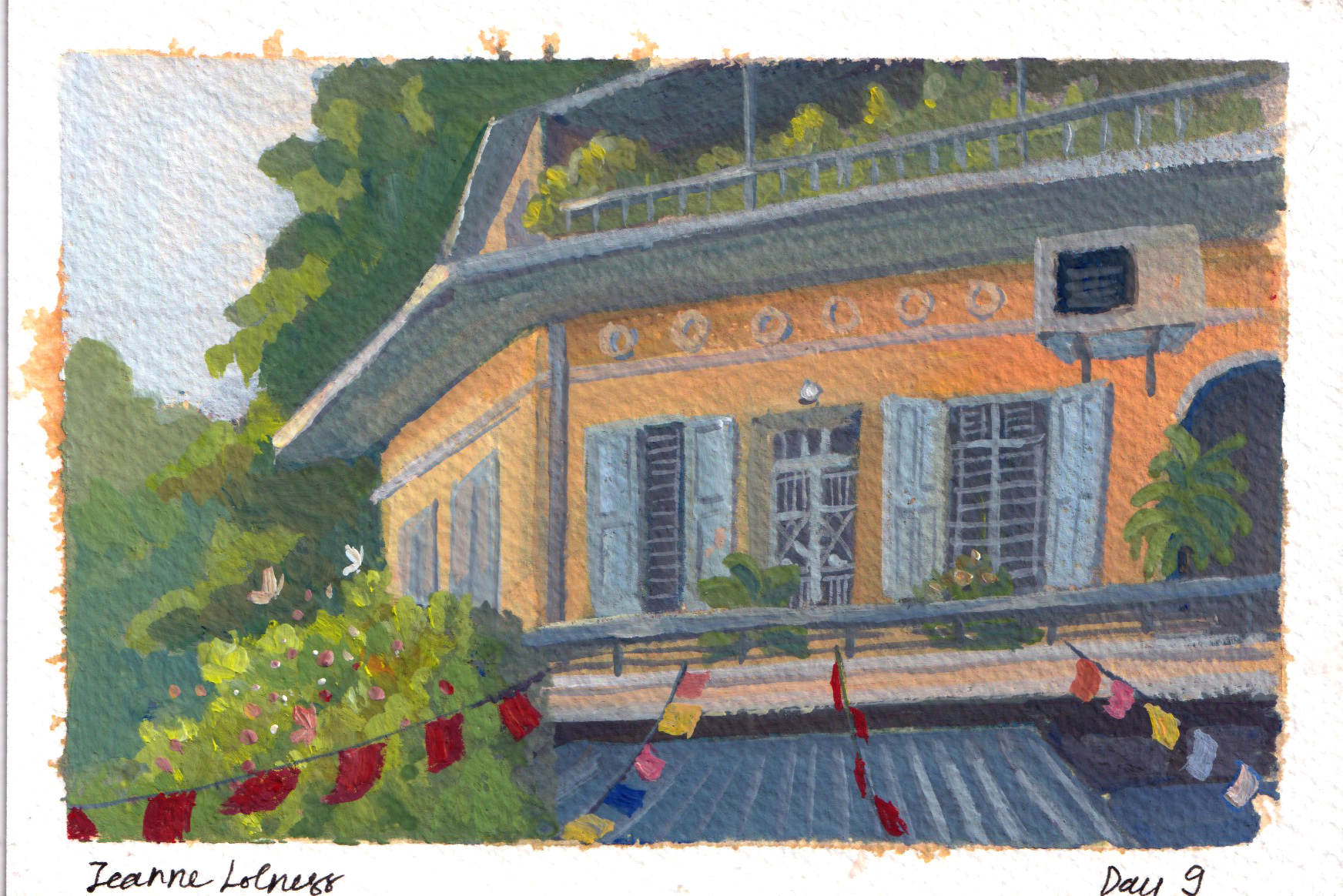
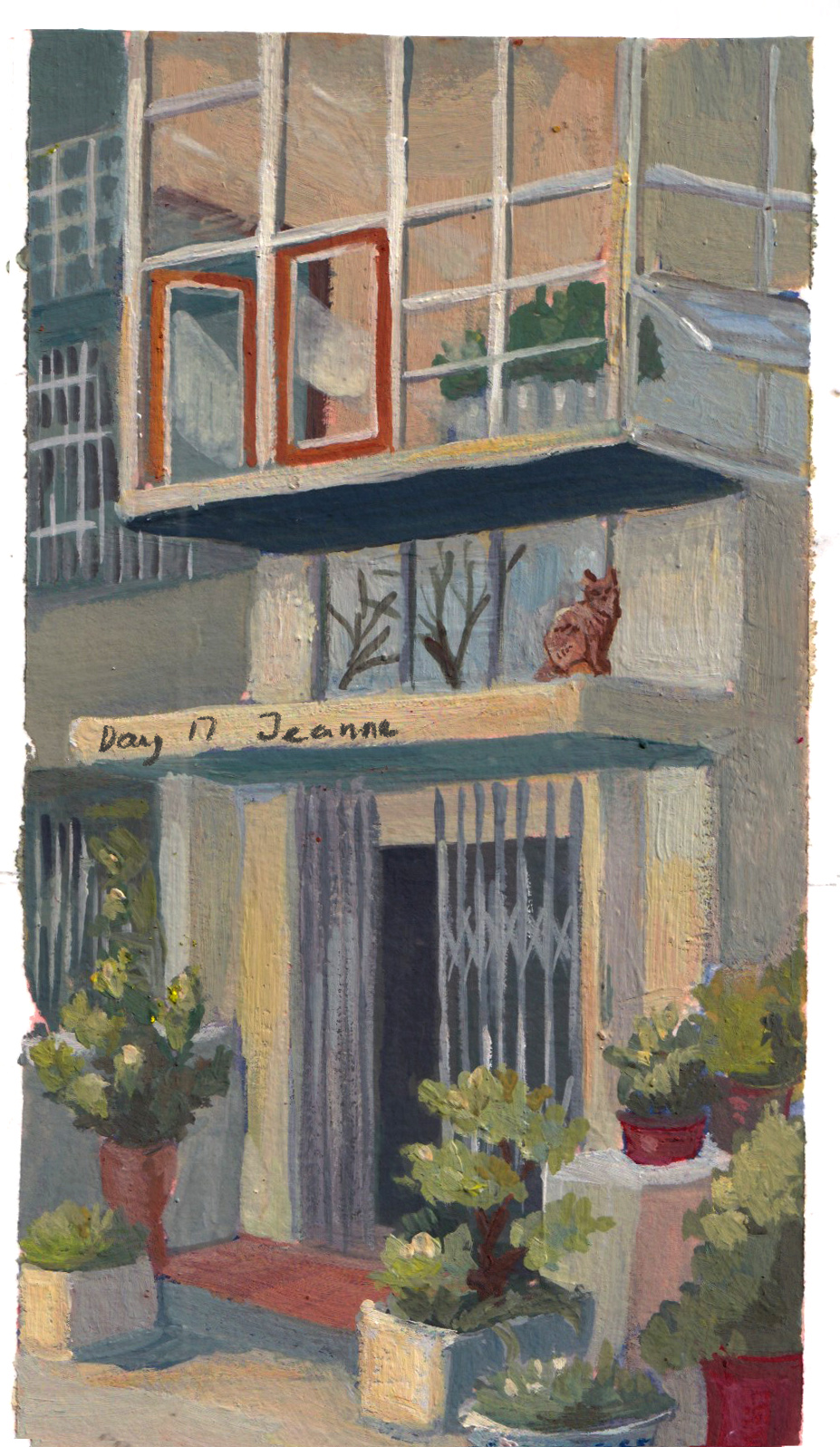
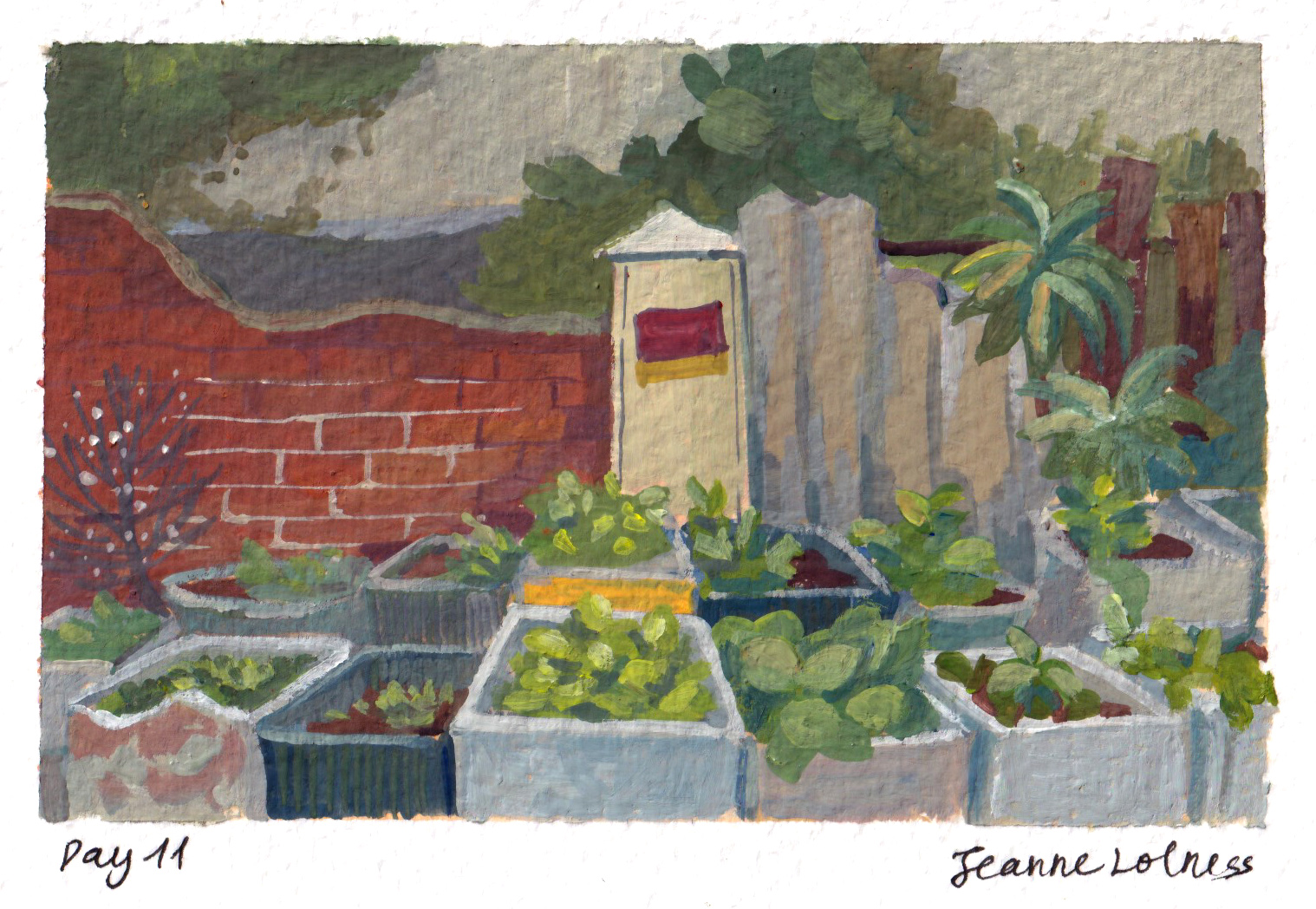
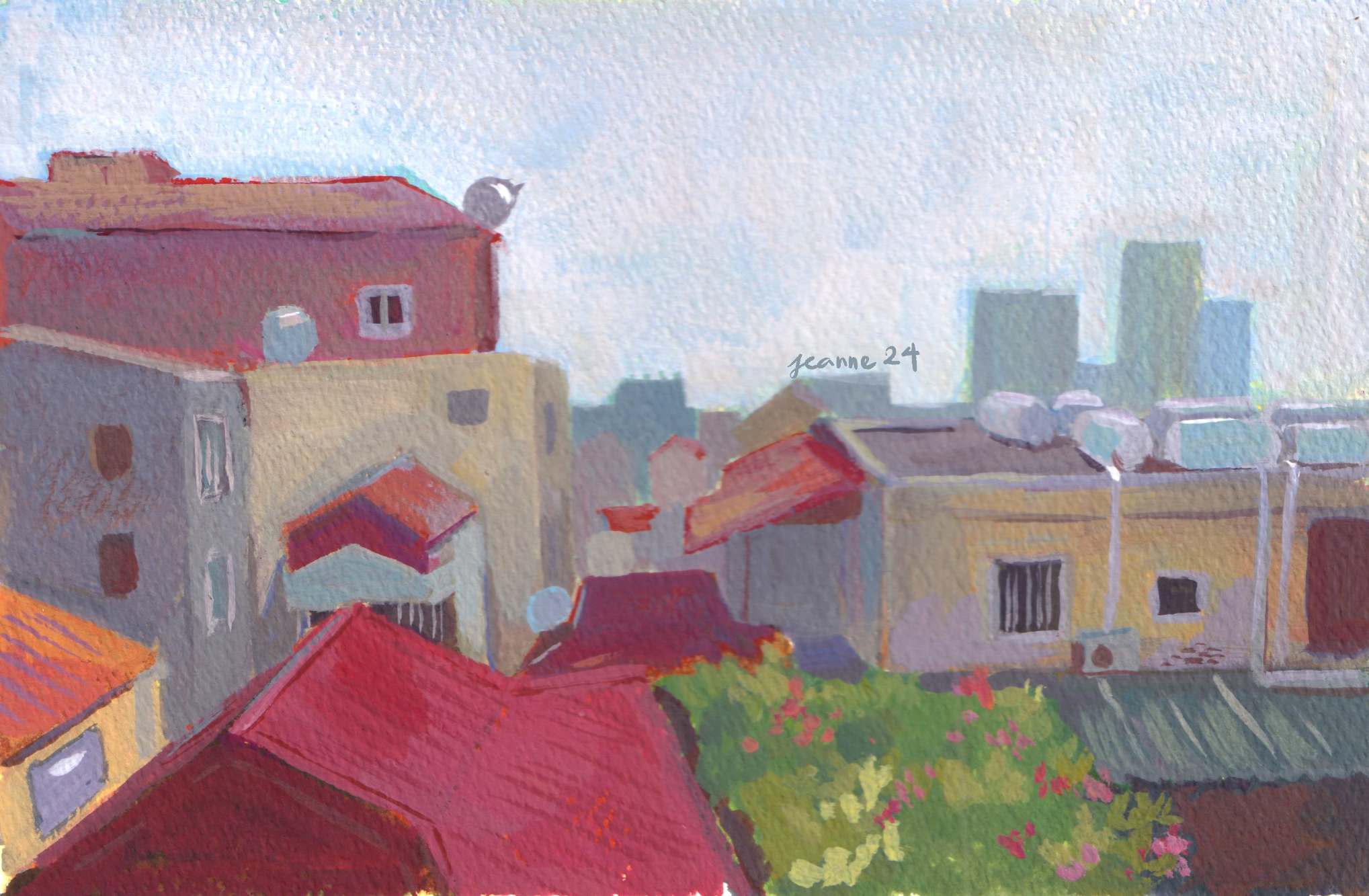
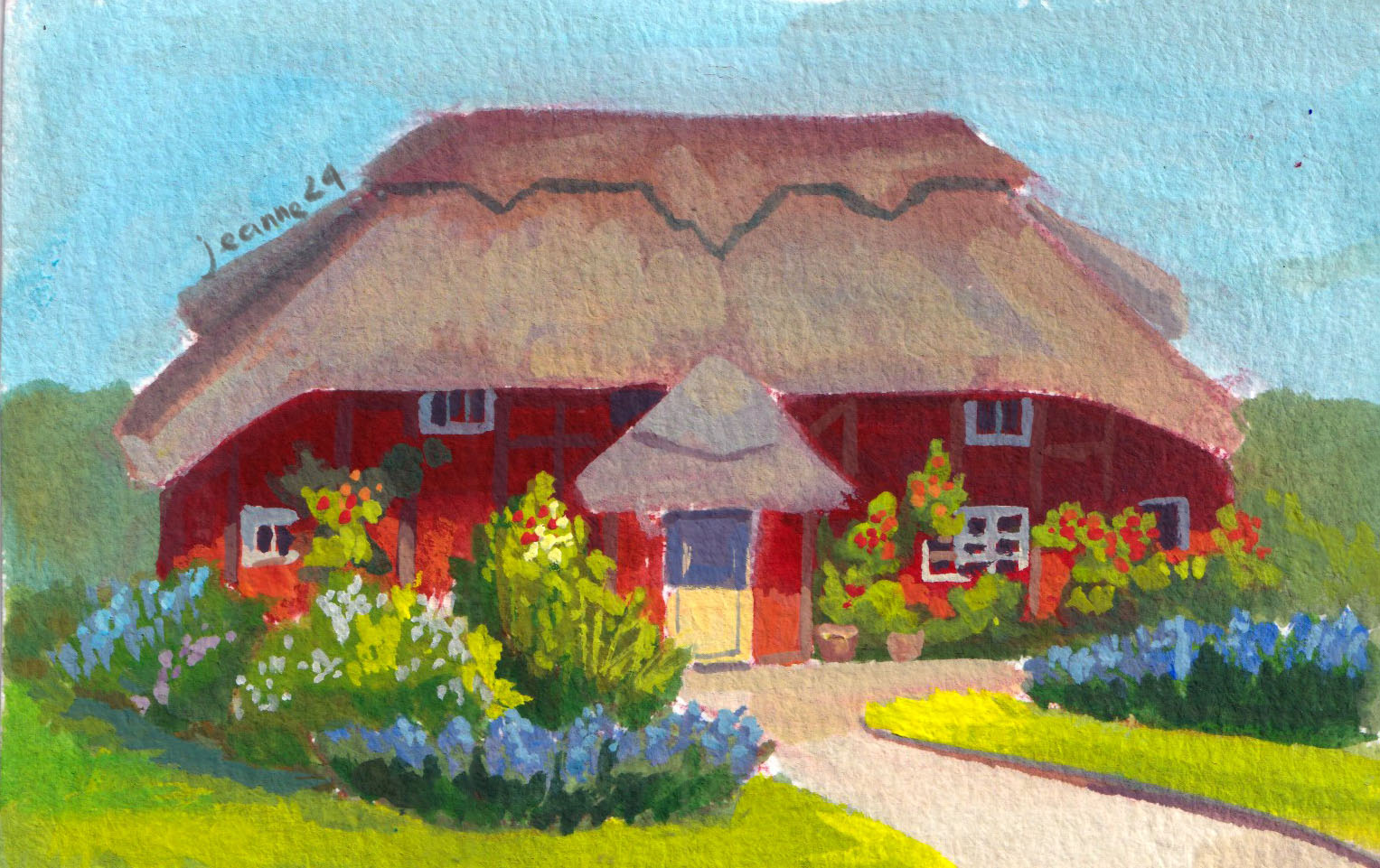
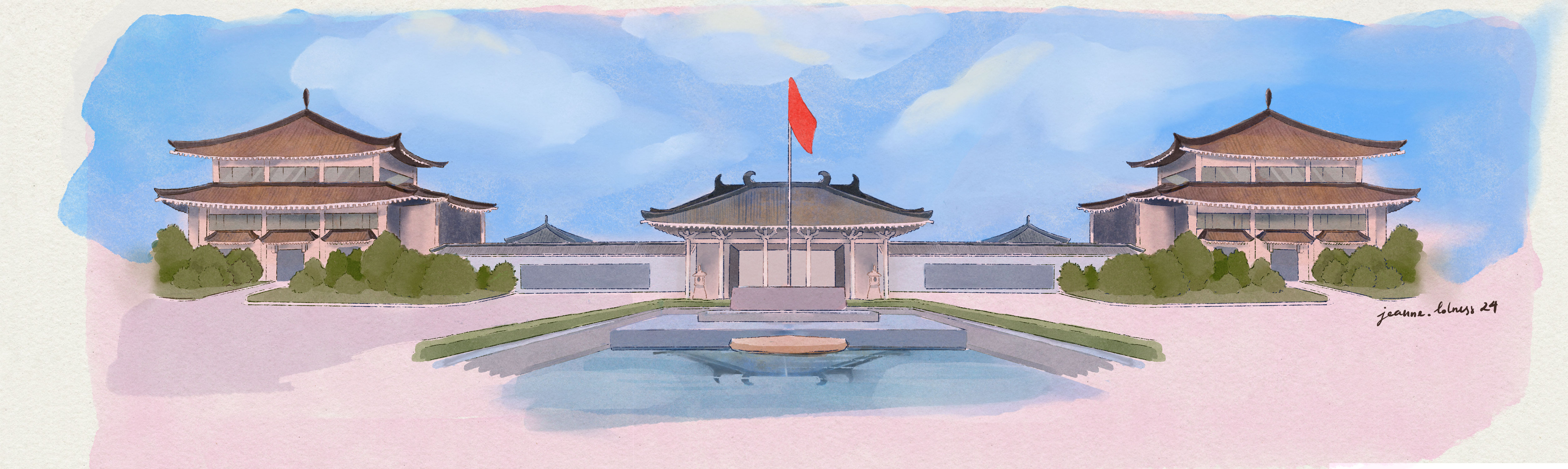
In the summer of 2024, I spent two sunny days exploring Huế – the place holding memories of a bygone era: Nguyễn dynasty. It was the final medieval dynasty before Vietnam became a colony of France and experienced warfare to the extreme in WW1, 2 and the Cold War.

Despite bombings and destruction, Huế and the Imperial City still maintained a variety of structures and monuments with their intricate details.

I had been longing to visit Huế for a long time and finally I got to enjoy this little peaceful city.

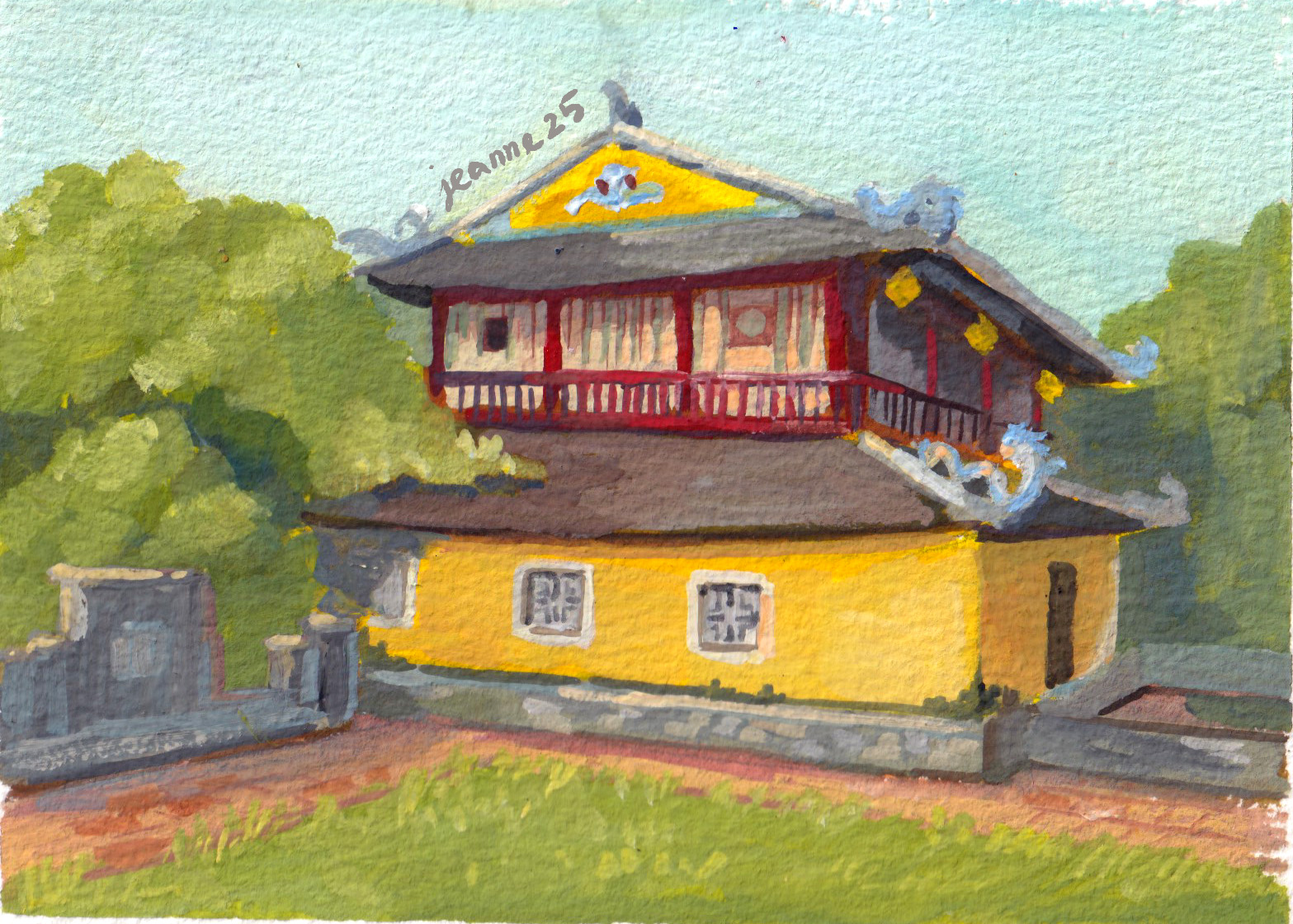
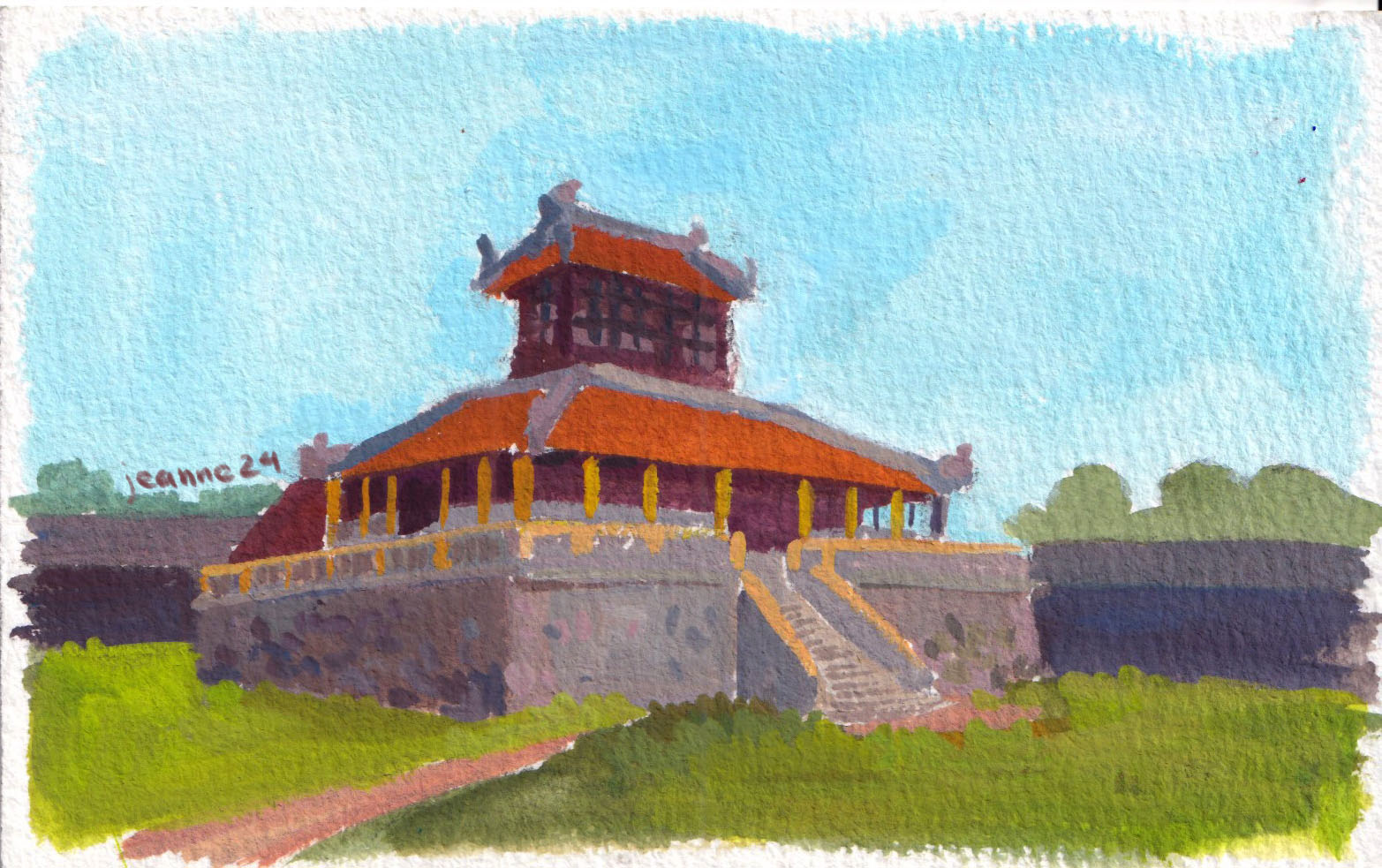
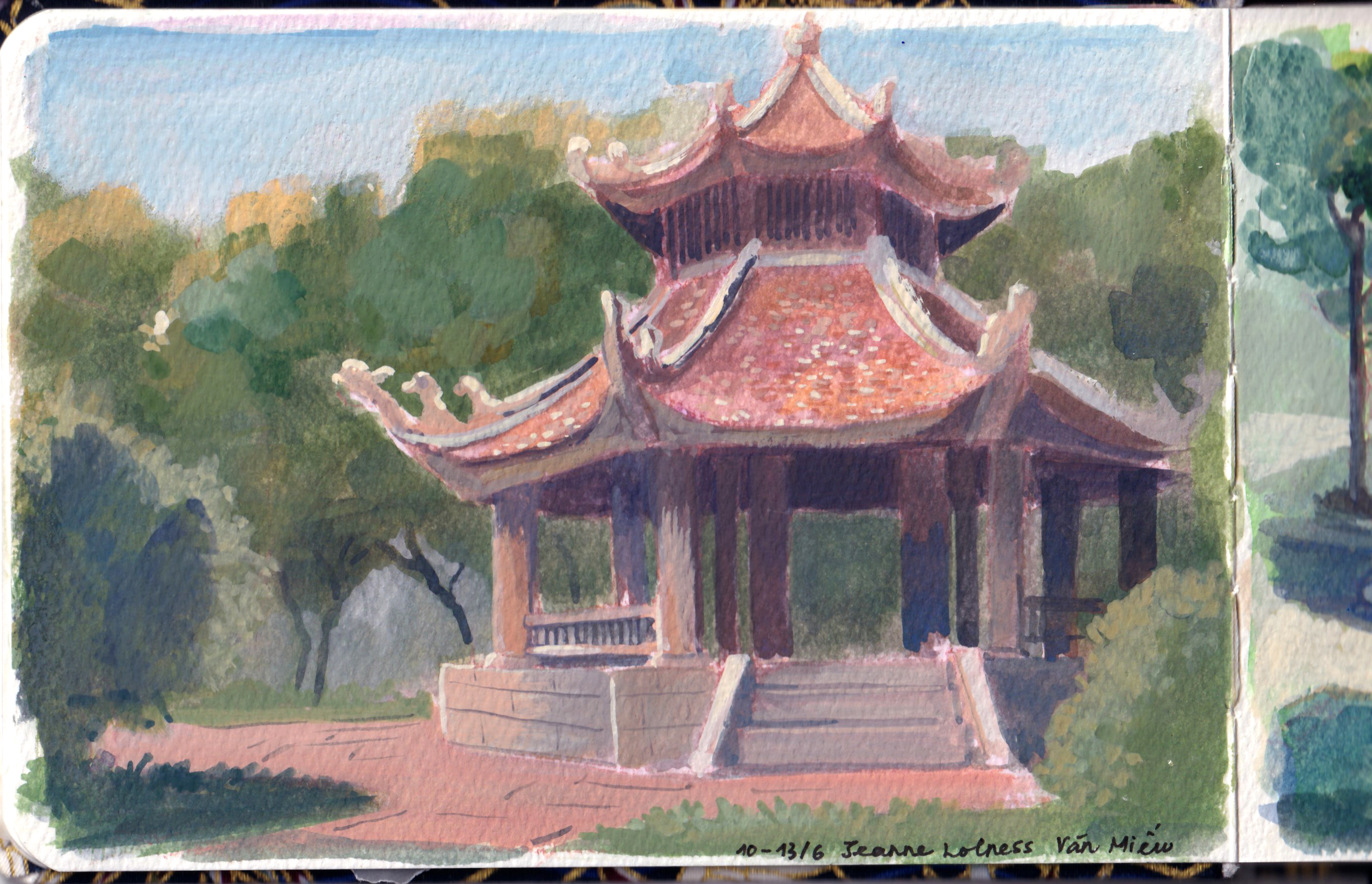
Nhật Thành Lâu
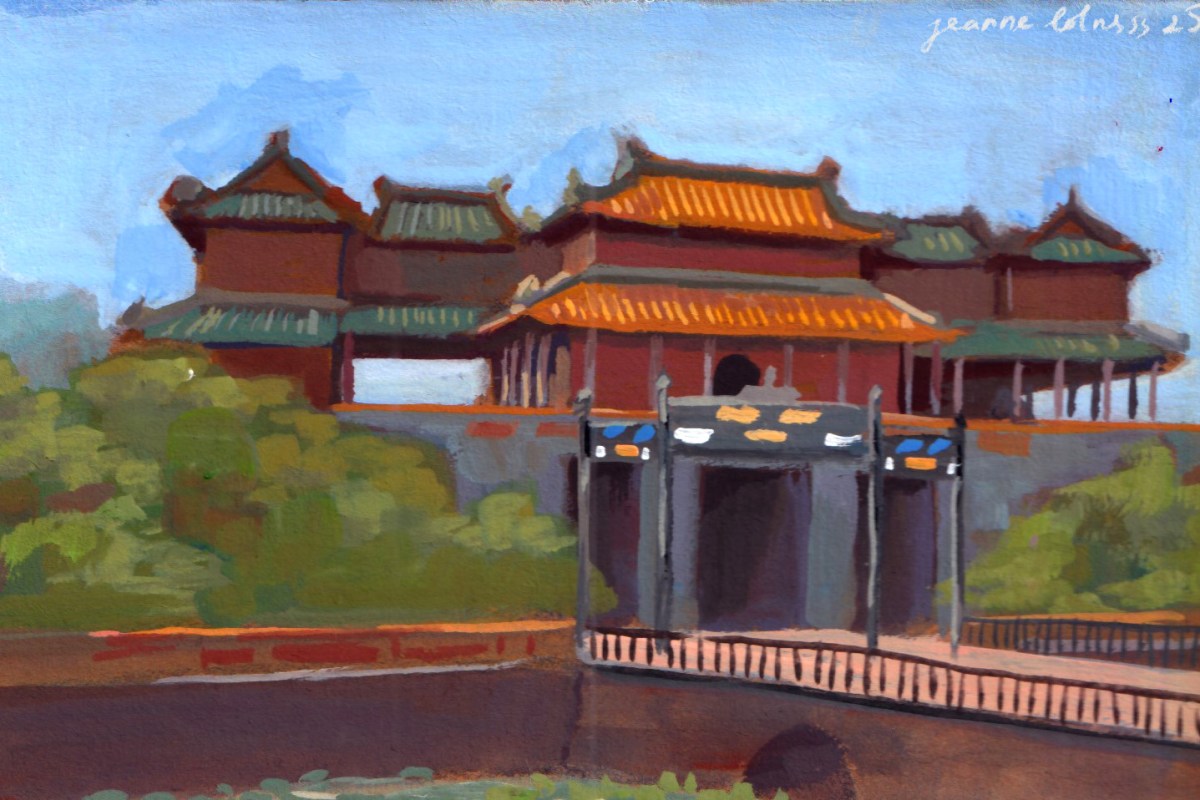
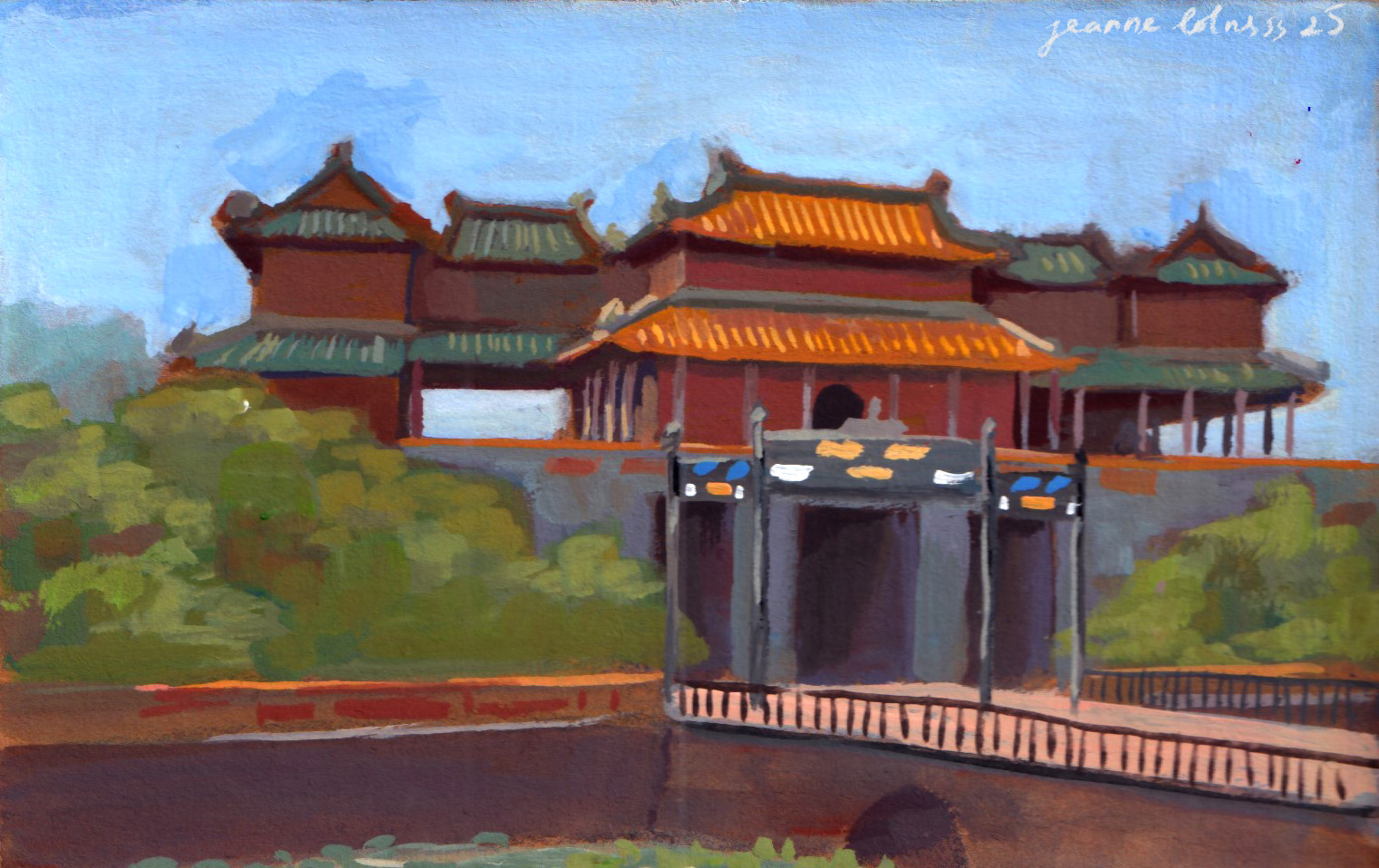
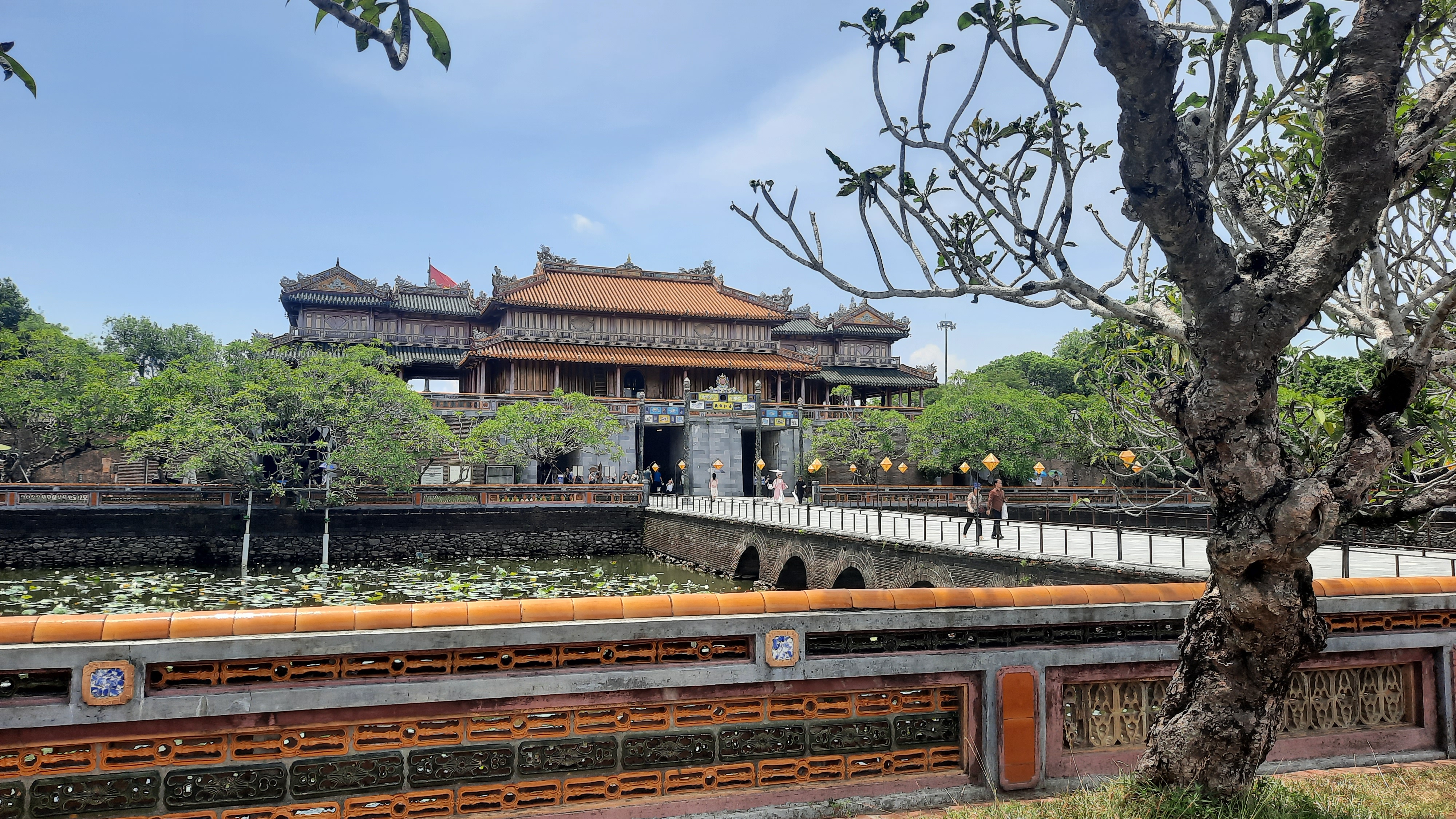
Cổng Ngọ Môn

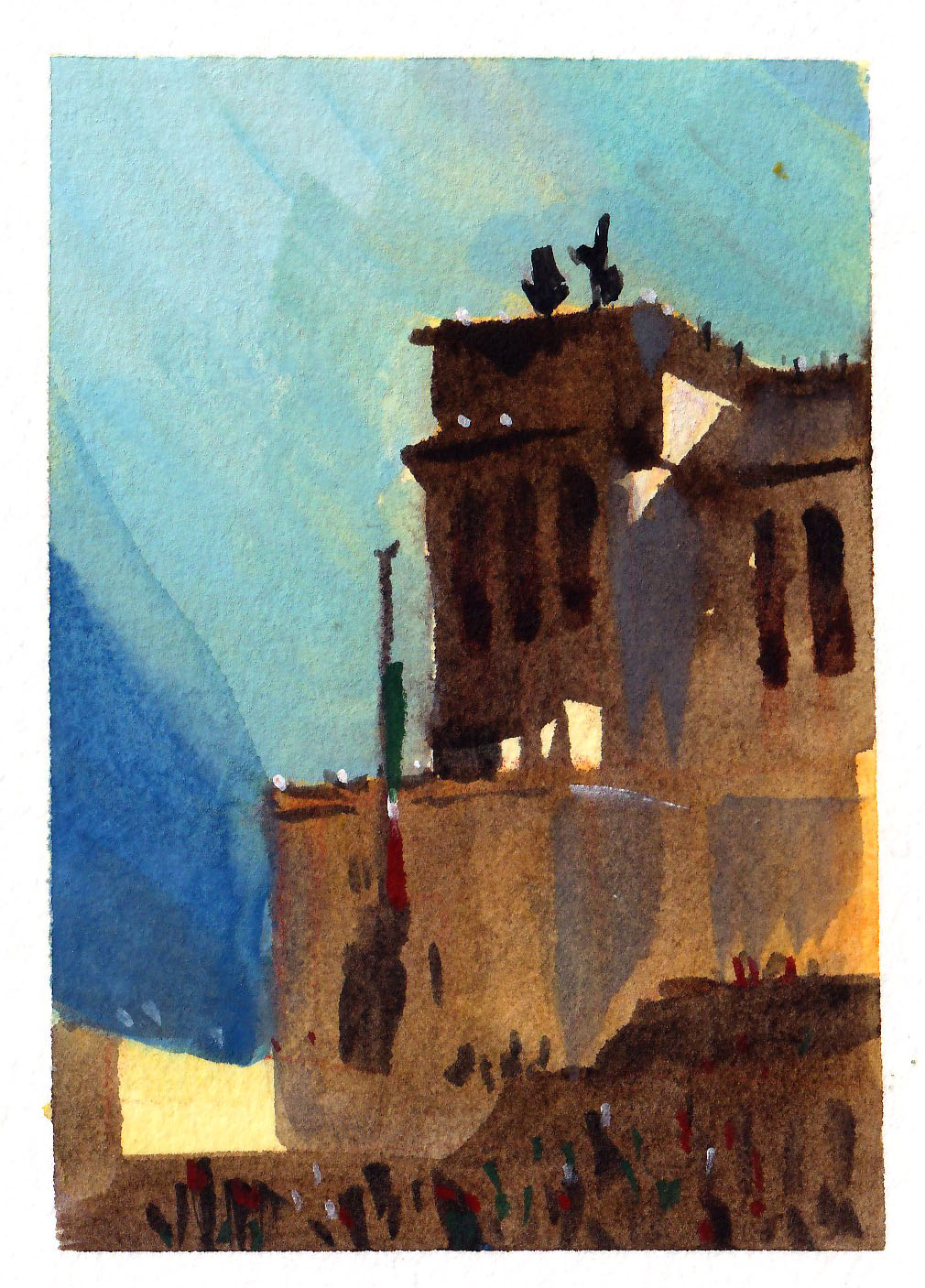
It was a sunny and hot day, and there were swarms of people visiting the citadel: foreigners, local people, Vietnamese travelers. The entrance (Cổng Ngọ Môn) was the most crowded spot, afterwards, people started wandering to different areas. It was understandable, because the entrance was built to impress anyone coming, foreshadowing normal people to pay respect to the king. My little painting can’t capture all the details of the entrance, many decorative elements were made by skilled craftsmen from all across Vietnam.

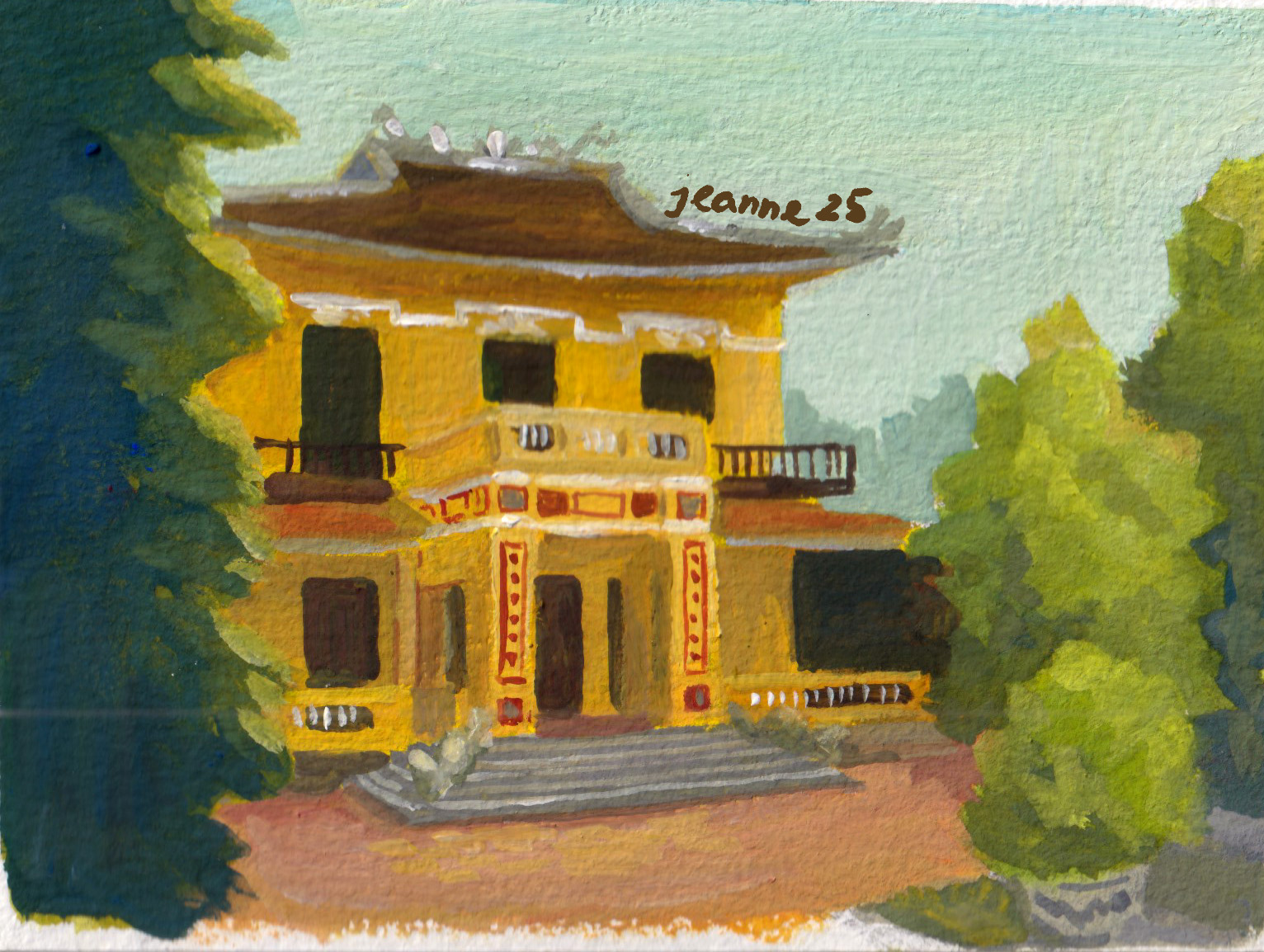
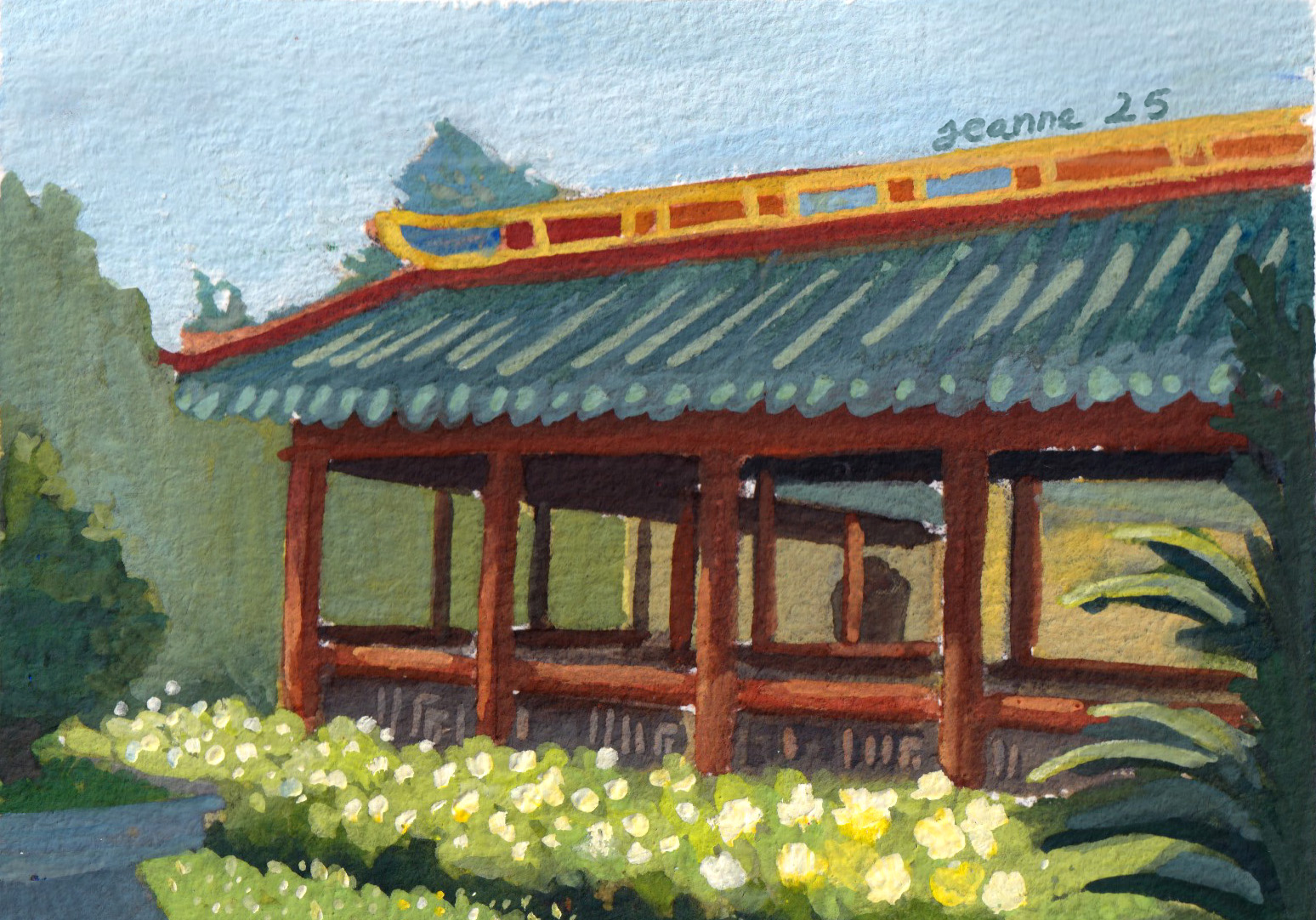
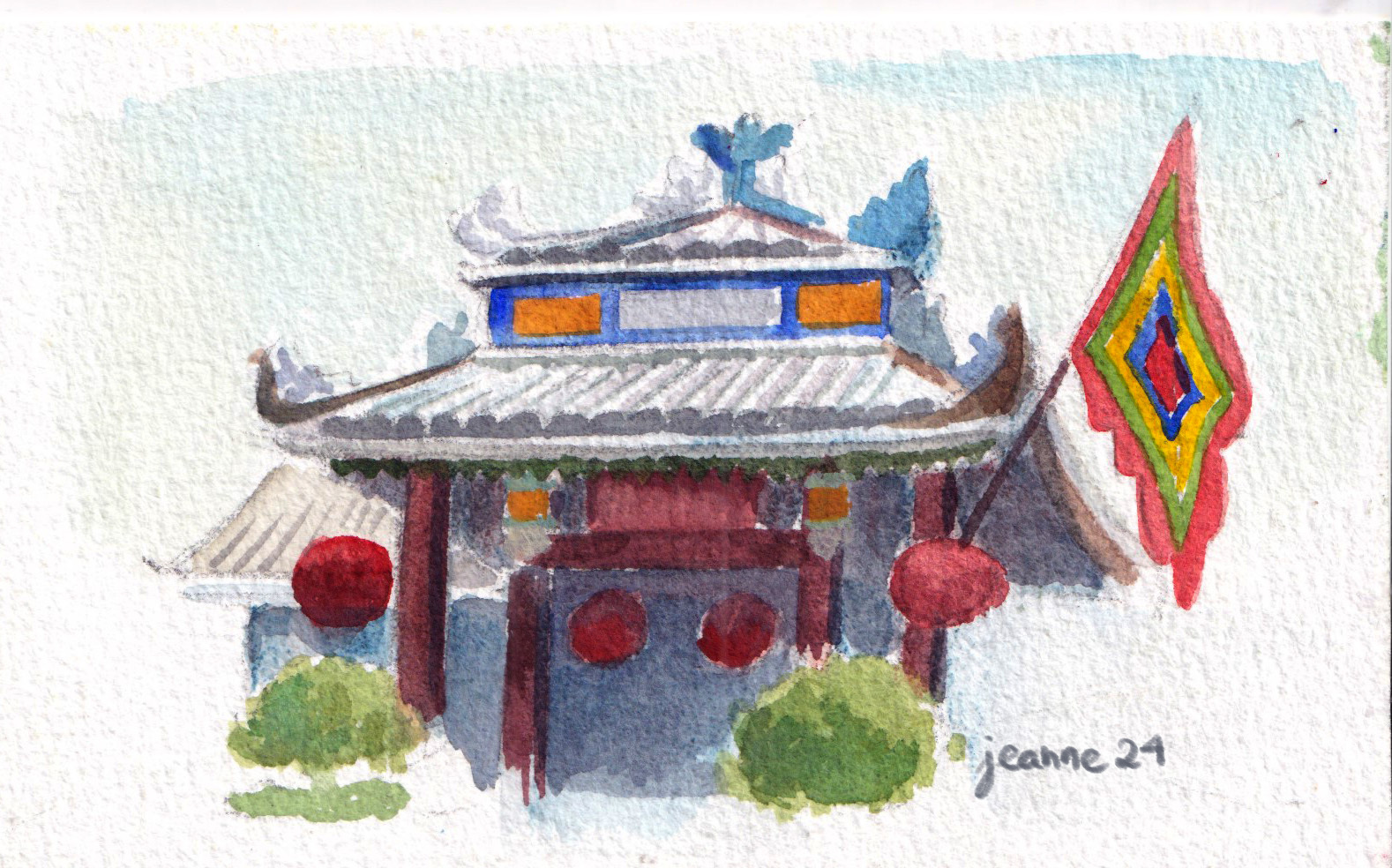
Phước Thọ Am
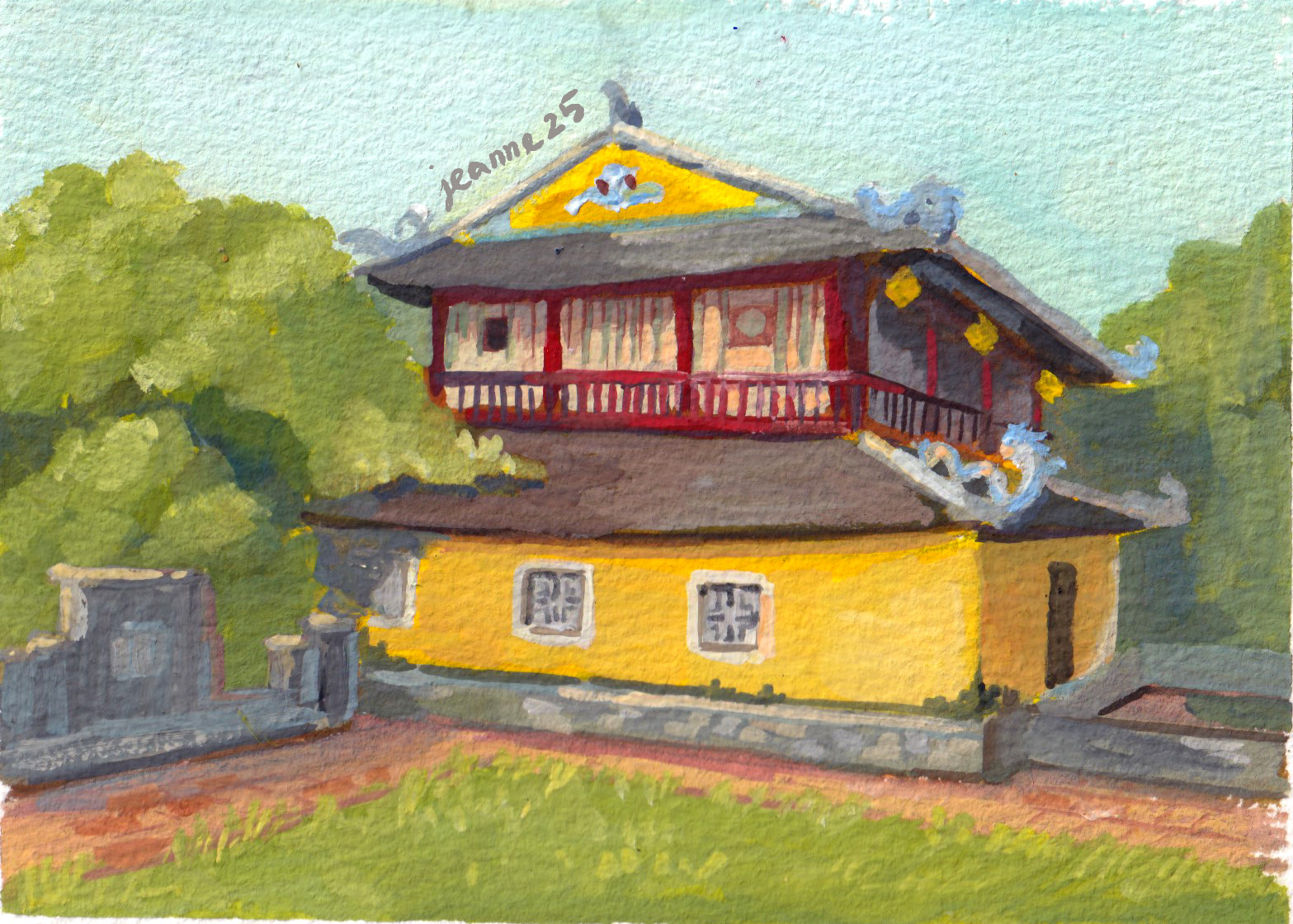
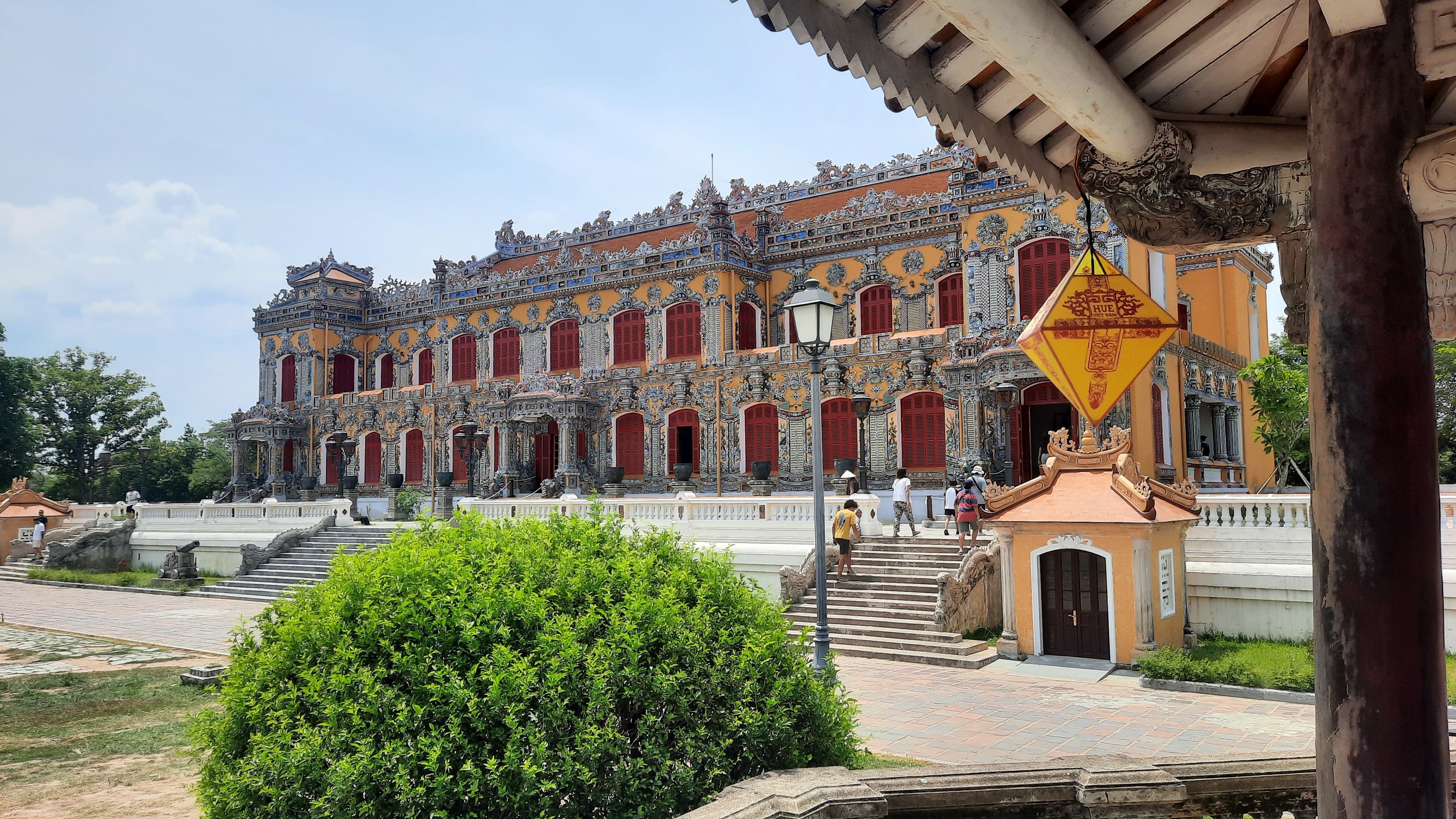
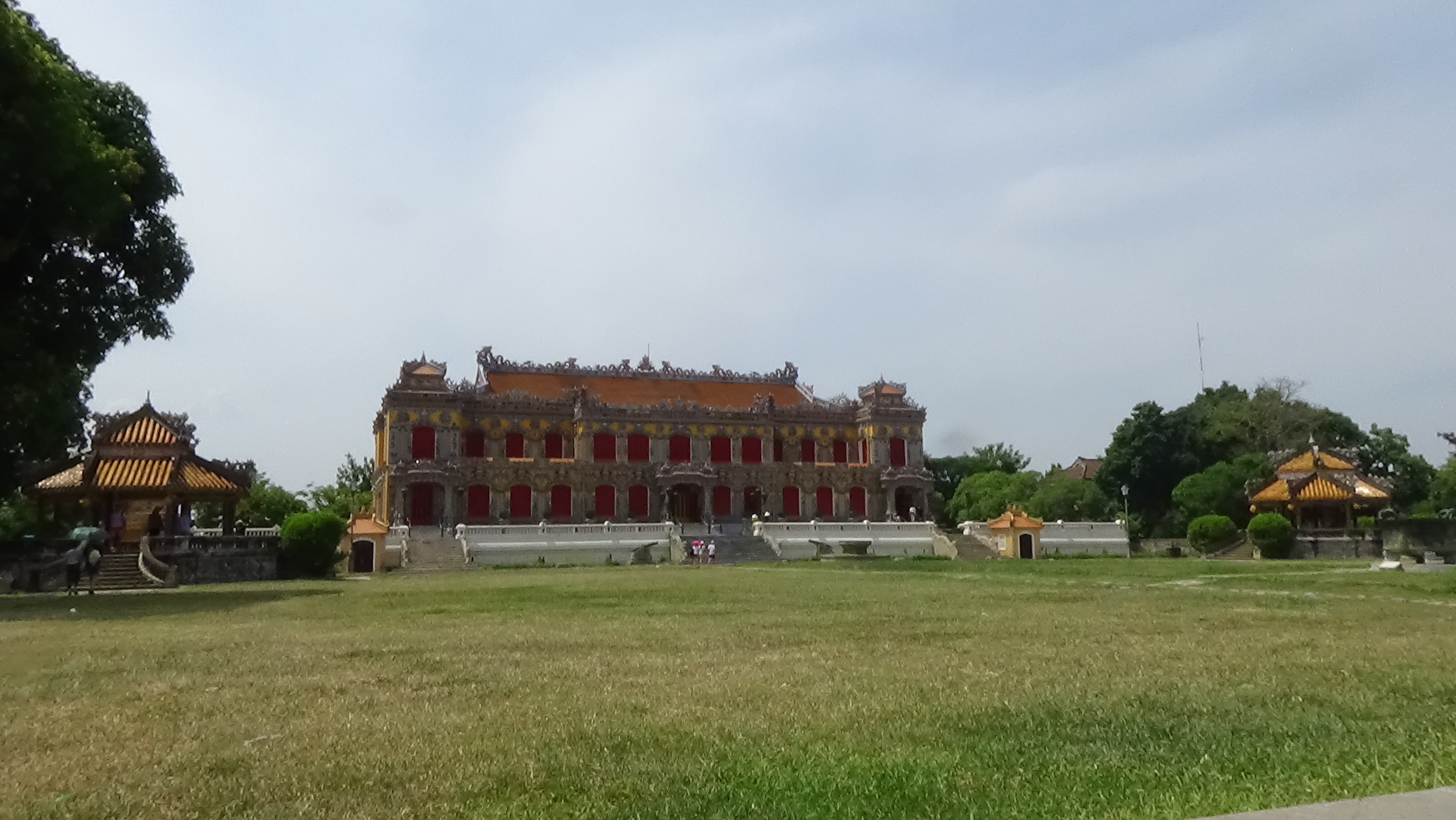
Lầu Tịnh Minh

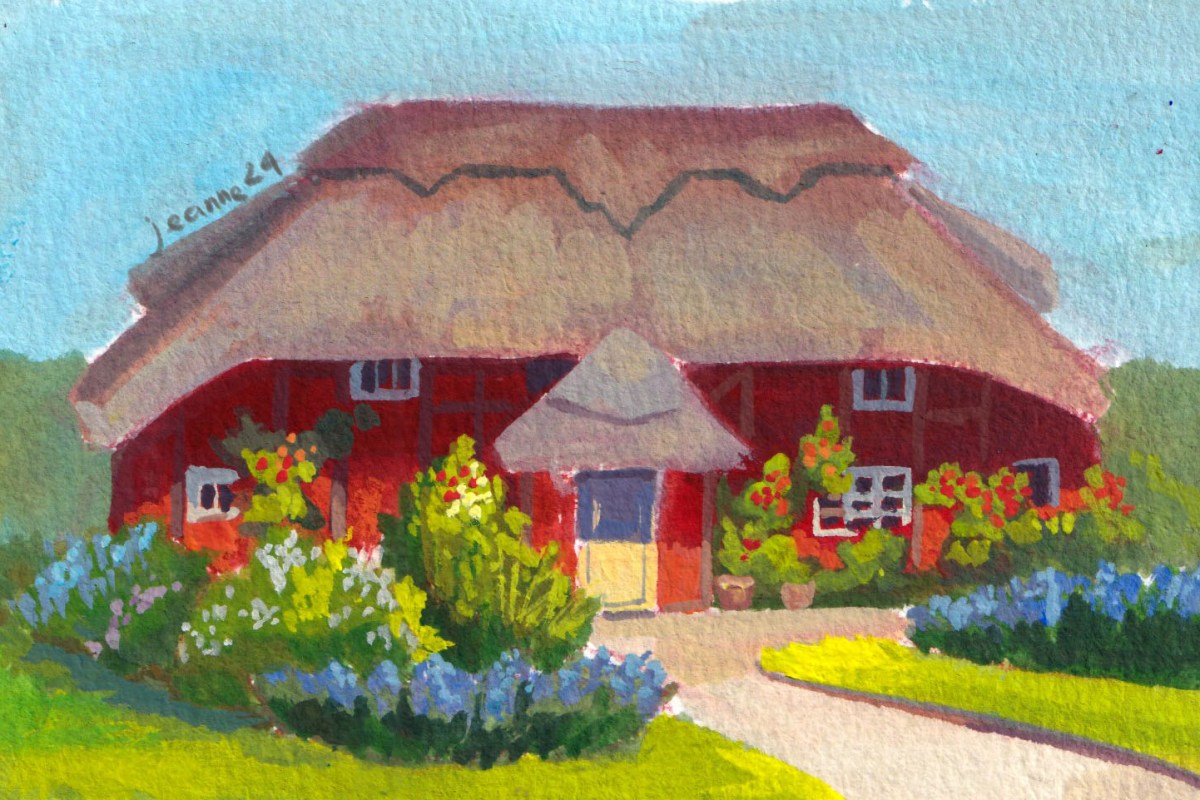
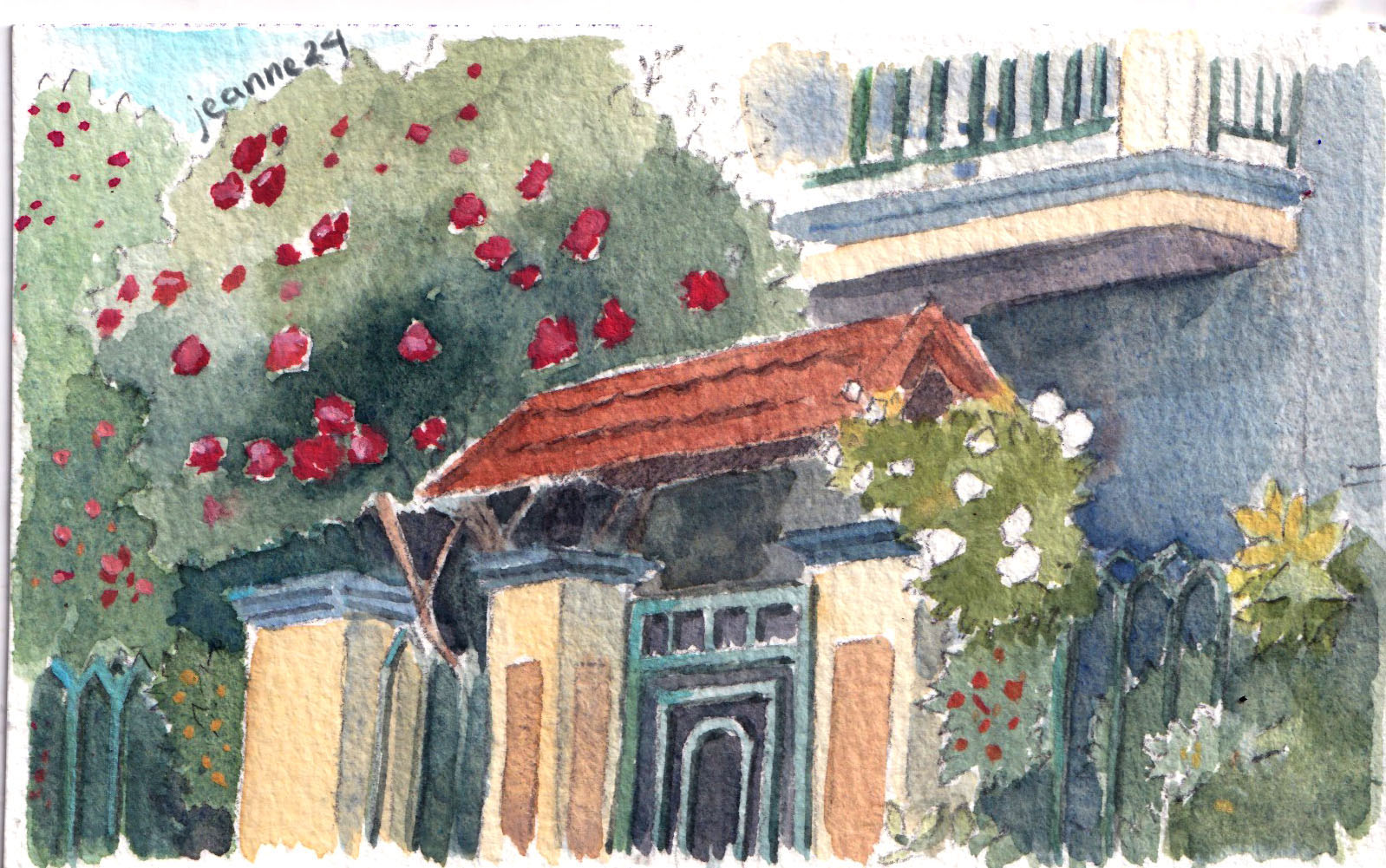
These two places (Phước Thọ Am, Lầu Tịnh Minh) were built much later, reflecting the changes coming from the outer world. Lầu Tịnh Minh was built in 1927, featuring a higher ceiling, a larger balcony and many other elements from Western, particularly French architecture; but still keeping the traditional roof and decorative tiles of Vietnam.

There are many places that I haven’t painted and I’m still excited to paint them, even after a year. There are still so many things I want to learn about Hue architecture and history.

You can use some of my images below to paint if you are interested in Vietnamese medieval architecture! Share with me if you can.

The in-between moments that matter

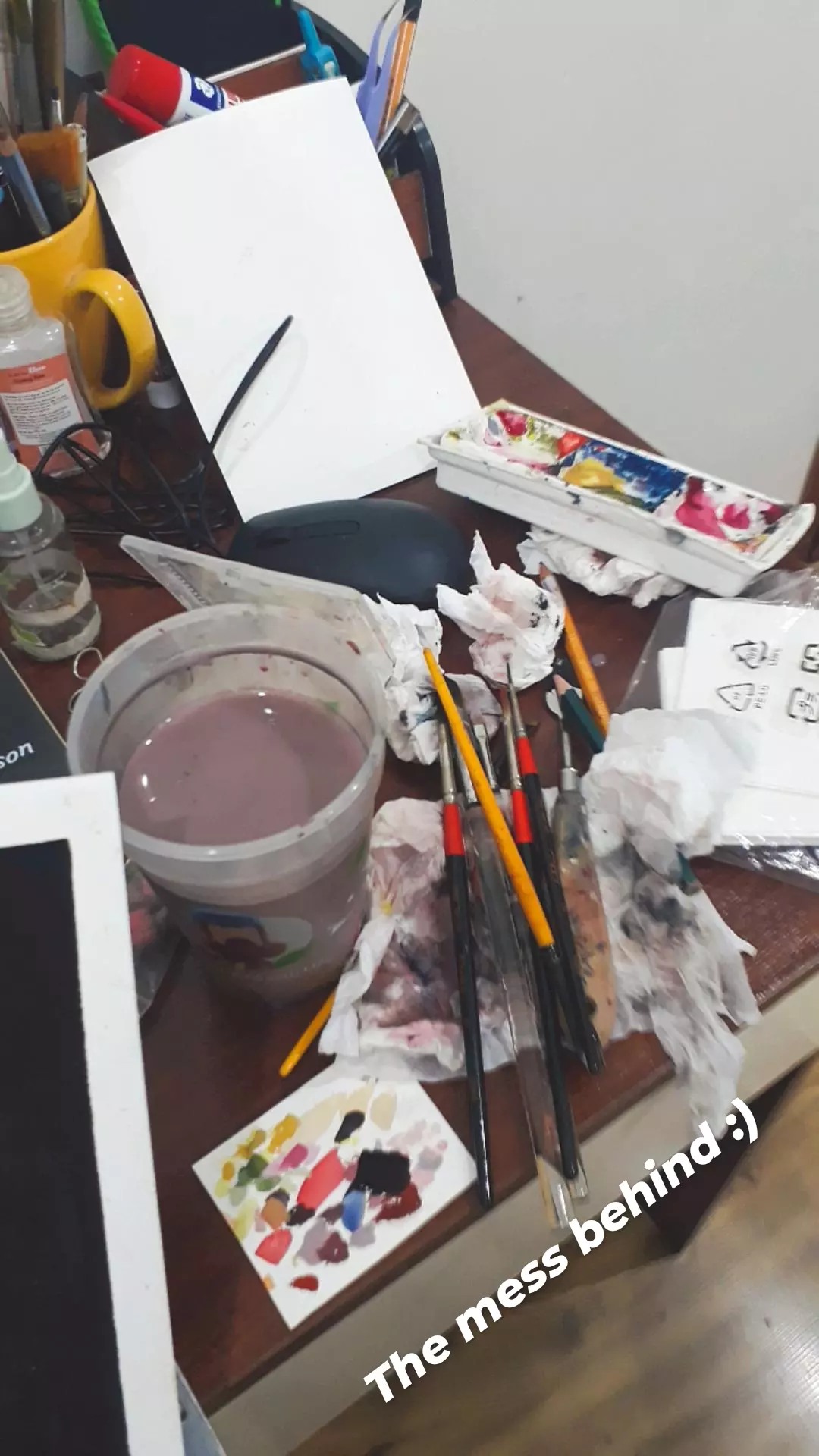
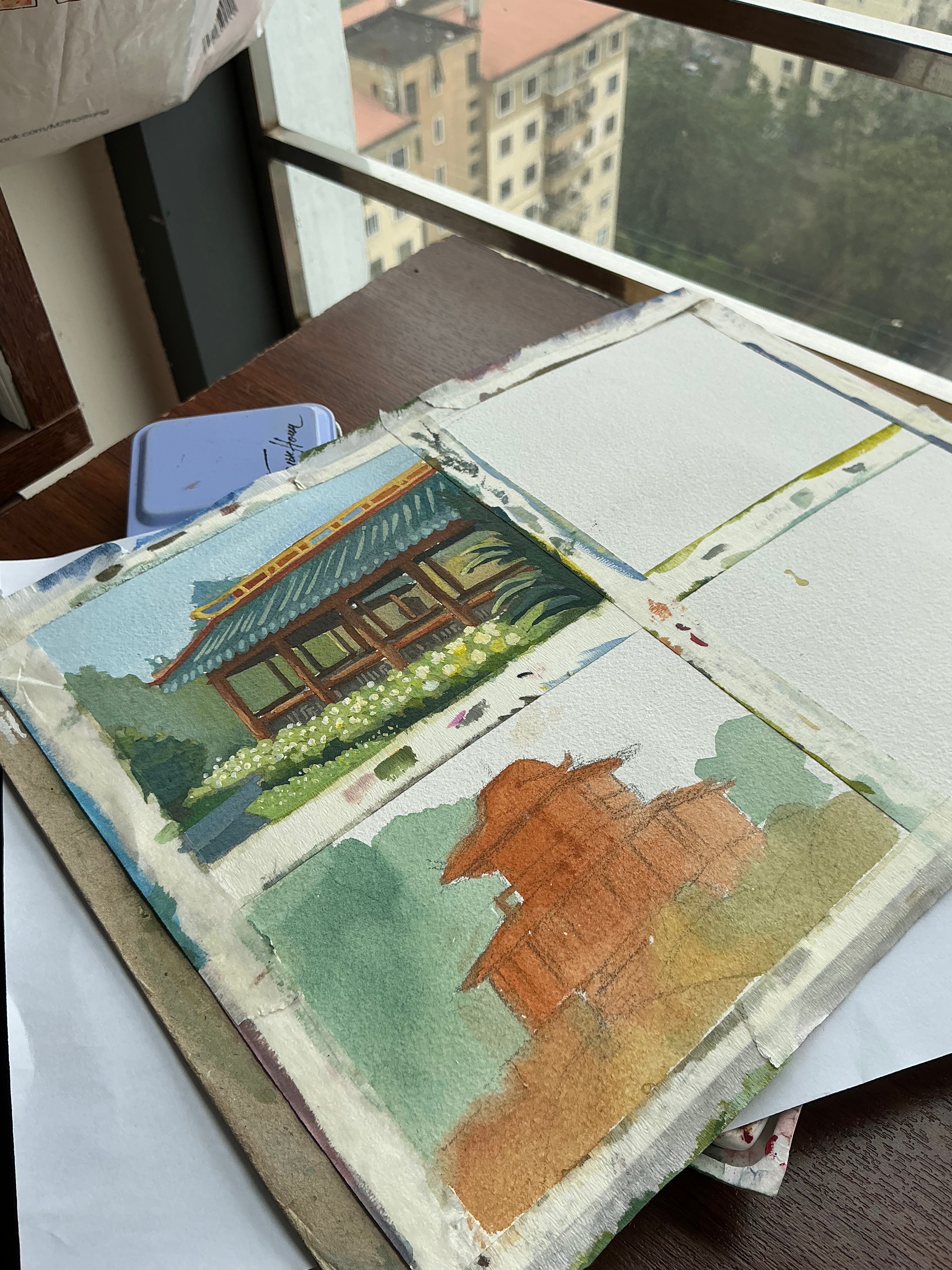
This is just a post to share all the mess behind polished paintings. You can see the underpainting, the half-done paintings, brushes thrown randomly on the desk, the palette almost falling off the desk.

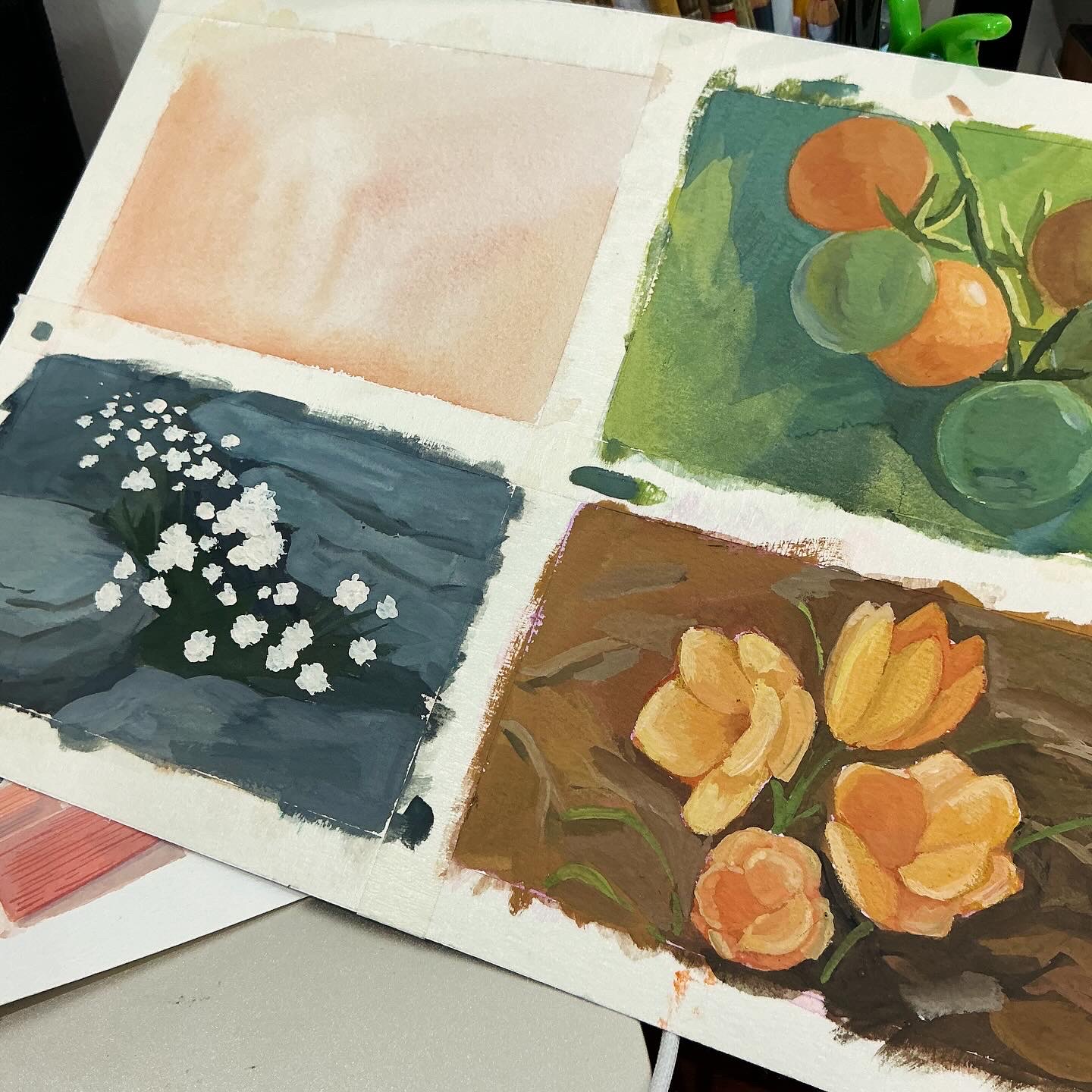
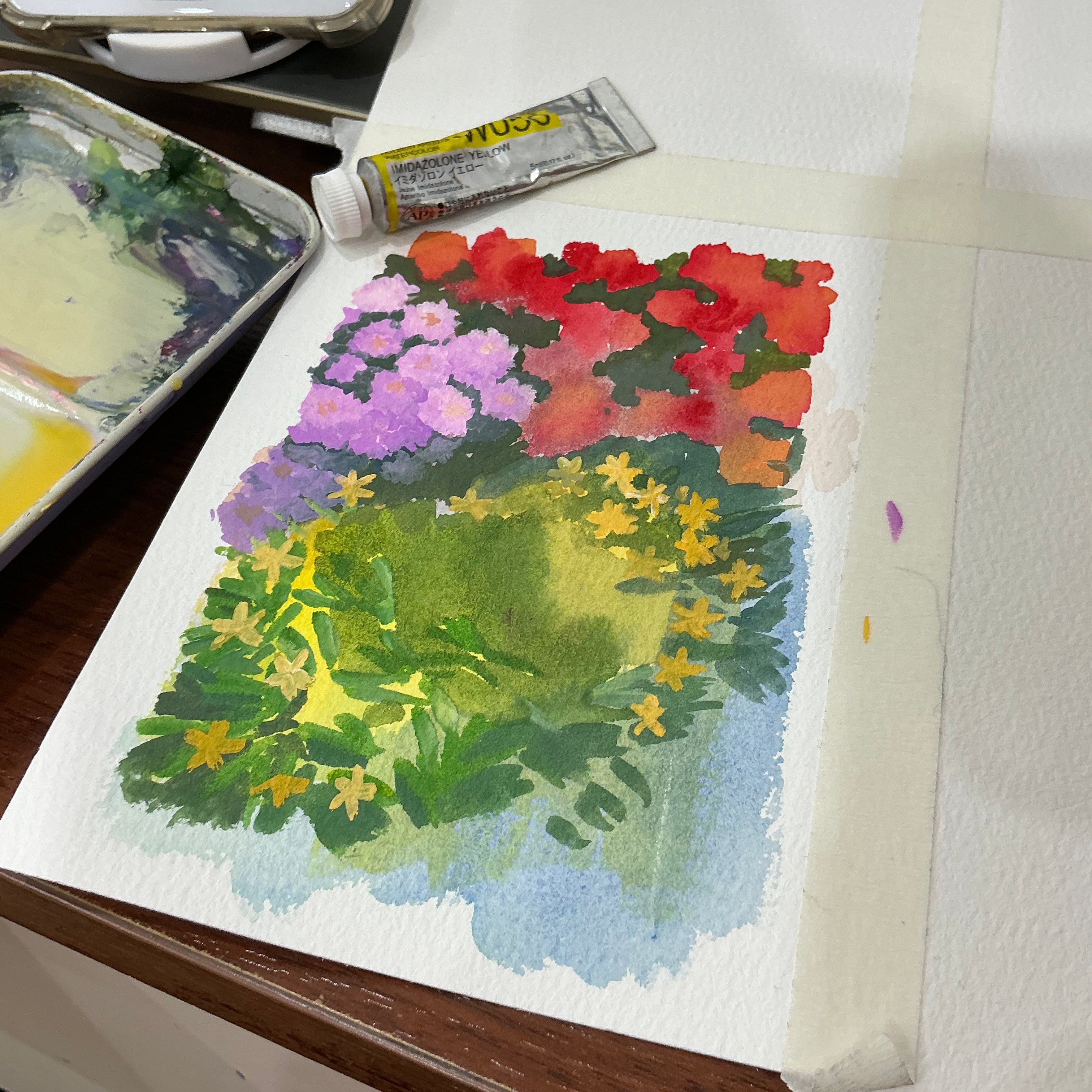
Sometimes, the process means more to me rather than the final result. I enjoy painting fast and playing with colors, so the moment the painting is finished or rather I see that I can’t do anything more. It feels like waking up from a dream and I’ll need to wait until next night for another dream.

2025 Plein Air Challenge review: Learning to love life as it is

I have always wanted to join the Plein Air Challenge held by the Warrior Painters, but never found the time in the past years.

This year, I had more free time due to a sudden decline in commission requests, possibly due to the introduction of AI to Fiverr. Instead of jumping into a new course, I decided it’s time to join the challenge, or just tried to see how far I could go.

The challenge was a good distraction in this transitional period. Fiverr has “encouraged” creatives to allow AI to create free or cheaper artworks for users, which forced me to accept how sloppy my art career is. While I still managed to work with long-term clients or projects to support myself in this period, I felt an existential crisis slowly burning myself out. On some days, when waking up, I was hit by questions such as “What am I doing here? Are my goals realistic or achievable enough? Am I feeling and doing like this forever? …”. The challenge helped me refocus my attention, simply speaking, I know today I need to finish by #13 painting because today is 13th.

The challenge also introduced me to a few more talented background, concept and landscape painters. Some are Giacomo Sardelli , Lex , Ferrari Duanghathai, and more; it ignites a bit of hope in me about posting arts online. I have always struggled to stick to a regular schedule of posting; and now that I’ve accepted it, I just post whatever I’m ready to. I also got featured on Warrior Painters page and story a few times, which helps my audience grows a bit.

This challenge also motivates me to appreciate small things, both physically and mentally. A quiet morning, a few hours focus in a distracted day, a tree coming up with new leaves, a cool summer breeze, a small commission, a regular client ordering little comics. In the days that I’m haunted by big questions about career and life, these little things keep me grounded. I tried to simplify everything, from declutter my art corner to relationships in my life.

I tried to simplify my tools as well, I used the same set of brushes and only four main colors: red, yellow, blue and white. I use a portable palette recycled from a plastic package of some electronic devices, which already has some grayish and brownish paints left. They help create the neutral gray parts of all paintings.

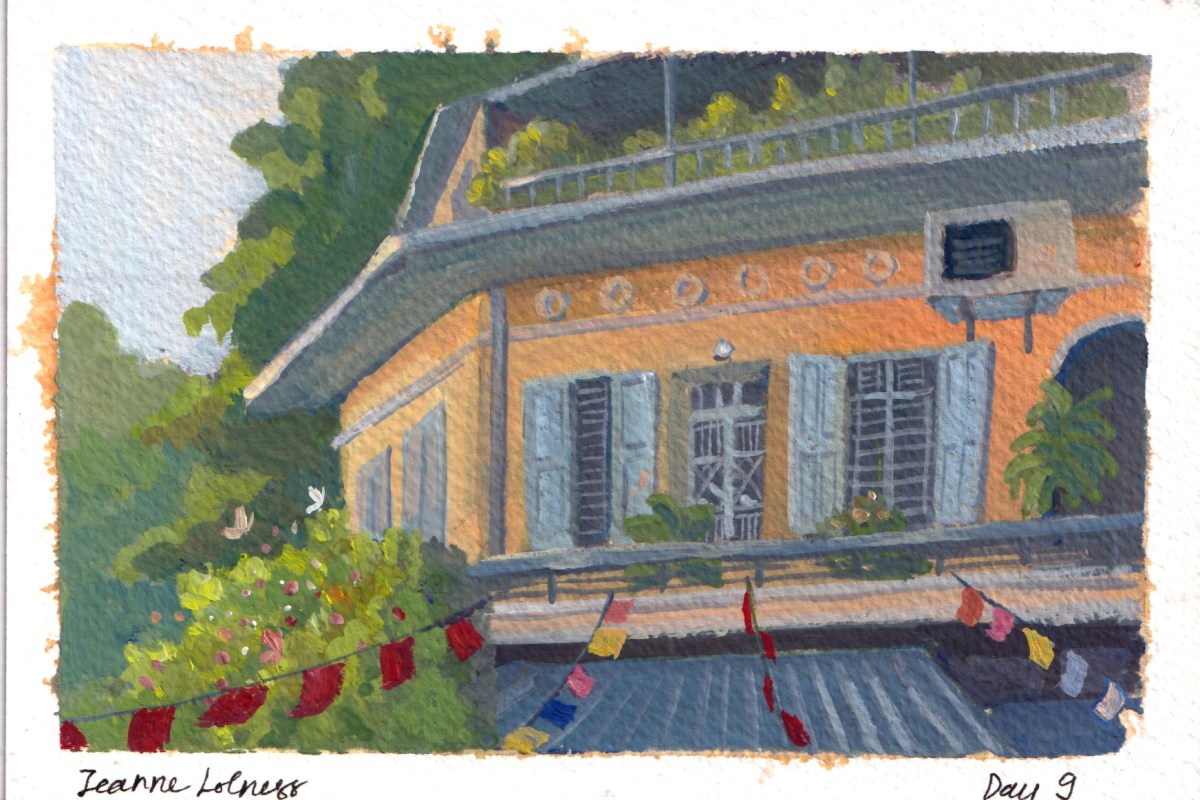
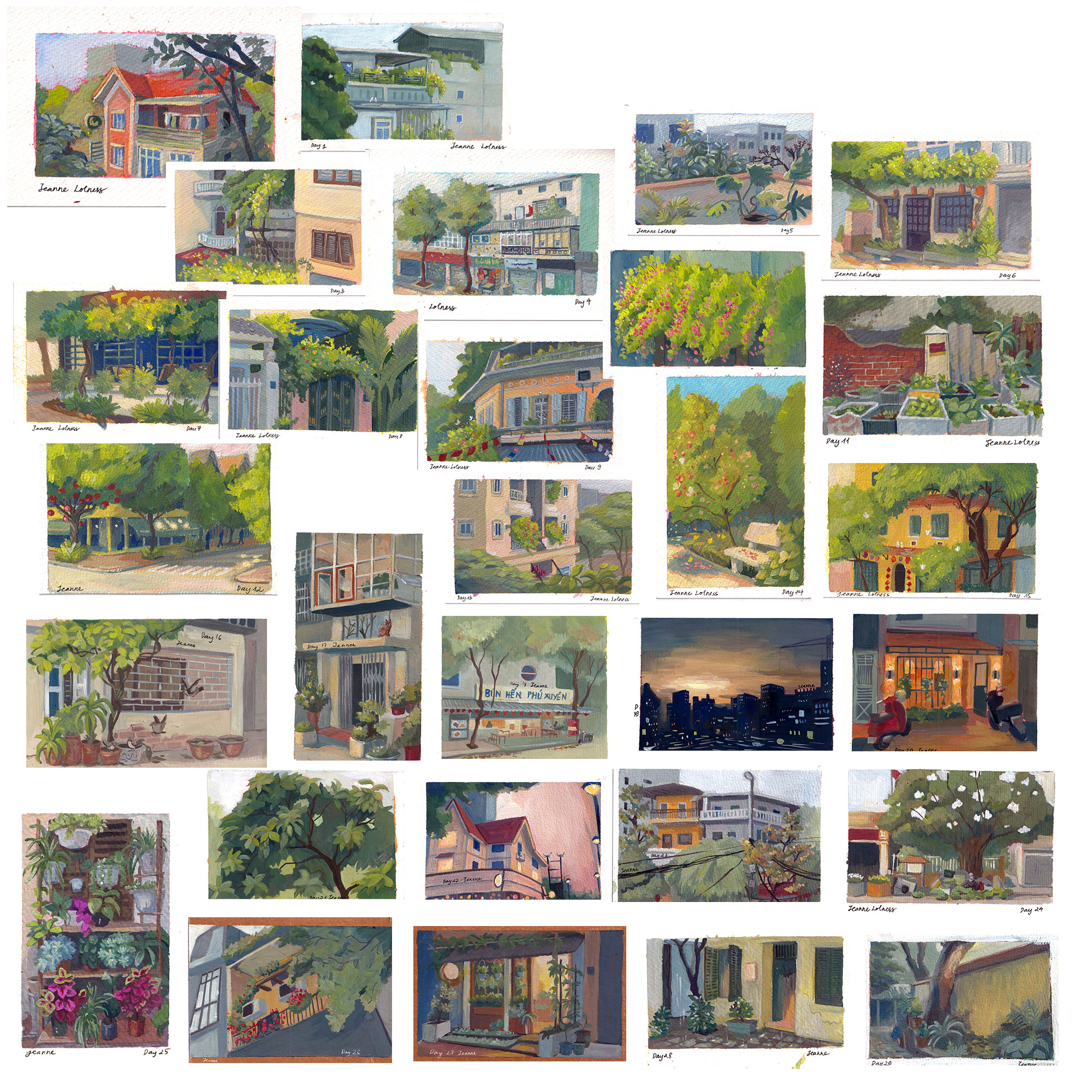
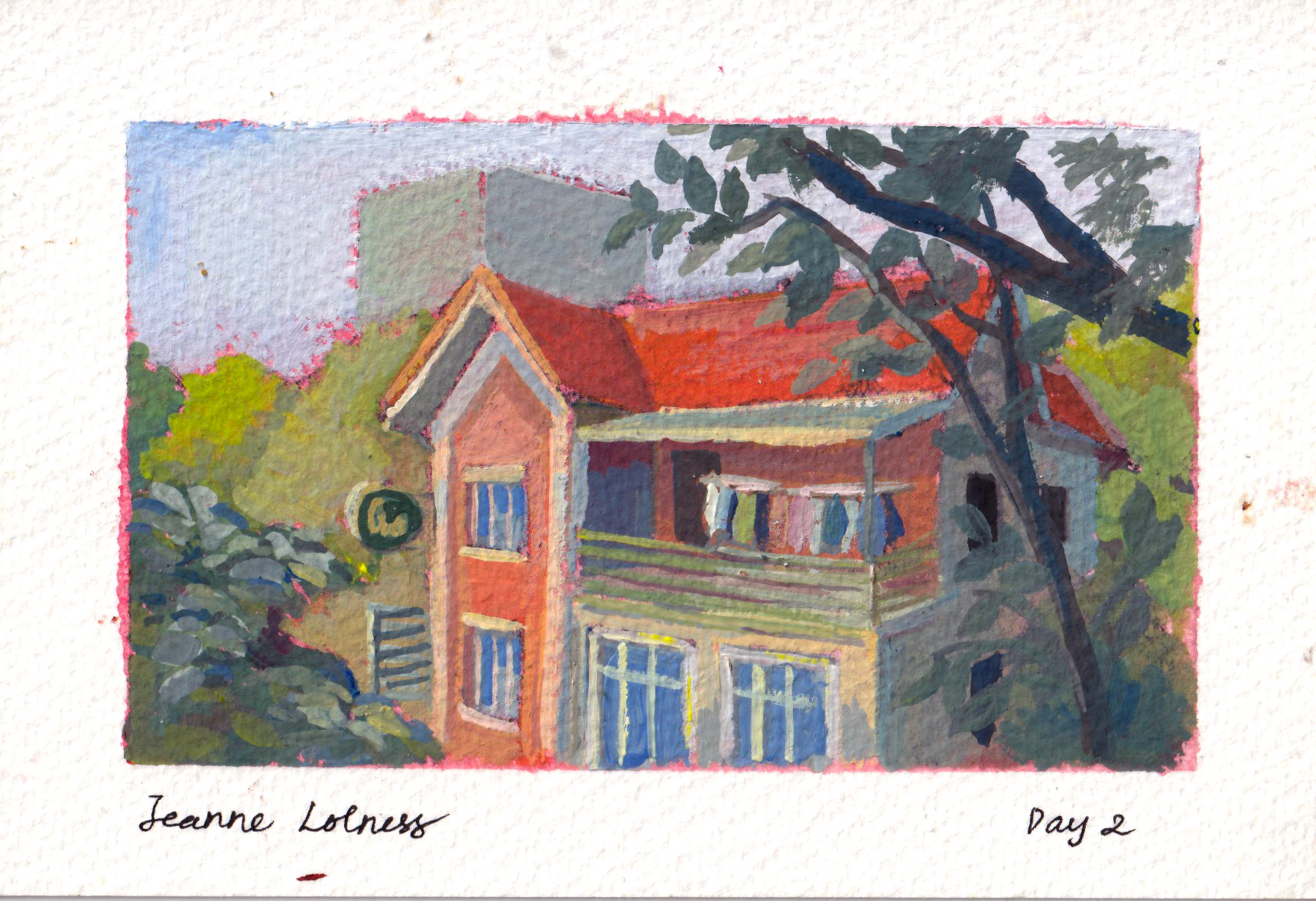
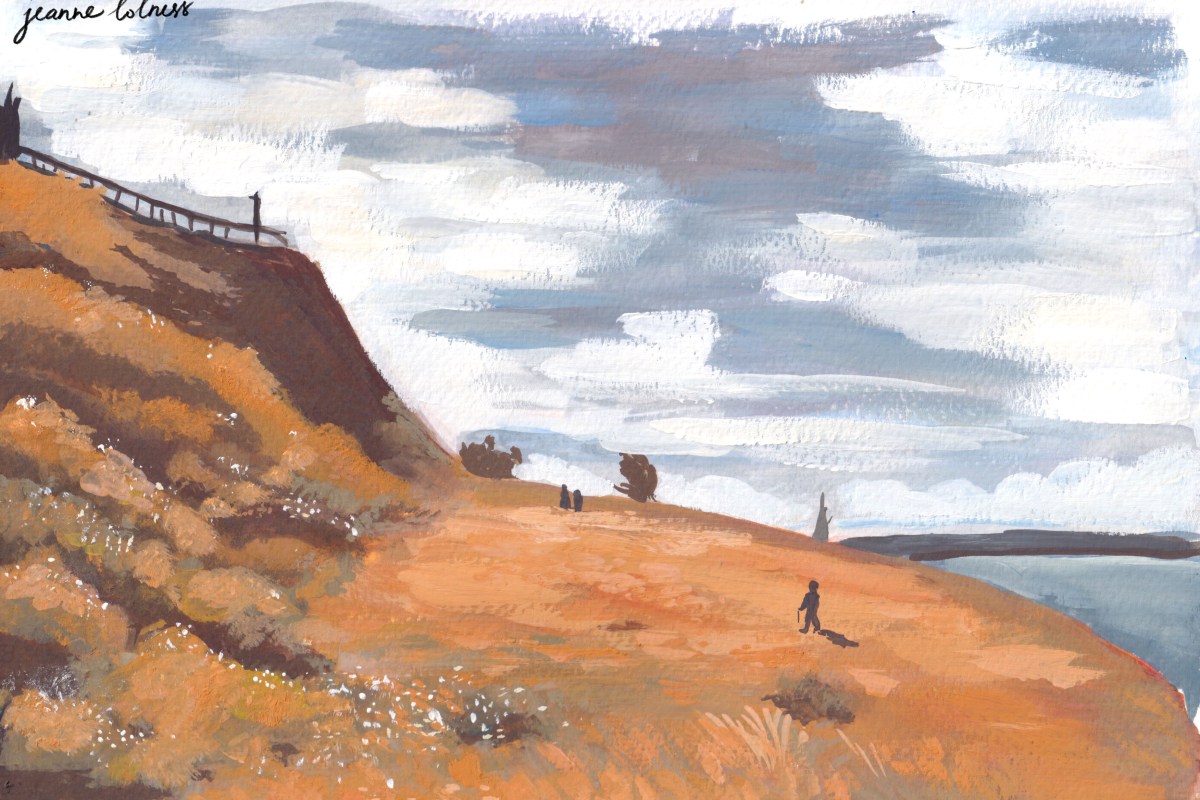
My original plan was to use this to motivate me to go out of my neighborhood, but in the end, I painted mostly houses in my area. I already have a collection of references taken by me during my weekly run. Painting from photo references taken on my own doesn’t lure me into copying the image, because I know the limits of my own photos and already have my own impression of the place.

And in the end, I have a lot of works to share and talk about, 29 paintings. I realize I have worked much faster, since my landscape sketchbook has only about 10 pages left and I began it 2 years ago. Along with reading about Mary Cassatt, I found more hope in myself and an art career, motivation to stay resilient and patient. Of course, I’m still at loss visualizing what kind of career I truly want, but there’s one thing I know for sure: I want to draw and paint everyday.

Copying old masters’ painting: A Controversial Yet Valuable Practice

Copying old masters is a practicing method that always sparks controversy.

Selling copies of old masters used to a profitable niche in art. In England, early eighteenth century, a number of artists used to work as professional copyist. Francis Harding is an artist famous for copying Italian painter Giovanni Paolo Panini.

Back then till today, copying old masters’ artworks is still a recognized way to practice in European academies. Jean-Auguste-Dominique Ingres, which today is known for his painting La Grande Odalisque, learned by copying the prints available in his family. In Chinese, copying works from previous artist is the sixth principle in the list of principles introduced by Xie He in his book “Classified Record of Painters of Former Times”, which later become standards for artist training and critic.

Today, many museums organize copying sessions for artist to copy paintings to improve their techniques or to pay homage to the masters. Some famous names include Lourve: copying has been allowed since 1793 and Met with their Copyist Program.

From a personal view point, I believe copying is simply a tool which can be use for both right and wrong purposes.

1. Copying is a relaxed yet effective method to practice

I have found copying is a good warm up exercise before getting to work on commissions and professional works.

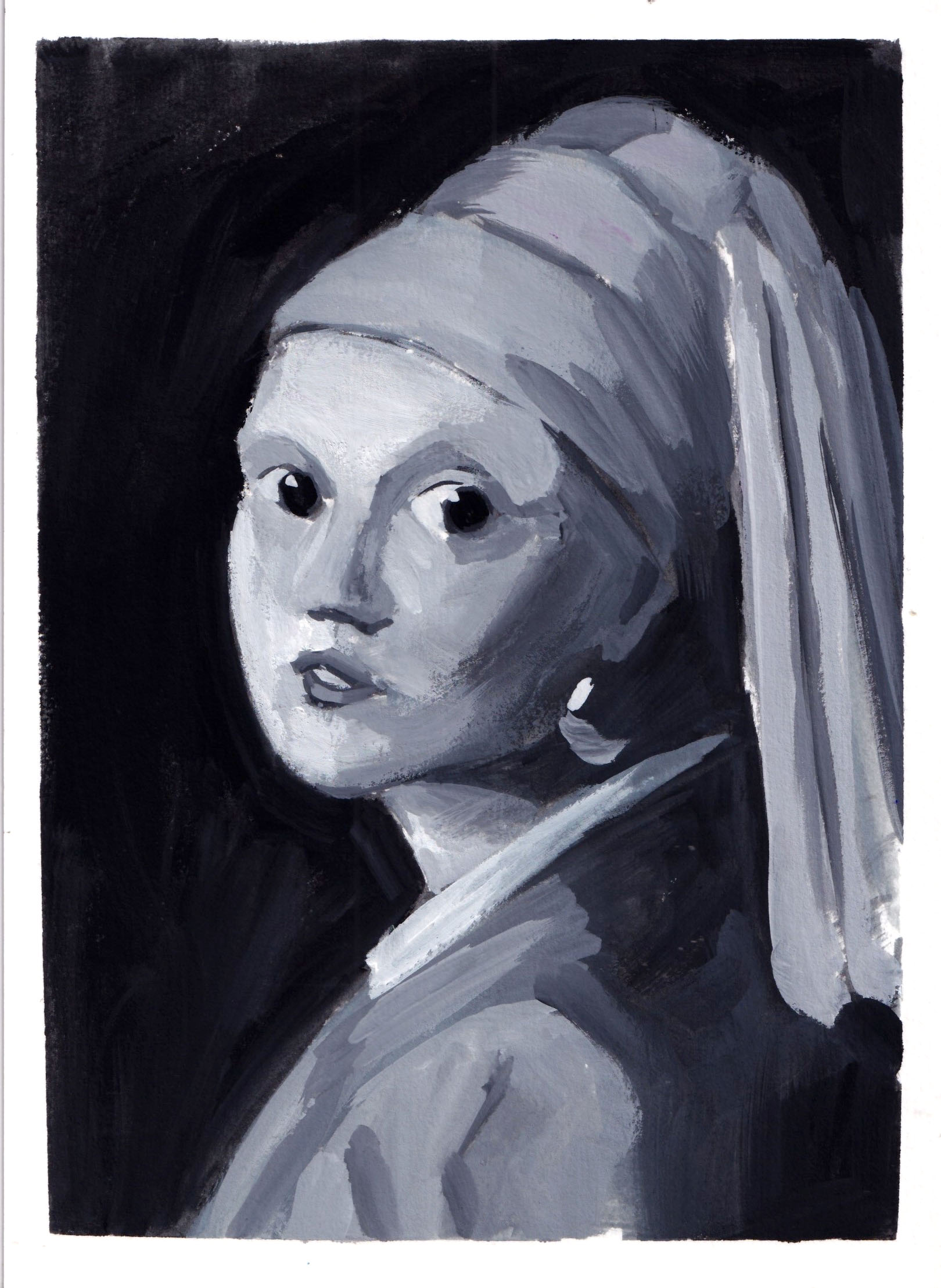
Study of Rembrandt’s and Botticelli’s

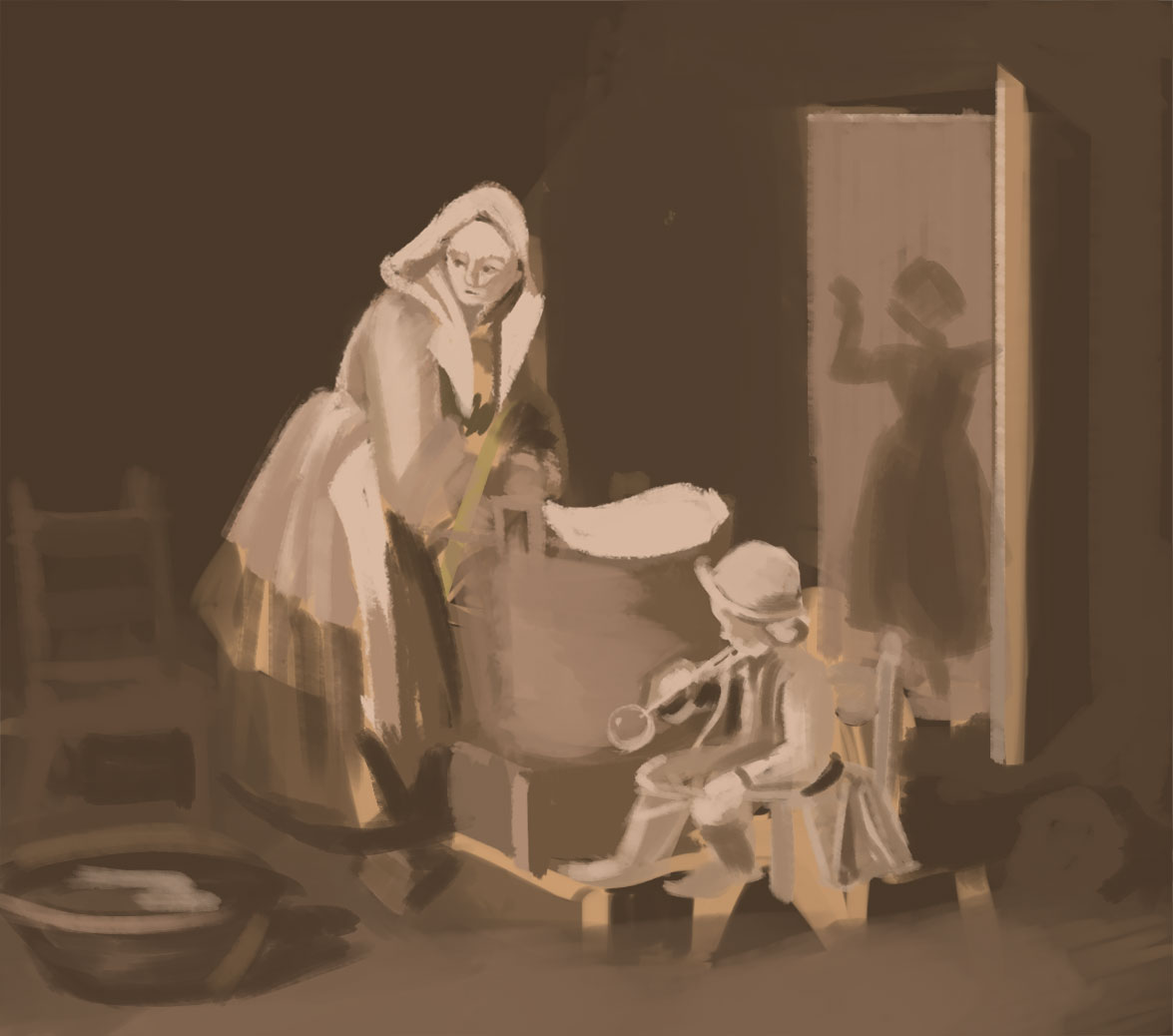
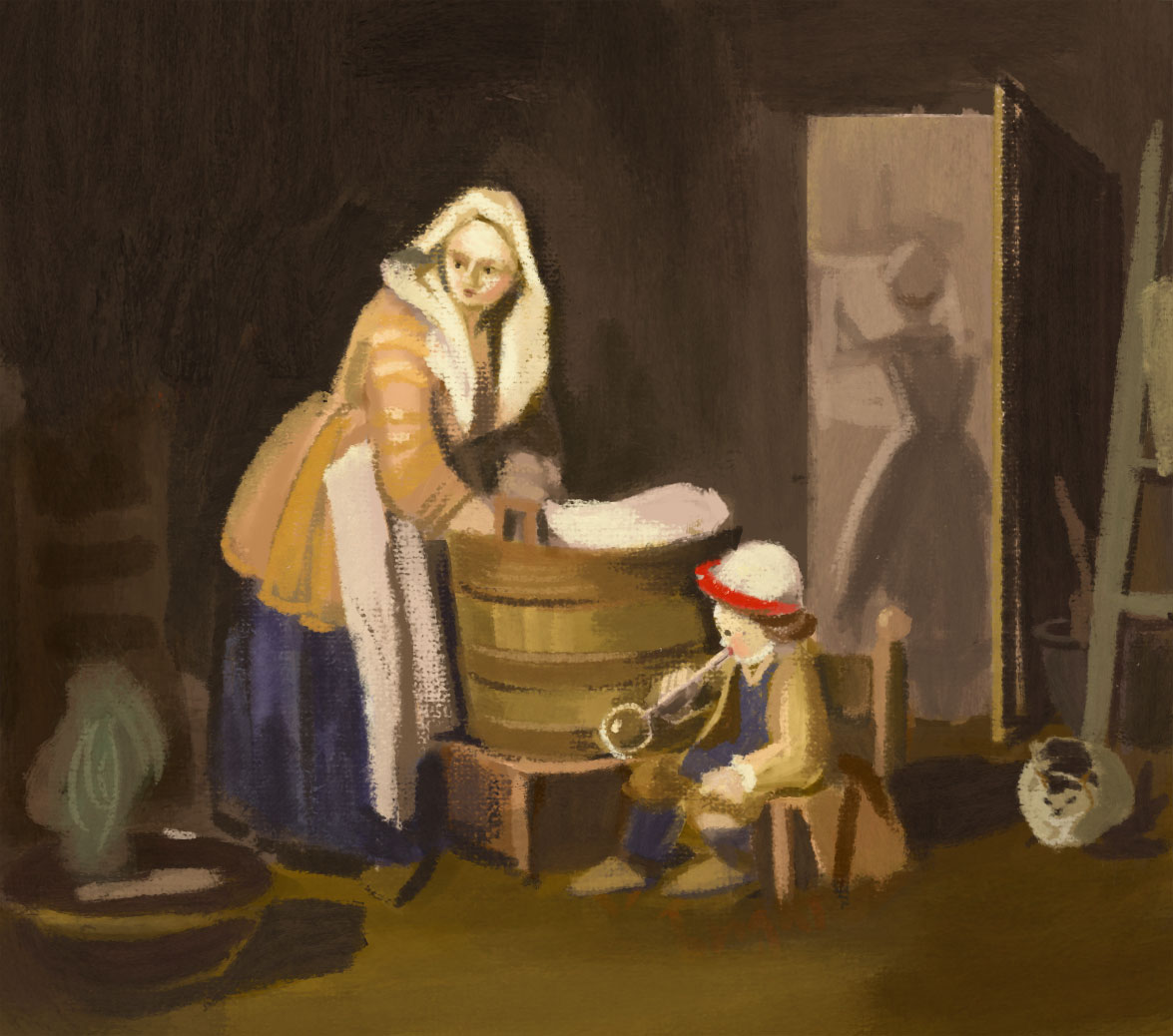
Copying as a warm-up exercise should focus on one purpose only: composition or anatomy or color, etc. These studies can be quickly done in 30 minutes to 1 hour. The exercise is relaxing since the masters has already figured out what and how to paint the focus, lighting setup and color. It’s similar to doing an experiment or research, with all other conditions controlled, focus on one element to understand how to work it out.

2. Copying simultaneously from tutorials

Tutorials are great sources to learn, particularly if you find an artist you admire and want to get inspired. Some artists can explain cohesively their progress in terms of both techniques and ideas; but some not. When watching how their hands hold, move their brush and trying to mimic them at the same time, I feel a lot of my questions and difficulties get cleared up.

Study from Nathan Fowkes

Above are copies I did when I studies a paid course from Nathan Fowkes, but there are a lot of free tutorials on Youtube: James Gurney , Matthew White , etc.

3. Copying also helps with rendering and brushstrokes

One important element affecting how an audience views a painting is the brushstrokes. Some artists, namely the Impressionists, kept their canvas textured while others, Vermeer for example, preferred a smooth painting. Both types will require specific technical skills. Observing closely the old masters’ pieces or watching tutorials/ live sessions helps me understand how an artist move their brush, their hand and what techniques I need to use to get a specific texture.

4 . When things get wrong

That being said, copying too much or without a purpose could harm an artist’s personal style. The reason why many format art teachers don’t like students copying manga or anime style because they feared of over-copying.

Especially in the age of social media, many inexperienced artists try to copy others with more followers. It’s not their fault entirely, especially social media can appear to help artists live on their passion.

Conclusion

In the end, copying old masters is a double-edged sword. When done with clear intent—whether to study composition, color, or technique—it can be an invaluable learning tool. However, over-reliance on copying without personal exploration may hinder artistic growth. As Austin Kleon wrote in Steal Like an Artist, “All creative work builds on what came before.”; being artists, we should learn from the past while continuously developing our own unique voices.

Personal Painting Collection 2024: Portraits, Practices, Pleinairs

2024 saw me going up and down with painting, beginning with an intensive period of doing portraits and then a loose period of painting random things to find out: what do I want to paint? Some context: for the past 2-3 years, I have been allocating my efforts on the technical side rather than idea sites; since I often stuck by techniques. Sometimes, it was confusion while mixing colors, other times, it was problems about anatomy, perspective, etc.

My belief is that I would perfect my techniques or style to some point before thinking about what I want to express with my works. Well, it turns out that arts doesn’t work like that, and I get annoyed by endless practice and studying sessions.

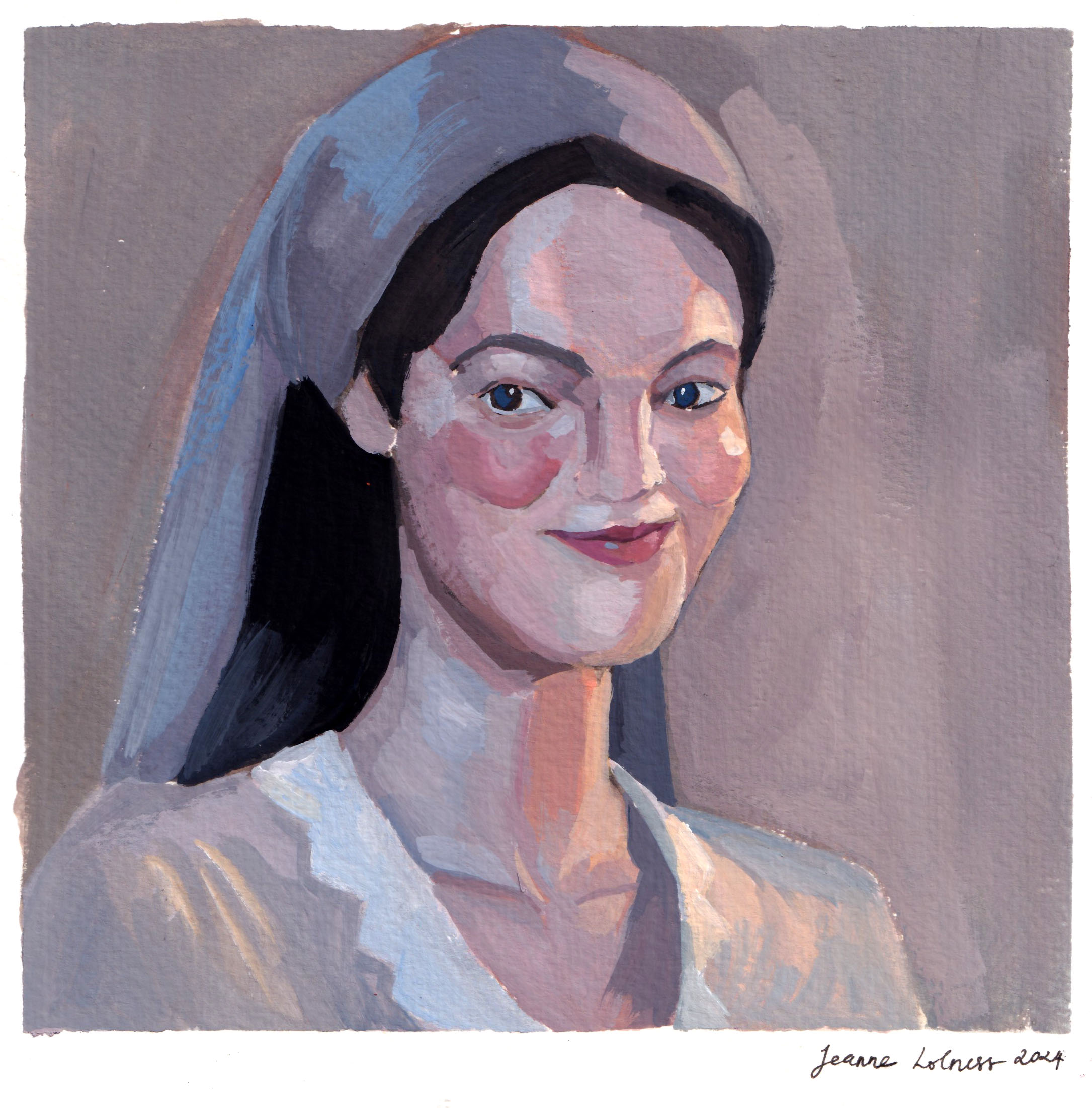
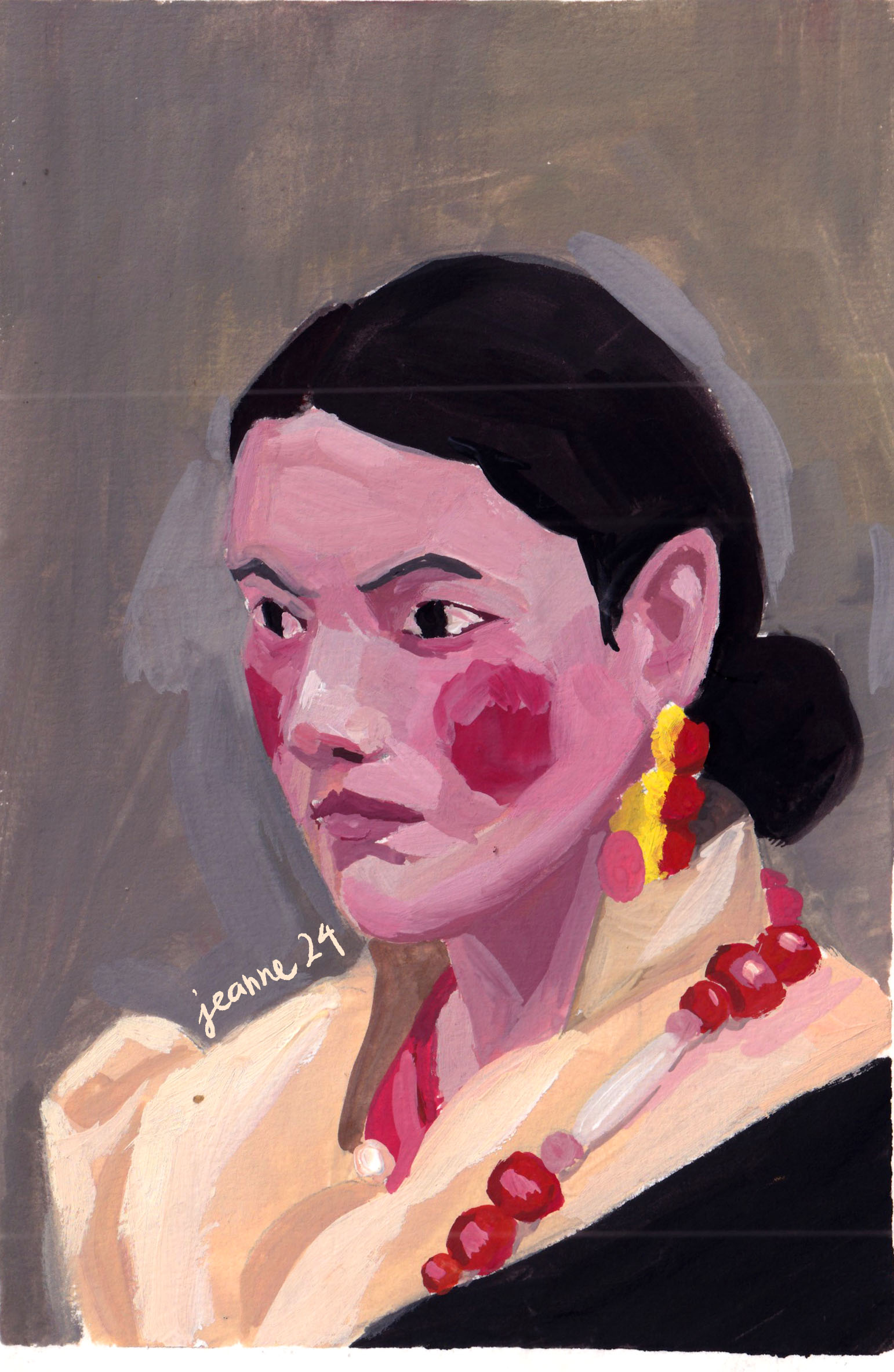
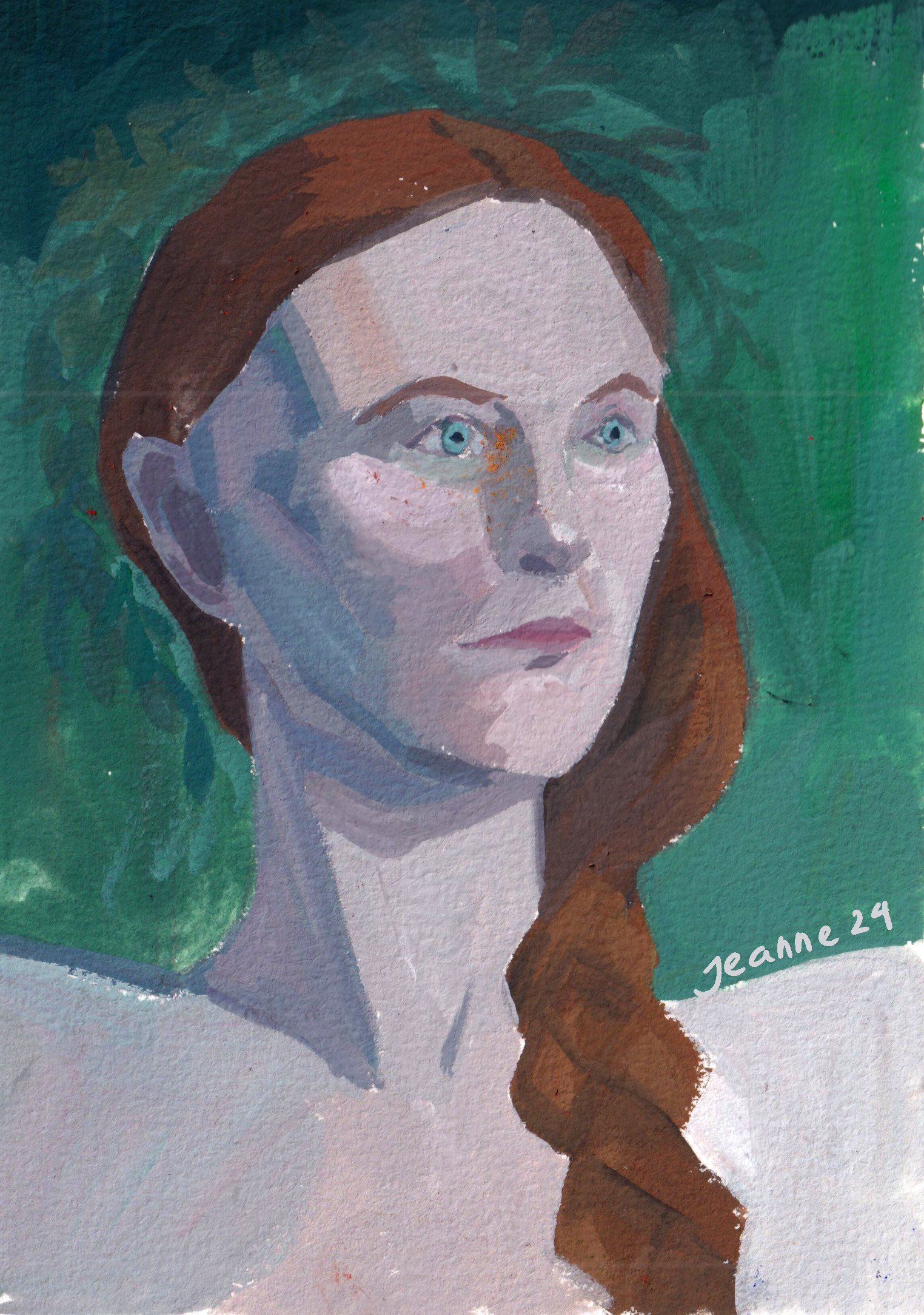
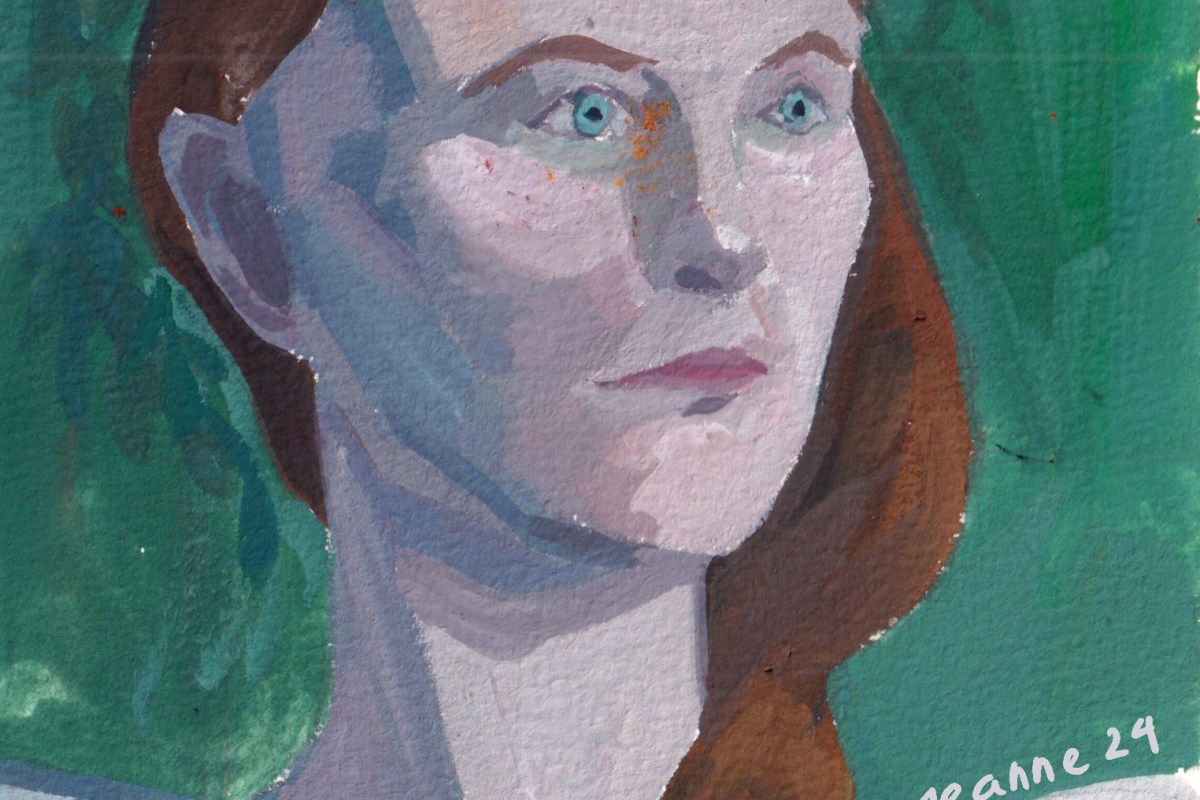
But let the story begin with the first few months. I was into learning about colors (again) and portraits. Portrait paintings were to recall my anatomical knowledge and to boost my color skills. Mixing skin tones is still something I need to work on.

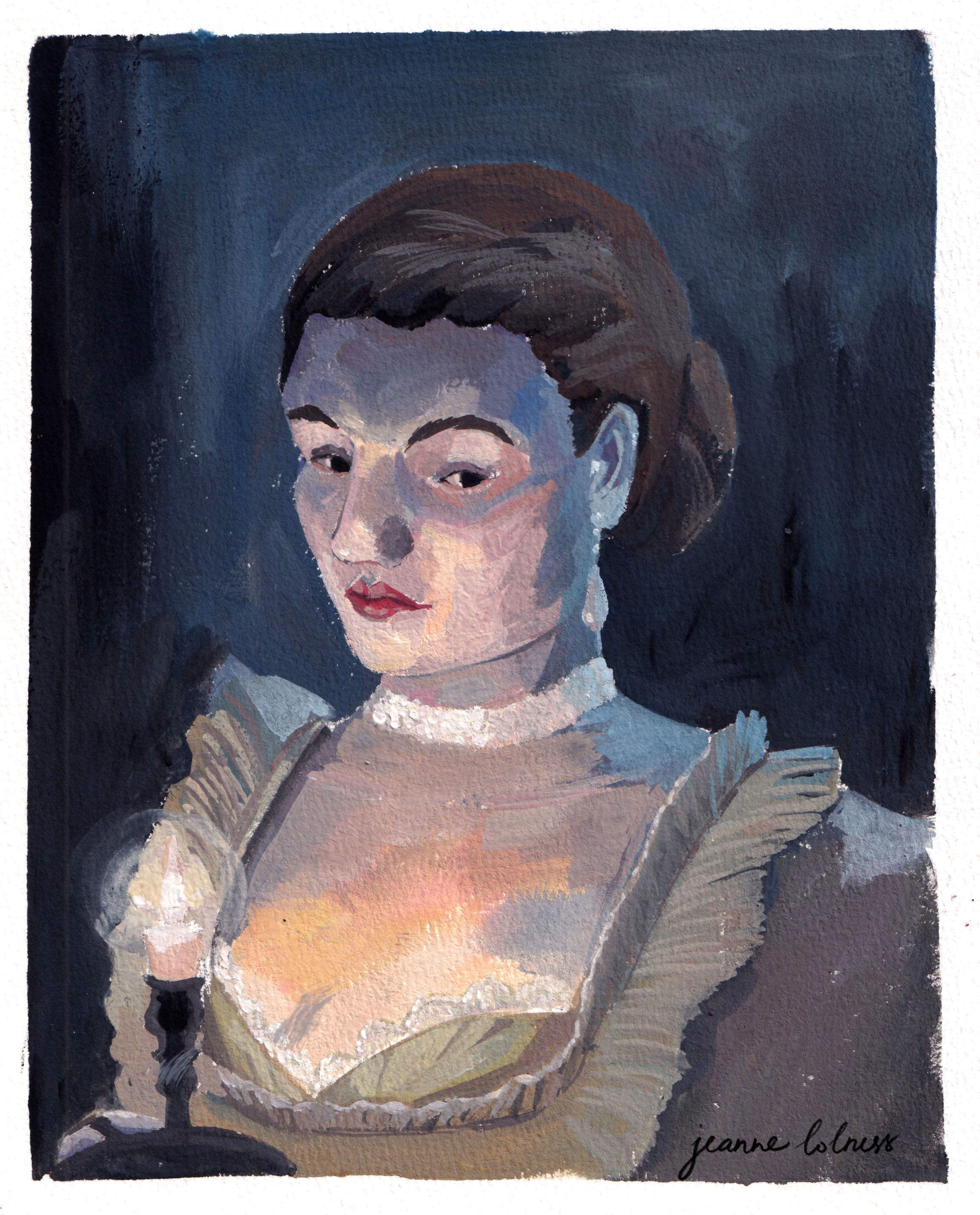
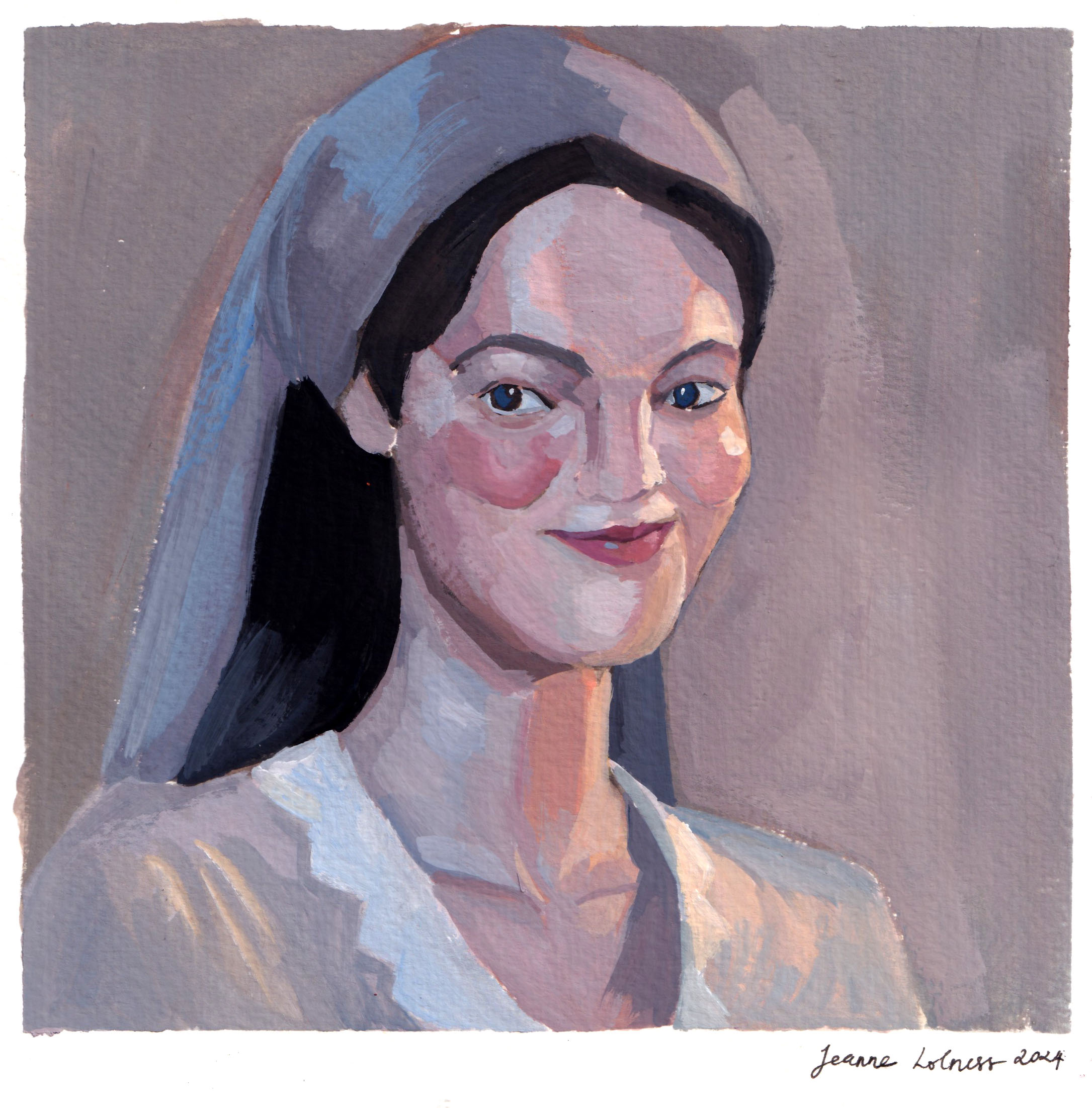
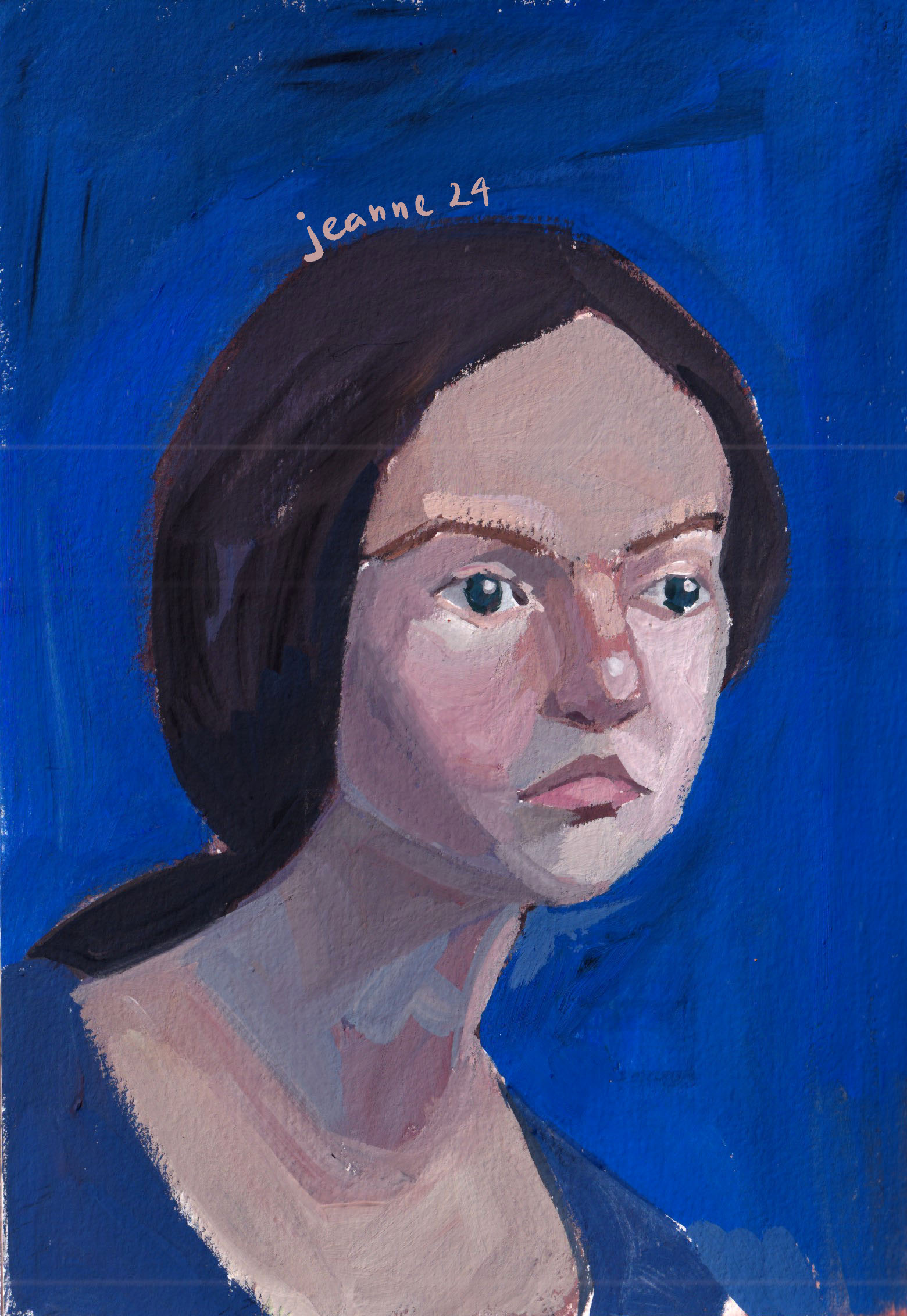
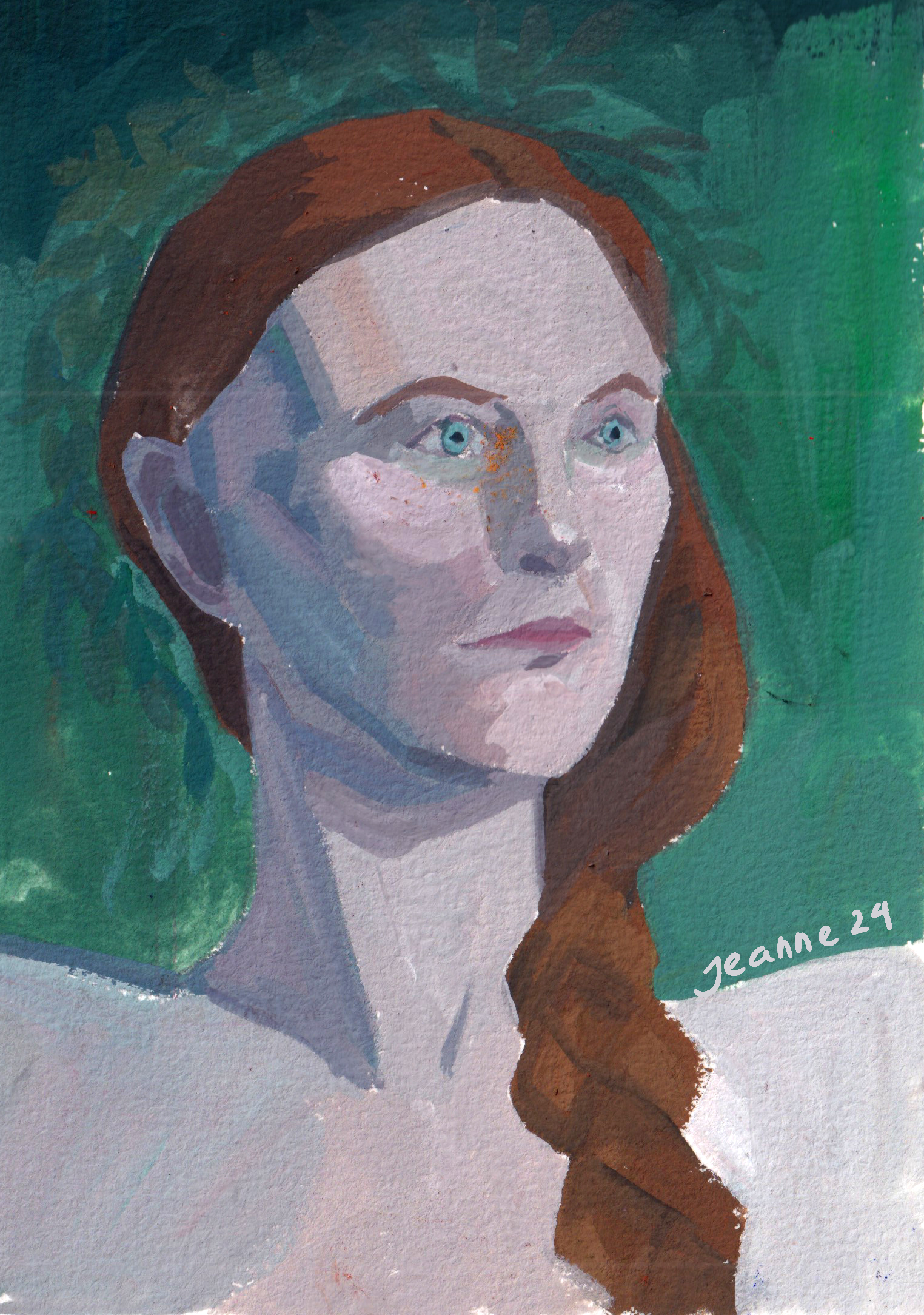
This is my favorite portrait of the whole year.

One big shift in my color usage is towards a brighter palette with bolder color choice. It possibly coincided with my switch to Holbein acrylic gouache, but also my slight change from just painting from dark to light or reverse to painting from the boldest color to neutral tones. It’s not an intentional thing, it’s more about keeping my palette organized so that I can avoid over mixing.

One thing I have been thinking about is how to add “life” into my paintings, or to be more specific, movement. My paintings use to have a nostalgia vibe, because I mostly painted the places I visited, the places that I met someone and talked with someone. The later paintings of 2024 has something else with bolder and brighter colors.

My summer trip to Quang Binh (Phong Nha), Hue, Da Nang (Hoi An) deepened my interest in painting traditional architecture. My only regret is that I should have taken many more reference images.

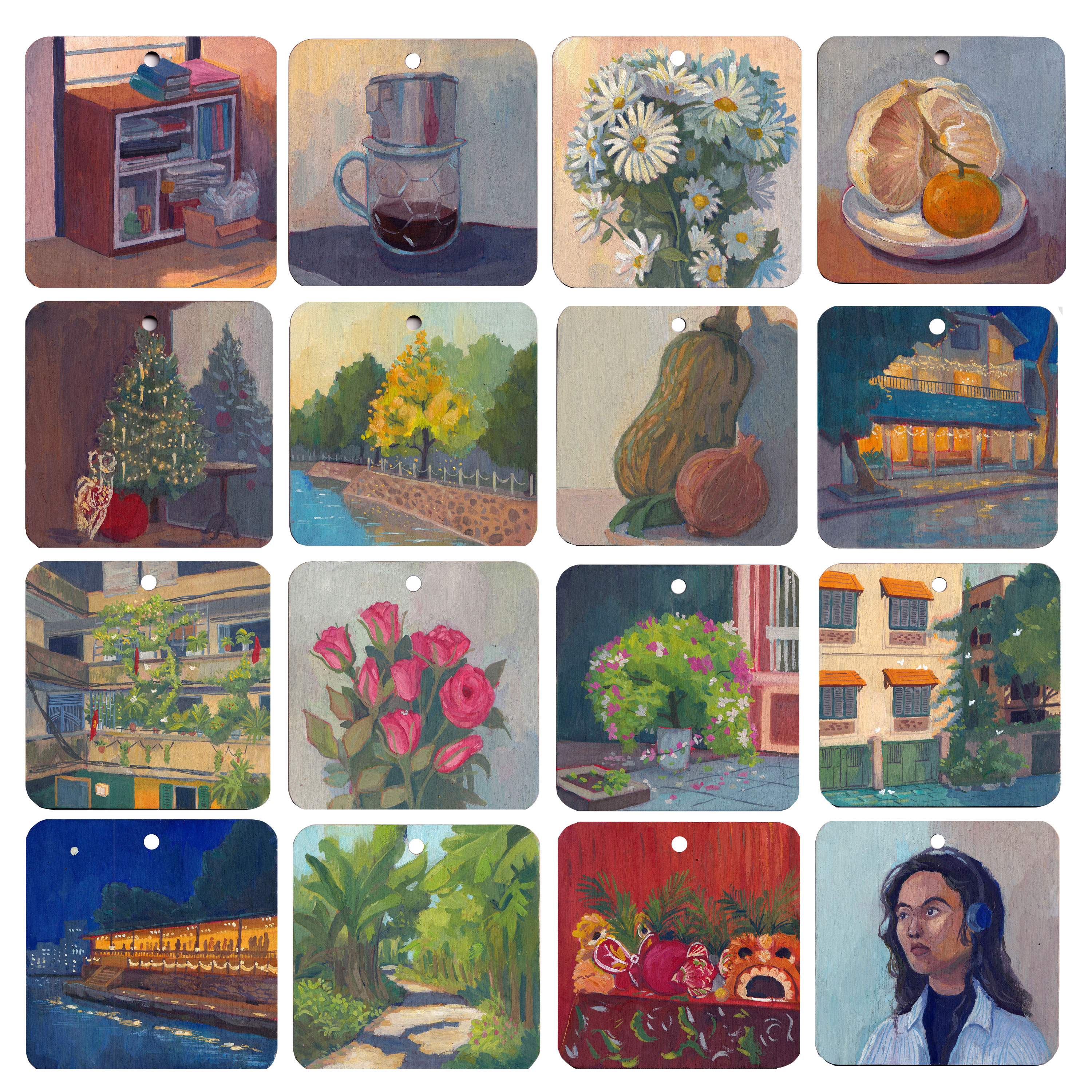
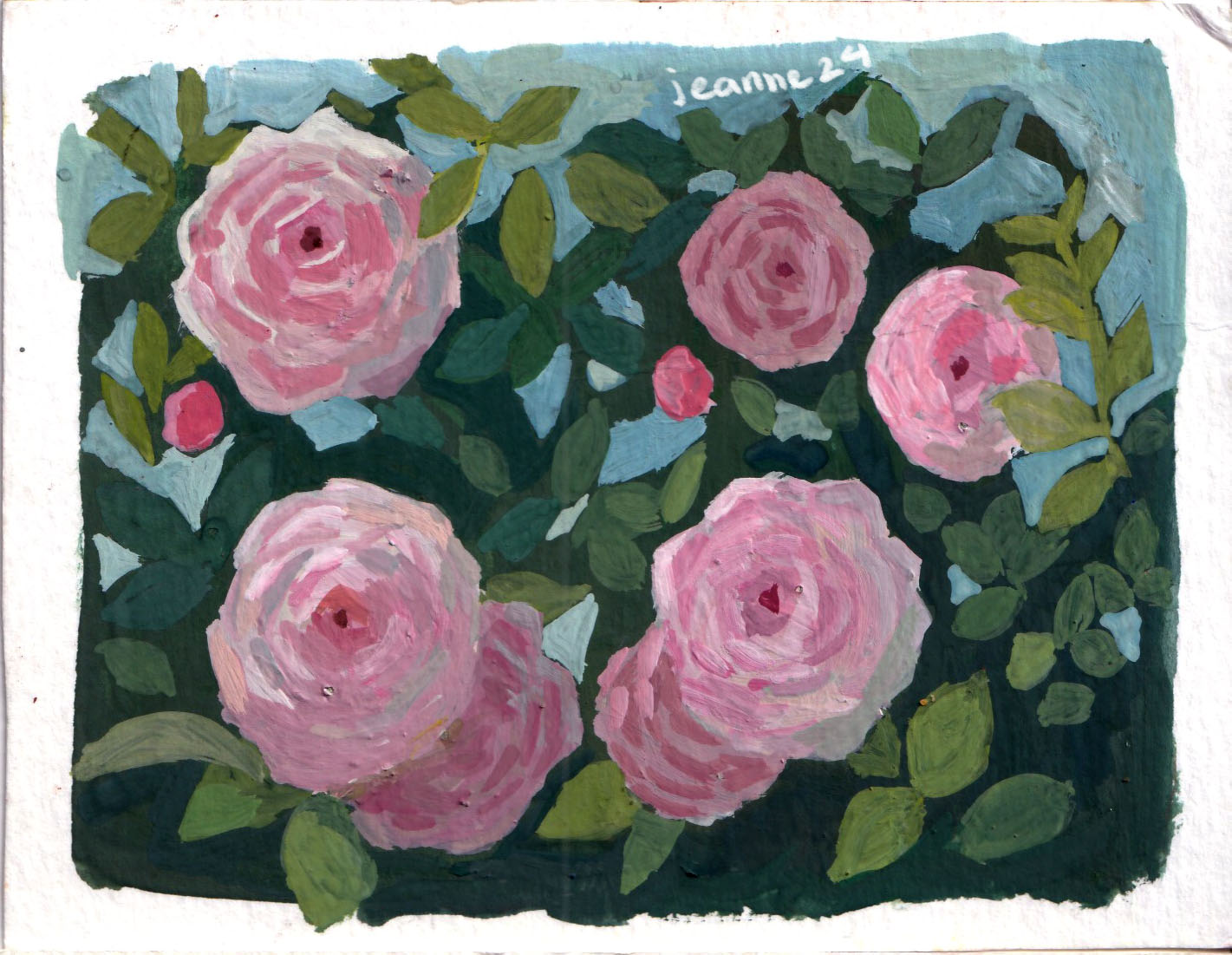
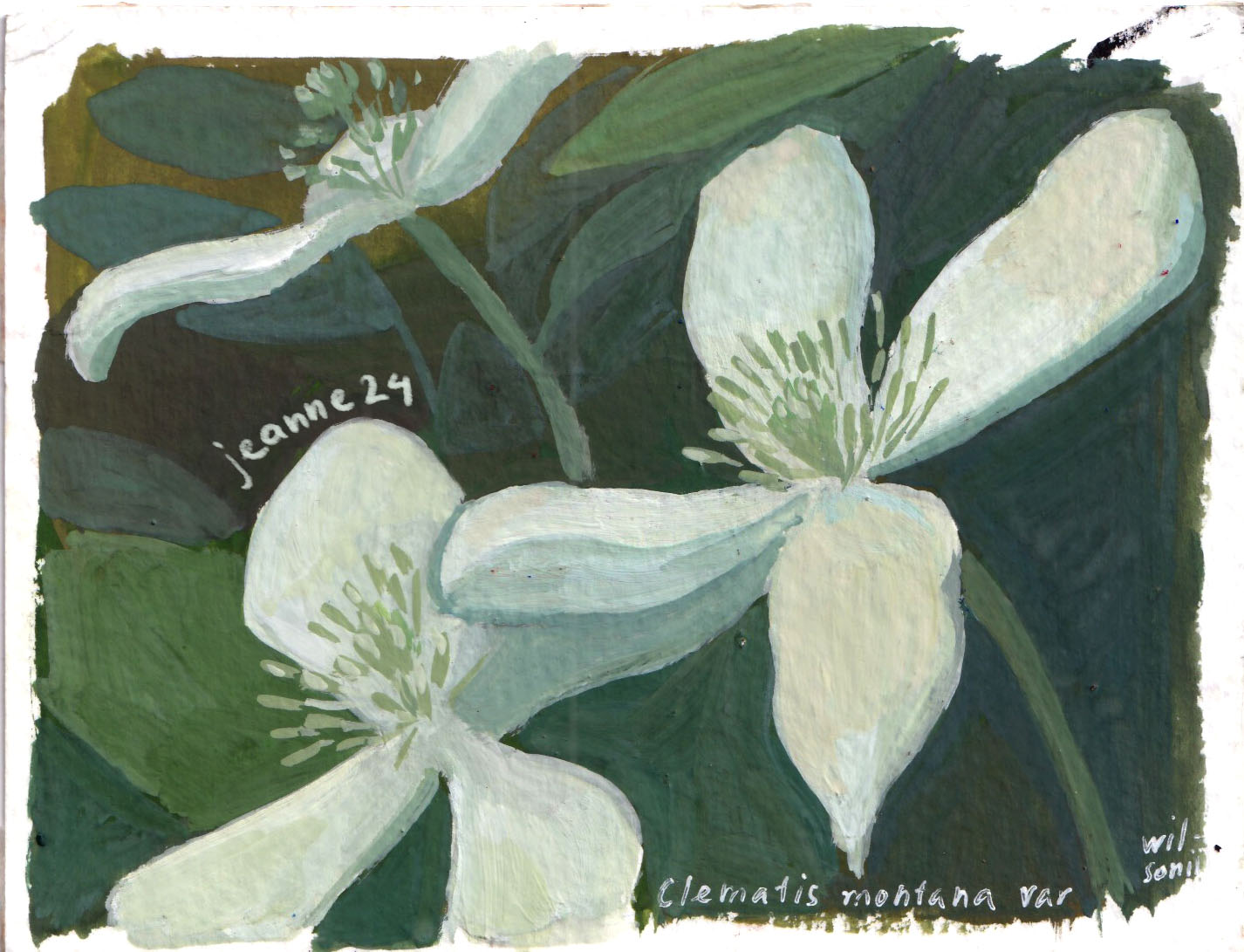
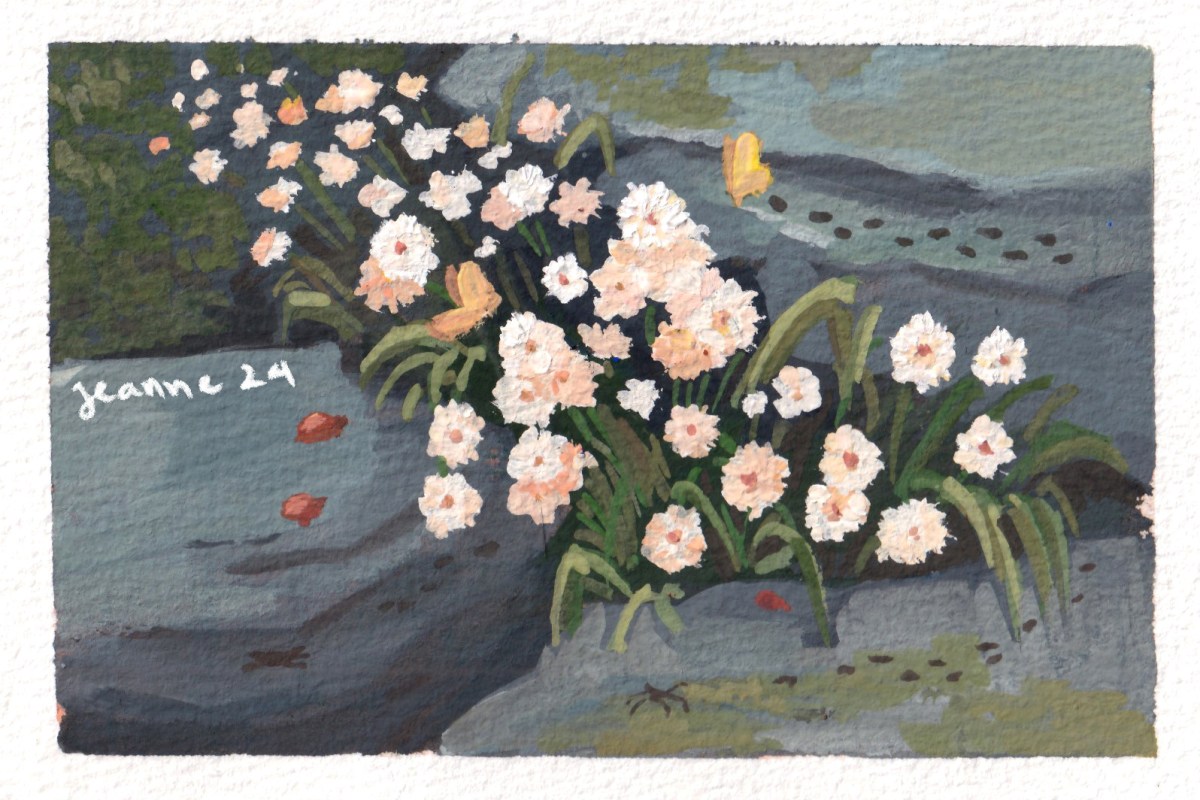
In the last months of 2024, I turned to painting nature, flowers and gardens in particular, as a method to relax. It’s also under the influence of writing about female artists, Rachel Ruysch, Élisabeth Vigée Le Brun, etc who use flowers as a subject and a recurring symbol of femininity. They allows me to work quickly with not-so-bad results, work freely wihout a reference image and can be used as gifts in rushed events.

Looking back, 2024 was a year of shifting perspectives—from focusing solely on technique to questioning how I want to express my ideas. While I haven’t found all the answers, I’ve discovered new directions, from bold color choices to the love for life and nature in my paintings.

I guess that’s it for a year.

Urban sketching in Hanoi with watercolor and gouache

How I Start

It all started when I watched videos by James Gurney. I was amazed by how much fun it looked to explore the world through an artist’s eyes, and how urban sketching could really improve my art skills. James went into detail about his process, from choosing materials to picking subjects and actually painting. His videos inspired me – a homebody by nature – to get outside and work on my observation and on-the-spot painting skills, instead of always sticking to my desk.

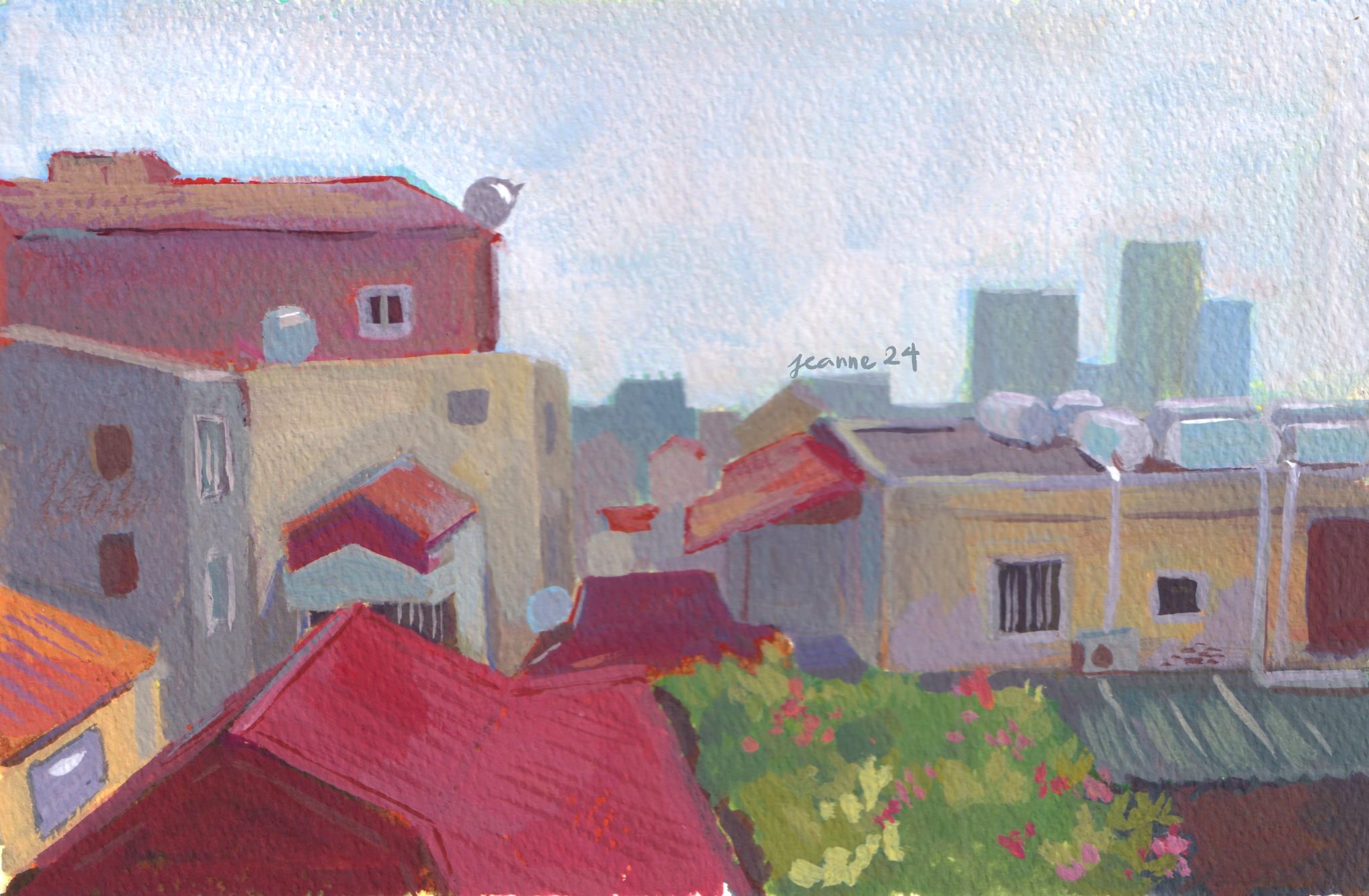
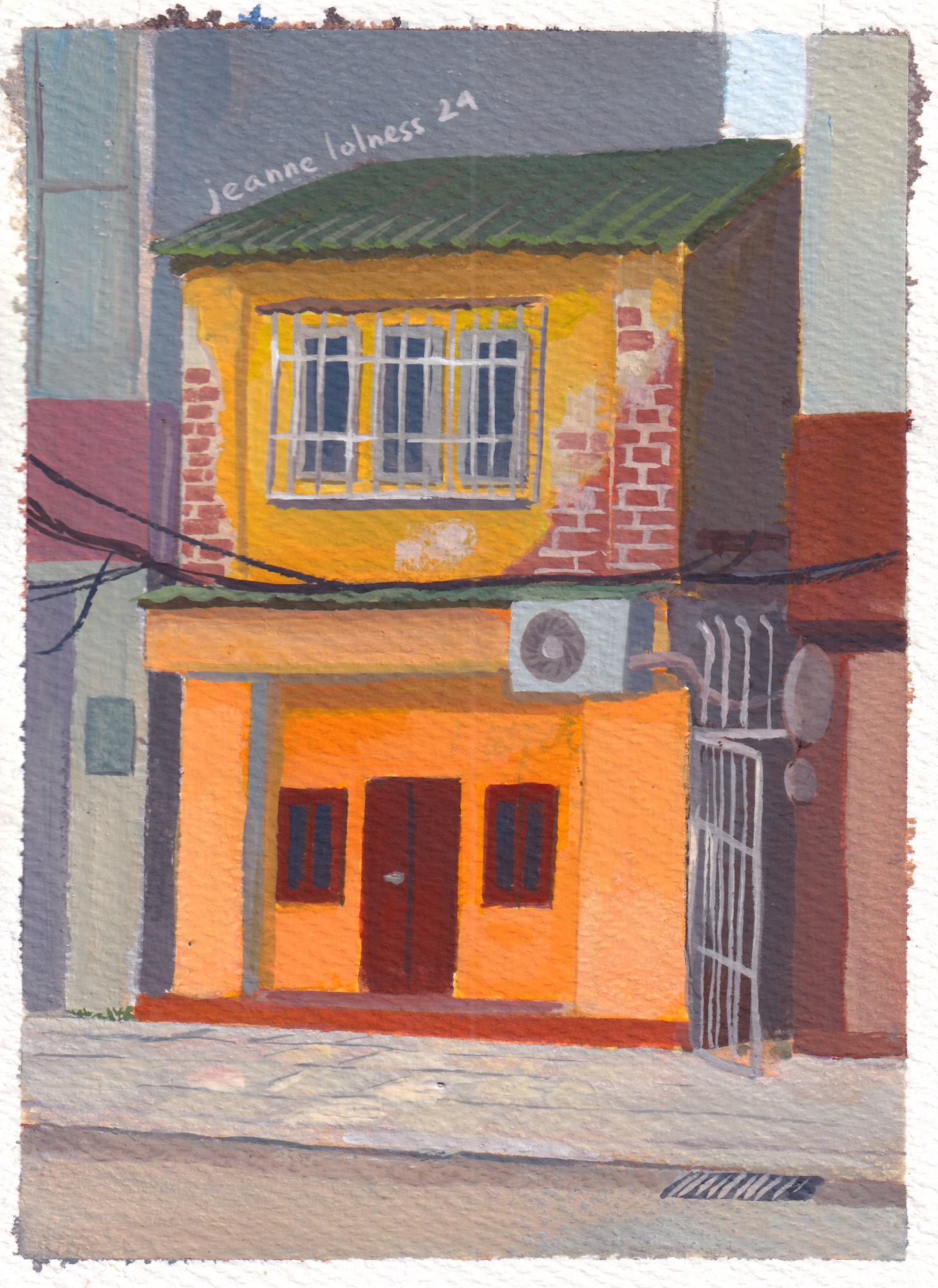
I grew up in Hanoi, where the streets are full of houses from all kinds of different eras. They’re old and diverse, definitely not your typical urban design, but perfect for painting.

I thought I knew all about these houses until I started sketching them. That’s when I began noticing details I’d never paid attention to before. Questions started popping up in my mind: Why does this window look strange? Is it uncomfortable living in these houses? And so on.

My Medium: Watercolor vs Gouache

I started with watercolor because it was the most convenient and readily available option. I could use pans or different sizes of boxes depending on where I was painting. It reminded me of the old-school watercolor techniques I admired.

Gouache, on the other hand, was messier for me at first. I had bought a set of bottles, which weren’t as portable as tubes for outdoor painting. It might sound like a small detail, but the difference in storage was significant—paints in tubes are far more convenient. Since paint tubes were first introduced in the early 19th century, around 1841, by American artist John G. Rand; it has got easier for artists to travel and work en plein air (outdoors), which became especially important during the rise of Impressionism.

Once I switched my gouache to tubes, it became my favorite medium. I enjoy painting opaquely, except when I have a specific idea that requires transparency. Gouache is more forgiving than watercolor, and it’s easier to define both large areas and fine details.

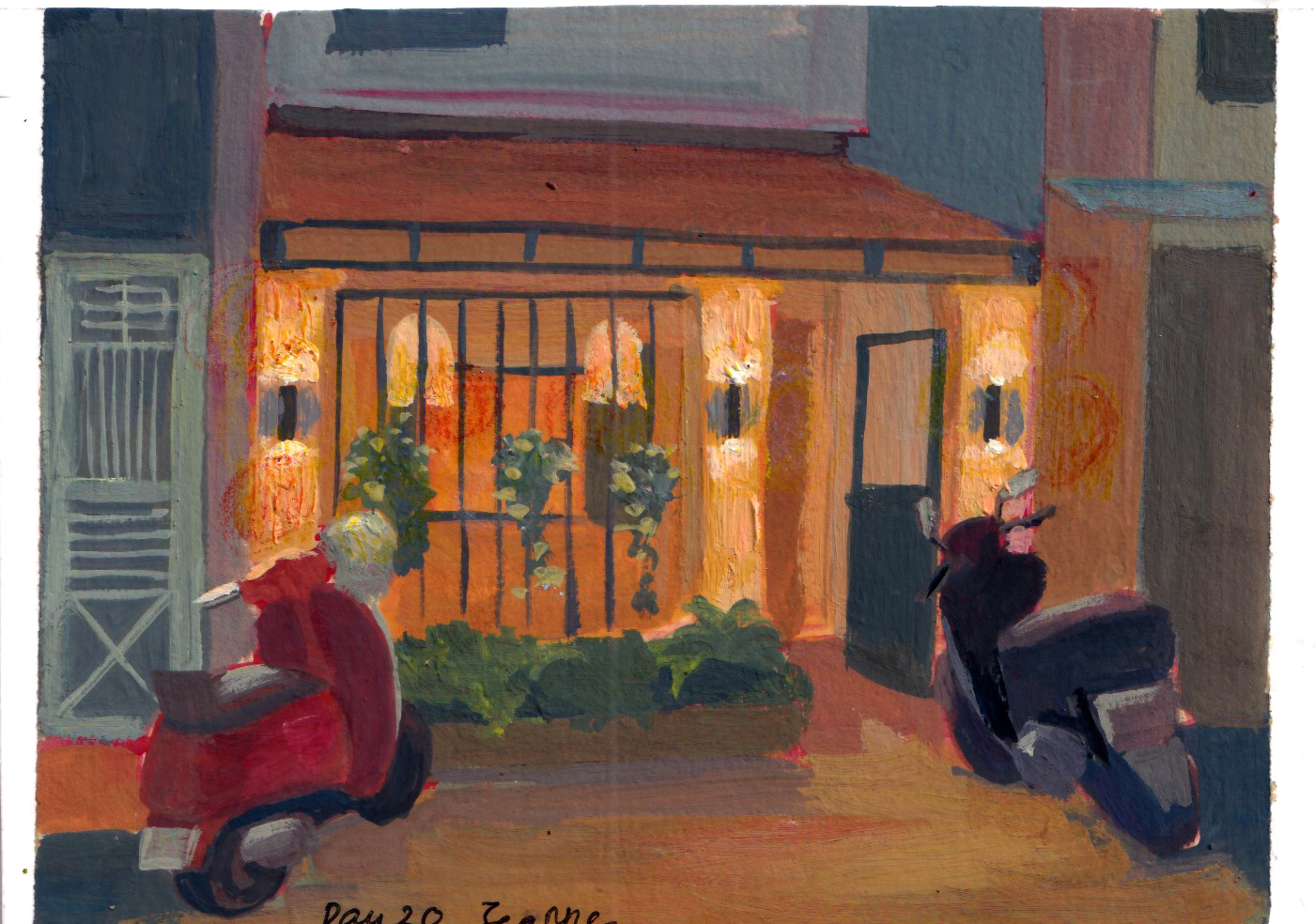
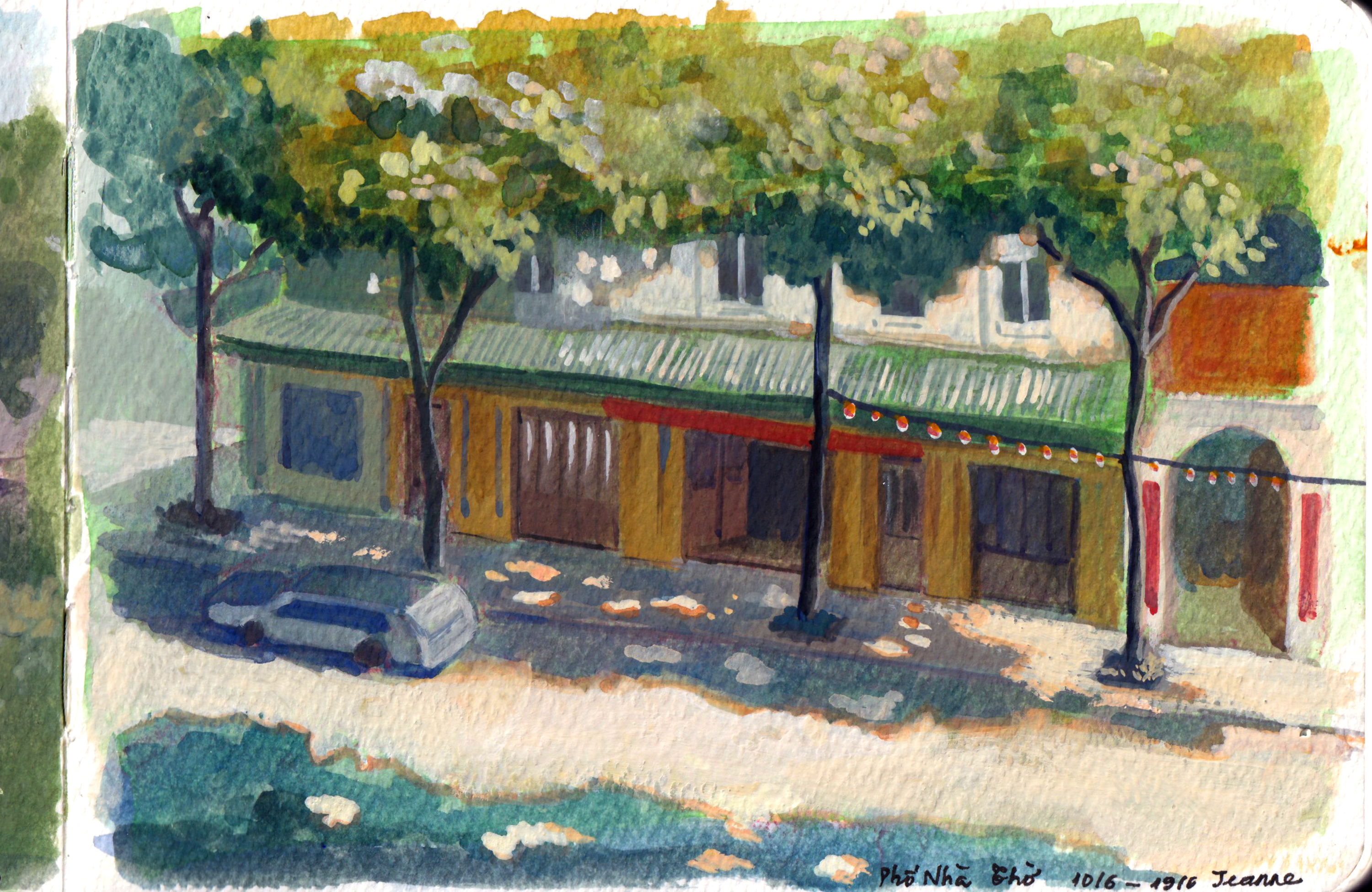
I started by painting my own neighborhood since I was already familiar with it from my daily life. It felt like a chance to rediscover my surroundings in a new way. I’m especially drawn to houses with plants, those that have a nostalgic vibe, or those that clearly show signs of someone’s life lived there.

For watercolor, there’s a wide range of pans available, which allows me to create a personalized palette. With the help of adhesive putty, I can make my own compact watercolor box to carry around. My favorite brush is the waterbrush, as it has a reservoir for water built into the handle, making it super convenient. Travel brushes are also great, though I’ve found that investing in good-quality brushes and a durable case is more worthwhile in the long run.
Hanoi’s streets stand out from other cities due to the rich history shaped by major influences from nations such as China, France, and the US. Tourist areas often showcase French architecture, which can be explored further in my blog about Hanoi, including detailed sketches of house facades.

Before the French Revolution, the architecture in Northern Vietnam was deeply influenced by Chinese culture. Buildings often featured intricate decorations, from the roof to the walls, with wooden, symmetric designs. This style can still be seen today in temples and other historical structures.

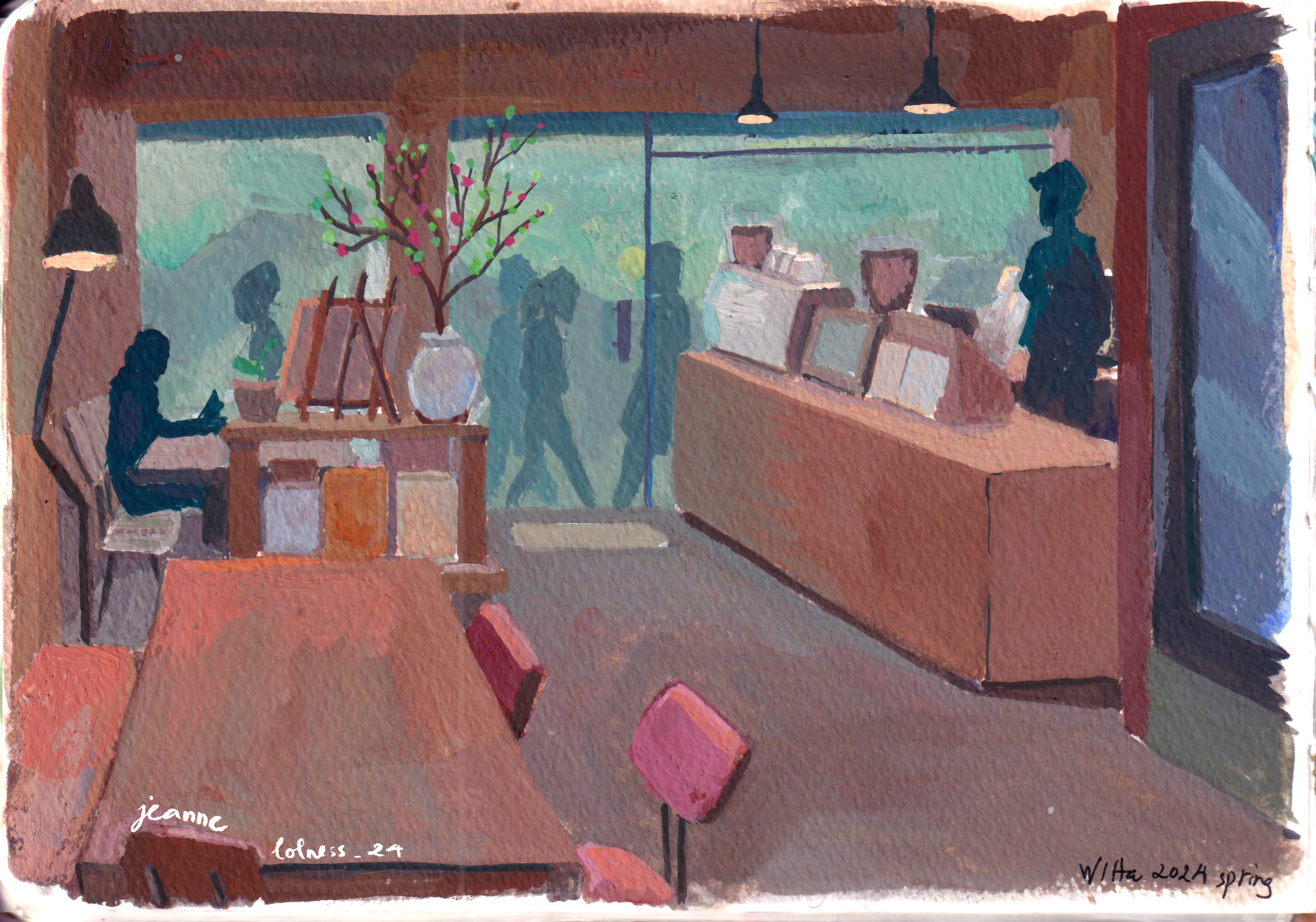
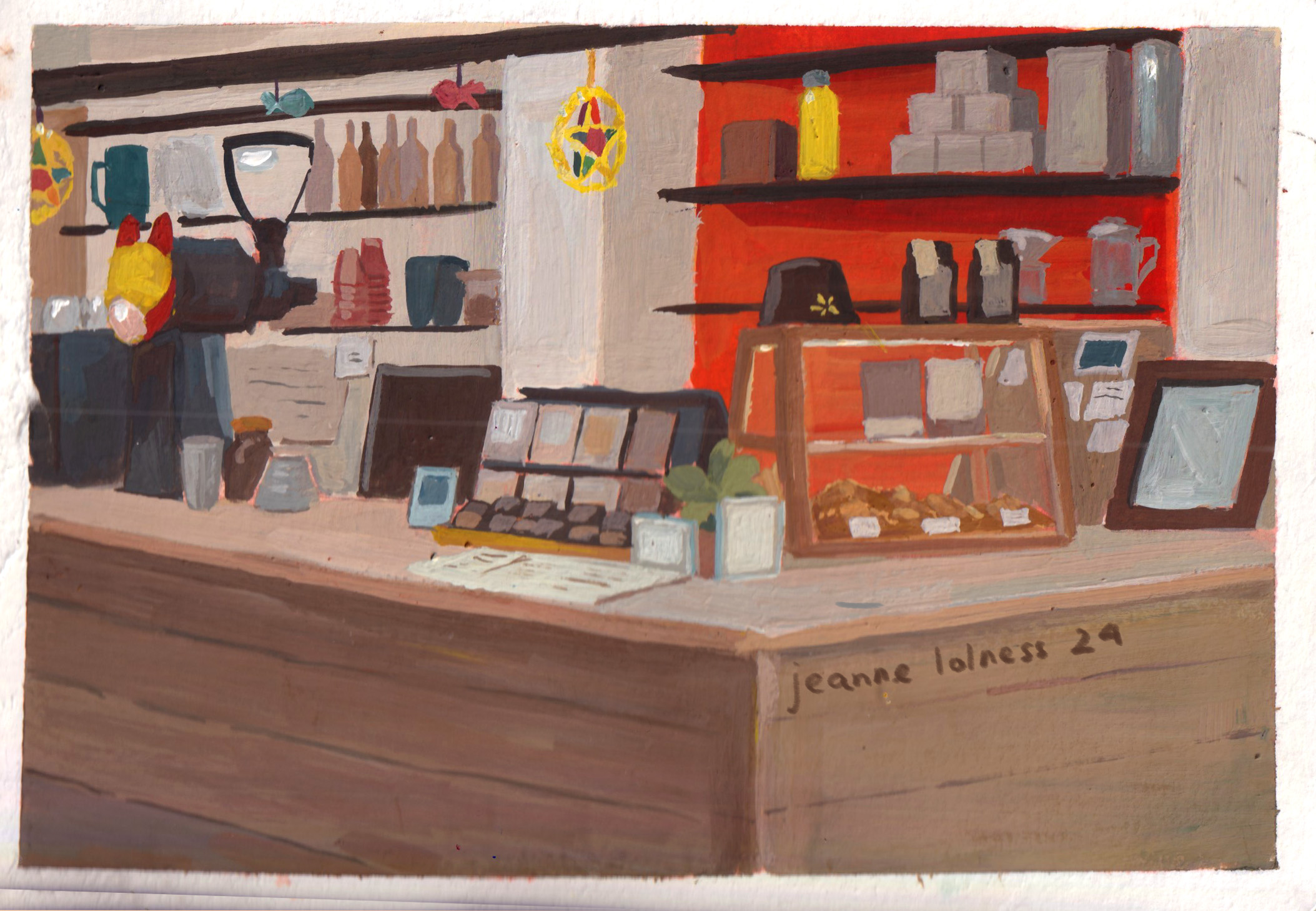
Hanoi’s vibrant coffee culture also provides ample opportunities for me to do studies. Many coffee shops are renovated from traditional architecture, while others embrace modern styles with clean lines and ambient lighting. Coffee shops in Hanoi serve as a melting pot for conversations, offering a perfect setting to observe and study people in real life.

To sum up

In wrapping up my journey of urban sketching in Hanoi, I’ve realized how much this experience has enriched my view of the city. Sketching outdoors has helped me capture the lively streets, stunning architecture, and everyday moments that often go unnoticed.
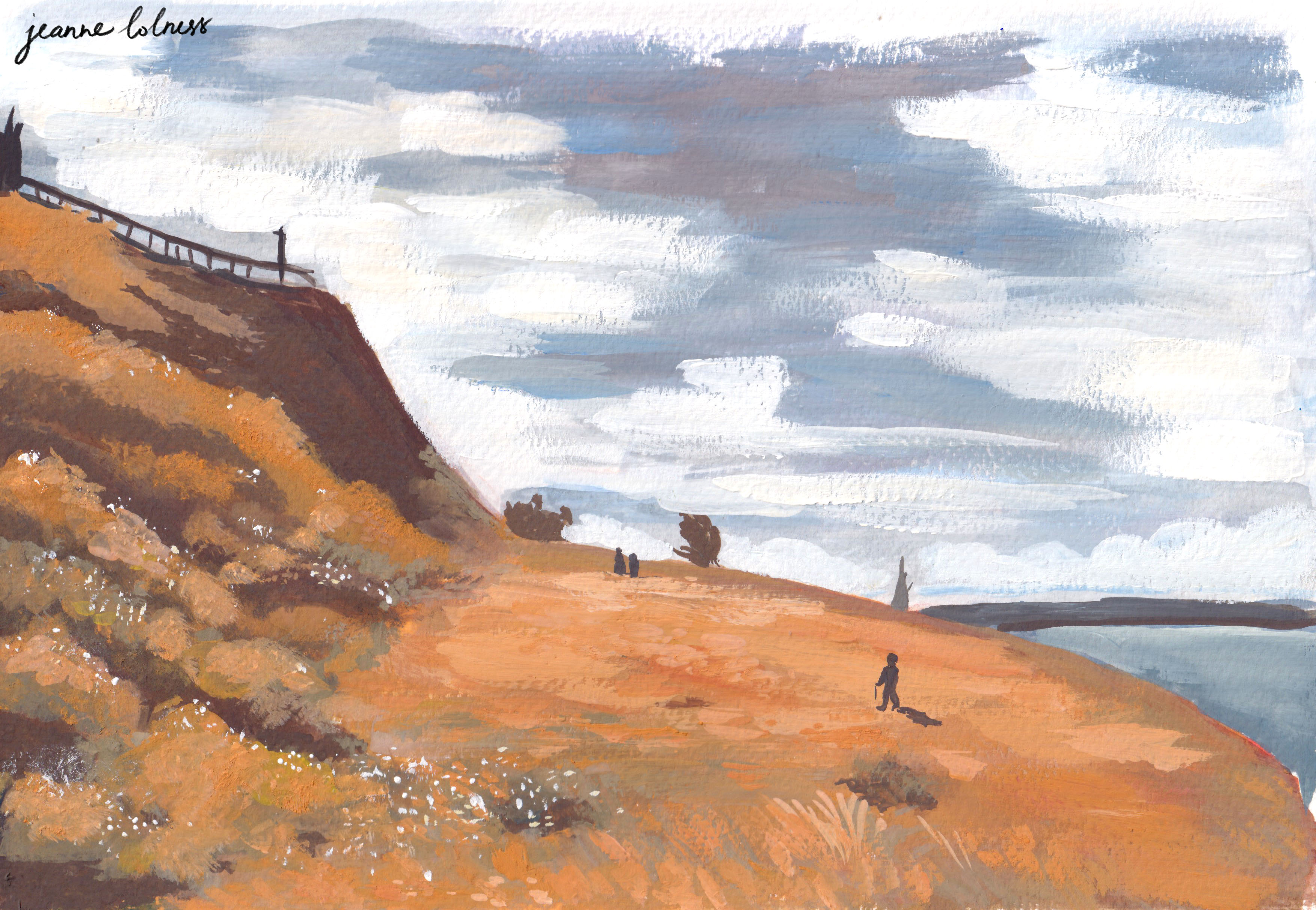
I encourage others to grab a sketchbook and explore their own surroundings. There are so many stories and details in our daily lives waiting to be captured. Each sketch not only reflects a scene but also our personal growth as artists. So, let’s keep sketching, observing, and enjoying the world around us!
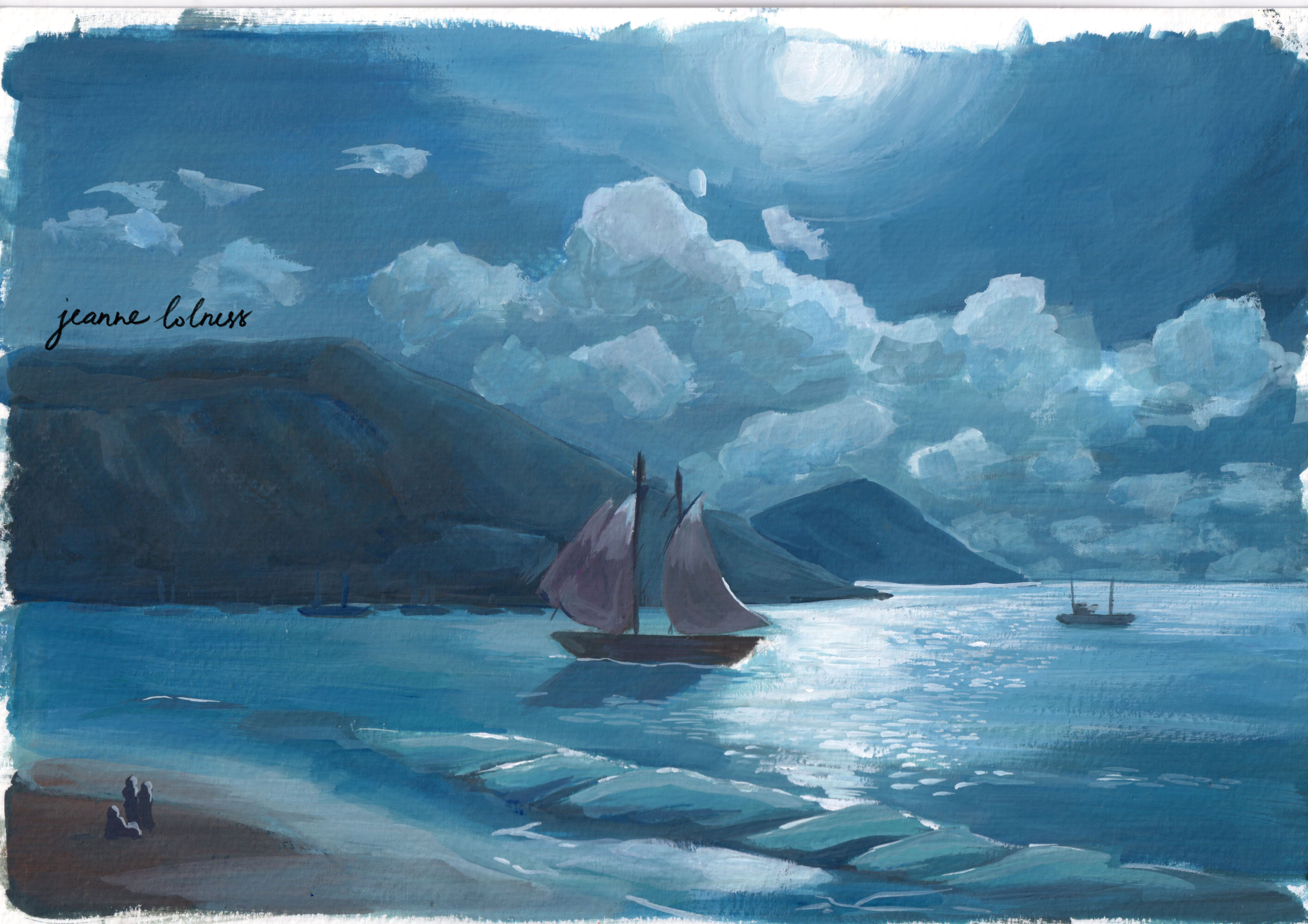
Sketching Vietnamese culture; watercolor strokes and shades

I use daily life as my resource for sketching, naturally, Vietnamese culture is a recurring topic. Keep scrolling to be excited by my culture!

Áo Dài” (loosly translated to English: Long Dress) is the Vietnamese traditional attire now, in fact, it’s the result of an evolving history of costumes. The version of the Áo Dài commonly seen on Vietnamese streets today is a modern adaptation from the 20th century. Vietnamese traditional costumes are an extensive and fascinating topic, one that I’d love to explore in greater depth later.

Male versions: Left: A medieval soldier; Right: A groom
Female versions: Left: áo ngũ thân tay chẽn (a predecessor to Ao Dai);
Right: Ao Dai (popular for daily wear in 20th century)

These little sketches were painted after I attended an event celebrating the history of Áo Dài in Hanoi, in which multiple versions were showcased.


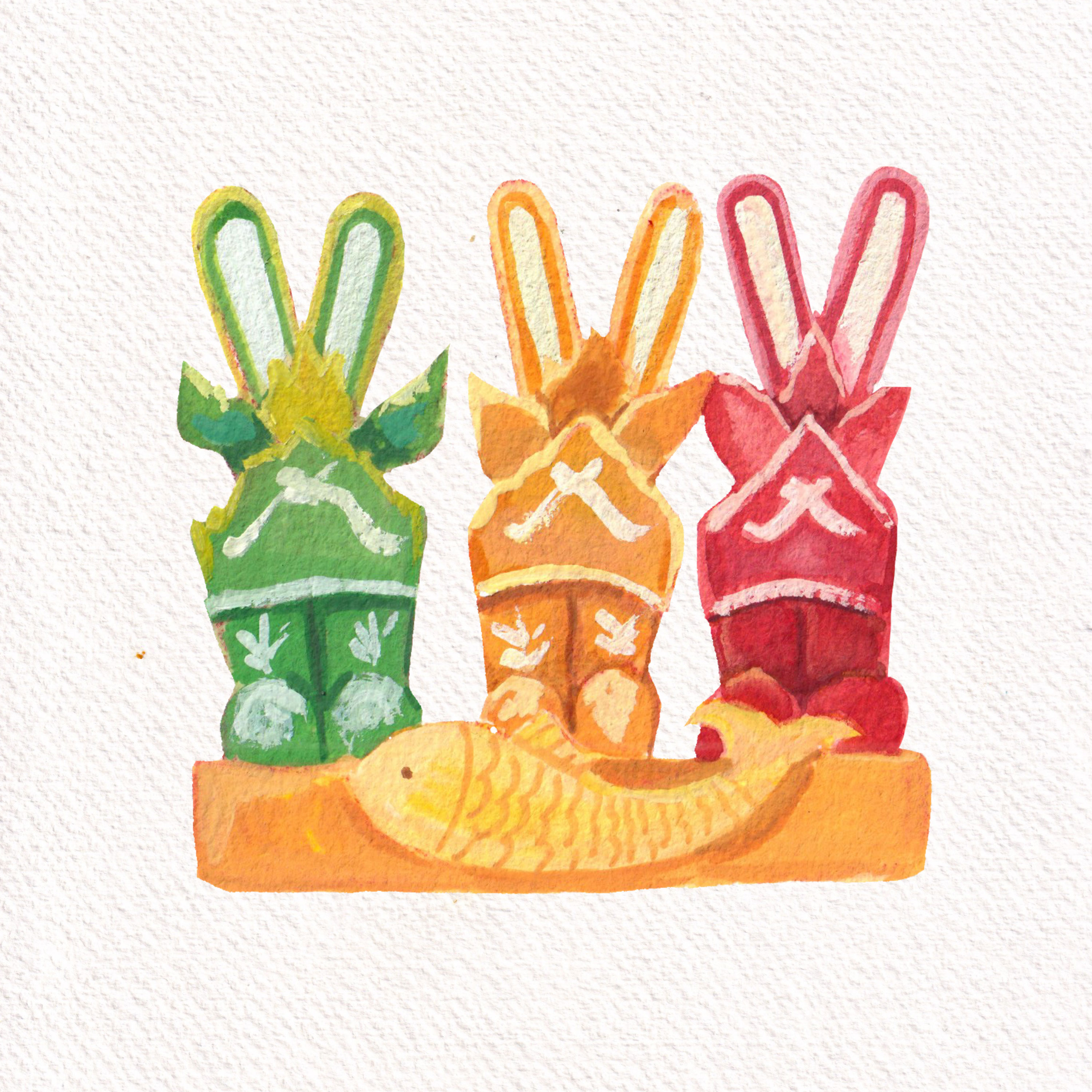
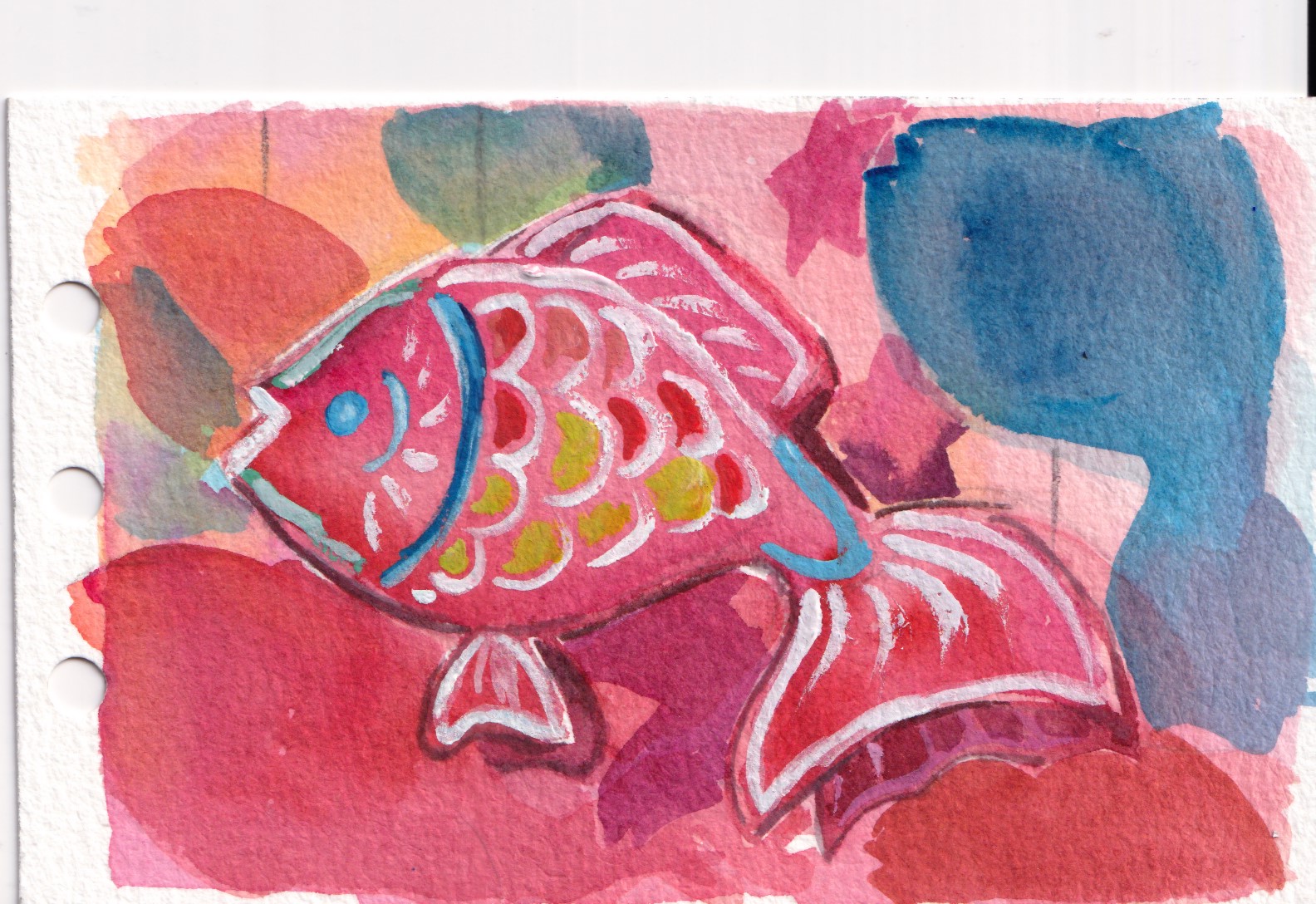
Tết holiday (Lunar New Year) is the time to watch bustling streets, enjoy traditional cuisine and appreciate the beginning of a new year. Not every Asian country celebrate Lunar New Year the same way and equally important. Simply explained, Tết holiday for Vietnamese is on the same level of importance as Christmas holiday for Westerners, Chuseok for Korean, Songkran for Thais, Diwali for Indians or Ramadan for Muslims.

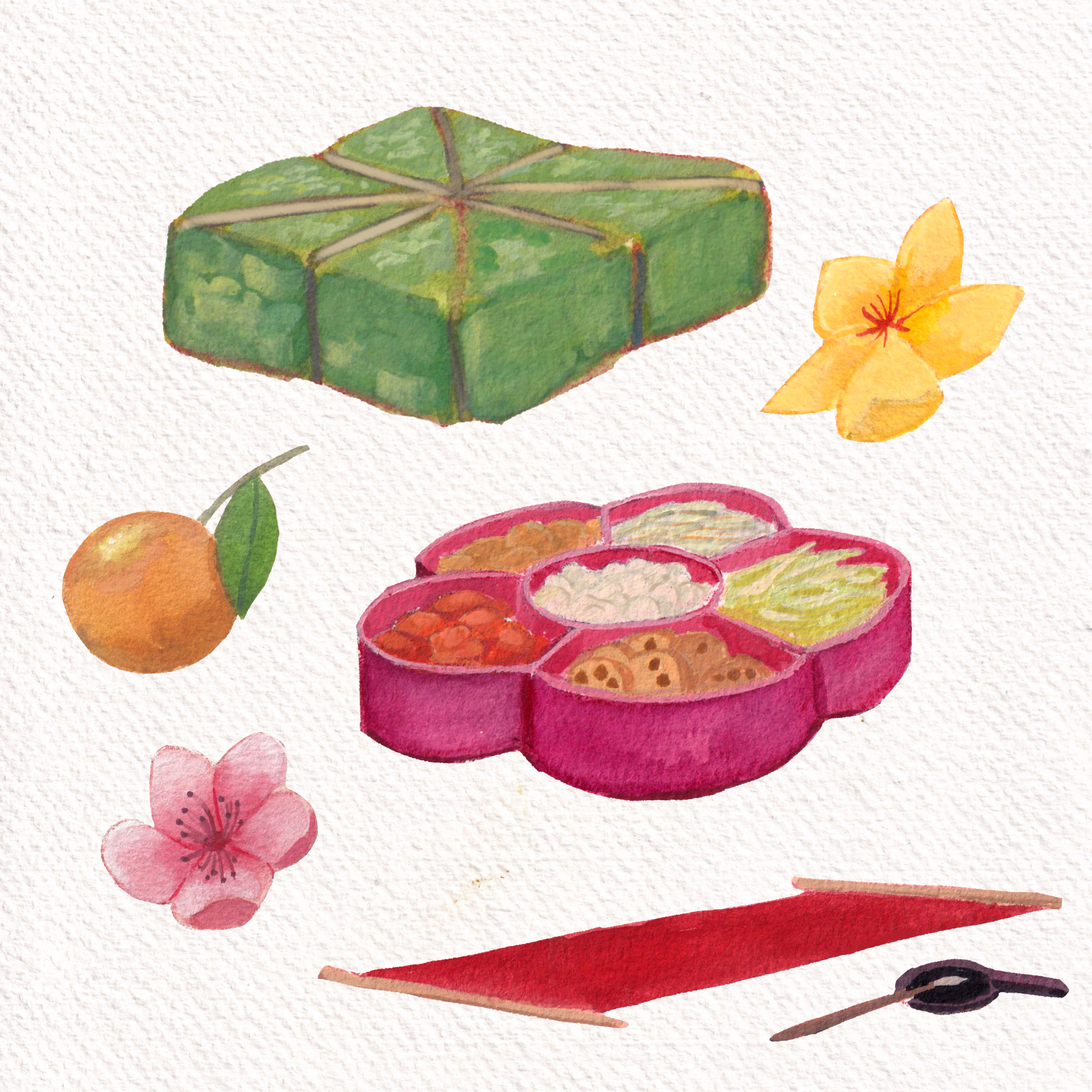
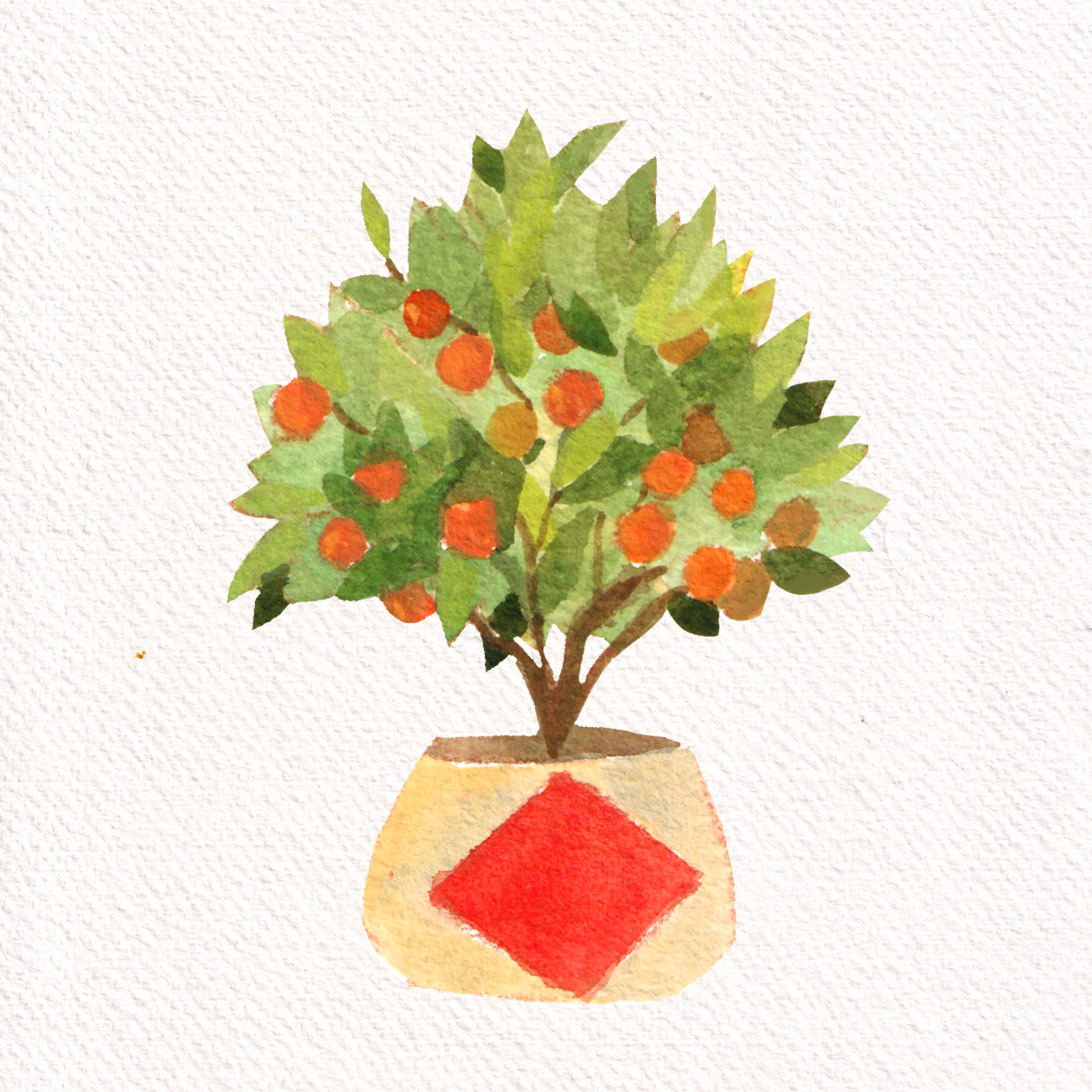
Bánh Chưng (sticky rice, pork, mung beans wrapped in Dong leaves) in green; Mứt (Candied Fruits) organized in traditional boxes; traditional calligraphy; Hoa Đào – Hoa Mai – Quất (3 types of essential plants for Tết)

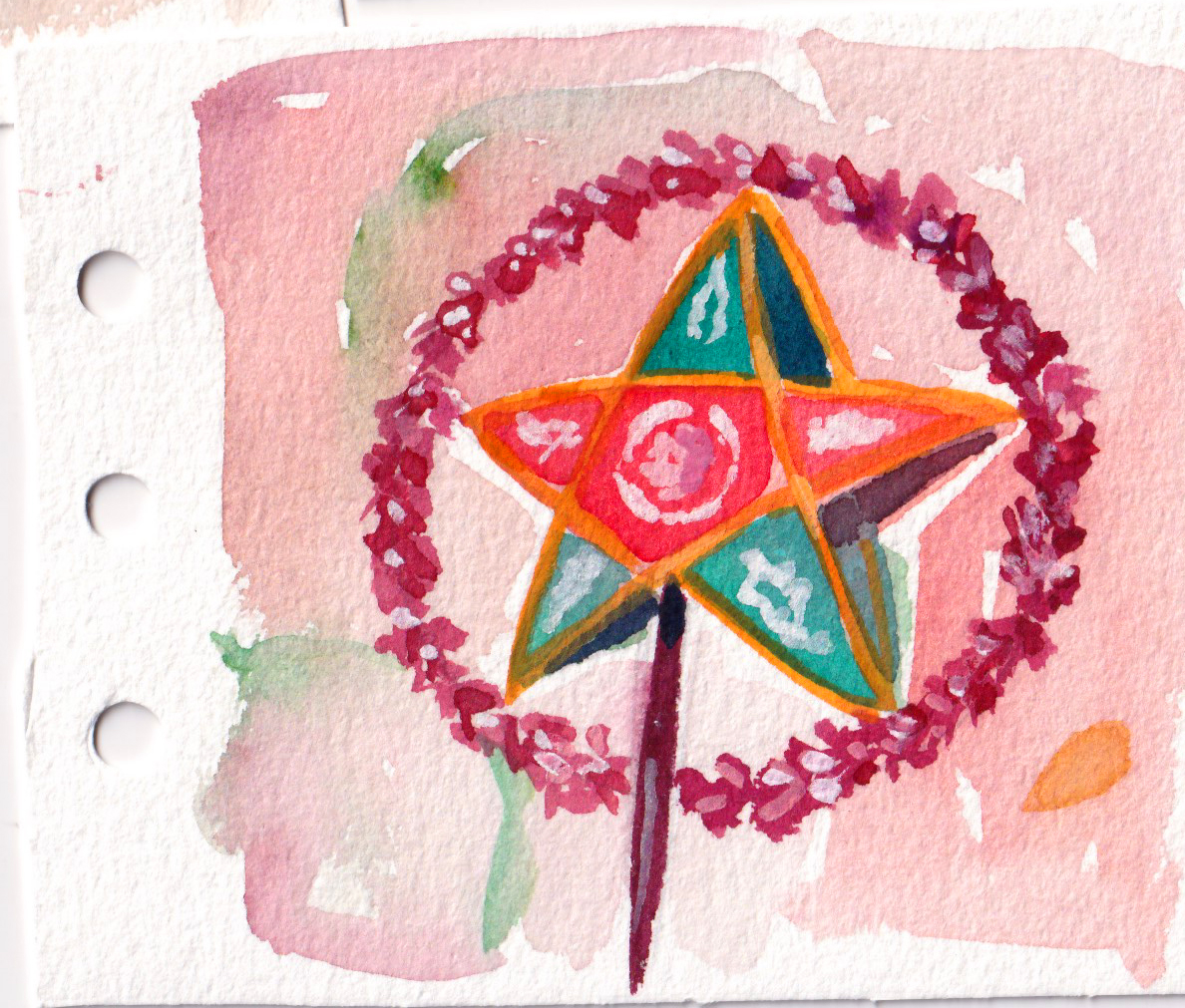
Mid-Fall festival or Moon Festival (Tết Trung Thu/ Tết Trông Trăng) is another major holiday for Vietnamese. It takes place on the 15th day of the 8th lunar month, typically around September or October. Children are especially excited during this festival, as they carry colorful lanterns, traditional toys and participate in fun parades. Mooncakes, filled with lotus seed paste or red bean, are shared among family members and friends as a symbol of unity and prosperity.

As I think about the colorful and lively culture of Vietnam, I’m reminded of how our traditions come to life through art, festivals, and our clothing. The Áo Dài, with its deep history, isn’t just a beautiful outfit—it’s a link to our past. Festivals like Tết and the Mid-Fall Festival bring us together, sharing happiness, food, and a sense of community. Every sketch and note I make is a way to celebrate these special moments.

The green color in my paintings

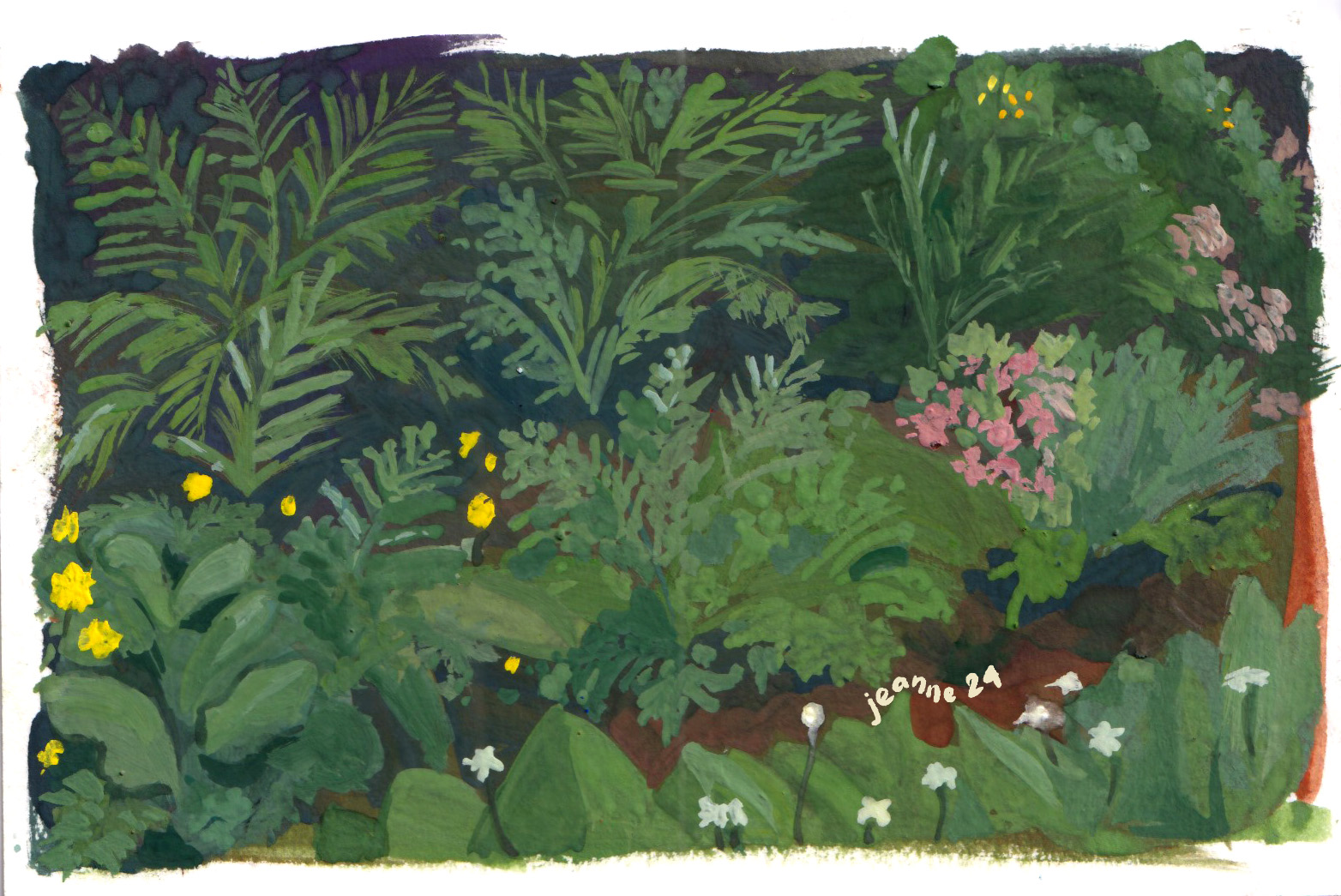
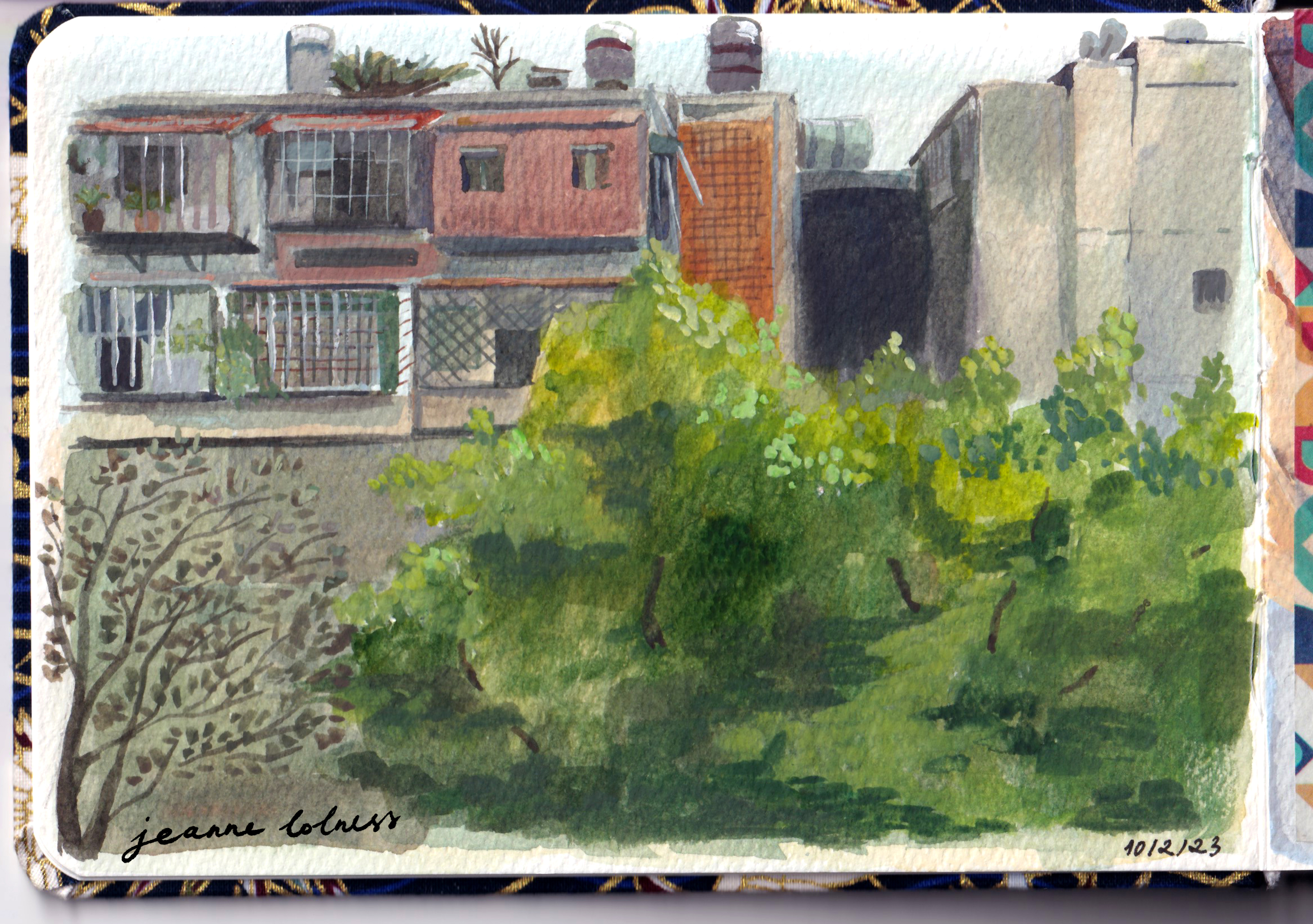
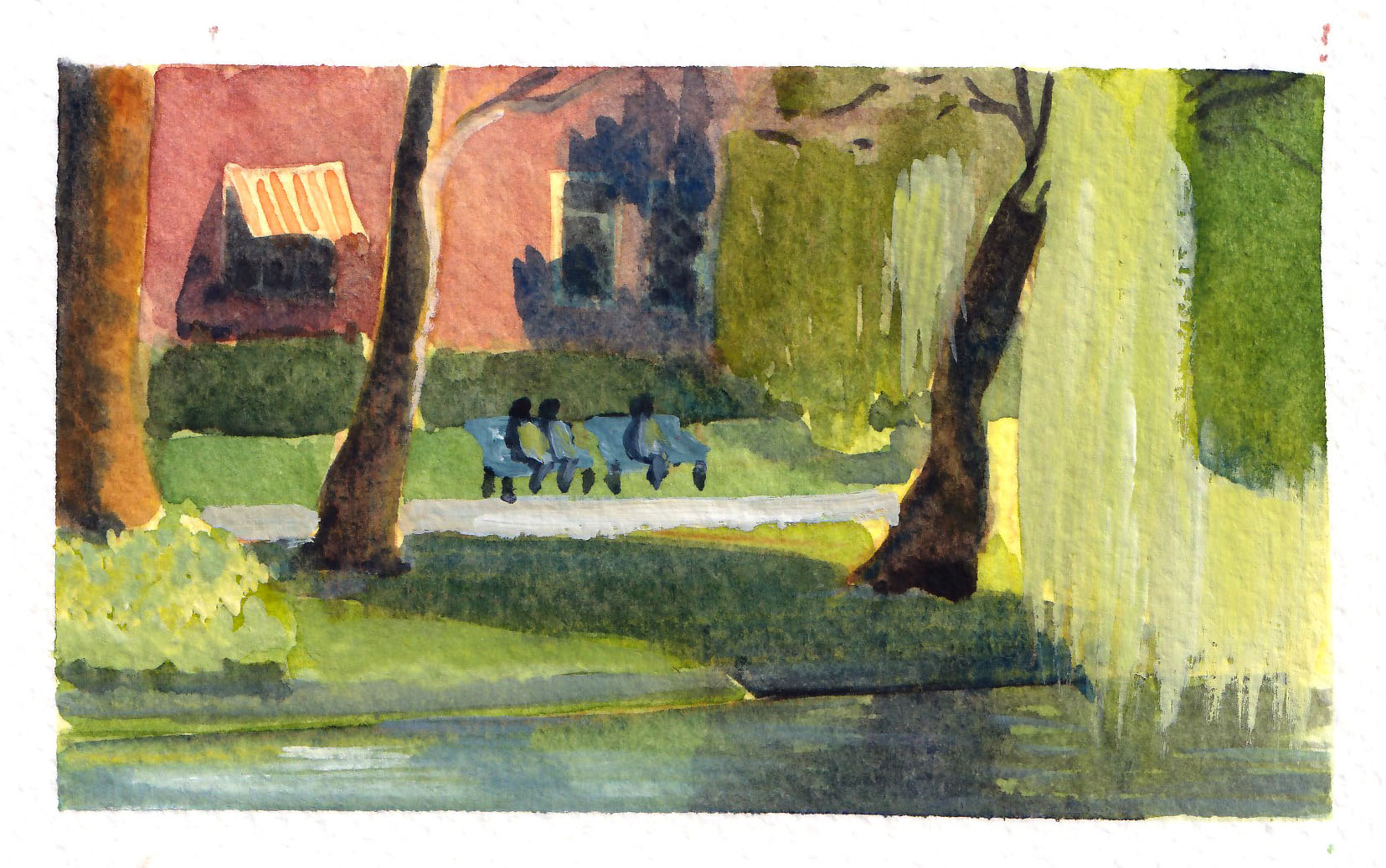
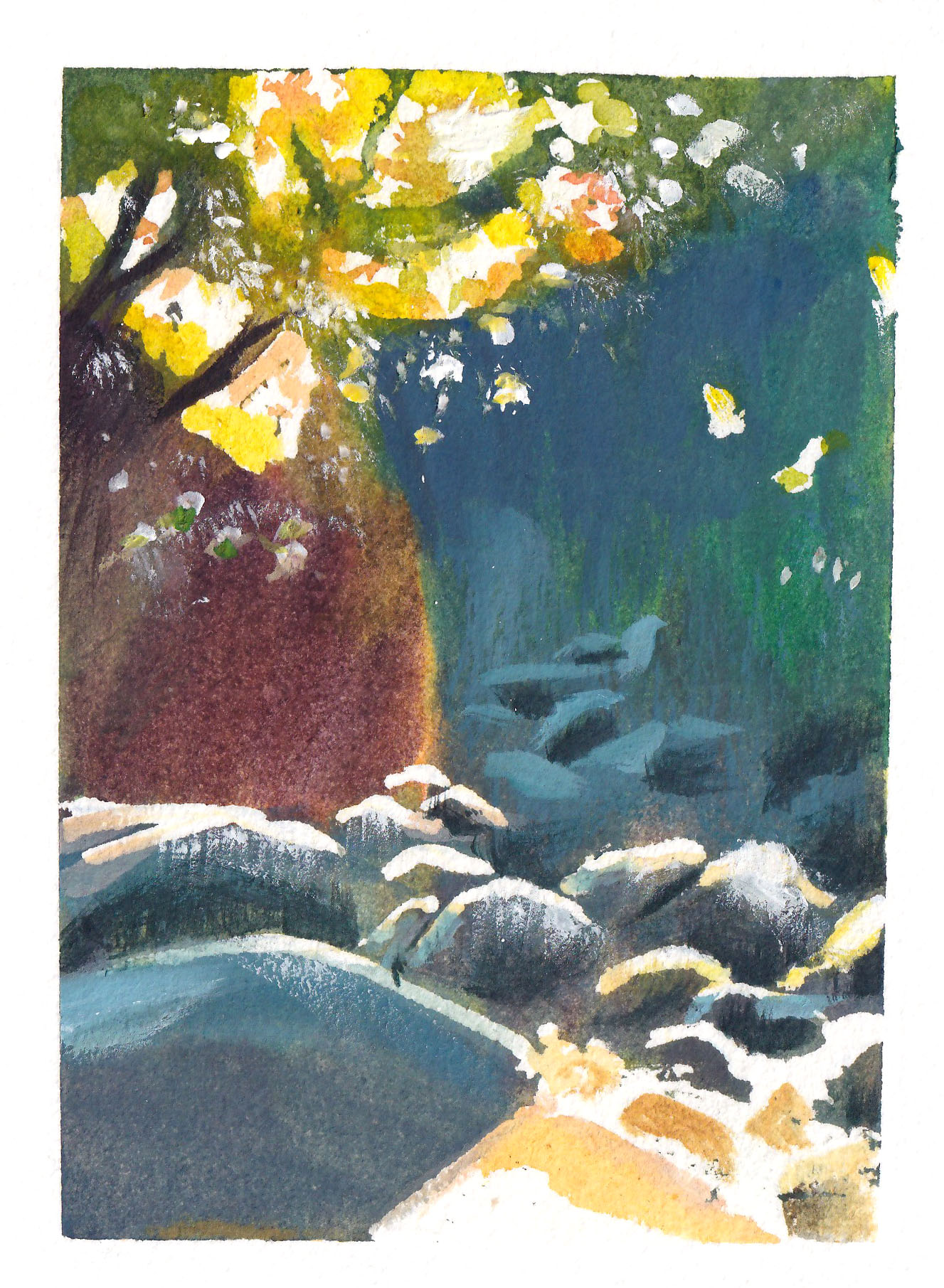
Welcome to my little collection of green colors. Green is hard to get it ‘right’ because the fresh paint from the tube always feel artificial. Green is often used to paint nature, especially trees. Trees, bushes, plants are not solid objects, they don’t have distinguished planes that we know for sure light is hitting on. They are made of thousands of leaves, each reflecting light in a different direction.

If nature is just a factor in the painting, I can rely on the texture of the paper to do the trick and just put a few layers for wide range of green tones.

Sometimes I try painting green in weird combinations. In this painting below, I try a combination of burnt sienna, green and purple – it turned out not good, but it was a fun experiment.

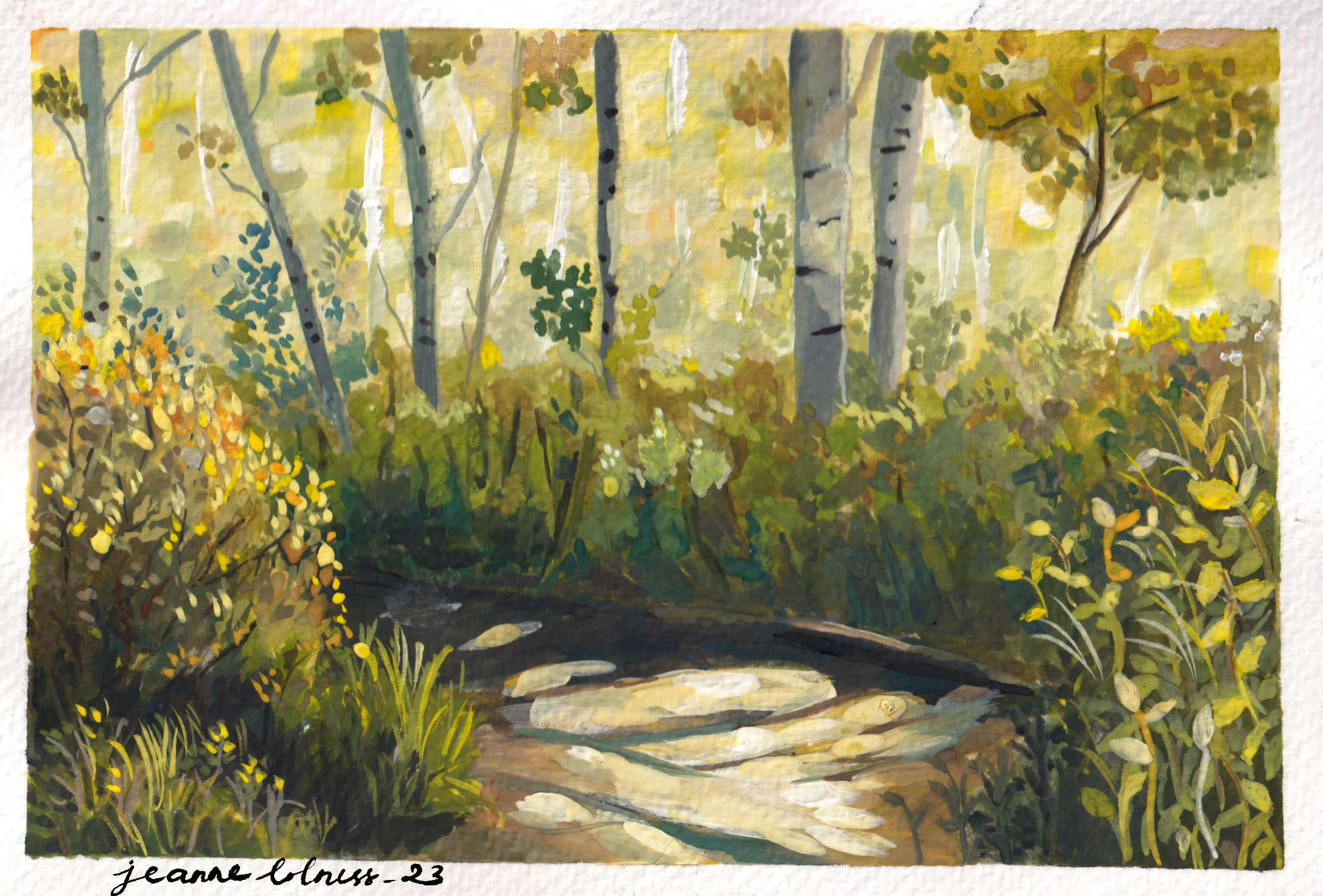
In this painting below, I actually use yellow and white more than green. Titanium white mixed yellow can create a cooler yellow suitable for the background.
In this sketch below, I use a few green paint (permanent green, leaf green) mixing with yellow, red, blue or brown sienna to create a wide range of tones so that I can imply that there are multiple types of plants.

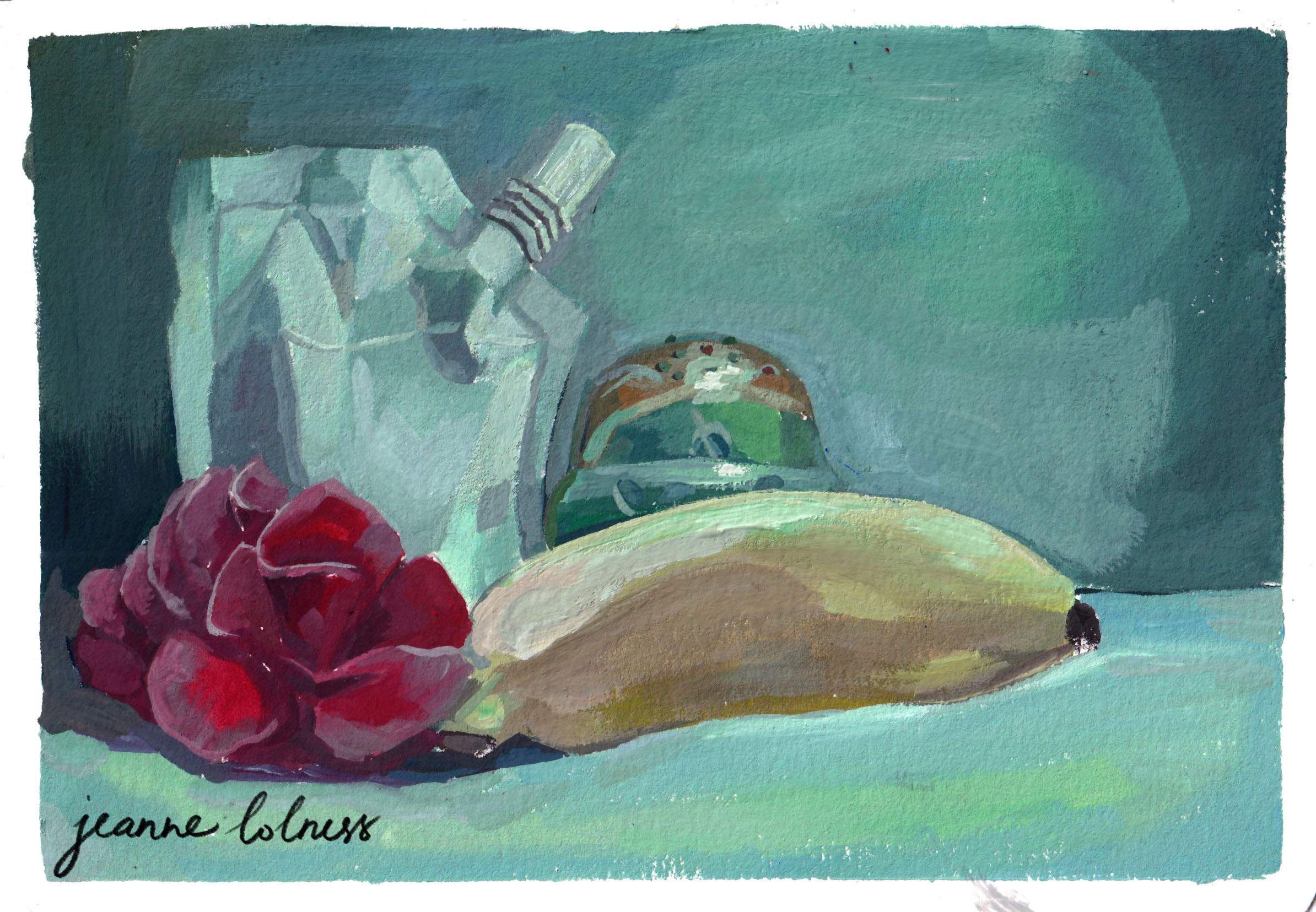
This is a fun experiment with green lighting over different objects. The green Russian doll and the white paint package have the most range of colors since they are made of reflective material. In contrast, the flower and banana tend to lose their saturation and doesn’t reflect as much.

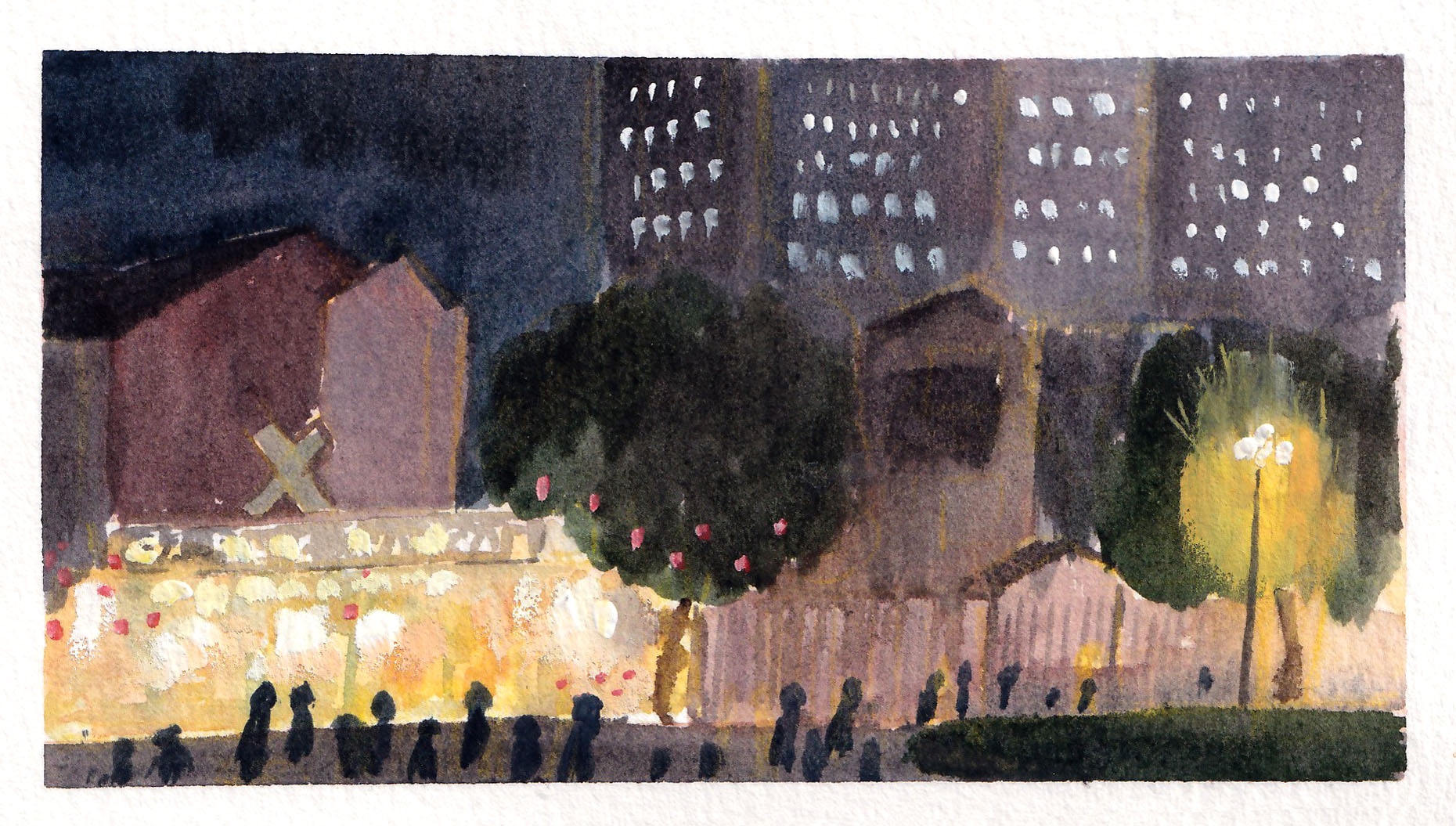
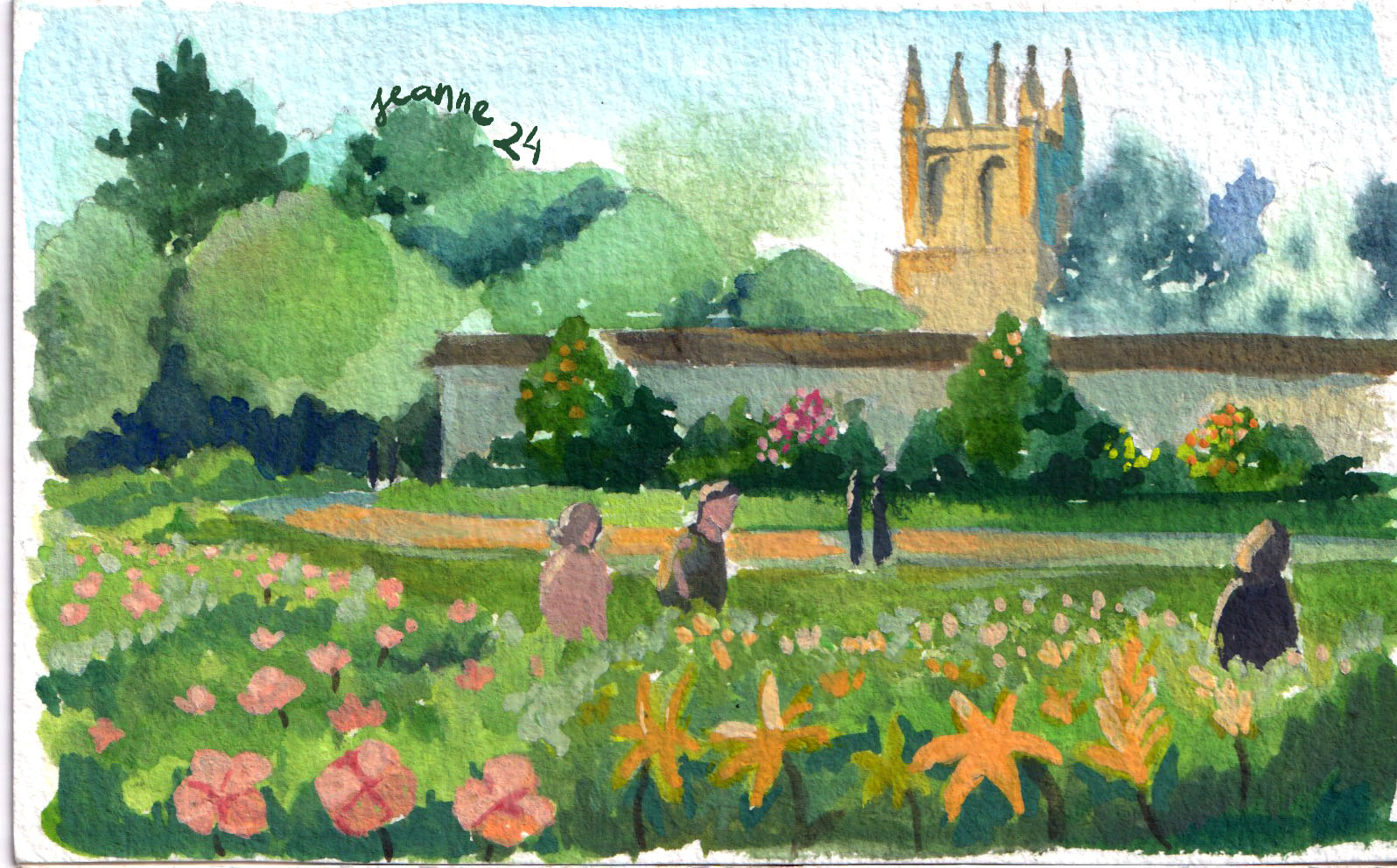
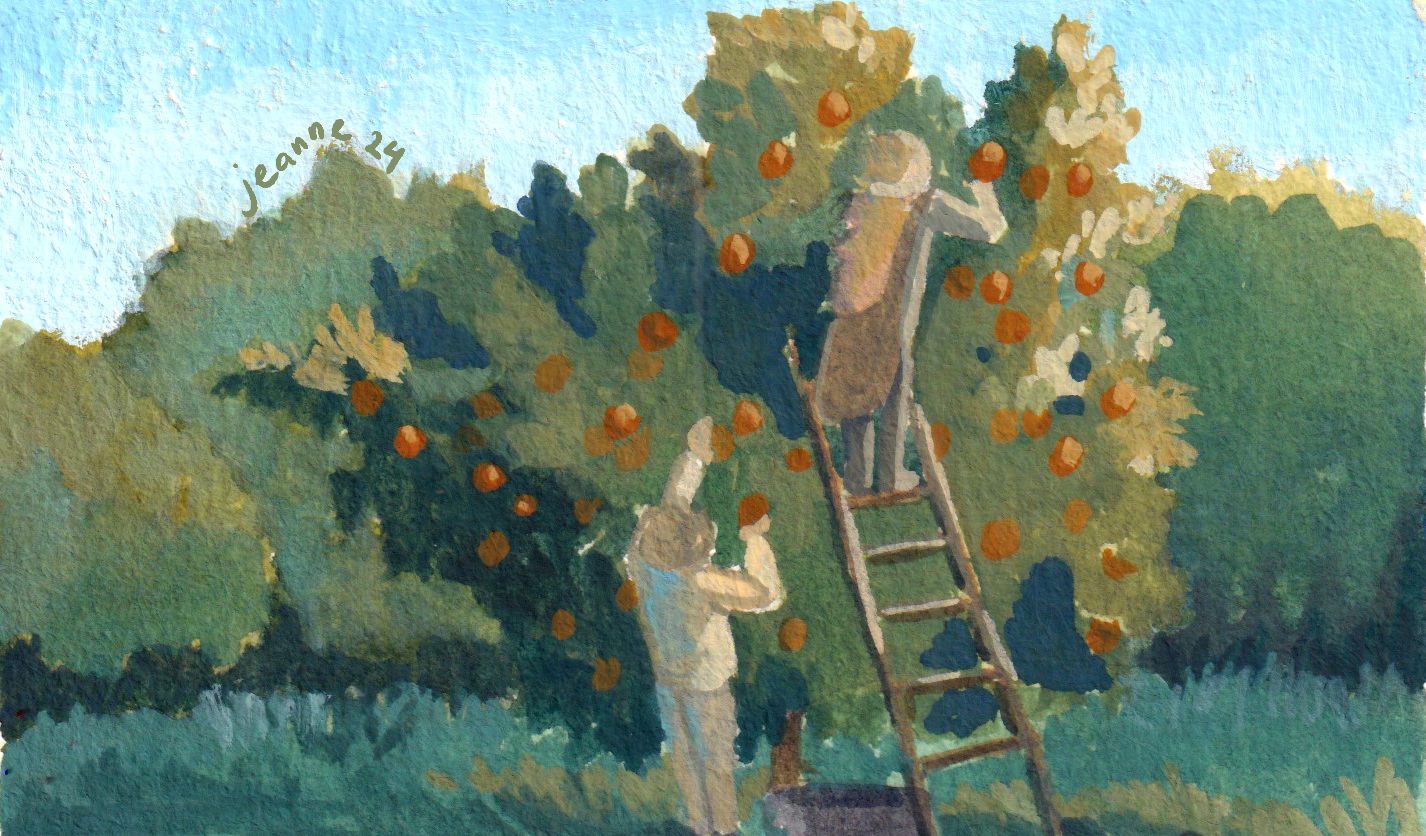
In the painting below, I added ultramarine blue when I mixed the dark tones for the trees, so that the oranges can stand out more. I also add horizon blue to the background trees to differentiate the main one.

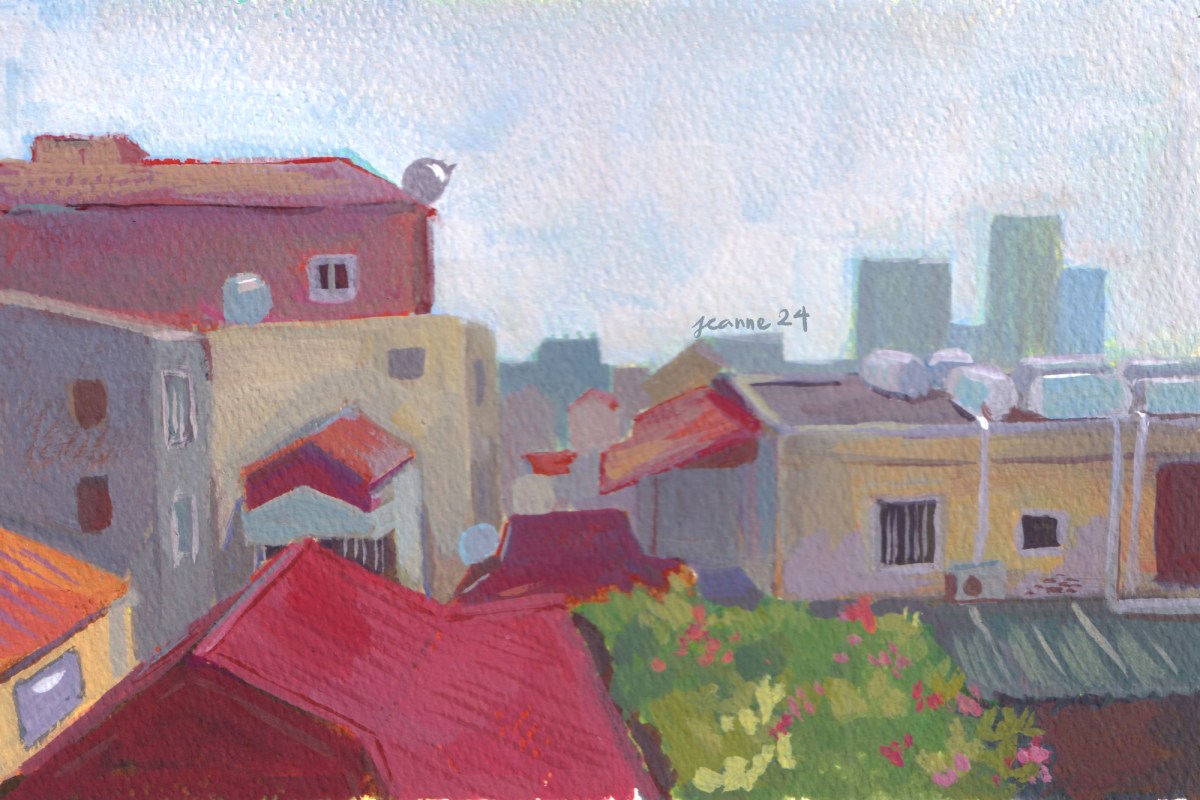
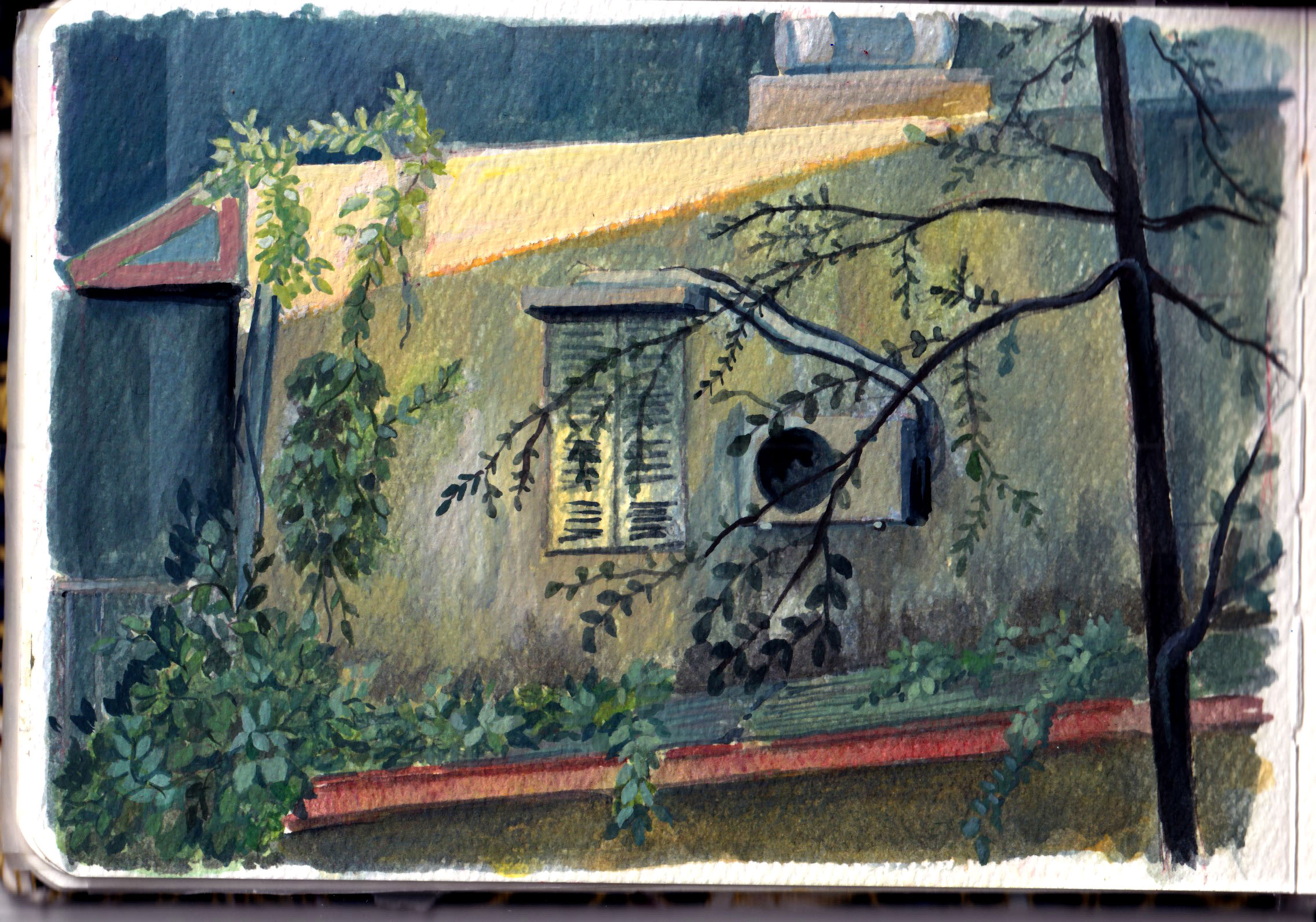
This one is to play with the green in the shadow and in highlight. The yellow house and the red roof made the process simpler with just three main basic color: yellow, blue, red.
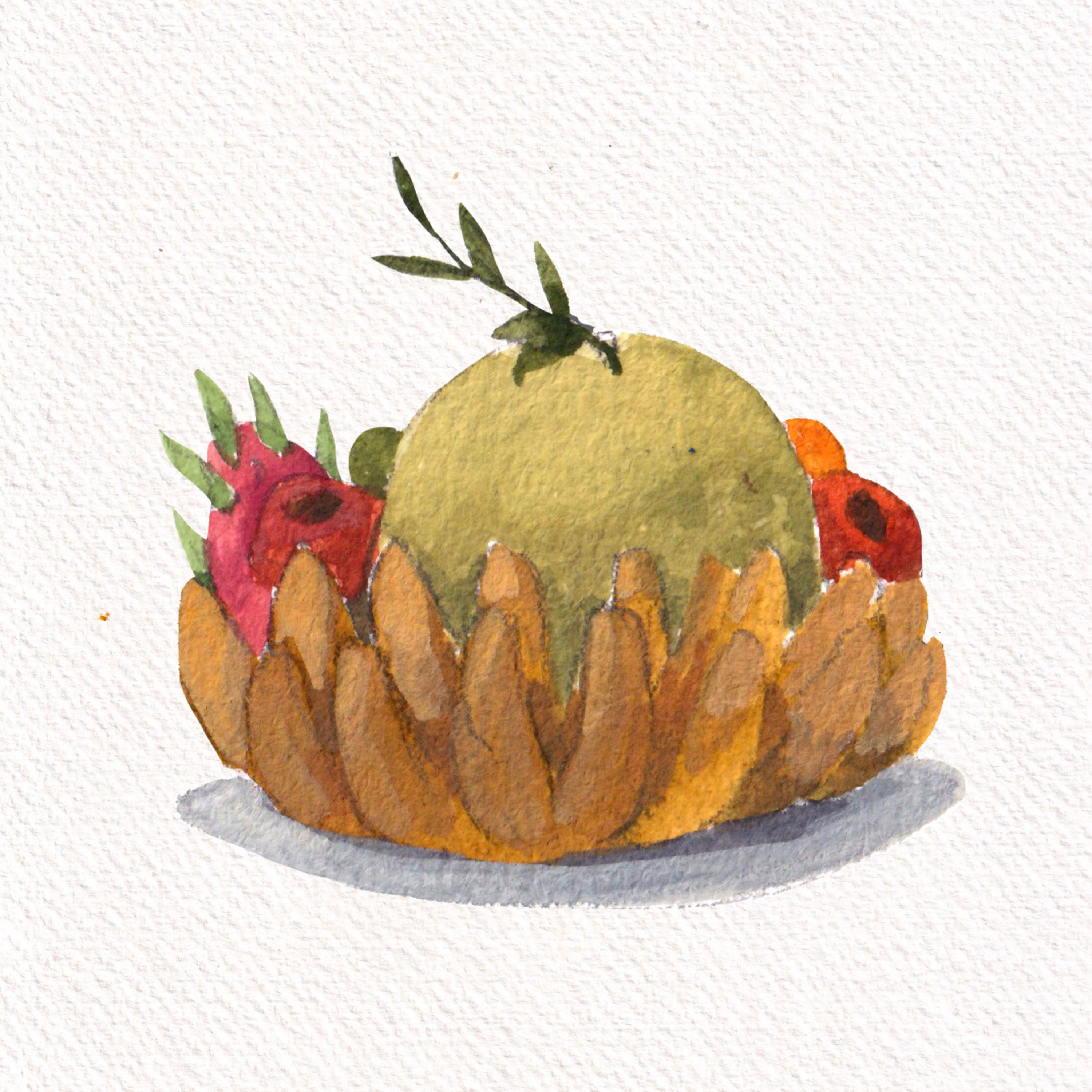
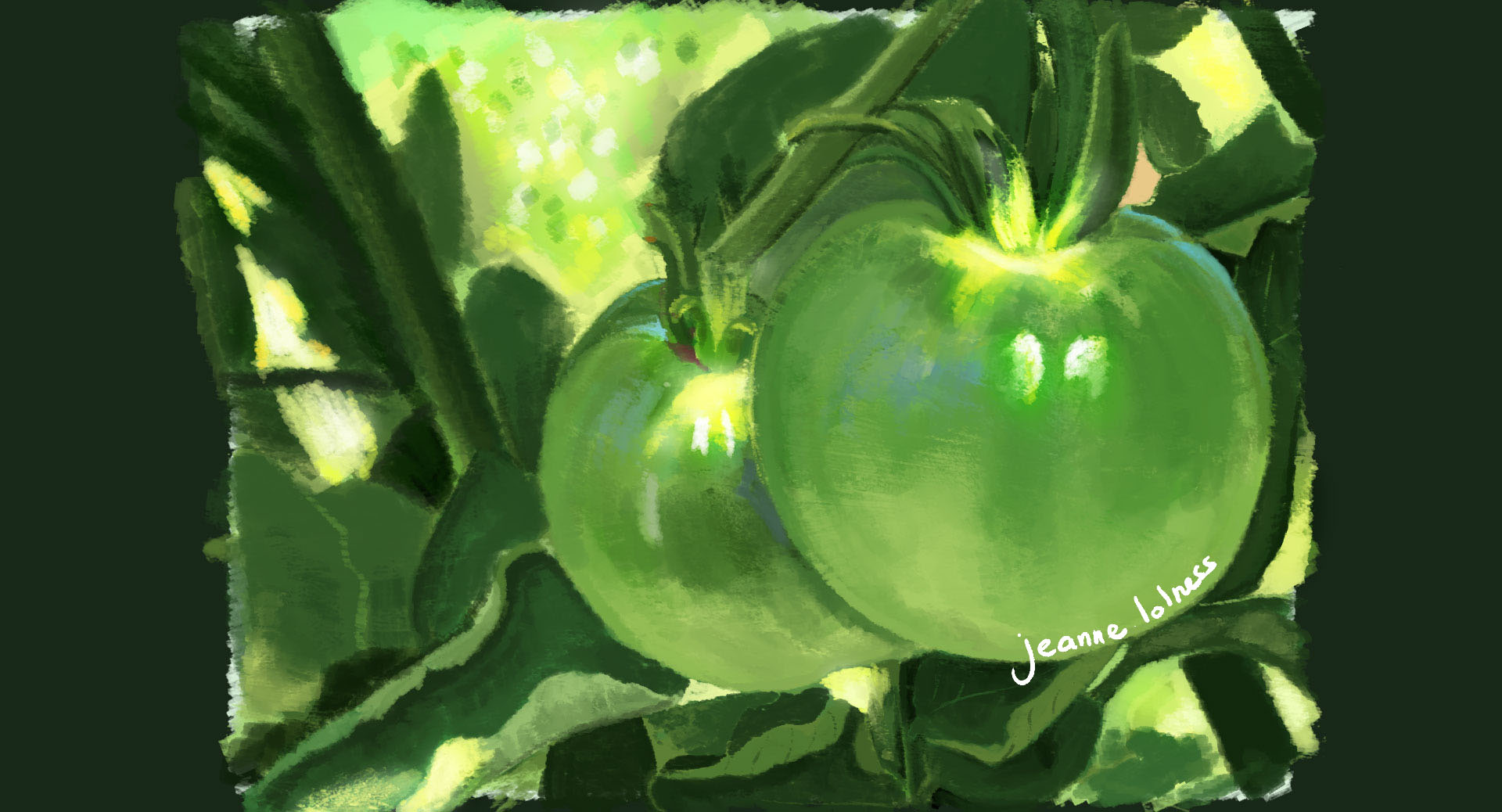
Here are a few pieces painting digitally. Apart from the highlight created by sunlight, other parts of the fruits have some blue since they are in the middle of branches and leaves.
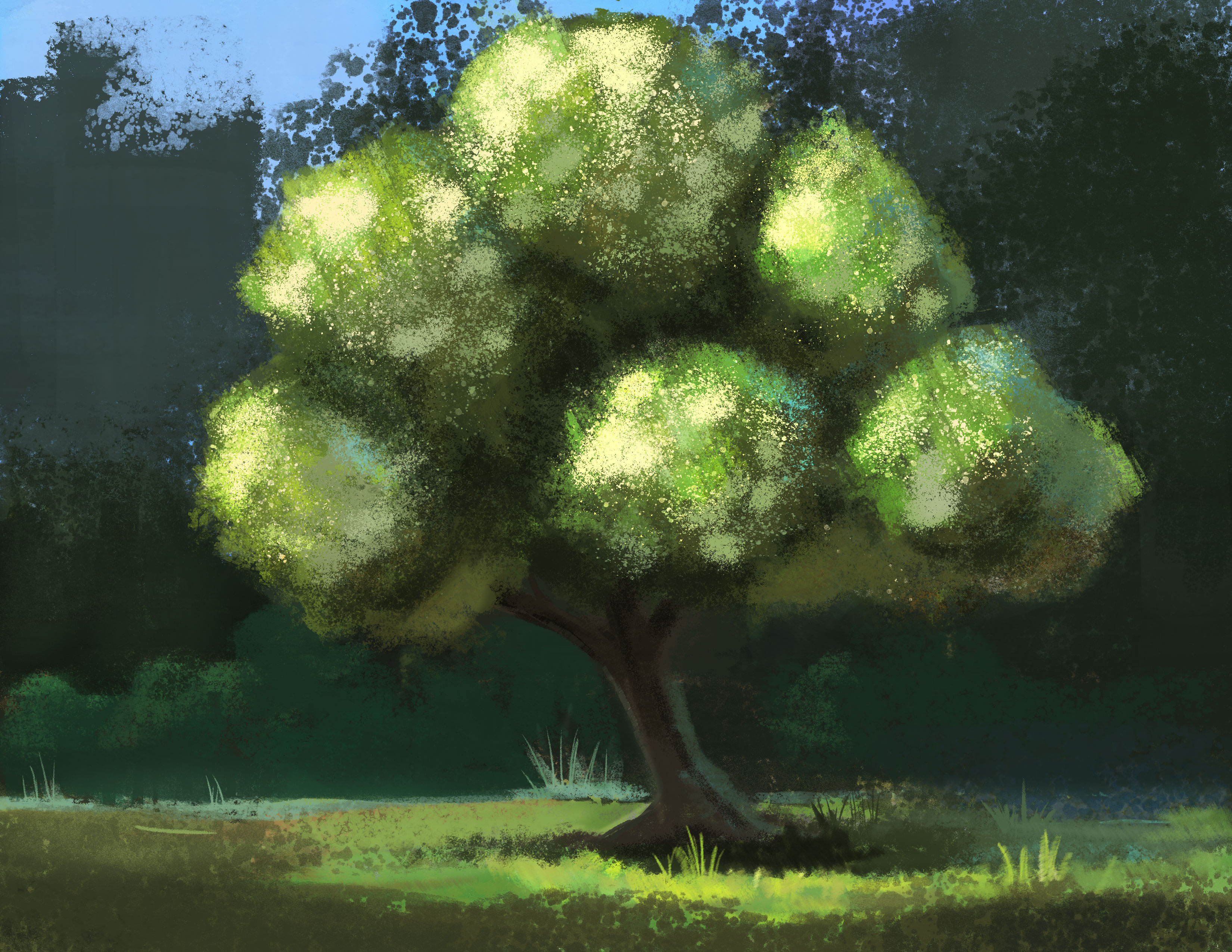
I try to think of the trees as made of multiple balls and add scattered highlights to show the texture of the tree.

As we wrap up this collection of green-themed paintings, I hope you’ve enjoyed exploring the shades of green with me. There’s still room to explore with green in particular and expressing nature for me, see you again in another collection in the future!

Art Journal Entry: 2024 look back – a struggling year

It’s the time of the year when you look back over the past twelve months to see what you have accomplished. In retrospect, 2024 to me was struggle after struggle, from arts to personal life.

A year of failed and rejected projects

Overall this year I worked more on series rather than individual commissions, especially since the introduction of generative images in the first few months of the year. The new exciting AI interests people with an illusion of getting good artworks for free. However, the flow of personal commissions starts again from October, which is not so surprising to me at all. The basic brick of generative image is data, not creativity or emotion. Personal commissions do not only need likeness, but also personal touches and modifications from both the artist and the ones being portrayed.

Series illustrations does provide a better and more stable income than personal commissions. However, to prove that you are able to complete a large amount of work with consistency in quality, it takes much more efforts. Truthfully, I failed in a few significant chances that stays in my mind longer than I expect.

A rejected piece in a project for a Chinese museum

A year of stagnancy in learning

I also failed in my learning goals this year. It feels like I have arrived at the stagnant part of the learning curve. My self-set up curriculum started falling part in June, I felt stuck in learning Storyboard. After procrastinating for a month, I decided to drop this subject and maybe come back to it again. Other studying goals felt frozen, and I couldn’t see any improvements except from sketchbooks piling over in the corner of my room. I must have passed the exciting beginner phase of learning arts now, no subject seems completely new now. It’s now the phase of repetition and patience.

My whole system of working and studying became too much for me to handle at certain points. I set up a complex Notion dashboard in January, and after a period of complex projects requiring quick turnarounds, the whole system started crumbling. The daily to do list of Notion was unlimited, which gave me a false idea of my capability. Furthermore, I missed using papers, the idea of ticking done to a task and how my pen moved across the papers. I’m still using it as store some lists and resources for blogging, and happy to be back with my handmade A6 notebooks.

I forced myself to learn things I don’t really like, hoping to cultivate a new aspect in my arts. In the first few months, I learned animal anatomy and started reviewing human anatomy in the later part of the year. These new knowledge doesn’t show up right away in my paintings, even the personal pieces. It only came to the surface after a long time brewing, it started with my realization that my artworks lack spirits or liveliness. I’m starting with small animals and human silhouettes.

I started to feel the urge to add more details, every now and then when I looked back some old pieces, I felt I could have added more characters to the scene instead of going the easy way. Of course, this led to less paintings done and a major portion of each need to be done at home instead of at the place. Being a quantity person, I can’t help thinking “I’m doing less this year”.

I overworked this one – I kept changing and adding objects

A year of resilience

A few sentences I often tell myself this year is “hang in a bit more”, “I can tolerate this a bit more” and “be resilient”. These reminders come from a podcast story I hold close to my heart—the story of Abigail May Alcott Nieriker. She was the inspiration for the character Amy in Little Women, but her real-life journey is even more inspiring. Abigail didn’t give up her dream of becoming an artist to marry a wealthy man; instead, she achieved recognition by exhibiting her work (of a black female!) at the prestigious Salon in France. She did marry eventually, but it was for love and much later in her life. (Interestingly, Laurie was entirely fictional and not based on any real person.) Her story is a true testament to perseverance and determination. She is a hard-working artist, passionate painter and devoted educator -I deeply relate to her journey—I sympathize with her struggles, feel inspired by her resilience, and see her as a role model.

Another source of strength and motivation for me is literature. I read many novels by Kazuo Ishiguro this year: An Artist of the Floating World, Klara and the Sun, Never let me go (a re-read), and Annie Ernaux: A girl’s story, Shame, A Woman’s story. The most interesting novel is The Bathroom by Jean-Philippe Toussaint, weirdly writing about almost the same thing I wrote in my journal but in a more beautiful way. Here are a few passages that I love:

70) But when I thought more deeply, and after I hadfound the cause for all our distress, I wanted to discover its reason. I found out there was a valid one, which consists in the natural distress of our weakand mortal condition, and so miserable that nothing can console us, when we think it over (Pascal, Pensees).

49) Seated on the edge of the bathtub, I explained to Edmondsson that perhaps it was not very healthy, at age twenty-seven going on twenty-nine, to live more or less shut up in a bathtub. I ought to take some risk, I said, looking down and stroking the enamel of the bathtub, the risk of compromising the quietude of my abstract life for
… I did not finish my sentence.

50) The next day, I left the bathroom.

Literature consoles me differently from social media or modern psychology. Instead of labelling, it just describes. It tells a story of thoughts, emotions and imaginations. How do I feel this year? I feel like a caterpillar slowly breaking my cocoon to realize that I’m still a caterpillar. At least, I’m still crawling forwards.

Painting from small to big: slowly goes a long way

Painting a full scene always feels overwhelming at first. When I lay out a big blank piece of paper or set up a canvas, I often imagine something is look back at me. Particularly when I was a beginner, I made the mistake of buying A3 paper stack to save and it was a bad choice. Some of my watercolor papers become buckled due to humidity and I had to get another stack.

It turned out that I overate myself and the simple solution is painting on a smaller size.

The case for a small painting

Starting with multiple thumbnail sketches actually saves much more time rather than going directly onto a big canvas. It helps capturing the idea at the rawest stage, then allowing me to explore different compositions, details and ideas. It works the same way as the outline for a book: you need to have a rough image of the end before starting with each chapter.

It also reduces the guilt of commitment: an idea may sound brilliant when it first comes into our head, but maybe not so when it is laid out on paper. It’s easier to give up a small sketch than a big painting. It doesn’t have to ‘good’, ‘excellent’ or ‘the masterpiece’; it can be anything attracting your attention.

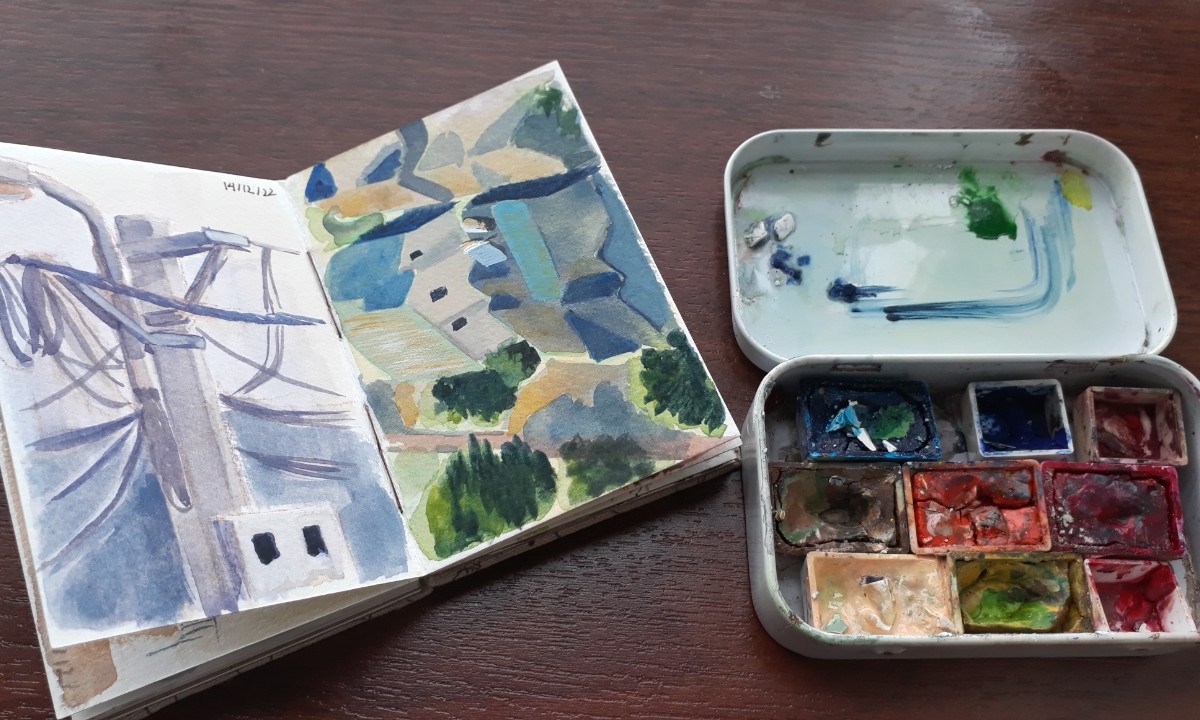
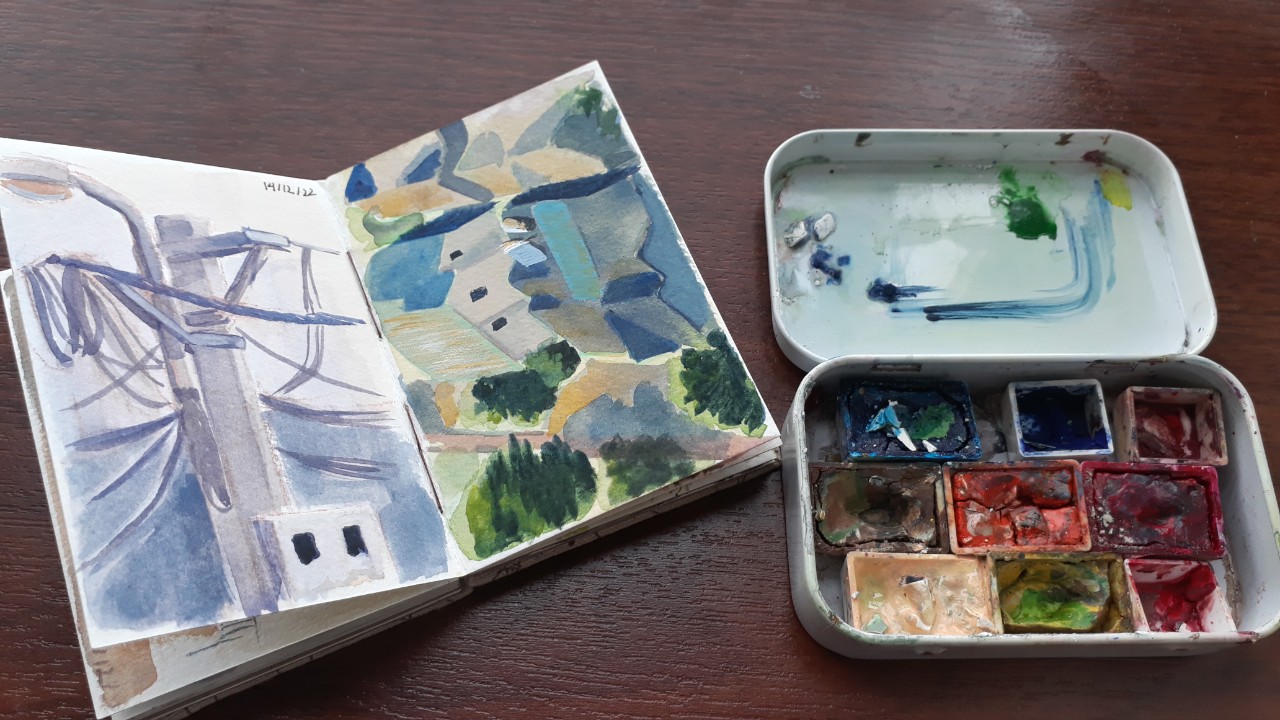
Small size sketchbooks work better when you try to paint outside as well. Pairing with watercolor, it becomes my essential kit whenever I go outside.

The mini sketchbook and mini palette I often carry around
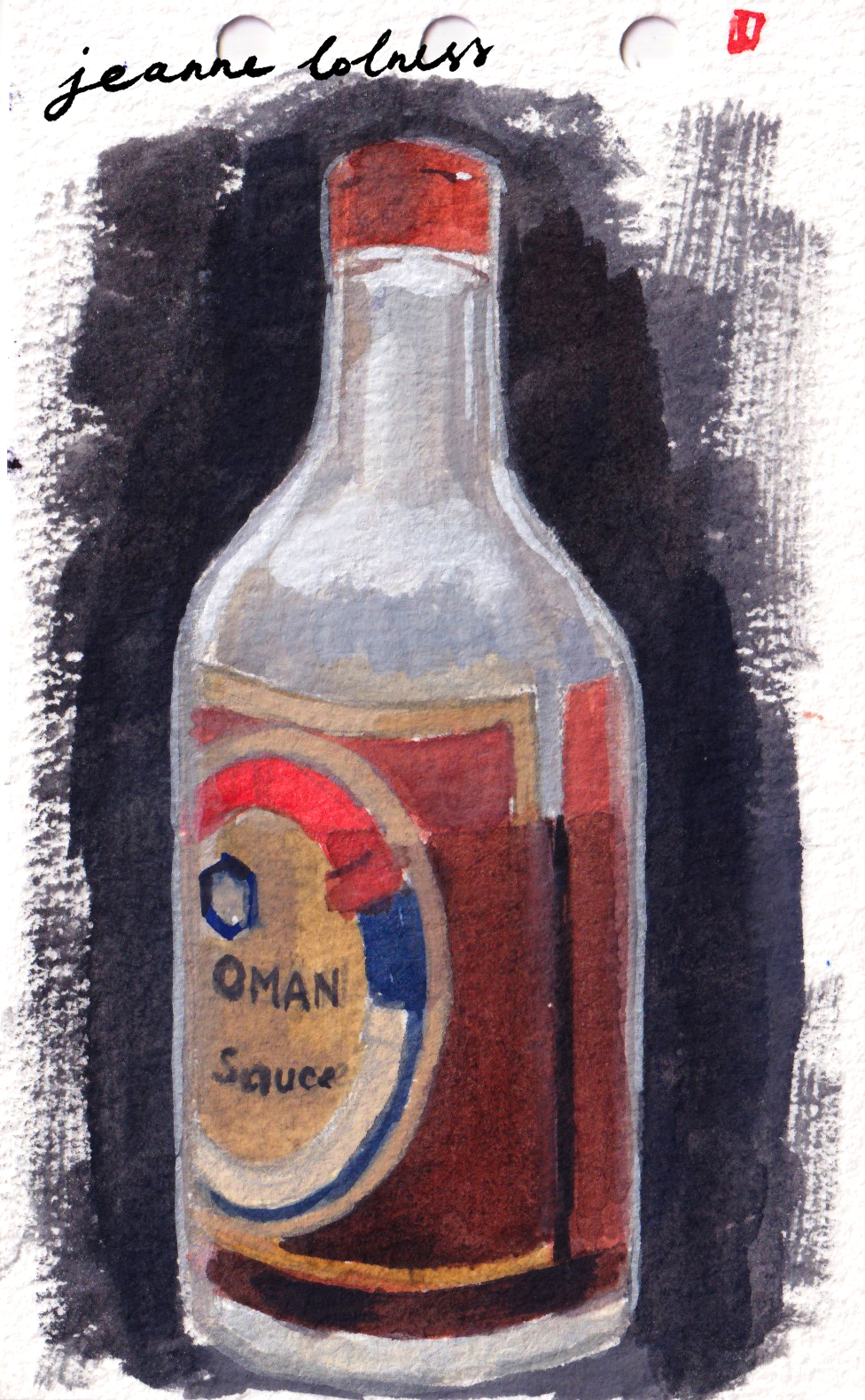
One page from the above sketchbook

The size of the above sketch of my sauce bottle is 13 x 8cm. You can see a bit of the process here.

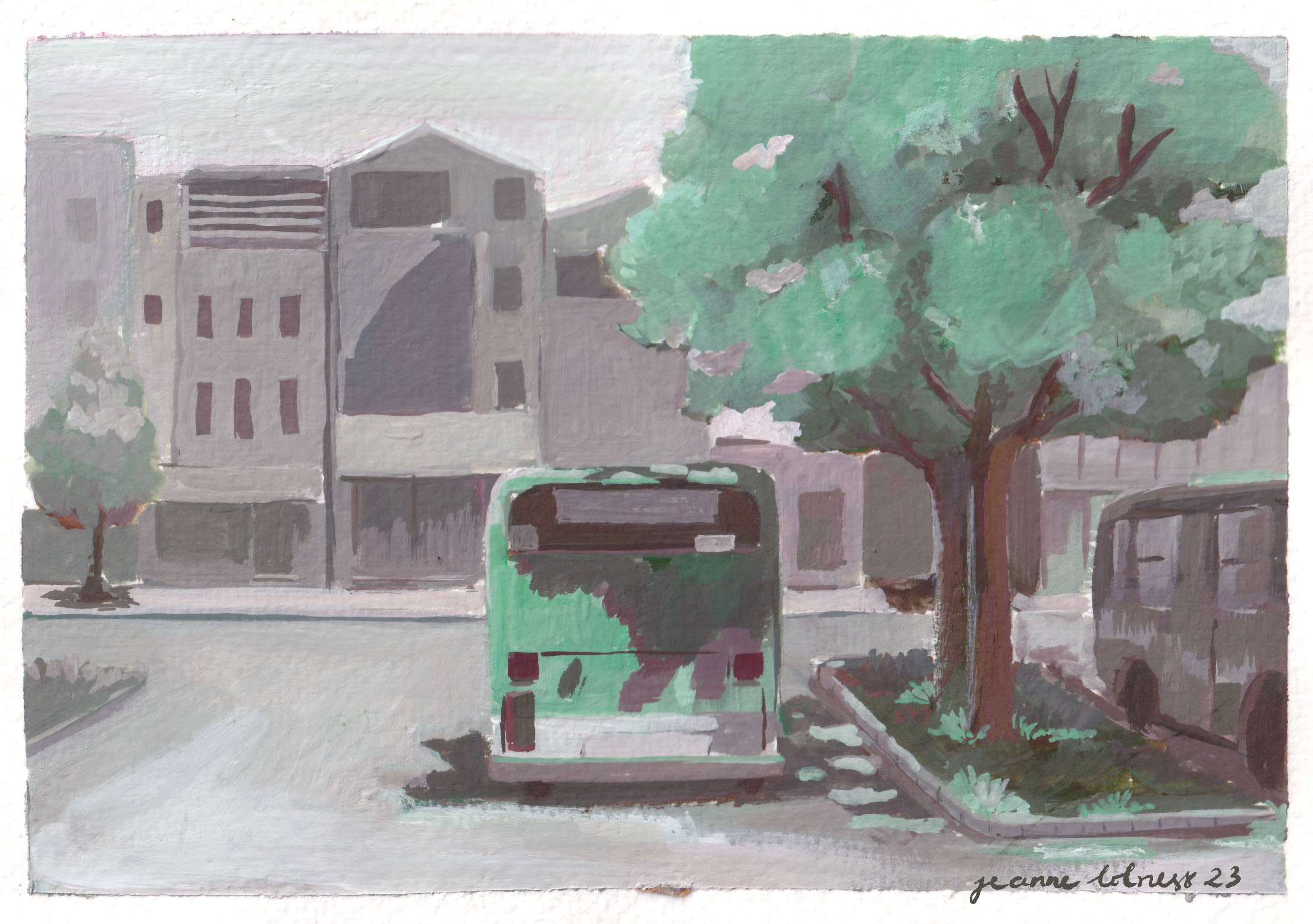
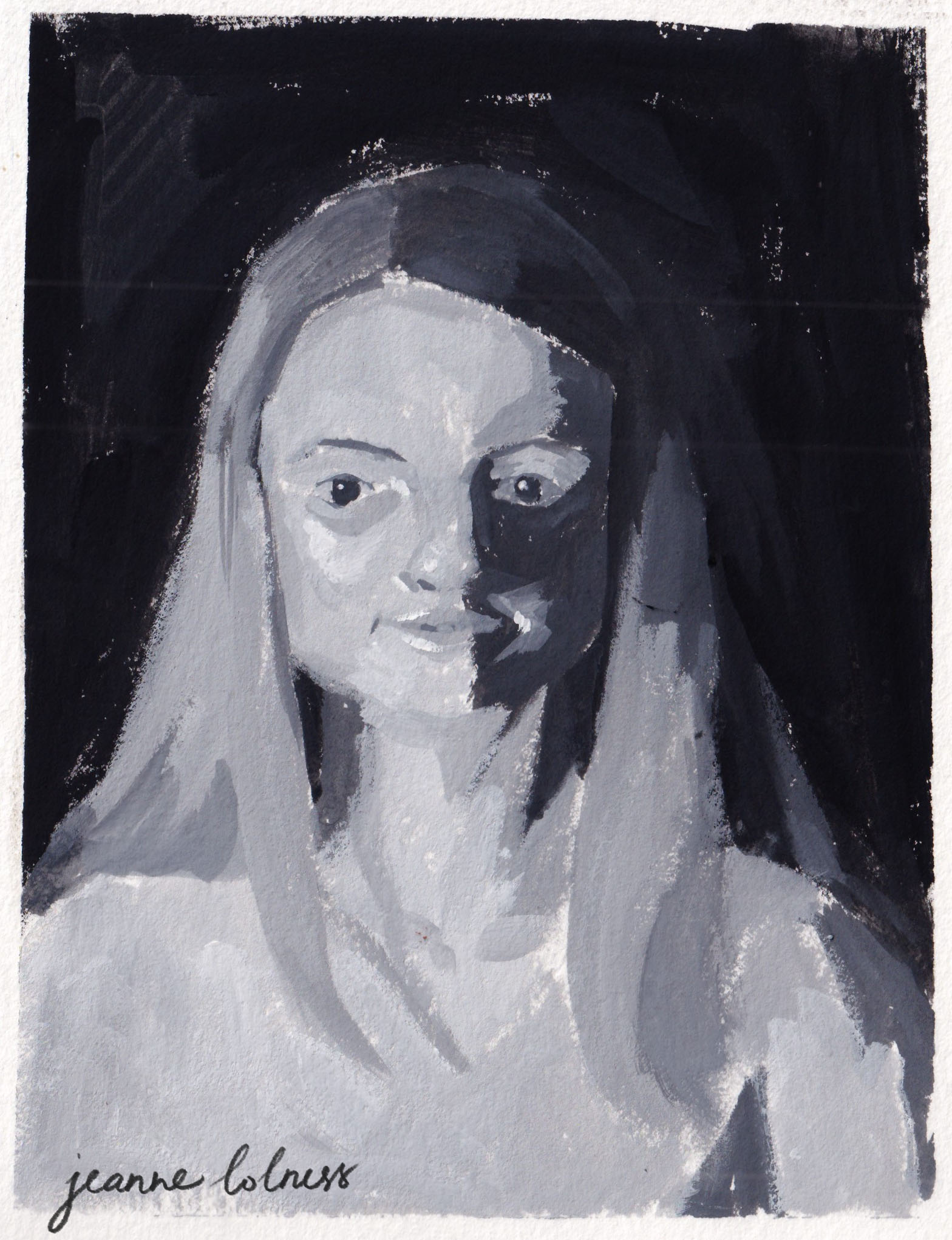
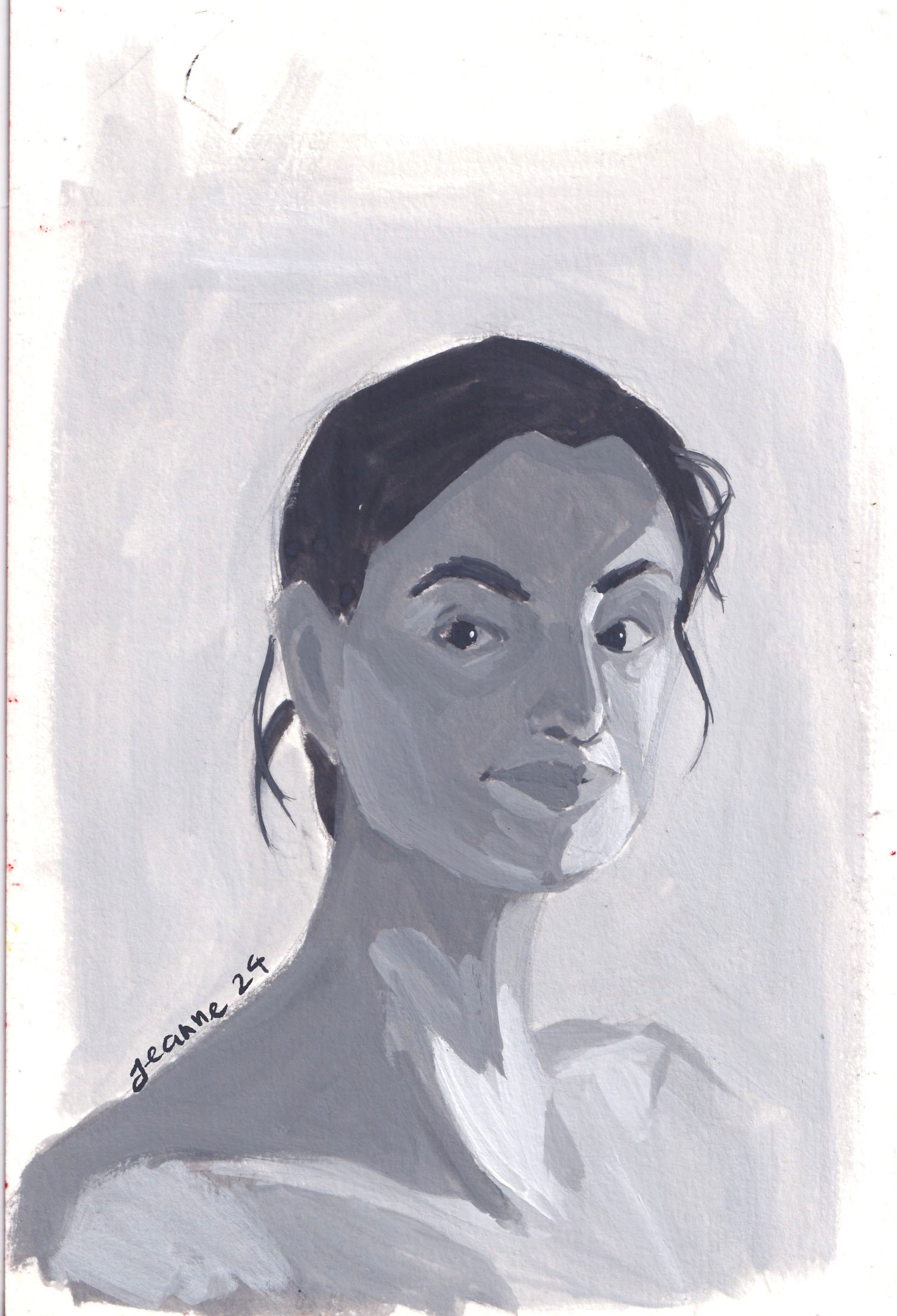
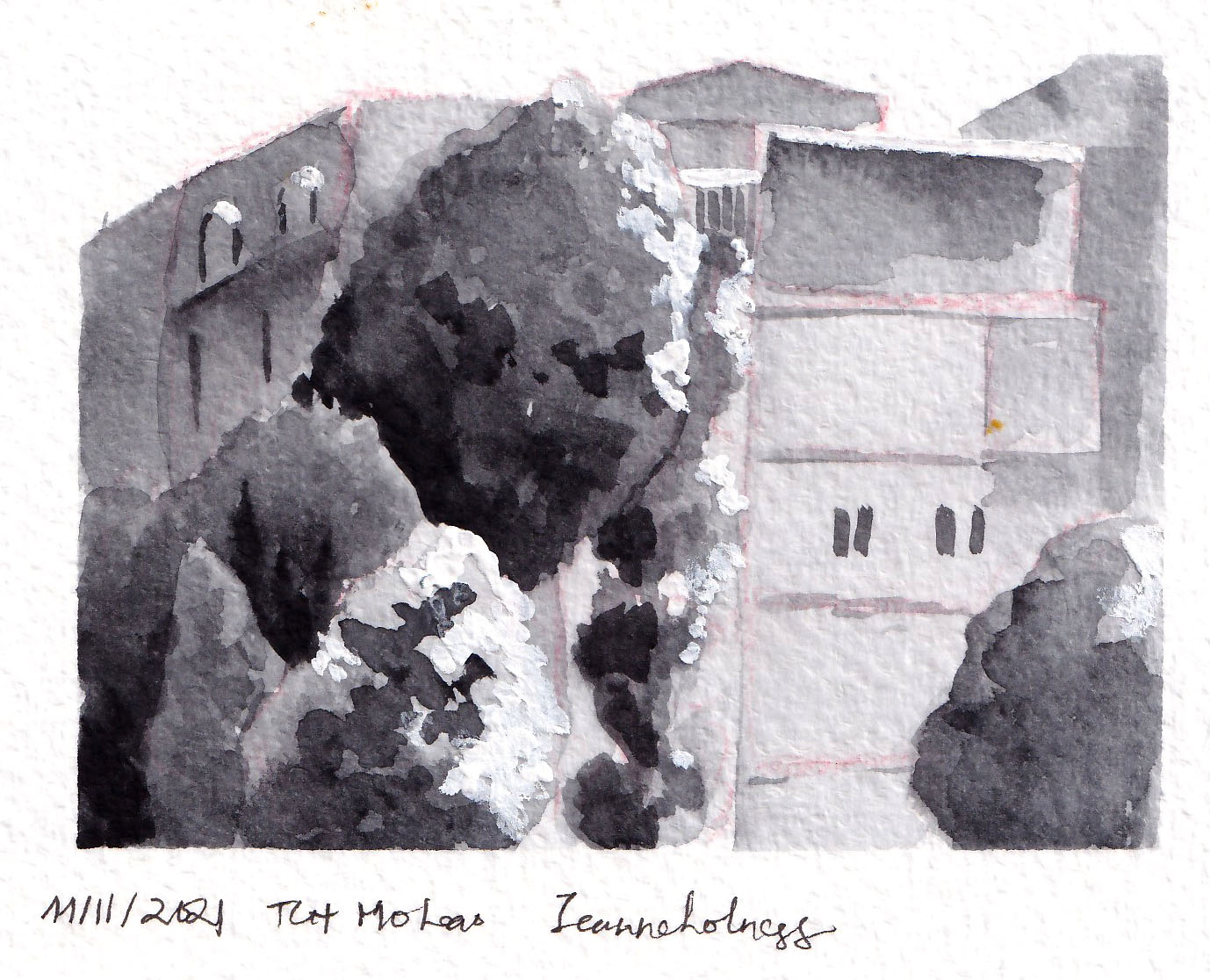
You don’t even need to use color for a thumbnail sketch: you can start with painting value scale first and then color later. When I started painting outdoors, I mostly painted in grayscale with black and white only. The above two are of the same view, with a 2-year gap in between.

Tips to work with small sketches

1. Experiment with the size

You can still buy a big paper stack, just cut them into different sizes to see how it feels to you. A6 size is my favorite size, it looks like a postcard and it fits with my A6 planner. I can just shove them in between the pages and I’m ready to go anytime anywhere.

2. Experiment with the tools

I found ink, dark pencils (6B – 8B) and watercolor more suitable for sketching small. But many artists prefer soft pencils, gouache and digital painting better.

3. Focus on the mass and perspective first

I layout a simple perspective and opt to the biggest mass in the composition. If you struggle with background and landscape illustration, learning to be comfortable with perspective first and trying to see the world in grid is my advice.

4. Break down process and have fun

It’s challenging to complete a full illustration, particularly a landscape one. That’s why I often divide it in parts. Of course, when the surge of excitement comes, just go with it ; but it’s unrealistic to be ecstatic everyday. I often have a few projects running over the same time to switch when I’m bored.

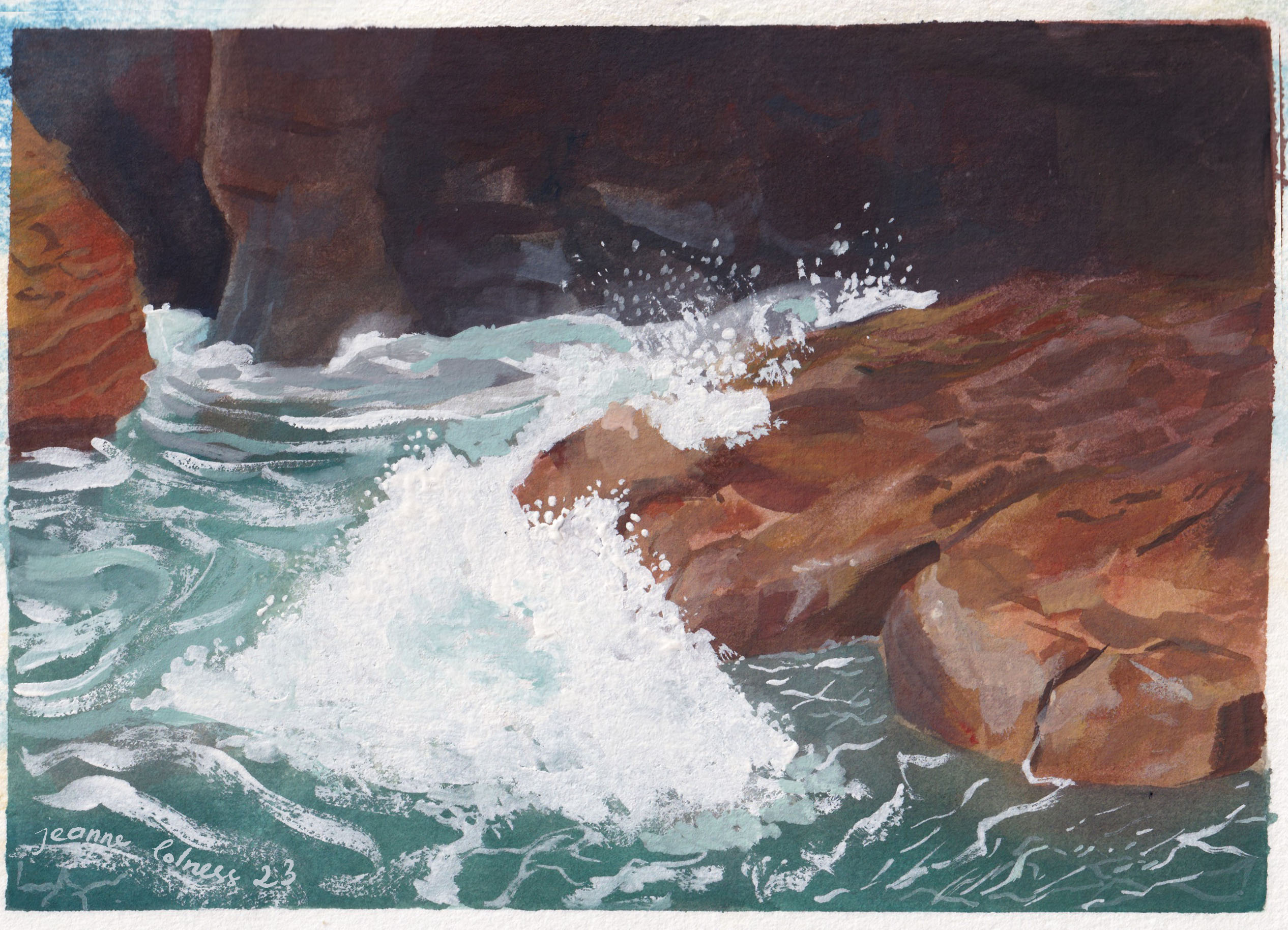
A painting capturing closely how waves crash with the rocks
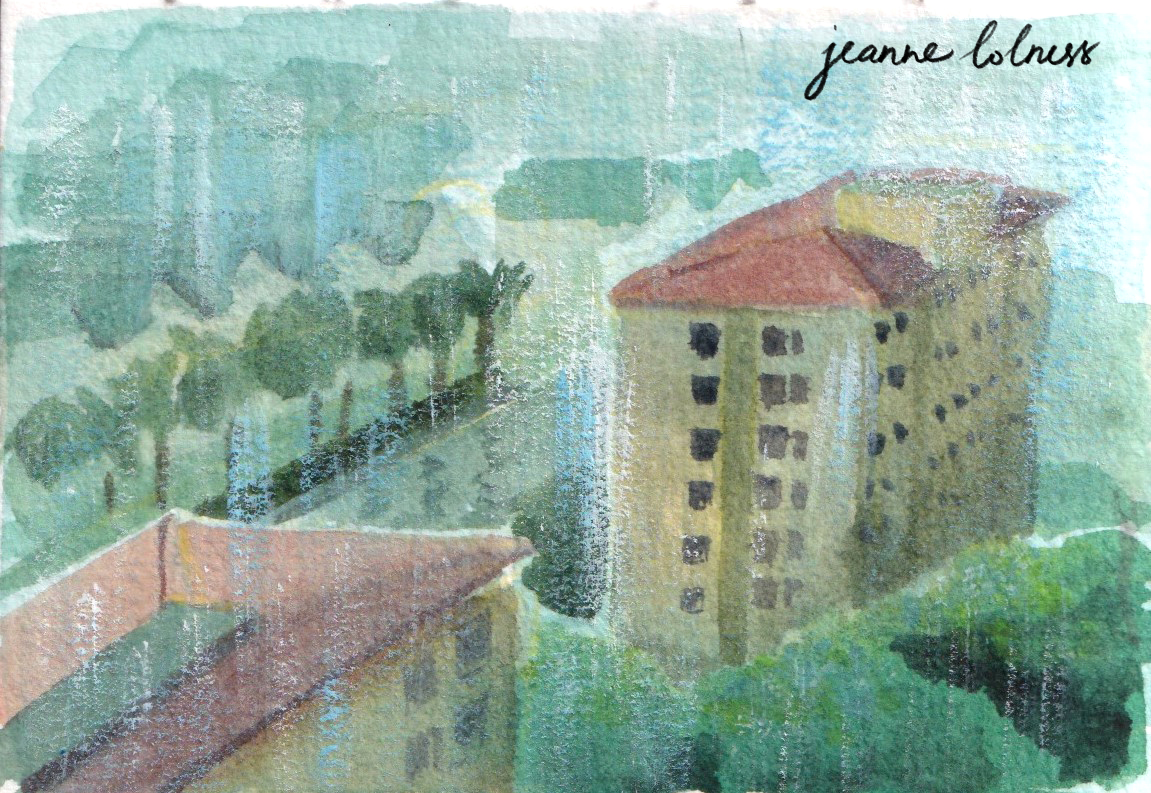
A painting of a view from my apartment

Above are some the largest painting I have ever done, roughly A4 size. It’s tough to paint big, but the joy of completing one big illustration is too great to miss!

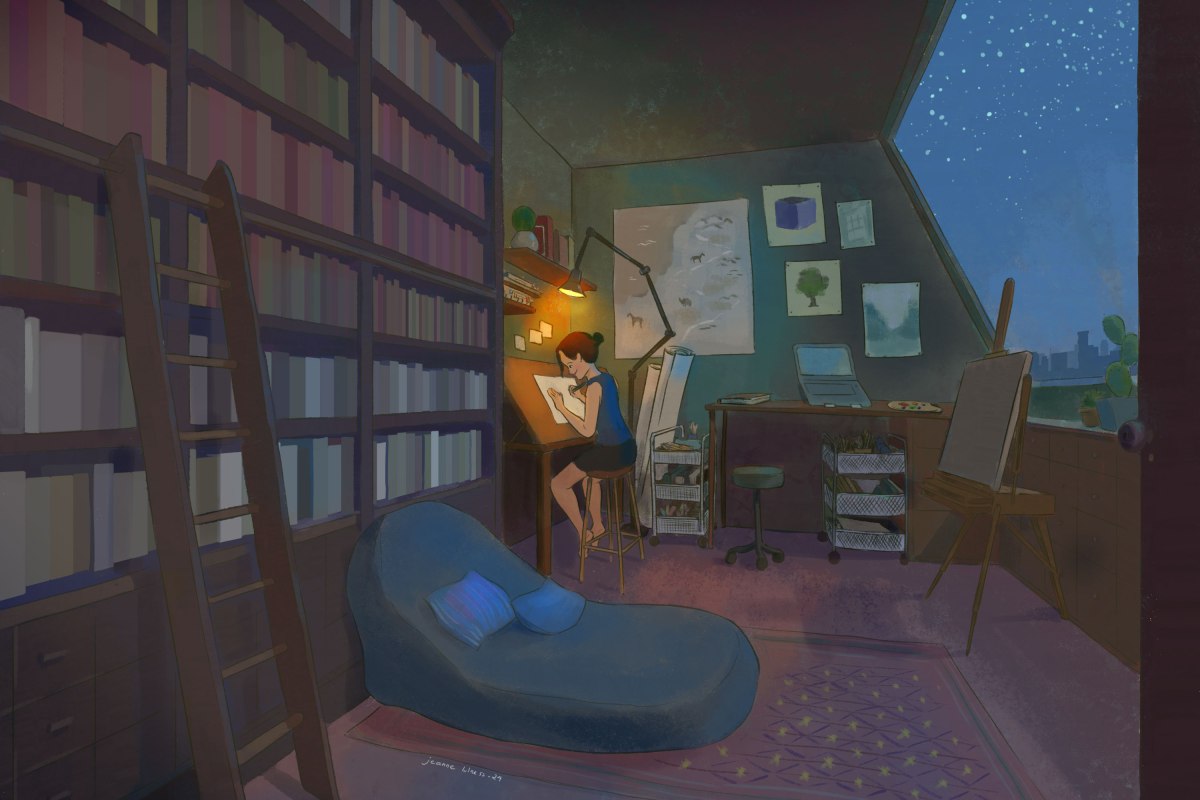
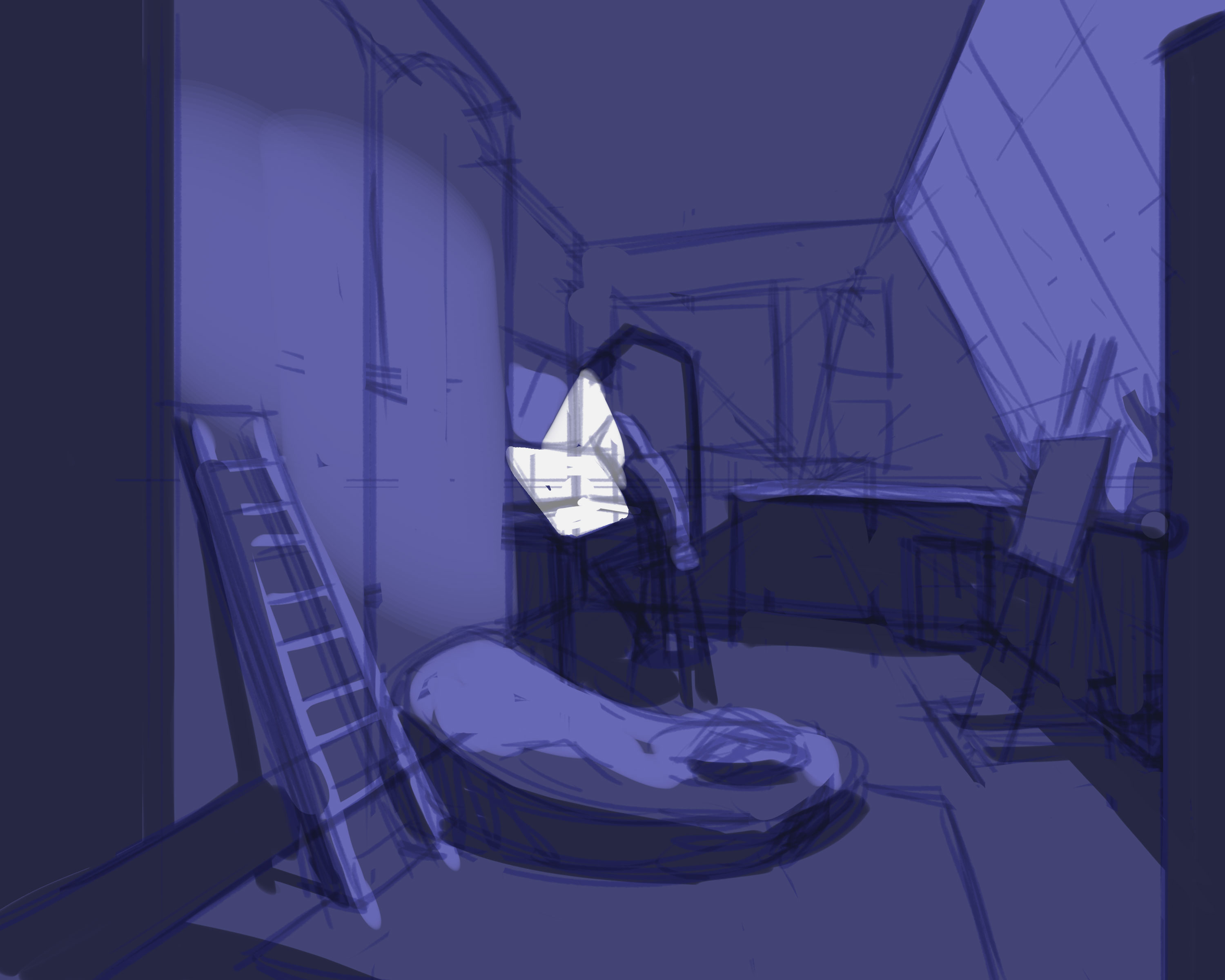
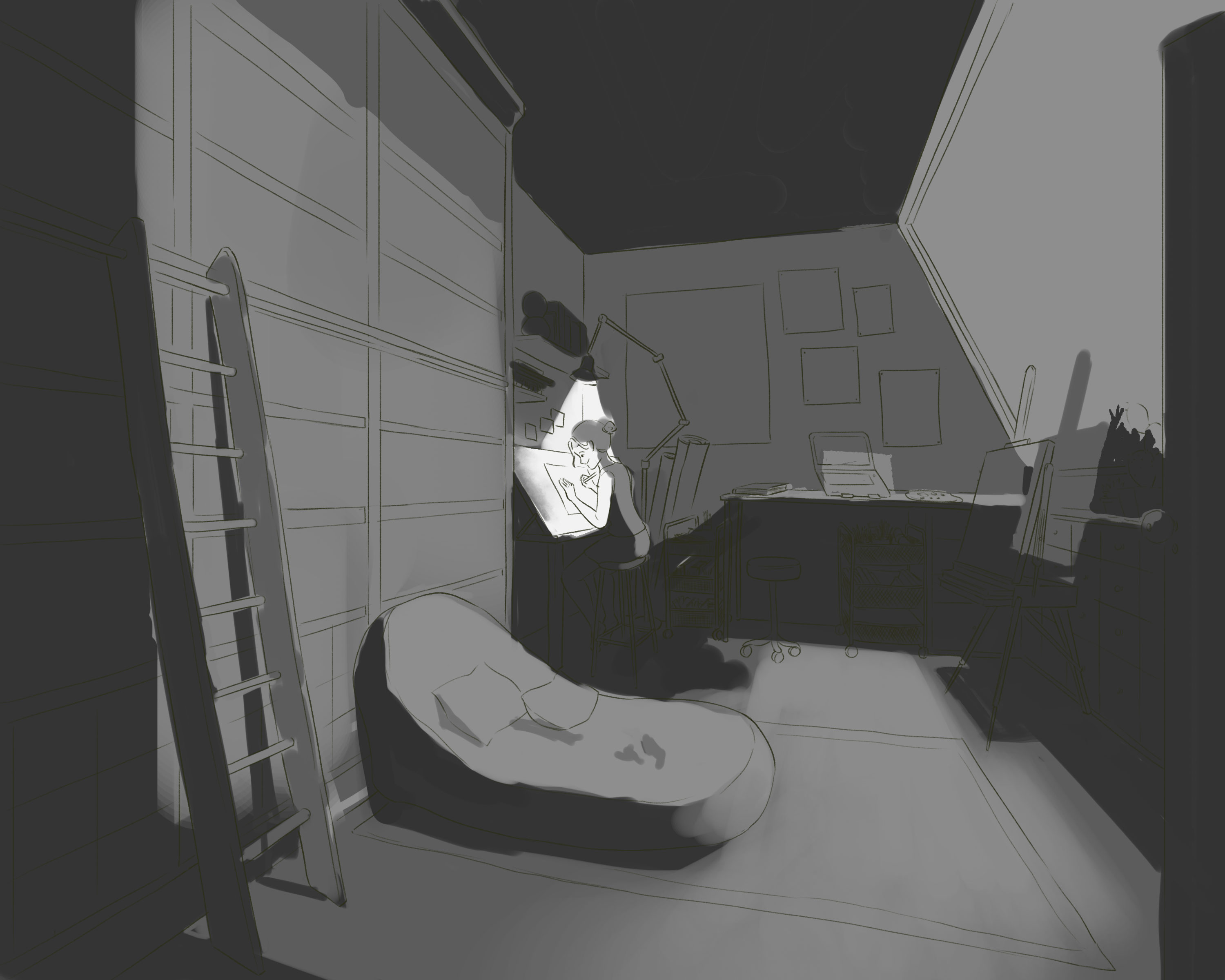
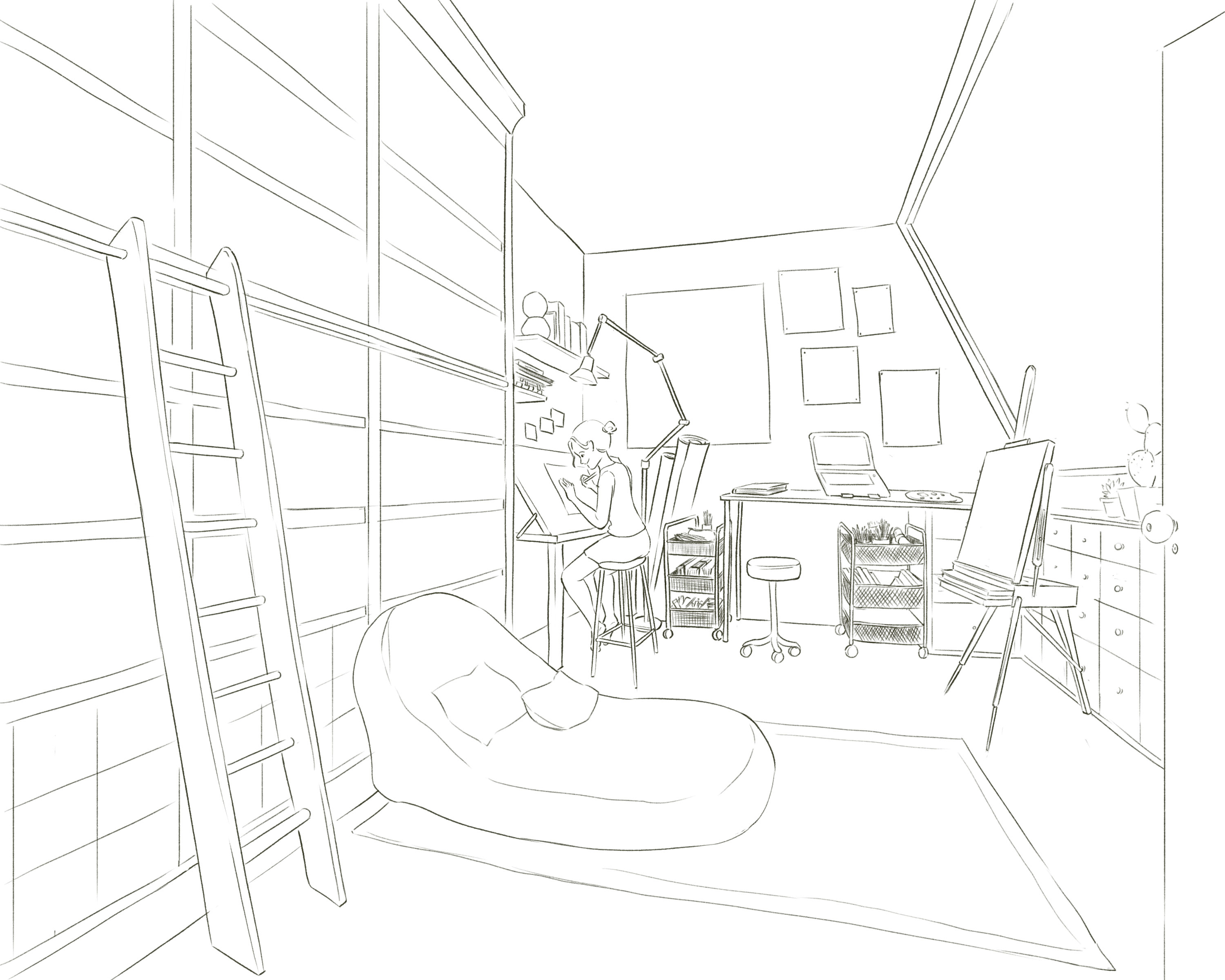
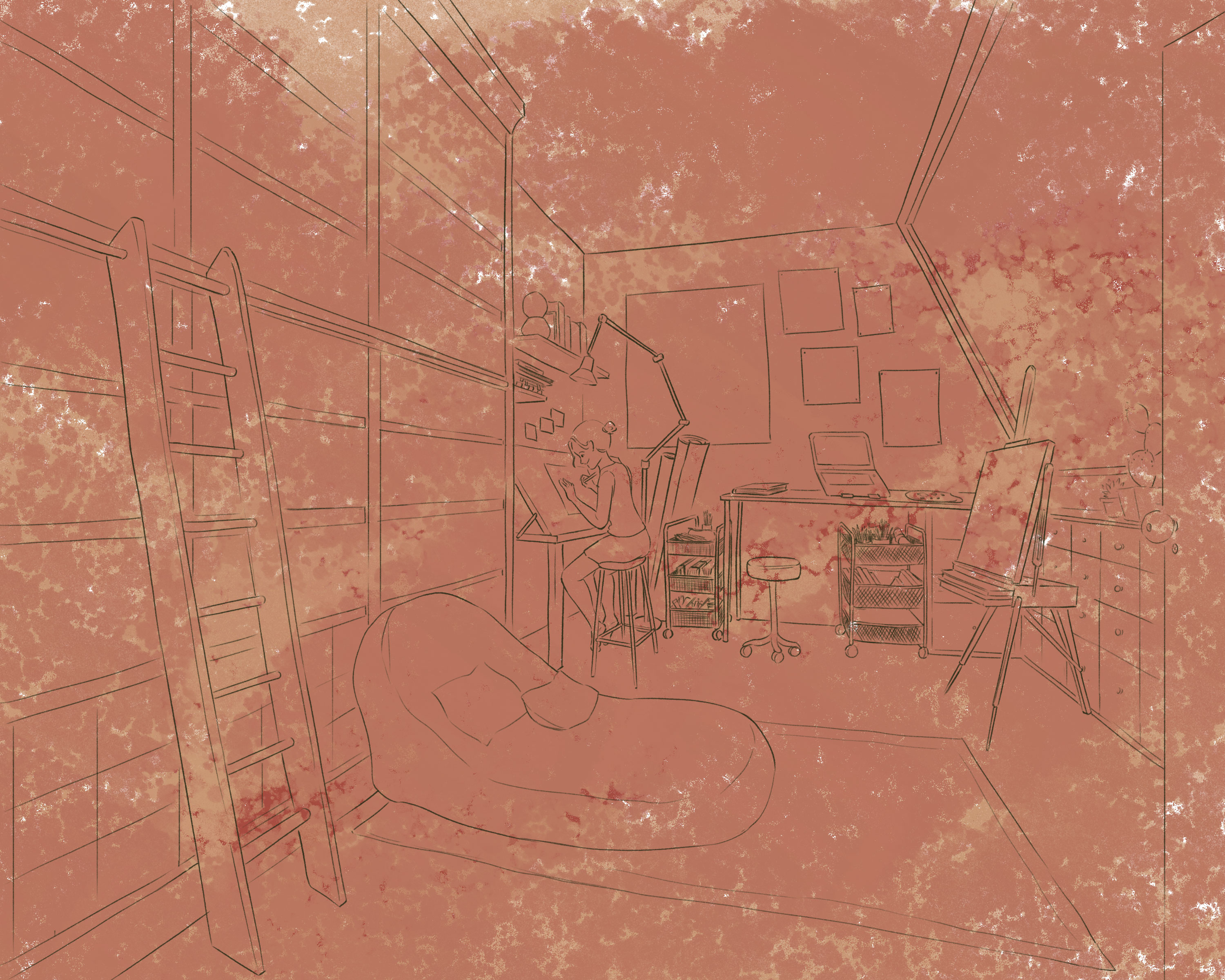
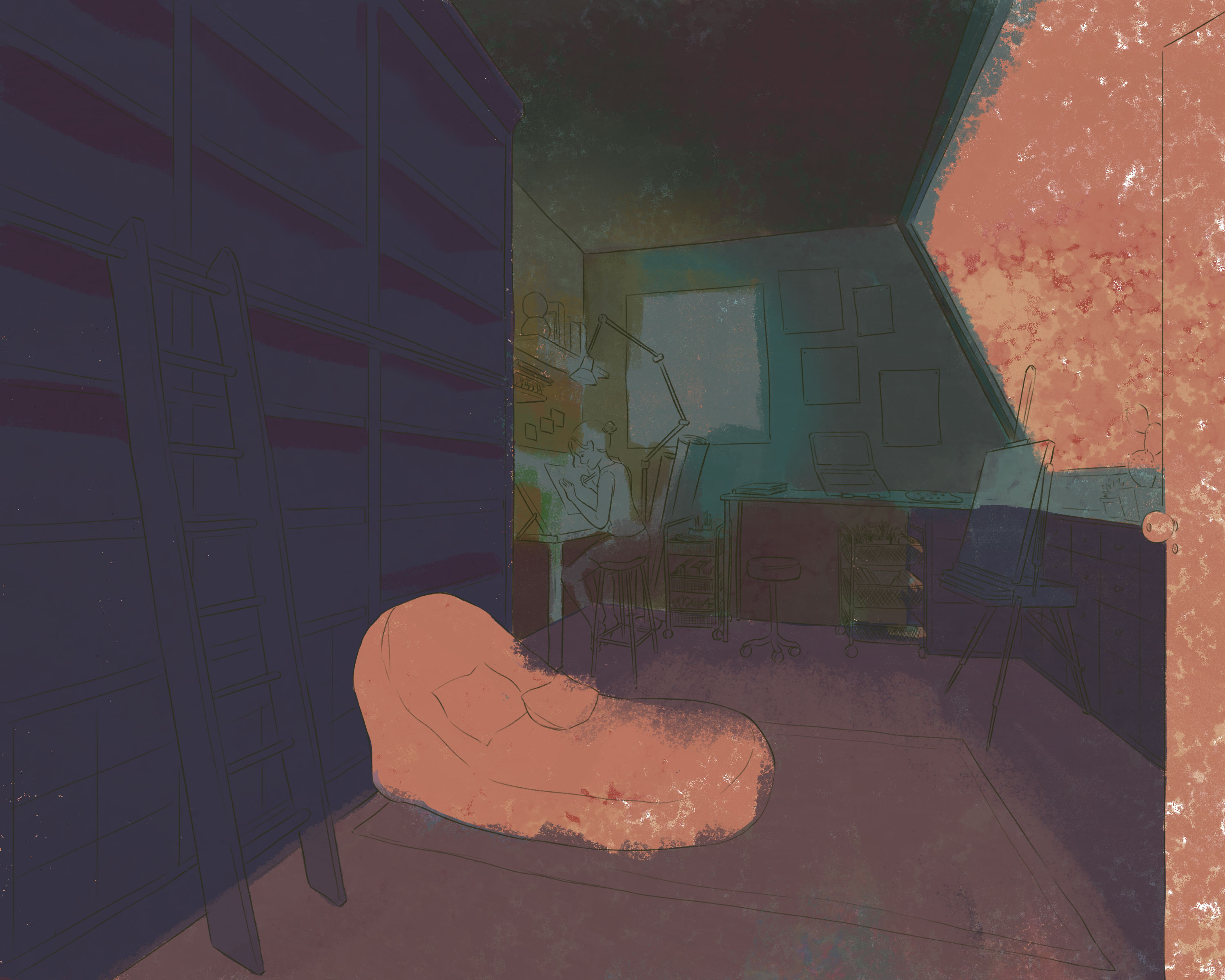
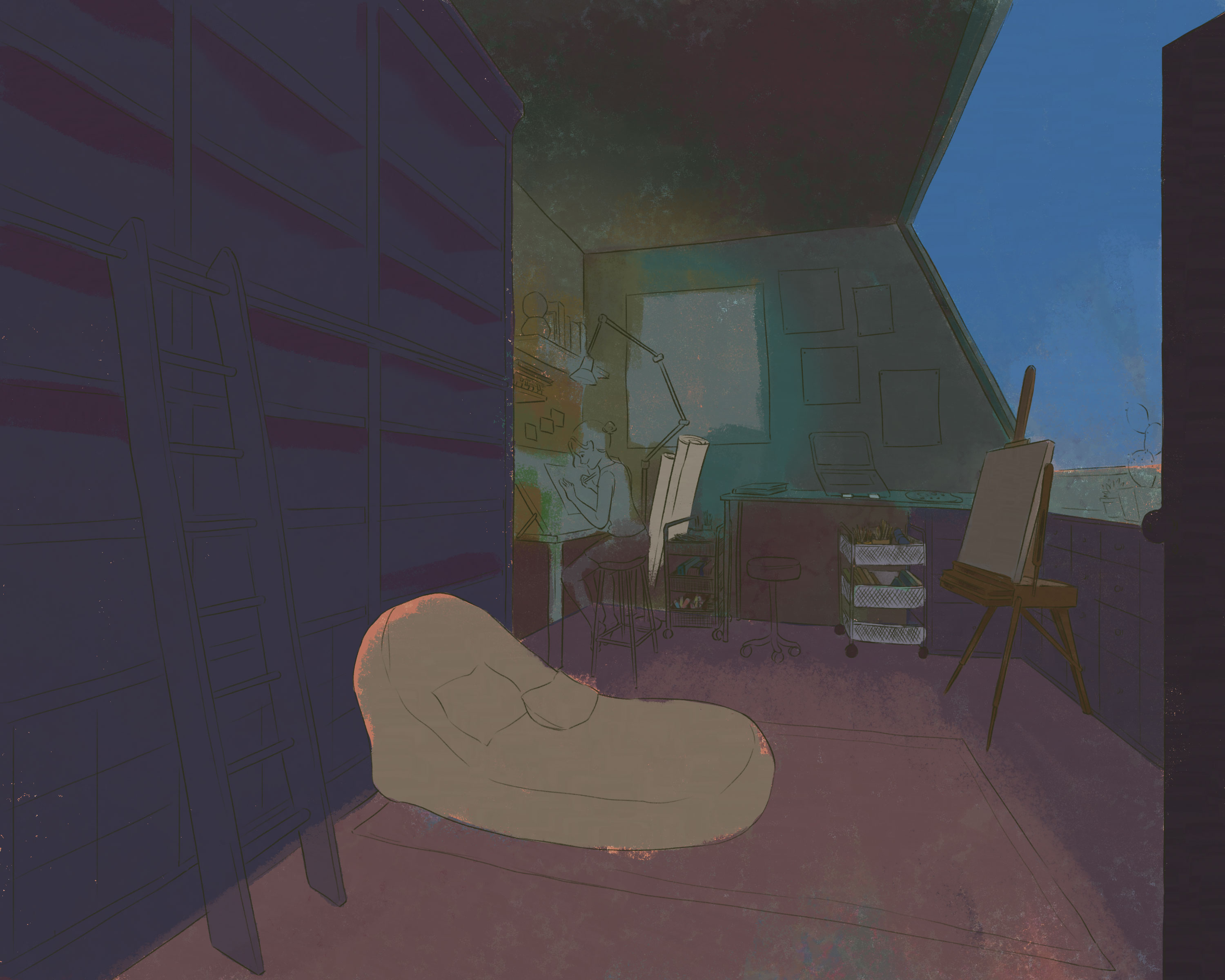
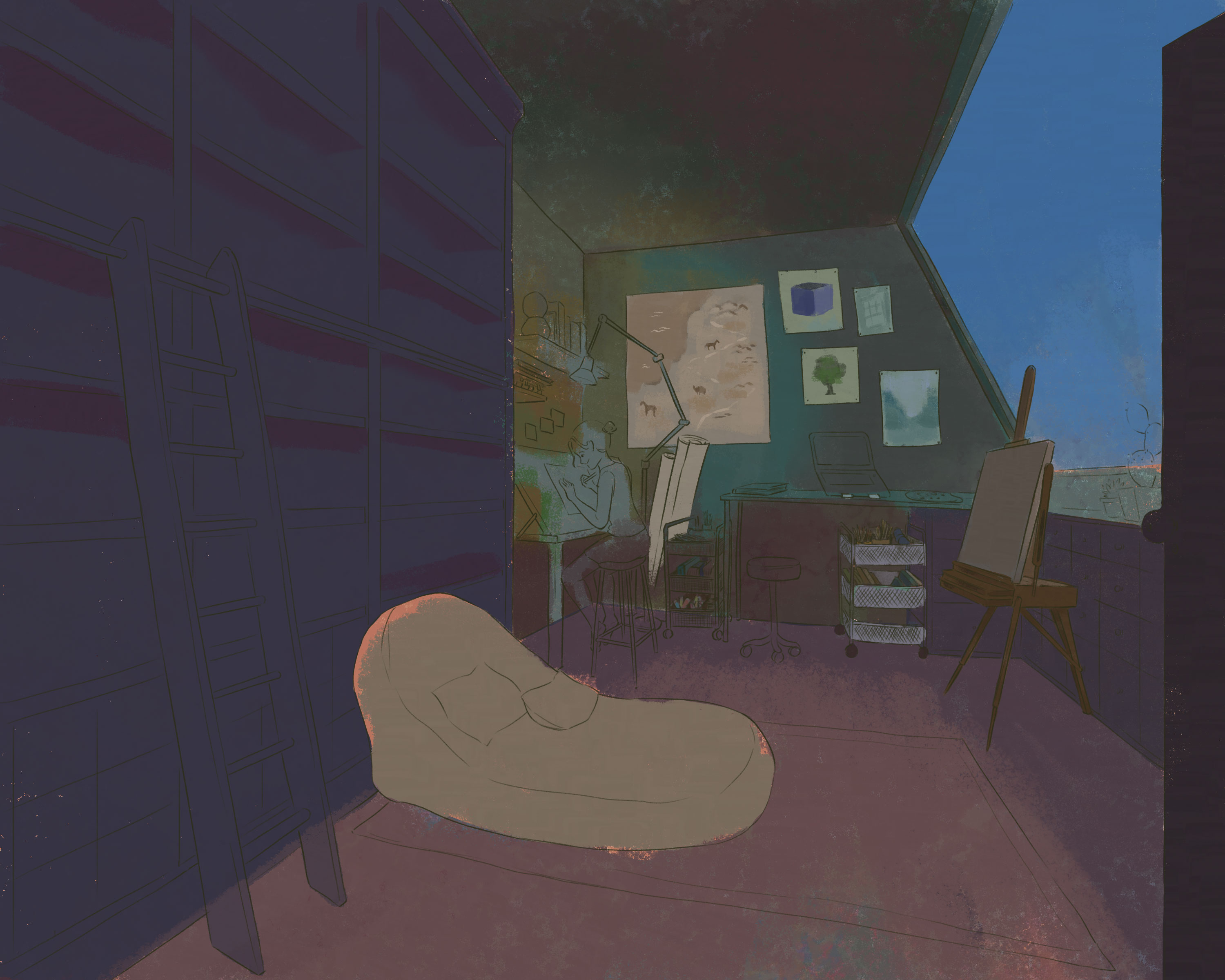
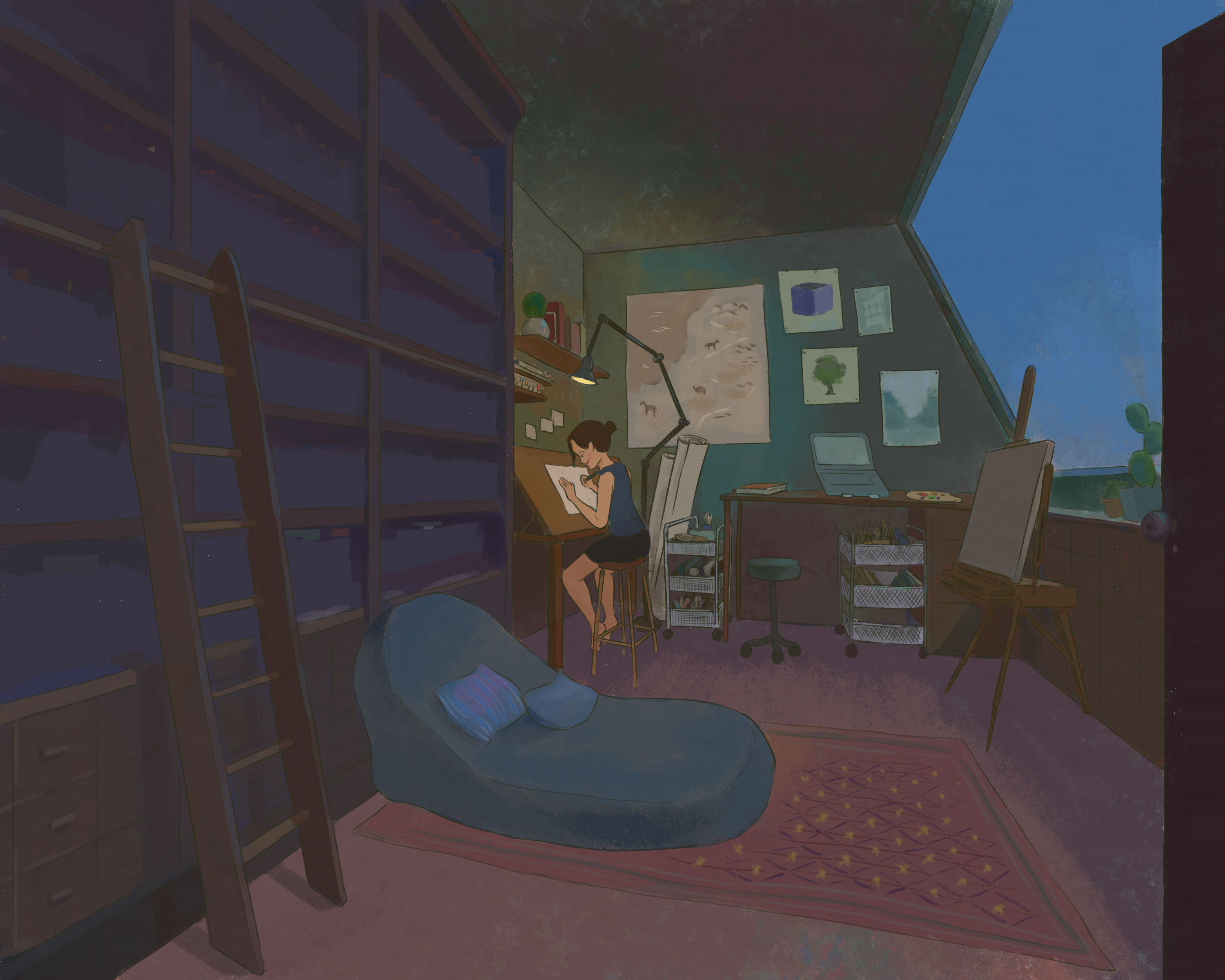
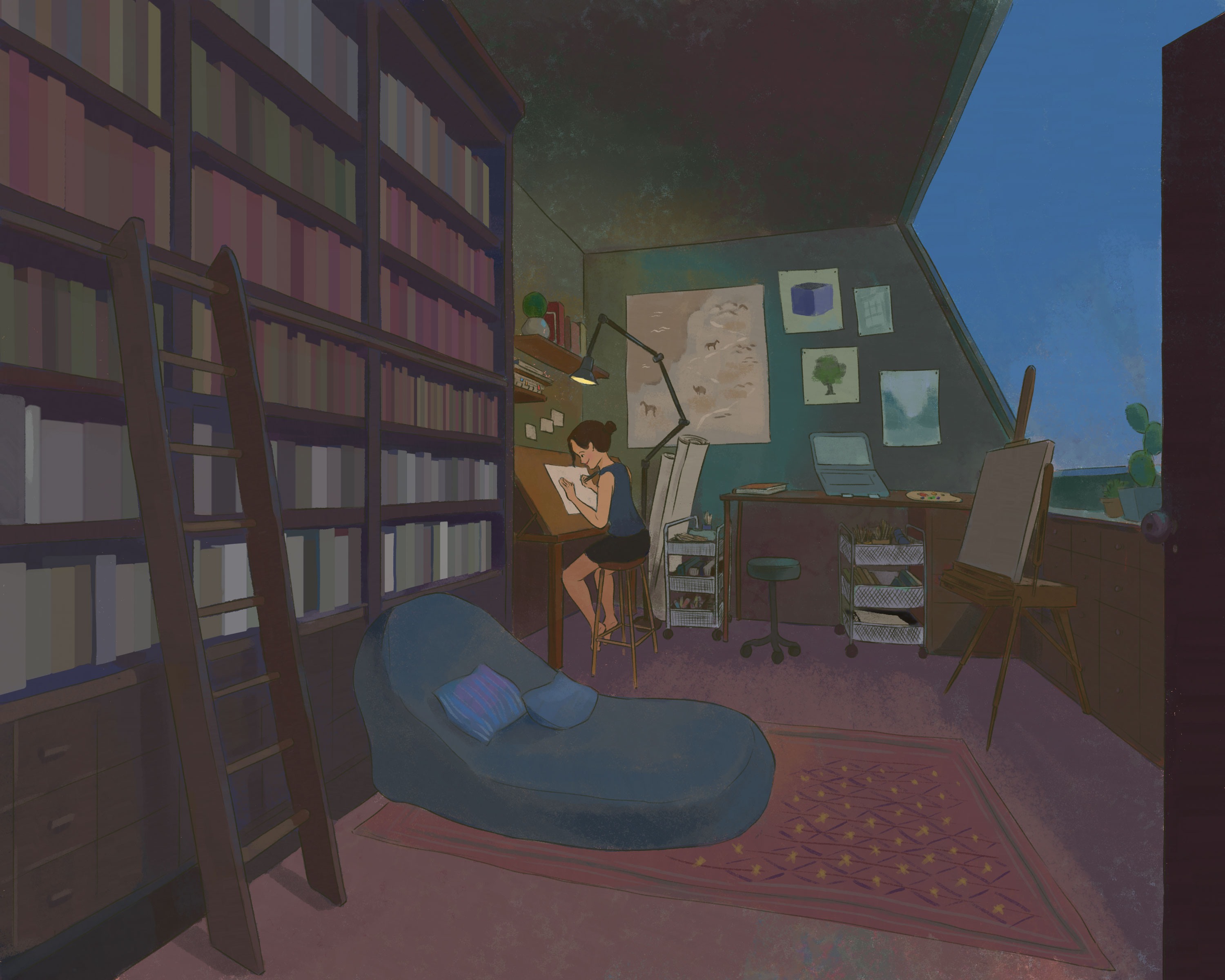
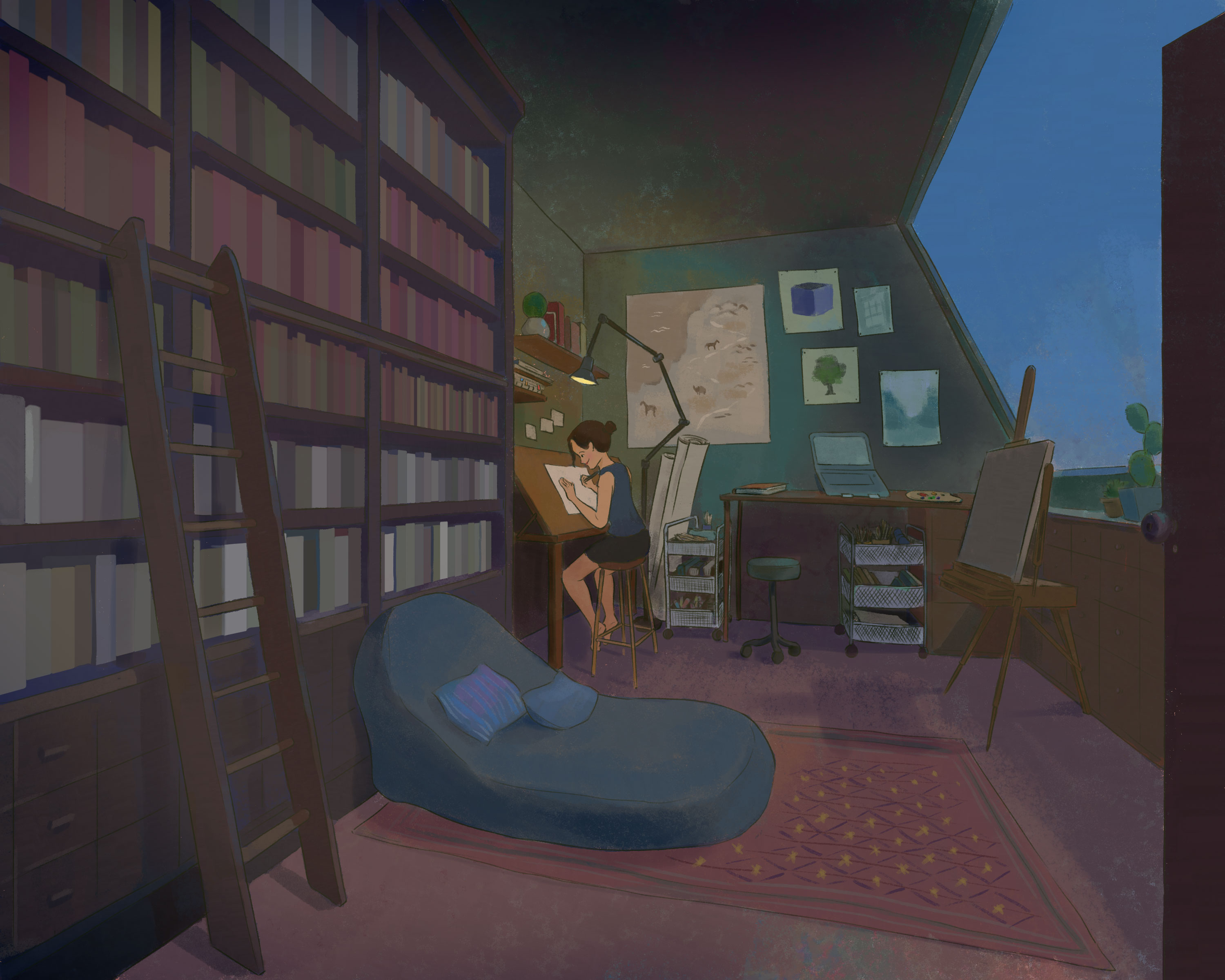
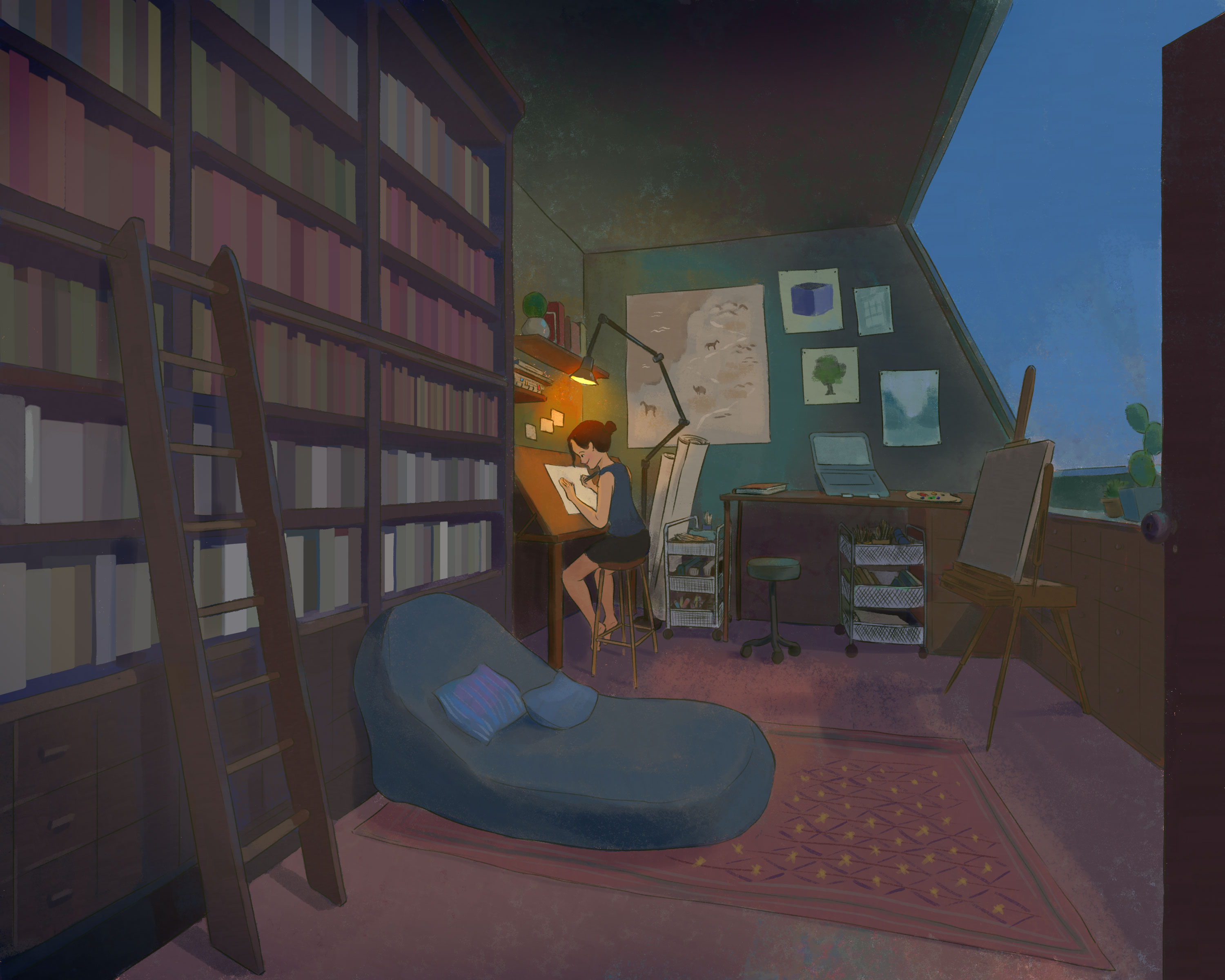
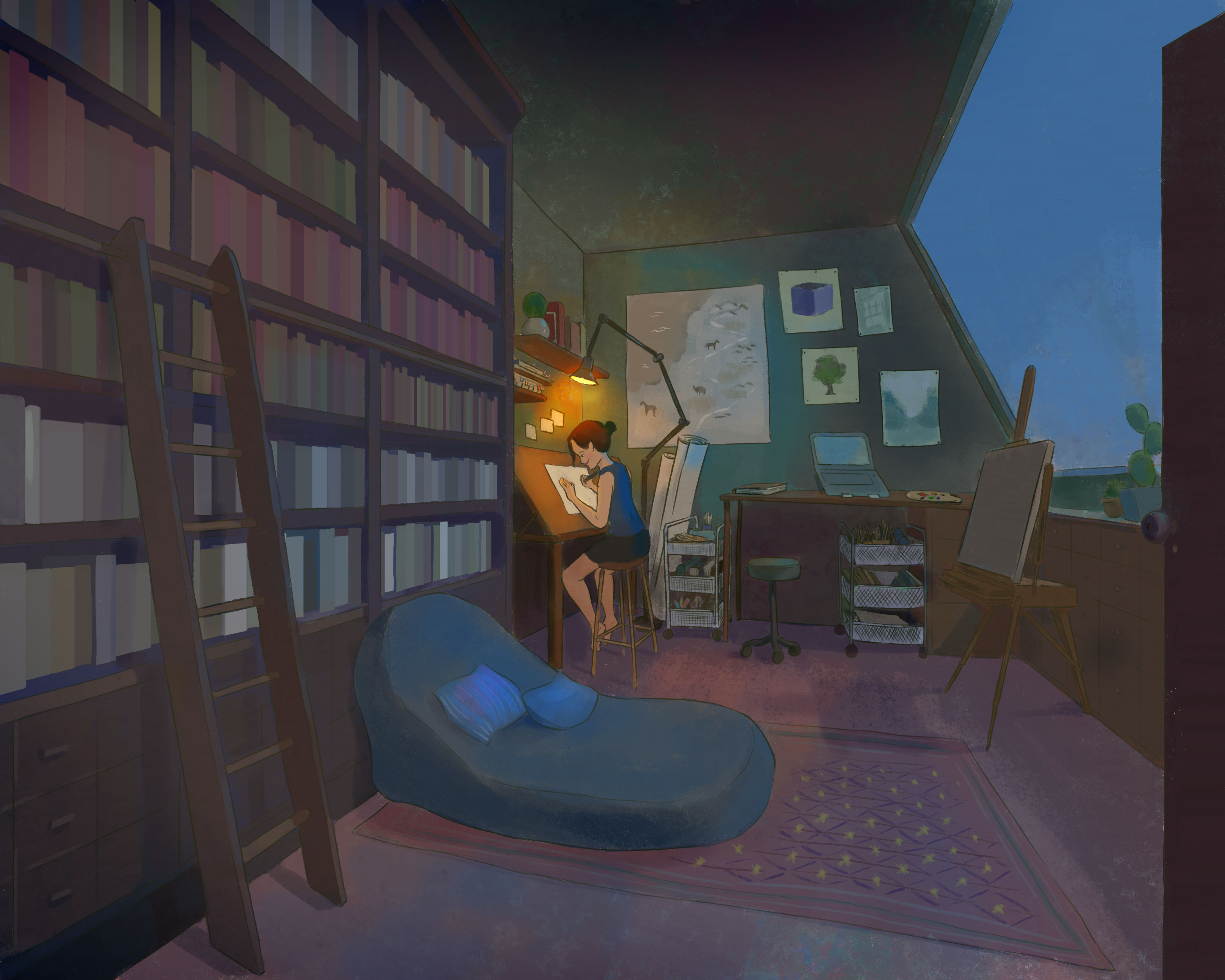
I painted myself working at night – breaking down my process

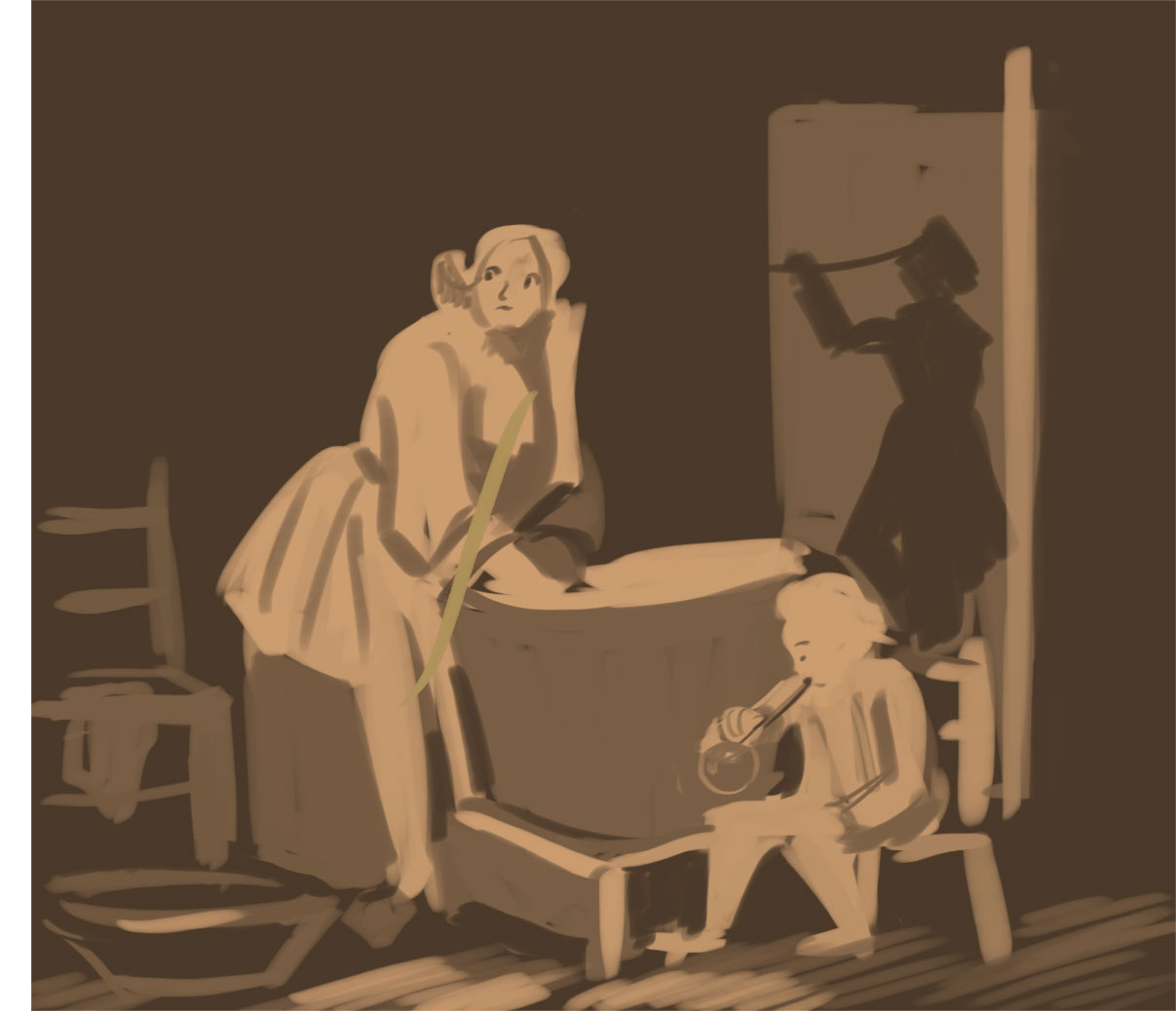
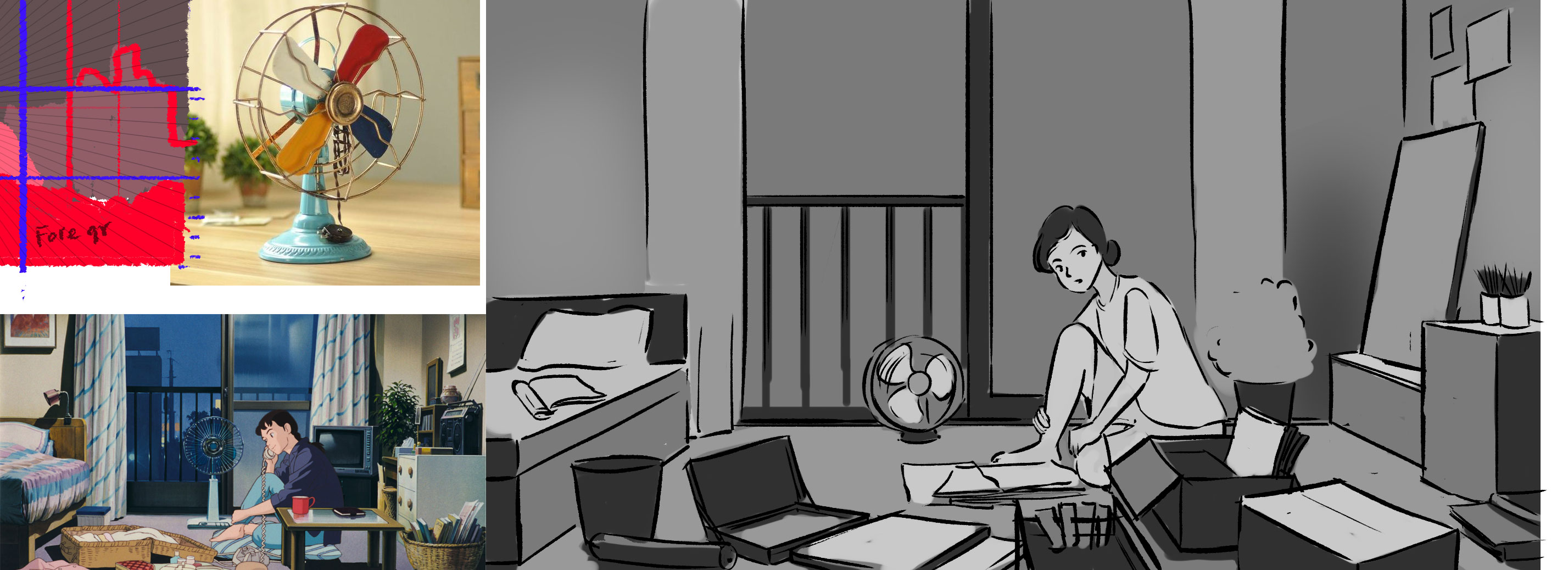
I took a class about composition and one of the homework was to copy and get creative from the arts that I need in grayscale.

I chose this scene in the movie ‘Only Yesterday’ from Ghibli because it feels intimate, it can be the room of anyone and I just need to step over the frame to be in the same room.

Inspired from that, I want to paint an arts room, a room that I would build if I have all the money I could.

I want to use night ambient light, a kind of soft light going with a strong light, light from the bulb. In that way, I could light up the whole room, yet still keep the focus on the main character (me :))

Drawing the human face and painting portraits

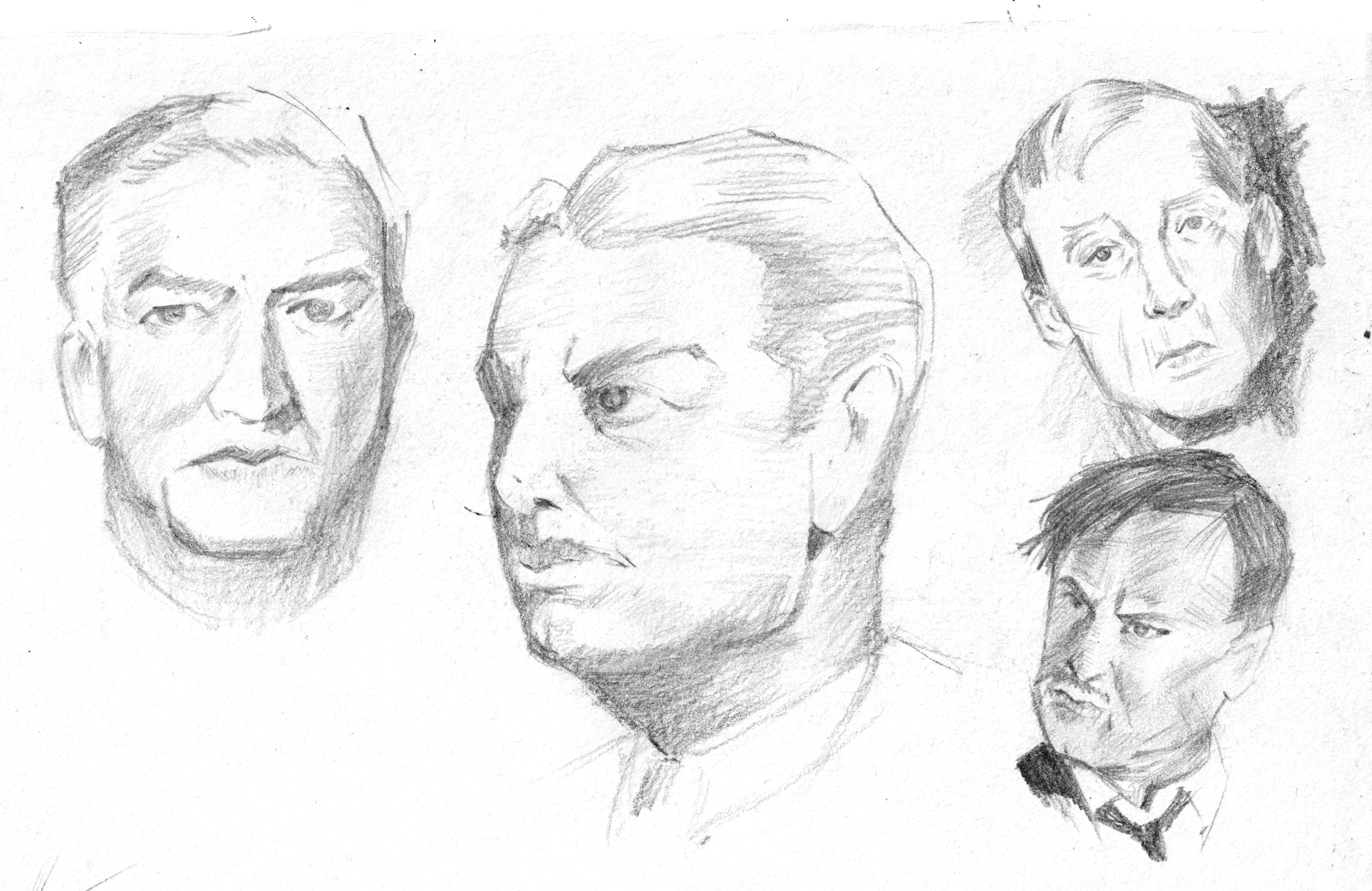
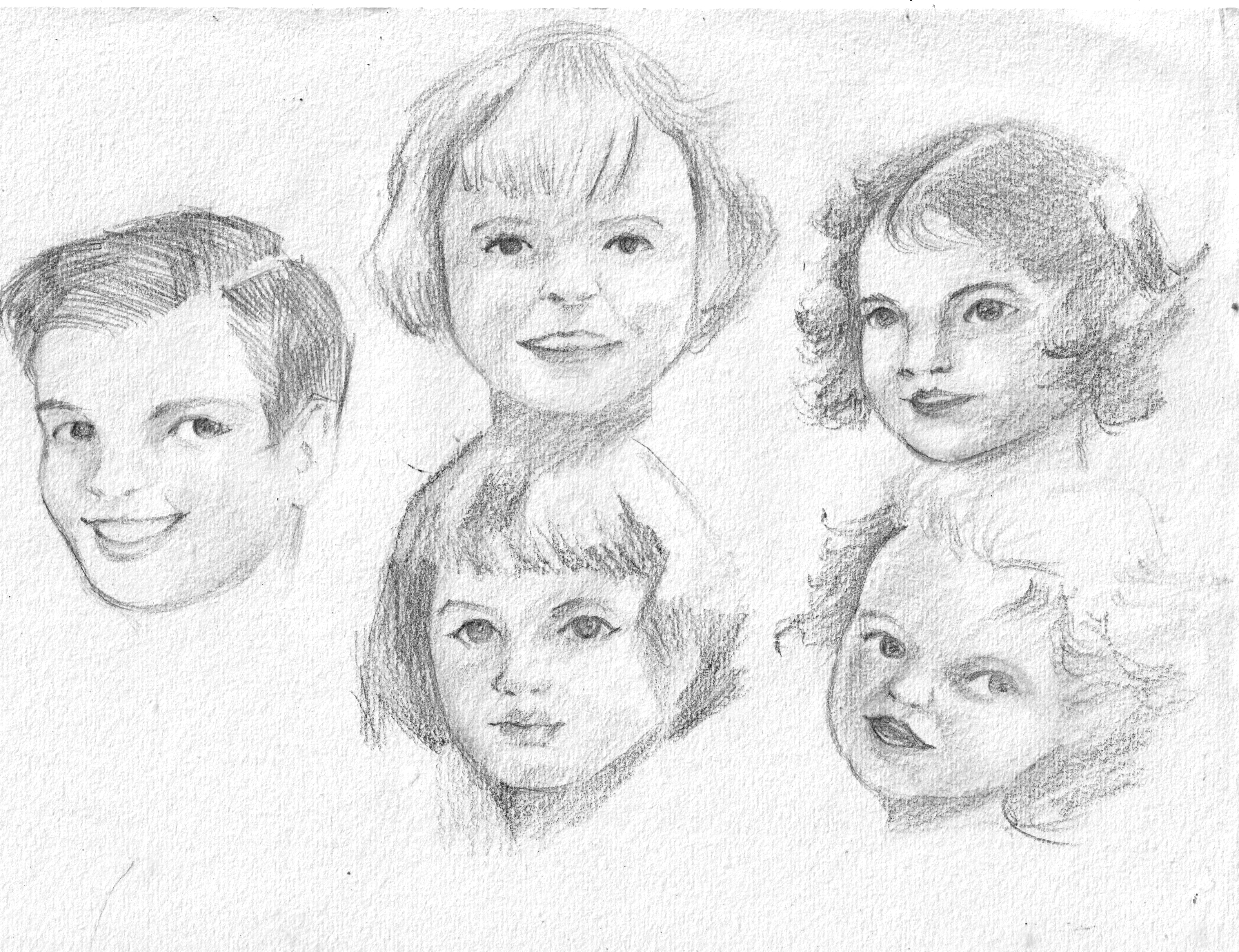
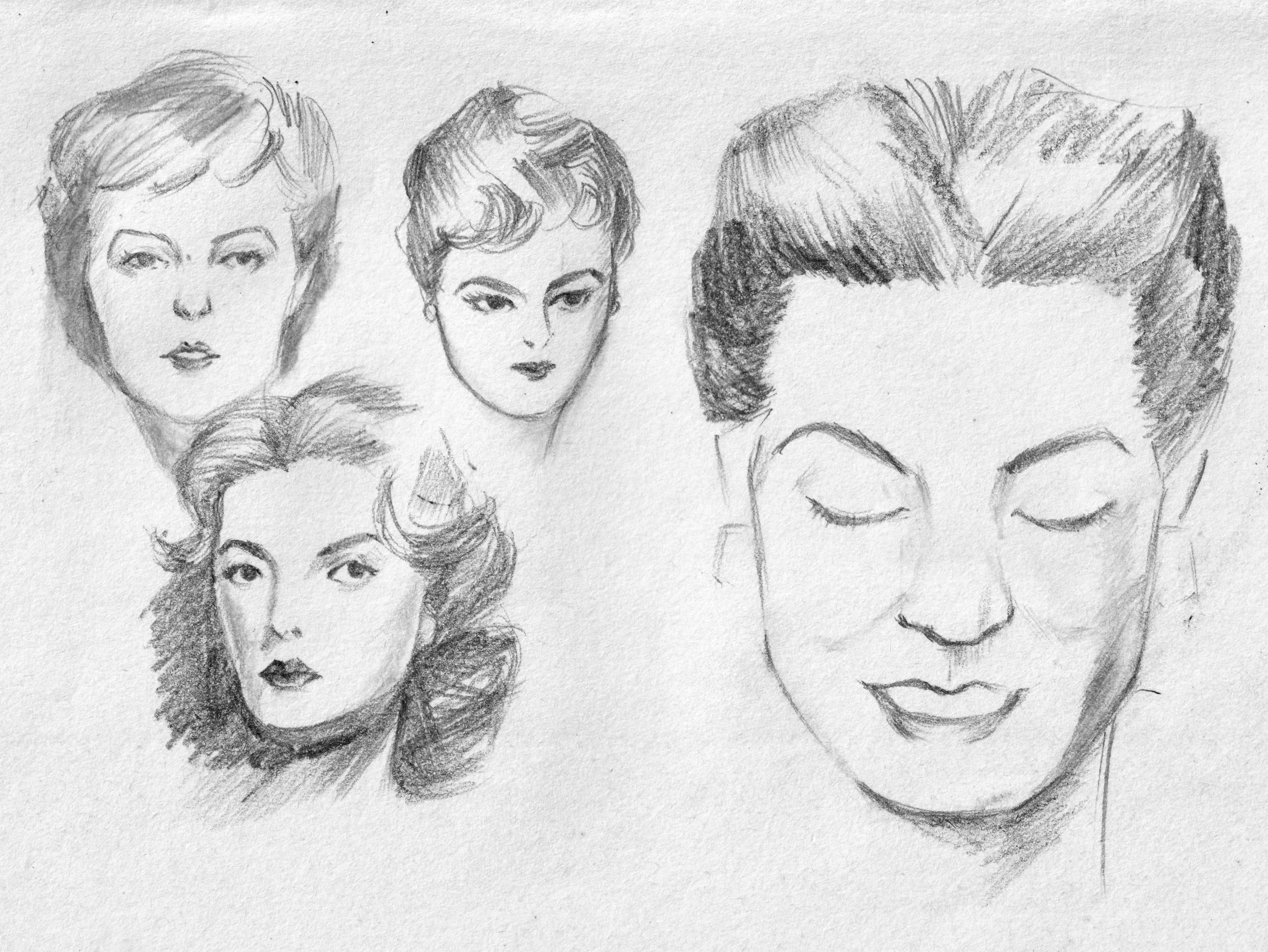
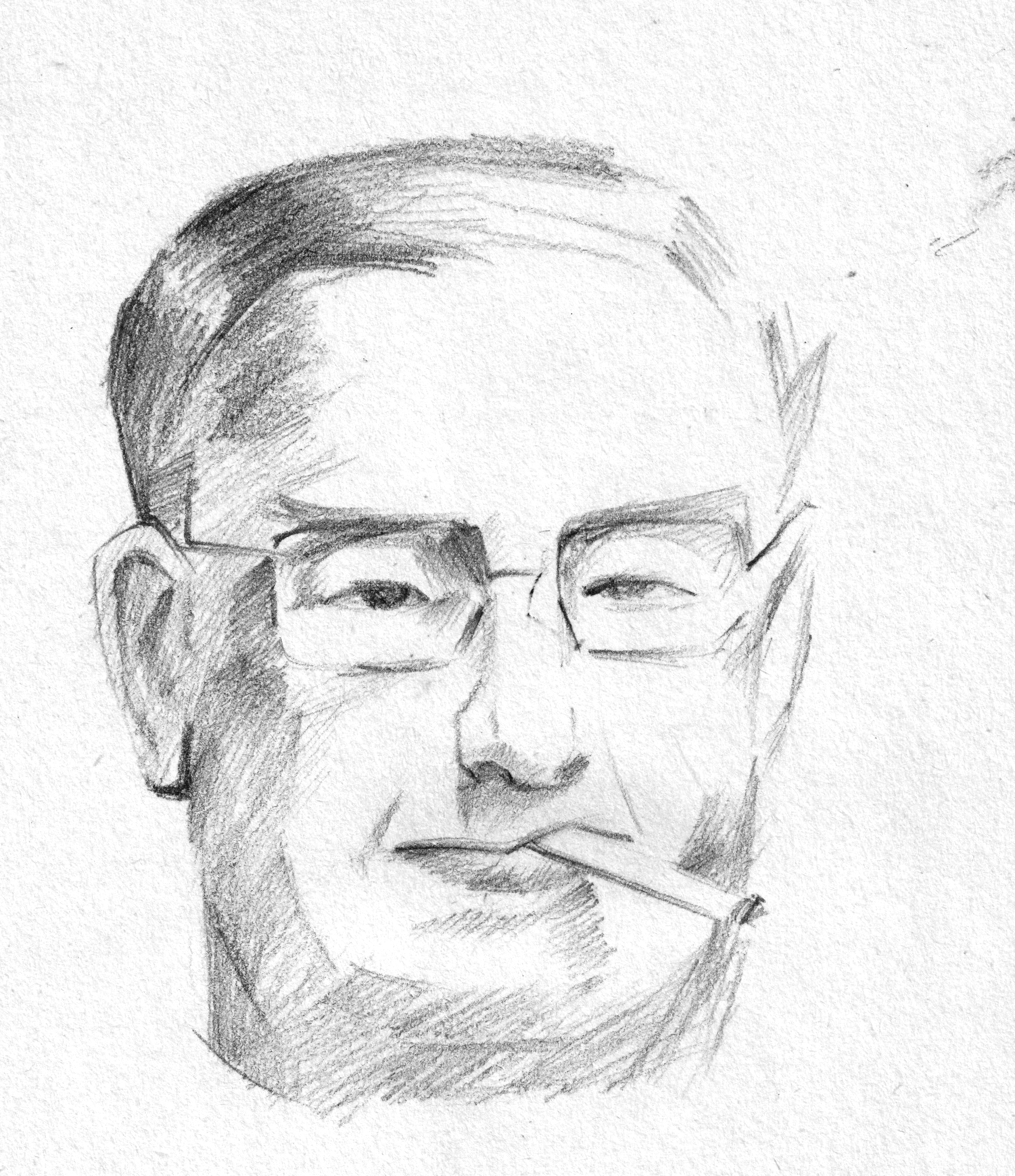
Human face is always a hard subject for me, since it’s easy to draw it ‘wrong’ and hard to fix it ‘right’. The annoying thing is even if I realize the face is ‘off balance’, sometimes I can’t point out which part need fixing or how should I re-draw it later.

That’s why it takes a long time for me to be able to draw a face that I can feel satisfied with.

My start

My first proper learning would be Proko’s drawing face videos, which is based on Andrew Loomis method. Later, I discovered Andrew Loomis wrote a whole series of books about arts, especially about figure drawings and portraits. The book I read, “Drawing the Face and Hands” was published in 1956, yet it’s still useful in learning the general structure of the face. The books were divided into male, female, teenager, kids and a small section at the end about hands. He often began with building the blocks first, then slowly adding features. The proportion of human face is similar among all people, yet, age and gender make the main difference.

I tried copying the sketches in the book

The only few drawbacks of the book are it don’t have any exercise or suggestion about practices and it was written in 50s language, which is lengthy and flattering for me. However, I can still feel the warmth and efforts of Andrew Loomis in his first few words opening the books “Now let’s get to work in earnest”.

The first course

Later, when I took the course “Deconstructed: Drawing People” by Viktor Kalvachev, he shared his method learned from a criminology professor to recognize faces based on basic shapes. Actually, you can see that section free on Schoolism channel.

Together, I found it easier to draw faces from images and came up with my own design for commissions.

A 60-day portrait painting challenge

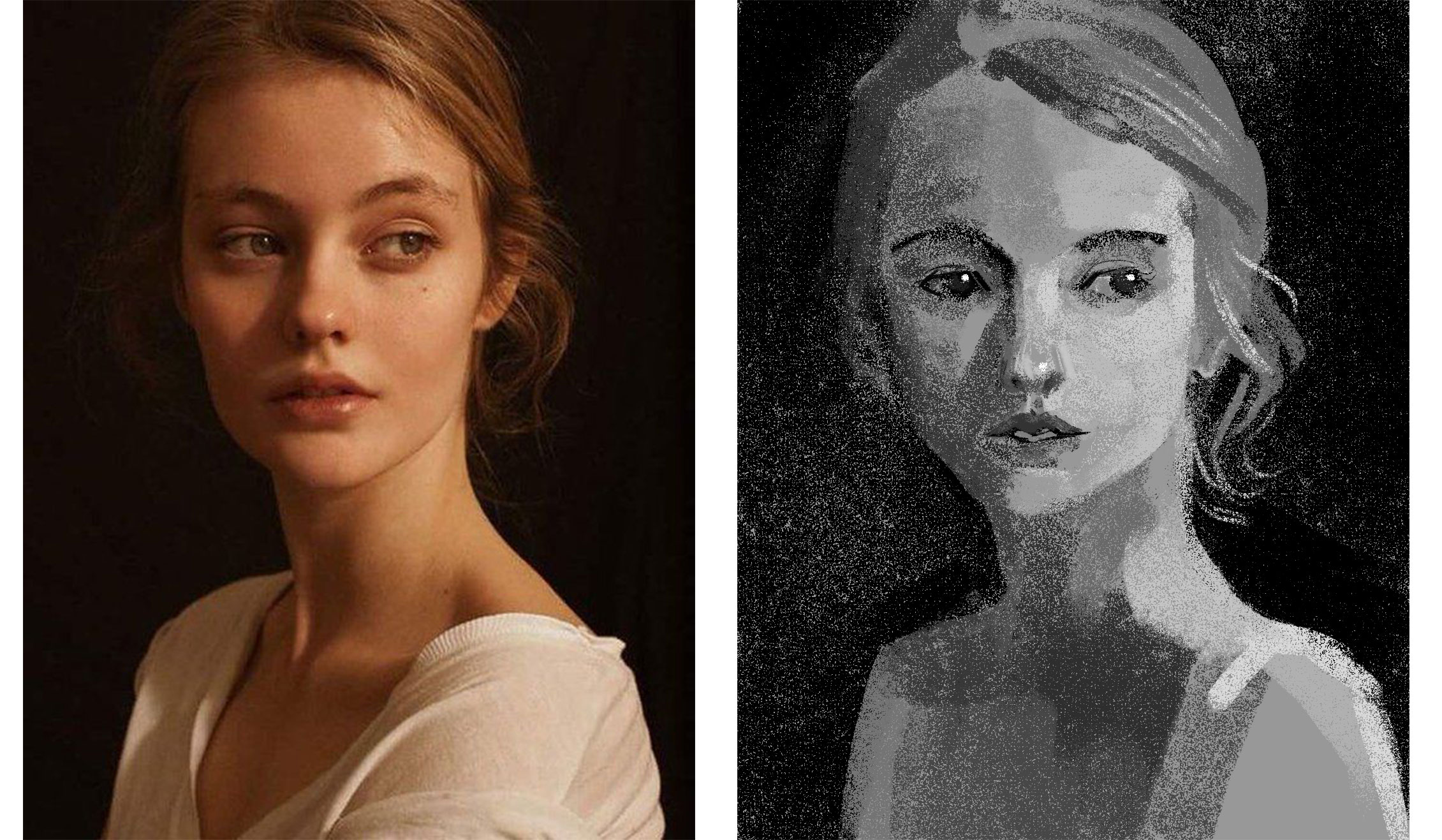
Feeling okay with my line drawing/sketch, I start to look for more ways to paint the face. There are realistic approach and stylish approach, color and lighting setup are also considered. I want a bit of fun so I try the Digital Painting Workout by Woulter Tulp (also a course on Schoolism). The course’s main purpose was to practice digital painting, yet the instructor prioritized portraits because they are subjects that can be tackled in 30 minutes or so. For each day in 2 months, I spared 30-40 minutes to paint an image based on the instructor’s guidance. Each painting focus on one goal only: value or color or rendering, etc.

The useful side of this workout is that it allows me to learn painting both way: realistically and stylishly. I learned that there’s endless possibilities about painting a person, the important point is to paint how I feel about the person.

Unknown source
Source: Freepik
Model: Ludan, from Vogue

My most recent course

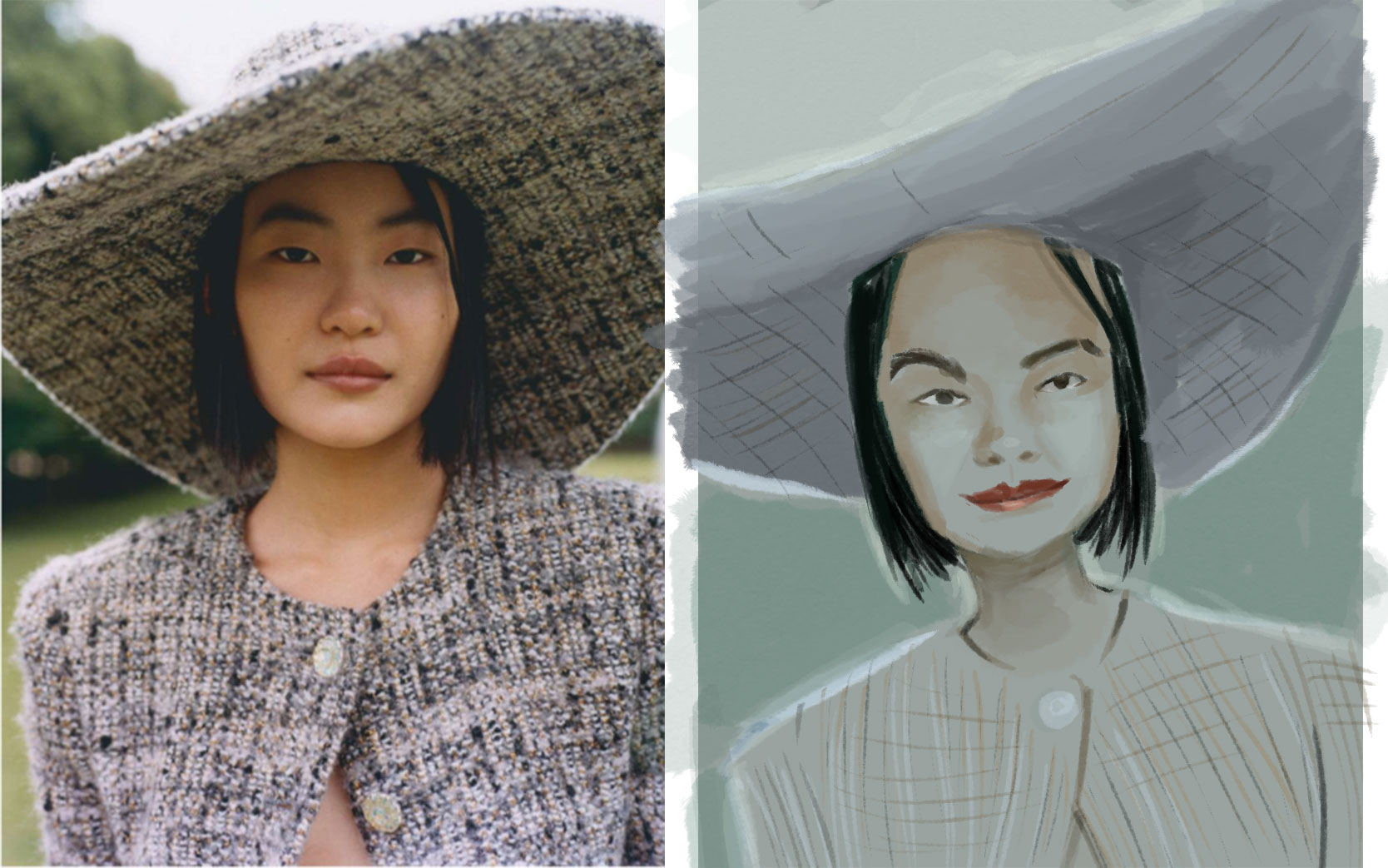
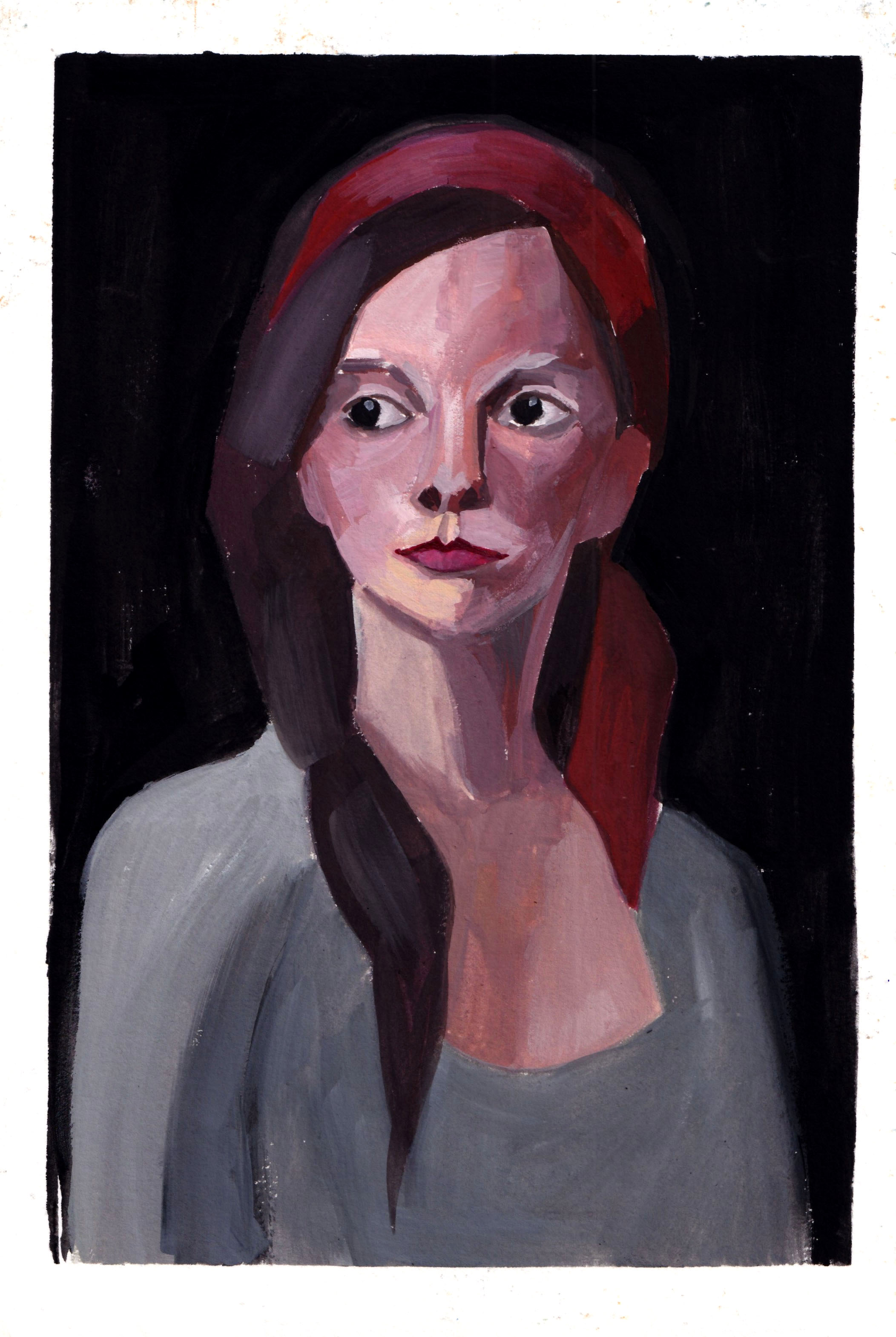
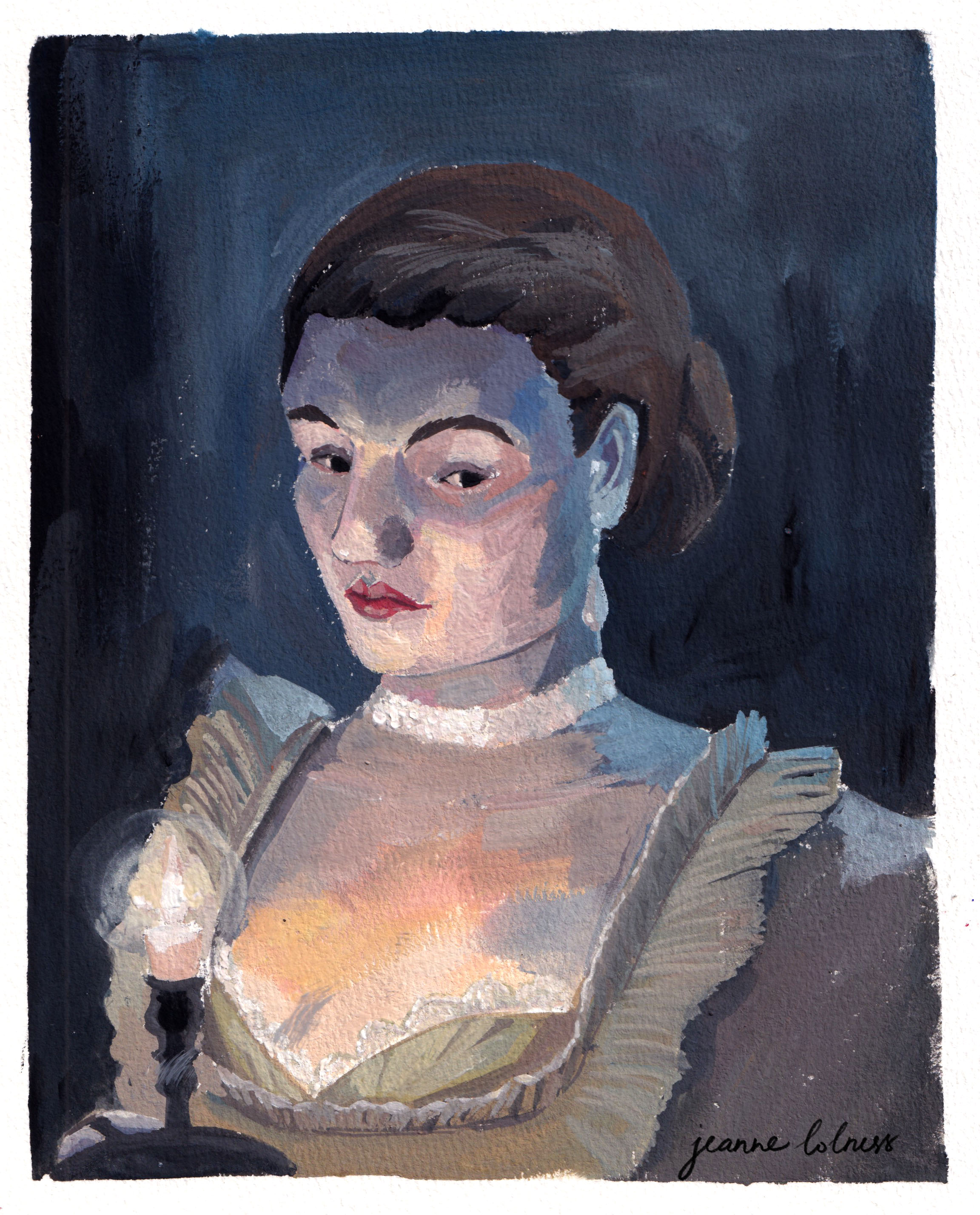
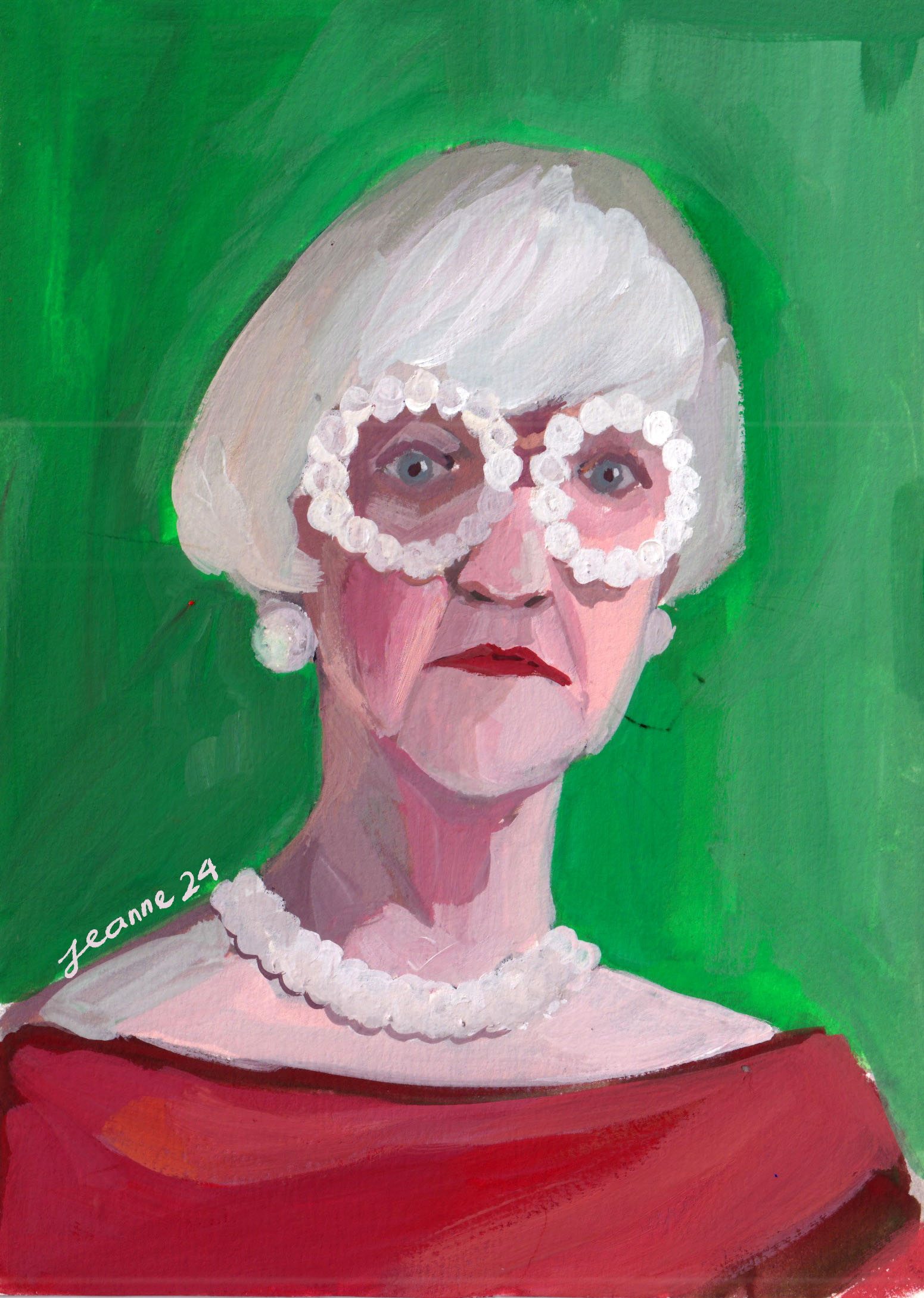
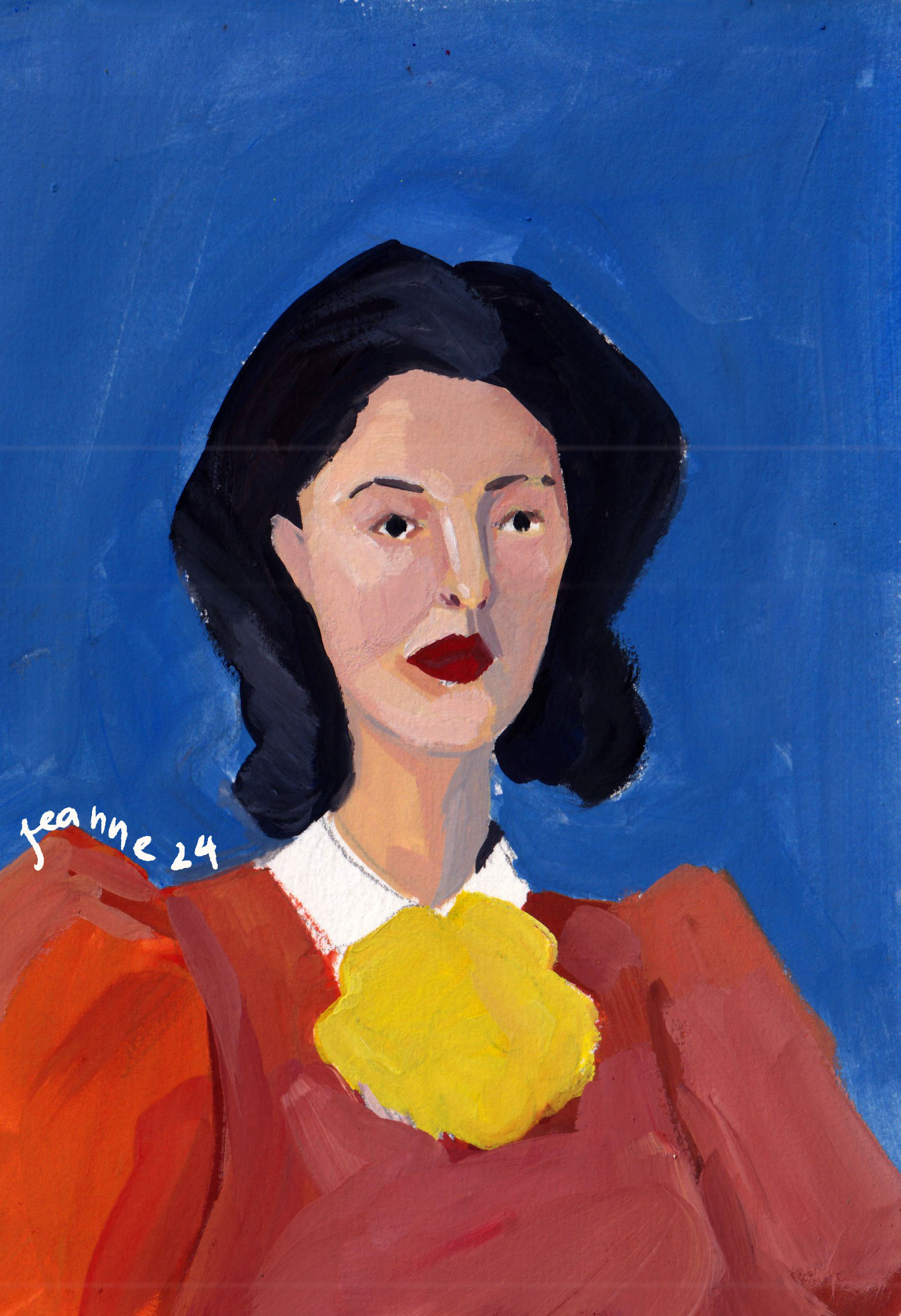
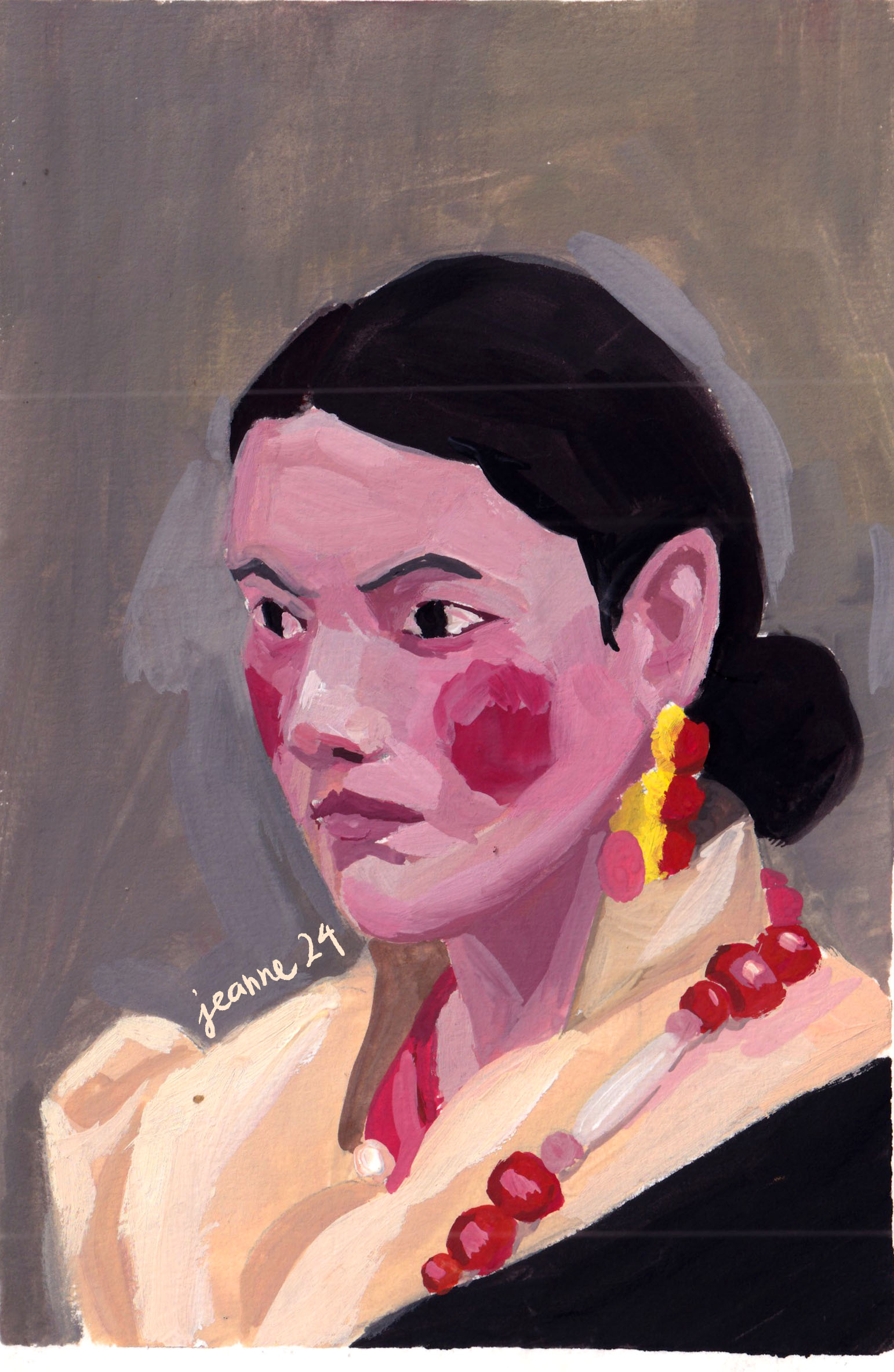
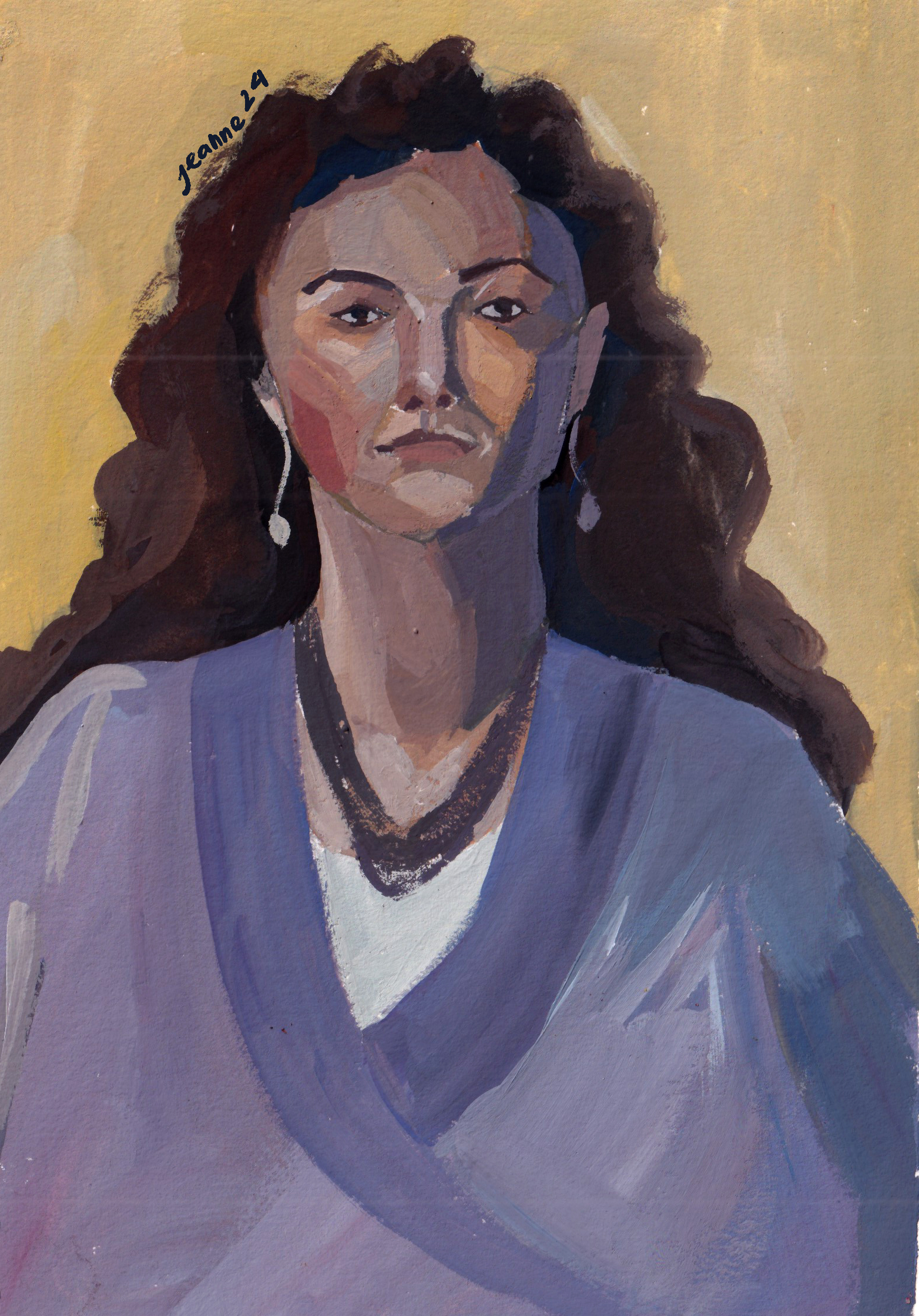
The most recent course I took is about color, and the subjects used were also portraits. This time I used gouache for the whole course, trying to mix color traditionally. The side effect of this course is that my portrait skill improved a lot as well.

Credit: @Lee Avision/ Trevillion Image
Actress Pınar Deniz
Based on photo by Photographer Sirli Raitma
Based on photo by Photographer Leslie Zhang JiaCheng
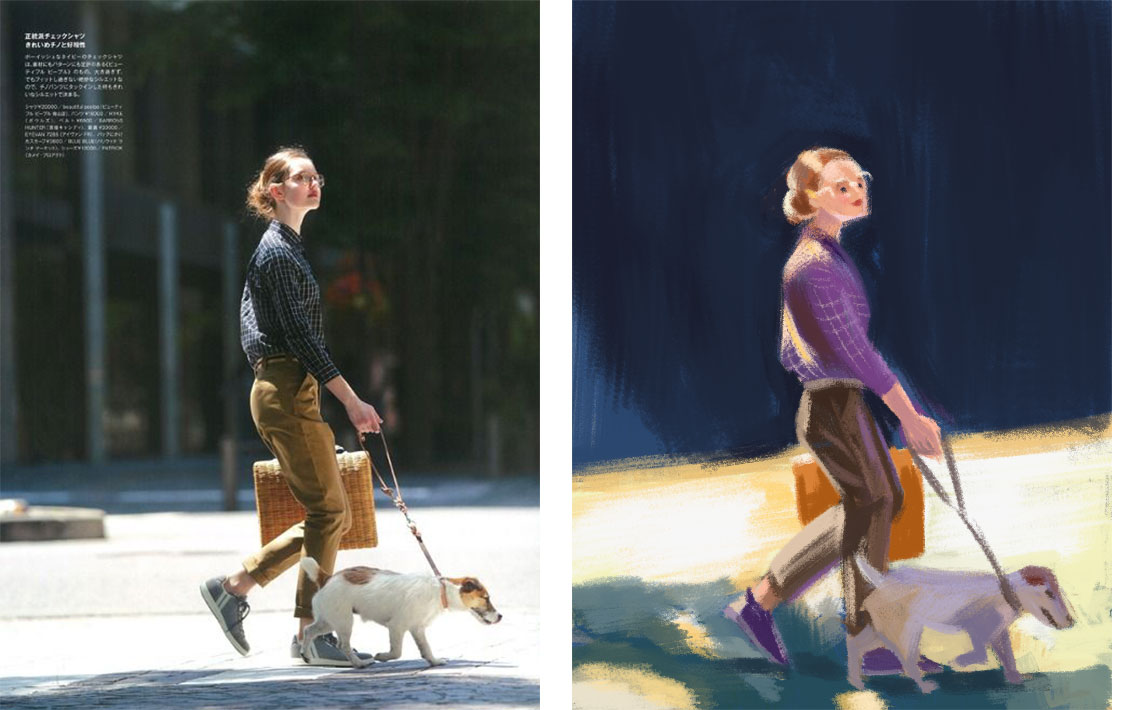
Unknown source
Credit: @Paradise studio
Model: Jessica from Croquis Cafe
Photographs by Paolo Verzone, Egyptologist Monica Hanna, from National Geographic

These paintings aren’t used for commercial purposes, just for education and promotion only.

I aim to use realistically but not in order to copy the image exactly, the important is to paint how I feel about the model, how I think about her, what’s the real or the imagined story I could tell with her eyes, her skin, etc.

What’s next?

I want to learn more about human expressions and experiment with specific lighting, especially dramatic/ theatrical set up to tell a story. And I will need to revisit the face structure to keep my knowledge fresh, but with a different approach/method to keep the art as fun as I originally started it.

Process of a distorted street scene

As person growing up in a city with buildings, sometimes I feel lost and falling behind. Buildings, though they are frigid structure, get taller every year. They get pulled down to be built taller and taller; while human, or me, doesn’t. I can’t break myself down to rebuild me to a better person.

Together with the book “Dora Bruder” by Patrick Modiano, I come up with this idea of a girl getting lost in a city, a crowd of cold blocks stacking over each other.

The sketching for this illustration actually took longer than the painting. There are a lot of windows to draw and I have to make sure the perspectives are distorted out of reality. About color, I already have the idea of using orange-yellow tone for a nostalgia vibe, which indirectly determined my choice of shadow (purple).

That’s it! I love this illustration because I love the book and I’m proud of me taking time with all these windows.